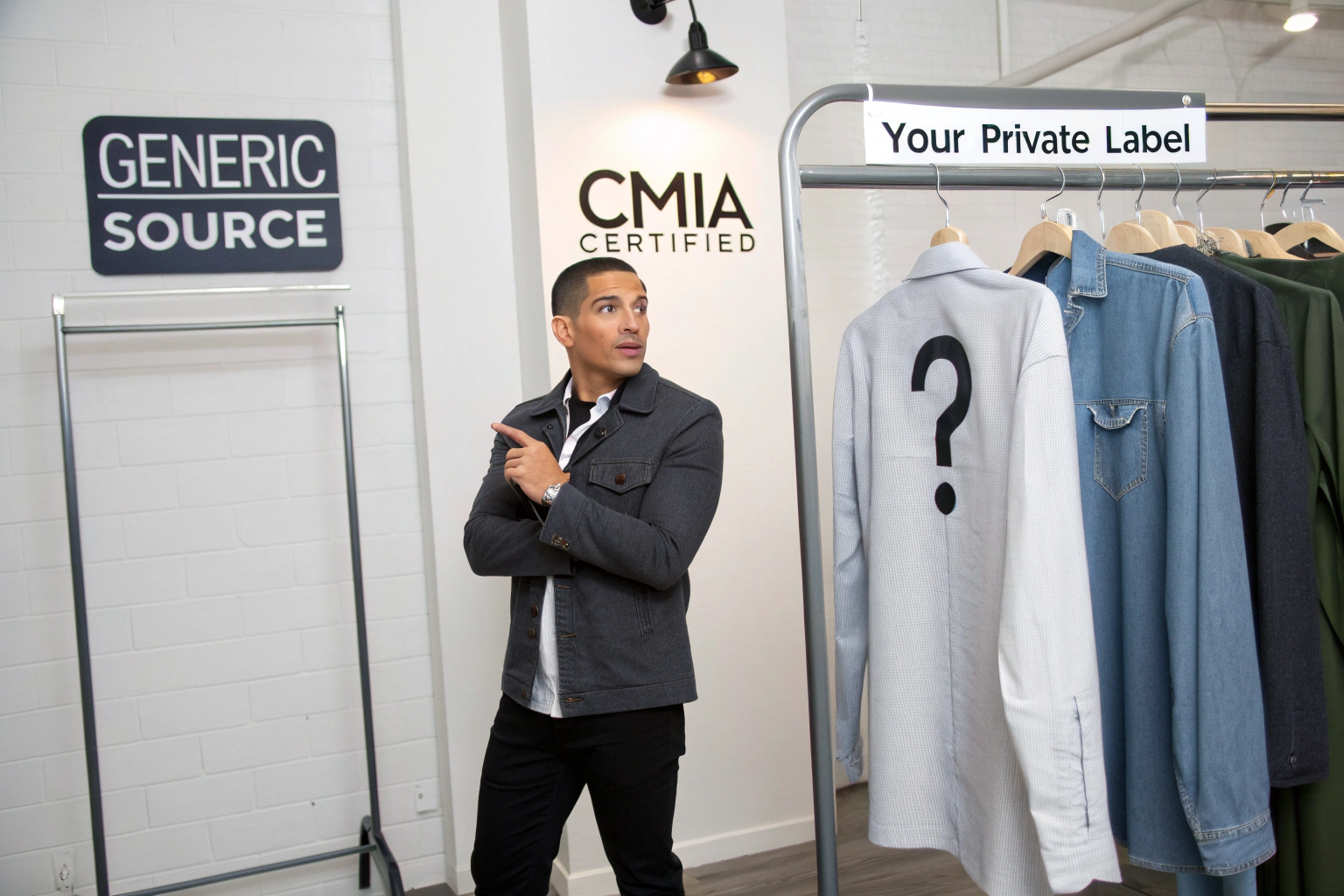
You've poured your heart into your private label. The designs are perfect, the branding is sharp, and you're ready to take on the market. Then you start talking to factories, and you hear about this thing called "CMIA certification." Your first thought might be: "That's for the big corporate brands with sustainability reports, not for my startup." Or maybe: "I just need good quality at a fair price. Is this just an extra cost I don't need?" I've had this conversation with dozens of emerging brand founders. Here's the truth you need to hear: In today's market, CMIA certification of your manufacturing partner isn't a corporate luxury; it's a strategic tool that can make or break your private label's credibility, scalability, and long-term survival. It's not about saving the planet (though that's a bonus); it's about de-risking your business, building a defensible brand story, and creating a supply chain that won't collapse under its first bit of pressure.
Think of your private label like a new restaurant. You could source ingredients from a random, unregulated market stall because it's cheap. It might work for a while. Or, you could source from certified, traceable suppliers. It costs a bit more upfront, but it gives you a consistent product, a story you can proudly tell your customers, and the peace of mind that you won't give anyone food poisoning. CMIA is that "supplier certification" for your clothing line. It’s the proof that behind your brand is a factory that operates with modern, transparent discipline. For a private label competing against thousands of others, this proof is what can lift you from being just another option to being a trusted, professional choice.
So, let's move past the greenwashing. Let's talk about how your factory's CMIA certification directly protects your investment, amplifies your marketing, and future-proofs your growing business.
Your Shield Against Supply Chain Disaster
As a private label owner, you likely don't have a team of QA engineers stationed in a factory overseas. You're managing designs, marketing, sales, and logistics—often by yourself or with a tiny team. Your greatest vulnerability is the production black box. You send money and specs, and you pray the right goods come out on time. CMIA certification is your remote-control monitoring system for that black box.
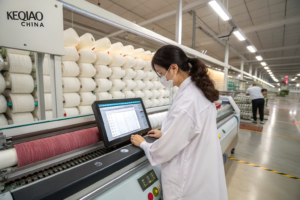
A CMIA-certified factory operates on a system of documented procedures and data tracking. This isn't abstract. It means:
- Predictable Timelines: They track production efficiency and equipment maintenance. This reduces the risk of the classic "two-week delay" that kills your launch campaign. Their system is designed to flag bottlenecks early.
- Consistent Quality: They control their processes (like dyeing temperatures, stitch settings). This means the 100th garment matches the 1st sample far more closely than in a non-systematic factory. For your brand, this means fewer customer complaints about sizing variation or color mismatches.
- Problem-Solving, Not Blame-Gaming: If something goes wrong (e.g., fabric shrinkage is off), a CMIA factory must conduct a root-cause analysis. They'll have records to check: Was it the incoming fabric? The washing parameters? This allows for a factual correction, not just promises to "do better next time."
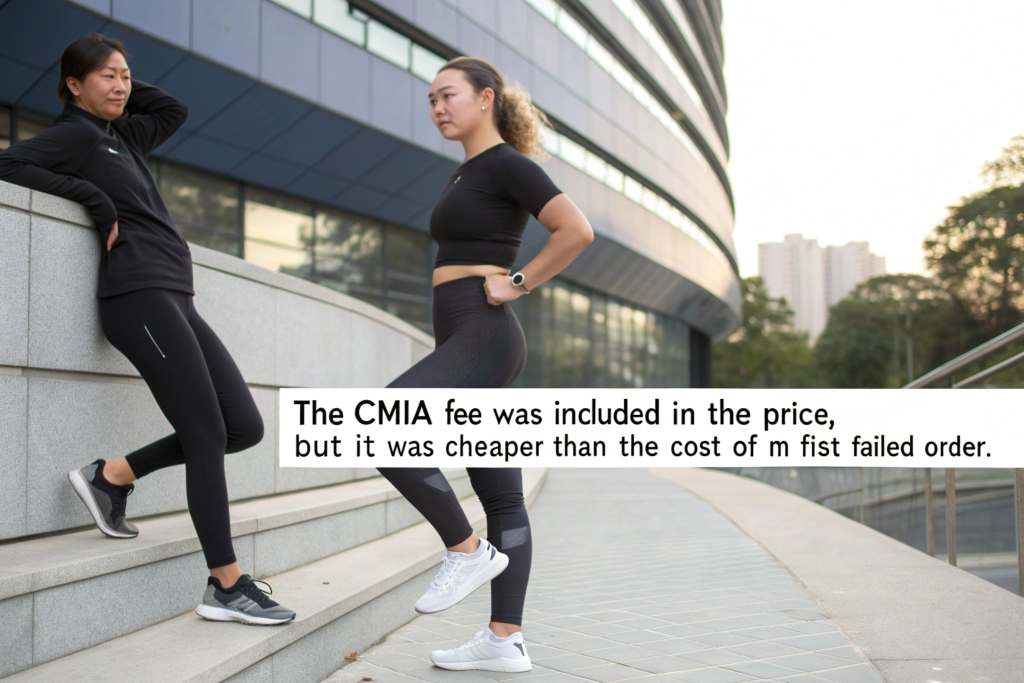
A specific example: A DTC athleisure brand we worked with sourced its first run of leggings from a non-certified factory. The order was delayed by 4 weeks due to "machine problems," and when the goods arrived, the black dye was inconsistent across sizes. They had to discount the entire batch, damaging their launch margin and reputation. For their second collection, they switched to a CMIA-certified partner. The production schedule was adhered to within 3 days, and the lab dip and bulk fabric were tested for color consistency before cutting. The founder told me, "The CMIA fee was in their price, but it was cheaper than the cost of my first failed order."
The Real Cost of "Saving Money" on an Uncertified Factory
Calculate the cost of one failed production run: lost inventory investment, missed sales season, damaged customer trust, and frantic scrambling. For a private label, this can be existential. The marginal extra cost per unit for a CMIA-certified partner is insurance against this catastrophe. It's not an expense; it's your first line of operational defense.
How This Affects Your Day-to-Day
It means fewer 3 a.m. emails chasing updates. It means your pre-shipment photos and videos show organized production lines and clear QC checkpoints. It means when you ask, "Can we add this care label?" they have a documented procedure for label approval and attachment, rather than a casual "sure, no problem" that leads to errors.
Your Most Powerful (and Credible) Marketing Story
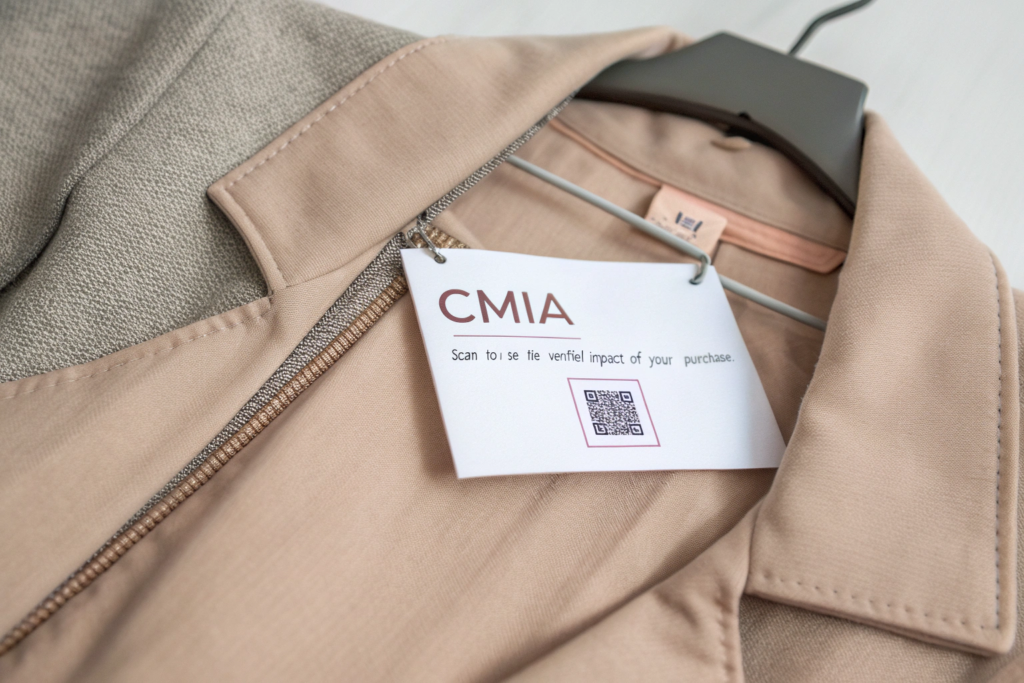
Anyone can put "eco-friendly" or "responsibly made" on their hangtag. Consumers and retailers are increasingly cynical about these claims. They want proof. A factory's CMIA certification is that third-party, audited proof that you can leverage without spending a dime on greenwashing.
You can transform this from a factory credential into your brand's backbone story:
- On Your Website: "Every stitch is made in a CMIA-certified facility, where we measure and reduce energy, water, and waste. This means better quality control for you and a lighter footprint for the planet." This is specific and credible.
- On Your Packaging: Include a simple icon and line: "Crafted in a CMIA-Certified Factory." It's a recognizable signal to conscious consumers.
- To Retailers: When pitching to boutiques or larger accounts, this is a key differentiator. Buyers are inundated with brands. Having a verifiable sustainability and ethical manufacturing story moves you from the "maybe" pile to the "serious vendor" pile. It answers their due diligence questions before they even ask.
In 2023, a small linen clothing brand from Australia used their factory's CMIA certification as the centerpiece of their wholesale pitch. They created a one-pager explaining what CMIA meant in simple terms—"It's like a report card for the factory's environmental responsibility and management." This document helped them secure placement in over 20 high-end boutiques that had a "sustainable sourcing" mandate. The certification provided the credibility their young brand lacked on its own.

Moving Beyond Vague Claims
Instead of saying "sustainable," you can say: "Our t-shirts are made in a facility that has reduced its water consumption per garment by 20% year-on-year, verified by annual CMIA audit." This is a concrete, ownable claim that competitors copying your design cannot easily replicate. It builds a moat around your brand based on supply chain integrity.
The Direct Link to Customer Loyalty
Today's customers, especially Millennials and Gen Z, seek alignment with their values. They are more loyal to brands they perceive as transparent and responsible. By showcasing your CMIA partnership, you're not just selling a garment; you're inviting them into a story of considered consumption. This fosters a community, not just a transaction.
Building a Foundation for Scalable Growth
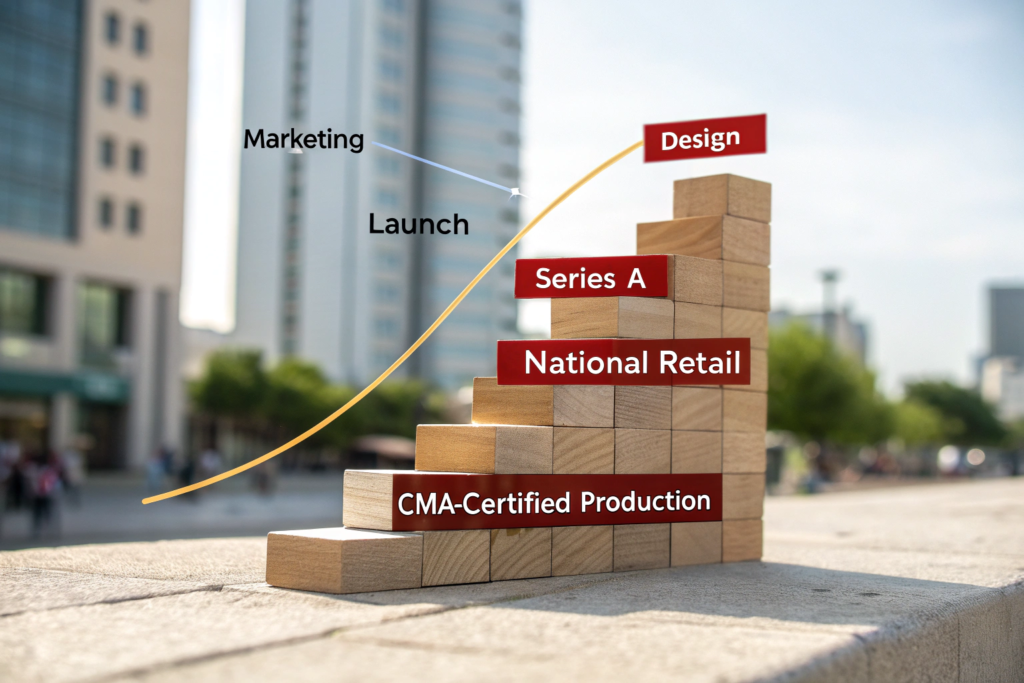
Your dream isn't to sell 100 units. It's to build a brand. Growth brings complexity: larger orders, more products, and increased scrutiny. The factory that got you through your first sample run might become your biggest bottleneck. A CMIA-certified partner is, by nature, built for scale and scrutiny.
Why? Because their system is designed for it:
- Financial Stability: The investment and discipline required for CMIA often correlate with a more financially stable operation. They are less likely to disappear overnight or cut drastic corners when material costs spike.
- Adaptability to Regulations: As you grow, you may sell into markets with stricter regulations (e.g., the EU). Your CMIA-certified factory is already managing chemical inventories (for REACH) and tracking data that will be needed for laws like the Carbon Border Adjustment Mechanism (CBAM). They grow with you, rather than holding you back.
- Capacity for Data Sharing: As you secure larger retail partnerships, you will be asked for supply chain disclosures. A CMIA factory can provide the environmental and social data packets you need efficiently, because generating such reports is part of their normal operation. A non-certified factory will see this as a burdensome, costly extra.
Think of it as infrastructure. You wouldn't build your website on a shaky, free hosting service if you plan to handle high traffic. You invest in robust hosting. Your manufacturing is your physical product's "hosting service." CMIA is the indicator of a robust platform.
The Partnership Mentality
A CMIA-certified factory views you differently. They see you as a client who values systems and long-term collaboration, not just a one-off order. This often translates to better service, more proactive communication, and a willingness to co-develop products. At Shanghai Fumao, we see this repeatedly: brands that choose certified partners engage in deeper conversations about fabric innovation and process optimization, building a true partnership for growth.
Avoiding the "Factory Swap" Agony
Many private labels outgrow their first factory and face the painful, risky process of finding a new one and requalifying all their products. Choosing a CMIA-certified partner from the start increases the odds that this factory can scale with you for years, avoiding this disruptive and costly transition.
Navigating the Cost Question: A Smart Investment, Not a Cost
Yes, working with a CMIA-certified factory might have a slightly higher FOB cost per unit. This is the most common hurdle. You must reframe this in your P&L statement.
1. The Efficiency Dividend: CMIA factories are, by design, more efficient. They waste less fabric and use less energy. These savings often offset part of the certification's cost. You might be paying a 5% premium, but they are operating with 3-5% less waste, which means your actual cost differential is minimal—and you're getting a vastly more reliable partner.
2. The Risk Mitigation Dividend: As calculated earlier, the cost of one delayed or defective order can be many times the total certification premium paid across an entire year's production. This is basic risk management.
3. The Brand Value Dividend: Can you quantify the value of a customer who becomes a loyal advocate because of your brand's integrity? Or the value of securing a wholesale order because you passed a retailer's sustainability vetting? This is where the ROI becomes exponential.
Actionable Step: When comparing quotes, don't just look at the bottom line. Ask the CMIA-certified factory to explain their quote. They should be able to articulate their value: their system, their stability, their data. Then, make an informed decision based on total value, not just unit cost.
How to Find and Vet These Partners
- Ask Directly: "Are you CMIA certified? Can I see the current certificate and scope?"
- Use Informed Platforms: Some B2B sourcing platforms now allow filtering by certification.
- Leverage Your Network: Ask your fabric supplier (like us). We know which factories in our network are certified and performance-oriented.
- Do the Verbal Audit: Ask them the questions from our "How to Spot a Fake CMIA Certificate" guide. A real partner will welcome the conversation.
Conclusion
For your private label clothing line, CMIA certification of your manufacturing partner is far more than an environmental checkbox. It is a multifaceted business tool: an operational shield against supply chain chaos, a credibility engine for your marketing, and a scalable foundation for serious growth. In a crowded market where product differentiation is fleeting, the integrity and transparency of your supply chain become a lasting, defensible competitive advantage.
Choosing a CMIA-certified partner is a declaration of the kind of brand you are building: one that is professional, transparent, and built to last. It signals that you care about the details your customers never see but ultimately experience through product consistency and brand trust.
Ready to build your private label on a foundation of verified responsibility and operational excellence? At Shanghai Fumao, we specialize in connecting ambitious brands with manufacturing partners who meet this high standard. Let's discuss how to align your product vision with a supply chain that amplifies your brand value. Contact our Business Director, Elaine, at elaine@fumaoclothing.com to begin the conversation.