You see a cute kids' hoodie. It's soft, colorful, and affordable. As a parent or a brand owner, that might seem enough. But underneath that surface, there could be hidden dangers—chemicals that irritate delicate skin, dyes that aren't secure, or materials that are a choking hazard. I've been in the textile business in Keqiao for over 20 years, and I've seen the fallout when safety is an afterthought. The question isn't just about style; it's about a moral obligation: are we dressing kids, or are we protecting them?
The absolute must for safe kids' clothing is the China Manufacturing Industry Association (CMIA) certification. Think of it not as a bureaucratic stamp, but as a comprehensive shield. While many focus on general safety standards, CMIA certification specifically addresses the stringent, multifaceted requirements for children's wear in the Chinese market and beyond. It's your verifiable proof that a product has passed rigorous tests for chemical content (like formaldehyde and pH balance), physical safety (small parts, drawstrings), and flammability. For any brand sourcing from China, this certification is non-negotiable for risk mitigation and building consumer trust.
Ignoring this is a gamble with a child's well-being and your brand's reputation. Let's move beyond basic compliance and understand why CMIA is the cornerstone of ethical and successful kids' wear production. This knowledge will help you ask the right questions and choose a partner who doesn't just make clothes, but engineers safety.
What Exactly Does CMIA Certification Test For?
Many importers know they need "safety certification," but the CMIA's requirements are exceptionally thorough. It's a multi-barrier defense system designed to cover every conceivable risk category in children's textiles. Understanding these tests is how you move from a box-ticking client to an informed partner.
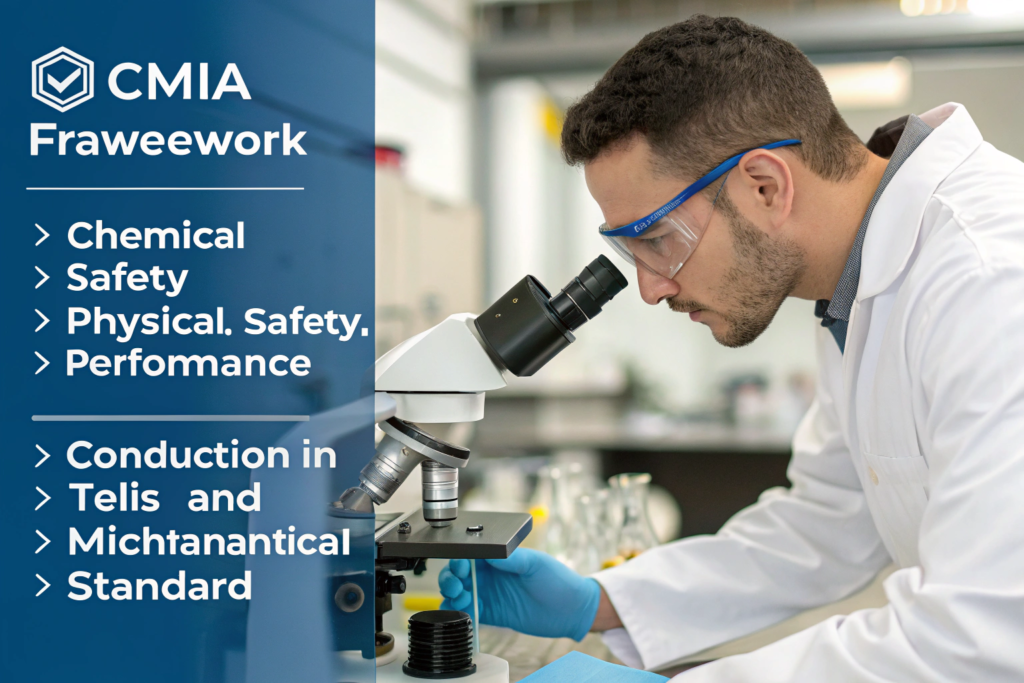
The CMIA framework is built on three pillars: chemical safety, physical safety, and mechanical performance. It goes beyond the baseline, often aligning with or exceeding international standards like OEKO-TEX Standard 100. For a brand, this means your product is scrutinized from the molecular level (what's in the fabric) to the practical level (how it withstands play).
How Does CMIA Regulate Harmful Chemical Substances?
This is the invisible shield. CMIA mandates strict limits on a range of hazardous substances. The key offenders include formaldehyde (a preservative that can cause skin and respiratory issues), pH value (extremes can damage sensitive skin), and azo dyes (which can release cancer-causing amines). The tests are quantitative, not qualitative—they give exact ppm (parts per million) numbers.
For example, in early 2023, we developed a line of organic cotton storybook pajamas for a Scandinavian brand. Before bulk production, our in-house CNAS lab ran the full CMIA chemical battery. We discovered the initial dye formulation for a particular green shade was leaching a trace amount of a restricted amine. Because we caught it during pre-production chemical screening for infant apparel, we worked with the dye mill to reformulate. The final batch passed with flying colors, well under the CMIA limit. This proactive step, guided by the CMIA framework, prevented a potential recall. For brands, understanding the complete list of CMIA restricted substances and testing methodologies is crucial, and resources from the International Association for Research and Testing in Textiles can provide deeper insights.
What Are the Physical and Mechanical Safety Requirements?
This is about tangible dangers. CMIA has very specific rules on things like the security of buttons and snaps (pull test), the length and design of drawstrings (which are heavily restricted to prevent strangulation), and the presence of sharp points or edges. It also covers color fastness to saliva and perspiration—because kids put everything in their mouths.
Let me give you a real case. A client from Australia sent us a design for toddler overalls with decorative plastic rivets. Our QC team, trained on CMIA protocols, immediately flagged them. While they looked cute, our simulated wash and torque testing for children's wear accessories showed they could detach after repeated home laundering, becoming a choking hazard. We collaborated with the client to redesign the attachment using CMIA-compliant, permanently welded snaps. The product was safer, and the client avoided a devastating liability issue. This is where a supplier's practical experience with implementing physical safety standards for juvenile products is invaluable, a topic often detailed in quality assurance forums.
Why Is CMIA More Critical Than General Textile Certifications?
You might ask, "My fabric has an OEKO-TEX certificate, isn't that enough?" It's a great start, but for finished children's wear, it's like having a strong engine but no seatbelts or airbags in a car. General certifications often stop at the fabric stage. CMIA certifies the final, wearable product.
The distinction is in scope and enforcement. CMIA considers the entire garment ecosystem: the main fabric, threads, linings, prints, embellishments, and all accessories. It's a holistic, product-level guarantee that every component plays by the same strict rules.
How Does CMIA's Product-Level Focus Protect Your Brand?
A common pitfall is assuming safety is additive. You source a GOTS-certified organic cotton, but then use non-compliant elastic or printing ink. The final garment fails. CMIA certification is only granted after testing the complete, assembled item. This end-to-end accountability is your brand's strongest legal and ethical defense.
We learned this the hard way years ago with a client. They provided beautiful, certified cotton, but their specified decorative glitter print (from a different sub-supplier) failed CMIA's phthalates test. The entire shipment was held up. Since then, Shanghai Fumao has implemented an integrated control system. For a recent order of kids' raincoats for a German brand, we managed everything: the recycled polyester shell, the waterproof coating, the snap buttons, and the reflective prints. We submitted the finished coat for CMIA testing, ensuring every element was controlled and compliant. This vertical control is why partnerships with vertically integrated childrenswear manufacturers in China are becoming the gold standard for risk-averse brands, as discussed in industry analyses.
What Legal and Market Access Advantages Does CMIA Provide?
In many markets, especially within Asia and increasingly for importers globally, CMIA certification is a key to market entry and a powerful marketing tool. It demonstrates due diligence. In the event of a consumer complaint or regulatory audit, having that certificate is your first and best piece of evidence.
Think of it as insurance. A U.S.-based e-commerce brand selling on platforms like Amazon can face sudden listing suspensions if safety complaints arise. In 2024, a client of ours had their CMIA certificates readily available when a competitor questioned their product's safety. They provided the documentation to the platform and not only kept their listing but saw a boost in consumer confidence. It’s a tangible asset. For brands navigating e-commerce compliance requirements for children's products on global platforms, understanding the role of certifications like CMIA is essential, a subject covered by specialized e-commerce legal blogs.
How to Verify and Work with a CMIA-Certified Supplier?
Finding a supplier who claims to be "CMIA compliant" is easy. Verifying it and ensuring it's woven into their process is the real work. You need a partner, not just a vendor. The certification should be a living part of their quality culture, not a framed document on the wall.
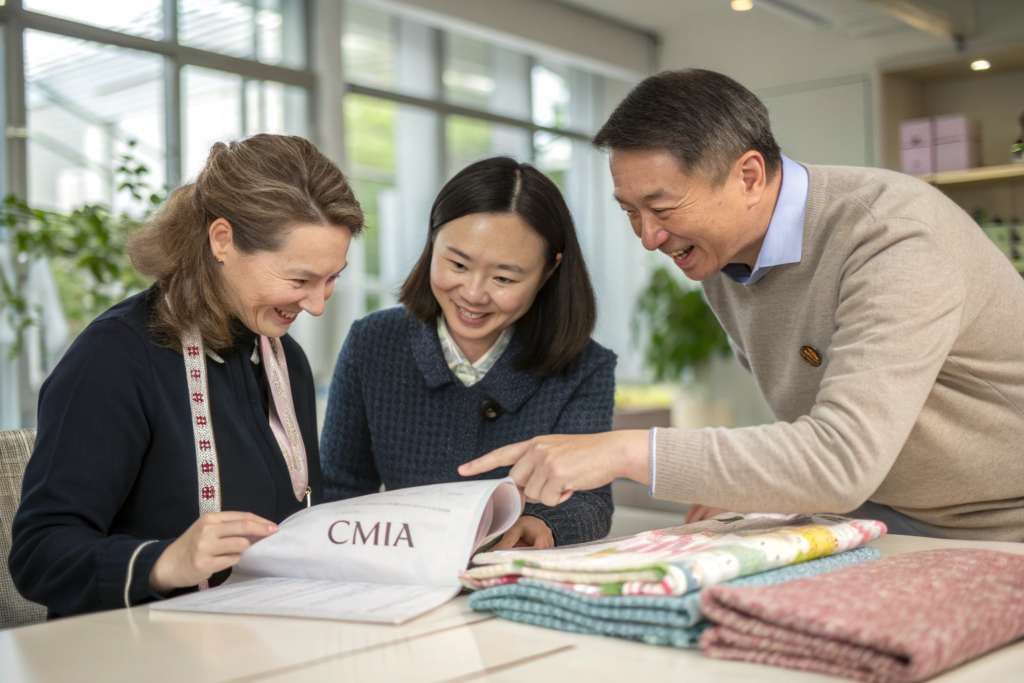
Due diligence is key. Ask for more than just the certificate. Ask for the detailed test reports, understand their internal QC checkpoints, and visit their factory to see the practices firsthand. A true partner will be transparent and even eager to educate you.
What Documents and Evidence Should You Demand?
Always request the official CMIA certification for the product category you are ordering. More importantly, ask for the specific test report from an accredited lab (like SGS, ITS, or a CNAS-accredited domestic lab). This report will list every tested parameter and the exact results. Cross-reference the product description, style number, and batch number on the report with your order.
For instance, when a French brand audits Shanghai Fumao, we don't just show a generic certificate. We pull up the digital files for a similar past order—say, a batch of toddler leggings. We show them the lab report highlighting the formaldehyde result (< 20 mg/kg, passing), the pH value graph, and the physical test logs for snap fastener security. This level of evidence turns a claim into a fact. Learning to interpret third-party lab test reports for textile imports is a critical skill for any serious buyer, and guides are often provided by the testing agencies themselves.
How Does a Certified Supplier Integrate CMIA into Production?
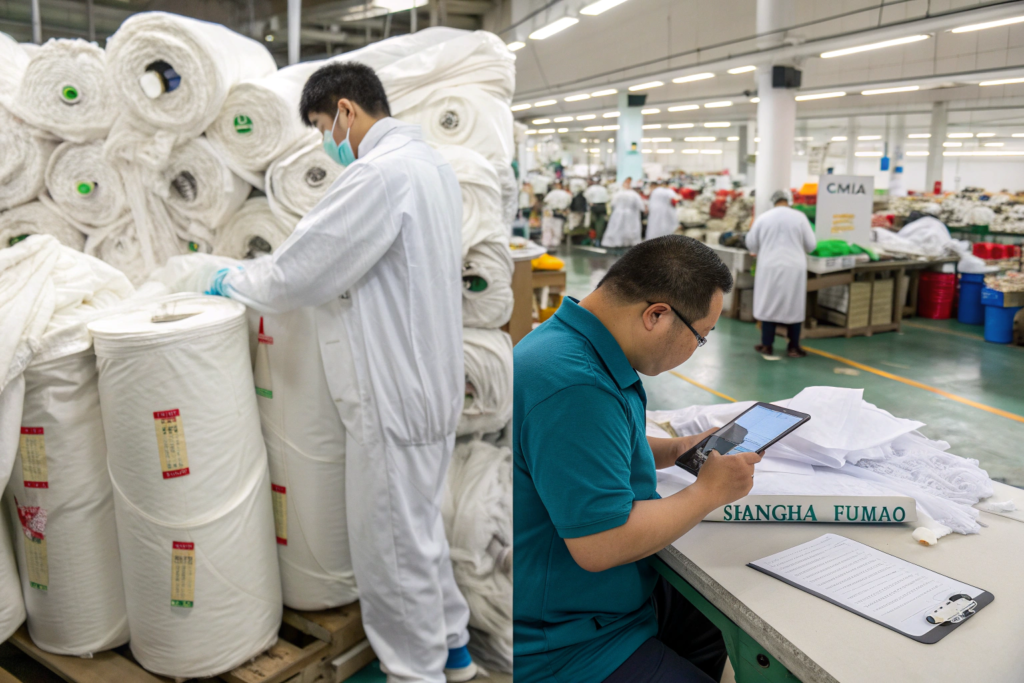
The certification must be built into the workflow, not just checked at the end. Ask about their In-Process Quality Control (IPQC). Do they test incoming fabrics? Do they have a approved supplier list for trims? Do they perform pre-shipment audits on random samples?
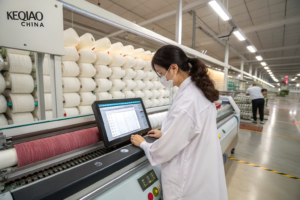
Here's our integrated approach, which I'm proud of: 1) Material Gatekeeping: All incoming fabrics, even from our own weaving mill, are screened for basic chemical parameters. 2) Trim Compliance Database: We maintain a library of CMIA-pre-approved buttons, zippers, and threads. 3) Assembly Checkpoints: On the line, inspectors verify that drawstring lengths comply and that embellishments are securely attached. 4) Final Random Testing: Before shipment, samples from the batch are pulled for final verification. This system, developed over years, ensures consistency. Brands looking for this level of assurance should seek partners experienced in managing a quality management system for kids product manufacturing, a complex process outlined by supply chain experts.
What Are the Common Pitfalls and How to Avoid Them?
Even with the best intentions, mistakes happen. The most common pitfalls stem from assumptions, communication gaps, and cost-cutting pressures. Knowing these traps in advance allows you to steer clear of them and build a smoother, safer supply chain.
The biggest risk is compartmentalizing safety. It cannot be siloed into a "compliance department." It must be a shared responsibility from design to delivery. A minor design change, a last-minute trim substitution, or a new printing technique can all introduce non-compliance.
Why Is "Value Engineering" Dangerous for Kids' Wear?
"Value engineering" is often a euphemism for finding cheaper alternatives. With children's products, this is a dangerous path. Switching to a cheaper dye, a different button supplier, or a non-specialized printing factory to save $0.10 per unit can invalidate the entire certification and introduce hazards.
A cautionary tale: A client wanted to reduce the cost of a popular baby romper. They sourced a seemingly identical but cheaper interlining from a new vendor without notifying us. The rompers passed our visual inspection but failed a random lab test later because the new interlining contained excessive formaldehyde. The entire order had to be remade, costing ten times the intended savings and damaging the relationship. The lesson is to centralize material sourcing with your certified partner. For brands, it's vital to understand the true cost breakdown of CMIA-compliant children's clothing to make informed decisions, not just chase the lowest price.
How Can Design Choices Unintentionally Breach CMIA Rules?
Designers focused on aesthetics can unknowingly create safety issues. Long, loose drawstrings, excessive loose sequins, or prints that cover too much surface area (affecting flammability) are common examples. Early collaboration between your design team and your supplier's technical team is critical.
We have a "Design for Safety" consultative service. When a U.S. startup sent us sketches for a hoodie with intricate, all-over puff print, our technical team flagged it. While beautiful, the thick print layer could potentially affect the fabric's flammability rating for sleepwear. We worked with them to redesign the print as a smaller, decorative motif, keeping the aesthetic while ensuring compliance. This early intervention saved them from a costly mid-production redesign. It highlights the importance of integrating safety standards into the apparel design process, a practice advocated by leading design schools and industry bodies.
Conclusion
CMIA certification is far more than a regulatory hurdle; it is the definitive blueprint for producing children's clothing that is genuinely safe. It transforms abstract concerns about well-being into concrete, measurable, and verifiable actions. In a world where parents are increasingly vigilant and regulations are tightening, this certification is your brand's pledge of integrity. It's not just about avoiding negatives—it's about actively championing a positive standard of care.
Choosing to work with a CMIA-certified partner like Shanghai Fumao is a decision to prioritize tomorrow's well-being over today's shortcut. We have built our processes around this commitment, ensuring that every stitch, dye, and button contributes to a product you can stand behind with absolute confidence. If you're ready to develop kids' wear that combines enchanting design with unwavering safety, let's build that trust together. Contact our Business Director, Elaine, to start a conversation about how we can bring your safest collections to life. Reach her at: elaine@fumaoclothing.com.