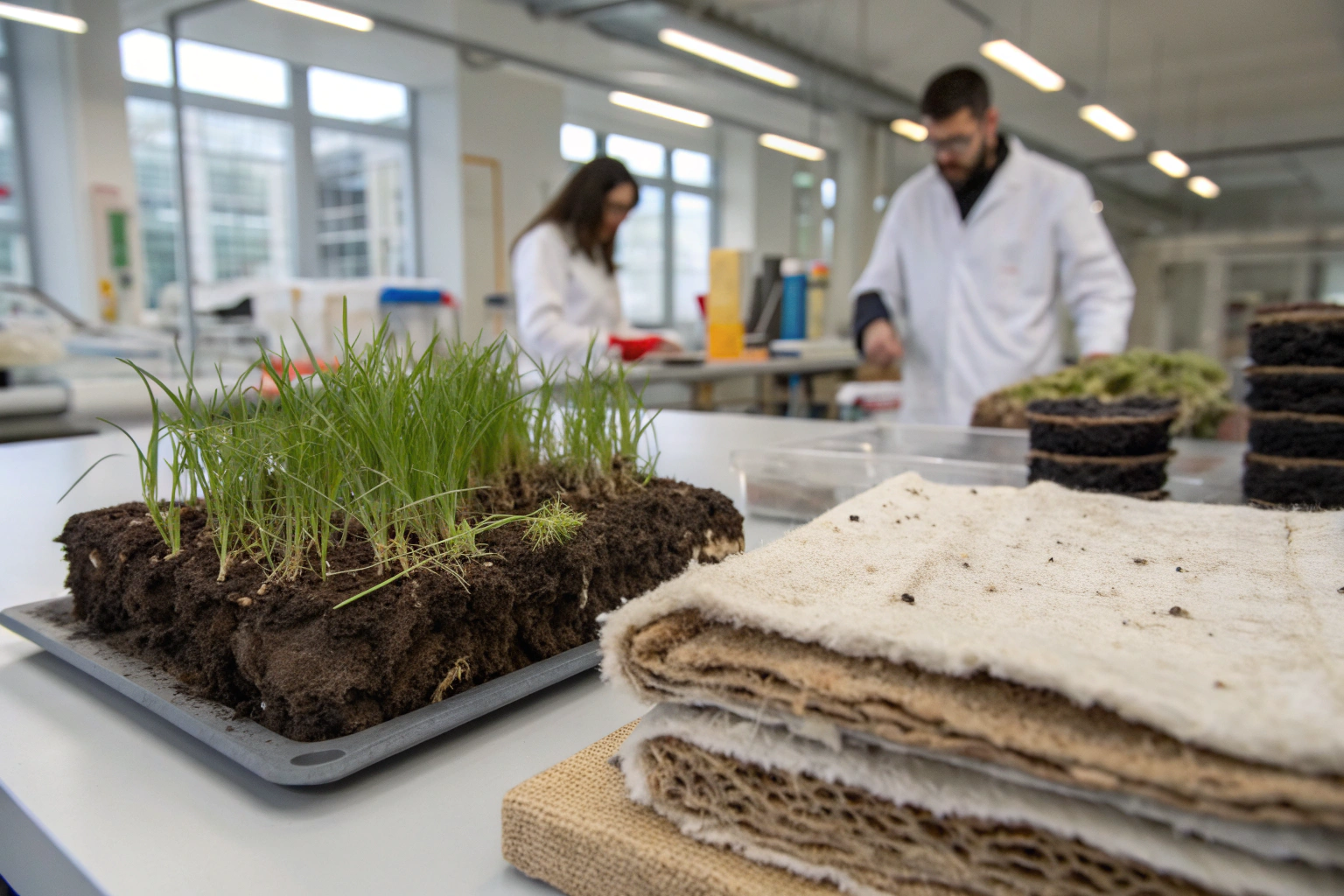
Habitat construction for extreme environments—such as polar research stations, disaster relief shelters, or extraterrestrial bases—faces recurring challenges: high transport costs, limited resupply, and short material lifespans. Traditional textiles eventually degrade, requiring replacement that strains logistics. This creates a fundamental problem: how to design fabrics that can regenerate themselves, reduce waste, and adapt to environmental stressors.
Self-replicating mycelium-based textiles offer a solution by leveraging fungal growth to create living, regenerative fabrics. These materials can be cultivated on-site, repaired when damaged, and decomposed at end-of-life without harmful waste. By merging biology with textile engineering, they offer a pathway toward resilient, sustainable habitats both on Earth and beyond.
This article explores the science, advantages, research progress, and future applications of self-replicating mycelium textiles.
What Are Self-Replicating Mycelium Textiles?
Mycelium is the vegetative network of fungi, composed of microscopic hyphae. When cultivated, these networks grow into dense mats or composites that resemble textiles. In controlled environments, mycelium can regenerate if provided with nutrients and humidity.
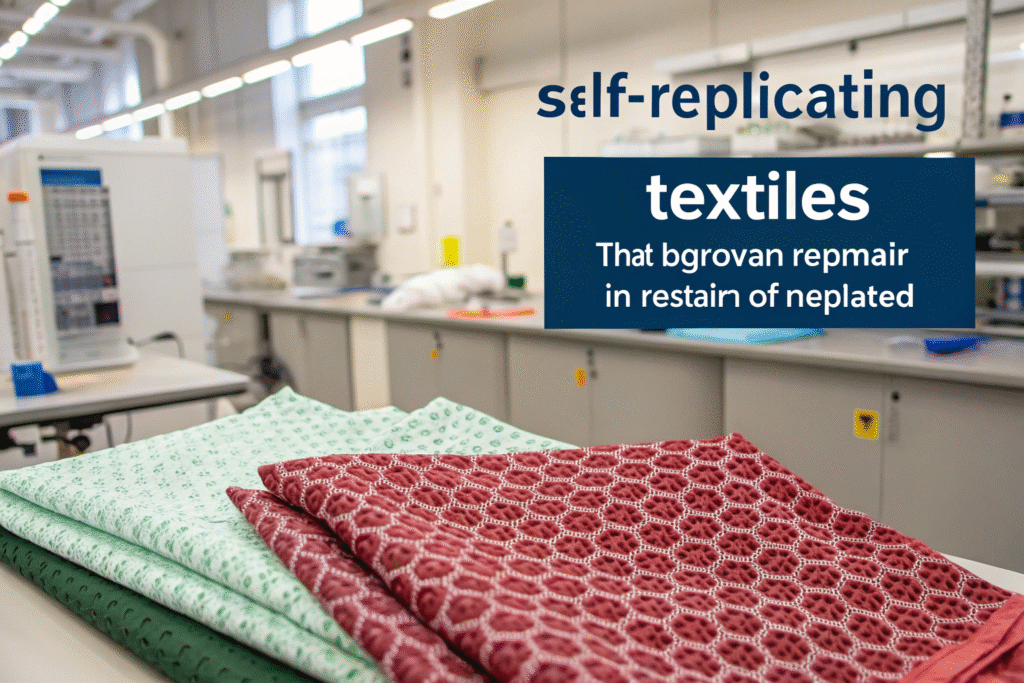
Self-replicating textiles mean fabrics that can be regrown or repaired instead of replaced.
Core Features
- Growth-Based Fabrication: Mycelium expands over substrates such as agricultural waste or textile residues.
- Regenerative Capability: Tears or worn sections can be healed by reseeding growth.
- Porous Microstructure: Offers natural breathability, insulation, and acoustic absorption.
For example, recent studies have cultivated Pleurotus ostreatus on cotton waste to produce composite fabrics with tensile strength comparable to lightweight natural textiles (Taylor & Francis).
Why It Matters
Instead of shipping replacement materials, habitats can grow or repair textiles locally, reducing dependence on fragile supply chains.
What Advantages Do They Provide for Habitats?
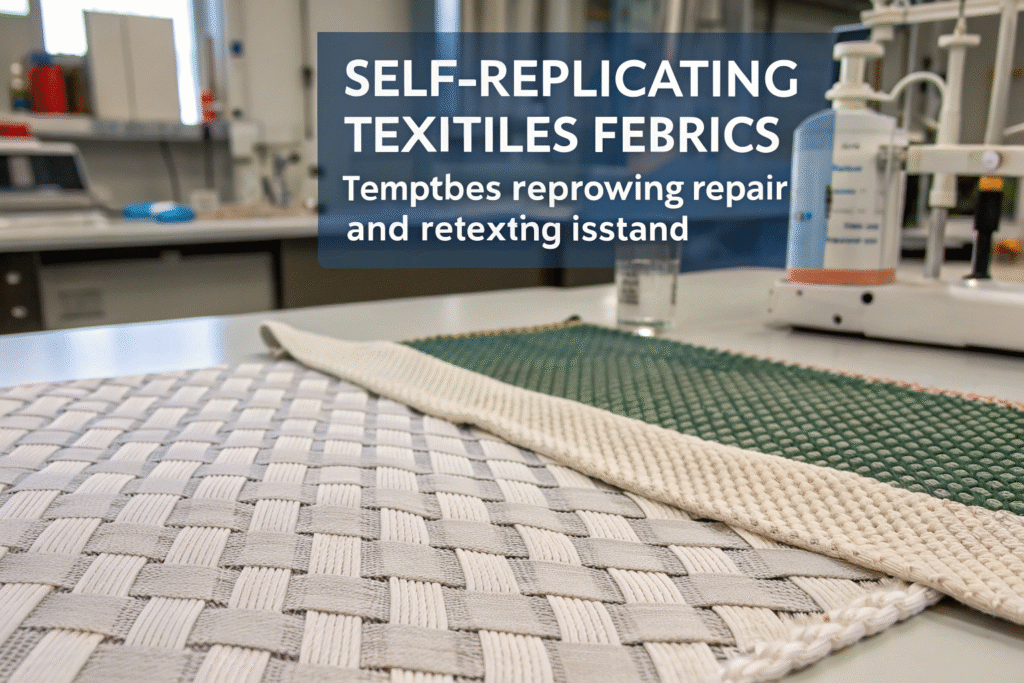
In both terrestrial and extraterrestrial contexts, self-replicating mycelium textiles provide advantages unmatched by synthetics.
Their regenerative and ecological nature reduces logistical burden while improving sustainability.
Key Benefits
- Self-Repair: Damage can be healed with controlled regrowth, extending service life.
- Sustainable Fabrication: Growth on waste substrates reduces environmental footprint.
- Thermal & Acoustic Insulation: Naturally porous structure buffers temperature and sound.
- Lightweight Yet Functional: Reduced density compared to traditional composites.
- Biodegradability: Materials decompose without toxic residues, closing the lifecycle.
For space missions, this means lower launch mass. For Earth habitats, it means turning agricultural waste into functional fabrics (ScienceDirect).
Comparison Table
| Property | Mycelium Textiles | Synthetic Fabrics |
|---|---|---|
| Regeneration | Yes | No |
| Sustainability | High | Low |
| Thermal Insulation | Natural porous | Requires fillers |
| Lifecycle | Biodegradable | Persistent waste |
What Does Research Show?
Research worldwide is moving these textiles from concept to practice.
Scientists are proving that mycelium composites can achieve mechanical and functional performance for real habitat use.

Current Findings
- Hybrid Myco-Composites: Combining mycelium with hemp or flax increases tensile strength (arXiv).
- Textile Waste Integration: Mycelium can grow directly on discarded fabrics, enabling circular economies (Springer Study).
- 3D Growth Control: Printing and mold technologies shape mycelium into panels for architecture and interiors.
Implications
These results prove that mycelium textiles are not only eco-friendly but also viable as structural and functional fabrics for future habitats.
What Challenges Remain?
Despite clear benefits, mycelium textiles face practical limitations.
Strength, environmental control, and scalability are the main hurdles.
Key Challenges
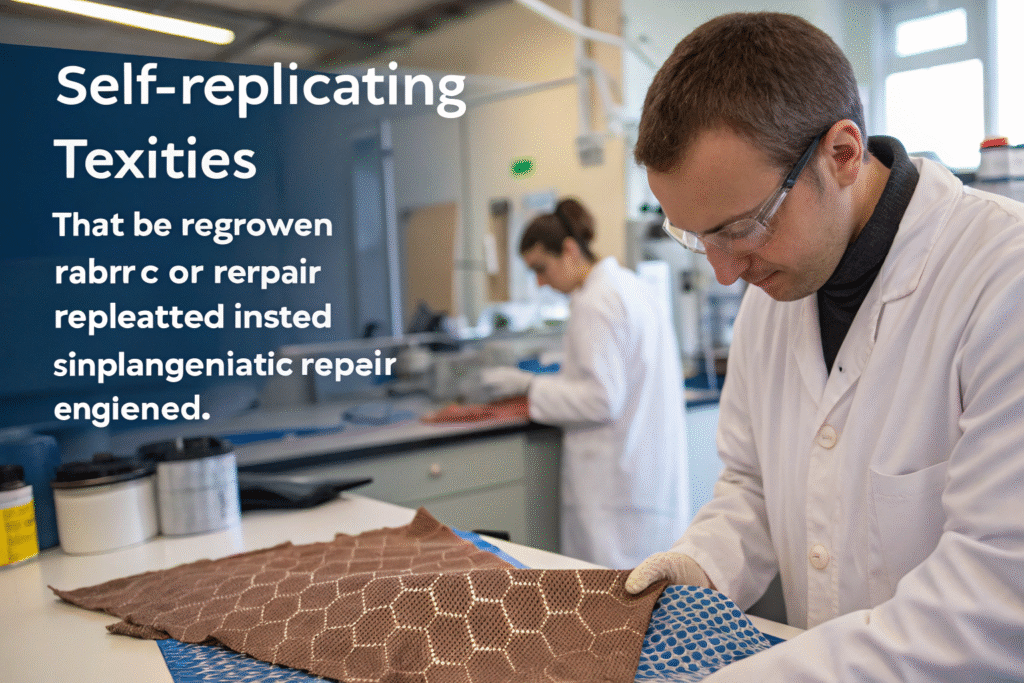
- Mechanical Fragility: Pure mycelium sheets can be brittle without reinforcement.
- Environmental Control: Growth requires humidity and nutrients not always compatible with habitats.
- Uniformity: Consistency across large textile surfaces remains difficult.
- Degradation Risks: Without stabilization, fabrics may decay or host unwanted organisms.
Possible Solutions
- Reinforcing with natural fibers (hemp, linen) for strength.
- Hydrophobic coatings for water resistance.
- Heat or freeze-drying treatments for long-term stability.
These innovations will define how soon mycelium textiles can scale from labs to industrial supply.
Conclusion
Self-replicating mycelium-based textiles represent a major shift from static to living fabrics. Their ability to regenerate, insulate, and biodegrade makes them ideal for sustainable habitat design.
Challenges remain in tensile strength and controlled growth, but global research provides strong evidence of progress. As these materials mature, they could redefine both terrestrial architecture and space exploration.
For companies seeking to pioneer in advanced textiles, Shanghai Fumao offers R&D collaboration, prototyping, and scalable production. To explore next-generation habitat textiles, contact our Business Director Elaine at elaine@fumaoclothing.com.