Let me ask you directly: when your customer develops a skin rash from a new t-shirt, who do you think they blame? The distant, faceless factory in Asia? No. They blame your brand. Your reputation. In the private label game, your factory isn't just a manufacturer—it's your silent business partner. Their compliance becomes your liability. So, why roll the dice?
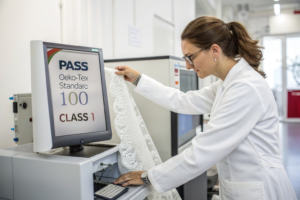
Choosing an OEKO-TEX® certified factory isn't about checking a box for marketing. It's a fundamental risk management strategy that protects your brand from chemical hazards, supply chain failures, and costly recalls. It means your products are tested against a globally recognized standard that bans over 350 harmful substances, from carcinogenic dyes to allergenic finishes. For a private label brand, this isn't an extra cost—it's your license to operate in today's conscious market.
I've seen too many brands learn this the hard way. They chase the lowest price per unit, only to pay tenfold in detention fees, destroyed shipments, and lost customer trust. At Shanghai Fumao, our OEKO-TEX® certification is the backbone of our production. It's how we ensure that the fabrics we produce for your private label don't just look good—they are scientifically proven to be safe. Let's break down why this should be your first filter when selecting a manufacturing partner.
Does OEKO-TEX® Certification Guarantee Faster Market Entry?
In private label, speed is currency. A delayed launch can mean missing an entire season. A common myth is that stringent certifications slow things down. The opposite is true. An OEKO-TEX® certified factory is built for compliance speed. Their systems are pre-audited, their chemical management is disciplined, and their quality control is proactive—not reactive. This structural efficiency shaves weeks off your timeline by preventing the single biggest cause of delay: failure at customs or during your own due diligence testing.
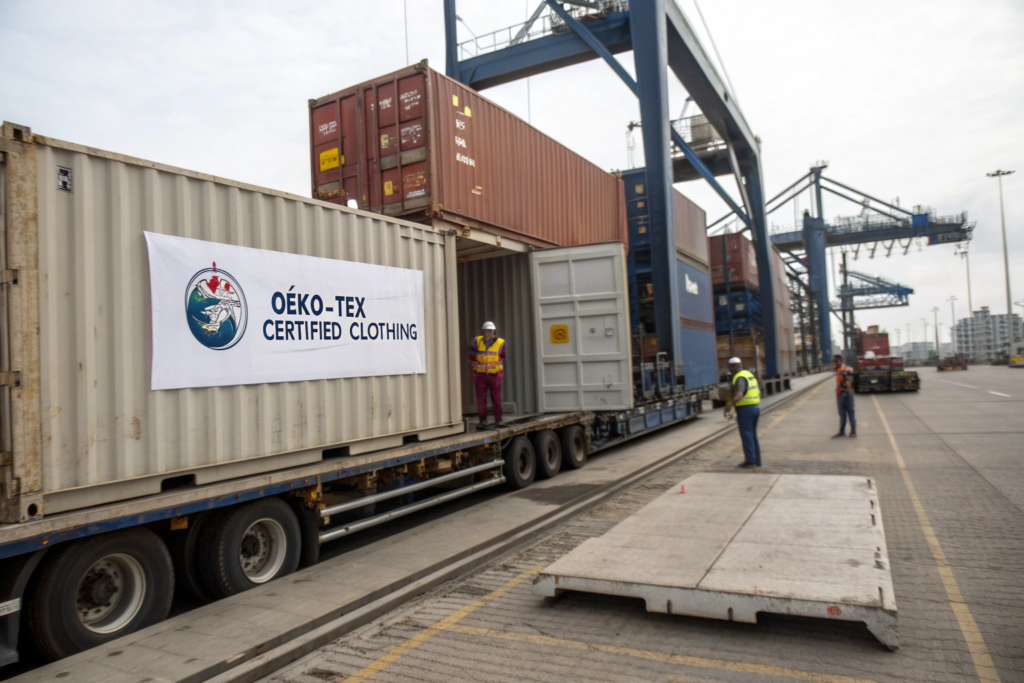
Think of it as a pre-cleared fast lane. When your shipment arrives with verifiable OEKO-TEX® documentation, it signals to customs officials that the goods have already passed rigorous third-party safety checks. This drastically reduces the risk of random physical inspections or lab testing, which can hold your container for 30 days or more. For a UK-based athleisure startup we worked with in 2023, using our certified fabrics meant their shipments consistently cleared Felixstowe port 5-7 days faster than their previous non-certified shipments, giving them a critical edge in restocking bestsellers.
How does certification streamline the pre-production process?
In a certified factory, safety isn't an afterthought—it's engineered into the workflow from fabric development. This eliminates costly back-and-forth during your approval stages.
- Approved Chemical Inventory: Certified factories like ours maintain a "positive list" of dyes, auxiliaries, and finishes that are pre-screened and approved for use. When you request a specific color or function (like moisture-wicking), we pull from this safe inventory. There's no guessing if a chemical will later fail a test.
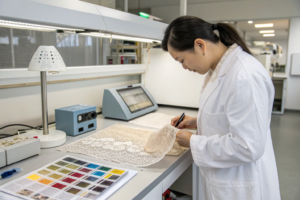
- Integrated Lab Testing: Our CNAS-accredited lab runs in-house tests for key parameters (pH, formaldehyde, colorfastness) throughout production, not just at the end. We caught a potential pH issue in a batch of organic cotton jersey for a French children's wear label during dyeing, adjusted it immediately, and still hit the original sample deadline. This proactive catch saved a 3-week delay.
- Documentation Readiness: All compliance documentation—test reports, certificates, material safety data sheets (MSDS)—is generated as a standard part of the order. You don't have to chase it down weeks later when your compliance officer asks.
This systemized approach is why we can offer a 48-hour development sample turnaround. The infrastructure for safety is already running. For a deeper look at how this integrates into a lean supply chain, industry experts often discuss the benefits of vertical integration in textile manufacturing.
What is the impact on sampling and approval timelines?
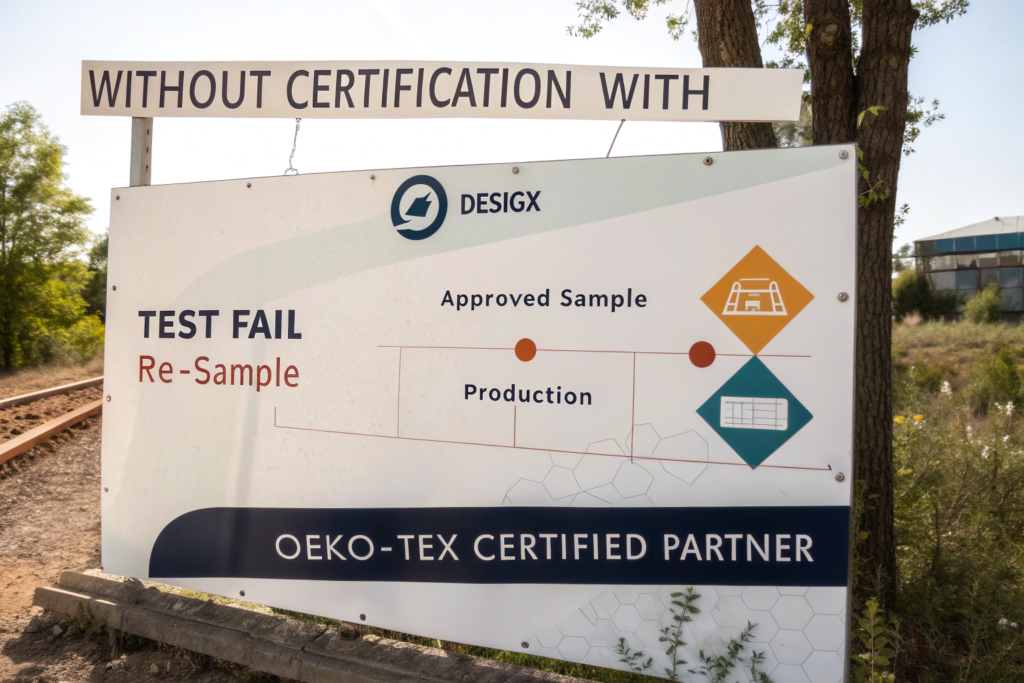
The sampling phase is where most private label timelines bleed. With a non-certified factory, the process is linear: Design -> Sample -> Send for Third-Party Test -> Wait 2-3 Weeks -> Fail -> Revise -> Resample -> Retest. This loop can kill a season.
With an OEKO-TEX® certified partner, the testing is parallel and predictive. Because the inputs (yarns, dyes) and processes are controlled, the first sample is far more likely to pass your own lab tests. For a Los Angeles-based streetwear brand last year, we developed a custom recycled polyester fleece. Their in-house policy required passing their own SGS test. Because we developed it within our certified system, the first strike-off sample passed all tests on the first try, accelerating their production start by a full month. They now use Shanghai Fumao as their benchmark for "right-first-time" sampling.
How Does Certification Mitigate Financial Risk for Your Brand?
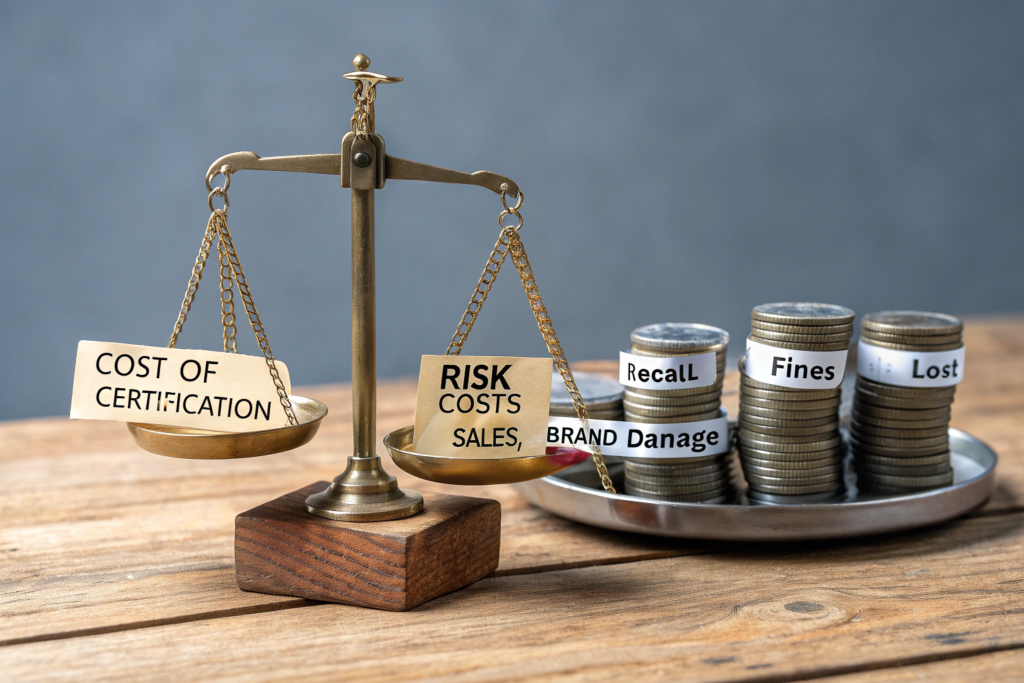
Private label is an investment. You're fronting capital for production, marketing, and inventory. The financial risk isn't just the cost of the goods—it's the catastrophic downstream costs of a failure. An OEKO-TEX® certified factory directly insulates you from these risks. Let's talk real numbers: a recall for chemical non-compliance can cost 10-100 times the value of the goods themselves when you factor in logistics, destruction, regulatory fines, lost sales, and brand rehabilitation campaigns.
Certification is risk mitigation priced into your fabric cost. It's perhaps the most cost-effective insurance you can buy. In 2022, an Australian eco-brand shared with us that their previous supplier's "organic" cotton knits failed for pentachlorophenol (PCP), a banned toxic biocide. The recall cost exceeded AUD $250,000. They switched to producing with us, and our OEKO-TEX® certification (which includes testing for PCP at levels as low as 0.05 mg/kg) gave them and their insurers the confidence to scale. Their risk premium plummeted.
Can it provide leverage in negotiations with retailers?
Absolutely. Major retailers and marketplaces (from Nordstrom to Amazon) are increasingly demanding proof of product safety. Having OEKO-TEX® certification in your pocket is a powerful negotiating tool. It moves you from a vendor who says they are safe to a vendor who can prove it with an internationally recognized certificate.
This proof can:
- Justify a Higher Price Point: Consumers and buyers are willing to pay more for verified safety. You can build this value into your brand story.
- Simplify Onboarding: Retailer vendor onboarding often requires lengthy questionnaires and proof of testing. An OEKO-TEX® certificate can shortcut this process.
- Reduce Liability Insurance Costs: Some insurers look favorably on robust risk management practices, which can lower your premiums.
When a Scandinavian department store chain was auditing potential private label suppliers, our client—a mid-sized Portuguese apparel brand—was able to provide our OEKO-TEX® certificates for the fabrics used in their collection. This closed the deal over a competitor, as it transferred a significant portion of compliance risk away from the retailer.
What are the hidden cost savings of preventing production errors?
Errors in chemical application are often irreversible. A fabric batch dyed with a restricted azo dye cannot be "fixed"—it must be destroyed. In a certified factory, the systems prevent these errors from happening.
- Zero Defect in Chemical Safety: The controlled substance list and regular audits make a chemical mishap almost impossible. This means no lost raw materials, no wasted production capacity, and no disposal costs for hazardous waste.
- Consistent Quality: The same disciplined processes that ensure chemical safety also ensure color consistency, shrinkage control, and durability. This leads to higher yields and fewer seconds or rejects. Our own data shows a 98% first-pass yield on certified production runs.
- Efficient Logistics: As mentioned, faster customs clearance means lower demurrage and storage fees, and your capital isn't tied up in floating inventory.
For a comprehensive understanding of true costing, many entrepreneurs read guides on calculating true landed cost for imported apparel. Certification is a key line item that saves money across almost all other categories.
Does It Future-Proof Your Brand Against Regulation Changes?
Global chemical regulations are a moving target. REACH updates its SVHC (Substances of Very High Concern) list regularly. California's Proposition 65 adds new chemicals. The EU is constantly tightening restrictions on PFAS, phthalates, and more. For a private label brand, tracking and complying with every market's laws is a monumental, expensive task.
An OEKO-TEX® certified factory is your regulatory early-warning system and compliance partner. The OEKO-TEX® standard is updated annually, incorporating new scientific findings and often anticipating regulatory changes. By partnering with a factory that is committed to this standard, you effectively outsource your regulatory tracking. Their compliance becomes your compliance.
How does the certification adapt to new scientific findings?
The OEKO-TEX® International Association has working committees of scientists and toxicologists who continuously review new research. When a substance is found to be hazardous, it is added to the restricted substances list (RSL) in the next annual update. Certified factories are then obligated to reformulate or eliminate that substance to maintain their certification.
A prime example is PFAS. Long before blanket regulatory bans, OEKO-TEX® began restricting specific PFAS compounds. Factories like ours had to develop alternative water-repellent technologies years ago. So when a major US state announced a PFAS ban in 2023, our clients' products were already compliant, while competitors scrambled. This proactive adaptation is invaluable. Resources like the Sustainable Apparel Coalition's Higg Index also track these shifts, but OEKO-TEX® provides the actionable, product-level framework.
What about compliance in multiple export markets?
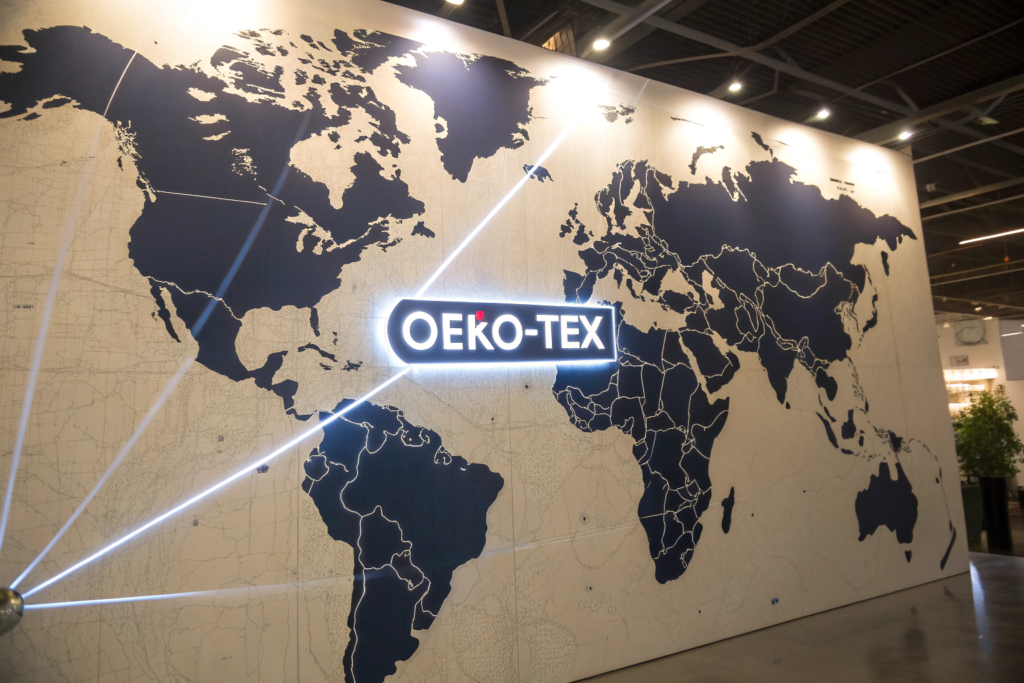
If you sell to the EU, US, and Japan, each region has its own chemical regulations. Managing separate production runs or conducting multiple tests is a nightmare. OEKO-TEX® STANDARD 100, particularly with its Product Class I (for babies), is designed to meet or exceed the strictest global regulations. A fabric certified for Product Class I is de facto compliant with EU REACH, US CPSIA, and Japanese Law 112.
This "one test, all markets" approach is a massive advantage. For a Canadian private label brand we work with that sells online globally, this universality is crucial. They produce one SKU of our OEKO-TEX® certified organic cotton pajamas, and they can sell it with confidence in North America, Europe, and Australia without worrying about differing compliance paperwork. It simplifies their inventory, marketing claims, and legal oversight immensely.
How Does Certification Strengthen Your Brand Story & Consumer Trust?
Today's consumer doesn't just buy a product; they buy the values behind it. "Safe" and "non-toxic" have moved from niche concerns to mainstream expectations, especially in categories like children's wear, activewear, and basics worn close to skin. An OEKO-TEX® certification is a third-party, credible character in your brand story. It's a symbol that transcends language and greenwashing, offering tangible proof of your commitment to consumer well-being.
This trust converts. It reduces purchase hesitation, justifies premium pricing, and fosters brand loyalty. When you can say, "Our garments are certified free from over 350 harmful substances by OEKO-TEX®, the world's leading textile safety standard," you're not making a vague "eco-friendly" claim—you're stating a verifiable fact. At Shanghai Fumao, we see our clients using our certificates in their marketing, on their hangtags, and in their product descriptions. It closes sales.
How can you leverage it in marketing and packaging?
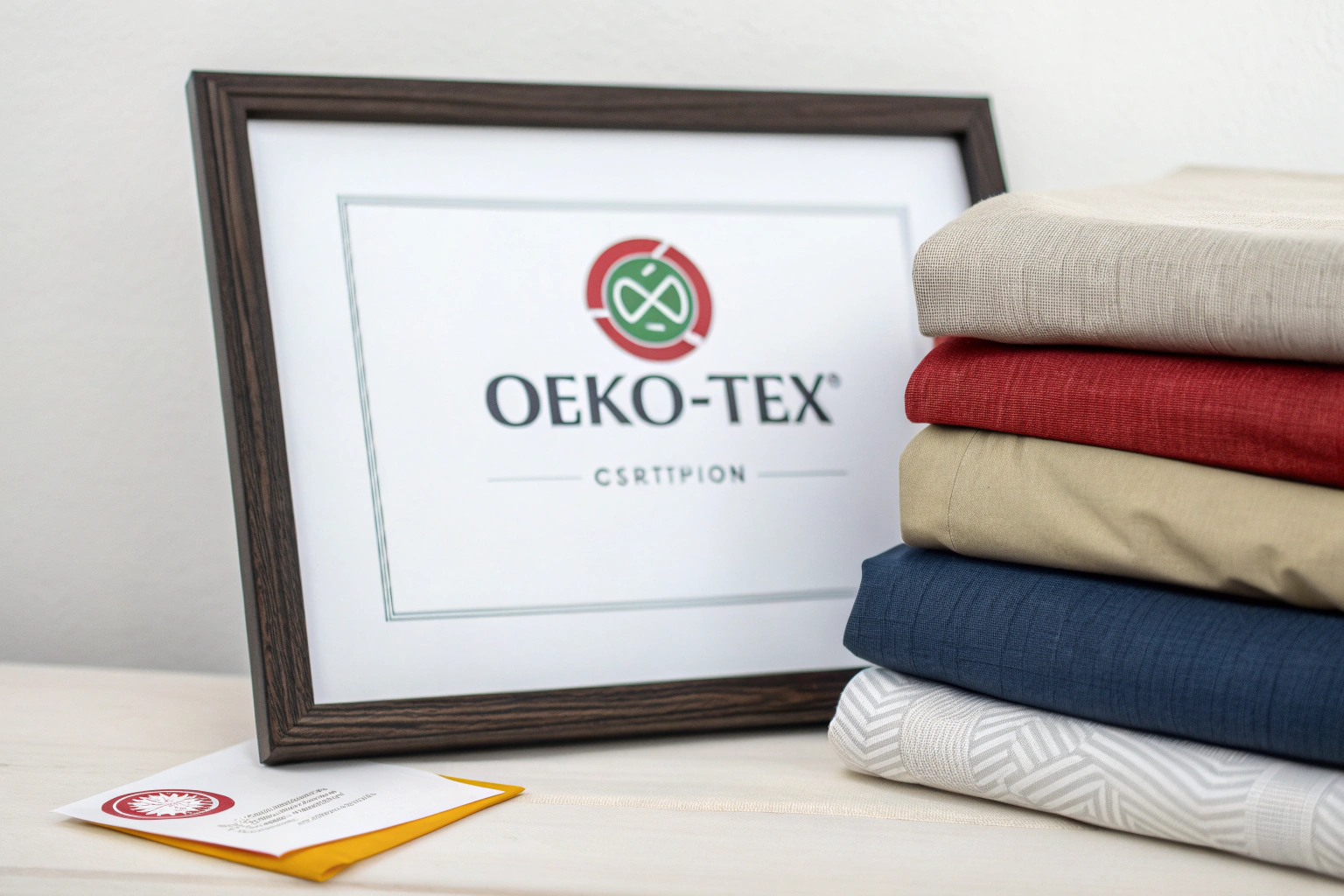
The OEKO-TEX® label is a marketing asset. You are licensed to use it on your products and marketing materials if the certified component constitutes a significant percentage of the product (learn the exact rules on their site). This visual badge does the heavy lifting of communicating safety.
- On Hangtags & Labels: The recognizable label assures safety at the point of purchase.
- E-commerce Product Pages: Display the certificate and explain what it means. Educate your customer.
- Social Media & Content: Create posts explaining why you chose a certified factory. This builds narrative depth. For example, you could say, "We partner with OEKO-TEX® certified factories because we believe your skin shouldn't be a testing ground for chemicals."
- Press & Retailer Pitches: It's a concrete differentiator that journalists and buyers understand.
A Dutch maternity wear brand using our fabrics features the OEKO-TEX® label prominently on their website. They told us it's one of the top three FAQs from customers and a key reason they win over competitors who only talk about design.
Does it align with broader ESG (Environmental, Social, Governance) goals?
Yes, significantly. While OEKO-TEX® STANDARD 100 focuses on product safety, it intersects with environmental (E) and social (S) governance.
- Environmental: By restricting persistent, bioaccumulative toxins (like heavy metals, PFAS), it reduces the chemical burden on waterways near factories and at the product's end-of-life.
- Social: The factory audit component includes checks on working conditions related to chemical handling, ensuring workers are protected from hazardous substances. This aligns with responsible sourcing principles.
For a private label brand building an ESG report, sourcing from certified factories is a strong, measurable data point under both "Sustainable Products" and "Responsible Supply Chain." It shows investors and stakeholders that you are managing downstream environmental and social impacts.
Conclusion
Choosing an OEKO-TEX® certified factory for your private label clothing is one of the most strategic decisions you can make. It transcends a simple compliance checkmark to become a core driver of speed, financial stability, regulatory agility, and brand equity. In a crowded market, it provides the undeniable proof that separates serious brands from the rest.
It transforms your supply chain from a potential liability into a verified asset. You gain a partner whose systems are designed to prevent problems, not just react to them. This allows you to focus on what you do best: designing, marketing, and building a loyal community around your brand. The confidence that your products are safe is the foundation upon which lasting brands are built.
Ready to build your private label collection on a foundation of proven safety and reliability? Partner with a factory that embeds these principles into every meter of fabric. Let's discuss how Shanghai Fumao's OEKO-TEX® certified vertical production can bring your designs to life with uncompromising quality and integrity. For a direct consultation on your next collection, contact our Business Director, Elaine, at elaine@fumaoclothing.com. Let's create something safe, beautiful, and successful together.