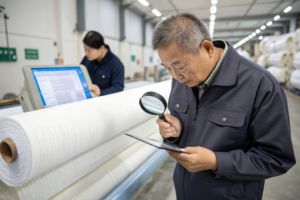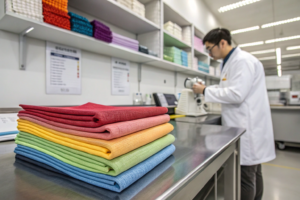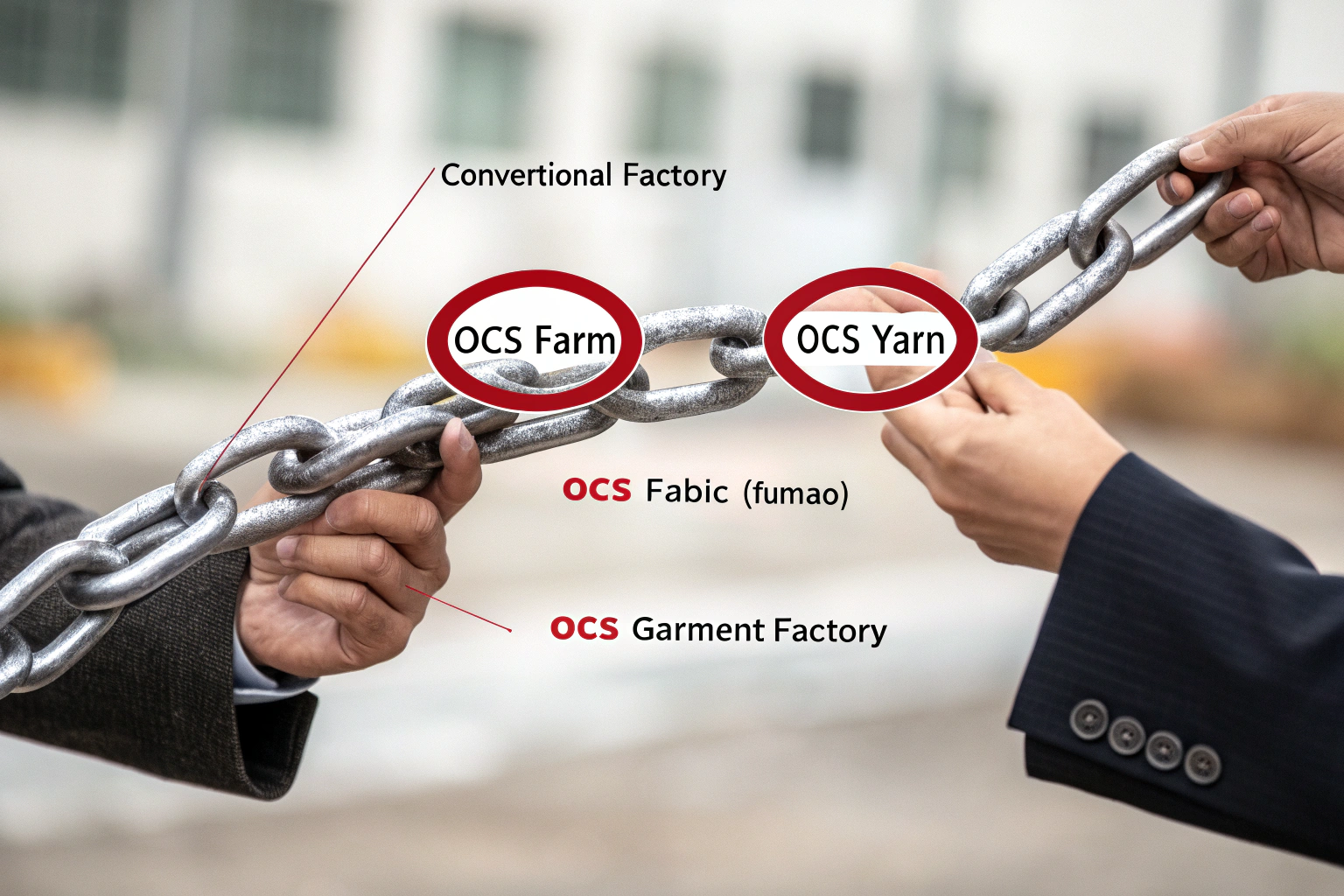
You've done the hard work. You've sourced beautiful OCS-certified organic cotton fabric from a trusted mill, your designs are final, and you're ready for production. Then you hand that precious, traceable fabric to a conventional garment factory. What happens next? Too often, the answer is: your certified integrity disappears the moment the fabric is cut. The factory mixes your organic rolls with conventional ones on the sewing line, uses non-compliant threads and trims, and provides zero documentation. Suddenly, your "certified organic" garment is uncertifiable—and your brand is exposed to greenwashing accusations at the final, most visible stage. This is the critical gap that an OCS-certified garment factory fills.
Choosing an OCS-certified garment factory isn't about adding another certificate to your supplier list. It's about closing the loop on your supply chain's integrity. It ensures the rigorous traceability you've paid for in your fabric isn't broken during the transformation into a finished product. At Shanghai Fumao, while we are primarily a fabric manufacturer, we work exclusively with OCS-certified apparel partners for our full-package clients because we've seen the disasters that happen when you don't. This final step is what turns a certified component into a certified, market-ready product that you can label and sell with absolute confidence.
Think of your supply chain as a chain of trust. Every link must be strong. The OCS-certified fabric mill is one link. The OCS-certified garment factory is the final, crucial link that connects directly to your customer. If that last link is weak, the entire chain fails. Let's examine why this final certification is non-negotiable for serious brands.
The Final Mile: Preserving Chain of Custody in Cut-Make-Trim (CMT).
The core function of an OCS-certified garment factory is to execute and document the final transfer of custody of the organic content. From the moment the certified fabric rolls enter their warehouse to when the finished garments are packed, every step is governed by the OCS protocol for handling certified materials. This isn't just about sewing skill; it's about systemic control.
In a certified factory, your OCS fabric (arriving with its Transaction Certificate from us) is logged into a segregated inventory. It is cut in batches that are kept physically separate from conventional fabric cuttings on the production floor. Approved, documented OCS-compliant threads, labels, and trims are used. The output—the number of finished garments—is reconciled against the fabric input, accounting for standard cutting waste. Finally, the factory issues a new, final Transaction Certificate for the finished garments. This TC names your brand as the consignee and is your proof that the organic content was preserved through manufacturing.

What specific risks does a non-certified factory introduce?
The risks are operational and legal:
- Physical Contamination: Fabric rolls stored on the same rack, cuttings mixed on the same table, or threads swapped can adulterate your product.
- Documentation Break: The certified chain ends at the fabric mill. You have no auditable proof linking the finished garment back to the organic content.
- Labeling Fraud: The factory may incorrectly attach your "100% Organic" labels without verification, creating a false claim.
- Retailer Rejection: Major retailers are now asking for evidence of final manufacturing certification. A fabric TC alone is insufficient.
We witnessed a case in Q3 2023 where a Scandinavian brand used a high-quality, non-certified factory in Vietnam. The factory mixed the organic cotton interlock from us with a similar-looking conventional interlock for another client during cutting. The brand discovered the error only after a retailer’s spot-check found inconsistent fiber content in garments from the same batch. The entire shipment was rejected, resulting in a $80,000 loss and a six-month suspension from the retailer's vendor list. This disaster could have been prevented by a certified factory's segregation protocols. This underscores the importance of managing cut-and-sew risk in sustainable apparel production.
How does the OCS certification audit a garment factory?
The audit focuses on the factory's ability to maintain integrity. Auditors check:
- Receiving & Storage: Procedures for verifying incoming TCs and storing certified fabrics/materials separately.
- Production Control: How cutting lots, sewing bundles, and trim kits are labeled and kept distinct.
- Mass Balance: Tracking fabric input (in kg or meters) against garment output (in pieces), with a calculated waste factor.
- Documentation Control: Systems for generating accurate, compliant outgoing TCs.
A certified factory has these processes embedded in its daily workflow, not as an add-on. For example, their cutters will use clearly marked, color-coded bins for OCS fabric scraps to prevent them from being mixed with general waste, which could later be recycled as "unidentified" content.
Beyond Fabric: Controlling Trims, Threads, and Labeling.
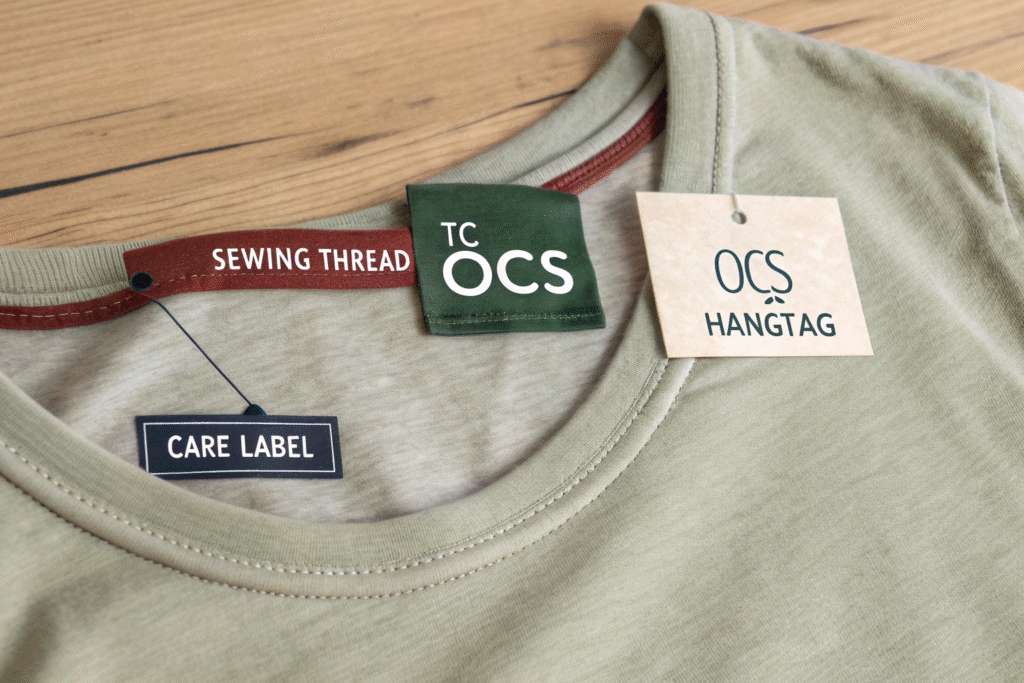
Your garment isn't just fabric. An OCS-certified garment factory ensures that all components that form part of the organic content claim are accounted for and compliant. This includes the sewing thread (often polyester or cotton), the care label fabric, and even the size tabs. If you claim a garment is "100% organic cotton," every fiber in its main components must be certified organic or be excluded from the claim.
A certified factory maintains a list of approved trim suppliers that can provide evidence for their materials (e.g., a TC for organic cotton thread or a statement of non-organic content for polyester thread). They understand the rules: for an OCS 100 claim (95-100% organic), the small percentage of non-organic content (like polyester thread) must be functionally necessary and is strictly limited. For an OCS Blended claim, they track the organic percentage accurately across the final product mix.

Why is certified thread so important?
If the main fabric is 100% organic cotton but the sewing thread is 100% conventional polyester, the final product's organic content percentage drops—for example, to perhaps 98%. For an OCS 100 claim, this is still acceptable, but it must be documented. If unaccounted for, it represents an inaccuracy. More critically, if a brand claims "100% organic cotton" and a consumer finds a polyester thread, it can spark a greenwashing allegation, even if the percentage impact is small. The certified factory manages this by sourcing from thread suppliers who can provide documentation, whether it's a TC for organic cotton thread or a manufacturer's declaration for synthetic thread.
How does a certified factory guarantee accurate labeling?
Labeling is the final, critical communication to the consumer. A certified factory will have a strict labeling protocol tied to the production order and its accompanying TC. They verify that:
- The care label content (e.g., "100% Organic Cotton") matches exactly what is authorized by the brand and supported by the TC.
- The correct OCS hangtags or logos are attached to the correct garment batch.
- There is a physical check to prevent mixing labels between OCS and conventional production runs.
In one of our partner factories, each OCS sewing line has a dedicated supervisor who cross-checks the labels against the work order before bundling garments for packaging. This simple, disciplined step prevents a catastrophic labeling error that could lead to legal action for mislabeling.
| Garment Component | OCS 100 Consideration | OCS Blended Consideration | Certified Factory's Role |
|---|---|---|---|
| Main Fabric | Must be 95-100% organic. | Organic % is precisely tracked. | Verify incoming TC, manage segregation. |
| Sewing Thread | Typically non-organic (functional). Must be documented. | Included in the non-organic portion. | Source from documented suppliers, keep records. |
| Care Label Fabric | Should be organic or minimal non-organic. | Tracked accordingly. | Use approved, documented materials. |
| Hangtags/Trims | Do not count toward content. | Do not count toward content. | Ensure correct labels are attached to correct batch. |
The Business Case: Risk Mitigation and Market Access.
Choosing an OCS-certified garment factory is a strategic business decision with a clear ROI centered on risk reduction and revenue protection. The premium for using a certified CMT partner is typically a small percentage of the total product cost, but it insures you against far greater potential losses.
Market Access: As discussed, major retailers and e-commerce platforms are the new regulators. Amazon's Climate Pledge Friendly, Target's sustainability standards, and Zalando's do.MORE program increasingly require proof of final product certification, not just fabric certification. An OCS-certified garment factory provides the complete documentation pack you need for approval. Without it, you may be locked out of these crucial sales channels.
Speed and Certainty: When a retailer requests evidence, you can respond immediately with the factory-issued TC. There's no frantic scrambling, no begging the garment factory for paperwork they don't understand. This agility can be the difference between securing a purchase order and losing it to a more prepared competitor.
Can a certified factory help with customs clearance?
Yes, indirectly but significantly. Accurate country-of-origin labeling and fiber content declaration are critical for customs. The precise documentation from a certified factory supports accurate HS code classification and import declarations. In the event of a customs audit, the TC chain is strong supporting evidence for your fiber content claim, reducing the risk of detention, testing, or penalties for misdeclaration. This is part of a broader strategy for ensuring smooth customs clearance for ethical fashion imports.
What about cost? Is the premium for a certified CMT justified?
Let's break it down with a real example from a client, an eco-conscious DTC brand from California. In 2023, they compared two factories for a run of 10,000 organic cotton dresses:
- Factory A (Non-certified): Quoted $8.00 per dress.
- Factory B (OCS Certified): Quoted $8.40 per dress (a 5% premium).
They chose Factory B. Six months later, a key online retailer requested full OCS documentation for a wholesale deal worth $200,000. Factory B provided perfect TCs in 24 hours. Factory A could only provide an invoice. The brand secured the deal. The total premium paid for certification was $4,000. The certified documentation helped secure a deal worth 50 times that premium. The business case is clear: it's a low-cost insurance policy that enables high-value opportunities.
How to Vet and Partner with an OCS-Certified Garment Factory.
Finding the right partner requires moving beyond Alibaba filters. Here is a practical checklist developed from our experience bridging fabric production with apparel manufacturing for brands.
1. Demand Proof of Scope: Request their OCS certificate. Ensure it lists "garment manufacturing" or "cut and sew" under scope, not just "trading." Verify the issuing body and expiry date.
2. Audit Their Trim Management: Ask how they control and document threads, labels, and elastic. Do they have approved supplier lists? Can they show sample documentation for trims?
3. Request a Reference TC: Ask for an anonymized sample of a finished garment TC they have issued. Examine its detail and accuracy.
4. Assess Their Understanding: Have a technical call. Ask, "Walk me through what happens when a roll of our OCS fabric arrives at your door." Their answer should immediately cover receiving checks, segregation, labeling, and documentation flow.
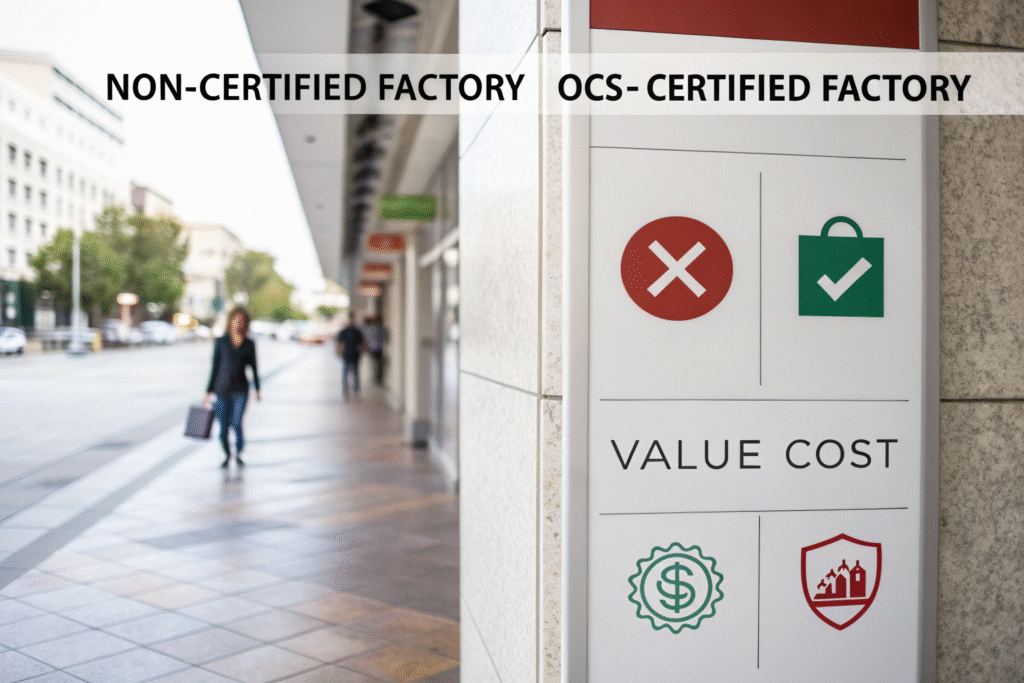
What questions should I ask during a facility tour (virtual or in-person)?
- "Can you show me your designated storage area for certified materials?"
- "How do you physically separate OCS and conventional production on the sewing floor?"
- "Where do you store OCS cutting waste, and how is it disposed of or documented?"
- "Who in your QC team is responsible for the final TC issuance, and what is their process?"
A competent factory will be proud to show these controls. We facilitated a virtual tour between our client and their OCS-certified partner factory in Jiangsu, where the factory manager specifically pointed out the color-coded rolling racks used only for OCS projects. This visible commitment is what you need.
How does Fumao assist in this process?
While Shanghai Fumao is your fabric source, our value extends to integration. For clients opting for our full-package service, we only work with a vetted shortlist of OCS-certified garment factories with whom we have aligned systems. We can:
- Introduce pre-vetted partners whose certification and quality we trust.
- Facilitate Communication to ensure the fabric TC data flows correctly into their production system.
- Act as a Liaison on technical traceability issues, ensuring a seamless chain from our dock to their shipping.
This integrated approach removes the guesswork and risk for you, creating a true certified supply chain partnership. It’s the logical extension of our commitment to integrity. Learn more about this model in discussions on building vertically responsible supply chains.
Conclusion
Choosing an OCS-certified garment factory is the definitive step in claiming true sustainability leadership. It transforms your investment in certified materials into a market-ready, defensible, and valuable product asset. It protects your brand from the immense operational, financial, and reputational risks that lurk in the final, most complex stage of production. In today's market, traceability isn't complete until it reaches the finished garment in the box.
This choice is no longer a luxury for niche brands; it is a prerequisite for scaling sustainable apparel businesses that wish to access major retailers, build unshakeable consumer trust, and operate with legal security. The certified garment factory is the guardian of your claim at the point of no return.
Partner with suppliers who understand this complete picture. At Shanghai Fumao, we provide the certified foundation and connect you with certified manufacturing partners to build upon it. Don't let your integrity be cut and sewn away.
Ready to ensure your organic garments are truly certified from field to final stitch? Contact our Business Director, Elaine, to discuss our full-package OCS solutions or to get referrals to our network of certified garment partners. Email elaine@fumaoclothing.com to secure your end-to-end traceability.