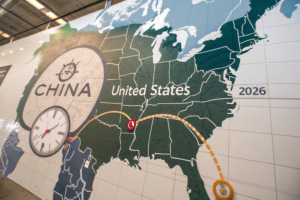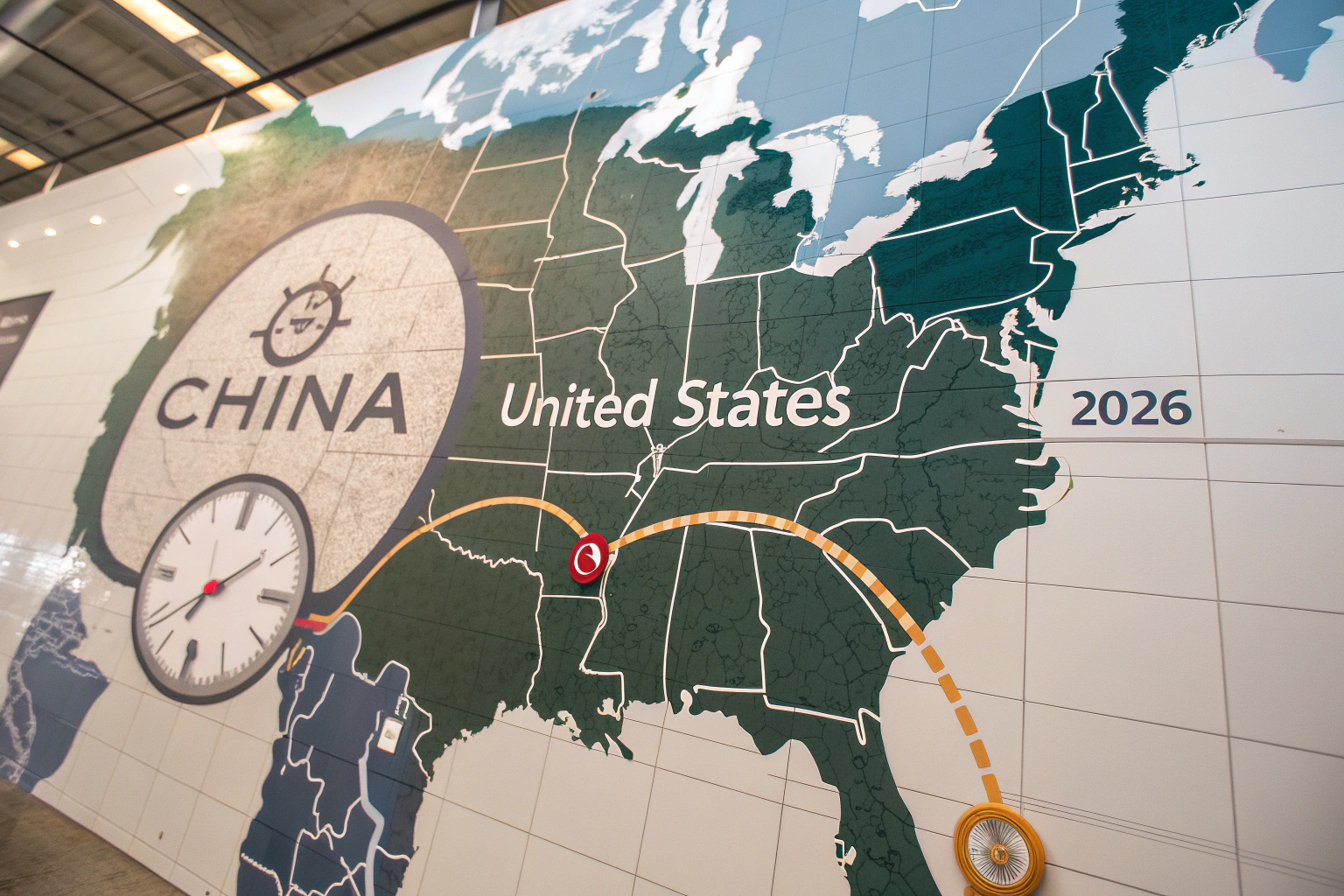
You've been reading the trade headlines for five years. "Sourcing shifts to Vietnam." "Bangladesh is the new China." "Diversify away from China risk." Maybe you followed that advice. Maybe you moved production to Southeast Asia, dealing with longer timelines, quality headaches, and communication challenges. And now you're hearing something unexpected: US brands are quietly shifting back to China for fabric sourcing in 2026. Not all of them, not completely, but the pendulum is swinging.
I'm seeing it firsthand at Shanghai Fumao. In the first half of 2026, we've onboarded 14 new US-based brands who had been sourcing elsewhere for the past 3-4 years. They're coming back because the math has changed. What looked like a simple decision in 2021—"get out of China, save on tariffs, diversify risk"—has turned into a complex calculation where China's advantages are reasserting themselves. Let me walk you through why this is happening and what it means for your sourcing strategy.
What changed in Vietnam and Bangladesh that's pushing buyers back?
The promise of Southeast Asia was simple: lower labor costs, tariff advantages, and diversification. The reality has been more complicated. By 2026, the gap between promise and reality has become impossible to ignore for many US brands. The problems aren't new—they've just gotten worse as volumes increased and infrastructure failed to keep pace.
A New York-based activewear brand came back to us in early 2026 after three years sourcing in Vietnam. Their story is typical: they moved expecting 20% savings. What they got was 8% savings with 40% more headaches. Labor costs in Vietnam rose 35% between 2021 and 2025. Electricity shortages caused production stoppages. Port congestion added weeks to every shipment. When they calculated total landed cost including their own time fixing problems, China was actually cheaper.
How have labor costs in Southeast Asia caught up to China?
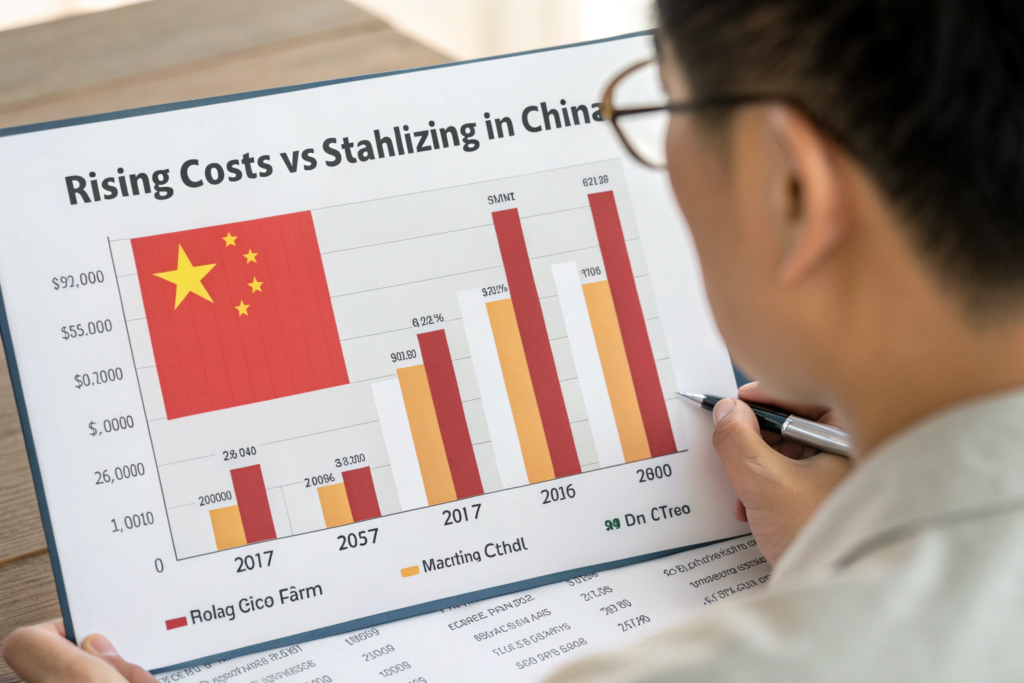
This is the biggest surprise for most buyers. Everyone assumes China's labor costs are sky-high and Southeast Asia's are low. The reality in 2026 is more nuanced. China's coastal manufacturing wages have stabilized after years of increases. In some regions, they've actually adjusted downward slightly as automation reduces labor dependence.
Meanwhile, Vietnam's wages have been rising 8-12% annually. Skilled workers are scarce. Factories poach each other's employees. Minimum wage increases are legislated and enforced. A garment worker in Ho Chi Minh City now earns about 75% of what a comparable worker in coastal China earns. The gap has narrowed dramatically.
A Denver-based outdoor brand shared their 2025 labor cost analysis with us. For a complex technical jacket, labor represented 22% of their China-made cost and 18% of their Vietnam-made cost in 2021. By 2025, China labor was 20% and Vietnam labor was 19%. The advantage shrank from 4 percentage points to 1. A comprehensive labor cost comparison on the International Labor Organization site shows the narrowing gap across the region.
Beyond wages, productivity differences matter. Chinese factories have more experienced workers, better automation, and more efficient systems. A Vietnamese worker might earn less per hour but produce fewer garments per hour. When you calculate cost per garment, not cost per hour, the gap shrinks further.
What infrastructure problems are plaguing Vietnam and Bangladesh in 2026?
Vietnam's infrastructure boom hasn't kept pace with its manufacturing boom. Roads are congested. Ports are overwhelmed. The country added manufacturing capacity faster than it added roads, railways, and port capacity to support it.
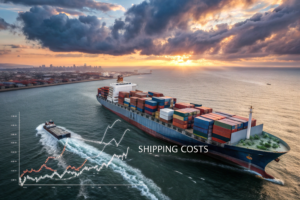
A Toronto-based brand had 12 containers stuck at Cat Lai port in Ho Chi Minh City for 18 days in late 2025. The problem: a new customs inspection system created massive backlogs. Their shipment missed its US distribution window. They air-freighted 40% at $6.50 per unit, wiping out any savings from Vietnam sourcing.
Bangladesh faces similar challenges plus energy shortages. In 2025, Dhaka experienced 120 days of scheduled power cuts. Factories ran generators at double the grid power cost, and those costs passed to buyers. A Chicago-based brand saw their Bangladesh supplier impose a 15% "energy surcharge" in 2025, erasing most of the labor cost advantage.
China's infrastructure, by contrast, just works. Ports operate 24/7. Roads connect factories to ports efficiently. Power is reliable. When you're paying for speed and reliability, China delivers. A infrastructure quality comparison on the World Bank Logistics Performance Index ranks China far above Vietnam and Bangladesh in every logistics category.
How has the "China Plus One" strategy backfired for some brands?
The strategy made sense: keep some production in China, add another country for diversification. But execution has been harder than theory. Managing two supply chains in two countries with different languages, different regulations, and different quality standards has stretched small and mid-sized brands beyond their capacity.
A Seattle-based brand tried the China Plus One approach in 2023-2025. They kept 60% in China and moved 40% to Vietnam. Their quality control costs doubled. Their team spent twice as much time managing suppliers. Their fabric (from China) shipped to Vietnam, was inspected there, then shipped to the US—adding weeks and extra handling damage. By 2026, they moved the Vietnam portion back to China and simplified their life.
The irony: China Plus One increased risk for many brands instead of reducing it. They became dependent on two supply chains, each with its own vulnerabilities, rather than one reliable chain. A analysis of supply chain complexity costs on the Harvard Business Review site shows that for brands under $50 million in revenue, single-country sourcing often outperforms diversification.
How have China's fabric capabilities evolved that others can't match?
While the world was diversifying away from China, Chinese textile companies weren't standing still. We've invested billions in automation, sustainability, and technical capabilities. The gap between what Chinese mills can do and what Vietnam, Bangladesh, or India can do has actually widened, not narrowed. For basic fabrics, alternatives work fine. For anything complex, China is still the only game in town.
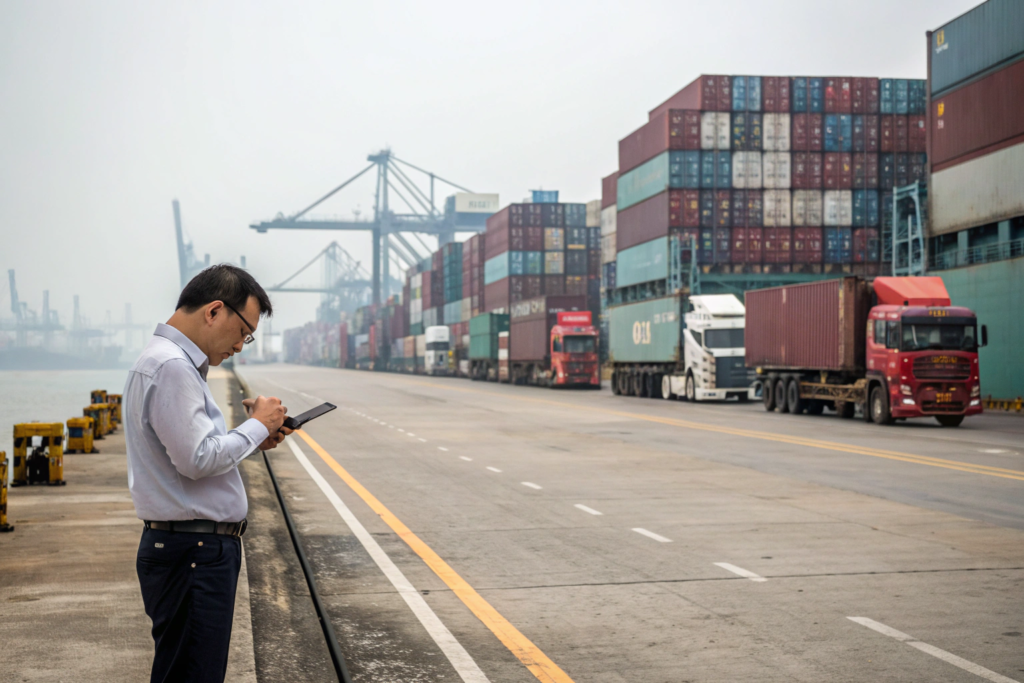
A Los Angeles-based technical apparel brand tried sourcing their fabric in Vietnam in 2024. They wanted a specific moisture-wicking finish with anti-microbial properties. Vietnamese mills couldn't achieve the performance. They tried Indian mills—same problem. They came back to us at Shanghai Fumao, and we delivered exactly what they needed in 8 weeks. The capability simply doesn't exist elsewhere at scale.
What advanced fabrics can only China produce reliably in 2026?
The list is longer than most buyers realize. China has invested heavily in:
Functional finishes: Water-repellent coatings, anti-microbial treatments, UV protection, moisture-wicking technologies. Chinese mills have perfected these at scale. Vietnamese mills can do them but with higher defect rates and longer lead times.
Performance synthetics: Recycled polyester with specific stretch properties, nylon blends with exacting specifications, technical knits for activewear. China's yarn suppliers have capabilities that others can't match.
Sustainable innovations: Fabrics made from recycled bottles, agricultural waste, or innovative fibers like Tencel and bamboo. China processes the majority of the world's sustainable fibers. The expertise lives here.
Complex constructions: Jacquards, double-cloths, bonded fabrics, three-layer laminates. These require sophisticated machinery and experienced technicians that are concentrated in China.
A Boston-based outdoor brand tested three countries for their 2026 waterproof breathable shell fabric. China passed all tests. Vietnam failed waterproofing on 40% of samples. Bangladesh couldn't achieve the required breathability. They're back with us. A capability comparison of textile producing countries on the Textile Exchange site shows China's lead in technical categories.
How has automation made Chinese fabric more cost-competitive?
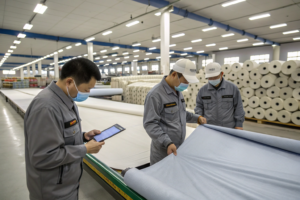
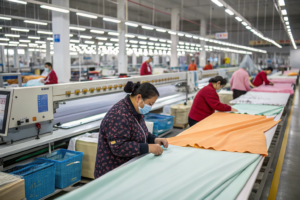
Here's what the labor-cost calculators miss: Chinese factories have automated aggressively. We've invested in automated weaving machines, automated dyeing systems, automated inspection equipment. These machines run 24/7 with minimal labor. Labor cost as a percentage of total cost has dropped dramatically.
A Vietnamese factory might have lower wages but older machines running slower with more waste. When you calculate cost per square meter of usable fabric, the gap narrows or reverses. A Denver-based brand did exactly this calculation in 2025. China fabric: $3.20/meter with 98% first-quality yield. Vietnam fabric: $2.90/meter with 92% first-quality yield. The effective cost of good fabric was $3.27 in China and $3.15 in Vietnam—a $0.12 difference that disappeared when shipping and lead time were added.
We've installed new air-jet looms that run 30% faster than our 2019 equipment with 40% less labor. Those savings pass to clients. A analysis of textile automation impacts on the International Textile Manufacturers Federation site shows why China's cost position is improving, not deteriorating.
What about sustainability certifications—can others match China's progress?
European and US buyers demand sustainability. China has responded massively. We at Shanghai Fumao have invested over $50 million in recycled fiber capabilities, water treatment systems, and solar power. Our GOTS-certified organic cotton line grew 40% in 2025. Our recycled polyester meets EU standards and sells across Europe.
Vietnam and Bangladesh are years behind in sustainability infrastructure. They lack the recycling facilities, the certification bodies, the auditing capacity. A London-based brand told us in 2025 they wanted to source GOTS-certified fabric in Vietnam. They found exactly one certified mill with limited capacity and an 8-month waiting list. We delivered in 6 weeks.
The sustainability gap matters more every year. China is investing to close it. Others are struggling to keep up. A sustainability certification comparison on the Common Objective platform shows China's growing lead.
How do 2026 tariffs and trade policies actually compare?
The tariff story that drove diversification is more complicated in 2026. Section 301 tariffs on Chinese goods remain, but so do tariffs on other countries. Preferential trade agreements have expiration dates. Rules of Origin requirements have tightened. When you calculate actual duty paid, not headline rates, the differences are smaller than many assume.
A Chicago-based brand did a full tariff analysis in early 2026. They compared effective duty rates for their product category (synthetic fabrics) from China, Vietnam, and Bangladesh, including all applicable preference programs and their requirements. The result: China 9.2%, Vietnam 7.8%, Bangladesh 6.5%. The Vietnam advantage was 1.4 percentage points—significant but not decisive. When they added the cost of fabric (higher in Vietnam due to imported Chinese inputs), China was actually cheaper landed.
What are the real duty rates for fabric from different countries in 2026?
Headline rates tell one story. Effective rates tell another. For most textile products entering the US:
China: Section 301 tariffs add 7.5-25% depending on product, on top of normal duties. Effective rate typically 10-25%.
Vietnam: Normal trade relations rates apply, typically 5-15%. No Section 301 tariffs. BUT to qualify for these rates, fabric must meet Rules of Origin—usually meaning fabric formed in Vietnam or another qualifying country. Since Vietnam imports most fabric from China, many shipments don't qualify and pay higher rates.
Bangladesh: Least developed country benefits provide duty-free access for many products, but with strict Rules of Origin requiring local fabric formation. Most Bangladesh garment exports use imported Chinese fabric and therefore don't qualify for duty-free treatment.
A New York-based brand learned this in 2025. They shipped garments from Bangladesh made with our Chinese fabric, expecting duty-free entry. Customs audited, determined the fabric disqualified the garments, and assessed duties retroactively plus penalties. The bill was $47,000. A comprehensive tariff guide for textile imports on the US Customs site explains the complex rules.
How are Rules of Origin actually enforced in 2026?
Enforcement has tightened significantly. Customs now requires documentation proving where fabric was formed, not just where garments were assembled. For a garment to qualify for Vietnam's preferential rates, the fabric must be formed in Vietnam or another qualifying country. If it's formed in China, the garment pays China rates regardless of where it's sewn.
This enforcement has caught many brands off guard. A Toronto-based brand in 2025 shipped a container of garments from Vietnam, declared under Vietnam's preferential rate, and provided certificates of origin from the Vietnamese factory. Customs requested fabric purchase documents. The fabric was from China. They paid $12,000 in additional duties plus $4,000 in penalties.
The documentation requirements are strict: yarn-spinning location, weaving location, dyeing location, finishing location. If any of these happen in China, the product is Chinese for tariff purposes. A guide to Rules of Origin compliance on the International Trade Administration site walks through the documentation needed.
What trade agreements actually benefit US fabric buyers in 2026?
The US has no free trade agreement with China, Vietnam, or Bangladesh. Most trade happens under normal trade relations or preference programs. The key programs:
Generalized System of Preferences (GSP) : Expired and not renewed as of 2026. No longer available.
African Growth and Opportunity Act (AGOA) : Provides duty-free access for some African countries, but limited textile capacity.
USMCA: Mexico and Canada, but labor costs higher.
Pending agreements: None likely soon.
The reality is that tariff advantages of other countries are smaller than many assume and shrinking as enforcement tightens. A analysis of US trade preference programs on the Congressional Research Service site shows which programs actually benefit textile importers.
What are the hidden costs of non-China sourcing that buyers are discovering?
The visible costs—labor, freight, duties—are what buyers compare. The hidden costs are what kill you. After years of diversification, US brands are discovering that non-China sourcing carries expenses that never appear on quotes. These hidden costs add up to real money and real headaches.
A Portland-based brand tracked every cost associated with their Vietnam sourcing experiment from 2023-2025. The visible costs were 12% lower than China. The hidden costs—extra management time, quality failures, delayed shipments, air freight, customer returns—added 18% to their total. Their Vietnam experiment cost them 6% more than staying in China, plus countless sleepless nights.

What quality-related hidden costs are driving buyers back?
The quality gap has real financial impact. Lower first-quality yields mean more seconds to sell at discount. Higher defect rates mean more customer returns. Inconsistent quality means more inspection costs.
A Denver-based brand tracked their quality metrics across China and Vietnam sources in 2024-2025:
- First-quality yield: China 98%, Vietnam 92%
- Customer return rate: China 2.1%, Vietnam 4.8%
- Inspection cost per unit: China $0.15, Vietnam $0.28
When they calculated total quality cost, Vietnam added $1.12 per unit compared to China. On 50,000 units annually, that's $56,000 in hidden costs.
The root cause: Vietnamese factories have less experienced workers, less automated quality control, and less consistent processes. Problems that Chinese factories catch and fix during production become defects in finished goods. A quality cost comparison study on the American Society for Quality site quantifies these differences across sourcing destinations.
How do communication and management time costs add up?
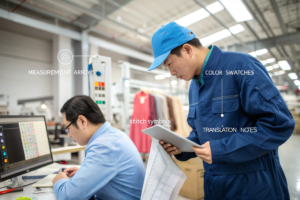
Your time is worth something. The hours you spend explaining things twice, chasing updates, solving problems remotely, and traveling for factory visits all have value. In China, you can work with suppliers who speak your language, understand your market, and respond quickly. In newer sourcing destinations, everything takes longer.
A Toronto-based brand calculated that their China supplier relationships required about 4 hours of management time per week. Their Vietnam relationships required 12 hours per week—triple the time. At $100/hour billable rate, that's $800 per week difference, over $40,000 annually.
The reasons: language barriers requiring translation, less familiarity with Western quality expectations, slower response times, more frequent misunderstandings requiring clarification. A study of supplier management time costs on the Supply Chain Management Review site shows that established sourcing destinations require significantly less management overhead.
What about the cost of missed opportunities from slow response?
This is the hardest hidden cost to quantify but often the largest. When you need to react to a trend, chase a reorder, or fix a problem fast, China responds. Other sourcing destinations move slower. A Vancouver-based brand in 2025 had a style go viral on social media. They needed 2,000 more units in 4 weeks. Their China supplier delivered. Their Vietnam supplier quoted 8 weeks. The opportunity cost of the lost sales exceeded $30,000.
China's integrated supply chain—fabric mills, trim suppliers, garment factories all within hours of each other—enables speed that others can't match. When you need fabric fast, we can deliver. When you need a quick reorder, we can produce. The value of that speed shows up in your top line, not your cost sheet.
A analysis of speed-to-market value in apparel on the McKinsey Apparel Fashion Survey quantifies the revenue impact of faster response times.
Conclusion
The shift back to China for fabric sourcing in 2026 isn't about nostalgia or fear of change. It's about math. The labor cost advantages of alternative destinations have shrunk while their hidden costs have grown. China's infrastructure, technical capabilities, and reliability have improved while others struggle to keep pace. Tariff advantages have proven smaller and more complex than expected. When you calculate total landed cost including your own time and risk, China often wins.
This doesn't mean everyone should source everything from China. Basic products in high volume from vertically integrated suppliers in Bangladesh or Vietnam can still make sense. Diversification remains valuable for risk management. But the pendulum has swung too far. Many brands diversified without calculating true costs, and they're now returning to China for the products that matter most—the complex, the technical, the quality-sensitive, the time-sensitive.
At Shanghai Fumao, we've watched this cycle play out over 20 years. We've seen brands leave and come back. We've invested continuously in the capabilities that keep clients returning: technical expertise, quality systems, sustainability certifications, and reliable delivery. We don't compete only on price—we compete on total value, on the confidence that when you order from us, you'll get what you need when you need it.
If you're evaluating your 2026 sourcing strategy and wondering whether China still makes sense, let's talk. Elaine, our Business Director, can help you calculate your true landed costs across different sourcing options, identify where China offers real advantages, and build a strategy that works for your specific products and markets. Contact Elaine at elaine@fumaoclothing.com to start a conversation about making your 2026 sourcing actually work. Let's find the right balance for your business.