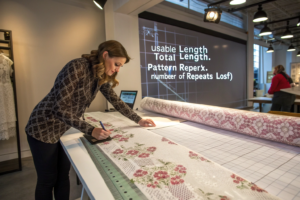
Let’s cut through the ESG report fluff. When a US apparel CEO pivots their multi-million dollar supply chain, it’s not about saving the planet—it’s about saving their business. I’ve sat across from enough of them to know the real driver: fear. Fear of a customs seizure for false claims, fear of a Walmart or Target delisting, fear of a class-action lawsuit over misleading "organic" labels. The switch to OCS (Organic Content Standard) certified suppliers isn't a moral awakening; it's a strategic risk mitigation move that has become a boardroom imperative. The cost of not switching has quietly surpassed the cost of implementation.
US apparel CEOs are switching to OCS-certified suppliers to achieve three critical business objectives: legal compliance with tightening FTC regulations and retailer mandates, protection against catastrophic supply chain and reputational risk, and access to higher-margin market segments that demand verifiable sustainability. In short, they are buying a certified, auditable insurance policy for their brand’s future in a market where "trust" is both the most valuable asset and the easiest to lose.
This shift is a calculated response to market forces, not a trend. Let’s examine the hard business calculus behind this strategic pivot.
The Compliance Imperative: Navigating a Legal Minefield
The US regulatory environment for environmental claims is shifting from ambiguous guidelines to enforceable rules. The Federal Trade Commission (FTC) Green Guides are being scrutinized and updated, with a clear focus on clamping down on vague terms like "eco-friendly" and "sustainable." For a specific, regulated claim like "organic," the requirements are even stricter. CEOs are realizing that their previous reliance on supplier "assurances" is a direct legal liability. An OCS-certified supplier provides a defensible, third-party audited system that aligns with the FTC's demand for "competent and reliable evidence" to back up claims.
Furthermore, major US retailers are no longer asking—they are demanding. Walmart’s Project Gigaton, Target’s Sustainable Product Standard, and Amazon’s Climate Pledge Friendly program all require verified data. Trying to sell to these channels without the documentation an OCS supplier provides is like trying to board a plane without a passport.

How does OCS protect against FTC Green Guides violations?
The FTC Green Guides state that marketers should have "competent and reliable scientific evidence" to support environmental claims. For an organic claim, this means proof of the organic content from seed to finished product. An invoice that says "organic cotton" is not evidence. An OCS Transaction Certificate (TC), backed by a full chain-of-custody audit trail, is.
When a brand sources from an OCS-certified supplier, they receive this TC. It is the documented, scientific (in the sense of traceability) evidence required. If the FTC ever questions a claim, the CEO can produce this validated paper trail. Without it, they are exposed to fines and forced corrective advertising, which can be more damaging than the fine itself. A mid-sized activewear brand avoided an FTC inquiry in 2023 precisely because they could immediately produce OCS TCs for their entire "Organic Collection" when a consumer advocacy group raised questions.
What is the cost of non-compliance with major US retailer programs?
The cost is exclusion from the market. Retailer programs are not optional for suppliers who want shelf space.
- Chargebacks and Fines: Retailers impose heavy fines for non-compliant shipments. A single shipment lacking proper documentation can be charged back at 5-10% of its value.
- Loss of Preferred Status/Vendor De-listing: Consistent failures lead to being moved off the preferred vendor list, resulting in worse payment terms, poorer placement, and ultimately, being dropped entirely.
- Missed Revenue: The "Sustainable" or "Conscious" section of a retailer's website or store is often the fastest-growing. Without certification, your brand is locked out of this high-traffic, high-intent segment.
Sourcing from an OCS supplier is the cost of admission to play in the big leagues. It's no longer a differentiation strategy; it's a baseline requirement for scale.
The Risk Mitigation Equation: From Reputation to Balance Sheet
For a CEO, risk is quantified in dollars. The risks associated with an opaque, uncertified supply chain have become quantifiably unacceptable. These are not hypothetical "black swan" events; they are frequent occurrences in today’s interconnected, watchdog-driven world.
An OCS-certified supplier dramatically reduces three key risks: reputational risk from greenwashing scandals, supply chain risk from fraud or contamination, and financial risk from unsellable inventory or legal penalties. This isn't corporate social responsibility; it's corporate financial responsibility.
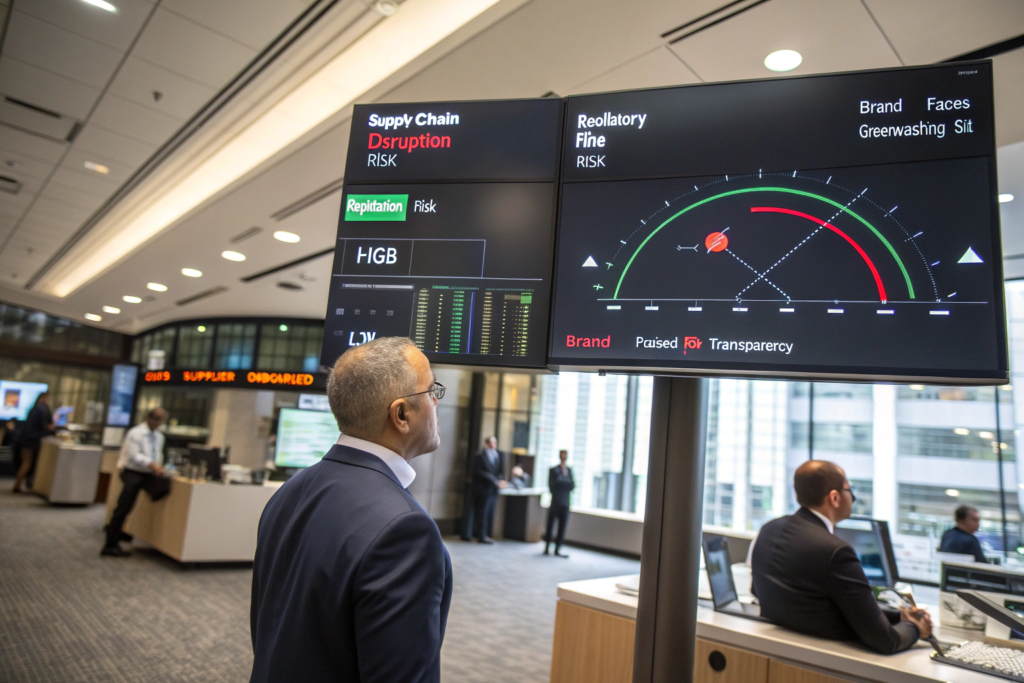
How does OCS de-risk the supply chain from fraud?
Organic cotton fraud—where conventional cotton is mis-sold as organic—is a multi-billion dollar global problem. For a CEO, this means you could be paying a 20-30% premium for a product that provides zero premium value and carries massive liability.
The OCS system is designed to make fraud exponentially more difficult and expensive. Its requirements—mass balance accounting, mandatory transaction certificates at every stage, annual third-party audits—create a system where fraud would require collusion across multiple certified entities. It’s a system of checks and balances. By choosing an OCS supplier, a CEO is choosing a partner operating within this controlled system, effectively outsourcing fraud prevention. It’s more reliable than any internal audit of an uncertified mill.
What is the financial impact of a greenwashing scandal?
It’s a direct hit to valuation. The costs cascade:
- Legal & Settlement Costs: Class-action lawsuits can result in settlements in the tens of millions.
- Marketing & PR Costs: The cost of a crisis PR campaign to rebuild trust can dwarf the annual marketing budget.
- Lost Sales & Stock Price: Consumer boycotts and retailer pullbacks lead to immediate revenue loss. Publicly traded companies often see an immediate stock price dip.
- Increased Cost of Capital: Investors and lenders view companies with high reputational risk as riskier bets, leading to higher interest rates or lower valuations.
Investing in an OCS-certified supply chain is a prophylactic measure against this financial catastrophe. The premium paid for certified materials is the insurance premium.
The Market Opportunity: Driving Growth and Margin
Beyond fear and risk, there is a powerful growth narrative. The conscious consumer segment in the US is not a niche; it’s a dominant, high-value demographic. This segment doesn't just prefer sustainable products; they actively seek out and are willing to pay more for brands that can prove their claims. OCS certification is the proof that unlocks this premium revenue stream.
For a CEO focused on top-line growth and margin expansion, OCS is a tool to access a less price-sensitive, more loyal customer base. It allows for a value-based pricing strategy instead of a race-to-the-bottom on cost.
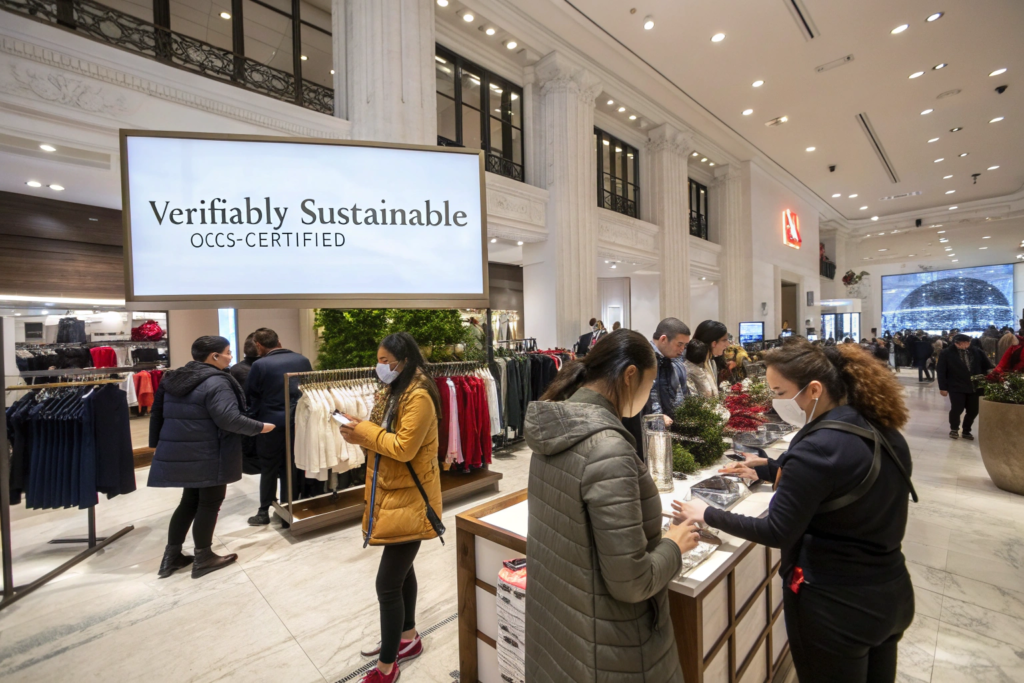
How does OCS certification support a premium pricing strategy?
It provides the justification. The narrative shifts from:
"This shirt is $50."
to
"This shirt is $65. It is made with 100% organic cotton, which you can verify through this OCS certificate (#XYZ123) on our website. This ensures no synthetic pesticides were used, protects farmer health, and results in a softer, more durable fabric."
The certification provides the tangible, shareable evidence that supports the price premium. It moves the conversation from cost to value. A US-based basics brand reported a 22% increase in Average Order Value (AOV) after rebranding their core line with OCS certification and transparently marketing the traceability story.
Does OCS open new sales channels and partnerships?
Absolutely. It is a prerequisite for:
- Corporate Uniform & Merchandise Contracts: Companies wanting to improve their ESG scoring for B Corp certification or internal goals seek suppliers with verified credentials.
- Subscription & Rental Services: Services like Rent the Runway or Stitch Fix’s sustainable boxes prioritize certified products for their discerning subscribers.
- Strategic Wholesale Partners: Boutiques and regional chains that cater to conscious consumers actively curate for certified brands.
It also makes a brand a more attractive candidate for investment from ESG-focused funds. The certification acts as a signal of operational maturity and long-term viability.
The Operational Advantage: Predictability and Partnership
Finally, CEOs are switching because OCS-certified suppliers represent a higher caliber of manufacturing partner. The discipline required to achieve and maintain certification (record-keeping, process control, audit readiness) typically correlates with superior overall operational management. This translates to tangible benefits for the brand: more reliable lead times, higher quality consistency, and a partnership based on data rather than promises.
In an era of constant supply chain disruption, predictability is priceless.

How does an OCS supplier improve supply chain predictability?
The systems mandated by OCS create visibility:
- Material Traceability: Because every input is tracked, the supplier knows exactly where the certified fabric is in the pipeline. This prevents last-minute surprises about material shortages.
- Accurate Lead Time Forecasting: Their production planning is more disciplined, allowing for more reliable ship dates.
- Proactive Issue Resolution: If a problem is found with a certified fabric lot, it can be isolated immediately, preventing it from contaminating an entire production run.
This predictability allows the brand’s own planning, marketing, and sales teams to operate with confidence. A CEO can commit to retail delivery dates knowing the supply chain behind them is robust.
Why is this a strategic partnership, not a transactional relationship?
Building a certified supply chain requires investment and shared goals. When a brand commits to an OCS supplier, they are entering a co-dependent relationship to protect a shared asset: the certification’s integrity. This fosters:
- Long-Term Planning: Joint forecasting and capacity planning.
- Collaborative Innovation: Working together to develop new OCS-certified fabrics or products.
- Shared Value: The supplier’s success is tied to the brand’s market success with the certified product.
This shifts the dynamic from adversarial price negotiations to collaborative value creation. It’s a more stable, more profitable foundation for growth.
Conclusion
US apparel CEOs are switching to OCS-certified suppliers because it is the most rational business decision available. It directly addresses the triplet of modern executive anxiety: compliance, risk, and growth. In a landscape of legal peril, consumer skepticism, and retailer power, OCS certification provides a structured, evidence-based path forward. It is the operational backbone for making credible sustainability claims that protect the brand, satisfy regulators, please retailers, and captivate consumers.
This isn't a fleeting trend led by marketing; it's a structural shift led by CFOs, General Counsel, and Operations heads. The brands that build on this foundation today will be the market leaders of tomorrow.
If your brand is ready to make this strategic pivot with a partner that combines OCS integrity with vertical supply chain control, the conversation starts here. At Shanghai Fumao, we are the OCS-certified supplier that leading US brands trust to de-risk their sourcing and power their growth. Contact our Business Director, Elaine, to discuss a partnership built for the new era of accountable apparel: elaine@fumaoclothing.com. Let's build a brand that's as secure as it is successful.