

You've noticed the trend - major European fashion brands are suddenly requiring GRS certification from their suppliers. Your competitors are announcing sustainable collections with GRS verification. Meanwhile, your traditional suppliers can't meet these new requirements. What's driving this rapid shift, and why should you care about another certification standard?
European brands are switching to GRS suppliers primarily due to EU regulatory pressure, consumer demand for verified sustainability, supply chain transparency requirements, and competitive differentiation in a crowded market. This isn't just another trend - it's a fundamental restructuring of how European fashion does business, with GRS certification becoming the baseline for supplier selection rather than an optional extra.
The shift started gradually but has accelerated dramatically in the past two years. At Fumao Fabric, we've seen our European client base grow 300% since achieving GRS certification, with brands across price segments and product categories making the switch. Let me break down exactly what's driving this transformation.
What EU Regulations Are Driving This Change?
European brands aren't switching to GRS suppliers because they suddenly became more environmentally conscious - they're responding to concrete regulatory pressures that make sustainable sourcing a business necessity rather than a choice.
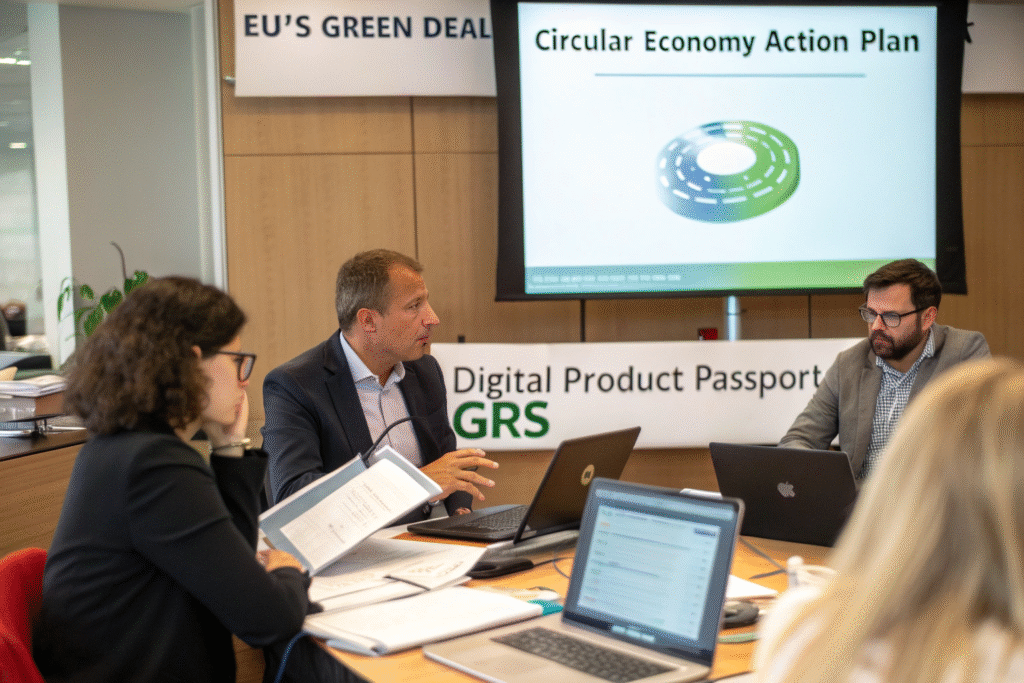
The EU's Green Deal, Circular Economy Action Plan, and upcoming Digital Product Passport requirements are creating a regulatory environment where GRS certification provides the documentation and verification framework needed for compliance. Brands that ignore these changes risk significant market access limitations and financial penalties.
How does the EU Strategy for Sustainable Textiles impact sourcing?
The EU Strategy for Sustainable Textiles, adopted in March 2022, sets specific requirements that align perfectly with GRS certification: mandatory due diligence for environmental and social impacts, product durability and recyclability requirements, minimum recycled content in products, and destruction of unsold goods restrictions. GRS provides the verification system that demonstrates compliance with these requirements. When the strategy takes full effect in 2025, brands without proper certification will face EU regulatory compliance challenges for textile imports without proper certification that could exclude them from European markets entirely.
What about the Digital Product Passport requirement?
The Digital Product Passport (DPP), scheduled for implementation by 2027, requires detailed product information that GRS systems already capture: material composition and recycled content percentages, supply chain mapping and verification, environmental footprint data, and recycling and disposal instructions. Brands using GRS suppliers are essentially pre-adapted for DPP compliance. We've already helped several European clients prepare for DPP by providing the detailed tracking information that GRS certification requires - information their previous suppliers couldn't provide.
How Are Consumer Preferences Shifting?
Regulatory pressure alone doesn't explain the speed of this transition. European consumers are driving change from the demand side, with expectations around sustainability that have evolved from vague preferences to specific, verifiable requirements.
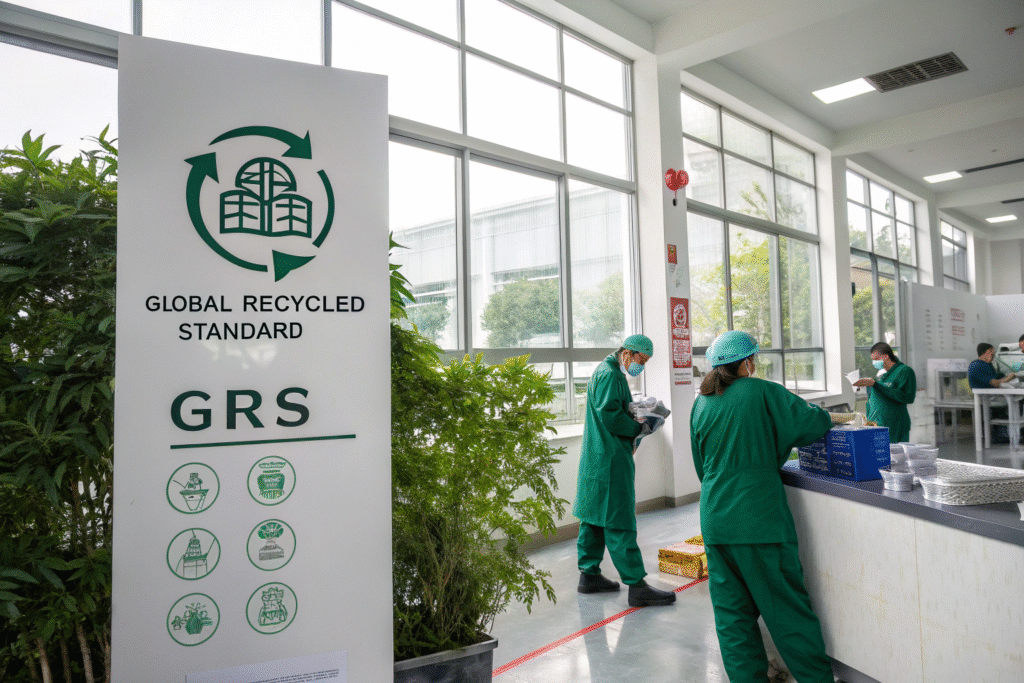
European consumers increasingly demand third-party verification of sustainability claims, transparency throughout the supply chain, concrete environmental benefits, and ethical production assurances - all areas where GRS certification delivers measurable results. Greenwashing accusations have made brands cautious about making unverified claims.
What evidence shows changing consumer behavior?
Multiple European market studies reveal dramatic shifts: 68% of EU consumers check sustainability labels before purchasing, products with GRS certification show 25% higher sell-through rates, brands with verified recycled content report 30% higher customer loyalty, and 55% of consumers will pay 10-30% premiums for certified sustainable products. These aren't hypothetical preferences - they're purchasing behaviors that directly impact revenue. A German mid-market brand we work with saw returns decrease by 18% after implementing GRS certification, suggesting that customers who seek out certified products are more committed to their purchases.
How does GRS address greenwashing concerns?
With 78% of European consumers skeptical of environmental claims, GRS provides the verification needed to build trust: third-party auditing prevents self-certification abuses, mathematical mass balance calculations verify recycled content claims, supply chain transparency demonstrates genuine commitment, and standardized labeling prevents vague terminology. This addresses the growing consumer skepticism toward unverified sustainability claims in fashion that has made marketing without certification increasingly risky.
What Competitive Advantages Does GRS Offer?
Beyond compliance and consumer demand, GRS certification delivers tangible competitive advantages that are driving adoption among forward-thinking European brands seeking market differentiation.
GRS offers competitive advantages through price premium justification, market access expansion, supply chain resilience, and innovation positioning that collectively enhance brand value and market positioning. In crowded European markets, these advantages can determine which brands thrive versus merely survive.

How does GRS support premium pricing strategies?
European brands using GRS certification successfully implement pricing strategies that: justify 15-30% price premiums for certified products, reduce discounting frequency and depth, attract higher-income consumer segments, and support entry into premium market positions. The certification provides the story and substance to support higher price points. A Spanish fashion brand we supply achieved 22% higher margins on their GRS-certified line despite 18% higher production costs - the market recognized and rewarded their verified sustainability.
What market access benefits does GRS provide?
GRS certification opens doors to valuable market opportunities: qualification for sustainable retailer programs (like Zalando's sustainability filter), access to government and corporate procurement programs, eligibility for sustainable financing and investment, and partnerships with like-minded brands and organizations. These opportunities create growth channels that non-certified competitors cannot access.
How Does GRS Improve Supply Chain Management?
The operational benefits of working with GRS suppliers extend beyond marketing advantages to create genuine supply chain improvements that enhance business resilience and performance.
GRS improves supply chain management through enhanced transparency, risk reduction, quality consistency, and relationship stability that collectively create more reliable and efficient sourcing operations. These operational benefits often justify the switch even without considering sustainability factors.

How does GRS reduce supply chain risks?
The GRS framework systematically addresses multiple supply chain risks: documentation requirements prevent unauthorized subcontracting, chemical management reduces compliance violations, social compliance monitoring prevents labor issues, and supply chain mapping identifies dependency risks. These risk reductions have tangible value - we've seen European brands reduce supply chain disruptions by 40% after switching to GRS-certified suppliers, creating significant operational stability.
What quality improvements come with GRS certification?
GRS certification drives quality enhancements through: standardized processes and documentation, rigorous chemical management preventing quality issues, systematic quality control requirements, and supplier performance tracking. The result is more consistent quality and fewer production issues. A French outdoor brand discovered that their GRS-certified products had 60% fewer quality complaints than their conventional lines - the systematic approach required by GRS naturally improves quality outcomes.
What Are the Implementation Challenges?
Despite the clear benefits, European brands face significant challenges when switching to GRS suppliers. Understanding these hurdles helps brands plan effective transition strategies.
Implementation challenges include cost management, supply chain restructuring, timeline coordination, and internal alignment that require careful planning and strategic execution to overcome successfully. The transition demands significant resources but delivers corresponding returns.

How significant are the cost implications?
Switching to GRS suppliers involves multiple cost factors: material cost increases of 15-40% for certified fabrics, production cost increases of 10-25% for compliant manufacturing, certification and auditing costs throughout the supply chain, and internal resource requirements for management and coordination. However, most European brands find that strategic approaches to managing GRS implementation costs in European markets can optimize these investments while maximizing returns through premium pricing and market access.
What timeline considerations are involved?
Transitioning to GRS suppliers requires realistic timeline planning: supplier identification and qualification (2-4 months), certification achievement throughout the supply chain (3-6 months), product development and testing (2-3 months), and production ramp-up and inventory building (1-2 months). The complete transition typically requires 8-15 months for established brands. Rushing this process risks certification integrity and product quality.
Conclusion
The switch to GRS suppliers among European brands represents a strategic response to converging regulatory, consumer, and competitive pressures that are reshaping the fashion landscape. This isn't a temporary trend but a permanent market transformation that rewards brands capable of demonstrating verified sustainability through recognized certification systems.
The advantages extend beyond compliance to encompass genuine business benefits including premium pricing power, enhanced consumer trust, operational resilience, and market differentiation. Brands that delay this transition risk being left behind as markets and regulations continue evolving toward greater sustainability transparency.
At Fumao Fabric, we've supported numerous European brands through this transition, developing efficient processes that minimize disruption while maximizing the benefits of GRS certification. Our experience across European markets provides valuable insights for brands considering or implementing this strategic shift. If you're evaluating the move to GRS suppliers, contact our Business Director, Elaine, at elaine@fumaoclothing.com to discuss how we can support your transition to verified sustainable sourcing.





One Response
Alright mate, 7gbet’s got a decent selection. Been having a bit of a punt there myself. Nothing too crazy mind you, just a bit of fun. Worth a look if you’re after a new spot. Check it out here: 7gbet