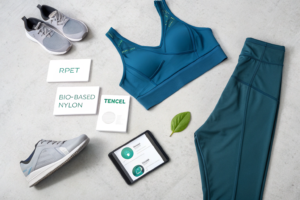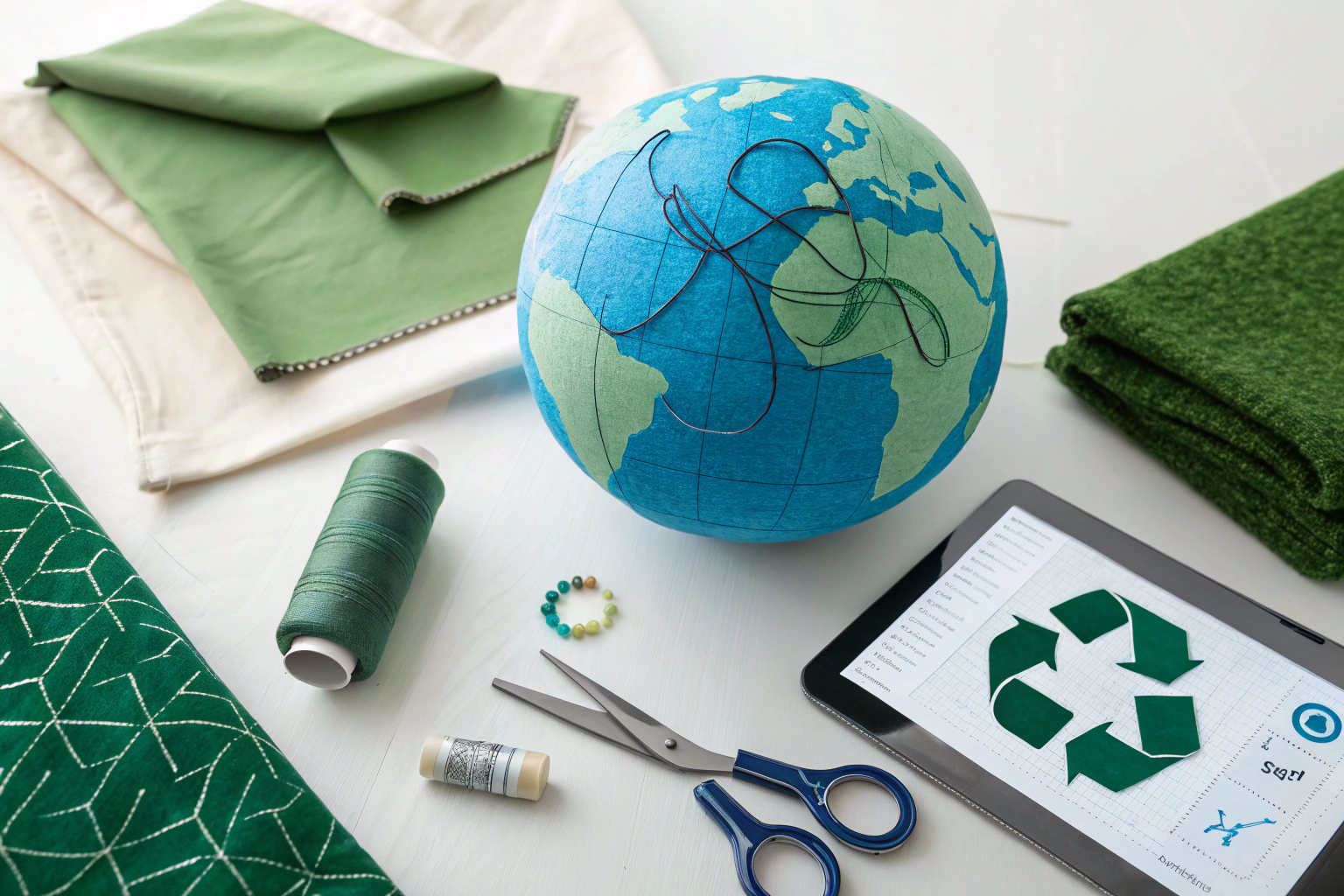
Last month, I sat in a virtual meeting with a sourcing director from one of the world's largest fast-fashion retailers, based in Spain. For years, our conversations had been about price, price, and price. But this time, the agenda was different. He didn't start by asking for a cheaper version of a cotton jersey. He asked, "Can you help us design a garment that can be fully recycled back into a new garment at the end of its life? We need a circular solution, and we need it now." I wasn't surprised. The pressure on big brands to abandon the old "take-make-waste" model has reached a tipping point.
The reason big brands are switching to circular economy fabrics now is a perfect storm of three forces: legislation, consumer demand, and raw material volatility. In Europe, new regulations like the EU's Strategy for Sustainable and Circular Textiles are making brands legally responsible for the entire lifecycle of their products, including waste management. Consumers, especially Gen Z, are increasingly skeptical of "greenwashing" and demanding proof of real circularity. And the volatile pricing of virgin resources, from oil-based polyester to conventional cotton, makes the stable, recycled inputs of a circular model look increasingly attractive from a business continuity perspective. It's no longer just an ethical choice; it's becoming a strategic and legal necessity.
But let me tell you what I tell every brand that comes to us with this question. Switching to circular economy fabrics is not as simple as swapping one material for another. It requires a fundamental rethink of how you design, how you source, and who you partner with. I've been in this industry in Keqiao for over 20 years, and I've watched the conversation shift from "Can we make it cheaper?" to "Can we make it circular?" The brands that are succeeding are the ones who realize this isn't a marketing exercise; it's a supply chain transformation. They are coming to partners like us not just to buy fabric, but to co-engineer solutions. Let me walk you through exactly why this shift is happening now, and what it means for your brand.
What Is Driving the Sudden Urgency for Circular Textiles?
It might seem sudden from the outside, but for those of us inside the industry, this urgency has been building for years. The linear model is hitting a wall. Landfills are overflowing with textile waste. Virgin resource prices are swinging wildly. And the social license for fashion to operate as a disposable industry is rapidly eroding. The "now" of your question is real.
I had a long conversation with a sustainability manager from a UK-based luxury brand in late 2023. She showed me a chart of their raw material costs over the previous five years. Virgin polyester, tied to oil prices, had been a rollercoaster. Conventional cotton had been hit by climate-related crop failures. But their recycled cotton and recycled polyester costs, while not immune to inflation, had been far more stable. She said, "Circularity isn't just about saving the planet for us anymore. It's about stabilizing our supply chain." That was a wake-up call for me. The business case for circularity is becoming as strong as the environmental case.

How are new European regulations forcing brands to act now?
The regulations coming out of Europe are the single biggest driver. The EU's Ecodesign for Sustainable Products Regulation (ESPR) is a game-changer. It will soon mandate that textiles sold in the EU must be durable, repairable, and recyclable. It's introducing a Digital Product Passport, meaning every garment will need a digital ID containing information about its materials and how to recycle it. And it's considering bans on the destruction of unsold or returned textiles.
I saw the impact of this firsthand with a German outdoor brand we work with. In 2022, they asked us to help them prepare for the Digital Product Passport. We started by mapping the exact supply chain for one of their best-selling jackets—from the yarn spinner to the dyer to our weaving mill. It was a huge undertaking. We had to collect data we'd never tracked before: the exact energy mix used in dyeing, the water consumption per kilo, the chemical inputs. But now, they are ahead of the curve. When the regulation hits, they'll be ready. Their competitors are scrambling. (The European Commission's page on the EU Textiles Strategy is essential reading for anyone selling into Europe.)
Are consumers actually demanding circularity, or is it just marketing hype?
It's becoming real, especially with younger demographics. Consumers are getting smarter about greenwashing. They've heard "recycled" so many times that it's lost some meaning. Now, they are starting to ask harder questions: "Recycled into what?" "Can this be recycled again?" "What happens when I'm done with it?"
We saw this shift in a focus group our client from a Dutch denim brand ran in 2023. They showed consumers two jeans. One was made from "recycled cotton" (but was a blend that couldn't be recycled again). The other was designed for circularity—monomaterial, with easily removable hardware. The consumers, even those who weren't sustainability experts, immediately gravitated towards the second pair when the concept of "end-of-life" was explained. They didn't want to feel guilty about throwing something away. They wanted to feel like they were part of a solution. (This report from McKinsey on consumer sentiment on sustainability in fashion confirms this trend.)
What Exactly Are "Circular Economy Fabrics" and How Do They Work?
This term gets thrown around a lot, so let's get specific. A circular economy fabric is one that is designed, produced, and intended to be used and then reused, repaired, or recycled back into a new product at the end of its life, keeping materials in circulation and out of landfills. It's not just about the fiber content; it's about the entire ecosystem around the fabric.
The simplest way I explain it to clients is with a question: "Can your garment, after years of use, become a new garment of similar quality?" If the answer is no, it's not truly circular. It might be "recycled," but it's not "circular." True circularity requires designing for disassembly and designing for recyclability from the very first sketch. It's a mindset shift from "cradle-to-grave" to "cradle-to-cradle."
What's the difference between "recycled" fabrics and "circular" fabrics?
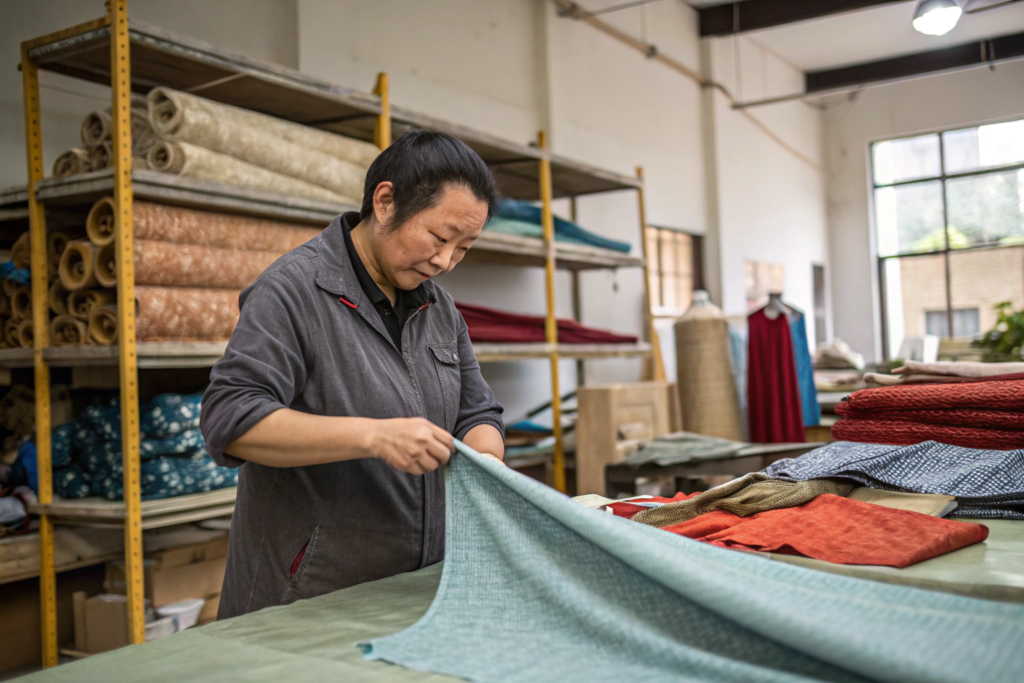
This is the most important distinction in sustainable fashion right now. "Recycled" fabric is made from waste—like plastic bottles or post-industrial cotton scraps. That's a great start. But if that recycled fabric is then blended with other materials, dyed with mixed chemicals, or sewn with non-detachable threads, it becomes unrecyclable at the end of its life. It's "recycled content," but it's not part of a "circular system."
"Circular" fabric is designed from the start to be recycled again. It's often monomaterial (100% one fiber type) so it doesn't need complex separation. It uses dyes and finishes that don't contaminate the recycling stream. It's designed to be durable enough for multiple lives, but also to break down cleanly at the end. I had a client from a Swedish brand ask for a "circular" hoodie. We developed it using 100% recycled polyester, but we used a specially designed, easily detachable drawstring and a sewing thread that dissolves in the recycling process. The hoodie itself can become new polyester yarn someday. That's circular. (The Ellen MacArthur Foundation's guide to circular design is the bible on this topic.)
Can any fabric become truly circular, or are there limits?
There are significant technical limits today, but innovation is rapid. The biggest challenge is blends. A cotton-polyester blend is a nightmare for current recycling technologies. You can't easily separate the natural and synthetic fibers to recycle them both effectively. Similarly, adding spandex for stretch contaminates the recycling stream for both polyester and nylon.
However, solutions are emerging. There are new chemical recycling technologies that can separate cotton and polyester blends, though they are not yet scaled or cheap. There are also new "fibers-to-fiber" recycling plants opening in Europe and Asia that can take old cotton garments and turn them into new, high-quality cotton pulp for spinning. We are working with a partner in China who is piloting a mechanical recycling system for post-consumer cotton that maintains fiber length much better than traditional methods. It's not perfect yet, but the progress in just the last five years has been astonishing. (This report from Fashion for Good on the state of textile recycling is a great overview.)
How Are Big Brands Redesigning Their Products for Circularity?
This is where the rubber meets the road. Big brands aren't just swapping materials; they are overhauling their design philosophies, their supply chains, and even their business models. They are realizing that circularity starts on the drawing board, not in the recycling plant. It's about designing out waste from the very beginning.
We've seen this shift in the briefs we receive. A few years ago, a client would send us a tech pack and say, "Make this in recycled polyester." Now, they send us a tech pack and ask, "Can you help us make this recyclable?" It's a subtle but profound difference. It opens up conversations about yarn selection, weave construction, dye chemistry, and even the thread we use for seams. It's more complex, but the results are far more meaningful.
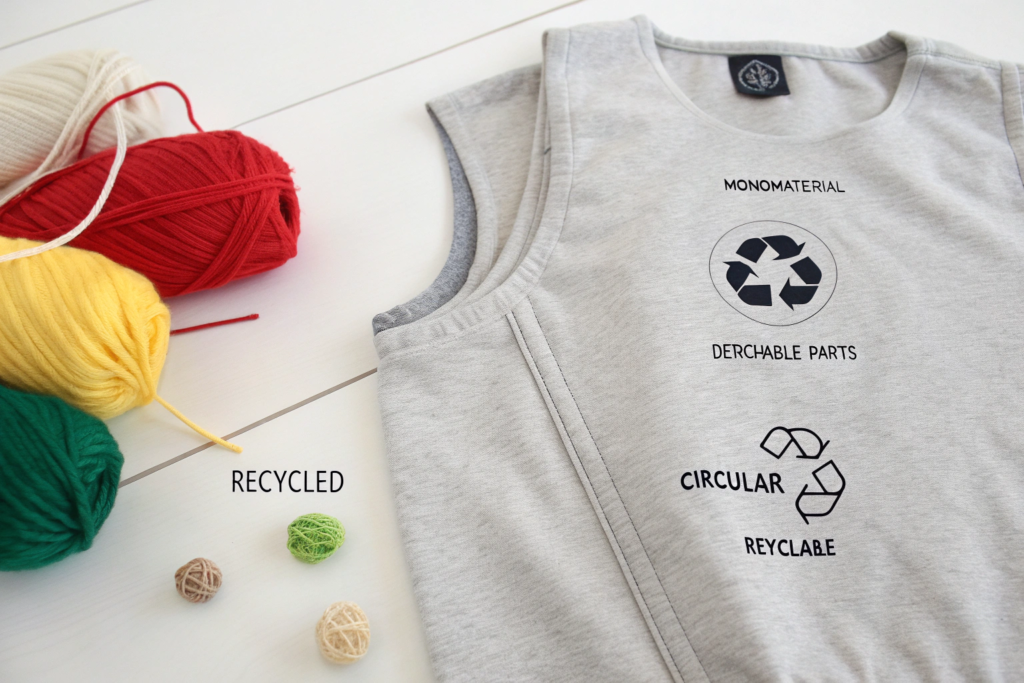
What does "design for disassembly" mean for a simple t-shirt?
It means thinking about every component. A conventional t-shirt might have a cotton body, polyester thread, a spandex-blend rib collar, and a printed PVC label. That's a recycling disaster. To recycle the cotton, you'd have to remove the thread, the collar, and the label, which is almost impossible at scale.
A t-shirt designed for disassembly might use the same fiber for everything—say, 100% organic cotton for the body, 100% cotton thread for sewing, a 100% cotton rib for the collar, and a woven cotton label. No mixed materials. No contaminants. At the end of its life, it can go into a cotton recycling stream as a pure, homogeneous product. We worked with a Japanese brand in 2023 to develop exactly this. The first samples failed because the cotton thread wasn't strong enough for the seams. We had to source a specialized, high-tenacity cotton thread. It cost more, but the result was a genuinely circular garment. (Here's a practical guide on designing for disassembly from the Fashion Institute of Technology.)
How are brands handling dyes and finishes in a circular world?
This is a huge and often overlooked area. Conventional dyes and finishes can contaminate recycling streams. For example, if you have a garment dyed with heavy metal-based dyes, those metals can end up in the recycled fiber, causing quality and safety issues. Similarly, finishes like anti-wrinkle or water-repellent coatings often contain chemicals that hinder recycling.
Big brands are now working with us to select dyes and finishes that are "recycling-compatible." This means they are either easily removable in the recycling process or they are benign and won't contaminate the output. For a French luxury brand's circular cashmere project, we used a special dye that could be stripped cleanly during the mechanical recycling process, allowing the recycled fiber to be re-dyed to a new color without any muddying from the old one. It required extensive lab testing, but it proved it could be done. (The ZDHC organization has resources on chemicals and circularity.)
What Are the Real Challenges in Scaling Circular Economy Fabrics?
I have to be honest here. As much as I believe in circularity, scaling it is incredibly difficult. The infrastructure isn't there yet. The costs are higher. The technology is still evolving. And the entire global textile system is built for linearity. Switching to circularity is like trying to change the tires on a car while it's speeding down the highway.
We experience these challenges every day. When a client asks for a fully circular fabric, we often have to source specialized yarns that are made in smaller batches, which cost more. We have to run smaller production lots to keep them segregated from our conventional production. We have to spend more time on testing and validation. It's a labor of love, and it requires clients who are patient and committed. But the momentum is building, and the challenges are slowly being overcome.
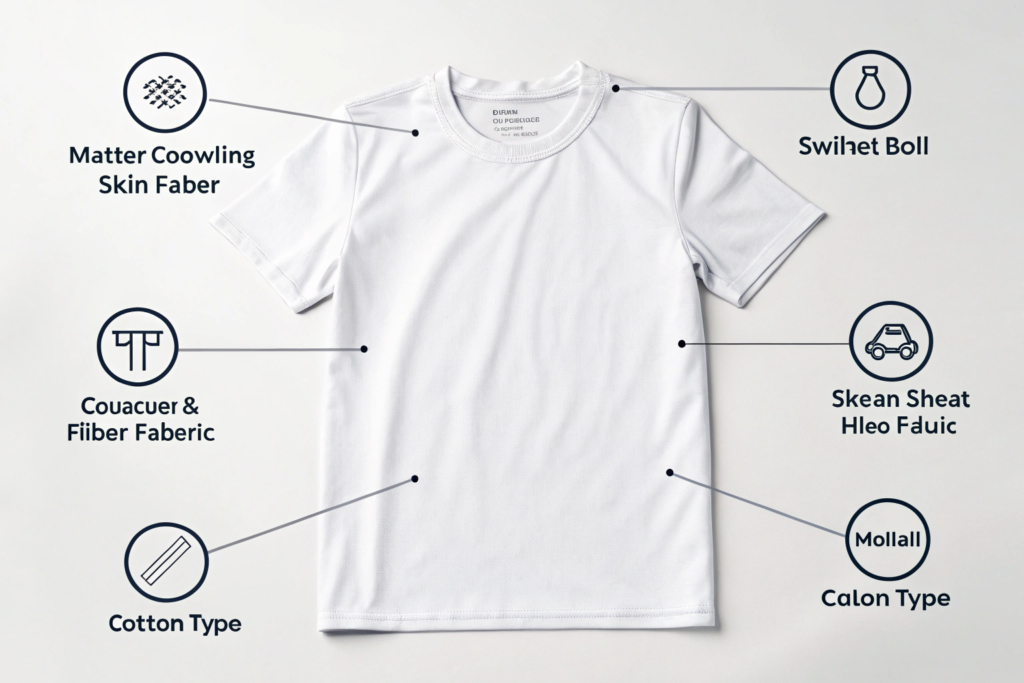
Is there enough recycled fiber to meet the demand from big brands?
Not yet, and this is a massive bottleneck. The demand for recycled cotton and recycled polyester is outstripping supply. Most "recycled cotton" today comes from pre-consumer waste (factory cutting room scraps), not from old clothes. The technology to recycle post-consumer cotton back into high-quality, long-staple fiber at scale is still in its infancy.
For polyester, the situation is better, but still tight. Most recycled polyester comes from plastic bottles. But as more brands switch to rPET, the competition for bottle supply increases. The real solution is "fiber-to-fiber" recycling—taking old polyester garments and turning them back into polyester fiber. This technology exists, but the collection, sorting, and processing infrastructure is not yet in place globally. We had a client from a US outdoor brand who wanted 100% fiber-to-fiber recycled nylon for a new line. We found a supplier in Europe, but the lead time was 6 months and the minimum order quantity was huge. It was a non-starter for their smaller collection. (The Textile Exchange Materials Market Report has detailed data on recycled fiber supply and demand.)
How do we handle the "fit" of circularity with complex performance requirements?
This is the frontier of innovation. For simple products like t-shirts or tote bags, circularity is relatively achievable. But for high-performance activewear or outdoor gear, with requirements for waterproofing, breathability, stretch, and durability, it's much harder. A waterproof jacket might have a face fabric, a membrane, a laminate, a durable water repellent (DWR) coating, and taped seams. That's a multi-material sandwich that is currently almost impossible to recycle.
Brands are tackling this in two ways. First, they are simplifying constructions. Some are moving to "monomaterial" laminates, where the face fabric, membrane, and backer are all the same polymer (like all-polyester), allowing for chemical recycling. Second, they are developing bio-based and biodegradable DWR coatings that don't persist in the environment. We worked with a German sportswear brand in 2024 on a "circular ski jacket" concept. We used a polylactic acid (PLA) bio-based membrane and a recycled polyester face fabric. It wasn't perfect—the durability wasn't quite at the level of Gore-Tex—but it was a huge step forward. (Innovation platforms like The Microfibre Consortium are tackling these complex performance-recyclability trade-offs.)
Conclusion
So, why are big brands switching to circular economy fabrics now? Because the convergence of regulatory pressure from Europe, intensifying consumer demand for genuine sustainability, and the business imperative of stabilizing volatile raw material costs has made circularity not just an ethical aspiration, but a strategic necessity. They are realizing that the old linear model is a dead end. But true circularity is not a simple swap. It requires a fundamental redesign of products—from choosing monomaterials and designing for disassembly, to selecting recycling-compatible dyes and finishes. It means tackling immense challenges in scaling recycled fiber supply and solving the complex puzzle of recycling high-performance textiles. The brands that are leading the way aren't just buying "green" fabric; they are partnering deeply with their suppliers to co-create new systems and new solutions.
This is exactly the kind of deep, collaborative innovation we specialize in at Shanghai Fumao. We aren't just a fabric supplier; we are a circularity partner. With over 20 years of experience in Keqiao, our own CNAS-accredited lab, and a network of innovative upstream partners, we are helping brands navigate this transformation. We can help you select the right monomaterials, source fiber-to-fiber recycled content, test for recycling compatibility, and even prepare for the Digital Product Passport. If you're ready to move beyond the buzzwords and start building a genuinely circular supply chain for your brand, please reach out to our Business Director, Elaine. She can discuss your specific goals, walk you through our circular fabric capabilities, and help you plan a roadmap for the future. Email her directly at elaine@fumaoclothing.com. Let's build a circular future, together.