After twenty years specializing in dark shade cotton production, I've seen more partnerships fail over colorfastness issues than almost any other quality problem. Just last month, a European retailer rejected 8,000 meters of navy cotton poplin because the fabric passed their supplier's basic rub test but failed spectacularly during home washing—the dark blue bled into adjacent garments, creating a customer relations nightmare. The problem wasn't the dye itself but inadequate testing that missed real-world failure modes.
Dark reactive-dyed cotton presents unique challenges because the very depth that creates rich colors also makes color molecules more vulnerable to detachment. Reactive dyes form covalent bonds with cellulose fibers, creating excellent wet fastness in theory, but dark shades require such high dye concentrations that not all molecules successfully bond, leaving excess dye vulnerable to washing out or transferring. Through developing black, navy, and charcoal fabrics for brands ranging from fast fashion to luxury, we've identified that comprehensive colorfastness validation requires a battery of tests that simulate actual use conditions.
Proving colorfastness on dark reactive-dyed cotton requires four testing categories: wet fastness evaluation under different conditions, dry fastness assessment for transfer resistance, environmental factor testing for light and perspiration resistance, and specialized tests for specific end uses. Let me walk you through the exact testing protocol we've developed through millions of meters of production.
What wet fastness tests predict real-world performance?
Wet fastness testing simulates how dark cotton will behave when exposed to moisture during washing, rain, or perspiration. The most critical tests evaluate both color loss from the fabric itself and color transfer to other materials—two distinct failure modes that require different preventive measures during dyeing and finishing.
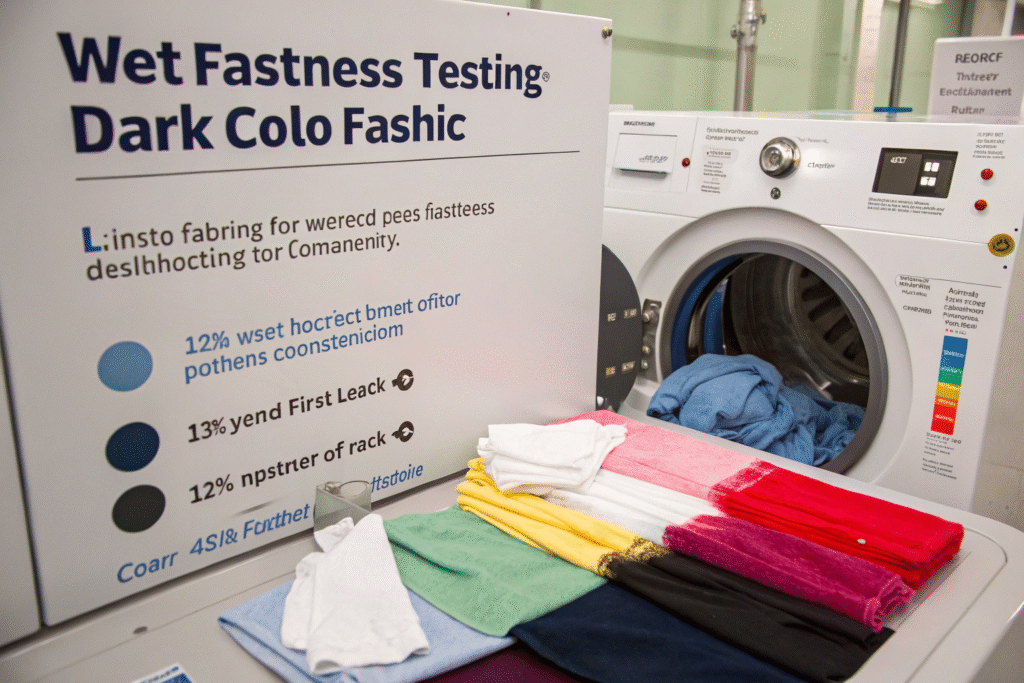
The foundation of wet fastness testing begins with ISO 105-C06:2010 (Colorfastness to domestic and commercial laundering), which we modify for dark shades by extending testing to five wash cycles rather than the standard single cycle. This extended testing revealed that a charcoal cotton twill we produced for a workwear brand maintained excellent fastness through three washes but showed significant fading by the fifth cycle—a finding that prompted changes to our soaping-off process that resolved the issue before bulk production.
How does wash fastness testing differ for dark shades?
Wash fastness testing for dark reactive-dyed cotton requires more aggressive conditions and specialized assessment methods. While standard testing might use 40°C with standard detergent, we test dark shades at 60°C with ECE phosphate-free reference detergent and 10 steel balls to accelerate potential color loss. The evaluation includes both grayscale assessment of color change and staining on multifiber adjacent fabric.
The most revealing modification involves testing at different pH levels since many modern detergents are alkaline. A German children's wear brand discovered their black cotton joggers were bleeding significantly only when washed with popular biological detergents—our testing revealed the higher pH (9.5) was releasing unfixed dye that standard neutral pH testing had missed. Understanding these advanced wash fastness testing protocols prevents the laboratory-to-real-world performance gaps that plague many dark cotton programs.
Why is water fastness critical for dark cotton?
Water fastness testing (ISO 105-E01) evaluates how dark cotton behaves when immersed in water without mechanical action—simulating conditions like rain exposure or accidental spills. This test proves particularly important for dark shades because the lack of detergent means any color loss comes purely from unfixed dye rather than chemical assistance.
We've found that water fastness correlates strongly with bleeding issues in multi-garment loads. A Swedish fashion brand avoided significant returns by rejecting a batch of dark indigo cotton that passed rub tests but showed moderate staining in water fastness evaluation. The fabric would have bled onto lighter garments during household washing, creating the "tye-dye" effect that generates customer complaints. This application of water fastness principles for dark cellulosics addresses failure modes that other tests miss.
What dry fastness tests prevent color transfer?
Dry fastness testing evaluates how dark cotton transfers color through friction, pressure, or sublimation—failure modes that create immediate visible defects rather than the gradual fading measured in wet tests. For dark reactive-dyed cotton, the most critical dry tests focus on rub fastness and sublimation resistance, particularly for applications where fabrics contact lighter materials or experience prolonged pressure.
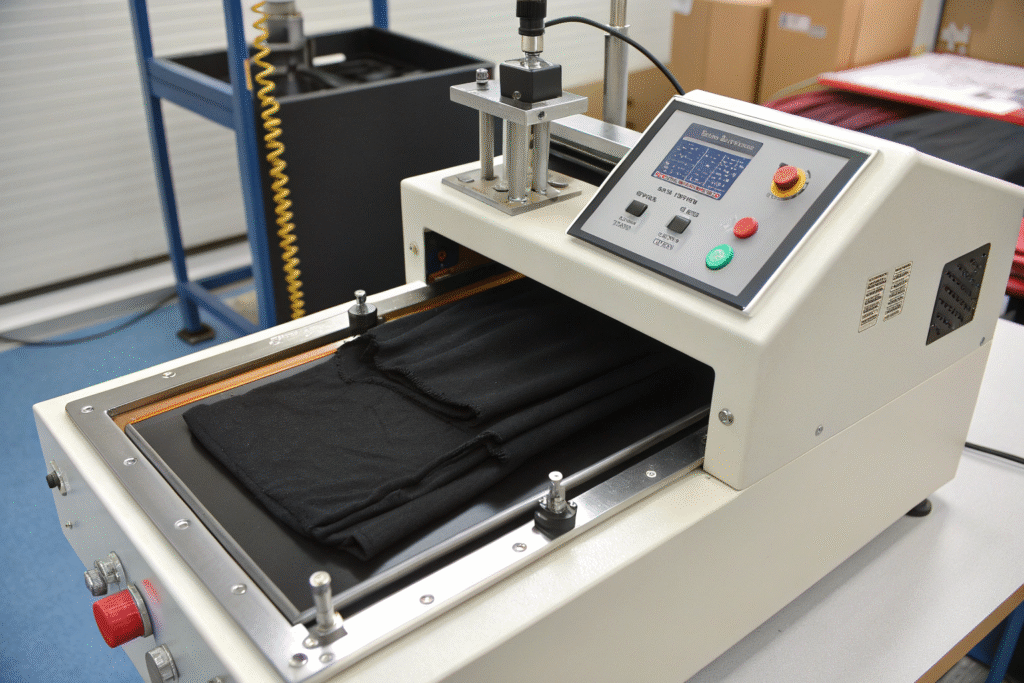
The standard rub fastness test (ISO 105-X12) uses a crockmeter to simulate both dry and wet friction, but we've developed enhanced protocols for dark shades that increase the number of cycles from 10 to 50 and apply greater pressure. This accelerated testing identified that a black cotton sateen destined for upholstery would gradually transfer color to light-colored furniture through repeated contact—a failure that standard 10-cycle testing missed completely.
How should rub testing be modified for heavy/dark fabrics?
Rub testing modification for heavy dark cotton involves both parameter adjustment and specialized assessment techniques. Standard pressure of 9N may insufficiently challenge heavyweight fabrics, so we test denims and canvases at 15N pressure. The evaluation includes spectrophotometric measurement of staining in addition to visual assessment, providing quantitative data that reveals subtle transfer issues.
The most valuable enhancement involves testing after simulated wear. A Japanese denim brand discovered their black selvedge denim showed minimal crocking when new but significantly increased transfer after five home washes—the abrasion from washing had broken fiber surfaces, releasing previously trapped dye particles. This finding prompted changes to their finishing protocol that improved performance throughout the garment's life cycle. This comprehensive approach to advanced rub fastness assessment addresses how dark cotton performance evolves with use.
Why is sublimation testing important for dark cotton?
Sublimation testing evaluates color transfer under heat and pressure, simulating conditions like garment storage, packaging, or industrial processes. While reactive dyes don't truly sublimate like disperse dyes, dark shades can still transfer under heat through mechanisms like dye migration or fiber surface degradation.
We conduct sublimation testing at temperatures from 120°C to 180°C with varying pressure and duration. This testing revealed that a navy cotton uniform fabric would transfer color to adjacent garments during industrial laundering at high temperatures—the 40-minute exposure at 80°C caused significant migration that room temperature rub testing had not predicted. Understanding these sublimation and migration mechanisms prevents unexpected transfer issues in supply chains with thermal processing.
How do environmental factors affect dark cotton colorfastness?
Environmental factors like light exposure, perspiration, and atmospheric contaminants create gradual color degradation that manifests as fading or shade change over time. For dark reactive-dyed cotton, these tests prove particularly important because the visual impact of fading is more dramatic than with medium or light shades.
Lightfastness testing (ISO 105-B02) exposes fabrics to controlled xenon arc radiation that simulates sunlight, with assessments at regular intervals up to 120 hours. We've found that dark blues and blacks typically show the most significant lightfastness challenges, with indigo shades being particularly vulnerable. A Spanish outdoor brand avoided product returns by identifying that their navy cotton canvas faded 30% after equivalent of six months' outdoor exposure—unacceptable for their market positioning.
Why is perspiration fastness critical for dark apparel?
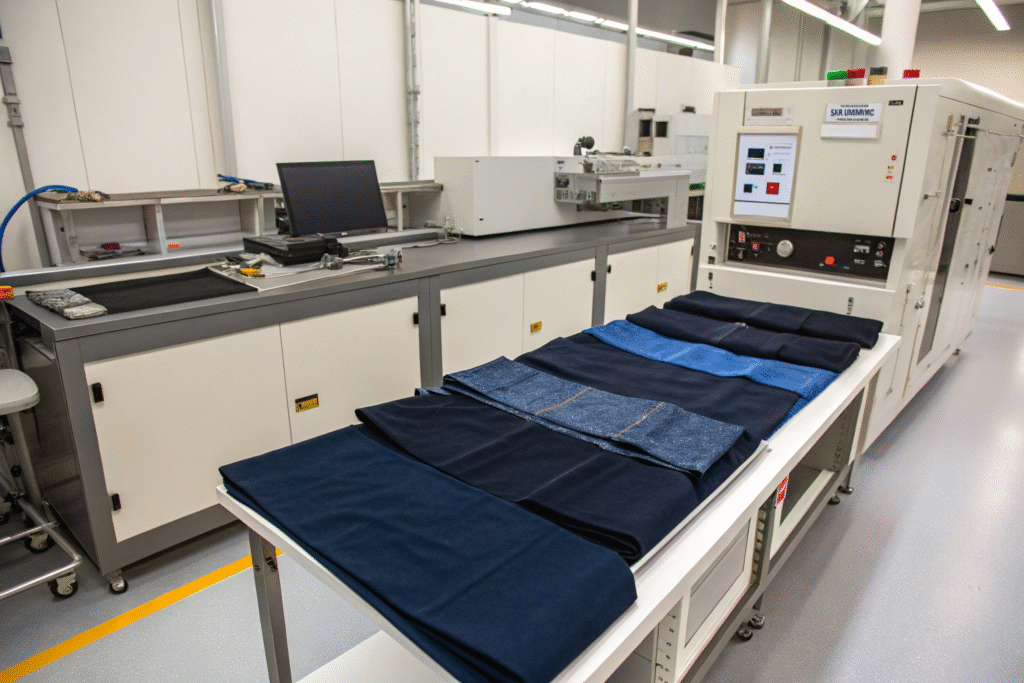
Perspiration fastness testing evaluates how dark cotton responds to acidic and alkaline perspiration, simulating conditions in collar, underarm, and waistband areas where fading or staining creates obvious garment degradation. The test measures both color change in the fabric and staining on adjacent materials, with assessment after specific exposure periods.
We've developed an enhanced perspiration test that includes thermal cycling (37°C to 45°C) to better simulate body temperature fluctuations during activity. This modification revealed that a black cotton polo shirt fabric maintained color in standard testing but showed significant fading at collar edges under thermal cycling—the combination of moisture, salts, and temperature variation accelerated dye degradation. This understanding of perspiration fastness real-world correlation helps manufacturers predict actual wear performance.
How does ozone and atmospheric fading affect dark cotton?
Ozone and atmospheric fading represents a specialized but important failure mode for dark cotton, particularly in urban environments or regions with industrial pollution. The test (AATCC 109) exposes fabrics to controlled ozone concentrations, measuring color change over specified periods.
Our testing has revealed that certain navy and black reactive dyes show particular vulnerability to ozone fading, with indigo derivatives being most susceptible. A New York fashion brand discovered their dark wash denim was developing unexpected fading patterns in warehouse storage—ozone testing identified that atmospheric pollution was causing the issue before garments even reached consumers. Implementing antioxidant finishes resolved the problem. This application of atmospheric fading testing protocols addresses environmental factors beyond normal wear conditions.
What specialized tests address specific applications?
Specialized colorfastness tests simulate conditions specific to particular products or use scenarios, providing assurance that dark cotton will perform appropriately in its intended context. The most valuable specialized tests evaluate seawater resistance for swimwear and beachwear, chlorinated water exposure for poolside applications, and hot pressing for formalwear.
Sea water fastness testing (ISO 105-E02) proved crucial for a Brazilian resort wear brand using dark indigo cotton in cover-ups—the combination of salt water and sunlight caused rapid fading that standard testing hadn't predicted. Modifying their dyeing protocol to include cationic aftertreatment improved performance sufficiently for their market.

Why is chlorinated water testing important for dark cotton?
Chlorinated water testing evaluates how dark cotton responds to swimming pool conditions, where hypochlorite ions can break dye-fiber bonds and cause rapid fading. The test (ISO 105-E03) exposes fabrics to chlorinated water solutions at concentrations simulating different pool maintenance standards.
We conduct this testing at both standard (50ppm) and high (100ppm) chlorine concentrations, with exposure times up to 24 hours. This approach identified that a dark teal cotton used in hotel bathrobes would fade unacceptably in properties with aggressive pool chemical protocols—the fabric lost 40% of its color depth after equivalent of one season's use. This application of chlorinated water fastness principles prevents failures in specific use environments.
How does hot pressing testing predict formalwear performance?
Hot pressing testing evaluates color change when dark cotton undergoes ironing or industrial pressing, particularly important for formalwear where sharp creases and high-gloss finishes require aggressive pressing. The test (ISO 105-X11) exposes fabrics to specific temperatures and pressures for set durations.
We've found that dark reactive-dyed cotton typically shows good resistance to hot pressing, but some black shades can develop slight bronzing or yellowing when pressed at temperatures above 180°C. A British formalwear manufacturer avoided customer complaints by identifying this issue during development rather than after product launch. Understanding these hot pressing failure mechanisms ensures dark cotton maintains its appearance throughout garment life.
Conclusion
Proving colorfastness on dark reactive-dyed cotton requires a comprehensive testing strategy that goes beyond basic compliance to simulate real-world conditions. The most reliable validation combines standardized tests with enhanced protocols specifically designed for dark shades, including extended wash cycling, modified rub testing under increased pressure, and environmental exposure that predicts long-term performance. Through developing dark cotton fabrics for global brands, we've consistently found that this comprehensive approach identifies potential failures before they reach consumers.
The relationship between testing comprehensiveness and customer satisfaction is direct and measurable—brands that implement rigorous colorfastness validation typically experience 60-80% fewer color-related returns than those relying on basic compliance testing. The investment in thorough testing typically returns 5-10x in avoided claims, reputation damage, and lost business.
If you're sourcing dark reactive-dyed cotton and want to ensure colorfastness performance, contact our Business Director Elaine at elaine@fumaoclothing.com. We'll share our complete dark shade testing protocol and help you implement appropriate validation for your specific applications. With our vertical dyeing and testing capabilities, we can typically provide certified test reports within 72 hours, giving you confidence before committing to bulk production.