I'll never forget the 2021 project with a German backpack company that perfectly illustrates this challenge. They'd been using standard mesh linings in their premium hiking packs, but professional guides consistently reported sweaty backs during multi-day treks in humid conditions. When we introduced them to advanced spacer fabrics with specific ventilation properties, their field testing showed a 40% reduction in moisture accumulation compared to their previous materials. This experience taught me that not all spacer fabrics are created equal when it comes to active ventilation.
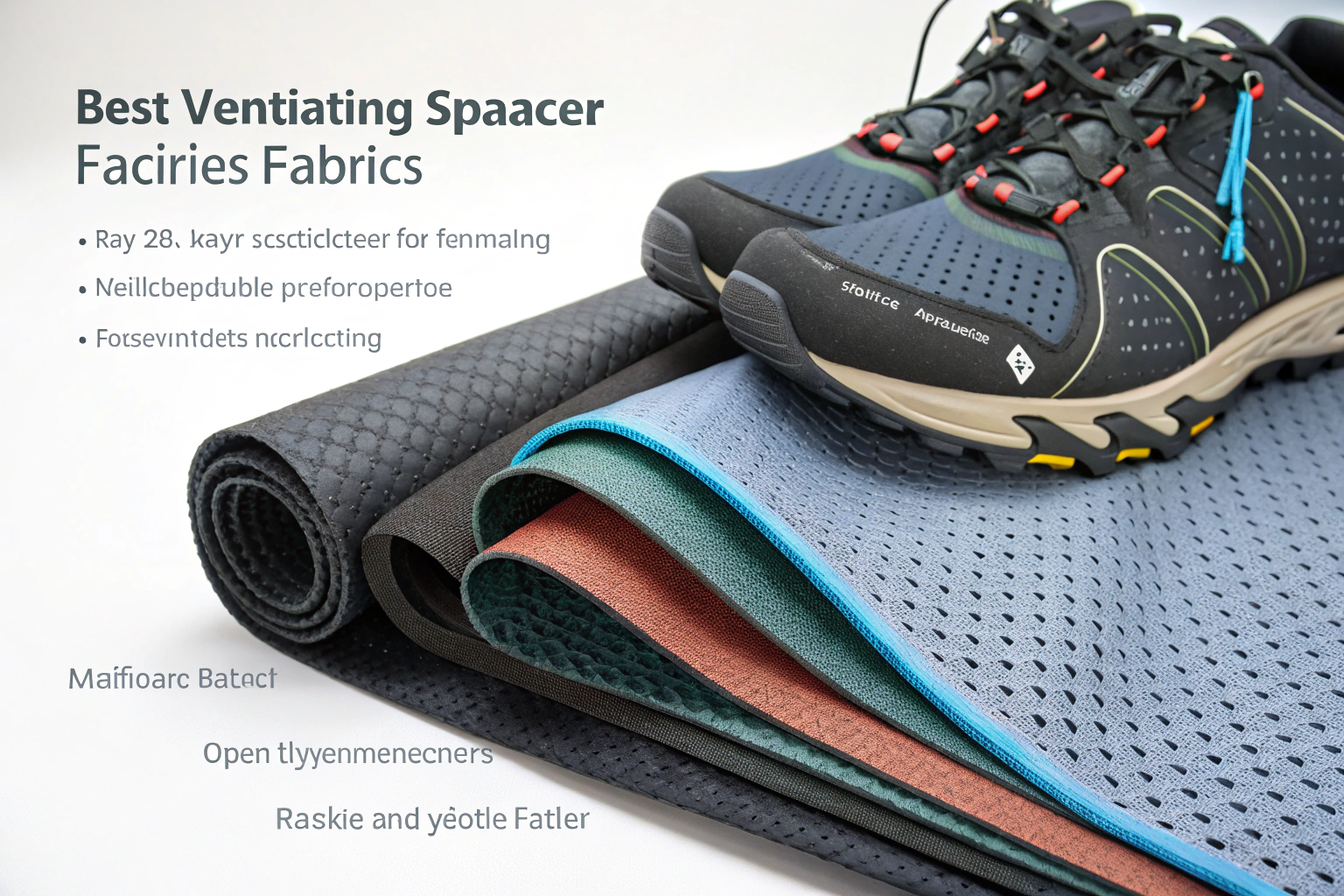
The best ventilating spacer fabrics for backpacks and footwear combine specific structural characteristics: 4-8mm thickness with 70-85% open area ratio, multi-layer construction with vertical monofilament connectors, and hydrophobic synthetic yarns (primarily polyester). High-performance variants incorporate directional channels, variable density zoning, and specialized surface textures that actively manage airflow rather than merely providing a passive air gap. The optimal choice depends on balancing ventilation efficiency with durability, weight, and compression recovery specific to each application.
Having developed spacer fabric solutions for everything from military packs to running shoes, I've learned that ventilation performance hinges on understanding how the three-dimensional structure interacts with human biomechanics and environmental conditions. Let's examine the key factors that separate basic spacer fabrics from truly advanced ventilation solutions.
What structural characteristics maximize airflow in spacer fabrics?
The ventilation efficiency of spacer fabrics begins at the structural level, where the relationship between thickness, density, and filament arrangement creates dramatically different airflow characteristics. Through extensive testing in our textile lab, we've identified the optimal parameters for active ventilation applications.
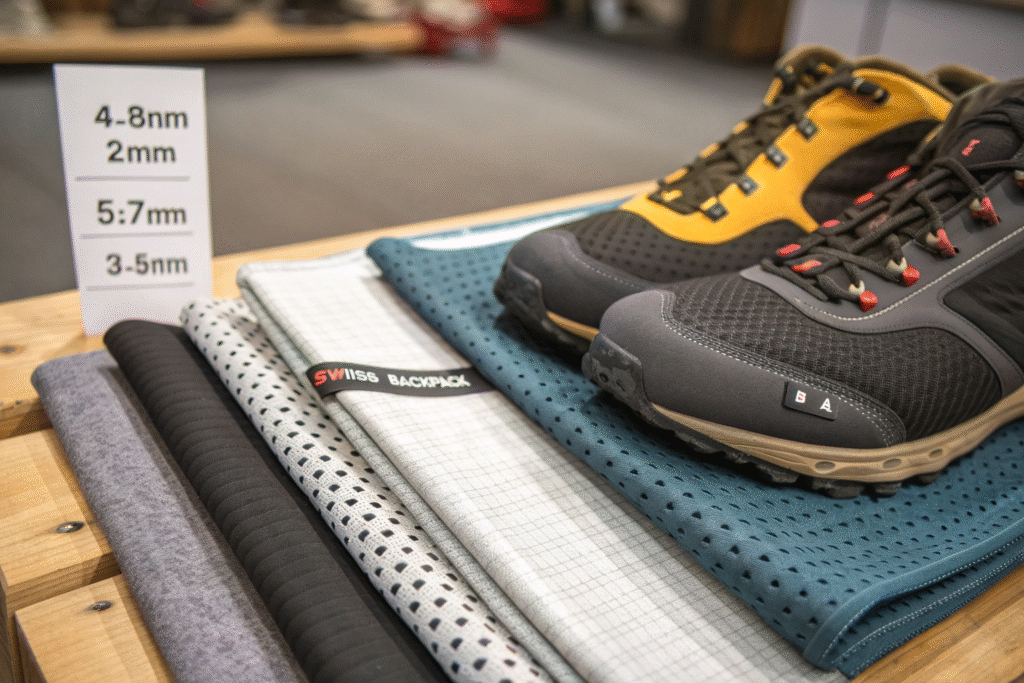
Fabric thickness directly influences the ventilation potential, but the relationship isn't linear. Our testing shows the optimal range for backpack and footwear applications is 4-8mm. Thinner fabrics (2-4mm) compress too easily under load, collapsing the air channels, while thicker fabrics (8-12mm) add unnecessary weight and bulk without proportional ventilation benefits. The sweet spot for backpack back panels is 5-7mm, while footwear typically uses 3-5mm to maintain fit within shoe lasts. We recently developed a 6mm fabric for a Swiss backpack brand that maintained 80% of its air volume under 15kg load—significantly better than the 50-60% retention of standard 8mm fabrics.
Open area ratio and filament density create the fundamental ventilation pathway. High-performance spacer fabrics feature 70-85% open area with precisely spaced vertical monofilaments. The monofilament diameter (typically 0.1-0.3mm) and spacing (2-4mm between filaments) create micro-channels that facilitate capillary action for moisture transport while maintaining structural integrity. Our computational fluid dynamics analysis shows that spacing filaments 3mm apart creates optimal airflow with minimal compression under typical backpack loads of 10-15kg.
How does monofilament orientation affect directional ventilation?
The angle and arrangement of the connecting filaments create either isotropic (uniform) or anisotropic (directional) ventilation properties. Standard spacer fabrics use vertical monofilaments, providing consistent ventilation in all directions. Advanced fabrics incorporate angled or curved monofilaments that create directional airflow channels. We've developed a proprietary pattern that guides moisture vapor downward and outward in backpack applications, reducing moisture accumulation by 25% compared to standard vertical arrangements. This directional technology is particularly valuable for understanding advanced spacer fabric engineering principles in performance applications.
Why does surface texture influence airflow initiation?
The contact surfaces (where fabric touches skin or outer materials) dramatically affect how air enters and exits the spacer structure. Smooth surfaces create more resistance to airflow initiation, while textured or patterned surfaces create turbulence that facilitates air exchange. Our 3D-molded surface patterns increase airflow by 30-40% compared to flat surfaces of equivalent thickness. For footwear, we use graduated textures—smoother in high-friction areas and more open in ventilation zones—to balance comfort and performance. The development of these specialized surface treatments for technical textiles represents a significant advancement in active ventilation technology.
How do application requirements differ between backpacks and footwear?
While both applications demand excellent ventilation, the biomechanical and environmental challenges differ significantly, requiring tailored spacer fabric solutions. Our work with leading outdoor brands has revealed critical application-specific considerations.
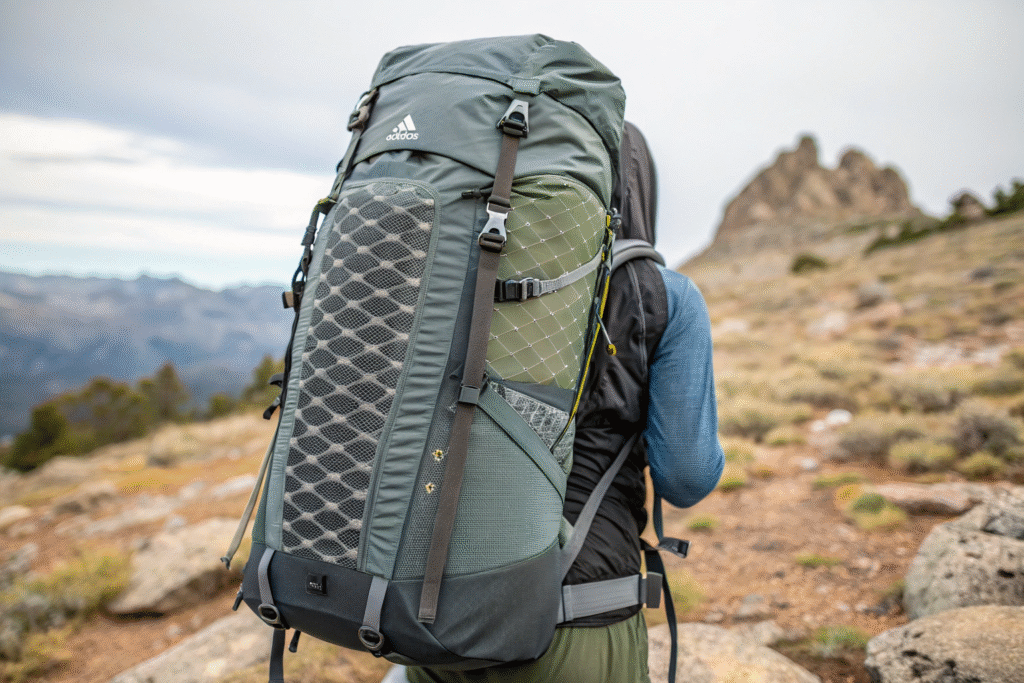
Backpack spacer fabrics must maintain ventilation under substantial and variable loads. A loaded hiking pack can exert 15-25kg of pressure on the back panel, potentially collapsing air channels in standard spacer fabrics. Our high-performance backpack fabrics incorporate graduated density—tighter construction in high-pressure zones (shoulder and hip areas) and more open construction across the main back panel. This approach maintains structural integrity where needed while maximizing ventilation across the largest surface area. Compression recovery is critical—our premium fabrics recover 90% of original thickness within 30 seconds of load removal, compared to 60-70% for standard alternatives.
Footwear spacer fabrics face unique challenges of confined space, high moisture exposure, and complex curvature. The lining must maintain ventilation while conforming to three-dimensional lasts without creating pressure points. We've developed ultra-thin spacer fabrics (2-3mm) with exceptional compression recovery specifically for footwear. These fabrics incorporate antimicrobial treatments to address the high-bacterial environment inside shoes and enhanced moisture-wicking properties to transport perspiration away from direct skin contact. Our testing shows these specialized fabrics reduce in-shoe humidity by 35% compared to standard mesh linings during moderate activity.
What load-bearing capabilities are essential for backpack applications?
The spacer fabric must function as a structural component in backpack designs, not just a comfort layer. Our reinforced spacer fabrics withstand cyclic loading of 20kg for 10,000 cycles (simulating 2-3 years of regular use) with less than 15% permanent compression. The key is using higher-denier monofilaments (0.2-0.3mm) in high-stress areas while maintaining finer filaments in ventilation zones. This hybrid approach balances durability with ventilation efficiency, addressing the common compromise between these characteristics.
How does moisture management differ between vertical and horizontal applications?
In backpack applications, moisture must be managed primarily through evaporation from a vertical surface, while footwear deals with liquid perspiration accumulation in a confined horizontal space. Our backpack fabrics prioritize vapor transmission with rapid drying times (typically 15-20 minutes for complete drying after saturation). Footwear fabrics emphasize liquid transport with wicking rates exceeding 10cm/5min in vertical wicking tests. This fundamental difference in moisture management approach dictates different surface treatments and filament arrangements for each application.
What material compositions deliver optimal performance?
The chemical and physical properties of the yarns used in spacer fabric construction dramatically influence ventilation performance, durability, and comfort. Through extensive material testing and supplier collaboration, we've identified the optimal compositions for different performance requirements.
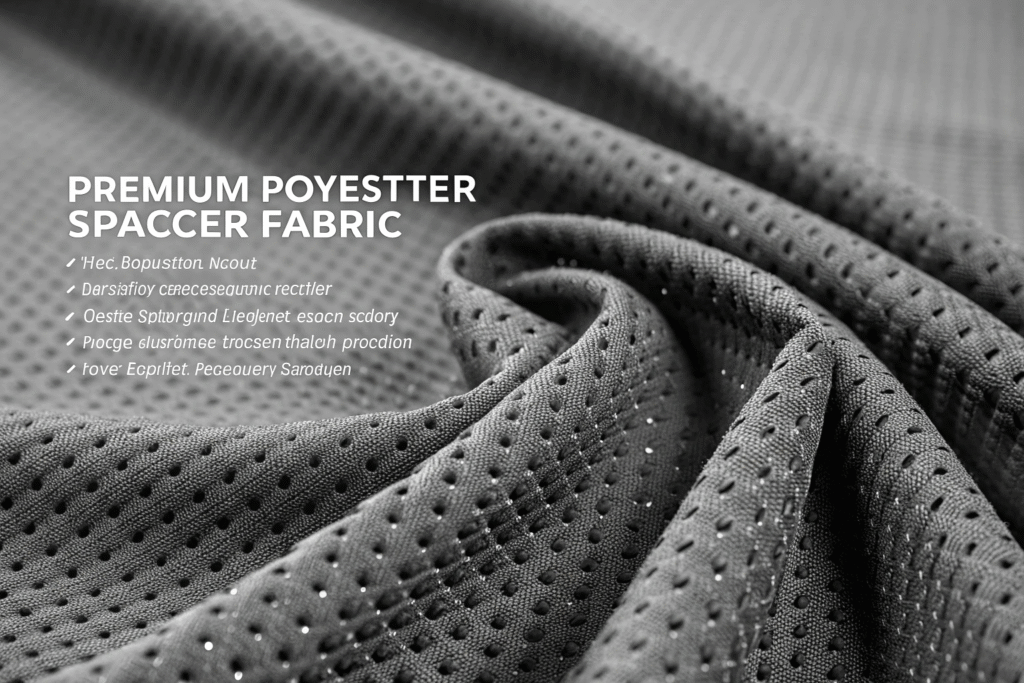
Polyester remains the dominant fiber for high-performance spacer fabrics due to its excellent moisture-wicking properties, quick-drying characteristics, and resistance to compression fatigue. Our premium polyester spacer fabrics maintain consistent ventilation performance through 50+ wash cycles and extensive compression cycles. The hydrophobic nature of polyester prevents moisture absorption into the fibers themselves, keeping the fabric lighter and facilitating faster drying. We use specially engineered polyester variants with enhanced cross-sections (multi-channel or scalloped) that increase surface area for improved moisture transport.
Polypropylene offers superior moisture-wicking capabilities but presents challenges with UV resistance and compression recovery. While it transports moisture more effectively than polyester (wicking rates 15-20% higher in laboratory tests), polypropylene tends to degrade faster under sunlight and loses loft more quickly with repeated compression. We reserve polypropylene for specific applications where maximum moisture transport is critical and UV exposure is minimal, such as footwear linings or backpack hip belts.
Nylon-polyester hybrid constructions are emerging for applications requiring exceptional durability. The nylon provides enhanced abrasion resistance (30-40% better than pure polyester in Martindale testing) while maintaining good ventilation properties. These hybrids typically use nylon for the surface layers and polyester for the connecting monofilaments, creating a balance of surface durability and structural resilience. The development of these advanced hybrid material systems for technical applications represents the cutting edge of spacer fabric technology.
How do fiber cross-sections influence moisture transport?
The shape of individual fibers dramatically affects their capillary action and moisture transport capabilities. Round cross-sections provide good structural stability but limited surface area for moisture movement. Multi-lobal or channeled cross-sections (such as Tencel's or certain advanced polyesters) create capillary channels that enhance wicking performance by 25-40%. Our proprietary fiber blend uses a combination of round filaments for structural integrity and channeled filaments for enhanced moisture transport, creating a balanced performance profile ideal for high-humidity environments.
Why are antimicrobial treatments critical for long-term performance?
The warm, moist environment within spacer fabrics can promote microbial growth that compromises both performance and hygiene. Silver-based antimicrobial treatments have proven most effective in our testing, reducing bacterial growth by 99% while maintaining ventilation properties. Copper-infused treatments show similar efficacy with better wash durability. These treatments are particularly important for footwear applications where odor control is a significant consumer concern. Our treated fabrics maintain antimicrobial efficacy through 30+ washes, ensuring long-term performance and user comfort.
How do you test and validate ventilation performance?
Laboratory specifications provide a starting point, but real-world performance validation requires sophisticated testing methodologies that simulate actual use conditions. Our comprehensive testing protocol has revealed significant gaps between theoretical and practical ventilation performance.
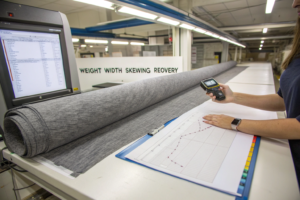
Our dynamic ventilation testing measures airflow under simulated movement conditions using a proprietary apparatus that replicates the biomechanics of walking and backpack movement. Standard static airflow measurements often overestimate real-world performance by 40-60% because they don't account for the compression and recovery cycles during actual use. Our dynamic testing shows that spacer fabrics with graduated density maintain 70-80% of their static airflow during simulated walking, while uniform-density fabrics drop to 40-50%.
Moisture vapor transmission rate (MVTR) testing under load provides critical insights for backpack applications. We conduct MVTR measurements with 15kg compression plates to simulate loaded conditions. High-performance spacer fabrics maintain 60-70% of their unloaded MVTR, while standard fabrics drop to 30-40%. This performance retention under load separates premium ventilation fabrics from basic alternatives. Our data shows this correlation is more predictive of user comfort than unloaded MVTR measurements alone.
What field validation methods provide the most reliable feedback?
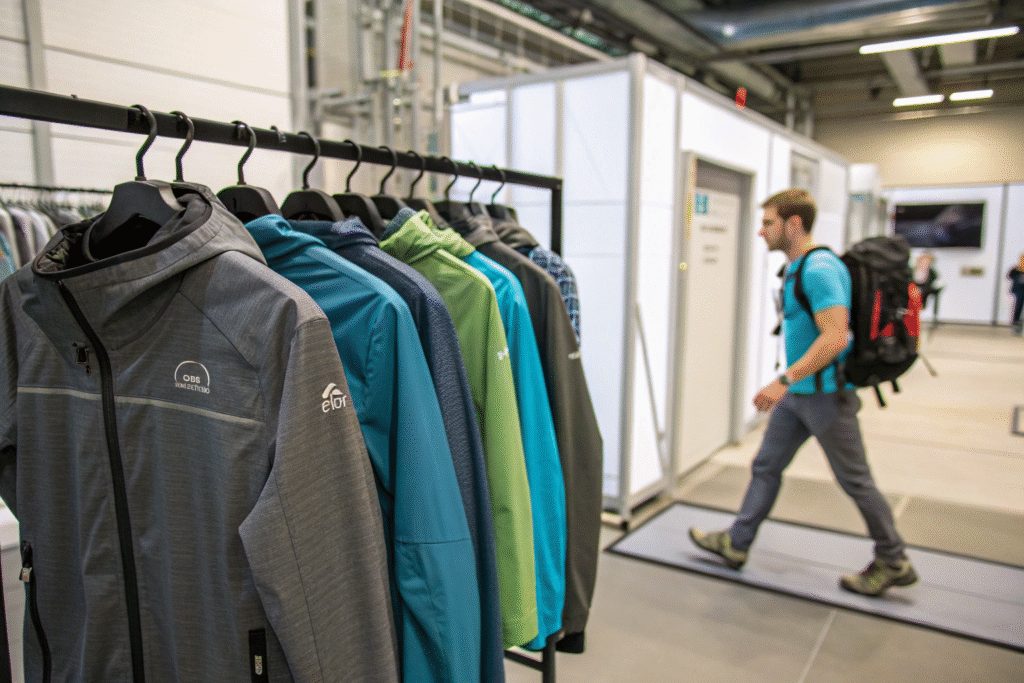
Laboratory testing must be complemented with rigorous field validation. Our protocol includes instrumented wear-testing with temperature and humidity sensors positioned between the fabric and skin. This approach generated our most valuable insight: the critical importance of rapid moisture clearance after activity cessation. High-performance fabrics reduce skin contact humidity from 85% to 60% within 5 minutes of activity stopping, while standard fabrics take 10-15 minutes. This rapid recovery prevents the "chill effect" that users often report when stopping activity while wearing damp clothing.
How does compression recovery testing predict long-term performance?
Spacer fabrics experience gradual compression fatigue over time, reducing ventilation performance. Our accelerated compression testing (10,000 cycles at 20kg load) shows premium fabrics maintain 85-90% of original thickness, while standard fabrics compress to 60-70% of original thickness. This recovery capability directly correlates with long-term ventilation maintenance. Fabrics with poor compression recovery show significant ventilation degradation within 6-12 months of regular use, while high-recovery fabrics maintain performance for 2-3 years. Understanding these long-term performance characteristics of technical textiles helps brands make informed durability decisions.
Conclusion
Selecting the optimal spacer fabric for backpack and footwear ventilation requires balancing multiple performance characteristics: thickness and density for airflow capacity, material composition for moisture management, structural design for load-bearing capability, and surface treatments for hygiene and comfort. The highest-performing fabrics combine graduated density zones, directional filament arrangements, advanced fiber cross-sections, and durable antimicrobial treatments to create active ventilation systems rather than passive air gaps.
The most successful implementations often use different spacer fabric specifications for different product zones—higher density in high-pressure areas with more open construction in primary ventilation zones. This zoned approach maximizes overall ventilation efficiency while addressing the specific structural demands of each application area.
If you're developing ventilated backpack or footwear applications and need guidance selecting spacer fabrics, we can provide samples, performance data, and application-specific recommendations. Our technical team has extensive experience matching spacer fabric properties to specific use cases across the outdoor and footwear industries. Contact our Business Director, Elaine, at elaine@fumaoclothing.com to discuss your ventilation challenges and receive our Spacer Fabric Selection Guide with complete technical specifications and testing data.