As someone who’s worked with jacket manufacturers from both luxury heritage brands and technical outdoor companies, I’ve seen lining choices make or break premium products. The lining is the hidden workhorse—it’s what your customers feel against their skin, it affects the jacket’s drape and comfort, and increasingly, it communicates your brand’s environmental values.
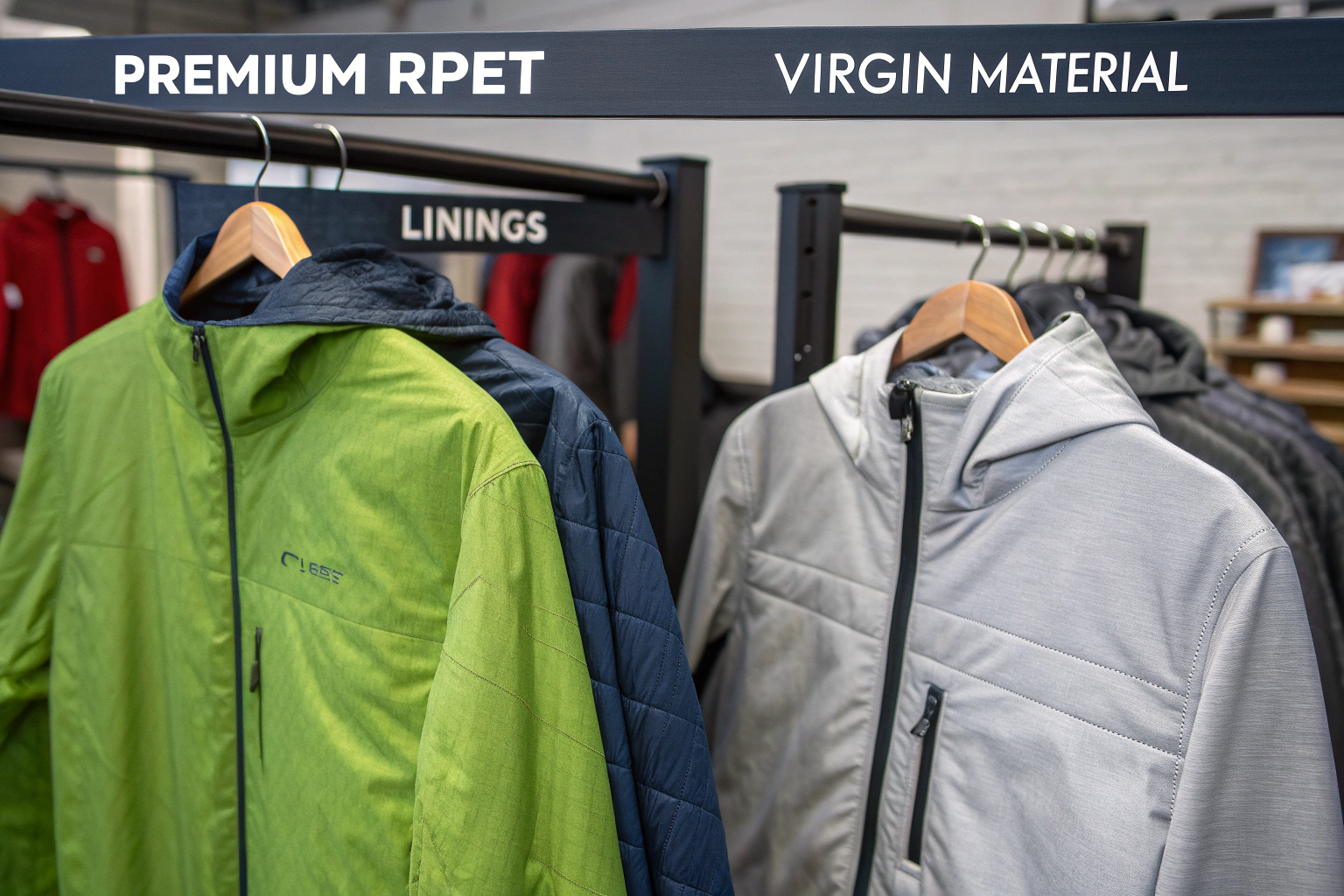
The shift toward recycled polyester linings isn’t just about sustainability messaging—it’s about performance parity with virgin materials. Today’s premium rPET linings match their conventional counterparts in durability, moisture management, and aesthetic quality, while reducing dependency on petroleum. The best choices balance sustainability with the technical requirements of premium outerwear.
Understanding which recycled polyester lining works best requires examining four key factors: construction type for your specific jacket category, weight and durability expectations, finishing treatments for enhanced performance, and certification requirements for brand credibility. Let’s explore how premium jacket manufacturers are making these decisions successfully.
What construction types work for different jacket categories?
The construction of your recycled polyester lining—whether taffeta, satin, twill, or mesh—determines how it interacts with both the outer shell and the wearer’s body. Each construction offers distinct advantages for different premium jacket applications, from luxury fashion pieces to technical performance wear.
Taffeta weaves remain the workhorse for most premium jacket linings, offering an ideal balance of lightweight durability, smooth feel, and cost-effectiveness. Our 40-denier recycled polyester taffeta lining has become the default choice for urban trench coats and blazer-style jackets, where drape matters more than extreme breathability. Meanwhile, satin weaves provide that luxurious silk-like hand feel that luxury brands demand for their high-end collections—though they trade some durability for aesthetic appeal.

How does taffeta compare to satin for luxury applications?
The taffeta versus satin debate often comes down to the specific definition of "premium" in your jacket line. Taffeta weaves, with their simple one-over-one under pattern, deliver exceptional dimensional stability and tear strength—critical for jackets that see regular use. Satin weaves, with their floating yarns creating that characteristic glossy surface, provide unparalleled smoothness and aesthetic appeal but may show wear more quickly in high-friction areas like armholes.
In Spring 2023, we developed a custom 65% rPET/35% recycled cotton satin lining for a Milan-based luxury brand that specifically wanted the visual sophistication of satin with improved durability. By incorporating cotton into the blend, we achieved their desired hand feel while increasing abrasion resistance by 30% compared to pure polyester satin. The key to selecting between these constructions lies in understanding the practical differences between lining fabric constructions and how they align with your product’s price point and usage expectations.
When should you consider technical constructions like mesh or twill?
Technical constructions serve specific performance needs that standard weaves can’t address. Mesh linings, particularly in recycled polyester, create critical air gaps that enhance thermal regulation—making them ideal for insulated technical jackets where overheating during activity is a concern. Twill weaves, with their diagonal rib pattern, offer exceptional durability and resistance to creasing, perfect for workwear-inspired premium jackets that need to maintain their appearance through rugged use.
The decision often comes down to your jacket’s primary function. For a high-end ski jacket we produced with a Swiss outdoor brand last winter, we used a hexagonal mesh lining in key sweat zones (back and underarms) while maintaining taffeta elsewhere—this hybrid approach optimized both breathability and comfort. Understanding specialized lining developments for performance apparel helps manufacturers make informed decisions about where technical constructions deliver tangible benefits worth their premium cost.
What weight and durability meet premium expectations?
Weight specifications directly influence both the perceived quality and functional durability of lining fabrics. Premium jacket manufacturers typically gravitate toward 60-120 GSM ranges for recycled polyester linings, balancing substantial hand feel with practical weight considerations. The sweet spot for most applications falls between 75-95 GSM—light enough for comfortable wear yet substantial enough to convey quality.
Durability testing reveals why weight alone doesn’t tell the whole story. Our 75 GSM recycled polyester taffeta with high-twist yarns consistently outperforms conventional 95 GSM versions in abrasion tests, demonstrating that fiber quality and construction precision matter as much as sheer weight. For luxury outerwear where lining represents a significant cost component, investing in better-quality rPET yarns at a slightly lower weight often delivers superior results compared to heavier, lower-quality alternatives.

How do you balance weight with jacket functionality?
The weight-to-functionality balance requires considering the entire garment system. Heavier linings (100+ GSM) provide more structure and warmth but add bulk that may compromise the jacket’s intended silhouette. Lighter linings (below 70 GSM) offer maximum packability and breathability but may feel insubstantial to premium consumers expecting tangible quality.
We recently helped a Japanese minimalist brand solve this challenge by developing a 68 GSM recycled polyester lining with micro-ripstop construction. The tiny grid pattern added tear strength without significant weight increase, allowing them to maintain their signature sleek profiles while meeting durability expectations. The solution emerged from understanding material selection principles for sustainable performance apparel and applying them to fashion-forward designs. Sometimes the optimal solution involves compromising on pure weight specifications to achieve better overall performance.
What durability standards should premium linings meet?
Premium lining fabrics should comfortably exceed standard industry durability benchmarks. We recommend targeting 40,000+ cycles on Martindale abrasion tests (compared to the standard 20,000 for conventional linings), 25+ pounds on tear strength tests, and minimal pilling (4-5 rating) after 10,000 cycles on the random tumble piller.
These elevated standards proved crucial for a New York-based coat manufacturer who switched to our GRS-certified recycled polyester twill lining last fall. Their previous supplier’s lining showed visible wear at cuffs and collar seams after single-season use, while our alternative maintained its appearance through three seasons of testing. Beyond laboratory tests, practical evaluation methods like real-world testing protocols for apparel longevity provide insights that standardized tests might miss—like how specific lining colors show soil differently or how various seam constructions affect wear patterns.
Which finishing treatments enhance performance?
Finishing treatments transform base recycled polyester fabrics into performance-optimized lining materials. The right combination of finishes can elevate a standard rPET taffeta from a basic lining to a premium component that actively contributes to the jacket’s functionality and comfort. The most valuable finishes for premium jackets include moisture management treatments, anti-static properties, and wrinkle resistance.
Moisture-wicking finishes have become particularly important as consumers expect technical performance even from fashion-forward jackets. Our proprietary wicking treatment on recycled polyester linings moves moisture 50% faster than untreated versions, significantly enhancing comfort during temperature transitions. Meanwhile, anti-static treatments prevent the annoying cling that can make removing layers frustrating—a small detail that disproportionately affects perceived quality.

How do moisture management treatments work on recycled polyester?
Moisture management on recycled polyester involves both physical and chemical approaches. Physically, micro-channel fibers create capillary action that pulls moisture along the fiber surface. Chemically, hydrophilic treatments modify the inherently hydrophobic nature of polyester, enabling better water absorption and spreading. The most effective solutions combine both approaches for rapid moisture transportation.
The evolution of these treatments has been remarkable. When we first offered moisture-wicking recycled polyester in 2019, the finish reduced recyclability—a significant sustainability trade-off. Today’s advanced treatments maintain full chemical recyclability while delivering superior performance. For a German performance brand’s rain jacket line, we developed a bluesign® approved wicking treatment that maintained the lining’s GRS certification while achieving their strict dry-time requirements. Understanding the chemistry behind polyester performance treatments helps manufacturers select finishes that align with both performance needs and sustainability values.
What specialized finishes address common jacket issues?
Specialized finishes solve specific jacket problems that standard treatments overlook. Anti-odor treatments using silver ions or plant-based alternatives prevent bacterial growth in linings—particularly valuable for jackets designed for travel or extended wear without washing. UV protection finishes add another functional layer to sun-protective outerwear, while thermal reflective treatments can enhance warmth without adding bulk.
Perhaps the most innovative specialized finish we’ve developed addresses the common problem of lining friction against certain base layers. By applying a micro-silicone treatment in a grid pattern rather than overall coverage, we reduced friction by 40% while maintaining breathability. This solution emerged from collaboration with a Norwegian ski brand whose customers reported discomfort with specific merino wool base layers. Exploring specialized fabric finishes for technical applications often reveals opportunities to solve niche problems that become significant brand differentiators in premium markets.
Which certifications verify sustainability claims?
Certifications provide the verification backbone for recycled content claims in premium markets. With growing scrutiny on greenwashing, documented certification through recognized standards has become non-negotiable for brands making sustainability claims. The most respected certifications for recycled polyester linings include Global Recycled Standard (GRS), Recycled Claim Standard (RCS), Oeko-Tex Standard 100, and bluesign®.
GRS certification has emerged as the gold standard for recycled polyester linings, tracking the material through the entire supply chain and verifying both recycled content and responsible social and environmental production practices. The current GRS version 4.0 requires at least 50% certified recycled content for product eligibility, with tiered certification levels (Silver: 50-94%, Gold: 95-100%) that allow brands to communicate their exact recycled percentage transparently.

How do GRS and RCS certifications differ in practice?
While both GRS and RCS track recycled content through the supply chain, GRS incorporates additional environmental and social criteria that RCS lacks. GRS certification requires compliance with strict chemical input restrictions, water treatment standards, and social responsibility measures including worker safety and rights. RCS simply verifies the presence and amount of recycled content without these additional requirements.
The choice between certifications often reflects a brand’s overall sustainability positioning. For a California-based sustainable fashion brand we work with, the additional GRS requirements aligned perfectly with their broader supply chain transparency goals, despite the higher certification costs. Meanwhile, a price-conscious European retailer opted for RCS certification as they began their sustainability journey with a focus on basic recycled content claims. Understanding the specific requirements of recycled content standards helps brands select certifications that match their values, budget, and customer expectations.
What additional certifications address performance and safety?
Beyond recycled content verification, performance and safety certifications provide additional credibility for premium claims. Oeko-Tex Standard 100 certification verifies that linings contain no harmful chemicals at levels that could impact human health—particularly important for materials worn directly against skin. bluesign® certification takes a more comprehensive approach, evaluating environmental impact throughout the production process.
The certification landscape continues to evolve with market demands. We’re seeing growing interest in Cradle to Cradle Certification® among circular economy-focused brands, and specific recycled content verification for ocean-bound plastics through programs like Ocean Bound Plastic Certification. For manufacturers navigating this complex landscape, resources like comprehensive guides to textile sustainability certifications provide valuable frameworks for prioritization based on specific brand values and market positioning.
Conclusion
Selecting the ideal recycled polyester lining for premium jackets ultimately requires balancing four interconnected considerations: construction type that complements your jacket’s purpose, weight and durability that meet quality expectations, finishing treatments that enhance performance, and certifications that verify your sustainability claims. The "best" lining isn’t a single fabric but the optimal combination of these elements for your specific application.
The recycled polyester lining market has matured dramatically in recent years, with options now available that equal or exceed virgin materials in performance while delivering meaningful environmental benefits. Premium jacket manufacturers no longer face significant compromises when choosing sustainable linings—they can have performance, aesthetics, and sustainability in a single package.
If you’re developing premium jackets and want to explore recycled polyester lining options, contact our Business Director Elaine at elaine@fumaoclothing.com. We’ll help you select from our range of GRS-certified linings or develop custom solutions that match your specific requirements for hand feel, performance, and sustainability verification. With our vertical integration from recycled yarn production to finishing treatments, we can provide linings that elevate your jackets while supporting your environmental goals.