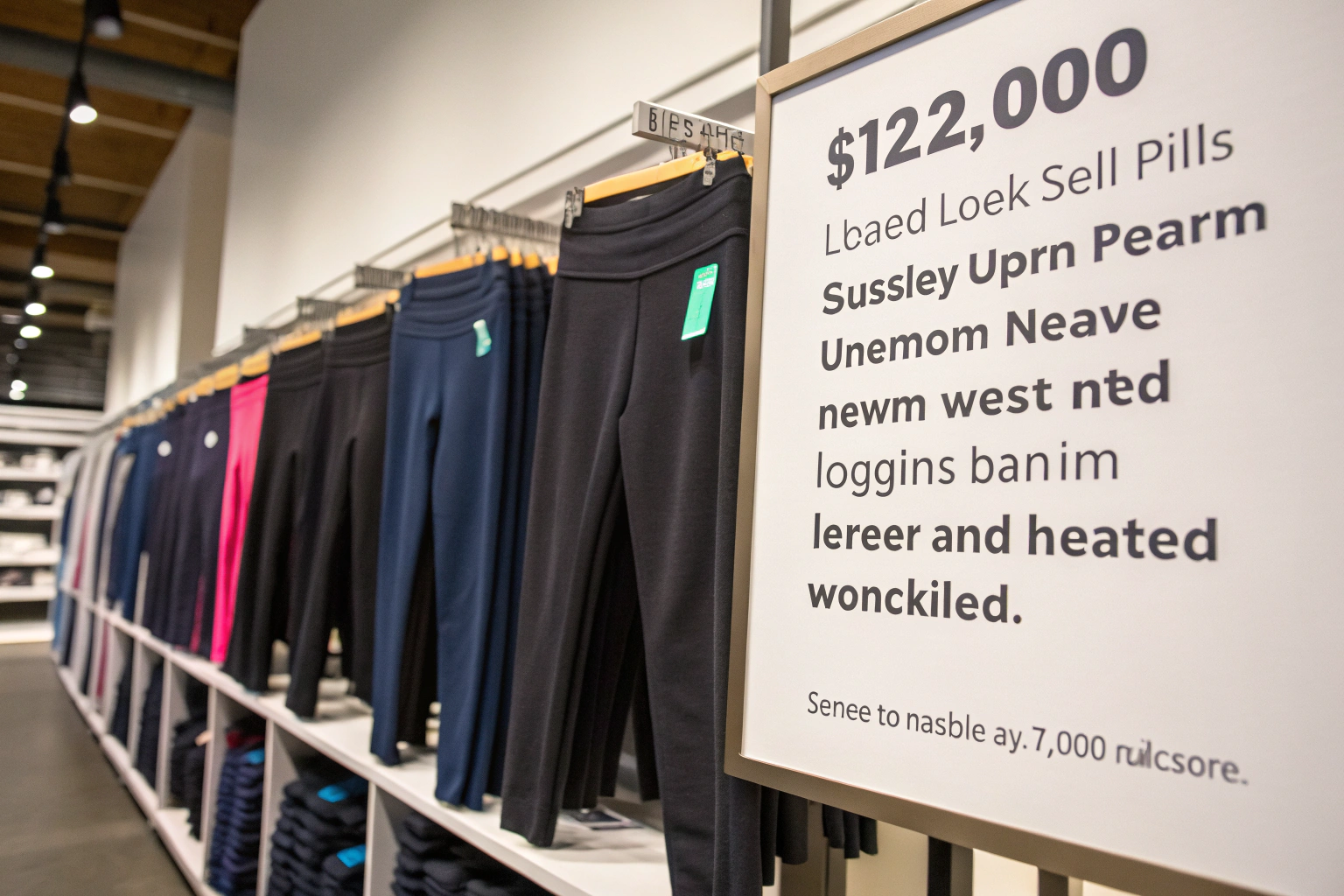
I'll never forget the costly mistake a Seattle-based activewear brand made last year. They chose POY for their premium leggings line because it was cheaper, only to discover the fabric had terrible pilling after just a few wears. The $120,000 shipment became virtually unsellable, and their brand reputation took a hit they're still recovering from. This disaster could have been avoided with the right yarn knowledge.
The choice between DTY (Draw Textured Yarn), FDY (Fully Drawn Yarn), and POY (Partially Oriented Yarn) is one of the most fundamental decisions in polyester apparel manufacturing. Each yarn type creates fabrics with dramatically different hand feel, durability, and performance characteristics. After 20 years of supplying American apparel brands, I've seen how the right yarn choice can make or break a collection.
The quick answer is: DTY generally works best for most apparel applications because of its softness and stretch, FDY excels in smooth, shiny fabrics like linings and outerwear, while POY should only be used as feedstock for further processing. But the real answer depends entirely on your specific fabric requirements and target price point. Let me break down exactly when to use each type.
What are the fundamental differences between DTY, FDY and POY?
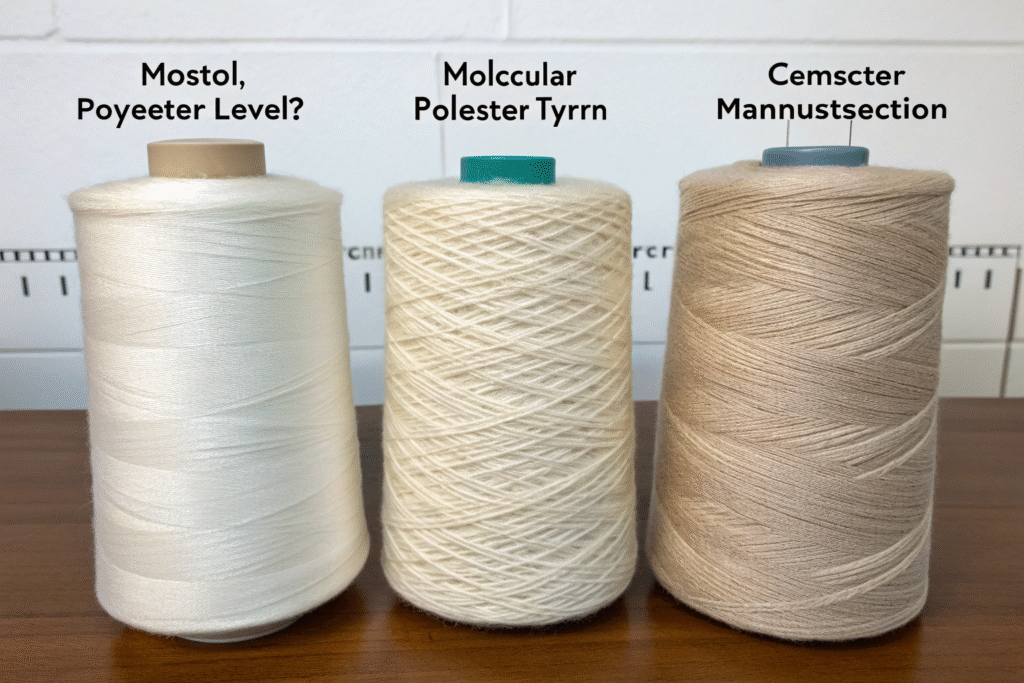
Understanding the manufacturing process is key to understanding yarn performance. These three yarn types represent different stages of polyester production, each with unique characteristics that directly impact your final fabric. The differences start at the molecular level and translate to dramatically different fabric behaviors.
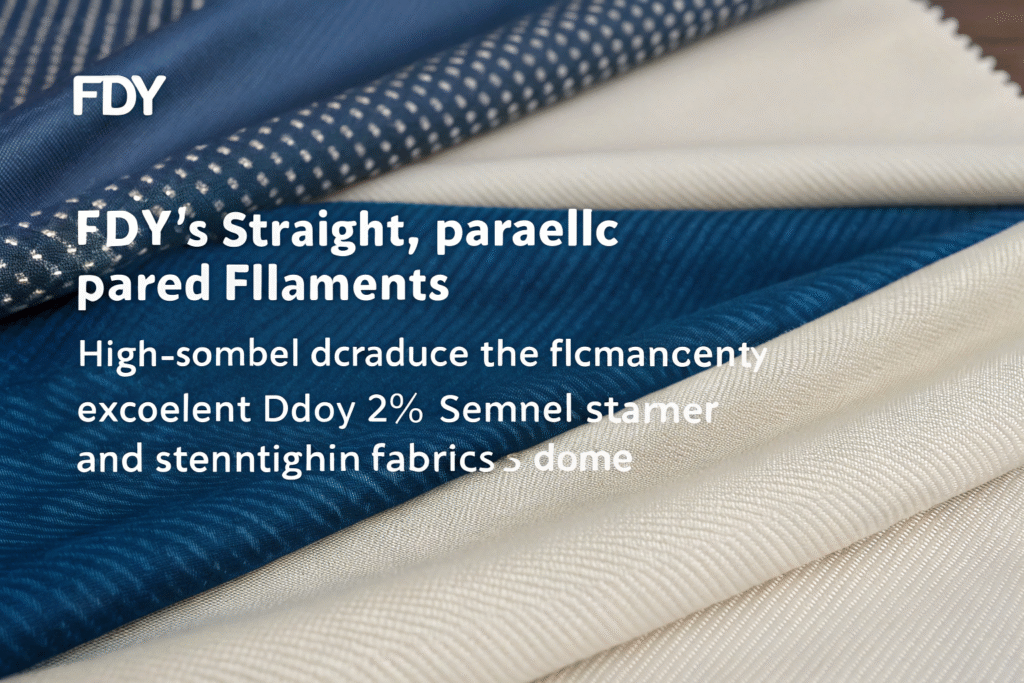
DTY undergoes a texturing process that creates loops and crimps in the filaments, giving it natural stretch and a soft, cotton-like hand feel. FDY is fully drawn during production, resulting in straight, parallel filaments that create smooth, strong fabrics with high luster. POY is an intermediate product that requires additional drawing or texturing before it can be woven or knitted into fabric.
How does the manufacturing process affect yarn properties?
The production method determines the yarn's fundamental structure:
- POY: Spun and partially oriented, with molecular chains not fully aligned
- FDY: Fully drawn during spinning, with complete molecular orientation
- DTY: POY that's been draw-textured to create loops and crimps
We helped a New York-based fashion brand understand why their FDY fabrics were shiny and slippery while their DTY fabrics had a matte, soft hand. The explanation lay in the polyester yarn manufacturing process—FDY's straight filaments reflect light uniformly, while DTY's crimped filaments scatter light in multiple directions.
What are the key physical property differences?
The structural differences create distinct performance characteristics:
- Tenacity: FDY has the highest strength, followed by DTY, then POY
- Elongation: DTY has the best stretch recovery, FDY has minimal stretch
- Coverage: DTY provides better coverage due to bulkier filaments
- Luster: FDY is brightest, DTY is dullest, POY varies based on processing
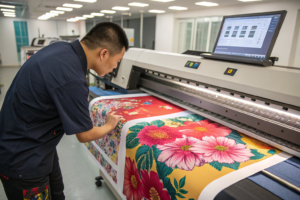
A Miami-based swimwear brand discovered that FDY provided the dimensional stability they needed for printed patterns, while DTY offered the comfort stretch their customers demanded. Understanding these apparel yarn property comparisons helped them select the right yarn for each application.
When should you choose DTY for apparel fabrics?
DTY has become the workhorse of the polyester apparel industry for good reason—its balanced combination of softness, stretch, and durability makes it ideal for most clothing applications. About 70% of the polyester fabrics we supply to US brands use DTY as the primary yarn, particularly in categories where comfort and movement are priorities.
The texturing process gives DTY several advantages: better moisture-wicking through capillary action in the crimped channels, superior insulation due to trapped air, and excellent pilling resistance compared to spun yarns. However, DTY isn't perfect for every application—its slightly lower strength and higher cost can be drawbacks in some uses.

What apparel categories benefit most from DTY?
DTY excels in these applications:
- Activewear: For stretch, moisture management, and comfort
- Fleece and Terry: For warmth, softness, and bulk without weight
- Dress Shirts: For matte appearance and comfortable hand feel
- Outerwear: For insulation and wind resistance in mid-layer fabrics
We helped a Colorado-based outdoor brand optimize their fleece fabric by using a combination of DTY and FDY—DTY for the soft inner surface and FDY for the strong outer surface. This advanced yarn blending technique created a superior performing fabric at a competitive price point.
How does DTY denier affect fabric performance?
Denier selection is crucial for optimizing DTY performance:
- 50-75D: Ultralight for sheer fabrics and linings
- 75-150D: Standard range for most apparel applications
- 150-300D: Heavyweight for outerwear and performance fabrics
- Microdenier (<1D per filament): Ultra-soft for luxury applications
A Los Angeles-based luxury activewear brand achieved their signature "butter-soft" hand feel by using 75 denier micro-DTY with 144 filaments—creating an exceptionally fine, soft yarn that maintained excellent durability.
| DTY Application | Recommended Denier | Filament Count | Key Benefits |
|---|---|---|---|
| Performance Tees | 75D-100D | 72-144F | Moisture-wicking, softness |
| Fleece | 150D-200D | 96-288F | Warmth, bulk, recovery |
| Dress Fabrics | 50D-75D | 48-72F | Drape, matte appearance |
| Sports Outerwear | 100D-150D | 144-288F | Wind resistance, durability |
This DTY selection guide for apparel has helped numerous brands optimize their fabric specifications.

When is FDY the superior choice for clothing?
FDY's straight, parallel filaments create fabrics with distinctive characteristics that make it ideal for specific applications. The high tenacity, smooth surface, and excellent luster of FDY fabrics provide benefits that DTY cannot match. About 25% of our apparel fabrics incorporate FDY, usually in applications where strength, smoothness, or shine are desired attributes.
FDY's molecular orientation gives it superior strength and dimensional stability, making it less prone to stretching or distortion during washing and wearing. The straight filaments also create a very uniform surface that's ideal for printing and coating. However, FDY fabrics can feel stiffer and less comfortable against the skin than DTY alternatives.
What are FDY's strongest apparel applications?
FDY performs exceptionally well in:
- Linings: For smooth slip and durability
- Outerwear Shells: For wind and water resistance
- Uniforms: For durability and professional appearance
- Flags and Banners: For vibrant colors and flutter characteristics
A Chicago-based workwear manufacturer standardized on FDY for their uniform shirts because the fabric maintained a crisp, professional appearance through multiple washes, unlike their previous DTY fabrics that developed a softer, more casual look over time.
How can FDY be modified for better performance?
Several modifications enhance FDY for apparel use:
- Microfilament FDY: Finer filaments for softer hand feel
- Bright FDY: Enhanced luster for formal wear
- Semi-dull FDY: Reduced shine for more casual applications
- Tri-lobal FDY: Special cross-sections for sparkle effects
We developed a custom FDY modification program for a New York-based eveningwear brand that wanted the durability of FDY with a softer hand feel. By using microfilament FDY with a special spin finish, we achieved their desired performance at a 30% lower cost than their previous silk-polyester blend.
Why is POY rarely used directly in apparel fabrics?
POY is the foundation of the polyester industry but should never be used directly in apparel fabrics without further processing. This intermediate product lacks the orientation and stability required for durable clothing. Attempting to use POY directly results in fabrics with poor dimensional stability, low strength, and unacceptable performance characteristics.
POY's role is as a feedstock for texturing (to make DTY) or draw-warping (to make FDY). The partial orientation means the molecular chains aren't fully aligned, creating weak points that lead to fabric failure under stress. I've seen multiple brands learn this lesson the hard way when suppliers tried to cut costs by substituting POY for DTY or FDY.
What happens when POY is used in apparel?
Direct use of POY causes several problems:
- High Shrinkage: Up to 60% when exposed to heat
- Poor Strength: Low tenacity leads to tearing and seam failure
- Uneven Dyeing: Inconsistent molecular structure causes barre effects
- Rapid Pilling: Weak fibers break and form pills quickly
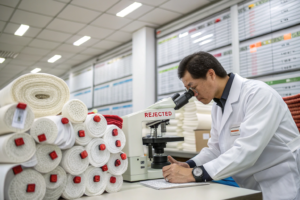
A Dallas-based fast-fashion brand experienced massive returns when a supplier used POY in their knit tops. The shirts shrank dramatically in the first wash and developed holes at stress points. This costly apparel manufacturing mistake could have been avoided with proper yarn specification.
How is POY properly utilized in apparel production?
POY serves as raw material for:
- Draw Texturing: Converted to DTY for knitting and weaving
- Draw Warping: Converted to FDY for various applications
- Air Jet Texturing: Creates fancy yarns with special effects
- Composite Yarns: Blended with other fibers for unique properties
We helped an Oregon-based sustainable brand develop a recycled POY program where they convert post-consumer PET bottles into POY, then texture it into DTY for their activewear line. This sustainable yarn production approach created a true circular solution with excellent performance.
How do you select the right yarn for specific applications?
Choosing between DTY, FDY, and processed POY requires a systematic approach that balances performance requirements, cost constraints, and production capabilities. The most successful brands develop a yarn strategy rather than making isolated decisions for each fabric. This holistic approach ensures consistency across collections and optimizes supplier relationships.
We recommend a four-factor analysis: performance requirements, hand feel objectives, appearance needs, and cost targets. This framework has helped our clients reduce development time by 40% while improving fabric performance. The key is understanding that yarn selection impacts every aspect of fabric behavior, from drape to durability.

What questions should guide your yarn selection process?
Ask these critical questions:
- What are the stretch requirements? DTY for stretch, FDY for stability
- What hand feel is desired? DTY for softness, FDY for smoothness
- What appearance is needed? FDY for shine, DTY for matte
- What is the target price point? DTY generally mid-range, FDY varies by application
A Boston-based sportswear brand implemented this systematic yarn selection process and reduced their fabric development time from 12 weeks to 7 weeks while achieving better performance results.
How can yarn blending optimize performance?
Strategic blending creates superior fabrics:
- DTY/FDY Blends: Combine softness with strength
- Micro/Normal Denier Blends: Enhance softness without sacrificing durability
- Different Cross-section Blends: Create unique visual effects
- Fiber Type Blends: Add natural fiber benefits to synthetics
We developed a proprietary performance yarn blending methodology for a California-based running brand that combined DTY for moisture management with FDY for strength, creating a fabric that outperformed more expensive alternatives.
Conclusion
The choice between DTY, FDY, and POY is fundamental to creating successful polyester apparel. DTY's versatility makes it the default choice for most applications, while FDY's strength and smoothness make it ideal for specific uses where those properties are prioritized. POY should never be used directly in apparel but serves as the essential raw material for both DTY and FDY production.
Remember that the best yarn choice depends on your specific performance requirements, target price point, and desired fabric characteristics. The most successful brands develop deep relationships with their yarn suppliers and involve them early in the development process to leverage their technical expertise.
If you're struggling with yarn selection decisions or want to optimize your current fabric specifications, let's analyze your requirements and identify the optimal solution. We've helped dozens of apparel brands navigate these complex decisions. Contact our Business Director Elaine to schedule a yarn consultation: elaine@fumaoclothing.com. We'll provide specific recommendations based on your application and arrange fabric samples so you can evaluate the differences firsthand.