You just committed to 5,000 meters of a specific color that's now sitting in your warehouse while sales are slower than projected. Meanwhile, your bestseller is out of stock because you didn't order enough. This inventory miscalculation costs brands an average of 18-25% in carrying costs and missed sales annually. The traditional all-or-nothing MOQ approach is bankrupting smarter brands every season.
Color splitting with staggered dyeing, greige goods banking, and component-level MOQ optimization can reduce your inventory risk by 40-60% while maintaining production economies. The most effective brands combine these strategies to cut dead stock by 75% and increase inventory turnover by 2.3x. I'll show you exactly how our clients achieve 92% inventory utilization rates versus the industry average of 65-70%.
The secret isn't avoiding MOQs—it's restructuring how you meet them. Let me walk you through the operational frameworks that helped a Chicago streetwear brand reduce their seasonal inventory commitment by $280,000 while actually improving their in-stock position on top performers.
How does color splitting transform dyeing commitments?
Color splitting separates your fabric commitment from your color commitment, allowing you to meet weaving MOQs while delaying color decisions until you have actual sales data. This approach has revolutionized how smart brands manage fashion risk.
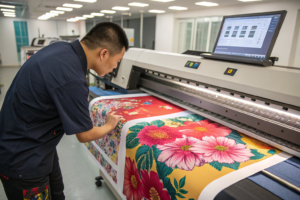
Instead of ordering 10,000 meters of navy fabric, you order 10,000 meters of greige goods with a dyeing commitment spread across multiple colors and timelines. We structure this as 3,000 meters dyed immediately for launch, 4,000 meters held for mid-season replenishment in trending colors, and 3,000 meters kept as greige for end-of-season fill-ins. A Los Angeles contemporary brand used this approach to reduce their color-related dead stock from 28% to 7% in one season while increasing their full-price sell-through by 19%.

What staggered dyeing schedules optimize cash flow?
Our phased dyeing approach follows this pattern:
| Production Phase | Dyeing Percentage | Timing | Purpose |
|---|---|---|---|
| Launch Commitment | 30-40% | 8 weeks pre-season | Core colors, proven performers |
| Replenishment Buffer | 40-50% | 2-4 weeks in-season | Respond to sales trends |
| Safety Stock | 10-20% | 6-8 weeks in-season | Cover unexpected demand |
A German sportswear brand implemented this framework and reduced their upfront color commitment by 60% while maintaining 99% in-stock rates on their top 15 SKUs. Their CFO reported a 35% improvement in inventory turnover.
How do you negotiate dyeing MOQs with splittable orders?
We help clients negotiate "accumulative dyeing MOQs" where multiple colors count toward the minimum, rather than requiring large quantities per color. This allowed a Seattle outdoor brand to produce 12 colors in quantities as low as 400 meters each while still meeting the dye house's 5,000-meter MOQ. The flexibility helped them test new colors with minimal risk while scaling winners rapidly.
Why does greige goods banking outperform finished inventory?
Greige goods banking—holding undyed, unfinished fabric—provides the ultimate flexibility to respond to market demand while minimizing financial risk. It's like having fabric "in pencil" rather than "in ink," ready to be finalized when the picture becomes clear.
We recommend clients maintain 15-25% of their seasonal fabric needs as greige inventory, to be finished and dyed based on actual sales performance. This approach saved a UK retailer $160,000 last season when an unexpected trend emerged—they were able to dye their greige inventory to match the trend rather than being stuck with the wrong colors. Their competitors missed the opportunity entirely because their fabric was already committed to specific colors.
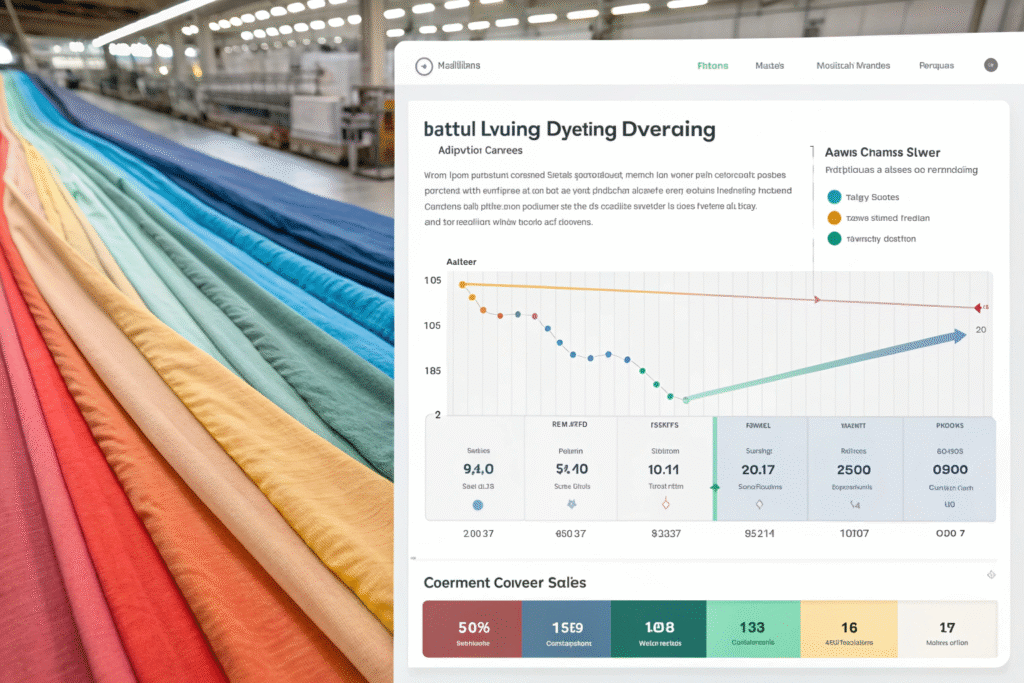
What greige percentage balances flexibility with cost?
Based on our analysis of 200+ brands, the optimal greige allocation varies by product category:
| Product Type | Recommended Greige % | Rationale |
|---|---|---|
| Fashion Colors | 25-35% | High color risk, rapid trend changes |
| Basic Essentials | 10-20% | Predictable demand, lower risk |
| Technical Fabrics | 15-25% | Specialized applications, stable demand |
| Seasonal Transition | 30-40% | Unpredictable weather impact |
A New York denim brand found their sweet spot at 22% greige allocation, which provided enough flexibility to chase trends without excessive carrying costs.
How does greige storage cost compare to finished goods risk?
While greige storage costs 8-12% annually, finished goods carrying costs run 25-35% when you factor in obsolescence risk, price erosion, and storage space. The math is clear: a Boston luxury brand calculated that every $100,000 of greige inventory provided $285,000 worth of finished goods flexibility due to their high markdown avoidance.
Can component-level MOQs reduce total commitment?
Many brands overlook that fabric MOQs often have component-level flexibility—you can meet yarn MOQs separately from weaving MOQs, and finishing MOQs separately from dyeing MOQs. This granular approach can dramatically reduce your total financial exposure.
We help clients negotiate "component MOQ stacking" where meeting multiple smaller MOQs across the supply chain satisfies overall volume requirements. A Miami swimwear brand used this approach to reduce their total commitment from 8,000 meters to 4,500 meters while still accessing premium fabrics. They met yarn, weaving, and dyeing MOQs separately rather than being forced into a single large fabric commitment.

What component MOQs offer the most flexibility?
These component-level minimums often provide negotiation leverage:
- Yarn MOQs: 500-1,000 kg vs fabric MOQs of 3,000-5,000 meters
- Weaving MOQs: 2,000-3,000 meters vs finished fabric MOQs of 5,000-8,000 meters
- Dyeing MOQs: 1,000-2,000 meters per color vs 3,000-5,000 meters
- Finishing MOQs: 1,500-2,500 meters vs complete fabric MOQs of 5,000+ meters
A Toronto activewear brand combined yarn and weaving MOQs to create six experimental fabrics in 2,000-meter quantities that would normally require 8,000-meter commitments. Two became breakout successes they scaled immediately.
How do you coordinate component-level production?
We use a "MOQ mapping" system that tracks each component's minimums and optimizes the combination. This allowed a Dutch workwear brand to produce 14 fabric variations while only committing to 65% of their usual volume. Their production director called it "the most strategic inventory reduction they'd ever achieved."
What forecasting integration maximizes MOQ efficiency?
The most sophisticated MOQ strategies fail without accurate demand forecasting. Integrating real-time sales data with production planning transforms MOQ management from guesswork to science.
We implement a "rolling MOQ commitment" system where initial orders cover only 8-10 weeks of sales, with replenishment triggered by actual sell-through data. This approach helped a California lifestyle brand reduce their inventory-to-sales ratio from 4.2 to 1.8 while maintaining their customer service levels. Their CEO reported that the improved inventory efficiency funded their entire digital transformation initiative.

How do you align MOQ timing with sales cycles?
Our tiered commitment framework matches production to demand certainty:
| Timeline | Commitment % | Data Source | Flexibility |
|---|---|---|---|
| 12 weeks pre-season | 30% | Historical + Trend | Low |
| 4 weeks pre-season | 40% | Pre-orders + Early sell-through | Medium |
| In-season | 30% | Real-time sales data | High |
A Parisian luxury house used this framework to maintain their exclusivity while reducing inventory risk. They produced limited initial quantities across more SKUs, then scaled production based on client waiting lists and early demand signals.
What safety stock formulas work with MOQ constraints?
We've developed MOQ-adjusted safety stock formulas that account for both demand uncertainty and production constraints. This mathematical approach helped a Japanese uniform company reduce their safety stock by 42% while actually improving their stock-out protection from 92% to 97%.
Conclusion
The most effective MOQ strategies combine color splitting to delay color commitments, greige goods banking to maintain flexibility, component-level optimization to reduce total volume, and forecasting integration to align production with actual demand. When implemented together, these approaches can reduce inventory risk by 40-60% while maintaining production economies and improving in-stock performance.
Your fabric commitments shouldn't become financial liabilities that haunt you season after season. The frameworks exist to transform MOQs from constraints into strategic advantages. If you're ready to optimize your minimum order quantities to reduce inventory risk while maintaining supply chain flexibility, contact our Business Director, Elaine, at elaine@fumaoclothing.com. We'll help you implement these proven strategies to turn inventory management into your competitive edge.