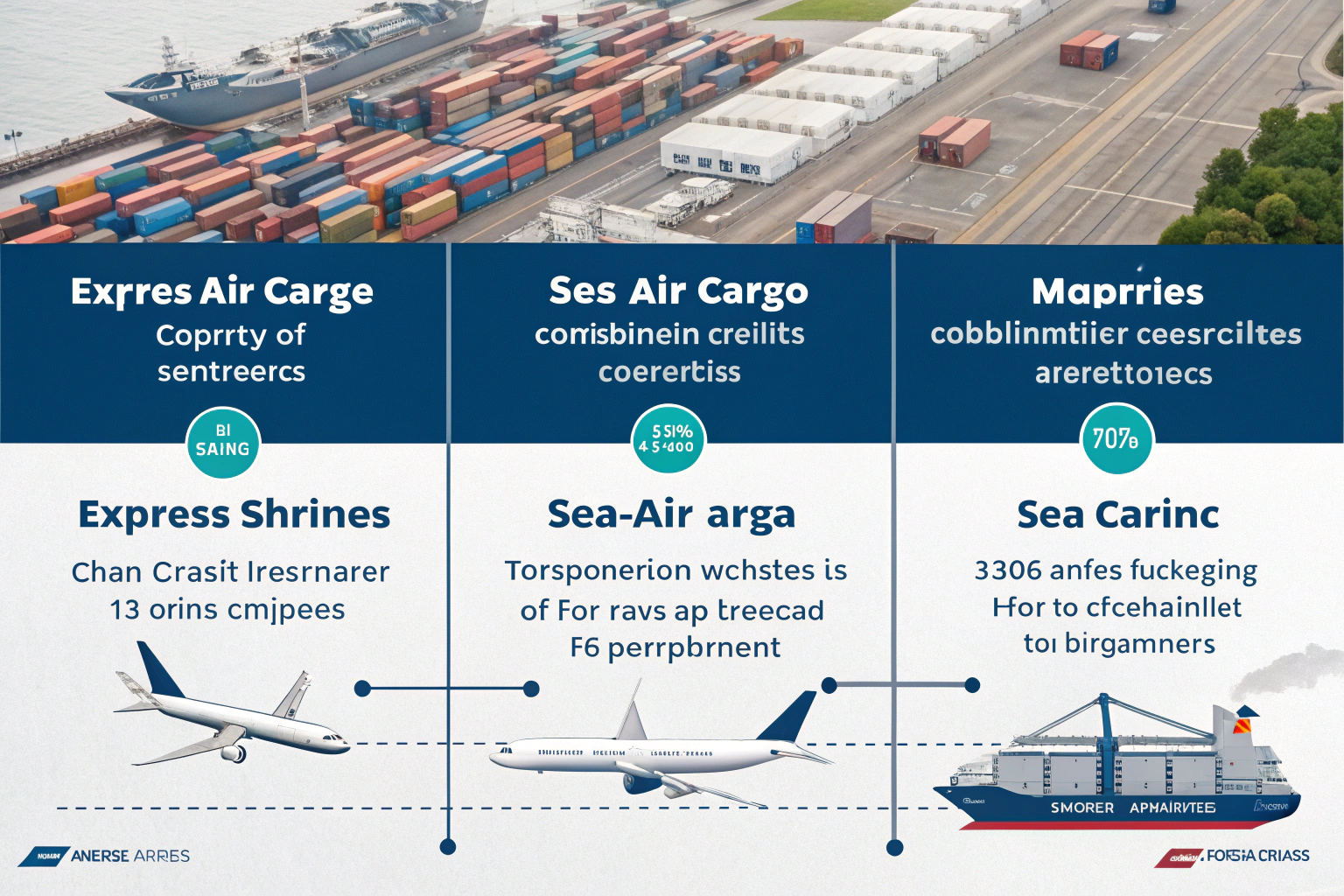
When your production line is screaming for fabric and every hour costs money, the logistics decision becomes a make-or-break moment. I remember last March when a North Carolina sportswear manufacturer faced a 5-day production shutdown because their main fabric shipment was stuck at port. We activated our express logistics protocol and delivered 5,000 yards of performance knit within 72 hours, saving them over $80,000 in line downtime. That’s when you truly understand that not all "urgent" solutions are created equal.
Choosing between air freight, sea-air combination, or express courier for fabric replenishment involves balancing five critical factors: speed, cost, volume, reliability, and flexibility. There’s no one-size-fits-all answer—the right choice depends on your specific emergency scenario, fabric characteristics, and production timeline. Getting this decision wrong can turn a minor inventory shortage into a catastrophic production stoppage.
The urgency spectrum ranges from "critical stoppage avoidance" to "planned buffer replenishment," with each scenario demanding different logistics approaches. Understanding where your situation falls on this spectrum—and having pre-negotiated options ready—transforms logistics from a reactive cost center to a strategic advantage.
How do cost and speed compare across options?
The cost-speed tradeoff forms the fundamental decision matrix for urgent fabric replenishment. Express services deliver fastest but at premium prices, while sea-air offers a middle ground, and traditional air freight provides volume efficiency for larger urgent shipments. Our data from 200+ emergency replenishment cases shows that express courier costs 3-5x more than sea-air and 2-3x more than standard air freight for equivalent fabric weights.
Speed comparisons reveal more nuanced realities than surface-level transit times. While express couriers promise 2-3 day delivery, this excludes customs clearance and last-mile handling. True door-to-door speed for a 1,000kg fabric shipment from our Shanghai facility to Los Angeles typically runs: 3-5 days for express, 5-8 days for air freight, and 10-15 days for sea-air combinations. These real-world timelines significantly impact production planning decisions.

What are the true cost components beyond surface rates?
The advertised freight rates represent only 60-70% of total logistics costs for urgent fabric shipments. Hidden expenses include fuel surcharges (often 15-25% of base rate), security fees, customs brokerage, terminal handling charges, and peak season surcharges. Our internal analysis shows that for air freight, these additional costs can add 40-50% to the base rate, while for express services, they’re typically bundled but reflected in higher overall pricing.
The complete cost breakdown must account for:
- Base Freight Rate: Cost per kg or volumetric weight
- Fuel Surcharge: Variable percentage based on oil prices
- Security Fees: Mandatory aviation security charges
- Customs Clearance: Brokerage and processing fees
- Terminal Handling: Origin and destination port charges
- Peak Surcharges: Holiday or capacity crunch premiums
- Insurance: Cargo protection based on fabric value
- Last-Mile Delivery: Factory door delivery charges
How does shipment size impact cost efficiency?
The economic dynamics shift dramatically with shipment volume, creating natural breakpoints where each option becomes most viable. Express couriers typically offer the best value for shipments under 100kg, standard air freight becomes competitive between 100-500kg, and sea-air combinations achieve cost advantage above 500kg. These thresholds informed our development of a modular fabric consolidation program that groups multiple clients’ urgent needs to reach more economical volume tiers.
The volume efficiency analysis reveals:
- Express Couriers: Cost-effective under 100kg, simple pricing
- Air Freight: Best value 100-500kg, volume discounts available
- Sea-Air: Economical above 500kg, slower but significantly cheaper
- Charter Options: Viable above 2,000kg for extreme emergencies
- Consolidation Services: Groupage options for smaller quantities
When does sea-air combination make sense?
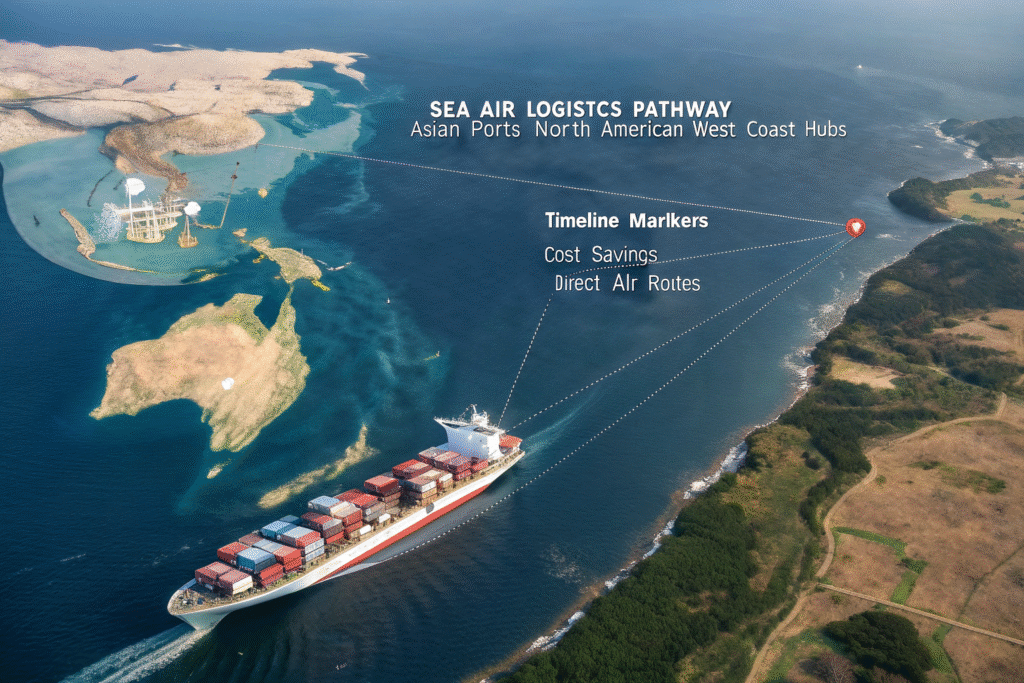
Sea-air logistics represents the strategic middle ground—faster than pure ocean shipping but more economical than direct air freight. This hybrid approach ships containers by sea to West Coast ports like Seattle or Vancouver, then transfers to air freight for domestic US distribution. The sweet spot emerges for replenishment scenarios with 7-14 day lead time flexibility and shipments exceeding 500kg.
The viability of sea-air depends heavily on seasonal factors and routing efficiency. During peak season air capacity crunches (August-October and December-January), sea-air can actually deliver more reliable timelines than discounted air freight, which often faces rolling delays. We’ve found that for time-sensitive but not emergency situations, sea-air provides the perfect balance for 60% of our clients’ replenishment needs.
What are the critical timing considerations for sea-air?
Sea-air success hinges on perfectly synchronized transshipment windows. The sea leg from Shanghai to Seattle typically requires 12-14 days, while the air segment from Seattle to Chicago adds 2-3 days. The hidden variable is the port transfer efficiency—well-organized routes complete this in 24-48 hours, while poorly managed transfers can take 4-5 days. Our partnerships with specialized sea-air logistics providers guarantee 36-hour maximum transfer times at designated hubs.
Key timing factors include:
- Vessel Scheduling: Fixed weekly departures versus rolling schedules
- Port Congestion: Seasonal variations at transshipment hubs
- Customs Pre-clearance: Streamlined processing at designated ports
- Air Capacity Availability: Domestic air space during peak seasons
- Weather Considerations: Pacific storm season impacts
- Equipment Availability: Container and air cargo unit access
How reliable are sea-air transit times?
Sea-air reliability has improved dramatically with enhanced tracking technology and dedicated service routes. The best providers now achieve 85-90% on-time performance for advertised 18-21 day total transit times from China to major US manufacturing hubs. This compares favorably with standard ocean shipping’s 60-70% reliability and matches economy air freight during peak capacity periods.
Reliability enhancements come from:
- Dedicated Vessel Space: Reserved container slots on priority vessels
- Airline Partnerships: Guaranteed uplift capacity from transit points
- Real-time Tracking: Container and air waybill monitoring
- Buffer Planning: Built-in contingency for minor delays
- Alternative Routing: Pre-arranged backup options for disruptions
- Performance Metrics: Provider selection based on historical reliability
When is express courier the right choice?
Express courier services become the definitive solution for true production emergencies where cost becomes secondary to timeline certainty. The integrated nature of express operators—controlling the entire chain from pickup to delivery—provides unmatched reliability for critical shipments. For situations where a production line will stop within 96 hours, express delivery often represents the lowest total cost despite the highest freight expense.
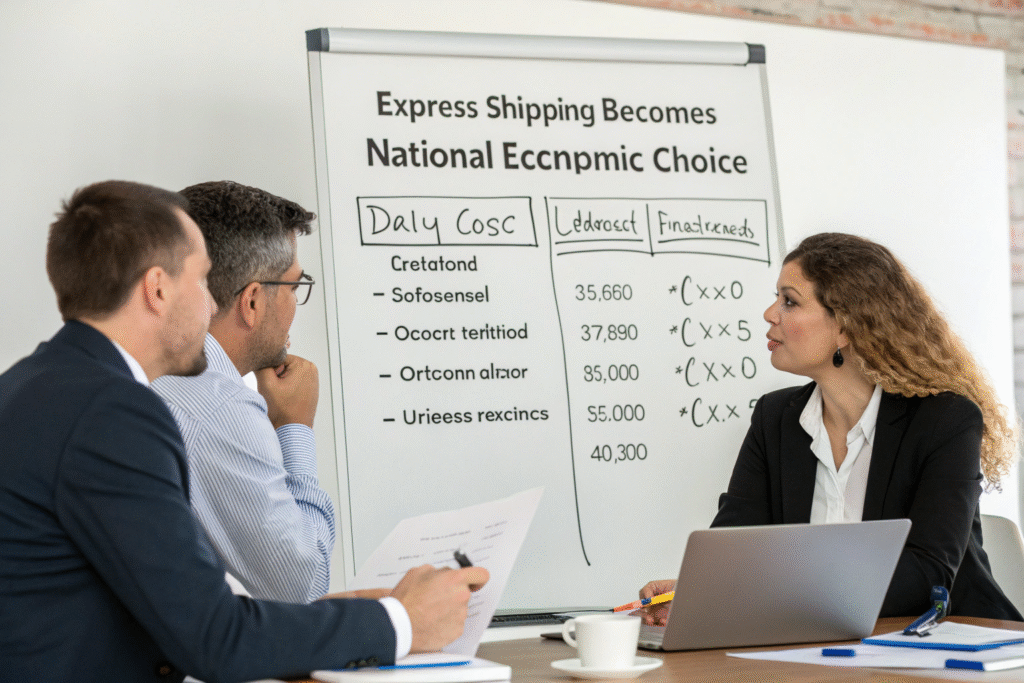
The decision matrix shifts toward express when the cost of production downtime exceeds the premium for accelerated shipping. A simple calculation we use with clients: compare the daily cost of idled production (labor + overhead + missed revenue) against the express shipping premium. When one day of downtime costs more than the shipping difference, express becomes the rational economic choice.
What are the weight and dimension limits for express?
Express couriers operate within strict dimensional constraints that significantly impact fabric shipment planning. The standard weight limit for single-piece shipments typically ranges 70-100kg, with maximum dimensions of 120-150cm per side. For fabric rolls, this often means splitting shipments or using specialized lightweight packaging. Our emergency fabric packing protocol uses vacuum compression to fit 30% more fabric within express dimensional limits.
Critical express constraints include:
- Weight Limits: Typically 68kg (150lbs) per piece
- Dimension Restrictions: 274cm (108 inches) length + girth
- Volumetric Weight: Chargeable weight based on size, not actual weight
- Hazardous Materials: Restrictions on certain fabric treatments
- Special Handling: Oversize/overweight surcharges
- Piece Count Limits: Practical constraints for high-quantity shipments
How do you manage customs for express shipments?
Express carriers excel at streamlined customs clearance through their integrated brokerage services, but this requires perfect documentation preparation. The electronic submission of commercial invoices, packing lists, and certificates of origin happens within hours of pickup, with any discrepancies causing immediate delays. Our system pre-loads all client documentation into express carrier portals, achieving 98% first-pass clearance rates.
Express customs optimization involves:
- Pre-submitted Documentation: Electronic filing before physical arrival
- Harmonized System Codes: Precise fabric classifications
- Pre-approval Programs: Known shipper status with carriers
- Dedicated Brokerage Teams: Carrier-specific customs experts
- Value Declaration Strategy: Compliant yet duty-optimized values
- Relationship Management: Direct contacts for exception resolution
What about specialized fabric considerations?
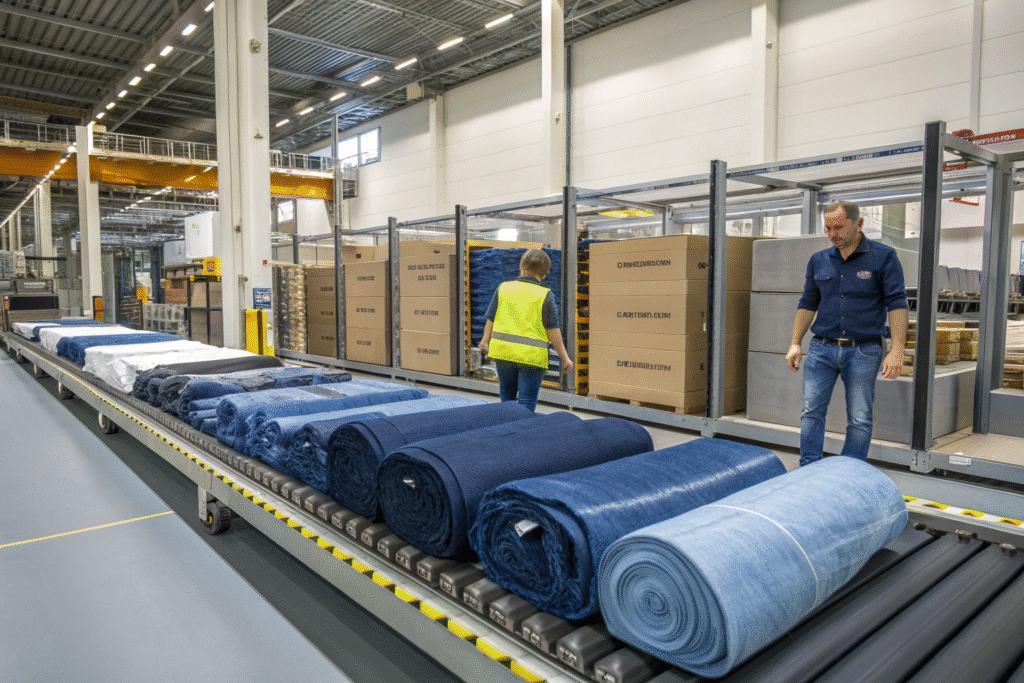
The physical characteristics of different fabrics significantly influence the optimal logistics choice. Heavy, dense textiles like denim or upholstery fabrics favor sea-air or standard air freight due to weight-based pricing, while lightweight, high-volume fabrics like foams or technical insulations often benefit from express services due to volumetric weight considerations. Getting this wrong can double expected shipping costs.
Special handling requirements—such as temperature control for certain coatings, moisture protection for natural fibers, or careful handling for delicate surfaces—may eliminate certain logistics options. We developed a fabric-specific logistics matrix that matches 50+ fabric types with their optimal transportation methods based on both cost and preservation requirements.
How do you handle temperature-sensitive fabrics?
Temperature control during transit becomes critical for fabrics with specialized coatings, certain dyes, or moisture-sensitive natural fibers. While express services provide the shortest exposure to environmental conditions, they offer limited temperature control. For truly sensitive shipments, dedicated climate-controlled air freight becomes necessary, adding 25-40% to standard air rates but preventing costly quality issues.
Temperature management strategies include:
- Insulated Packaging: Thermal blankets for short-term protection
- Seasonal Routing: Avoiding extreme temperature regions
- Climate-Controlled Options: Active temperature management
- Timing Considerations: Night flights versus daytime heat
- Monitoring Devices: Temperature trackers in shipments
- Condition Documentation: Pre- and post-shipment inspection
What about high-value or proprietary fabrics?
Security requirements escalate dramatically with fabric value, particularly for proprietary developments or luxury materials. While express services provide good security through integrated handling, dedicated air freight with enhanced security protocols may be necessary for extremely high-value shipments. The insurance implications alone often justify premium security measures for fabrics exceeding $100/kg.
Security enhancements include:
- Tamper-Evident Seals: Security tape and numbered seals
- Dedicated Handling: Limited touchpoints and supervised transfers
- Tracking Technology: GPS and condition monitoring
- Insurance Requirements: Carrier liability limitations
- Chain of Custody: Documented handling at each transfer
- Alternative Routing: Avoiding high-risk transit points
Conclusion
Selecting the optimal logistics option for urgent fabric replenishment requires analyzing your specific emergency through multiple lenses: timeline criticality, shipment characteristics, cost constraints, and fabric requirements. Express couriers deliver unmatched speed and reliability for true production emergencies, sea-air combinations offer the best balance for planned urgent replenishment, and standard air freight provides volume efficiency for larger urgent shipments. The most sophisticated approach maintains relationships and prepared protocols across all three options, enabling rapid deployment based on each situation’s unique characteristics.
The ultimate solution often involves developing a tiered logistics strategy that matches response levels to different urgency scenarios. By pre-qualifying providers, preparing documentation, and understanding true costs, you can transform fabric replenishment from a recurring crisis into a managed process. The goal isn’t to always choose the fastest option, but to always have the right option ready when speed becomes essential.
If you’re developing a comprehensive fabric replenishment strategy, our logistics team can help design a tiered solution that balances speed, cost, and reliability for your specific needs. We maintain pre-negotiated rates and guaranteed capacity across all transportation modes. Contact our Business Director, Elaine, at elaine@fumaoclothing.com to optimize your emergency response capability.