Nothing ruins a sleek blazer silhouette like the wrong interlining choice. You design for sharp, clean lines, but end up with bulky, stiff results that feel more like armor than elegant tailoring. This common frustration stems from mismatched interlining weight selection that compromises both aesthetics and comfort. At Fumao, we've perfected interlining applications for blazers across global markets, balancing structure and wearability.
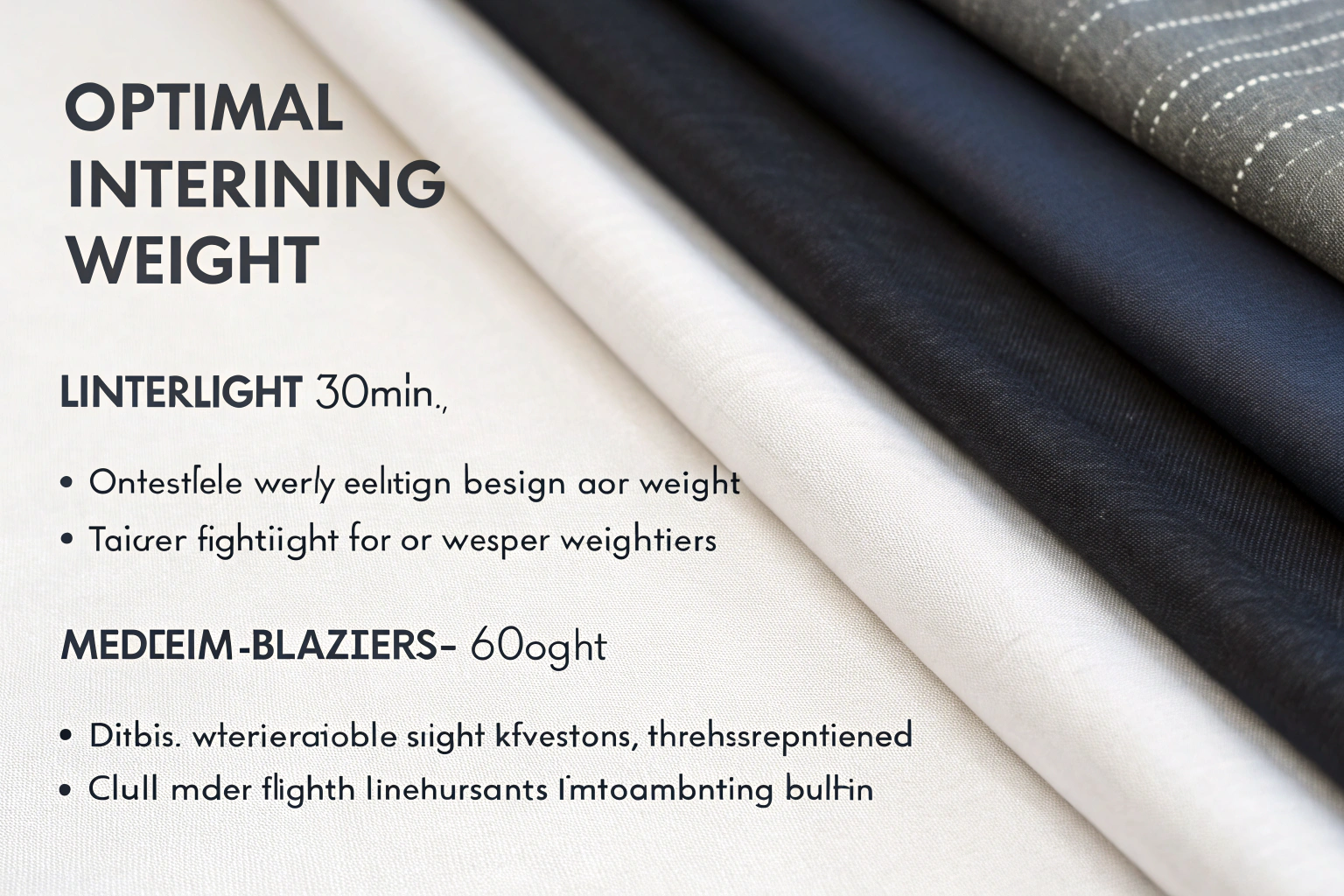
The optimal interlining weight for blazers depends on fabric weight, design style, and desired drape characteristics. Lightweight fusibles (30-50gsm) provide minimal structure for soft-tailored blazers, medium weights (60-80gsm) offer balanced support for business wear, while specialized woven interfacings deliver maximum structure with minimal bulk. The key lies in matching interlining properties to specific blazer components and performance requirements.
If you're struggling to achieve that perfect balance where structure enhances rather than overwhelms your blazer designs, understanding interlining specifications is crucial. Let's examine how to select weights that create impeccable silhouettes without unnecessary bulk.
What Interlining Weights Work Best for Different Blazer Styles?
Different blazer styles demand different structural approaches. For unstructured, soft-shouldered blazers popular in contemporary Italian styling, lightweight woven fusibles in the 30-40gsm range provide just enough stability without compromising the garment's fluid drape. These lighter weights prevent collar and lapel roll while maintaining natural movement. For traditional business blazers requiring more defined shape, medium-weight interlinings (50-70gsm) offer the necessary body for structured shoulders and crisp front panels.
The heaviest weights (80-100gsm+) serve specific purposes in structured tailoring. However, modern technical interlinings achieve similar support at lower weights through advanced fiber compositions and construction methods. We've found that strategic placement of varying weights within a single blazer often produces superior results to using uniform weight throughout. The collar, lapels, and front facings typically benefit from slightly heavier interlining than sleeve cuffs or back panels.
How Does Fabric Weight Dictate Interlining Selection?
Your shell fabric weight directly determines appropriate interlining choices. Lightweight wools (180-220gsm) pair best with lightweight fusibles (30-50gsm) to prevent the interlining from dominating the hand. Medium-weight tweeds and flannels (230-280gsm) can support slightly heavier interlinings (50-70gsm) while maintaining balanced drape. Heavy coating wools (290-350gsm+) require careful interlining selection—often medium weights with specific drape characteristics to avoid creating overly rigid results. The table below illustrates our standard pairings:
| Shell Fabric Weight | Recommended Interlining Weight | Application Areas |
|---|---|---|
| Lightweight (180-220gsm) | 30-50gsm | Collar, lapels, front panels |
| Medium (230-280gsm) | 50-70gsm | Full front, sleeve heads |
| Heavy (290-350gsm) | 60-80gsm | Strategic reinforcement only |
| Stretch Fabrics | Knitted fusibles 40-60gsm | All structured areas |
A Scandinavian minimalist brand achieved their signature sharp-yet-fluid blazer silhouette by using a 45gsm polyamide interlining specifically on collar stands and lapel roll lines only, leaving the body largely unlined for maximum drape and minimal bulk.
What Role Does Interlining Construction Play in Bulk Management?
Interlining construction significantly impacts bulk regardless of weight. Non-woven interfacings, while economical, often create more bulk than woven alternatives of equivalent weight due to their denser fiber composition. Woven interlinings with open constructions provide better structure-to-bulk ratios, as their yarn-based architecture creates stability through construction rather than density. Knitted interfacings offer exceptional drape and flexibility, making them ideal for blazers requiring structure with maximum comfort. For luxury blazers, we often recommend custom-woven hair canvas—a traditional material that provides unparalleled shape retention with surprisingly little bulk due to its hybrid composition of natural fibers and strategic resin treatment.
How to Strategically Place Interlining for Maximum Effect?
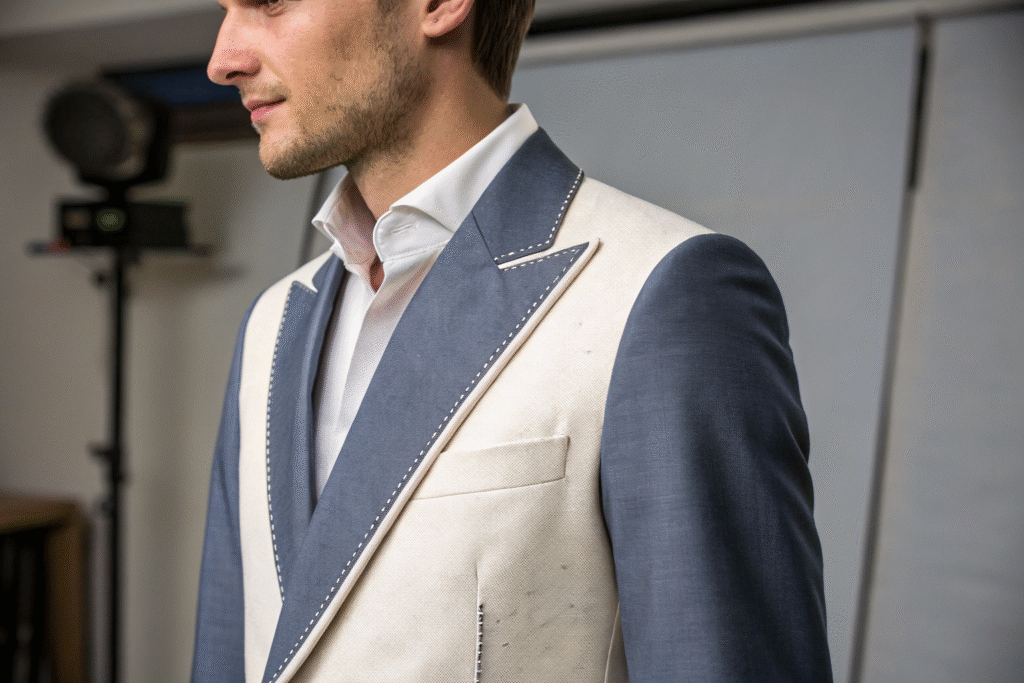
Strategic interlining placement proves more important than uniform application for controlling bulk. The key structural areas—chest piece, collar, lapels, and front edges—require different interlining treatments to create a balanced silhouette. We use a zoning approach where higher-support interlinings concentrate in areas needing shape retention, while lighter options or no interlining maintain comfort and drape in less critical zones.
The chest piece deserves special attention. Rather than fusing the entire front panel, we often use a separate chest piece that extends from shoulder to bust level and armhole to center front. This localized reinforcement creates the blazer's architecture without stiffening the entire garment. For the collar, we frequently use a slightly heavier weight on the undercollar than the upper collar to encourage proper roll and prevent buckling.
Which Blazer Components Need Different Interlining Treatments?
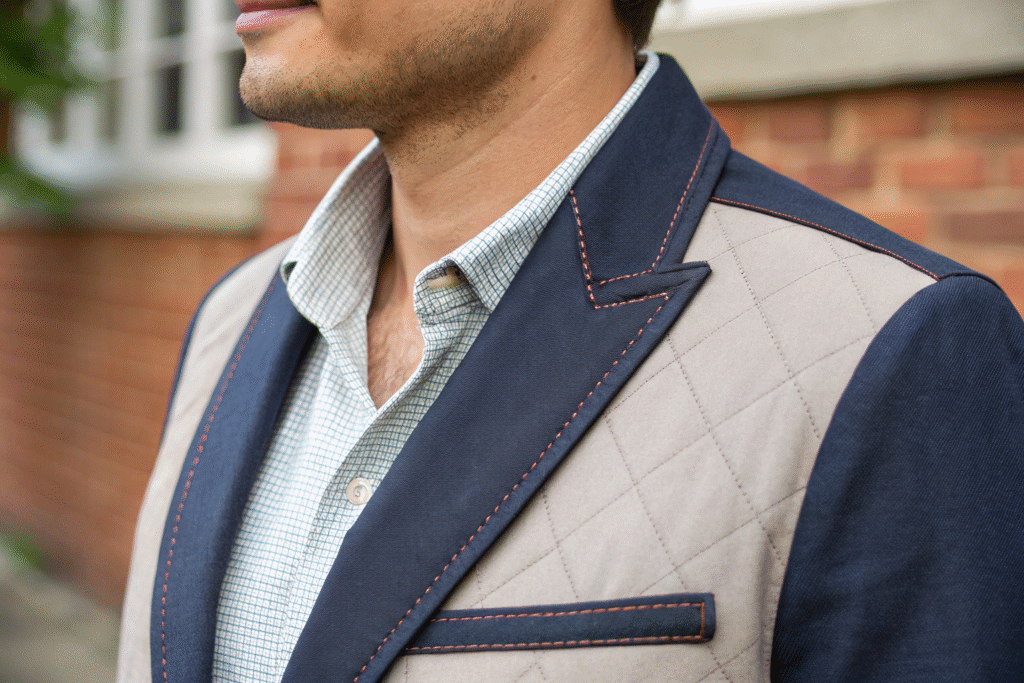
Each blazer component benefits from customized interlining approaches. Collars require firmness at the roll line but flexibility at the points. We often use a combination of 60gsm woven hair canvas at the roll line transitioning to 40gsm knitted fusible at the tips. Lapels need consistent support throughout their length but should remain pliable—we prefer 50-60gsm woven fusibles bias-cut to match the lapel roll. Front edges demand stability without rigidity—often achieved with medium-weight non-wovens (55-65gsm) that prevent stretching while maintaining clean lines. Sleeve heads benefit from lightweight knitted interlinings (30-40gsm) that support the cap shape without restricting arm movement. A New York-based designer revolutionized their blazer construction by implementing our component-specific interlining system, reducing bulk complaints by 70% while improving shape retention.
How Can Layering Techniques Reduce Overall Bulk?
Strategic layering of lighter interlinings often outperforms single heavy layers. Using two 30gsm layers in critical areas can provide better moldability and shape memory than one 60gsm layer, with reduced stiffness. We've developed a proprietary technique using a base layer of knitted fusible for drape with targeted patches of woven interlining at stress points. This "composite" approach allows us to customize support exactly where needed while maintaining overall garment flexibility. For the lapel construction, we might use a lightweight woven fusible across the entire lapel with a narrow strip of medium-weight non-woven precisely at the roll line—this creates a crisp edge without the board-like feel of heavier uniform application. Understanding advanced interlining layering techniques for tailored garments can transform your blazer construction approach.
What Modern Materials Offer Structure Without Weight?
Technical advancements have revolutionized interlining materials, providing unprecedented structure-to-weight ratios. Polyamide fusibles with micro-dot adhesive patterns offer exceptional stability with minimal add-on weight, while new generation polyester-based interlinings provide memory and recovery previously only possible with much heavier traditional materials. These technical options have largely replaced many traditional hair canvases in contemporary blazer manufacturing.
Shape memory alloys incorporated into interlinings represent the cutting edge of lightweight structuring. These materials respond to body heat, allowing the blazer to maintain its shape during wear while adapting to movement. Though currently premium-priced, they offer drape characteristics impossible with conventional interlinings. Another innovation involves hollow-core fibers that create air pockets within the interlining, providing loft and structure without corresponding weight increases.

How Do Technical Fusibles Compare to Traditional Woven Interlinings?
Modern technical fusibles often outperform traditional wovens in structure-to-bulk ratio while offering easier application. The latest low-temperature fusibles with engineered adhesive patterns provide controlled bond strength without penetrating through to the face of luxury fabrics—a common problem with traditional fusing that creates shine and stiffness. However, traditional woven hair canvases still excel in certain applications, particularly for blazers requiring exceptional moldability and long-term shape retention. The choice often comes down to production requirements—technical fusibles suit higher-volume manufacturing, while traditional methods better serve bespoke and luxury segments. We helped an Italian manufacturer transition from traditional sewn-in hair canvas to a technical fusible system that reduced production time by 35% while maintaining their renowned silhouette quality.
What Role Do Sustainable Interlinings Play in Modern Blazers?
Sustainable interlinings have evolved from niche to mainstream as brands seek reduced environmental impact. Recycled polyester fusibles now match the performance of virgin materials while reducing carbon footprint by up to 45%. Bio-based interlinings using polylactic acid (PLA) derived from corn offer compostability options for end-of-life garment management. We're also seeing increased use of natural fiber interlinings like organic cotton and wool, particularly in blazers marketed with sustainability credentials. A UK sustainable brand achieved their B Corp certification while improving blazer structure by switching to our recommended 55gsm recycled polyester fusible, which provided better shape retention than their previous virgin material while reducing environmental impact.
How to Test Interlining Performance Before Production?
Thorough testing prevents costly production mistakes with interlining selection. We conduct multiple validation tests before approving any interlining for production, including bond strength, shrinkage compatibility, dry cleaning durability, and drape evaluation. The most critical test involves creating complete blazer sections with candidate interlinings and subjecting them to real-world wear simulations.
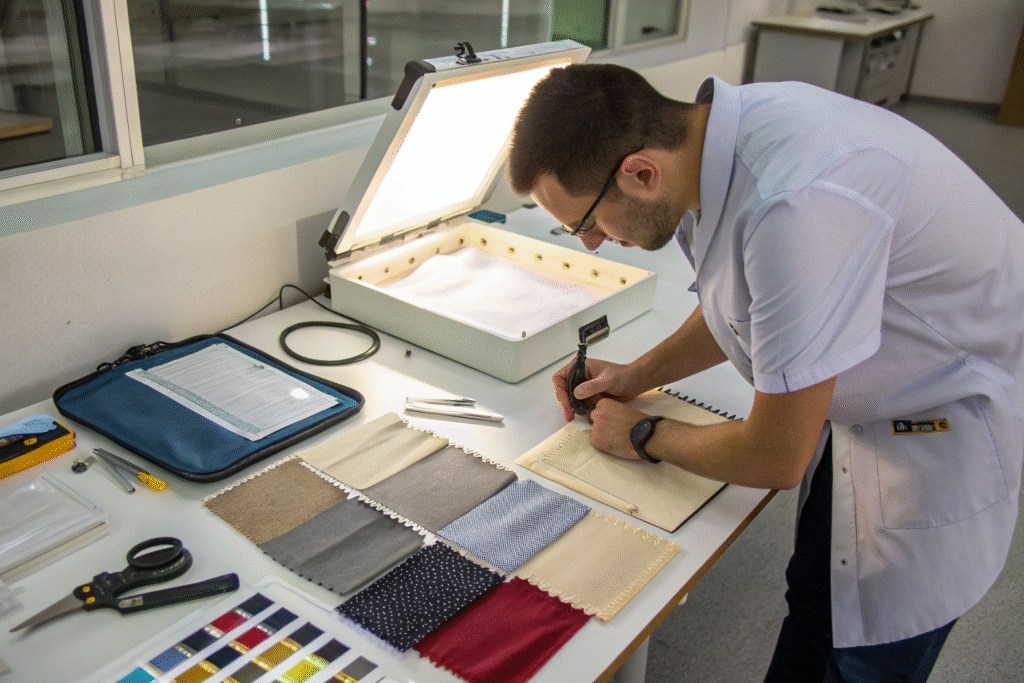
Compatibility testing between shell fabric and interlining cannot be overlooked. We test fusing temperature ranges, adhesive penetration, and hand feel changes across multiple combinations. Perhaps most importantly, we conduct visual assessments under various lighting conditions to detect any surface imperfections caused by the interlining, such as adhesive strike-back or pattern telegraphing.
What Performance Metrics Matter Most for Blazer Interlinings?
Key performance metrics differ for various blazer components. For collar and lapel interlinings, flex durability and recovery angle are critical—we test these using specialized equipment that simulates thousands of folding cycles. For front panel interlinings, dimensional stability and shrinkage compatibility take priority. The table below shows our standard testing protocol:
| Performance Metric | Test Method | Acceptable Range |
|---|---|---|
| Bond Strength | Peel test after 5 washes | 8-12 N/5cm |
| Dimensional Stability | IS ISO 7770 | ±1.5% maximum |
| Stiffness | Cantilever test | 3.5-6.5cm bending length |
| Recovery Angle | After 180° folding | >120° |
| Shrinkage | After 3 dry clean cycles | <2% |
A French luxury house avoided a production disaster when our testing revealed their chosen interlining shrank 3.2% after dry cleaning, while their wool shell fabric shrank only 0.8%—this incompatibility would have caused significant bubbling and distortion in finished blazers.
How Can Prototyping Prevent Bulk and Structure Issues?
Comprehensive prototyping provides the ultimate test for interlining selection. We create full blazers with each candidate interlining, then evaluate them on fit models representing different body types. This process reveals how the interlining performs in actual wear—how it moves with the body, how it drapes when sitting versus standing, and how it affects overall comfort. We pay special attention to how the interlining ages through multiple wears and cleanings, as some materials lose resilience over time. The International Association of Clothing Designers provides valuable guidelines for interlining testing protocols that can help standardize your evaluation process across different suppliers and material types.
Conclusion
Selecting the right interlining weights for blazers requires balancing multiple factors—fabric characteristics, design intent, performance requirements, and comfort considerations. The optimal solution often involves strategic combinations of different weights and constructions rather than a single uniform approach. Modern technical interlinings offer unprecedented structure-to-weight ratios, while traditional methods still excel for specific applications.
Perfecting blazer structure without bulk is both science and art, requiring technical knowledge and practical experience. If you're struggling to achieve the ideal balance for your specific designs, our technical team can provide customized solutions based on decades of specialized experience. We've helped brands worldwide optimize their interlining selections for improved aesthetics, comfort, and performance. For personalized recommendations and technical support, contact our Business Director, Elaine, at elaine@fumaoclothing.com. Let us help you create blazers that look impeccable and feel incredible to wear.