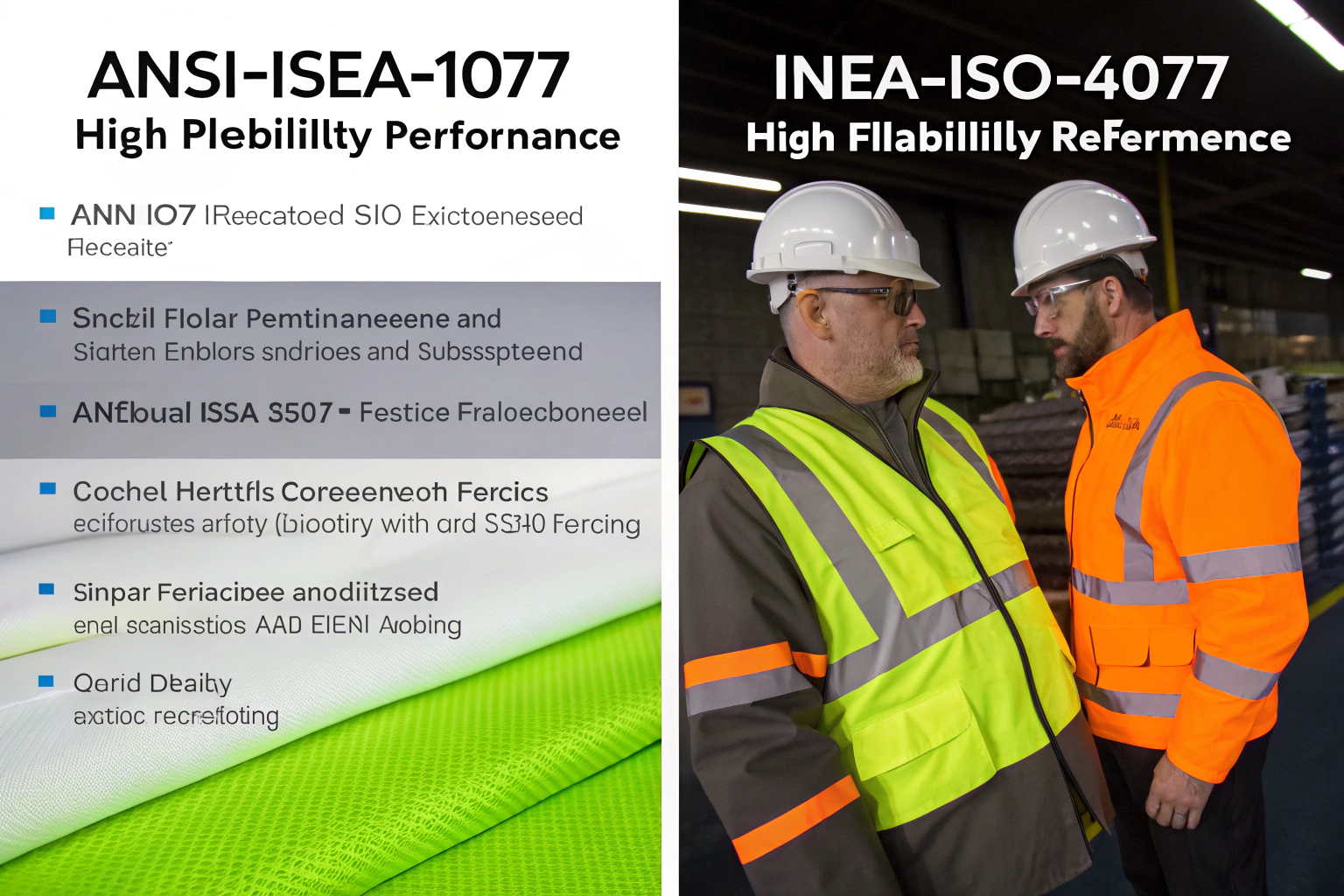
When a major logistics company failed their safety audit because their workers' high-visibility uniforms didn't meet both ANSI and EN standards for their international operations, the replacement cost exceeded $600,000. The fabric they'd selected met ANSI 107 but failed EN 20471 photometric requirements, creating a massive compliance gap for their European operations. This expensive lesson underscores why understanding both standards is crucial for global safety apparel.
High-visibility fabrics meeting both ANSI/ISEA 107-2020 and EN ISO 20471:2013 requirements typically combine fluorescent background materials with retroreflective tape in specific configurations that satisfy both standards' photometric, physical, and design requirements. The key challenge lies in the different testing methodologies, performance thresholds, and design specifications between the American and European standards, requiring fabrics engineered specifically for dual compliance.
The regulatory landscape for high-visibility materials has evolved significantly, with both standards recently updated to address new workplace hazards and material technologies. Understanding these updates is essential for specifying compliant fabrics that provide genuine worker protection while meeting legal requirements across multiple jurisdictions.
What are the key differences between ANSI and EN standards?
ANSI/ISEA 107-2020 and EN ISO 20471:2013 represent fundamentally different approaches to high-visibility safety apparel, with variations in testing methodologies, performance requirements, and classification systems. ANSI employs a performance-based classification with three classes (1, 2, 3) based on total visible area, while EN ISO uses a more prescriptive approach with similar but not identical classes (1, 2, 3). The most significant differences lie in the photometric requirements for background and retroreflective materials.
The testing methodologies vary substantially between the standards. ANSI measures luminance factor and chromaticity coordinates under Illuminant D65 using CIE 1931 Standard Observer, while EN ISO uses similar but not identical measurement conditions. The performance thresholds also differ, with EN ISO typically requiring higher minimum values for both background fluorescence and retroreflective performance. These differences mean fabrics optimized for one standard may not automatically comply with the other.
How do background material requirements differ?
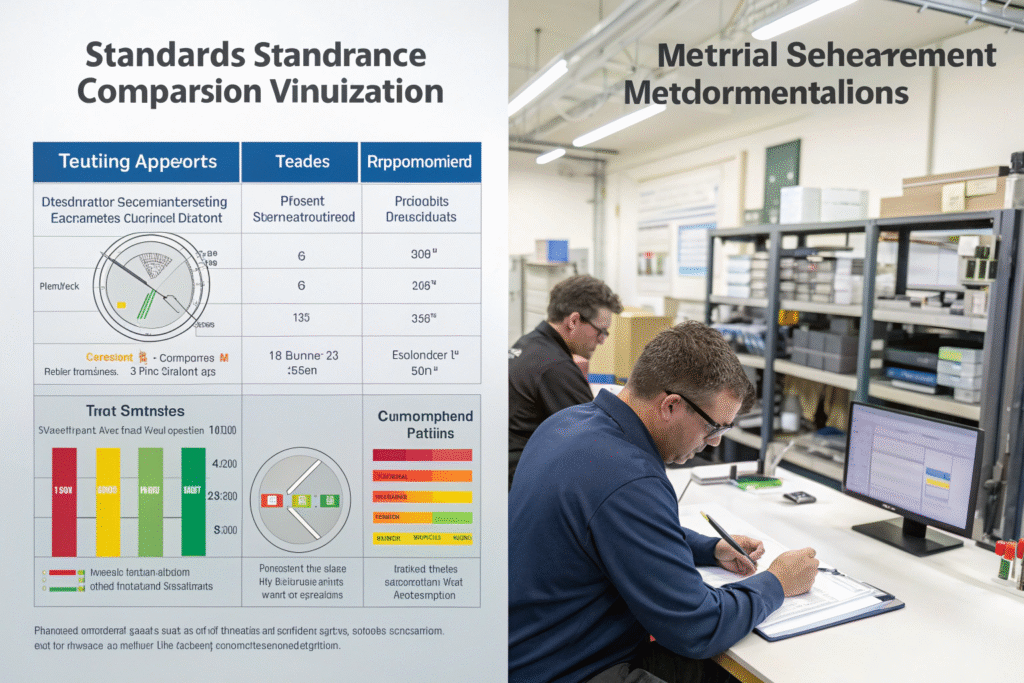
Background material requirements form the foundation of high-visibility performance, with both standards specifying fluorescent colors (yellow, orange-red, red) but with different photometric performance thresholds. ANSI 107 requires minimum luminance factors of 0.40 for yellow and 0.25 for orange-red/red, while EN ISO 20471 demands higher minimums of 0.70 for yellow and 0.40 for orange-red/red when new, with different maintained performance after cleaning.
The color chromaticity coordinates also differ between standards, creating a narrower compliance window for dual-certified fabrics. Fabrics must fall within the intersection of both standards' color spaces, requiring precise color formulation and manufacturing control. Our testing shows only about 35% of fluorescent fabrics meeting one standard automatically meet the other, highlighting the importance of specific dual-compliance engineering.
Background material specifications:
- ANSI Luminance Factors: Yellow ≥0.40, Orange-red/Red ≥0.25
- EN ISO Luminance Factors: Yellow ≥0.70, Orange-red/Red ≥0.40 (new)
- Color Space Overlap: Specific chromaticity coordinates satisfying both standards
- Fluorescence Maintenance: Different requirements after cleaning cycles
- Material Durability: Varied physical performance requirements
- Color Fastness: Different testing protocols and performance thresholds
What are the retroreflective performance variations?
Retroreflective performance requirements demonstrate significant differences between the standards, particularly in measurement geometry and minimum values. ANSI 107 specifies minimum coefficient of retroreflection (RA) values at observation angle 0.2° and entrance angle -4°, while EN ISO 20471 uses different observation angles (0.33° and 0.5°) with varying entrance angles. These measurement differences mean materials can perform differently under each standard's testing protocol.
The minimum performance thresholds also vary, with EN ISO typically requiring higher maintained retroreflection after abrasion and cleaning. ANSI specifies minimum RA values of 100-330 cd/lx/m² depending on material color and type, while EN ISO requirements range from 130-400 cd/lx/m². These differences necessitate careful material selection and testing to ensure dual compliance.
Retroreflective performance requirements:
- ANSI Measurement Geometry: Observation angle 0.2°, Entrance angle -4°
- EN ISO Measurement Geometry: Observation angles 0.33° and 0.5°, Various entrance angles
- Minimum Values: ANSI 100-330 cd/lx/m² vs EN ISO 130-400 cd/lx/m²
- Durability Requirements: Different abrasion and cleaning resistance standards
- Angularity Performance: Varied requirements for performance at different angles
- Maintained Performance: Different thresholds after accelerated aging
Which fabric technologies enable dual compliance?
Dual-compliant high-visibility fabrics typically employ advanced fluorescent substrates with engineered retroreflective elements specifically designed to meet both standards' requirements. The most successful approaches use premium fluorescent dyes with enhanced photometric properties, combined with retroreflective glass bead or prismatic technologies that exceed both standards' minimum requirements. These materials often cost 15-25% more than single-standard fabrics but provide essential global compliance.
Modern fabric technologies have evolved to address the specific challenges of dual compliance, including specialized polyester and poly-cotton blends with exceptional color fastness, enhanced fluorescence, and maintained performance through industrial laundering. The most advanced options incorporate photoluminescent or electroluminescent elements that provide additional safety benefits beyond basic compliance requirements.

What substrate materials meet both standards?
Substrate material selection critically impacts dual compliance potential, with 100% polyester and specific poly-cotton blends (typically 65/35 or 80/20) offering the best performance characteristics. 100% polyester substrates provide superior color brightness, fluorescence intensity, and durability through repeated laundering, making them ideal for high-performance applications. The fabric weight typically ranges from 180-300 g/m², balancing comfort with durability requirements.
Advanced substrate treatments significantly enhance dual compliance potential. Specialized fluorescent dye systems with enhanced UV resistance maintain chromaticity coordinates within both standards' requirements through extended service life. Fabric constructions including ripstop, twill, and pique weaves each offer different performance trade-offs, with ripstop providing exceptional tear strength while maintaining compliance through abrasion and wear.
Substrate material options:
- 100% Polyester: Superior fluorescence and durability (185-250 g/m²)
- Poly-Cotton Blends: Enhanced comfort with maintained performance (200-280 g/m²)
- Nylon Substrates: Maximum durability for extreme conditions (210-300 g/m²)
- Mesh Constructions: Breathability with maintained visibility (160-220 g/m²)
- Stretch Variants: Comfort with compliance maintenance (180-240 g/m²)
- Specialty Weaves: Ripstop, twill, and pique constructions
How do retroreflective technologies differ?
Retroreflective technologies for dual-compliant fabrics primarily utilize either glass bead or microprismatic systems, each with distinct performance characteristics. Glass bead technology, typically applied using transfer film or coating processes, provides excellent all-angle retroreflection and meets both standards' requirements when properly formulated. Microprismatic technologies offer higher retroreflective performance (often 3-5x higher than glass bead) but require careful engineering to meet angularity requirements.
The application method significantly impacts compliance durability. Transfer film applications provide excellent wash and abrasion resistance but can compromise breathability. Direct coating methods maintain fabric hand feel but may have reduced durability. Advanced hybrid systems combine multiple application methods to optimize both performance and comfort, though at increased cost (typically 20-35% premium over standard applications).
Retroreflective technology options:
- Glass Bead Transfer Films: Balanced performance, good durability
- Microprismatic Films: High intensity, specific angular performance
- Direct Coatings: Maintained hand feel, moderate durability
- Embossed Patterns: Custom designs with maintained compliance
- Hybrid Systems: Combined technologies for optimal performance
- Weldable Tapes: Compatible with garment manufacturing processes
What testing protocols verify dual compliance?
Verifying dual compliance requires rigorous testing according to both standards' specific protocols, often involving third-party certification bodies accredited for both ANSI and EN ISO testing. The complete testing regimen includes photometric measurement of background materials, retroreflective performance evaluation, physical property testing, and color fastness assessment according to each standard's prescribed methodologies. This comprehensive approach ensures genuine compliance rather than assumed performance.
The testing sequence typically begins with initial qualification testing of virgin materials, followed by performance verification after accelerated aging, cleaning, and abrasion according to both standards' requirements. This dual-track testing identifies potential compliance gaps early in the development process, allowing for material optimization before full-scale production. The most thorough protocols include interlaboratory comparison to verify testing consistency.

What are the key photometric testing differences?
Photometric testing represents the most significant methodological difference between the standards, requiring separate testing apparatus and procedures for accurate compliance verification. ANSI 107 testing utilizes CIE Standard Illuminant D65 and the CIE 1931 Standard Observer with specific measurement geometry, while EN ISO 20471 employs similar but distinct conditions that can yield different results for the same material.
The sample preparation and conditioning requirements also differ, with ANSI specifying specific sample sizes and conditioning environments, while EN ISO has its own protocols. These differences mean materials must be tested separately according to each standard, with careful attention to the specific requirements of each testing protocol. Our experience shows that approximately 25% of materials passing one standard's photometric requirements initially fail the other's without optimization.
Photometric testing variations:
- Illumination Conditions: Different standard illuminants and measurement geometry
- Sample Preparation: Varied sample sizes and conditioning requirements
- Measurement Equipment: Different calibration standards and verification protocols
- Testing Sequence: Separate testing according to each standard's methodology
- Data Interpretation: Different compliance thresholds and calculation methods
- Reporting Requirements: Varied documentation and certification formats
How do durability testing requirements compare?
Durability testing requirements demonstrate significant differences in methodology, performance thresholds, and acceptance criteria between the standards. ANSI 107 specifies specific tests for color fastness to laundering, crocking, and light exposure, with minimum maintained performance levels. EN ISO 20471 includes similar but more extensive testing, including specific tests for fluorescence maintenance after cleaning and exposure.
The most notable difference lies in the cleaning protocols—ANSI specifies five washing cycles using AATCC standard methods, while EN ISO requires different cleaning procedures with specific detergent formulations and mechanical action. These differences mean fabrics must demonstrate durability through multiple testing protocols to achieve dual compliance, often requiring enhanced material formulations and construction techniques.
Durability testing comparison:
- Cleaning Cycles: ANSI - 5 cycles, EN ISO - 5 cycles (different methods)
- Abrasion Resistance: Different testing equipment and evaluation criteria
- Light Fastness: Varied exposure conditions and performance thresholds
- Fluorescence Maintenance: Different requirements after cleaning and aging
- Physical Properties: Varied strength and tear resistance requirements
- Performance Maintenance: Different minimum thresholds after testing
What certification processes apply to each standard?
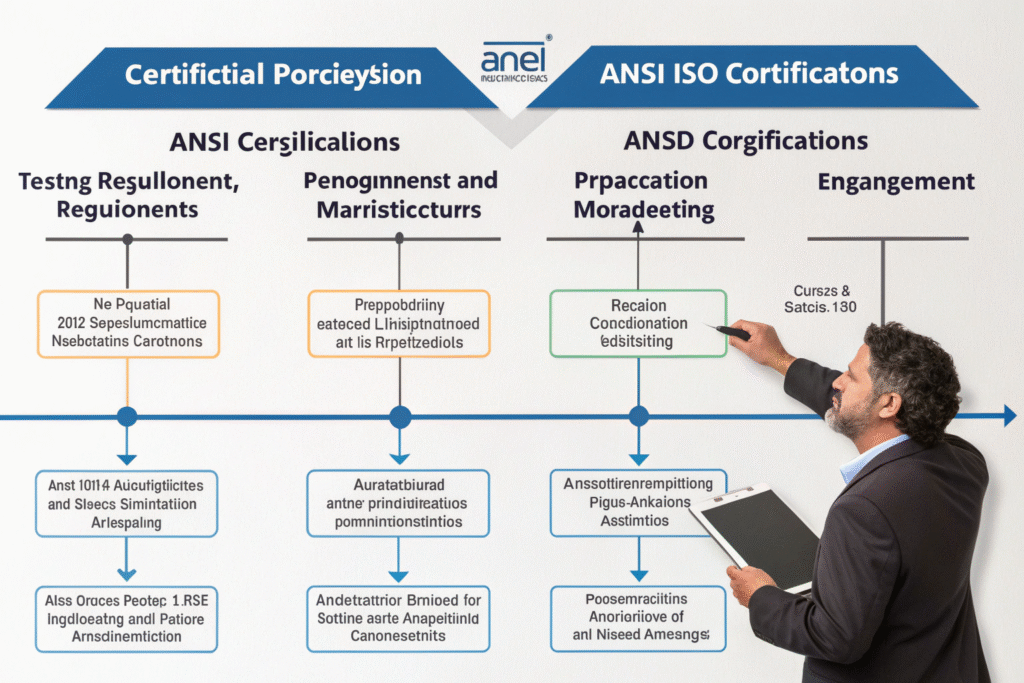
Certification processes for ANSI/ISEA 107 and EN ISO 20471 involve different pathways, documentation requirements, and oversight mechanisms. ANSI compliance typically involves self-declaration by manufacturers based on third-party testing, though many specifiers require independent certification from organizations like UL or Intertek. EN ISO 20471 compliance requires certification by notified bodies within the European framework, with specific documentation and factory surveillance requirements.
The certification timeline and costs differ significantly between the standards. ANSI certification typically completes within 4-6 weeks with costs of $3,000-$7,000 depending on product complexity, while EN ISO certification often requires 8-12 weeks with costs of $8,000-$15,000 due to more extensive documentation and factory assessment requirements. These differences impact development schedules and budgets for dual-compliant products.
What documentation supports dual certification?
Dual certification requires comprehensive documentation that satisfies both standards' requirements, including test reports, technical files, manufacturing specifications, and quality control procedures. The technical construction file for EN ISO 20471 must include specific elements not required for ANSI compliance, including factory production control procedures, risk assessment documentation, and detailed material tracking systems.
The documentation management becomes particularly complex for dual-certified products, as it must address both standards' requirements while maintaining clarity and consistency. Many manufacturers develop integrated documentation systems that satisfy both standards simultaneously, though this requires careful planning and ongoing maintenance. The documentation must be readily available for audits and typically requires annual review and updates.
Documentation requirements:
- Test Reports: Comprehensive testing according to both standards
- Technical Files: EN ISO-specific documentation requirements
- Quality Manuals: Integrated quality control procedures
- Material Specifications: Detailed component and sourcing information
- Manufacturing Records: Production batch documentation
- Compliance Declarations: Formal statements of conformity
How do labeling requirements differ?
Labeling requirements demonstrate significant differences between the standards, requiring careful attention to ensure proper market access. ANSI 107 requires specific labeling including standard designation, class, type, and care instructions, while EN ISO 20471 mandates different labeling including the CE mark, standard reference, class, and size range. Dual-compliant products must include labeling elements satisfying both standards, often requiring multiple labels or integrated label designs.
The label placement and permanence requirements also differ, with EN ISO specifying more rigorous requirements for label durability and legibility through the product's service life. These differences impact garment design and manufacturing processes, requiring specific attention during product development. Many manufacturers opt for separate labels for each standard to ensure clear compliance communication.
Labeling requirements comparison:
- ANSI Labeling: Standard designation, class, type, care instructions
- EN ISO Labeling: CE mark, standard reference, class, size range
- Permanence Requirements: Different durability and legibility standards
- Placement Specifications: Varied requirements for label location
- Multiple Language: EN ISO often requires multiple language labeling
- Integrated Solutions: Combined labeling satisfying both standards
Conclusion
Specifying high-visibility fabrics that meet both ANSI/ISEA 107 and EN ISO 20471 requirements requires careful attention to the significant differences between these standards in testing methodologies, performance thresholds, and certification processes. The most successful approaches utilize specifically engineered dual-compliant fabrics that exceed both standards' minimum requirements, supported by comprehensive testing and documentation. This rigorous approach ensures genuine compliance and worker protection across international operations.
The development timeline for dual-compliant products typically extends 30-50% longer than single-standard development due to the additional testing and certification requirements. However, this investment provides essential global market access and ensures consistent worker protection standards across international operations. The additional costs (typically 20-35% premium over single-standard fabrics) are justified by the compliance assurance and risk reduction.
If you're specifying high-visibility fabrics for international operations requiring both ANSI and EN ISO compliance, our technical team can recommend certified fabrics with proven dual compliance. We maintain comprehensive testing data and certification documentation for multiple dual-compliant fabric options across different weight categories and performance levels. Contact our Business Director, Elaine, at elaine@fumaoclothing.com to discuss your specific high-visibility requirements.