As a protective textile manufacturer supplying high-visibility fabrics to global safety markets for over two decades, I've witnessed the confusion that arises when companies operate across international borders. Just last year, a US-based logistics company faced €85,000 in fines when their European distribution center was inspected—their ANSI-compliant vests didn't meet EN ISO 20471 requirements for European operations. Understanding which standard applies isn't just about compliance; it's about ensuring worker safety in specific environments and light conditions.
ANSI/ISEA 107 (American National Standards Institute) and EN ISO 20471 (European International Organization for Standardization) represent two different philosophical approaches to high-visibility protection. ANSI focuses on performance classification based on garment area and material types, while EN ISO emphasizes minimum surface areas and specific material performance requirements. Through supplying safety garments to construction, utility, and logistics companies across 40+ countries, we've developed a clear framework for selecting the appropriate standard based on your operational geography, risk assessment, and regulatory environment.
Let me guide you through the decision process that has helped our clients maintain compliance while optimizing their safety investments.
What are the fundamental differences between ANSI and EN ISO standards?
The core distinction lies in their approach to visibility assurance: ANSI classifies garments by performance levels based on intended use, while EN ISO certifies garments that meet minimum material and design requirements for European markets.
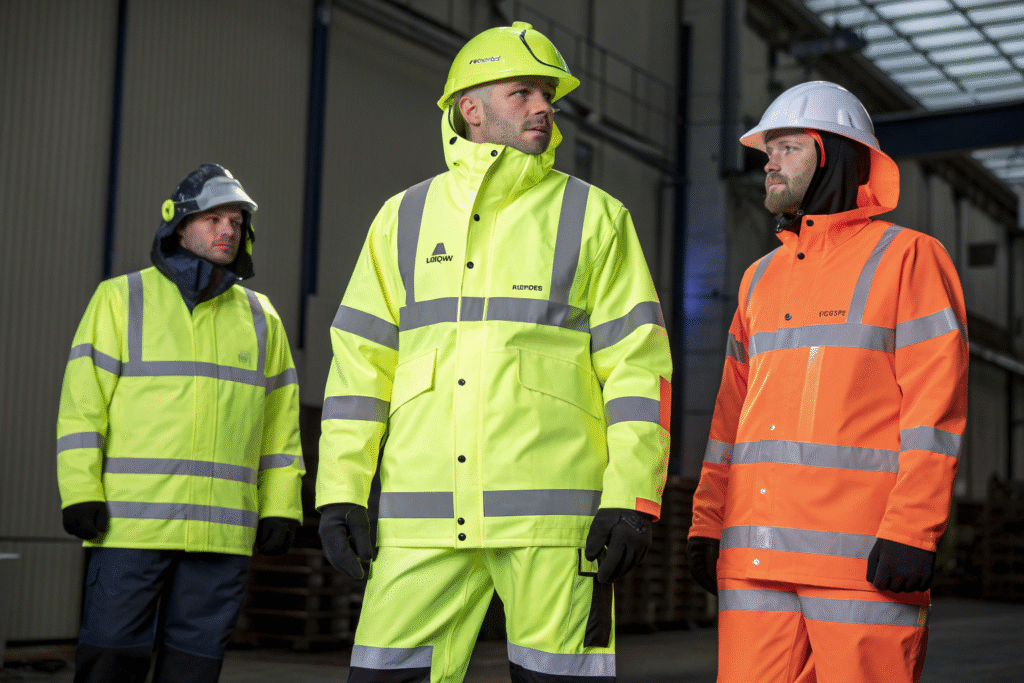
ANSI/ISEA 107-2020 organizes garments into three main classes (Class 1, 2, 3) with additional specialized types (O, E, P). The classification depends on the amount of background and retroreflective material, with Class 3 offering the highest visibility for high-risk environments. EN ISO 20471:2013 also uses three classes (Class 1, 2, 3) but requires specific minimum areas of fluorescent background material and retroreflective material, with more stringent requirements for material performance and garment design.
How do the material requirements differ?
The technical specifications for fluorescent background materials and retroreflective materials vary significantly between standards, affecting both daytime visibility and nighttime retroreflection performance.
Fluorescent material comparison:
- ANSI: Specifies color coordinates (chromaticity) and luminance factors for fluorescent yellow, orange-red, and red
- EN ISO: Specifies color and luminance factors for fluorescent yellow, orange-red, and red with additional requirements for colorfastness after xenon arc testing
Retroreflective material requirements:
- ANSI: Minimum coefficient of retroreflection (RA) values based on observation and entrance angles
- EN ISO: Minimum coefficient of retroreflection (RA) with additional requirements for resistance to cleaning and environmental exposure
We recently helped a wind turbine service company navigate these differences when expanding from North America to European markets. Their ANSI Class 3 garments used retroreflective tape with RA 350, while EN ISO required RA 500 for equivalent applications—the discrepancy would have left workers under-protected during night operations in Germany.
What are the certification and testing distinctions?
The certification processes involve different testing methodologies and compliance verification systems, creating potential gaps if not properly addressed.
ANSI/ISEA 107 certification:
- Manufacturer self-declaration of compliance is common
- Third-party certification available but not always required
- Focus on material performance and garment design
EN ISO 20471 certification:
- Requires notified body involvement for initial certification
- Annual surveillance audits mandatory
- Complete garment certification (not just materials)
- Must include testing after cleaning cycles
A safety manager discovered this difference the hard way when their "certified" imported garments were rejected during a European audit—the supplier had provided ANSI certification but lacked the required EU-type examination certificate from a notified body.
How do you determine which standard applies to your operations?
The primary determining factor is geographic, but increasingly, multinational companies are adopting the more stringent standard globally to simplify procurement and ensure uniform protection levels.
ANSI/ISEA 107 applies when:
- Operating primarily in the United States and Canada
- Supplying to organizations following OSHA regulations
- Working with US-based clients requiring ANSI compliance
- Operating in countries without specific national standards
EN ISO 20471 applies when:
- Operating within the European Economic Area
- Supplying to organizations following EU PPE Regulation 2016/425
- Working with European clients or multinationals with European operations
- Operating in countries that have adopted EN ISO as their national standard

What about operations in multiple regions?
For companies with transcontinental operations, we recommend one of three approaches:
- Regional Standard Compliance: Maintain separate inventories meeting each region's requirements
- Highest Common Denominator: Use garments meeting the more stringent requirements of both standards
- Custom Hybrid Solutions: Develop garments specifically certified to multiple standards
A global logistics company we work with adopted the highest common denominator approach, using EN ISO Class 3 garments globally. While this increased their initial cost by 18%, it eliminated compliance risks and simplified their global safety program management.
How do industry-specific requirements influence selection?
Certain industries have evolved preferences or additional requirements that may influence standard selection, even within the same geographic region.
Industry tendencies:
- Road construction and maintenance: Typically require highest class in both systems (ANSI Class 3/EN ISO Class 3)
- Railway industries: Often have additional standards (EN 13788 for Europe)
- Airport operations: Frequently follow specific customer requirements beyond base standards
- Public safety: May require specific colors or configurations not covered by base standards
We helped an airport ground services provider navigate this complexity by developing garments that met both ANSI Class 3 and EN ISO Class 3 while incorporating the specific orange color required by their aviation clients.
What are the performance differences between classification levels?
Understanding the protection levels within each standard helps match the garment to the specific hazard environment and ensures appropriate protection without over-specifying.
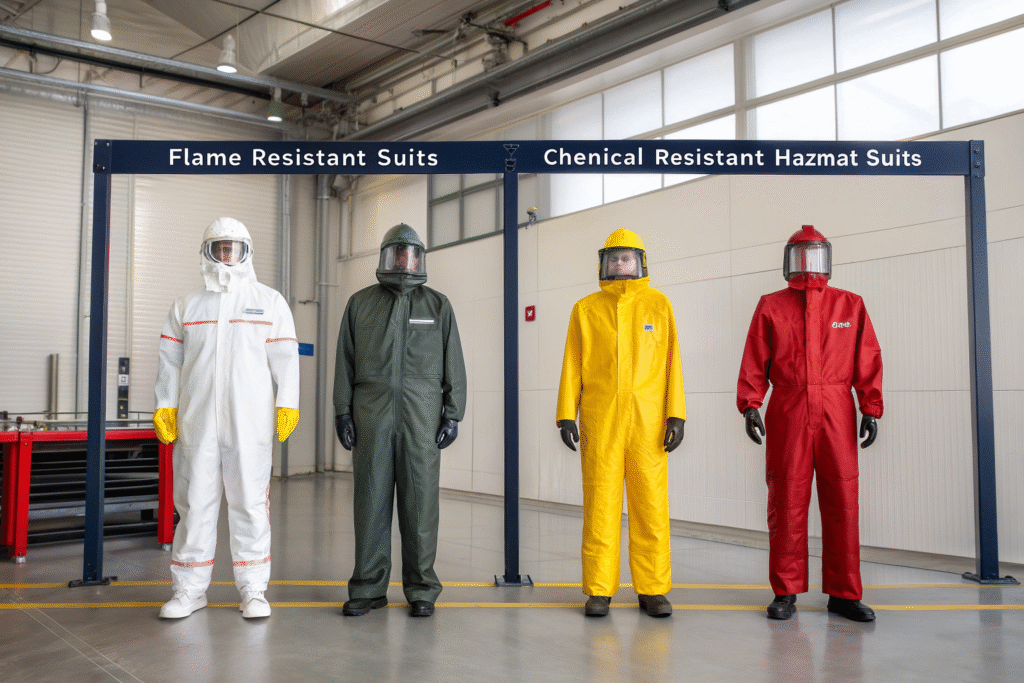
ANSI/ISEA 107-2020 classification breakdown:
Class 1:
- Lowest visibility for workplaces with traffic up to 25 mph
- Minimum background material: 0.14 m² (217 in²)
- Minimum retroreflective material: 0.10 m² (155 in²)
- Typical applications: Parking attendants, warehouse personnel
Class 2:
- Intermediate protection for traffic 25-50 mph and inclement weather
- Minimum background material: 0.50 m² (775 in²)
- Minimum retroreflective material: 0.13 m² (201 in²)
- Typical applications: Roadway construction, utility workers, railway workers
Class 3:
- Highest visibility for high-risk environments and high-speed traffic
- Minimum background material: 0.80 m² (1,240 in²)
- Minimum retroreflective material: 0.20 m² (310 in²)
- Typical applications: Emergency responders, highway construction, utility workers in high-speed environments
EN ISO 20471:2013 classification breakdown:
Class 1:
- Minimum level for urban areas with traffic <30 mph
- Minimum background material: 0.14 m²
- Minimum retroreflective material: 0.10 m²
- Minimum combined performance material: 0.20 m²
Class 2:
- Intermediate protection for higher risk environments
- Minimum background material: 0.50 m²
- Minimum retroreflective material: 0.13 m²
- Minimum combined performance material: 0.53 m²
Class 3:
- Highest level of protection for high-risk environments and poor visibility
- Minimum background material: 0.80 m²
- Minimum retroreflective material: 0.20 m²
- Minimum combined performance material: 0.80 m²
A municipal utility company learned these differences when their workers moved between city streets (ANSI Class 2 adequate) and highway operations (requiring ANSI Class 3). Implementing a risk-based garment assignment system ensured appropriate protection while controlling costs.
How do material and design requirements impact garment selection?
The technical specifications for materials and design features significantly impact both compliance and wearer comfort, making them crucial considerations in standard selection.

Background material performance requirements:
Colorfastness testing:
- ANSI: Xenon arc exposure for 40 hours (Option 1) or 100 hours (Option 2)
- EN ISO: Xenon arc exposure for 24 hours with specific color change limits
Cleaning durability:
- ANSI: 25 wash cycles for background materials
- EN ISO: 5 wash cycles for background and retroreflective materials
We identified a material failure for a client when their fluorescent fabric passed ANSI colorfastness requirements but failed EN ISO testing—the European standard had stricter limits for color change after light exposure.
Retroreflective material distinctions:
Performance maintenance:
- ANSI: Requires maintenance of RA values after cleaning and environmental exposure
- EN ISO: Specific requirements for resistance to flexion, temperature, and water exposure
Configuration requirements:
- ANSI: Allows various configurations meeting minimum area requirements
- EN ISO: Requires specific retroreflective arrangements (bands encircling torso and limbs)
A US construction company expanding to Poland discovered their standard retroreflective tape patterns didn't meet EN ISO configuration requirements, necessitating a complete garment redesign for their European operations.
What about specialized types and supplemental items?
Both standards address specialized applications and supplemental items, but with different approaches and requirements.

ANSI specialized types:
Type O (Off-road):
- For occupational use outside the roadway right-of-way
- Less stringent requirements than roadway classes
Type E (Emergency):
- For incident command and emergency response
- Specific color requirements (orange background for fire, lime for law enforcement)
Type P (Public Safety):
- For law enforcement, emergency medical services
- Specific configurations and optional colors
EN ISO supplemental items:
The European standard allows supplemental items that don't meet full class requirements but provide additional visibility when worn with compliant garments.
A fire department we worked with needed Type E garments for incident command (ANSI) while also requiring EN ISO compliance for their European training exercises. We developed a dual-certified solution that met both standards' specialized requirements.
Conclusion
Selecting between ANSI/ISEA 107 and EN ISO 20471 depends primarily on your geographic operations, regulatory environment, and specific risk assessment. ANSI governs North American operations with its performance-based classification system, while EN ISO is mandatory for European operations with its more prescriptive material and design requirements. For multinational operations, we recommend either maintaining regional compliance or adopting the more stringent requirements globally to ensure uniform protection levels.
The most successful safety programs conduct thorough risk assessments and select the standard (or combination) that provides appropriate protection for their specific hazards while ensuring regulatory compliance. If you need assistance determining which high-visibility standard applies to your operations or require garments certified to multiple standards, contact our Business Director Elaine at elaine@fumaoclothing.com. Our technical team will analyze your specific requirements and recommend the optimal compliance strategy for your global workforce.