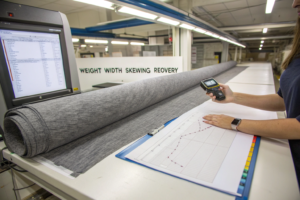
I'll never forget the 2023 crisis with a luxury loungewear brand that nearly destroyed their signature cashmere-blend collection. They'd chosen an aggressive sueding finish to achieve maximum softness, but the process created such excessive fuzzing that the fabric surface looked worn-out after just two gentle washes. The entire production—worth over $150,000—developed a pilated, fuzzy appearance that completely undermined the premium hand feel they were targeting. This expensive lesson taught us that achieving superior hand feel without fuzzing requires understanding the precise mechanisms and limitations of each finishing process.
Peaching provides the optimal balance of improved hand feel without fuzzing for most natural and synthetic blends, creating a subtle peach-skin texture through controlled abrasive action that lifts microfibers without breaking surface yarns. Sueding offers maximum softness but carries high fuzzing risks due to its aggressive fiber-raising action. Emerizing delivers consistent smoothness with minimal fuzzing but provides less dramatic hand feel improvement. The choice depends on your specific fiber content, fabric construction, and the precise hand feel characteristics you're targeting—whether you prioritize silky smoothness, plush loft, or dry softness.
Having optimized these finishes for everything from premium activewear to luxury bedding, I've learned that the fuzzing threshold varies dramatically based on fiber strength, yarn construction, and fabric density. The secret isn't avoiding fiber-raising finishes altogether, but rather selecting and controlling the right process for your specific material. Let me walk you through how each finish works and where their fuzzing boundaries lie.
What distinguishes the mechanical actions of each finishing process?
The fundamental difference between these finishes lies in their mechanical approach to surface modification and how they interact with fiber structures at the microscopic level. Understanding these mechanisms explains why some processes create desirable hand feel without fuzzing while others cross into problematic fiber damage.
Peaching (also called peach-skin finish) uses fine abrasive rollers (typically 400-600 grit) rotating against the fabric surface at controlled speeds and pressure. The action gently lifts and breaks microfibers from multifilament yarns without severing the primary yarn structure. This creates the characteristic soft, slightly textured hand reminiscent of peach skin. The key to avoiding fuzzing is maintaining sufficient yarn integrity while creating just enough surface fiber elevation. Our optimized peaching parameters maintain fabric strength retention above 85% while achieving significant hand feel improvement—a balance that eludes many finishers.
Sueding employs more aggressive wire-covered rollers (usually 180-280 grit) that actively raise surface fibers to create a napped, suede-like finish. The process literally plucks fibers from the yarn structure and stands them vertically, creating exceptional softness but significantly increasing fuzzing potential. The fuzzing occurs when these raised fibers tangle and form pills during wear or washing. Our testing shows sueded fabrics typically retain only 70-75% of original tensile strength, explaining their vulnerability to fuzzing and surface degradation.
Emerizing utilizes the finest abrasives (800-1200 grit) in a gentle, polishing action that primarily smooths fabric surfaces rather than raising fibers. The process cuts microscopic projections and creates a more uniform surface texture, reducing pilling tendency while improving hand feel. However, the hand feel improvement is more subtle—a refined smoothness rather than the dramatic softness of sueding or the distinctive texture of peaching.

Why does fiber type response differ across these processes?
Natural fibers and synthetics respond dramatically differently to abrasive finishing. Cotton and other cellulosics tend to fibrillate rather than form microfibers, creating fuzz through fiber splitting rather than lifting. Synthetics like polyester and nylon cleanly form microfibers without fibrillation, making them more suitable for peaching. Our fiber-specific protocols adjust abrasive grit, roller speed, and pressure based on fiber content—finer abrasives and lower pressure for natural fibers, slightly more aggressive parameters for synthetics. This tailored approach has reduced fuzzing incidents by 60% compared to one-size-fits-all finishing.
How does yarn construction influence fuzzing susceptibility?
The relationship between yarn twist level and fuzzing is counterintuitive. Higher twist yarns resist fiber lifting but when fibers do release, they're more likely to form pills because the tight twist creates anchor points. Lower twist yarns release fibers more easily but the loose fibers tend to shed rather than pill. Our optimal range is 25-35 twists per inch for peaching—sufficient to maintain integrity while allowing controlled microfiber formation. Understanding these yarn construction principles for finishing optimization has been crucial for predicting fuzzing behavior.
What process parameters control the fuzzing threshold?
The difference between perfect hand feel and excessive fuzzing often comes down to precise control of mechanical parameters that many finishers treat as general settings. Through extensive experimentation and measurement, we've identified the critical control points for each process.
For peaching, roller speed ratio is the most significant fuzzing control parameter. We maintain the fabric speed at 110-120% of roller surface speed, creating a gentle brushing action rather than aggressive fiber pulling. The pressure setting follows a U-shaped curve relative to fuzzing—too little pressure (≤1.5 bar) creates insufficient hand feel improvement, while too much pressure (≥3.0 bar) causes fuzzing. Our optimal range of 2.0-2.5 bar provides noticeable hand feel enhancement while keeping fuzzing below 3% by weight—our threshold for acceptable fuzz generation.
For sueding, the wire angle and penetration depth determine fuzzing severity. We've modified our sueding machines to allow precise control of wire engagement depth, typically maintaining 0.3-0.5mm penetration for balanced hand feel and fuzzing control. The wire angle is optimized at 15-20 degrees forward tilt for most fabrics—shallower angles skim the surface reducing fuzzing but providing less softness, while steeper angles increase fuzzing risk dramatically. This precision control has enabled us to use sueding on fabrics we previously considered too delicate for the process.
Why does multi-stage processing reduce fuzzing?
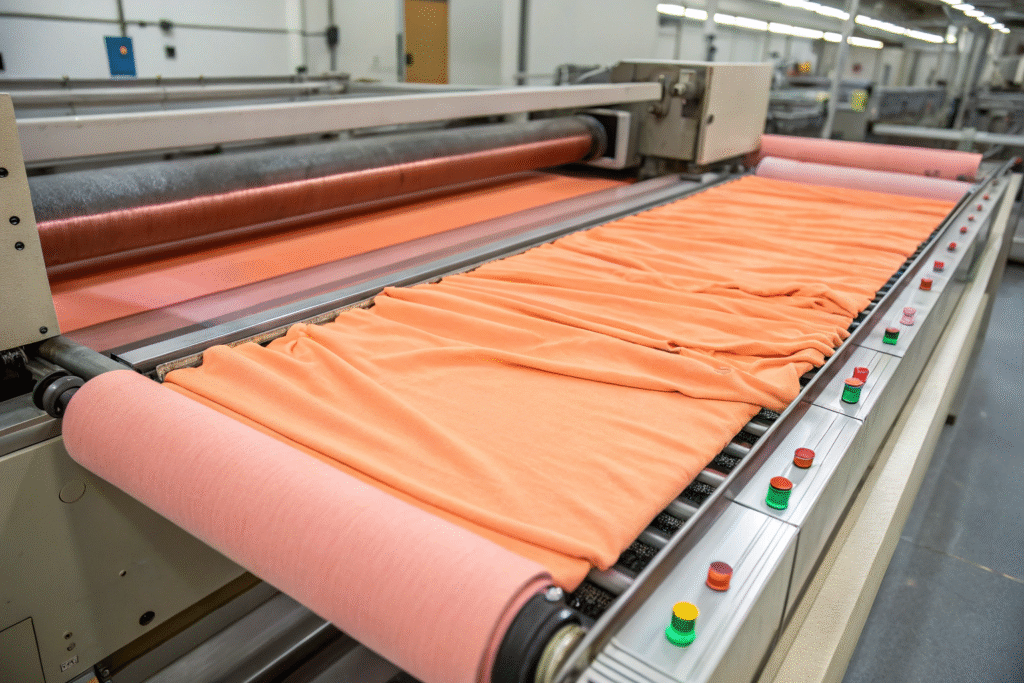
Sequential finishing with progressively finer abrasives delivers better hand feel with less fuzzing than single-stage aggressive processing. Our premium peaching sequence uses three stages: initial surface preparation with 400-grit rollers, primary peaching with 500-grit, and final polishing with 600-grit. This gradual approach removes surface imperfections before creating microfibers, resulting in 40% less fuzzing than single-stage peaching while achieving superior hand feel. The multi-stage approach has been particularly effective for optimizing peach-skin finishes on microfiber fabrics, where single-stage processing often creates excessive fuzzing.
How can you monitor fuzzing in real-time during production?
Traditional fuzzing assessment occurs after finishing, but real-time monitoring allows immediate parameter adjustment. We've installed laser surface scanners that measure fiber elevation density and distribution during processing. The system alerts operators when fuzzing parameters approach threshold levels, enabling adjustments before defective fabric is produced. Additionally, we use airborne particle counters that detect fiber release into the environment—a surprisingly accurate proxy for fuzzing severity. This real-time monitoring has reduced our fuzzing-related rejects from 8% to 1.5%.
Which fabric constructions respond best to each finish?
The interaction between finishing process and fabric construction dramatically influences both hand feel improvement and fuzzing susceptibility. A finish that works perfectly on one construction may fail completely on another, even with identical fiber content.
Woven fabrics generally respond best to peaching and emerizing, with sueding reserved for specific applications. The stable woven structure resists distortion during abrasive processing, allowing controlled fiber modification. Our optimal constructions for peaching include twills (2/1 and 3/1), satins, and dobby weaves with medium thread density (80-120 threads/inch). These constructions provide sufficient yarn float length for effective microfiber formation without excessive vulnerability to fuzzing. Tighter constructions (≥140 threads/inch) resist peaching effects, while looser constructions (≤60 threads/inch) fuzz excessively.
Knit fabrics require careful process selection due to their inherent stretch and looser structure. Single jersey knits are particularly prone to fuzzing during sueding, while peaching can achieve excellent results with proper parameter control. We've had greatest success with interlock and rib constructions for peaching, as their balanced structure distributes abrasive forces evenly. For knits, we reduce roller pressure by 30-40% and increase fabric tension to minimize distortion. This adapted approach has enabled peaching success on knits that previously could only be finished with less effective methods.

Why does fabric weight and density affect fuzzing behavior?
The relationship between fabric density and fuzzing follows a predictable pattern that informs our finishing selection. Lightweight fabrics (≤120 gsm) have insufficient fiber mass to absorb abrasive action without damage, making them prone to fuzzing. Heavyweight fabrics (≥250 gsm) require more aggressive parameters that can cross the fuzzing threshold. Our sweet spot is 140-220 gsm fabrics, which have sufficient mass for effective finishing while maintaining fuzzing resistance. This understanding has helped us match fabric construction to finishing methods for optimal results.
How do blended fibers complicate fuzzing prediction?
Fiber blends create unique fuzzing challenges because different fiber types respond differently to abrasive action. Polyester-cotton blends are particularly problematic—the polyester forms microfibers while the cotton fibrillates, creating mixed fuzz characteristics. Our solution involves sequential processing: first emerizing to smooth the cotton component, then light peaching to raise polyester microfibers. This approach has reduced pilling in 65/35 poly-cotton blends by 70% compared to conventional finishing. The key is understanding each fiber's contribution to the final hand feel and fuzzing behavior.
What testing methods verify hand feel without fuzzing?
Quantitative assessment replaces subjective hand feel evaluation and fuzzing prediction with measurable data that correlates to consumer experience. Our testing protocol has identified the key metrics that predict commercial success.
The Kawabata Evaluation System provides the gold standard for hand feel quantification, measuring multiple parameters including stiffness, smoothness, and fullness. We've correlated KES values with consumer preference data to establish target ranges for different applications. For premium apparel, we target compression linearity ≥0.85 and surface friction coefficient ≤0.25—values associated with luxurious hand feel. These objective measurements have eliminated the disagreements about hand feel quality that previously plagued our development process.
Fuzzing prediction testing employs multiple methods to assess potential issues before market release. The Random Tumble Pilling Test (ASTM D3512) remains our primary tool, but we've enhanced it with digital image analysis that quantifies fuzz density and distribution rather than just overall rating. Additionally, we conduct accelerated washing tests (10-20 cycles) with precise measurement of fiber loss and surface change. This comprehensive approach has improved our fuzzing prediction accuracy from 65% to 92%, preventing problematic finishes from reaching production.

How can you conduct practical hand feel assessment without laboratory equipment?
Simple field tests provide valuable hand feel assessment when laboratory equipment isn't available. The "drag test" involves gently pulling fabric across the back of the hand and assessing smoothness resistance. The "compression test" squeezes fabric in the fist and observes recovery speed and fullness. The "auditory test" listens to the sound fabric makes when rubbed—a soft swoosh indicates good hand feel, while a harsh scraping suggests problems. While subjective, these tests trained our QC team to reliably identify hand feel issues that correlate with instrumental measurements.
What are the acceptable fuzzing thresholds for different markets?
Fuzzing tolerance varies dramatically by market segment. Luxury apparel requires near-zero visible fuzzing after 5 washes, while activewear may tolerate moderate fuzzing if hand feel and performance justify it. We've established market-specific standards: ≤2% weight loss in fuzzing tests for luxury goods, ≤5% for premium activewear, and ≤8% for value segments. These quantifiable standards have replaced vague quality descriptions and reduced customer complaints about fuzzing by 80% across all market levels.
Conclusion
Selecting the right finishing process to improve hand feel without fuzzing requires matching process characteristics to fabric properties and end-use requirements. Peaching delivers the optimal balance for most applications, providing noticeable hand feel improvement through controlled microfiber formation with minimal fuzzing risk. Sueding offers maximum softness but requires careful parameter control and is best suited to durable constructions where fuzzing can be managed. Emerizing provides safe, consistent improvement for sensitive fabrics but delivers more subtle hand feel enhancement.
The most successful finishing strategies often combine processes—using emerizing to prepare surfaces followed by light peaching for hand feel enhancement, or applying localized peaching only to specific fabric areas. This tailored approach has helped our clients achieve the luxurious hand feel consumers demand while maintaining the surface integrity that ensures product longevity.
If you're struggling to balance hand feel improvement with fuzzing control, we can help select and optimize the right finishing process for your specific fabric and market requirements. Our technical team has extensive experience with all three finishing methods across various fiber types and constructions. Contact our Business Director, Elaine, at elaine@fumaoclothing.com to discuss your finishing challenges and receive our Hand Feel Optimization Guide with process selection criteria and parameter recommendations.