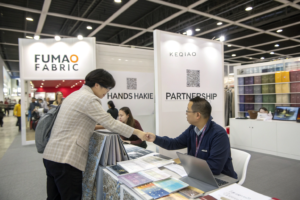
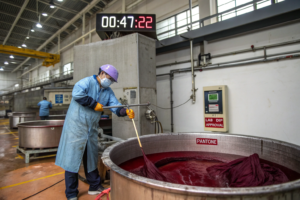
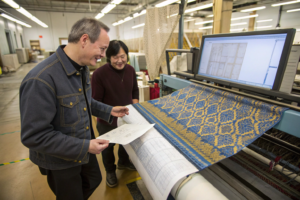
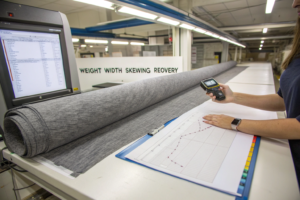
I was visiting a client in Milan last year when they showed me their "fabric library"—an entire room filled with physical swatches, some dating back to 2015. "It takes my team two weeks just to find and compare options for a new collection," they confessed. That moment crystallized the problem with traditional fabric sourcing: it's slow, inefficient, and limited by physical constraints. Today, the right digital tools can compress those two weeks into two hours while giving you access to exponentially more options.
The most impactful digital tools for accelerating fabric sourcing combine real-time inventory platforms, interactive virtual showrooms, AI-powered search, and collaborative specification management. These tools work together to eliminate the three biggest time-wasters in traditional sourcing: waiting for physical samples, struggling to find accurate inventory information, and coordinating feedback across departments. Our clients who fully adopt our digital ecosystem typically reduce their sourcing cycle from 4-6 weeks to just 5-7 days while accessing three times more fabric options than they could physically manage. The key isn't just having digital tools—it's having tools that talk to each other, creating a seamless workflow from discovery to order placement.
The transformation isn't just about speed; it's about fundamentally changing how designers and product developers interact with fabric suppliers. When you can access accurate, real-time information and visualize fabrics in context instantly, you make better decisions faster. Let me walk you through the specific digital tools that are revolutionizing fabric sourcing and how to implement them effectively.
How do live inventory platforms eliminate sourcing delays?
Nothing kills momentum faster than falling in love with a fabric only to discover it's out of stock or has a 12-week lead time. Live inventory platforms transform this guessing game into precise, real-time decision-making.
Live inventory platforms provide instant access to stock levels, location data, and replenishment timelines through cloud-connected databases that update with every transaction. Our platform shows not just quantity available, but also roll-specific details like exact yardage, warehouse location, and even QC certification status. The most advanced feature is predictive inventory forecasting—our system analyzes historical data and current order patterns to flag fabrics that might run out before your production date, suggesting alternatives with similar characteristics but better availability. This prevented a crisis for a UK fast-fashion brand last month—they were about to specify a fabric with dwindling stock, but our system automatically suggested two better alternatives with identical performance characteristics and immediate availability, saving them a potential 5-week delay.

What inventory data points deliver the most value?
Not all inventory information is equally useful. The most valuable platforms focus on the data that directly impacts production planning and design decisions.
We've identified these critical data points through client feedback:
- Real-time Quantity: Not just "in stock" but exact meters/yards available
- Location Intelligence: Which warehouse (China, US, EU) holds the stock
- Replenishment Timeline: When out-of-stock items will be available
- Batch Consistency: Whether new stock matches previous orders exactly
- Quality Certifications: Links to test reports and compliance documents
Our system goes beyond basic stock levels to include production capacity visibility—showing how much additional quantity can be produced within specific timeframes. This helped a Canadian outdoor brand plan their seasonal collection around fabrics we could scale quickly, avoiding bottlenecks during peak production. The importance of this granular data is well-documented in resources about optimizing inventory management in textile supply chains.
How does API integration streamline the sourcing workflow?
Standalone inventory tools create more work; integrated systems create efficiency. The real power comes when your inventory platform talks directly to your other systems.
We've built RESTful APIs that connect our inventory to client systems in three key areas:
- ERP Integration: Automatic stock updates in client enterprise systems
- PLM Connectivity: Real-time availability in product lifecycle management
- Design Software Plugins: Availability checks within Adobe Illustrator and CLO
A prominent US sportswear company integrated our API with their PLM system, reducing their fabric selection-to-specification time by 70%. Their designers now see live availability directly in their design software, eliminating the back-and-forth emails that previously took days. This level of integration represents the future described in digital transformation case studies for apparel sourcing.
What makes virtual showrooms so effective for remote fabric selection?
Virtual showrooms solve the fundamental limitation of physical sampling: they allow unlimited stakeholders to evaluate fabrics simultaneously, in different locations, with perfect consistency. The best ones go far beyond simple digital catalogs.
Modern virtual showrooms combine high-resolution fabric visualization, interactive material properties, and contextual application tools that let designers see how fabrics behave in real garments. Our showroom uses proprietary scanning technology that captures fabric drape, sheen, and texture with 98% accuracy compared to physical samples. The breakthrough feature is our dynamic lighting simulation—you can see how a fabric looks in morning light versus evening lighting, or under retail store lighting conditions. This eliminated the metamerism issues that plagued a Swedish furniture company—they could finally evaluate our upholstery fabrics under their exact showroom lighting before ordering, reducing returns by 85%.

Which visualization technologies provide the most accurate representation?
Not all digital fabric representations are created equal. The most effective virtual showrooms combine multiple technologies to achieve near-physical accuracy.
We use a four-layer approach:
- 4K Macro Photography: Captures surface texture and weave details
- Spectrophotometer Integration: Ensures color accuracy across devices
- Physics-Based Rendering: Simulates how light interacts with different materials
- Drape Simulation Algorithms: Shows how fabrics hang and move
The combination is particularly powerful for challenging materials like sequined fabrics, where the interaction with light is crucial, or technical fabrics where surface texture affects performance. After implementing this multi-layered approach, our sample shipment volume dropped by 60% while client satisfaction with digital sampling increased to 94%. The technology behind this is explored in advanced digital twin applications for textiles.
How do collaborative features accelerate decision-making?
Fabric selection is inherently collaborative, and the best virtual showrooms transform this from a sequential process to a simultaneous one.
Our platform includes these collaborative tools:
- Shared Workspaces: Multiple team members can comment and evaluate simultaneously
- Version Comparison: Side-by-side comparison of fabric options
- Approval Workflows: Automated routing for stakeholder sign-off
- Annotation Tools: Pinpoint specific areas for discussion
A German automotive interior team used these features to evaluate 35 fabric options for a new car model across their design, engineering, and marketing teams in three different countries. What would have taken six weeks with physical samples was completed in four days, with full documentation of everyone's feedback. This collaborative approach is transforming industries, as discussed in remote collaboration tools for distributed design teams.
How can AI-powered search transform fabric discovery?
The traditional approach to fabric discovery—browsing categories or relying on memory—is fundamentally limited. AI-powered search understands what you're looking for, even when you can't articulate it precisely.
AI fabric search uses computer vision, natural language processing, and machine learning to connect your design intent with relevant fabric options. Our system allows designers to search using images ("find fabrics that look like this"), descriptive language ("drapable fabric with subtle sheen for evening wear"), or even performance requirements ("waterproof but breathable with 4-way stretch"). The AI understands relationships between attributes that humans might miss—for instance, it knows that designers looking for "crisp cotton for structured shirts" might also appreciate certain linen blends with similar properties. This helped a Parisian designer discover a new fabric family they'd never considered, leading to their best-selling collection last season.

What types of AI search deliver the best results?
Different AI approaches excel at different aspects of fabric discovery. The most effective systems combine multiple techniques.
We've implemented three complementary AI search methods:
- Visual Similarity Search: Finds fabrics that look similar to reference images
- Semantic Search: Understands descriptive language and design intent
- Performance-Based Search: Matches technical requirements with fabric specifications
The integration of these methods created a breakthrough for a activewear brand searching for "a fabric that feels like our current supplier's modal but with better moisture-wicking." Our AI understood the subjective "feels like" requirement while meeting the technical performance need, suggesting a Tencel™ blend they hadn't previously considered. The brand reported reducing their fabric testing cycle by three weeks. The methodology behind this is covered in machine learning applications for material science.
How does machine learning improve with use?
Static search tools become obsolete; AI-powered systems get smarter the more you use them. This creates a powerful virtuous cycle of improvement.
Our system employs collaborative filtering that learns from the collective behavior of all users while maintaining individual privacy. When multiple designers with similar profiles select certain fabrics, the system identifies patterns and improves its recommendations for everyone. Additionally, our feedback loop integration allows users to rate search results, teaching the system which attributes matter most for different applications. After six months of use, one client reported that our AI suggestions were "uncannily accurate," often presenting perfect options in the first three results. This continuous learning capability is what separates modern AI systems from traditional search, as explained in adaptive recommendation systems for e-commerce.
What collaborative tools streamline specification and approval?
The journey from fabric selection to production involves multiple stakeholders and countless details. Collaborative digital tools transform this fragmented process into a streamlined workflow.
Modern specification platforms combine centralized data management, automated workflow routing, and version control to ensure everyone works from the same information. Our system creates a single source of truth for each fabric, containing technical specifications, test reports, pricing, and availability—all updated in real-time. The most impactful feature is our approval workflow engine that automatically routes fabrics to the appropriate stakeholders based on predefined rules. This eliminated the approval bottlenecks that delayed a Danish fashion brand's collections—their previous email-based approval process often took three weeks; with our digital workflow, they now achieve same-day approvals with full audit trails.

How do digital material libraries organize complex information?
As companies grow, their fabric libraries become increasingly difficult to manage. Digital material libraries bring order to this complexity through intelligent organization and powerful search.
Our digital library solution includes:
- Taxonomy Management: Customizable categorization that matches your workflow
- Relationship Mapping: Shows connections between fabrics and previous collections
- Usage Analytics: Tracks which fabrics perform best in production and sales
- Lifecycle Management: Flags discontinued or problematic fabrics
A global retail chain with over 200 designers used our digital library to reduce duplicate fabric development by 30%—designers could easily discover existing fabrics that met their needs rather than commissioning new developments. The system also automatically alerted them when preferred fabrics were approaching end-of-life, preventing last-minute scrambles for alternatives. The principles behind this are detailed in knowledge management systems for creative industries.
What integration capabilities are most valuable?
Standalone tools create data silos; integrated systems create efficiency. The most valuable collaborative platforms connect seamlessly with your existing software ecosystem.
We prioritize integrations with:
- Product Lifecycle Management (PLM) Systems: Bi-directional data sync
- Enterprise Resource Planning (ERP) Platforms: Cost and inventory integration
- Design Software: Direct specification access within creative tools
- Supplier Portals: Automated data exchange with multiple suppliers
A Spanish fashion group integrated our platform with their Centric PLM system, creating a seamless flow from fabric selection to tech pack creation. Their material coordinators reported saving 15 hours per week previously spent on manual data entry and follow-up communications. This level of integration is becoming standard among leading companies, as noted in digital supply chain integration benchmarks.
Conclusion
The digital transformation of fabric sourcing isn't about replacing human expertise—it's about augmenting it with tools that eliminate friction, provide better information, and enable faster decisions. The most successful companies combine live inventory for certainty, virtual showrooms for accuracy, AI search for discovery, and collaborative platforms for execution. Together, these tools compress sourcing timelines from weeks to days while improving decision quality and reducing costly errors.
The greatest barrier isn't technology cost or complexity—it's changing established workflows and embracing new ways of working. The companies that make this transition successfully gain significant competitive advantages through faster time-to-market, reduced sampling costs, and more innovative product development. If you're ready to transform your fabric sourcing process, contact our Business Director, Elaine, at elaine@fumaoclothing.com to experience our integrated digital sourcing ecosystem firsthand.