
Last month, a New York fashion startup sourced their entire 35-fabric collection in 72 hours instead of their usual 3-week process by leveraging our digital tools. Meanwhile, their competitor was still waiting for physical samples to arrive by courier. This accelerating advantage demonstrates how digital transformation is revolutionizing fabric sourcing from a physical, time-intensive process to an instantaneous, data-driven experience.
Digital fabric sourcing tools address the three biggest time drains in traditional sourcing: sample shipping delays, inventory uncertainty, and the inefficiency of physical showroom visits. Live inventory platforms provide real-time availability data, while virtual showrooms offer immersive digital experiences that replicate physical interaction. Together, these technologies can compress sourcing timelines by 60-80% while improving decision quality through enhanced information access.
The evolution of digital sourcing represents a fundamental shift from relationship-dependent processes to data-enabled efficiency. Where buyers once needed to visit multiple physical showrooms or wait weeks for sample shipments, they can now access global fabric inventories instantly and evaluate materials through advanced digital representations. This transformation is particularly valuable for overseas buyers who previously faced significant barriers accessing Asian fabric markets.
How do live inventory platforms transform sourcing efficiency?
Live inventory platforms eliminate the single biggest frustration in fabric sourcing: discovering that a selected material is unavailable after days of evaluation. These systems connect directly to mill and distributor inventory management systems, providing real-time visibility into stock levels, location, and reservation status. Our implementation reduced "available-to-promise" inquiry response time from 48 hours to 3 minutes for our international clients.
The most advanced platforms go beyond simple stock level reporting to provide intelligent availability forecasting. By analyzing historical consumption patterns, production schedules, and current demand, these systems can predict inventory depletion dates and suggest alternatives for fabrics approaching stock-out. This proactive approach prevents last-minute sourcing crises and enables better production planning.

What data integration creates true inventory visibility?
True live inventory requires integration across multiple systems: warehouse management systems for physical stock, order management systems for committed inventory, production systems for goods in process, and procurement systems for incoming materials. The most effective platforms use API connections that update inventory levels every 15-30 minutes, with trigger-based alerts for stock levels falling below predetermined thresholds.
Critical integration points include:
- Warehouse Management Systems: Real-time physical stock accuracy
- Order Management Platforms: Commitment tracking against available inventory
- Production Planning Systems: Visibility to goods in process
- Raw Material Procurement: Incoming inventory forecasting
- Quality Management Systems: Hold inventory tracking
- Logistics Platforms: In-transit inventory visibility
How do reservation systems prevent stock conflicts?
Digital reservation systems transform inventory management from first-come-first-served to strategically managed allocation. Our platform allows clients to place temporary holds on inventory while making sourcing decisions, with automated expiration to prevent hoarding. For high-demand materials, the system implements controlled release mechanisms that ensure fair access while maximizing inventory turnover.
Advanced reservation features:
- Temporary Holds: 24-72 hour reservation during decision making
- Priority Allocation: Tiered access based on relationship and volume
- Waitlist Management: Automatic notification when reserved items release
- Partial Reservation: Ability to secure portion of available inventory
- Cross-location Allocation: Intelligent distribution across multiple warehouses
- Conflict Resolution: Automated processes when demand exceeds supply
What virtual showroom capabilities deliver decision-quality information?
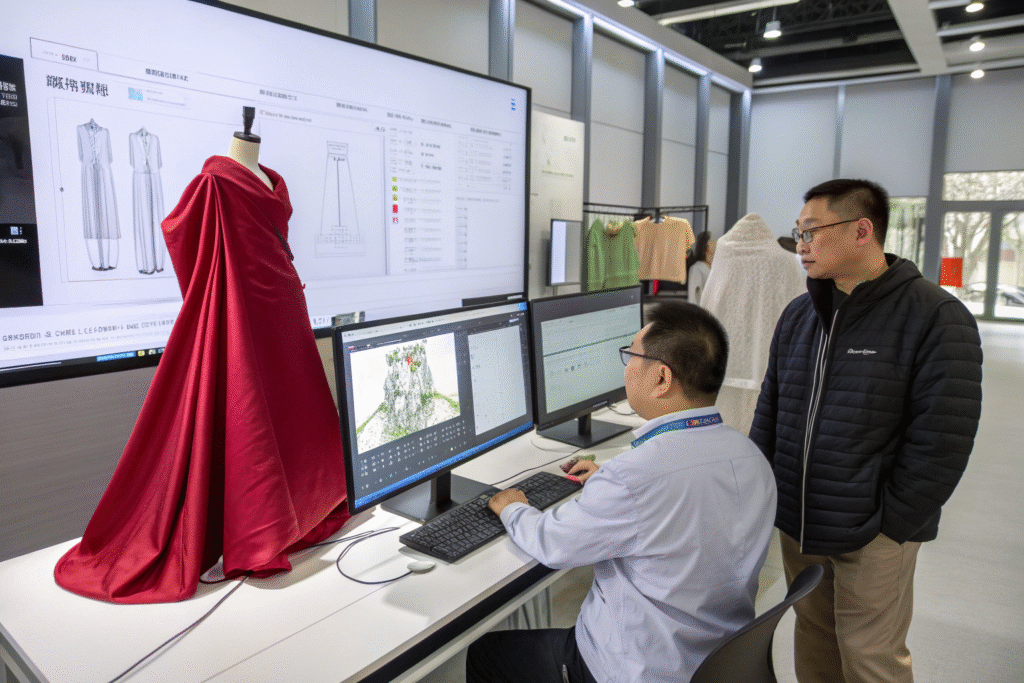
Virtual showrooms have evolved from simple image galleries to sophisticated simulation platforms that provide sufficient information for confident sourcing decisions. The most advanced systems combine high-resolution imagery, 3D draping simulation, technical specification data, and comparable swatch viewing. Our client data shows that 85% of fabric selections now occur without physical sampling when using our comprehensive virtual showroom.
The breakthrough in virtual showroom effectiveness comes from accurately representing how fabrics behave rather than just how they look. Draping simulation engines use physical properties data to show how fabrics fall, stretch, and interact with light. This movement simulation provides critical information that static images cannot convey, particularly for fluid fabrics like silks and jerseys.
How accurate are digital color and texture representations?
Color accuracy remains the most significant challenge in digital fabric representation, with even high-quality monitors varying significantly in color rendering. The most effective systems combine hardware calibration with software color management, using standardized color spaces and providing reference images under multiple light sources. Our implementation includes physical color calibration kits that clients use to ensure their displays match our standard settings.
Advanced color and texture representation:
- Hardware Calibration: Monitor profiling for color accuracy
- Multi-light Simulation: Viewing under D65, TL84, and UV lighting
- Texture Mapping: High-resolution surface detail representation
- Scale Reference: Included objects for accurate scale perception
- Metamerism Testing: Simulation of color shifts under different lighting
- Physical Reference: Provided calibration tools for client setups
What technical data integration supports sourcing decisions?
Beyond visual representation, virtual showrooms integrate comprehensive technical data that buyers would traditionally gather from specification sheets and testing reports. This includes composition details, weight, thickness, stretch properties, performance test results, and certification status. The most advanced systems allow side-by-side comparison of technical attributes across multiple fabrics, enabling data-driven selection.
Integrated technical information:
- Composition Analysis: Fiber content and blend percentages
- Physical Properties: Weight, thickness, and density measurements
- Performance Data: Strength, durability, and functional test results
- Certification Status: Sustainability and safety certifications
- Care Instructions: Washing, drying, and maintenance requirements
- Production Details: Weave/knit type and manufacturing process
How do integrated sampling systems accelerate validation?
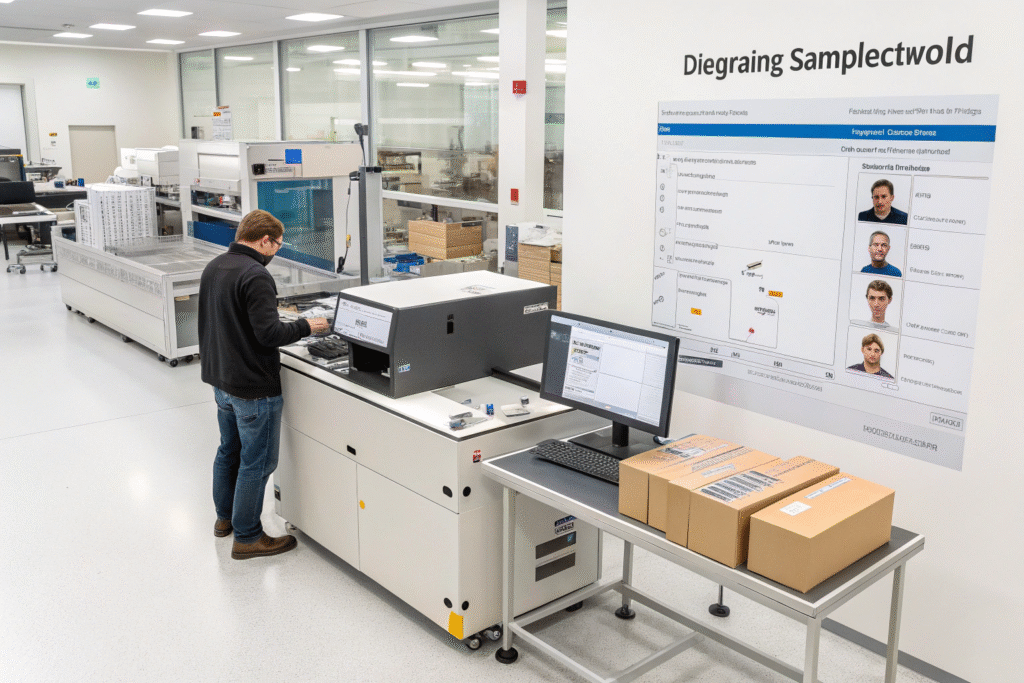
Even with advanced digital tools, physical validation remains necessary for final fabric selection. Integrated sampling systems bridge the digital and physical worlds by connecting virtual showroom selections with automated sample management. Our system reduced sample request fulfillment from 5-7 days to 24 hours through automation and express shipping integration.
The most efficient sampling systems provide graduated sampling options matching different decision stages: small swatches for initial color and hand feel assessment, larger cuts for draping and testing, and production equivalents for final validation. This tiered approach minimizes waste while providing appropriate validation at each decision point.
What automation accelerates sample fulfillment?
Sample fulfillment automation addresses the traditional bottleneck of manual sample cutting and documentation. Automated cutting systems connected to digital platforms can fulfill swatch requests within hours rather than days, while integrated labeling and documentation systems ensure accurate tracking. The most advanced facilities can process over 1,000 sample requests daily with minimal manual intervention.
Automation components:
- Digital Order Integration: Direct from platform to cutting system
- Automated Cutting: Precision swatch cutting with minimal waste
- Robotic Handling: Automated sorting and packaging
- Integrated Labeling: Automatic label generation with tracking codes
- Documentation Automation: Customized spec sheets for each sample
- Shipping Integration: Direct courier system connection
How do digital-physical correlation tools build confidence?
Building confidence in digital representations requires demonstrating their correlation with physical reality. Advanced systems provide comparison tools that show digital renders alongside photographs of actual physical samples, highlighting any variations. Over time, these systems learn individual client preferences and display characteristics, increasingly accurately predicting which digital representations will meet physical expectations.
Correlation enhancement tools:
- Side-by-Side Comparison: Digital render alongside sample photo
- Variation Alerting: Proactive notification of known representation gaps
- Preference Learning: Adaptation to individual client assessment patterns
- Confidence Scoring: Algorithmic assessment of representation accuracy
- Community Validation: aggregated user feedback on representation accuracy
- Continuous Improvement: System learning from physical-digital comparisons
What collaboration features streamline team decision-making?
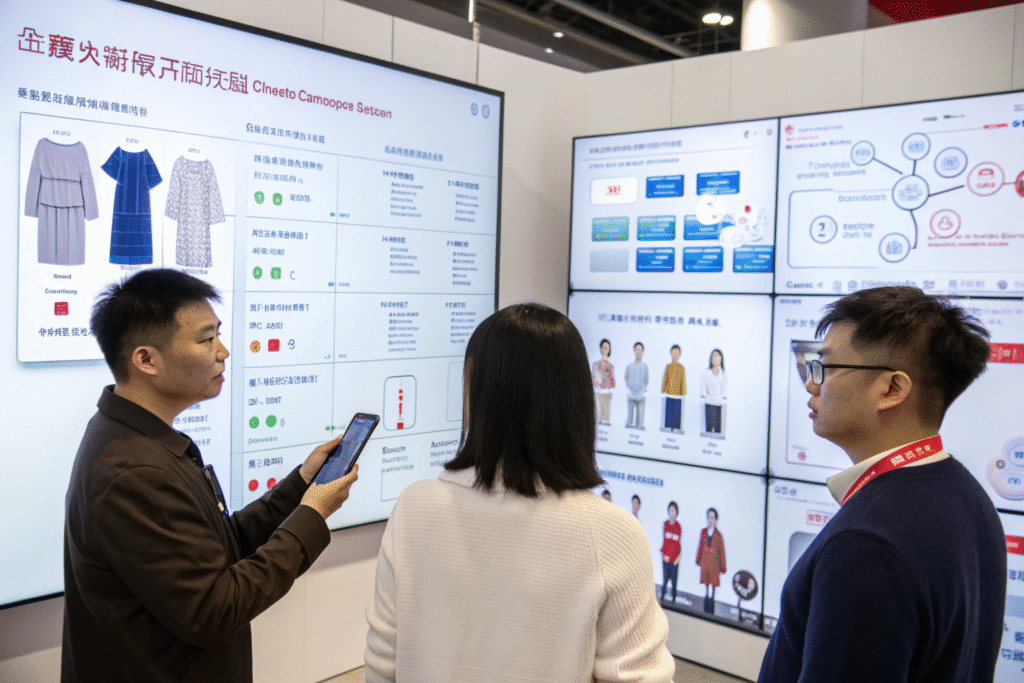
Fabric sourcing typically involves multiple stakeholders across design, merchandising, production, and finance functions. Digital platforms accelerate this process by providing collaborative tools that enable simultaneous evaluation and centralized decision tracking. Our clients report that collaborative features reduce their internal decision time by 65% by eliminating sequential review processes.
The most effective collaboration tools go beyond simple commenting to provide structured evaluation frameworks, version tracking, and approval workflows. These systems capture decision rationale and create audit trails that prevent rework and confusion. Integration with broader product development systems ensures fabric decisions flow seamlessly into subsequent processes.
How do approval workflows accelerate decision finalization?
Structured approval workflows replace ad-hoc decision processes with clear accountability and timing expectations. The most effective workflows define required approvers for different decision types, establish escalation paths for disagreements, and automate reminder systems for pending decisions. These systems reduce the "decision drift" that often occurs when approvals depend on individual initiative.
Workflow optimization elements:
- Role-based Approval: Defined approvers based on decision type
- Parallel Processing: Simultaneous rather than sequential review
- Escalation Protocols: Automatic escalation for delayed decisions
- Approval Thresholds: Flexible requirements based on material importance
- Decision Tracking: Clear status visibility for all stakeholders
- Integration Capabilities: Connection with broader approval systems
What integration with product development systems adds value?
The greatest efficiency gains occur when fabric sourcing platforms integrate seamlessly with broader product development systems. This integration enables fabric decisions to automatically populate tech packs, cost sheets, and production planning systems. The most advanced integrations provide bidirectional data flow, ensuring that fabric availability influences design decisions while design requirements guide fabric sourcing.
Integration points:
- Tech Pack Integration: Automatic population of fabric specifications
- Costing System Connection: Immediate cost calculation impact
- Production Planning: Lead time integration with manufacturing schedules
- Quality Management: Specification flow to quality control systems
- Sustainability Tracking: Compliance data integration
- Supplier Management: Performance data sharing
Conclusion
Digital fabric sourcing tools have evolved from nice-to-have accessories to essential competitive requirements in fast-paced fashion environments. Live inventory platforms eliminate availability uncertainty, virtual showrooms provide decision-quality information without physical samples, integrated sampling systems accelerate validation, and collaboration features streamline multi-stakeholder decision processes. Together, these technologies can transform fabric sourcing from a weeks-long process to a matter of days while improving decision quality through enhanced information access.
The most successful implementations approach digital transformation as an integrated system rather than isolated tool adoption. Platforms that connect inventory visibility, virtual evaluation, sampling, and collaboration create compounding efficiency benefits that far exceed the sum of individual tool advantages. This holistic approach maximizes return on digital investment while creating sustainable competitive advantages.
If you’re considering digital sourcing tools to accelerate your fabric selection process, our digital transformation team can help identify the right solutions for your specific needs. We’ve implemented comprehensive digital sourcing systems for clients ranging from startups to enterprise brands. Contact our Business Director, Elaine, at elaine@fumaoclothing.com to schedule a digital sourcing assessment.