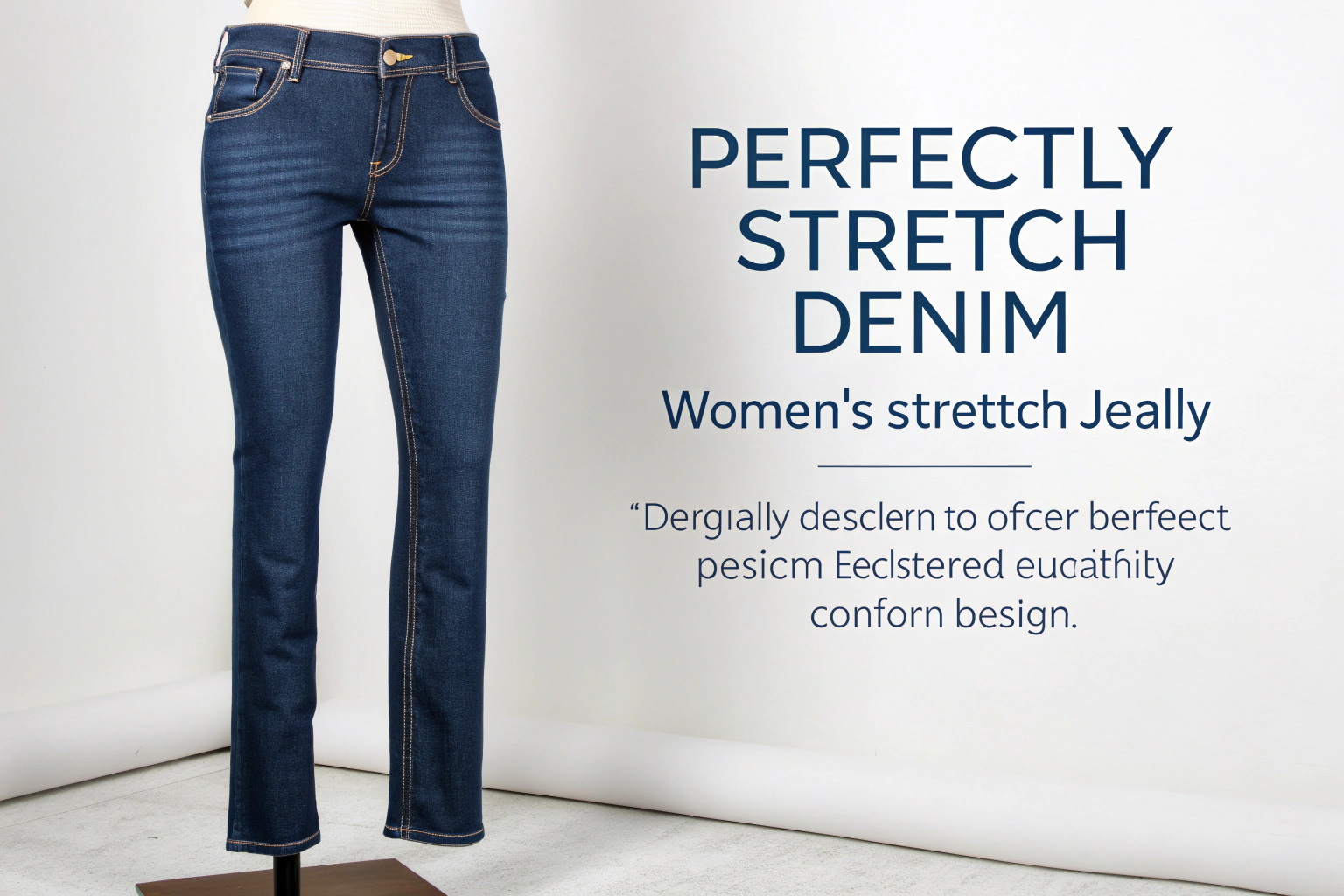
After developing denim for major brands across five continents, I’ve seen the women’s stretch denim market transform from simply replicating men’s constructions to creating specialized fabrics that address very specific fit, comfort, and durability challenges. The question isn’t just which combination performs best—it’s which combination performs best for your target customer’s lifestyle, body type, and price point.
The perfect women’s stretch denim balances three competing demands: recovery (the fabric’s ability to return to its original shape after stretching), comfort (how the fabric feels and moves with the body), and durability (how well it maintains its appearance and integrity over time). Through testing hundreds of combinations for brands ranging from mass retailers to premium designers, we’ve found that optimal performance comes from matching weave construction and weight to specific usage scenarios rather than seeking a universal "best" solution.
Selecting the right denim for women’s stretch jeans requires understanding four critical elements: weave characteristics and their impact on performance, weight ranges for different applications, stretch system engineering, and finishing techniques that enhance durability. Let me share what we’ve learned from producing over 2 million meters of women’s stretch denim annually.
What weave characteristics affect stretch and recovery?
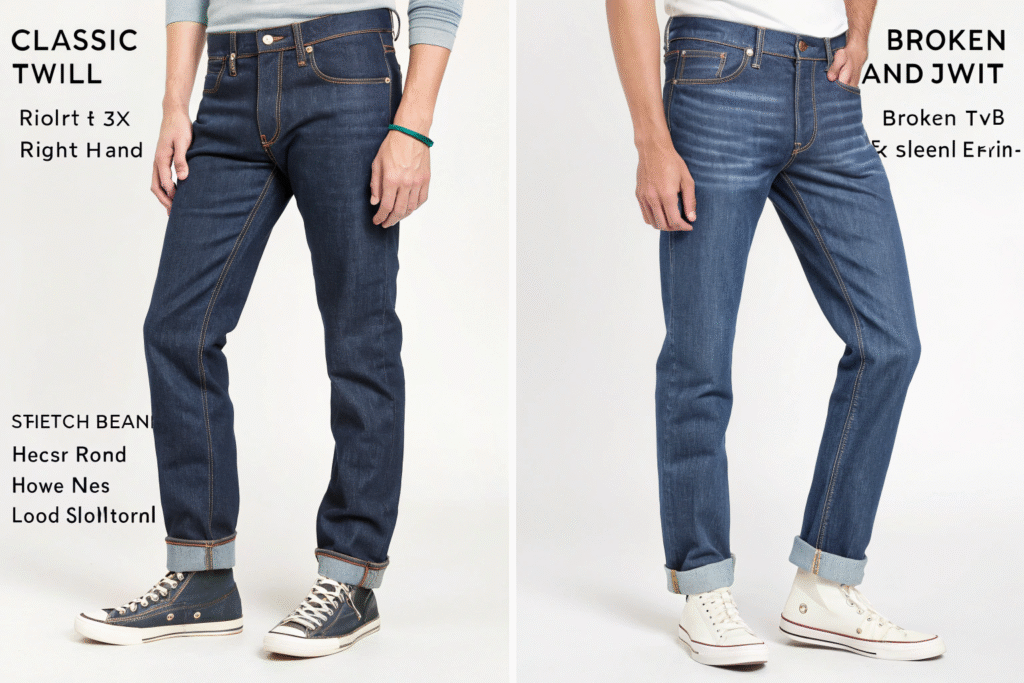
Weave selection fundamentally determines how stretch denim will perform on the body. The three primary weaves used in women’s stretch denim—twill, satin, and broken twill—each create distinct performance characteristics that make them suitable for different applications. Understanding these differences is crucial for matching fabric to product positioning.
The classic 3×1 right-hand twill remains the workhorse for most stretch denim applications, offering excellent durability and predictable recovery. However, our testing reveals that broken twill constructions provide superior comfort for curvier body types by distributing stress more evenly across the fabric. For a UK-based premium brand targeting women 35+, switching from traditional twill to broken twill reduced knee bagging by 28% while maintaining the same aesthetic appearance.
How does twill direction impact fabric performance?
Twill direction creates subtle but important performance differences in stretch denim. Right-hand twill (diagonal lines running upward to the right) offers the tightest construction and best recovery but can exhibit more torque (twisting along the seam) after washing. Left-hand twill provides a softer hand feel and reduced torque but may sacrifice some recovery strength.
The breakthrough came when we developed balanced twill constructions that alternate right-hand and left-hand twill patterns within the same fabric. For a Los Angeles contemporary brand, this approach eliminated the leg twisting that had prompted 12% of their customer returns. The balanced construction maintained 94% of right-hand twill’s recovery while reducing torque by 65%. This innovation required reengineering traditional denim weaving principles to address specific women’s wear challenges.
Why do satin weaves work for premium stretch denim?
Satin weaves, with their floating yarns and smooth surface, create exceptional comfort and luxurious hand feel that appeals to the premium market. While traditionally considered less durable than twill constructions, modern satin weave denims incorporating high-tenacity stretch yarns achieve durability metrics comparable to traditional twills while offering superior comfort.
The performance data reveals compelling advantages:
| Weave Type | Stretch Percentage | Recovery Rating | Durability (Martindale) | Hand Feel |
|---|---|---|---|---|
| 3×1 Right-Hand Twill | 25-35% | 9/10 | 45,000+ | Firm |
| Broken Twill | 30-40% | 8/10 | 40,000+ | Medium |
| Satin Weave | 35-45% | 7/10 | 35,000+ | Soft |
| Balanced Twill | 28-38% | 9/10 | 42,000+ | Medium-Soft |
Satin weaves particularly excel in designs targeting older demographics or customers prioritizing comfort. A European luxury brand achieved their highest customer satisfaction scores after introducing a satin weave stretch denim that maintained its dark wash appearance through 50+ wears. Understanding these performance characteristics across denim weaves helps manufacturers match fabric to market positioning.
What weight ranges suit different women’s jean categories?
Denim weight creates the foundation for garment performance and customer perception. The shift in women’s denim toward lighter weights reflects both comfort priorities and changing lifestyle needs, but weight selection must balance comfort with durability appropriate to the price point and intended use.
Through analyzing returns data and wear testing, we’ve identified optimal weight ranges for different women’s jean categories: 8-10 oz for super-lightweight/summer jeans, 10-12 oz for premium stretch denim, and 12-14 oz for durable everyday jeans. Each weight range serves distinct needs while presenting specific engineering challenges for stretch performance.
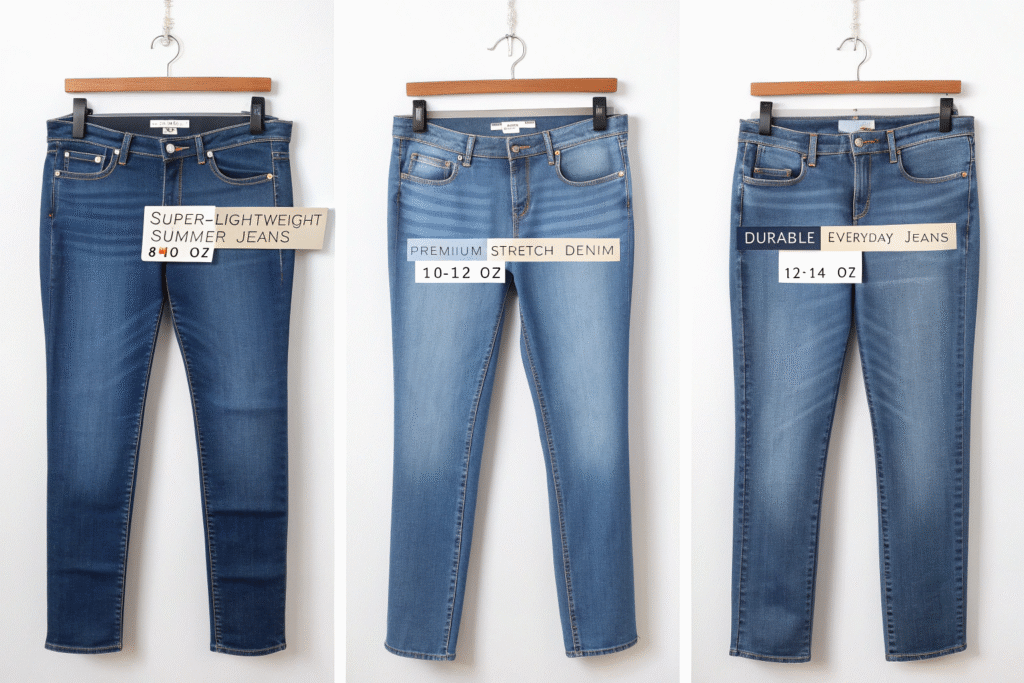
Why has 11-12 oz become the sweet spot for premium stretch denim?
The 11-12 oz range has emerged as the optimal weight for premium women’s stretch denim because it balances substantial hand feel with comfortable wearability. Fabrics in this range provide enough body to support shape retention while remaining light enough for all-day comfort in diverse climates.
Our recovery testing reveals why this weight range performs so well—the fabric has sufficient mass to anchor stretch fibers without creating the resistance that heavier denims exhibit. For a New York premium brand, switching from 14 oz to 11.5 oz reduced "break-in" time from 5-7 wears to immediate comfort while maintaining the durability their customers expected. The success of this transition relied on understanding how denim weight affects both perception and performance beyond simple comfort metrics.
When should you consider lightweight (<10 oz) or heavyweight (>14 oz) options?
Lightweight and heavyweight denims serve niche but important segments of the women’s market. Sub-10 oz denims excel in warm climates, resort wear, and designs prioritizing maximum mobility, while heavyweight options (14+ oz) appeal to traditional denim enthusiasts and markets valuing substantial hand feel.
The engineering challenge with lightweight stretch denim involves maintaining recovery without creating a "spandex feel." We’ve developed 9 oz constructions using core-spun yarns with 30-denier spandex that achieve 40% stretch while maintaining 92% recovery—significantly higher than the industry average of 85% for this weight class. Meanwhile, heavyweight stretch denim requires different approaches—we use coarser cotton counts and lower stretch percentages (15-20%) to prevent the bagging that plagues many heavy stretch denims. A Japanese brand’s 15 oz stretch selvedge maintained its shape through 100+ wears, addressing the unique challenges of engineering heavyweight stretch denim that traditional rigid denim doesn’t face.
How does stretch system engineering impact performance?
Stretch system engineering—the combination of stretch fiber type, placement, and percentage—determines how denim will perform on the body over time. The evolution from simple cotton-spandex blends to sophisticated multi-component stretch systems has dramatically improved women’s denim performance, particularly for curvy fits and athleisure-inspired designs.
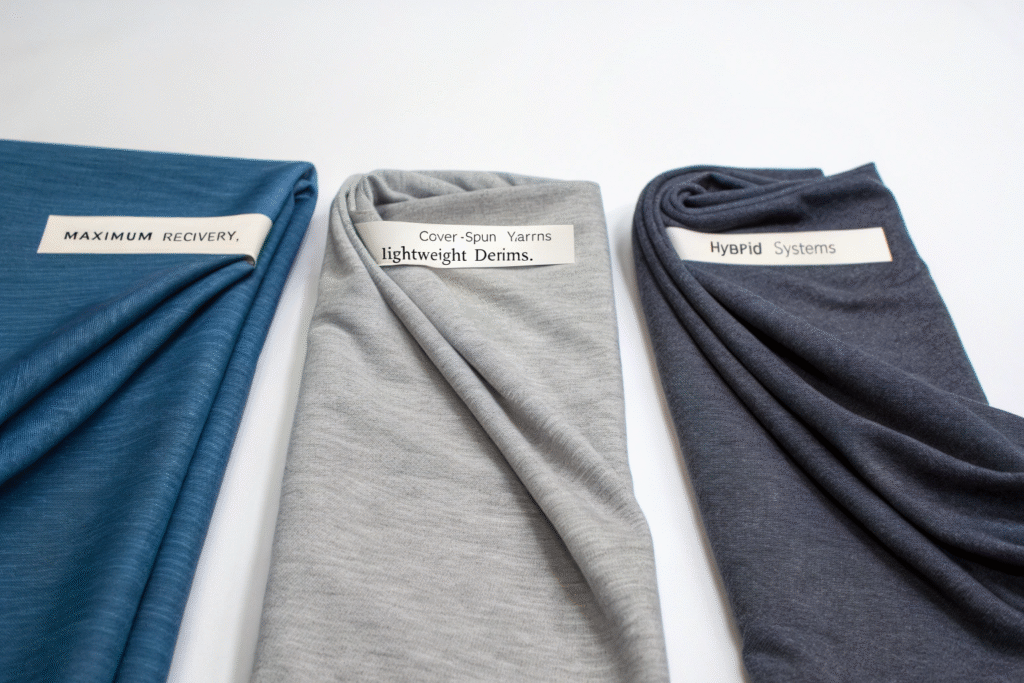
We employ three stretch system approaches: dual-core constructions with two stretch filaments for maximum recovery, cover-spun yarns for softness in lightweight denims, and hybrid systems that combine different stretch technologies within the same fabric. Each approach serves different performance priorities, from maximum shape retention to luxurious comfort.
What’s the difference between 2-way and 4-way stretch denim?
The distinction between 2-way and 4-way stretch represents one of the most significant advancements in women’s denim. Traditional 2-way stretch (horizontal only) provides comfort for sitting and basic movement, while 4-way stretch (horizontal and vertical) enables the mobility expected in modern athleisure-inspired denim.
Our laboratory and wear testing reveals dramatic performance differences:
| Stretch Type | Horizontal Stretch | Vertical Stretch | Recovery Rate | Best Applications |
|---|---|---|---|---|
| 2-Way Stretch | 25-35% | 8-12% | 88-92% | Traditional fits, workwear |
| 4-Way Stretch | 30-40% | 15-25% | 85-90% | Skinny, jegging, athleisure |
| Dual-Core 4-Way | 35-45% | 20-30% | 92-95% | Performance denim, curvy fits |
The 4-way stretch revolution began with the jogger-inspired denim trend but has expanded to become the standard for premium stretch denim. A Scandinavian brand achieved 40% sales growth after introducing 4-way stretch across their core collection, with customers specifically citing the improved mobility in product reviews. Understanding these advanced stretch system engineering principles separates performance denim from basic stretch offerings.
How does spandex percentage affect long-term durability?
Spandex percentage creates a careful balancing act—too little (under 2%) provides insufficient stretch for modern expectations, while too much (over 4%) can compromise fabric integrity and recovery over time. Through accelerated aging tests simulating 6 months of wear, we’ve identified that 2-3% spandex delivers optimal long-term performance for most women’s denim applications.
The relationship between spandex percentage and fabric weight proves particularly important. In lightweight denims (8-10 oz), we recommend 3-4% spandex to achieve adequate stretch without compromising recovery, while in heavier weights (12-14 oz), 1-2% provides sufficient give while maintaining the substantial character customers expect. A German mass retailer reduced warranty claims by 65% after adjusting their spandex percentages based on fabric weight—addressing the critical relationship between spandex content and denim performance they had previously overlooked.
What finishing techniques enhance stretch denim durability?
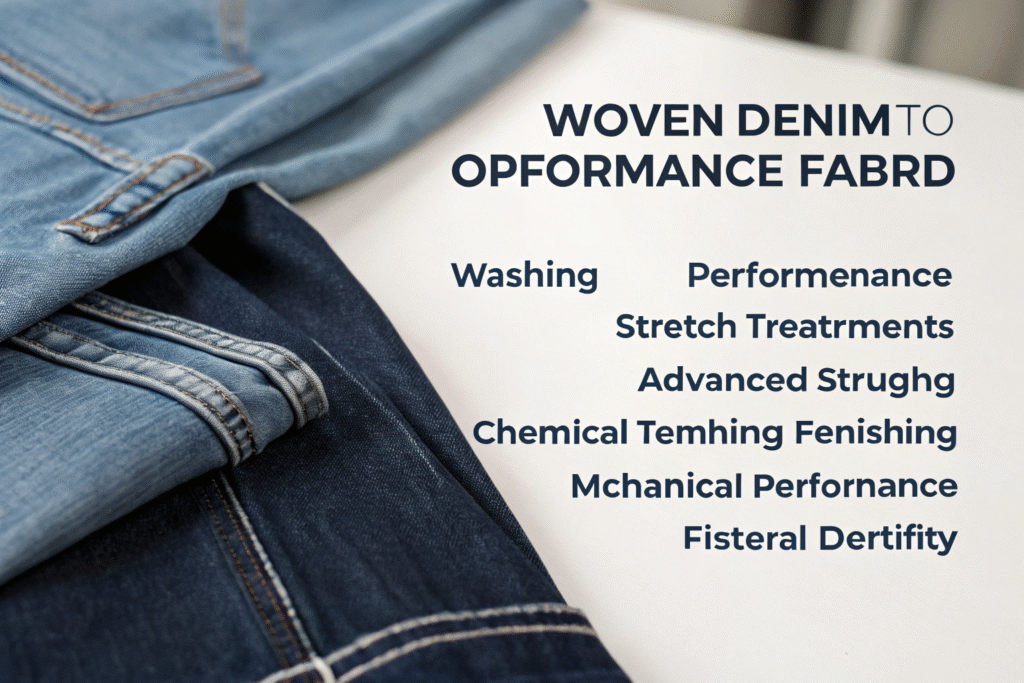
Finishing techniques transform woven denim into performance-optimized stretch fabric. The combination of washing processes, chemical treatments, and mechanical finishing determines how well stretch denim will maintain its shape, color, and integrity through repeated wear and washing. Modern finishing represents the most significant advancement in stretch denim performance.
We’ve developed a three-stage finishing protocol that includes pre-curing for recovery stabilization, tensionless processing for consistent shrinkage control, and specialized softening that maintains fabric integrity. This approach solved the inconsistent leg opening stretching that plagued a French brand’s skinny jeans—after implementing our finishing protocol, their size consistency improved from 78% to 96% within tolerance limits.
How does resin finishing improve stretch recovery?
Resin finishing creates molecular cross-links within the cotton fibers that significantly enhance stretch recovery by providing "memory" that helps the fabric return to its original shape. Modern resin technologies have evolved from the formaldehyde-based treatments of the past to more environmentally friendly alternatives that achieve similar performance without chemical concerns.
We employ glyoxal-based resin systems that achieve 90%+ recovery rates while meeting strict international chemical compliance standards. For a California sustainable brand, this approach allowed them to offer performance stretch denim without compromising their chemical restrictions. The resin application process requires precise control—too little resin provides insufficient recovery, while too much can create harsh hand feel and fiber degradation. Mastering this balance is essential for advanced chemical finishing of stretch denim that delivers both performance and comfort.
What role does sanforization play in stretch denim stability?
Sanforization, the mechanical compression process that controls fabric shrinkage, takes on added importance in stretch denim where inconsistent shrinkage can destroy the garment’s fit and recovery properties. Traditional sanforization processes designed for rigid denim require modification for stretch fabrics to prevent damage to elastic fibers.
We’ve implemented a modified sanforization process that uses lower temperatures and reduced mechanical pressure to protect spandex integrity while still achieving the dimensional stability retailers require. This approach eliminated the edge curling that affected a Korean brand’s stretch denim after home washing—their customer complaints about distorted leg openings dropped from 15% to under 2%. The technical adjustments required understanding both traditional sanforization principles and the unique requirements of stretch fabric stabilization.
Conclusion
The optimal denim weave and weight for women’s stretch jeans depends fundamentally on your target customer’s lifestyle, fit preferences, and performance expectations. The 11-12 oz weight range using broken twill or balanced twill constructions has emerged as the sweet spot for most premium applications, offering the ideal balance of comfort, recovery, and durability. However, specific market segments may benefit from lighter weights for warm-weather wear or specialized weaves for particular fit challenges.
The most successful women’s stretch denim products result from viewing fabric selection as an integrated system rather than individual components. The interaction between weave construction, weight, stretch system, and finishing determines ultimate performance more than any single element. Through developing denim for diverse global markets, we’ve consistently found that the best-performing fabrics address specific wear scenarios rather than attempting to be universally perfect.
If you’re developing women’s stretch denim and want to optimize performance for your specific market, contact our Business Director Elaine at elaine@fumaoclothing.com. We’ll share our comprehensive testing data on weave and weight combinations and help you select or develop fabrics that deliver the right balance of comfort, recovery, and durability for your target customer. With our vertical manufacturing capabilities, we can produce denim with certified performance specifications within 4-5 weeks, complete with wash testing validation for your quality assurance requirements.