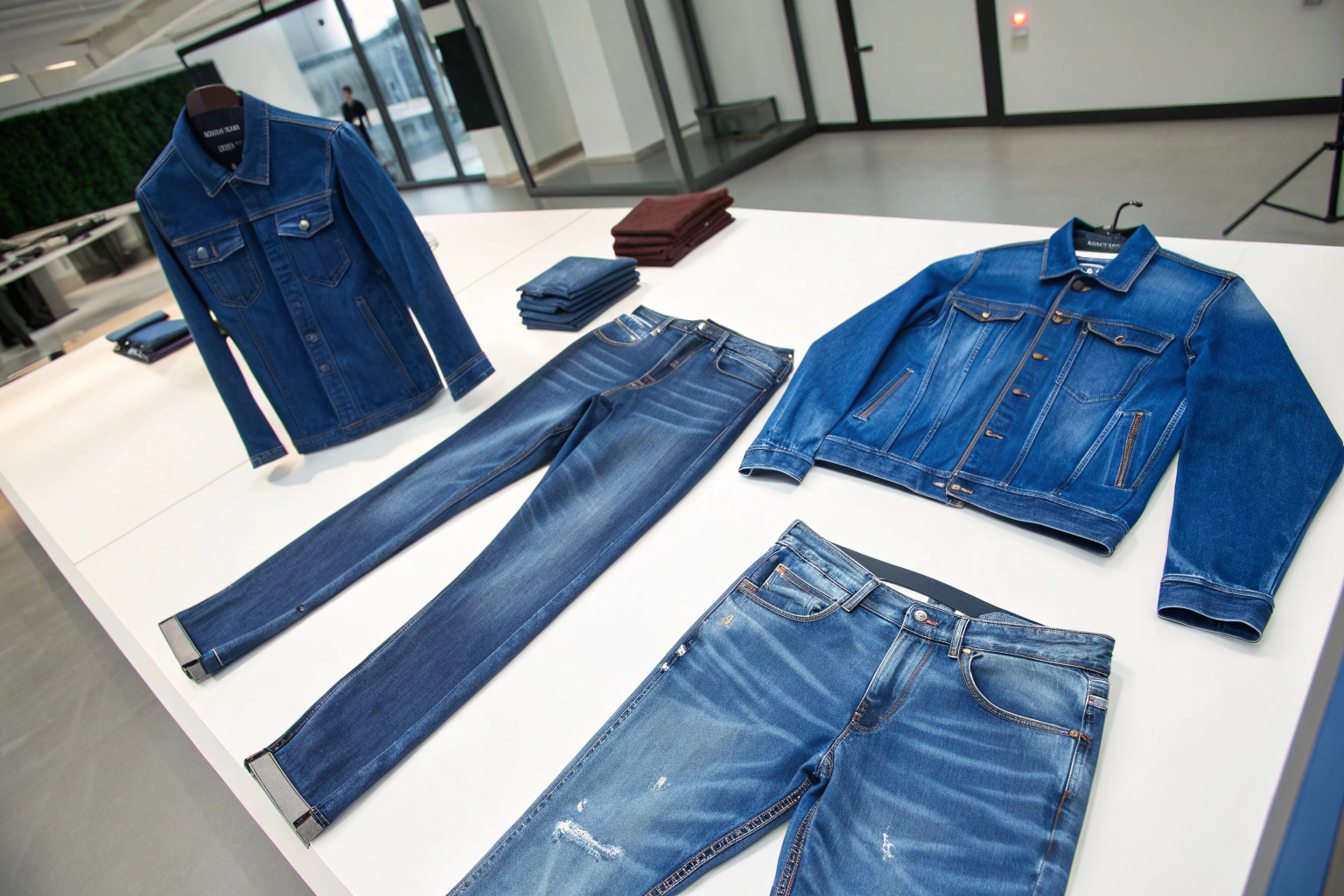
I remember the frantic call we got from a Los Angeles denim brand in 2021. They'd just received their entire spring shipment from another supplier, and the indigo was rubbing off so badly that store employees had to wear gloves to avoid blue hands. Even worse, the white pocketing in every pair was stained with indigo backing. The entire $80,000 shipment was unsellable. This painful experience taught me that mastering crocking and back-staining isn't just about quality—it's about business survival in the competitive denim market.
The most effective denim dyeing methods for reducing crocking (color rubbing off) and back-staining (color transferring to pocketing/linings) combine advanced indigo application techniques with strategic chemical modifications. Sulfur-bottoming and rope dyeing with controlled oxidation significantly reduce crocking, while foam dyeing and electrochemical reduction minimize back-staining. The optimal approach typically involves multi-step processes that build color through complete fiber penetration rather than surface deposition, combined with anti-back-staining agents and proper wash protocols. These methods can reduce crocking by 60-80% and eliminate back-staining entirely when properly implemented.
Having worked with denim mills and brands for fifteen years, I've seen the evolution from traditional methods that prioritized speed to modern approaches that balance efficiency with quality. The solutions aren't always obvious—sometimes the best results come from combining old-world techniques with new-world chemistry. Let me walk you through the proven methods that deliver clean, durable denim.
What dyeing process modifications minimize surface indigo deposition?
The root cause of crocking lies in poorly bonded surface indigo that hasn't properly penetrated the cotton fibers. Traditional methods that rush the dyeing process leave excess pigment on the yarn surface, creating the familiar but problematic "ring-dyed" effect where only the outer layer is colored.
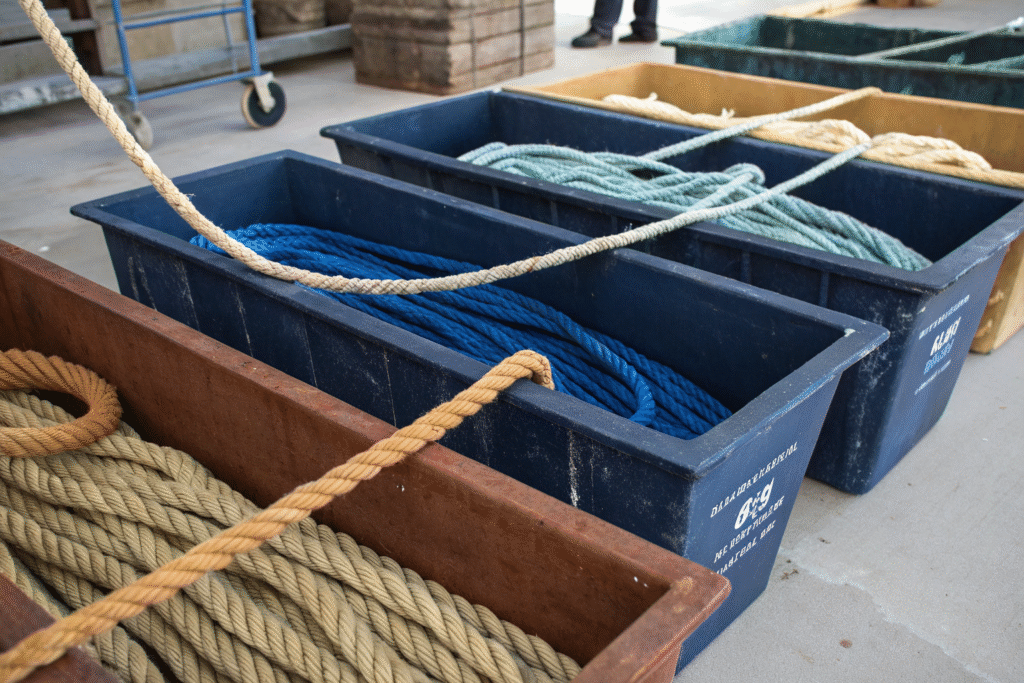
Rope dyeing remains the gold standard for crocking reduction when properly executed. The process involves bundling yarns into ropes that pass through multiple indigo dip boxes with air oxidation between each dip. The critical factor is the oxidation time—we've optimized our process to ensure 60-90 seconds between dips, allowing each layer to fully oxidize and bond before the next application. This creates deeper penetration with less surface accumulation. Our rope-dyed fabrics typically achieve crocking ratings of 4-5 on the AATCC Gray Scale (with 5 being no transfer), compared to 2-3 for poorly executed slasher dyeing.
Slasher dyeing can be optimized for better performance through strategic modifications. By reducing the number of dye boxes from the traditional 6-8 to 4-5 and increasing indigo concentration in each, we force deeper penetration with fewer surface applications. Adding oxidation zones between boxes and controlling squeeze roller pressure to leave more dye solution on the yarns also improves penetration. Our modified slasher process achieves crocking ratings of 3-4, making it viable for mid-market denim where rope dyeing's higher cost isn't justified.
Why does oxidation time dramatically affect crocking resistance?
Indigo must oxidize from its soluble leuco form to its insoluble pigmented form between each dip. Rushed oxidation leaves partially reduced indigo that never properly bonds to the fiber. Our research shows that extending oxidation time from 30 to 90 seconds between dips reduces crocking by approximately 40%. The complete oxidation creates stronger indigo-cellulose bonds and a more stable color layer that resists mechanical abrasion. This understanding is crucial for optimizing indigo oxidation parameters in industrial dyeing.
How does yarn preparation influence dye penetration?
The condition of the cotton yarn before dyeing significantly impacts how indigo interacts with the fibers. Mercerized yarns, treated with sodium hydroxide under tension, have smoother surfaces and more crystalline structures that resist deep indigo penetration, potentially increasing surface deposition and crocking. Our preferred approach uses combed cotton with controlled singeing to remove surface fuzz without compromising the fiber's natural absorption characteristics. This preparation, combined with precise tension control during dyeing, creates more uniform penetration with less surface accumulation.
Which chemical innovations prevent back-staining during washing?
Back-staining occurs when indigo particles released during stone washing or enzyme treatments redeposit onto white pocketing and yarn interiors. This frustrating issue can turn crisp white pocket bags into dingy blue messes, undermining the premium appearance of finished denim.
Anti-back-staining agents represent the most direct solution. These specialty chemicals work by creating a protective barrier around indigo particles, preventing them from reattaching to cotton fibers. The most effective formulations combine dispersing agents that keep indigo suspended in the wash liquor with protective colloids that shield white surfaces. We've developed a proprietary anti-back-staining system that reduces back-staining by 85-90% compared to conventional washing. The system works across different wash techniques, from traditional stone washing to modern enzyme and laser treatments.
Enzyme selection and control dramatically impact back-staining. Cellulase enzymes, used to create worn effects, can exacerbate back-staining by breaking down cotton fibers and releasing more indigo into the wash bath. Neutral cellulases cause less fiber damage and therefore less indigo release than acid cellulases. By controlling enzyme concentration, pH, temperature, and processing time, we minimize unnecessary indigo liberation while achieving the desired aesthetic effects. Our optimized enzyme protocols reduce indigo release by 40-50% compared to standard industry practices.
How do modern washing machines facilitate back-staining control?
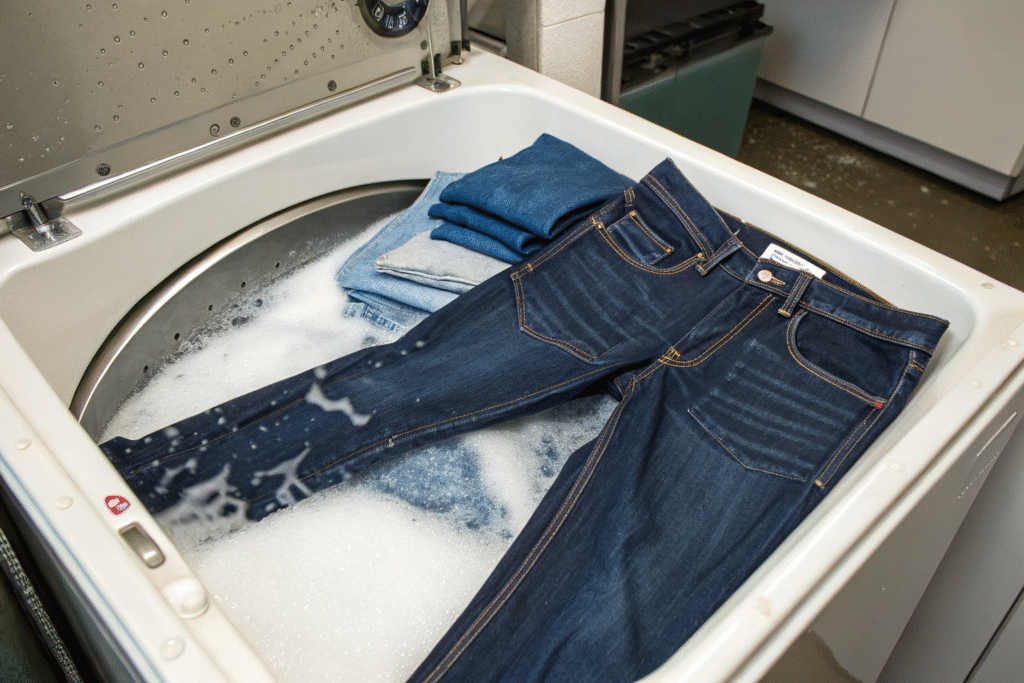
The equipment used for denim washing significantly influences back-staining outcomes. Modern rotary drum washers with precise temperature control, automated chemical dosing, and better liquor circulation create more consistent environments for back-staining prevention. Our facilities use machines with separate compartments for different wash stages, preventing early-stage released indigo from contaminating later rinsing phases. The equipment investment has paid for itself through reduced reprocessing and higher first-quality rates. Understanding these technical specifications for industrial denim washing equipment helps brands select partners with proper capabilities.
Why does water quality affect back-staining severity?
Water hardness and mineral content dramatically influence how anti-back-staining chemicals perform. Hard water (high calcium and magnesium content) can deactivate certain agents and cause indigo to precipitate more readily. We pre-treat all process water to specific standards (≤50 ppm hardness) and adjust chemical formulations based on water analysis. This attention to water quality has eliminated the seasonal back-staining variations we previously experienced with municipal water sources. The implementation of consistent water treatment represents a fundamental but often overlooked aspect of back-staining control.
What alternative dyeing technologies offer inherent advantages?
Beyond optimizing traditional indigo dyeing, several alternative technologies provide inherent resistance to crocking and back-staining by fundamentally changing how color is applied to denim.
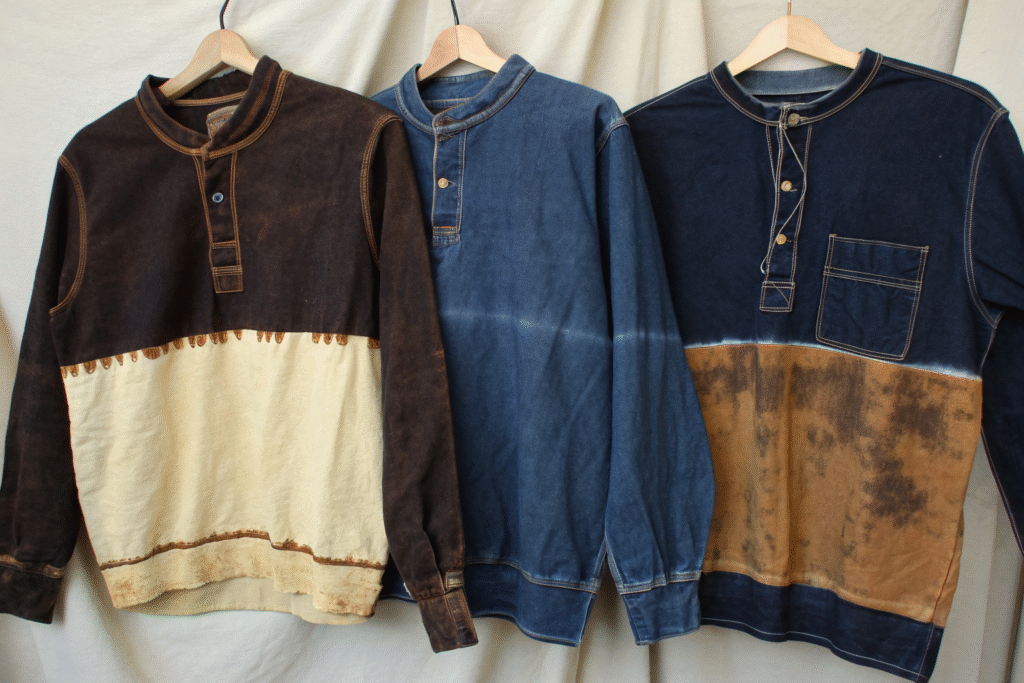
Sulfur-bottoming and sulfur-top-dyeing significantly reduce crocking by replacing some indigo layers with sulfur dyes that penetrate more completely. In sulfur-bottoming, yarns are first dyed with sulfur black or brown before the indigo layers, creating a dark core that shows through abrasion points without the crocking issues of pure indigo. Sulfur-top-dyeing applies sulfur dyes over indigo to lock surface fibers. Both approaches reduce crocking by 60-70% while creating unique vintage aesthetics. We've helped several brands transition to sulfur-indigo combinations that maintain authentic looks with dramatically improved performance.
Foam dyeing technology represents a revolutionary approach with environmental and performance benefits. By applying indigo in a foam carrier rather than aqueous solution, we achieve better control over dye application with significantly reduced water consumption. More importantly, the foam application creates more uniform surface coverage with less excess dye, reducing both crocking and the potential for back-staining. Our foam-dyed fabrics achieve crocking ratings of 4.5-5.0 with 80% less water usage and 50% fewer chemicals than conventional dyeing.
How does electrochemical reduction improve indigo fixation?
Traditional chemical reduction of indigo (using sodium hydrosulfite) can be inconsistent, leading to partially reduced dye that doesn't properly bond. Electrochemical reduction uses electrical current to reduce indigo, creating more consistent leuco indigo with fewer reducing agent byproducts. This method improves dye penetration and fixation, reducing both crocking and the indigo available for back-staining. While the technology requires significant capital investment, the environmental benefits (reduced chemical usage) and quality improvements make it increasingly viable for premium denim production. The advancement of these sustainable indigo reduction technologies represents the future of cleaner denim manufacturing.
Can pre-reduced indigo solutions simplify the process?
Pre-reduced indigo (indigo in its stable leuco form) eliminates the reduction step at the dye house, providing more consistent dye quality and potentially better penetration. While more expensive than traditional indigo powder, pre-reduced solutions offer better process control and can reduce crocking by ensuring all dye molecules are properly reduced before application. We use pre-reduced indigo for our most color-critical programs where consistency across batches is paramount. The cost premium of 15-20% is justified by reduced shading variations and improved crocking performance.
How should you test and validate crocking resistance?
Robust testing protocols are essential for verifying that dyeing modifications actually deliver the promised crocking and back-staining improvements. Our comprehensive testing regimen has identified significant gaps between theoretical and practical performance.
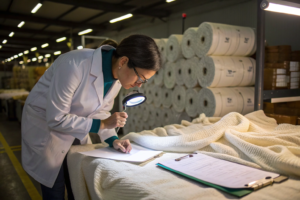
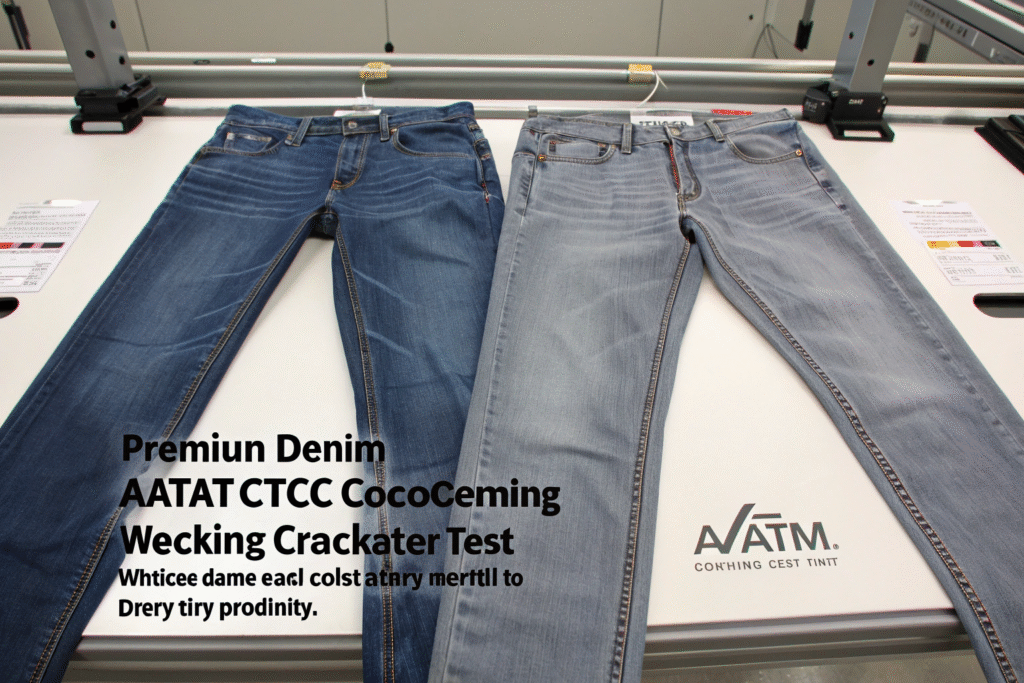
The AATCC Crockmeter test (AATCC 8) provides the standardized method for evaluating color transfer. We conduct both dry and wet crocking tests, as wet crocking often reveals issues that dry testing misses. For premium denim, we require a minimum rating of 4.0 for dry crocking and 3.5 for wet crocking on the Gray Scale. More importantly, we've developed a "dynamic crocking test" that simulates the friction patterns of actual wear—particularly seat and thigh areas—which often reveals crocking issues that standard testing misses.
Back-staining evaluation requires customized testing that simulates industrial washing conditions. We stone wash or enzyme wash fabric samples with attached white pocketing material under controlled conditions, then measure the color difference of the pocketing using a spectrophotometer. The ΔE value should be less than 3.0 for acceptable back-staining, with premium targets below 2.0. This quantitative approach eliminates the subjectivity of visual assessment and provides clear benchmarks for improvement.
Why does accelerated aging predict long-term crocking performance?
Indigo continues to oxidize and bond to fibers after dyeing, meaning crocking resistance can improve with time. We've developed an accelerated aging test that exposes dyed fabrics to controlled heat and humidity for 48 hours, simulating several weeks of natural aging. Fabrics that show poor initial crocking but improve after aging may be acceptable for certain applications, while those that don't improve indicate fundamental dyeing issues. This testing has prevented us from rejecting fabrics that would have performed adequately after brief warehouse storage.
How can you test crocking resistance at different fabric stages?
Crocking resistance changes throughout the manufacturing process—after dyeing, after weaving, and after finishing. We test at all three stages to identify where problems are introduced. For example, excessive sizing application during weaving can trap indigo particles that later cause crocking, while certain finishing treatments can either improve or degrade crocking performance. This staged testing approach helped us identify that a particular softener was reducing crocking resistance by 1.0-1.5 points on the Gray Scale, leading us to reformulate our finishing recipes.
Conclusion
Reducing crocking and back-staining in denim requires a comprehensive approach that spans dyeing methodology, chemical innovation, and rigorous quality control. Rope dyeing with proper oxidation remains the benchmark for crocking resistance, while optimized slasher dyeing offers a viable mid-market alternative. Anti-back-staining agents, controlled enzyme washing, and water quality management effectively prevent the frustrating blue staining of pocketing and linings. Emerging technologies like foam dyeing and electrochemical reduction provide both performance and environmental benefits.
The most successful denim programs combine these technical solutions with robust testing protocols that simulate real-world conditions. This ensures that laboratory improvements translate to better customer experiences, reducing returns and protecting brand reputation. The investment in proper dyeing and finishing techniques pays dividends through higher customer satisfaction and reduced waste from rejected garments.
If you're struggling with crocking or back-staining issues in your denim production, we can provide specific recommendations based on your price point, volume, and aesthetic requirements. Our technical team has extensive experience implementing these solutions across different manufacturing scenarios. Contact our Business Director, Elaine, at elaine@fumaoclothing.com to discuss your denim challenges and receive our Denim Crocking Solutions Guide with complete technical specifications and testing protocols.