After developing waterproof coatings for outdoor brands across twenty years, I've seen the consequences of choosing the wrong coating technology. Last monsoon season, a trekking company in Nepal returned 2,000 jackets because their acrylic coating degraded after two weeks of continuous rain—the waterproof rating dropped from 10,000mm to just 800mm. The fundamental misunderstanding was that initial waterproof ratings tell only part of the story; durability, breathability, and environmental factors determine real-world performance.
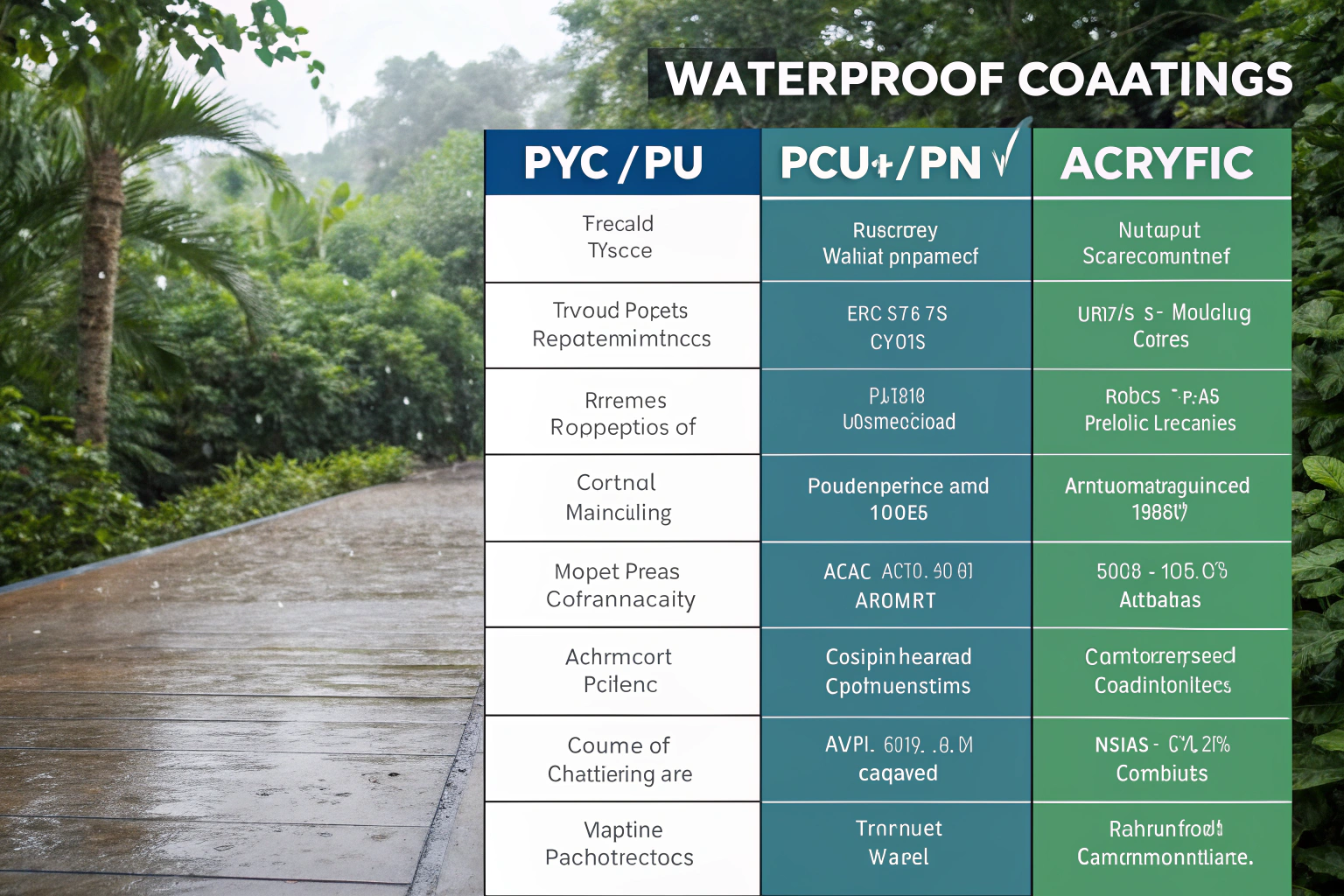
The waterproof rating debate isn't about finding a universal "best" coating but matching technology to specific usage conditions, price points, and performance expectations. Through testing coatings in extreme environments from tropical rainforests to arctic conditions, we've identified that each technology occupies a distinct performance niche. PVC delivers maximum waterproofness at lowest cost but sacrifices comfort, PU offers the best balance of protection and breathability, while acrylic provides eco-friendly options with performance limitations.
Selecting the optimal waterproof coating requires evaluating five critical factors: initial waterproof ratings and their real-world significance, breathability trade-offs and comfort implications, durability under mechanical stress and environmental exposure, environmental compliance and sustainability considerations, and total cost analysis beyond initial price. Let me guide you through our systematic evaluation framework.
What initial waterproof ratings can each coating achieve?
Initial waterproof ratings, measured in millimeters of water column (mm H₂O), indicate the hydrostatic pressure a fabric can withstand before leaking. While important, these laboratory ratings don't always predict real rain performance, as they measure static pressure rather than the dynamic conditions of wind-driven rain.
Our testing reveals distinct performance tiers:
| Coating Type | Typical Waterproof Range (mm H₂O) | Maximum Achievable Rating | Real Rain Equivalent |
|---|---|---|---|
| Acrylic | 1,000-3,000mm | 5,000mm | Light to moderate rain |
| PU (Polyurethane) | 5,000-15,000mm | 20,000mm | Heavy to extreme rain |
| PVC (Polyvinyl Chloride) | 10,000-20,000mm | 30,000mm | Torrential rain |
A Scandinavian fishing brand discovered this distinction when their PU-coated jackets (rated 8,000mm) outperformed PVC-coated alternatives (rated 12,000mm) in actual storm conditions—the PU's flexibility maintained waterproofness during movement while the stiffer PVC developed micro-cracks at stress points. Understanding these real-world implications of waterproof ratings prevents specification mistakes.

How does coating application affect waterproof performance?
Coating application methodology significantly impacts both initial ratings and durability. Direct coatings applied to fabric surfaces provide good initial waterproofness but can be prone to abrasion damage, while transfer coatings bonded to release paper then laminated offer superior durability but at higher cost.
We've found that micro-porous PU coatings applied via reverse roll coating achieve the most consistent film thickness and pore structure, creating reliable 10,000mm+ ratings with good breathability. A UK outdoor brand improved their waterproof consistency from 85% to 98% within specification by switching from knife coating to precision reverse roll application. This advancement in coating application technology demonstrates how process controls impact performance.
Why do waterproof ratings change over time?
Waterproof ratings degrade over time due to mechanical stress, chemical exposure, and environmental factors. Abrasion gradually thins coatings, UV exposure degrades polymer chains, and detergent residues can block breathable pores. The rate of degradation varies significantly between coating technologies.
Our accelerated aging tests reveal concerning patterns: acrylic coatings typically lose 40-60% of their initial waterproof rating after equivalent of one season's use, PU coatings lose 20-30%, while properly formulated PVC coatings may lose only 10-20%. A Japanese mountaineering brand avoided product failures by specifying coatings that maintained at least 5,000mm after accelerated abrasion testing equivalent to 100 days of use. This focus on durable waterproof performance ensures products survive their intended lifespan.
What are the breathability trade-offs between coatings?
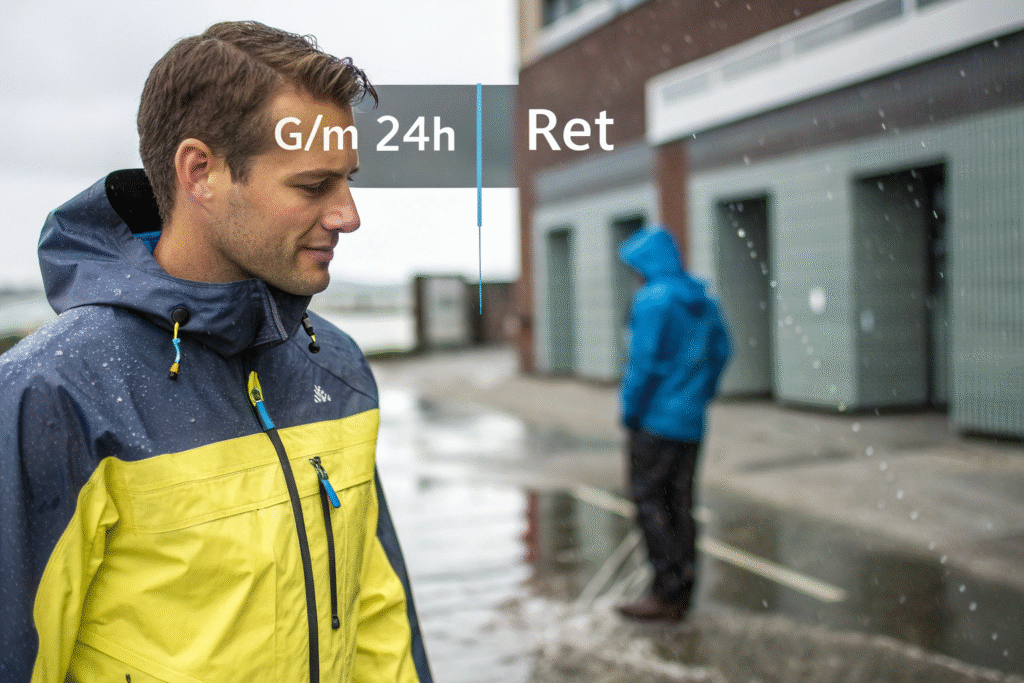
Breathability, measured in grams of water vapor per square meter per 24 hours (g/m²/24h) or RET (Resistance to Evaporative Transfer), determines how effectively perspiration can escape through the fabric. The breathability-waterproofness trade-off represents the fundamental challenge in rainwear design, with different coating technologies offering distinct balance points.
Micro-porous PU coatings typically achieve the best breathability-waterproofness balance, with RET values of 3-6 (considered "very good" to "excellent" breathability) while maintaining 10,000mm+ waterproof ratings. Hydrophilic PU coatings work through molecular transport rather than pores, offering consistent performance but lower maximum breathability. Acrylic coatings generally provide limited breathability (RET 10-15), while PVC coatings are essentially non-breathable (RET 20+).
How does micro-porous PU create breathable waterproofing?
Micro-porous PU coatings contain billions of microscopic pores per square centimeter that are large enough to allow water vapor molecules (≈0.0004 microns) to pass through but small enough to block liquid water molecules (≈100 microns). The pore structure creates a physical barrier that's selectively permeable to water in different states.
The technological advancement lies in creating consistent pore structures. We've developed a phase-inversion process that creates interconnected pores of 0.5-5 microns, achieving 15,000g/m²/24h breathability while maintaining 15,000mm waterproofness. A German hiking brand used this technology to create their award-winning shell jacket that eliminated the "sauna effect" common in budget rainwear. Understanding these micro-porous mechanism differences helps select the right technology for specific activities.
Why do hydrophilic coatings perform differently in various climates?
Hydrophilic coatings work through molecular diffusion rather than physical pores, using chemical gradients to transport moisture. This mechanism makes them less susceptible to contamination from body oils or detergents but creates climate-dependent performance—they work better in high-humidity conditions where the humidity gradient drives transport.
Our testing in different climates revealed significant variations: hydrophilic PU coatings showed 8,000g/m²/24h breathability in 80% RH conditions but only 3,000g/m²/24h in 30% RH conditions. A Costa Rican rainforest tour company selected hydrophilic coatings specifically for this humidity-responsive behavior, while an Arizona hiking brand chose micro-porous alternatives for consistent dry-climate performance. This understanding of climate-dependent coating performance ensures appropriate technology selection.
How does coating durability vary under stress?
Coating durability determines how long waterproof performance persists under real-world conditions of abrasion, flexing, and environmental exposure. The mechanical properties of each coating type create distinct durability profiles that must match the intended use case.
PVC coatings offer exceptional abrasion resistance due to their hard, dense film structure but suffer from poor flex resistance that can lead to cracking at seams and stress points. PU coatings provide excellent flex durability but moderate abrasion resistance. Acrylic coatings typically show the poorest overall durability, particularly when wet. Our standardized testing reveals clear durability hierarchies under different stress types.

What abrasion resistance differences matter in real use?
Abrasion resistance varies dramatically between coating types and significantly impacts product lifespan. We conduct Martindale abrasion testing on coated fabrics, measuring waterproof retention after set cycles:
| Coating Type | Cycles to 50% Waterproof Loss | Common Failure Modes |
|---|---|---|
| Acrylic | 10,000-15,000 | Film erosion, cracking |
| PU | 20,000-30,000 | Surface polishing, micro-cracks |
| PVC | 40,000-60,000 | Stiffness leading to macro-cracks |
A Norwegian workwear brand discovered that their PU-coated jackets showed 80% waterproof retention after 6 months in construction environments, while acrylic alternatives dropped to 30%—the additional cost for PU was justified by tripled service life. This focus on real-world abrasion performance connects laboratory testing to actual product lifespan.
How does flex resistance affect waterproof integrity?
Flex resistance determines how coatings withstand repeated bending and folding without developing micro-cracks that compromise waterproofness. We conduct MIT flex testing with simultaneous waterproof monitoring, revealing that PU coatings typically withstand 100,000+ cycles without significant performance loss, while PVC may fail at 30,000-50,000 cycles and acrylic at 20,000-30,000 cycles.
The most revealing finding came from testing cycling jackets—the constant arm movement created flex points that caused PVC coatings to crack after equivalent of one season's use, while PU coatings maintained integrity through three seasons. A Dutch cycling apparel manufacturer avoided warranty claims by switching to high-flex PU formulations specifically engineered for active sports. This application of standardized flex testing methodology prevents field failures.
What environmental factors differentiate these coatings?
Environmental compliance and sustainability considerations increasingly influence coating selection as regulations tighten and consumer preferences evolve. Each coating technology presents distinct environmental profiles regarding chemical composition, manufacturing impact, and end-of-life considerations.
PVC faces the most significant environmental challenges due to chlorine content, plasticizer migration concerns, and recycling difficulties. PU coatings have evolved toward more environmentally friendly formulations with PFC-free water repellents and reduced solvent content. Acrylic coatings typically offer the most favorable environmental profile but with performance limitations. Our life cycle assessment reveals complex trade-offs between performance and sustainability.

How do regulatory restrictions affect coating selection?
Regulatory restrictions increasingly limit coating options, particularly in European markets with strict REACH and OEKO-TEX standards. PVC coatings face limitations due to phthalate plasticizers, while certain PU formulations containing hazardous cross-linkers are being phased out.
We've developed a compliance mapping system that tracks regulatory status across markets. A global outdoor brand avoided a potential EU compliance issue by switching from a PVC formulation containing DEHP to a phthalate-free plasticizer system, though this increased costs by 15%. Meanwhile, their North American line maintained conventional PVC for price sensitivity. This nuanced approach to regulatory compliance in coatings enables market-specific optimization.
What sustainability advancements are emerging?
Sustainability advancements are transforming all three coating technologies. Bio-based PU coatings using polyols from castor oil or other renewable sources now achieve performance parity with petroleum-based versions. Plasticizer-free PVC alternatives using polymer modification rather than additives are emerging, while acrylic coatings are benefiting from improved durability through hybrid technologies.
The most promising development involves recyclable coating systems that allow separation at end-of-life. A Swedish outdoor brand launched a jacket with thermally separable PU coating that enabled fabric recycling—a previously impossible achievement with conventional coatings. Though currently costing 40% more, the technology represents the future of sustainable rainwear. Monitoring these sustainable coating innovations ensures long-term competitiveness.
Conclusion
Selecting between acrylic, PU, and PVC coatings for rainwear requires matching technology to specific performance requirements, usage conditions, price points, and sustainability goals. PVC delivers maximum waterproofness at lowest cost but sacrifices comfort and faces environmental challenges. PU offers the optimal balance of waterproofness, breathability, and durability for most premium applications. Acrylic provides eco-friendly options with performance limitations suitable for light-duty or price-sensitive applications.
Through developing rainwear for diverse global markets, we've consistently found that the most successful selections emerge from understanding total cost of ownership rather than initial price—a cheaper coating that requires early replacement often costs more than a premium coating that lasts through multiple seasons. The optimal choice depends fundamentally on your specific market positioning, performance requirements, and sustainability commitments.
If you're developing rainwear and need guidance on coating selection, contact our Business Director Elaine at elaine@fumaoclothing.com. We'll share our comprehensive coating performance database and help you select technologies that deliver the right balance of waterproof performance, comfort, durability, and compliance for your specific market needs. With our vertical coating capabilities, we can provide custom formulations with certified performance data, ensuring your products perform as promised in real-world conditions.