After developing antimicrobial textiles for medical, athletic, and intimate apparel brands across global markets, I've seen the costly consequences of regulatory non-compliance. Last year, a promising activewear startup faced product seizure at EU borders because their silver-based antimicrobial treatment exceeded the Biocidal Products Regulation (BPR) threshold—despite being perfectly legal in their home US market. The regulatory landscape for antimicrobial textiles has become a complex patchwork where technologies acceptable in one market can trigger violations in another.
The regulatory challenge stems from fundamentally different approaches: the US EPA regulates antimicrobial treatments as pesticides under FIFRA, while the EU treats them as biocides under BPR with stricter hazard-based assessment. Through navigating compliance for hundreds of product launches, we've identified that successful global market access requires technologies that satisfy both regulatory frameworks while maintaining performance and safety.
Selecting compliant antimicrobial technologies requires evaluating four critical aspects: understanding the regulatory frameworks and their testing requirements, identifying technologies with established compliance pathways, implementing verification testing that satisfies both regions, and maintaining documentation that demonstrates due diligence. Let me guide you through our systematic compliance methodology.
What are the key regulatory differences between US and EU frameworks?
The US and EU approach antimicrobial textile regulation through fundamentally different philosophical frameworks, creating distinct compliance requirements. The US Environmental Protection Agency (EPA) regulates antimicrobial treatments as pesticides under the Federal Insecticide, Fungicide, and Rodenticide Act (FIFRA), focusing primarily on efficacy claims and environmental impact. The European Union regulates them as biocides under the Biocidal Products Regulation (BPR), employing a precautionary principle with stricter hazard assessment.
The most significant differences emerge in treatment classification, data requirements, and claim substantiation:
| Regulatory Aspect | US EPA (FIFRA) | EU BPR |
|---|---|---|
| Regulatory Philosophy | Risk-based assessment | Hazard-based assessment |
| Primary Concern | Efficacy claims and environmental impact | Human health and environmental hazards |
| Data Requirements | Efficacy data, toxicology, environmental fate | Extensive toxicology, ecotoxicology, fate studies |
| Claim Substantiation | Must support public health claims | Limited to material preservation unless medical claims |
| Treatment Types | Public health treatments require registration | Article 95 list for approved active substances |
A German sportswear brand learned these differences the hard way when their US-compliant triclosan treatment was banned in the EU—the substance failed BPR approval due to environmental persistence concerns, despite acceptable EPA registration. Understanding these fundamental regulatory differences prevents costly market access failures.

How does treatment classification affect compliance?
Treatment classification determines the regulatory pathway, data requirements, and permissible claims. In the US, the EPA distinguishes between public health antimicrobials (which require registration) and materials preservatives (often exempt). In the EU, BPR differentiates between product types (PTs), with textiles typically falling under PT 9 (fibers, leather, rubber) or PT 2 (disinfectants) if making public health claims.
We've developed a classification flowchart that determines regulatory status based on:
- Intended use: Does the treatment protect the material or make public health claims?
- Application method: Is it applied during manufacturing or as a after-treatment?
- Leachability: Does the antimicrobial agent migrate from the treated article?
A UK uniform supplier avoided significant compliance issues by reclassifying their zinc pyrithione treatment from public health to materials preservation—this change eliminated the need for EPA registration while maintaining their desired odor control benefits. This strategic approach to antimicrobial treatment classification optimizes compliance burden.
What data requirements differ most significantly?
The data requirements represent the most substantial compliance difference, with EU BPR demanding significantly more extensive testing than US EPA. While both require basic efficacy data, BPR adds rigorous toxicological, eco-toxicological, and environmental fate studies that can cost €500,000+ per active substance.
Our compliance database reveals striking contrasts:
| Data Category | US EPA Requirements | EU BPR Requirements |
|---|---|---|
| Efficacy Testing | ASTM E2149, AATCC 100 | ISO 20743, EN 16738 |
| Toxicological Studies | Acute toxicity, irritation | Extended one-generation, endocrine disruption |
| Environmental Fate | Basic degradation studies | PBT assessment (Persistence, Bioaccumulation, Toxicity) |
| Exposure Assessment | Mainly occupational | Consumer and environmental exposure |
A Swiss textile manufacturer abandoned their proprietary antimicrobial development after BPR cost projections exceeded €2 million, instead opting for already-approved technologies with established compliance. This pragmatic approach to regulatory data requirements focuses resources on market-ready solutions.
Which technologies have established compliance pathways?
Technologies with established compliance pathways offer significantly lower regulatory risk and faster market access. The most viable options include silver-based technologies (within specific parameters), zinc pyrithione (for material preservation), quaternary ammonium compounds (with specific chemistries), and certain natural extracts with existing approvals.
Through systematic evaluation of approved substances, we've identified technologies with the strongest compliance positions:
| Antimicrobial Technology | US EPA Status | EU BPR Status | Key Limitations |
|---|---|---|---|
| Silver ions (silver chloride, silver zinc zeolite) | Registered for specific uses | Article 95 listed with concentration limits | EU: ≤1.5% silver content for synthetic fibers |
| Zinc Pyrithione (ZPT) | Registered as materials preservative | Article 95 listed for PT 9 | Not permitted for skin-contact in EU without additional assessment |
| Quaternary Ammonium Compounds (specific chemistries) | Registered for public health claims | Article 95 listed with restrictions | Chain length restrictions in EU (C12-16) |
| Polyhexamethylene Biguanide (PHMB) | Registered for specific applications | Not approved for PT 9 | Limited to disinfectant uses in EU |
| Chitosan (from crustacean shells) | Generally recognized as safe (GRAS) | Food-grade approved, BPR exemption possible | Efficacy limitations for high microbial loads |
A French intimate apparel brand successfully launched globally using silver zinc zeolite within EU concentration limits—the technology provided reliable odor control while satisfying both regulatory frameworks. This selective approach to pre-approved antimicrobial technologies minimizes compliance risk.

Why do silver-based technologies dominate compliant applications?
Silver-based technologies dominate compliant applications because they offer the most extensive regulatory history and established safety profiles. Silver ions have been used in medical applications for decades, generating substantial safety data that facilitates regulatory approval. The key to compliance lies in using specific silver compounds with established toxicological profiles and adhering to concentration limits.
The EU BPR Article 95 list includes several silver-based substances with specific conditions:
- Silver chloride: Approved for synthetic fibers at ≤1.1% silver content
- Silver zinc zeolite: Approved at ≤1.5% silver content
- Silver copper zeolite: Approved with specific particle size restrictions
An Austrian sportswear company achieved dual compliance by formulating their silver treatment at 1.4% silver content—satisfying the EU limit while maintaining efficacy for the US market. Their investment in precise application equipment ensured consistent dosing across production. This technical precision in silver antimicrobial implementation enables global market access.
What natural technologies offer compliance advantages?
Natural technologies offer compliance advantages through existing approvals in food or cosmetic applications, which can sometimes be leveraged for textiles. Chitosan (from crustacean shells), certain plant extracts (like neem, subject to restrictions), and essential oils with established safe use histories can provide compliance pathways with reduced data requirements.
However, "natural" doesn't automatically mean compliant. We've encountered numerous natural substances with regulatory restrictions:
| Natural Antimicrobial | US Status | EU Status | Key Considerations |
|---|---|---|---|
| Chitosan | GRAS (Generally Recognized as Safe) | May qualify under BPR Article 95 | Must demonstrate origin and purity |
| Tea Tree Oil | EPA exemption for certain uses | Not approved for PT 9 | Skin sensitization concerns in EU |
| Neem Extract | Registered pesticide | Banned for biocide use | Classification as pesticide prevents textile use |
| Citric Acid Derivatives | Food-grade approvals | Limited to specific compounds | Efficacy limitations for textiles |
A California lifestyle brand successfully marketed chitosan-treated socks as "naturally fresh" without making specific antimicrobial claims—this claim strategy avoided regulatory classification as a biocide while delivering consumer benefits. This innovative approach to leveraging existing approvals for natural substances creates compliant alternatives.
How should efficacy testing satisfy both regions?
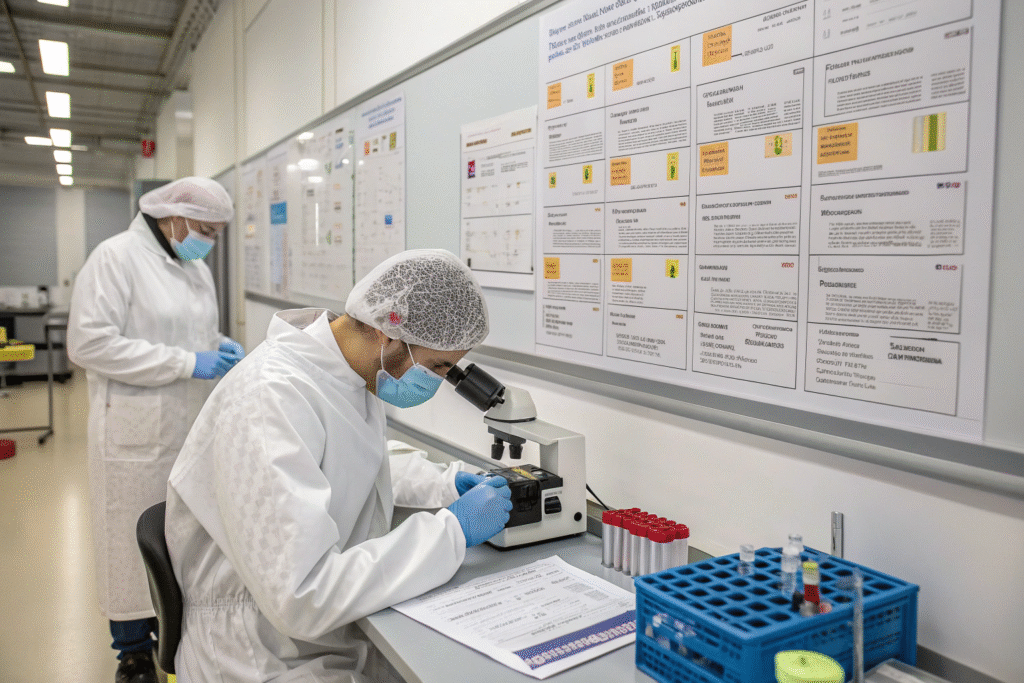
Efficacy testing must demonstrate performance using standards recognized by both US and EU authorities while supporting specific claims. The most efficient approach employs testing protocols that satisfy the more stringent requirements (typically EU) while providing data usable for both markets. This avoids duplicate testing while ensuring the highest compliance standard.
We've developed a unified testing protocol that addresses both regulatory frameworks:
| Test Requirement | US EPA Preference | EU BPR Preference | Unified Approach |
|---|---|---|---|
| Quantitative Method | ASTM E2149 | ISO 20743 | ISO 20743 with additional data analysis |
| Qualitative Method | AATCC 147 | JIS L 1902 | Parallel testing using both methods |
| Durability Testing | AATCC 100 (modified) | EN 16738 (washing) | EN 16738 with extended wash cycles |
| Specific Organisms | Staphylococcus aureus, Klebsiella pneumoniae | Additional EU-specific strains | Expanded test panel covering both requirements |
A Korean mattress manufacturer reduced their testing costs by 40% while improving regulatory acceptance by implementing this unified approach—their test reports now satisfy both EPA and BPR reviewers without modification. This efficient approach to global efficacy testing standardization streamlines compliance.
What testing standards have cross-regional acceptance?
Testing standards with cross-regional acceptance provide the most efficient path to dual compliance. ISO standards typically offer the broadest international recognition, while region-specific standards like ASTM (US) and EN (EU) may require additional validation. The key is selecting methods that regulatory authorities in both regions acknowledge as scientifically valid.
Our analysis identifies the most widely accepted standards:
| Test Standard | US EPA Acceptance | EU BPR Acceptance | Global Recognition |
|---|---|---|---|
| ISO 20743 (Quantitative) | Accepted with data review | Fully accepted | High (international standard) |
| ASTM E2149 (Quantitative) | Preferred method | Accepted with justification | Moderate (primarily US) |
| AATCC 100 (Quantitative) | Accepted | Limited acceptance | Low (textile industry specific) |
| JIS L 1902 (Qualitative) | Accepted | Fully accepted | High (Japanese industrial standard) |
A US medical textile company gained EU market access by supplementing their ASTM E2149 testing with ISO 20743 data—the additional investment was significantly less than developing entirely new testing protocols. This strategic approach to testing standard selection maximizes regulatory acceptance.
How does claim substantiation differ between regions?
Claim substantiation represents one of the most significant regulatory differences, with the EU taking a more restrictive approach to public health claims. While the US EPA allows claims like "antibacterial," "odor control," and "mold resistance" with proper substantiation, the EU BPR severely restricts public health claims for textile treatments unless they're approved for specific product types.
We've developed a claim classification system that aligns with regulatory constraints:
| Claim Type | US EPA Permissibility | EU BPR Permissibility | Compliant Alternatives |
|---|---|---|---|
| "Antibacterial" | Allowed with registration | Restricted to PT 2, 9 | "Material protection" |
| "Odor control" | Allowed with registration | Limited to material preservation | "Freshness maintenance" |
| "Hygienic" | Possible with data | Essentially prohibited | "Easy to clean" |
| "Mold resistant" | Allowed with registration | Allowed for material preservation | Same in both regions |
A Dutch towel brand successfully navigated this challenge by claiming "material protection against microbial degradation" instead of "antibacterial"—the technically accurate description satisfied BPR requirements while communicating the benefit to consumers. This precise approach to claim substantiation and labeling prevents regulatory issues.
What documentation demonstrates compliance diligence?
Compliance documentation must provide a clear audit trail demonstrating due diligence across both regulatory frameworks. The most effective documentation systems include technical dossiers with complete substance information, manufacturing process controls, quality assurance records, and claim substantiation files. This documentation becomes crucial during regulatory inspections or border controls.
We've implemented a comprehensive documentation framework that addresses both US and EU requirements:
| Documentation Category | US EPA Emphasis | EU BPR Emphasis | Unified Approach |
|---|---|---|---|
| Technical Dossier | Focus on efficacy and environmental fate | Comprehensive toxicology and exposure assessment | Combined dossier with region-specific sections |
| Manufacturing Records | Application rates and quality control | Good Manufacturing Practice (GMP) documentation | Integrated quality system with specific parameters |
| Supply Chain Documentation | Source of active substances | Full supply chain transparency with Article 95 verification | Supplier validation with compliance certificates |
| Labeling and SDS | EPA registration number and precautions | BPR relevant identified uses and safe handling | Dual-compliant labeling with region-specific elements |
A global uniform supplier avoided detention of their shipment at EU customs by providing complete documentation including their supplier's Article 95 listing—the thorough preparation prevented significant delays and potential fines. This meticulous approach to compliance documentation ensures smooth market access.

How does supply chain transparency ensure compliance?
Supply chain transparency ensures compliance by verifying that all components, particularly active substances, come from approved sources with proper documentation. The EU BPR Article 95 list specifically requires that substances be sourced from listed suppliers, while the US EPA requires establishment registration for manufacturing sites.
We've implemented a four-step supply chain verification process:
- Supplier validation: Confirming Article 95 listing or EPA establishment registration
- Substance verification: Certificates of Analysis confirming identity and purity
- Chain of custody documentation: Tracking from raw material to finished product
- Periodic re-verification: Regular confirmation of continued compliance status
An Italian shoe manufacturer discovered their silver supplier wasn't Article 95 listed during routine verification—the early detection prevented production of non-compliant inventory and potential regulatory actions. This proactive approach to supply chain compliance management identifies issues before they affect production.
What monitoring requirements ensure ongoing compliance?
Monitoring requirements ensure ongoing compliance through regular testing, documentation updates, and regulatory surveillance. Both US and EU systems require periodic reporting and re-evaluation, with the EU BPR including a comprehensive review program for approved substances. Companies must establish systems to track regulatory changes and adjust their compliance strategies accordingly.
Our compliance monitoring system includes:
- Regulatory surveillance: Tracking updates to EPA regulations and BPR Article 95 list
- Periodic testing: Conducting efficacy and durability testing to ensure maintained performance
- Documentation reviews: Updating technical dossiers with new safety or efficacy data
- Supplier audits: Regular assessment of active substance suppliers
A Spanish technical textile company avoided using a soon-to-be-restricted substance by monitoring the EU BPR review process—they reformulated six months before the restriction took effect, preventing inventory obsolescence. This forward-looking approach to regulatory monitoring and adaptation maintains continuous compliance.
Conclusion
Selecting antimicrobial technologies that comply with both US and EU regulations requires a strategic approach that prioritizes technologies with established compliance pathways, implements testing protocols satisfying both frameworks, maintains comprehensive documentation, and ensures supply chain transparency. Silver-based technologies (within concentration limits), specific quaternary ammonium compounds, and zinc pyrithione (for material preservation) currently offer the most reliable dual-compliance pathways, while natural options like chitosan provide alternatives with specific limitations.
Through navigating antimicrobial compliance for global brands, we've consistently found that the most successful approach involves selecting pre-approved technologies, implementing unified testing protocols, maintaining meticulous documentation, and establishing robust monitoring systems. The additional investment in compliance diligence typically returns multiples in avoided regulatory actions, market access delays, and brand reputation damage.
If you're developing antimicrobial textiles for US and EU markets, contact our Business Director Elaine at elaine@fumaoclothing.com. We'll share our complete compliance database and help you select technologies with established regulatory pathways for your specific applications. With our experience navigating both EPA and BPR requirements, we can ensure your antimicrobial treatments meet all regulatory obligations while delivering the performance your customers expect.