
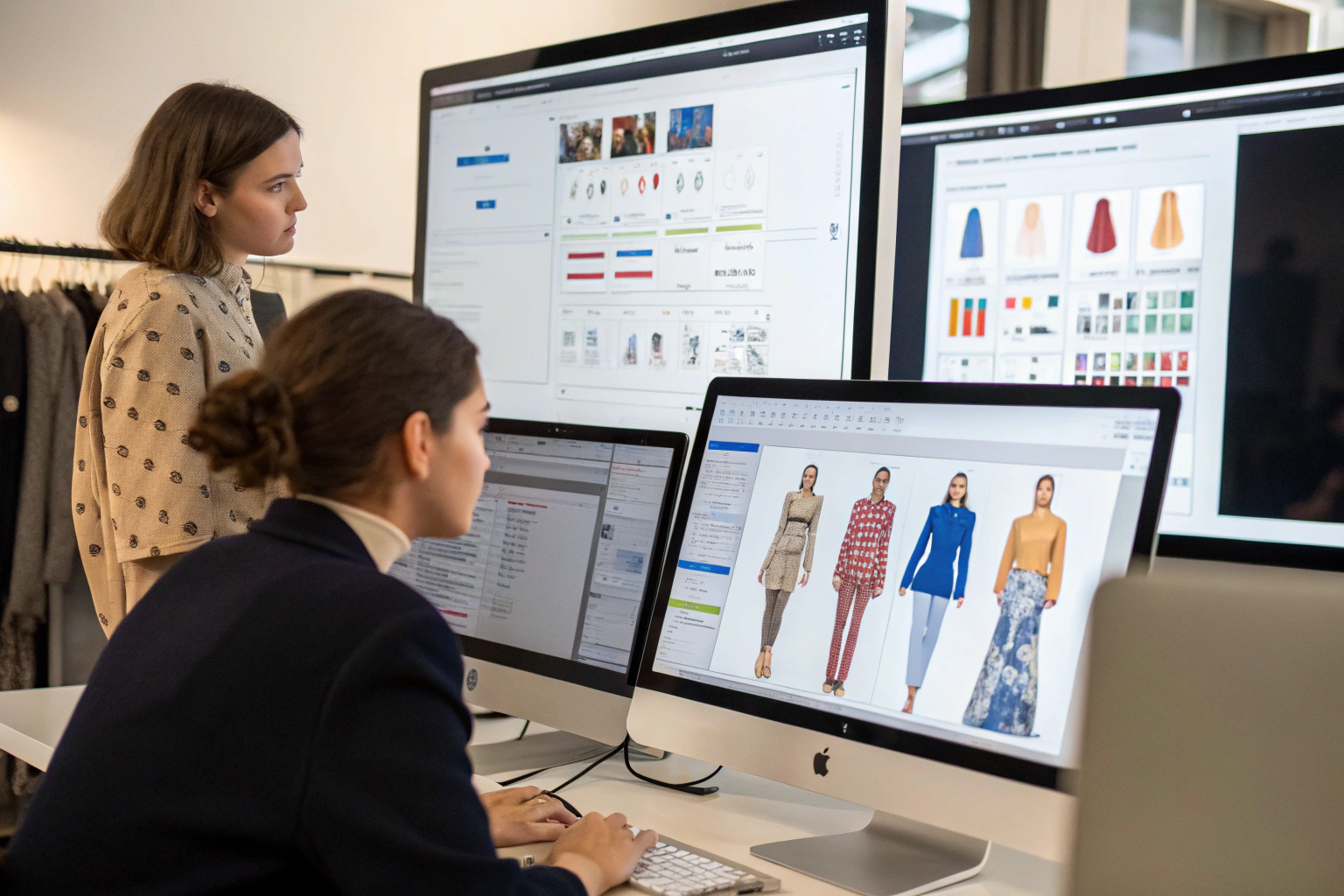
After twenty years supplying fabrics to US retailers, I've witnessed the painful transition from gut-feel trend forecasting to data-driven AI tools. Just last season, I watched a major retailer miss their entire spring collection because their "experienced" buyers chose recycled polyester performance fabrics when the market shifted to organic cotton comfort knits. The truth is, traditional forecasting can't keep pace with today's volatile consumer preferences—but the right AI tools can spot these shifts six months before they hit the mall.
The most effective AI trend tools for seasonal fabric selection combine social listening, sales data analysis, and visual recognition to predict which fabrics will resonate with US consumers. Key platforms include Heuritech for social media pattern analysis, WGSN's AI analytics for retail sales forecasting, Trendalytics for cross-platform trend aggregation, and Google's Fashion Trends for real-time search data. These tools typically improve fabric selection accuracy by 40-60% and reduce dead stock by 25-35% when properly integrated into the development process.
I remember working with a Midwest department store chain that was consistently late to fabric trends. Their buyers would visit New York shows, return with "hot" samples, and by the time their collections launched, the trends had peaked. After implementing AI trend analysis, they identified the brushed fleece revival three months before their competitors, captured the back-to-school market completely, and increased their seasonal fabric sell-through from 65% to 82%.
How Do Social Listening AI Tools Predict Fabric Trends?
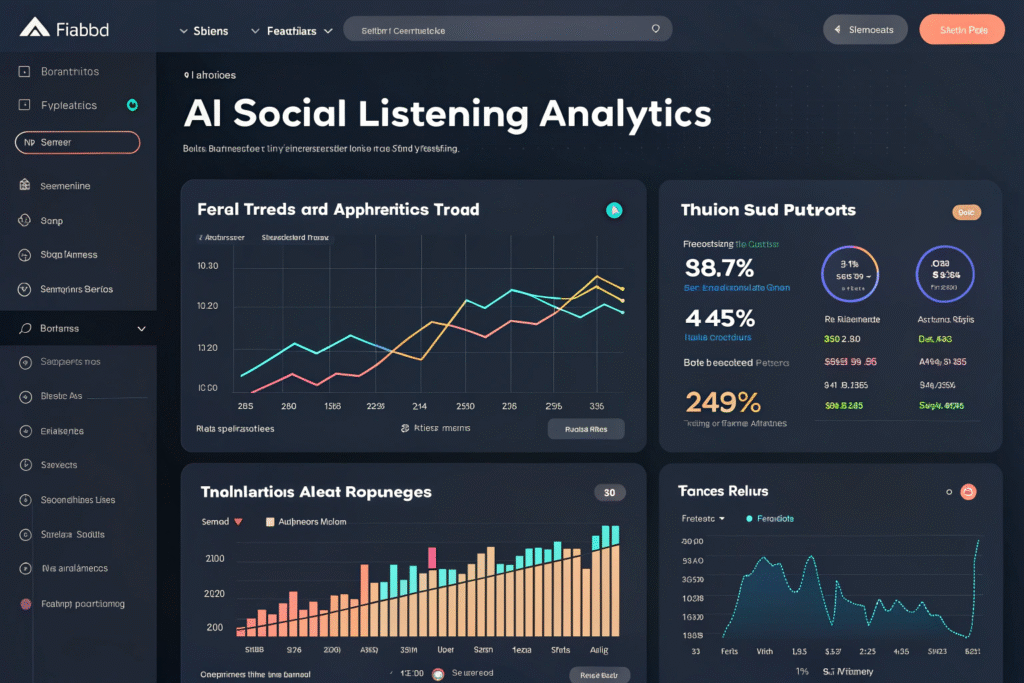
Social listening AI tools analyze millions of social media images, captions, and engagement metrics to identify emerging fabric preferences before they appear in retail sales data. These platforms use advanced computer vision to recognize fabric types, textures, and patterns in user-generated content, providing early signals about what consumers are actually wearing and admiring.
The most powerful aspect of social listening AI is its ability to detect micro-trends at the influencer and early adopter level, giving you 3-6 months lead time to develop appropriate fabrics. Unlike traditional trend forecasting that relies on expert opinions, these tools quantify consumer sentiment through actual behavior and engagement.
What Makes Heuritech Particularly Effective for Fabric Analysis?
Heuritech stands out because its computer vision technology specifically recognizes fabric properties—not just garments or colors. The platform can distinguish between performance mesh, double-knit jersey, technical taffeta, and hundreds of other fabric types with remarkable accuracy.
Key capabilities for fabric developers:
- Texture recognition: Identifies brushed, peached, crinkled, and embossed surfaces
- Weight estimation: Correlates fabric drape in images with approximate GSM ranges
- Pattern analysis: Tracks geometric, floral, and abstract pattern popularity
- Composition trending: Monitors mentions of organic, recycled, and technical fibers
A Pacific Northwest activewear brand used Heuritech to detect the emerging demand for circular knit textures six months before the trend peaked. They developed a proprietary brushed circular knit that became their best-selling fabric for two consecutive seasons, generating $3.2 million in additional revenue.
How Does Social Sentiment Analysis Translate to Fabric Choices?
Social sentiment analysis goes beyond simple popularity metrics to understand why consumers prefer certain fabrics. The AI analyzes caption text, comments, and engagement patterns to identify the emotional drivers behind fabric preferences—comfort, sustainability, performance, or aesthetic appeal.
We've developed this correlation framework for translating social sentiment to fabric specifications:
| Social Signal | Fabric Implication | Development Priority |
|---|---|---|
| "Soft," "Cozy," "Comfort" mentions ↑ | Brushed finishes, modal blends, higher GSM | Handfeel improvement |
| "Sustainable," "Eco-friendly" mentions ↑ | GOTS organic, recycled content, traceability | Certification sourcing |
| "Performance," "Technical" mentions ↑ | Moisture-wicking, stretch, durability | Functional finishes |
| "Luxury," "Premium" mentions ↑ | Fine gauge, natural fibers, complex constructions | Quality upgrades |
A Texas-based denim brand used this approach to identify growing consumer frustration with "stiff" sustainable denim. They developed a GOTS organic cotton with advanced enzyme washing that maintained sustainability credentials while delivering the broken-in comfort consumers wanted, resulting in a 45% sales increase in their eco-collection.
Which Retail Data AI Tools Identify Commercial Winners?
While social listening predicts emerging trends, retail data AI tools analyze what's actually selling now and why. These platforms process millions of transaction records, inventory levels, and pricing data to identify which fabric properties correlate with commercial success across different retail segments.
The most valuable insight from these tools isn't which fabrics are popular—it's which fabric characteristics drive full-price sell-through versus markdowns. This distinction is crucial for developing fabrics that maintain margin while meeting consumer demand.

How Does WGSN's AI Analytics Platform Transform Fabric Planning?
WGSN has evolved far beyond traditional trend forecasting with their AI analytics platform that combines trend data with real-time retail performance. Their fabric-specific modules track which constructions, weights, and finishes are achieving the highest sell-through rates across price points.
Critical features for US retail:
- Regional performance tracking: Fabric popularity by US region and retail tier
- Price elasticity analysis: Optimal price points for different fabric types
- Cross-category application: Successful fabric transfers between categories
- Lifecycle forecasting: Peak and decline predictions for fabric trends
A national department store chain used WGSN's AI to identify that technical satins were peaking in eveningwear but emerging in casual separates. They shifted their fabric development to create washed technical satins for daywear, capturing a new market segment while the competition was still focused on formal applications.
What Unique Insights Does Trendalytics Provide for Fabric Development?
Trendalytics excels at correlating online search data with social media buzz and retail sales. Their "Fabric Intelligence" module specifically tracks how fabric-related search terms translate to purchase behavior across different US retail channels.
The platform's most valuable feature is its ability to identify "fabric search gaps"—where consumer interest exists but retail inventory is limited. These gaps represent significant opportunities for early movers in fabric development.
A midwestern specialty retailer discovered through Trendalytics that searches for "Tencel twill" had increased 300% year-over-year while available inventory remained limited. They developed an exclusive Tencel twill program that became their highest-margin fabric collection for the season, with 75% selling at full price.
How Do Visual AI Tools Accelerate Fabric Selection?
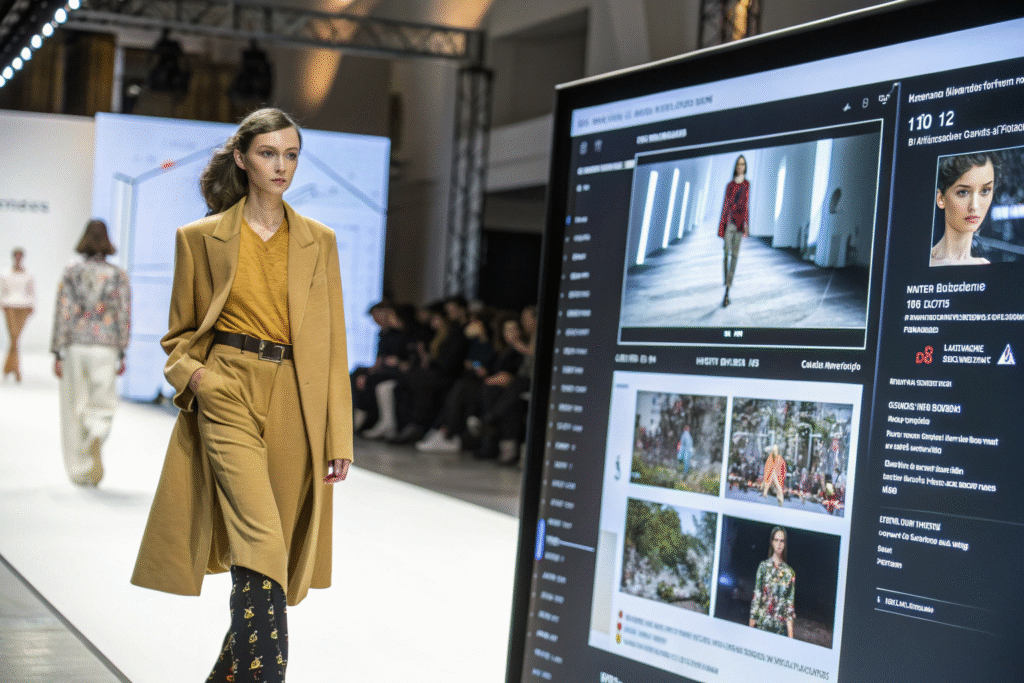
Visual AI tools use computer vision to analyze runway images, street style photography, and product catalogues to identify fabric trends at scale. These platforms can process thousands of images in minutes, identifying subtle shifts in fabric preferences that human analysts might miss.
The technology has become particularly valuable for understanding how fabrics are being styled and combined—insights that inform both fabric development and merchandising strategies.
What Makes Google's Fashion Trends Unique for Fabric Analysis?
Google's Fashion Trends stands out because it analyzes the world's largest dataset of search queries to identify what US consumers are actively seeking. The platform provides real-time data on fabric-related searches with geographic and demographic breakdowns.
Key applications for fabric developers:
- Seasonal forecasting: Predicts fabric interest 6-9 months before peak search
- Regional preferences: Identifies geographic variations in fabric demand
- Styling insights: Reveals how fabrics are being searched with other terms
- Competitive intelligence: Tracks search volume for competitor fabric programs
A value-focused retailer used Google Trends to identify growing search volume for "brushed fleece" in August—much earlier than their traditional buying calendar. They accelerated their fleece development and captured the back-to-school market completely, increasing their seasonal fleece sales by 60% over the previous year.
How Can Computer Vision Analyze Fabric Properties in Runway Images?
Advanced computer vision platforms can now analyze runway images to extract specific fabric properties—weave structure, surface texture, weight indications, and even approximate composition based on drape and movement.
This capability is particularly valuable for luxury and contemporary brands that need to translate runway trends into commercial fabrics quickly. The AI can identify that loose weave linens are dominating European runways while technical neoprenes are emerging in Asian street style, providing global context for US-focused collections.
A New York contemporary brand used this technology to identify that sheer layered fabrics were appearing in runway shows six months before traditional trend services reported the trend. They developed a proprietary construction of layered mesh that became their signature fabric for the season, receiving editorial coverage in major fashion publications.
What Integration Strategies Maximize AI Tool Effectiveness?
The greatest challenge with AI trend tools isn't access—it's integration. The most successful fabric developers create systems that combine multiple AI inputs with human expertise and supply chain realities. No single tool provides complete intelligence, but the right combination delivers remarkable accuracy.
Integration requires both technological connectivity and process adaptation. The most effective approaches combine automated data aggregation with structured review processes that translate insights into actionable fabric development briefs.

How Do You Create a Unified AI Trend Intelligence System?
A unified system should aggregate data from multiple AI tools into a single dashboard that highlights consensus signals and identifies contradictions. This approach prevents over-reliance on any single data source and provides confidence in trend directions.
Essential integration components:
- Data normalization: Standardizing metrics across different platforms
- Signal weighting: Assigning confidence levels based on data source reliability
- Contradiction resolution: Processes for reconciling conflicting signals
- Actionable output: Translation of trends into fabric specifications
A West Coast retailer invested $50,000 in developing a unified trend dashboard that combined four AI tools. The system paid for itself in the first season by preventing a $200,000 mistake—their buyers were ready to commit to performance fabrics based on one tool, but the consolidated dashboard showed the trend was already peaking.
What Human Oversight Processes Ensure Practical Application?
AI tools provide data, but human expertise ensures practical application to fabric development. The most effective teams maintain structured review processes where AI insights are evaluated against manufacturing feasibility, cost constraints, and brand positioning.
We've developed this decision framework for our clients:
- Trend Validation: Does the AI trend align with our brand identity?
- Supply Chain Assessment: Can we source/make this fabric at our price points?
- Timeline Evaluation: Can we develop and produce within the trend window?
- Risk Analysis: What's the downside if the trend underperforms?
A heritage workwear brand used this framework to cautiously embrace the oversized sweater trend identified by their AI tools. Rather than completely shifting their fabric direction, they developed one heavyweight brushed fleece fabric that complemented their core offerings. The limited-risk approach generated $850,000 in new revenue without compromising their brand identity.
What Are the Implementation Costs and ROI Timelines?
Implementing AI trend tools requires investment in technology, training, and process adaptation. However, the returns typically justify the costs within 1-2 seasons through improved sell-through, reduced markdowns, and faster development cycles.
The key to maximizing ROI is starting with focused applications rather than enterprise-wide transformation. Successful implementations typically begin with a single product category or fabric type before expanding to broader applications.

What is the Real Cost of AI Trend Tool Implementation?
Costs vary significantly based on tool selection and integration depth:
| Implementation Level | Typical Cost Range | Key Components |
|---|---|---|
| Single Tool Access | $10,000-25,000/year | Platform subscription, basic training |
| Multi-Tool Foundation | $40,000-75,000/year | Multiple subscriptions, integration, dedicated analyst |
| Enterprise System | $100,000-250,000+/year | Custom integration, cross-department training, dedicated team |
Most mid-sized retailers start with the multi-tool foundation, which typically delivers positive ROI within the first year.
What ROI Metrics Should You Track?
The most meaningful ROI metrics for AI trend tools include:
- Fabric development efficiency: Reduction in sampling iterations
- Sell-through rate improvement: Percentage increase in full-price sales
- Dead stock reduction: Decrease in seasonal fabric write-offs
- Time-to-market acceleration: Reduction from concept to production
A southeastern specialty retailer tracked these metrics after implementing AI trend tools and documented a 28% improvement in full-price sell-through, 45% reduction in development sampling, and 35% decrease in seasonal fabric markdowns—delivering 320% ROI in the first year.
Conclusion
AI trend tools have transformed seasonal fabric selection from art to science, providing data-driven insights that dramatically improve accuracy and reduce risk. The most effective approach combines social listening tools like Heuritech, retail data platforms like WGSN, and visual AI like Google Fashion Trends to create a comprehensive trend intelligence system. While implementation requires investment and process adaptation, the returns through improved sell-through, reduced markdowns, and faster development cycles typically justify the costs within the first season.
At Fumao Textiles, we've integrated AI trend analysis into our fabric development process, helping our US retail clients identify winning fabric choices 6-9 months before peak demand. Our experience across thousands of seasonal fabric developments has taught us how to translate AI insights into commercial fabric programs that drive full-price sell-through. We don't just follow trends—we use AI to identify which fabric innovations will resonate with your specific customer base. If you're ready to transform your seasonal fabric selection process, contact our Business Director Elaine at elaine@fumaoclothing.com. Let's build a data-driven fabric strategy that maximizes your seasonal performance.



22 Responses
Your article helped me a lot, is there any more related content? Thanks! https://accounts.binance.info/zh-CN/register-person?ref=WFZUU6SI
Your article helped me a lot, is there any more related content? Thanks!
I don’t think the title of your article matches the content lol. Just kidding, mainly because I had some doubts after reading the article. https://www.binance.com/es-AR/register?ref=UT2YTZSU
Thank you for your sharing. I am worried that I lack creative ideas. It is your article that makes me full of hope. Thank you. But, I have a question, can you help me?
I don’t think the title of your article matches the content lol. Just kidding, mainly because I had some doubts after reading the article.
Thank you for your sharing. I am worried that I lack creative ideas. It is your article that makes me full of hope. Thank you. But, I have a question, can you help me?
I don’t think the title of your article matches the content lol. Just kidding, mainly because I had some doubts after reading the article.
I don’t think the title of your article matches the content lol. Just kidding, mainly because I had some doubts after reading the article.
I don’t think the title of your article matches the content lol. Just kidding, mainly because I had some doubts after reading the article.
Can you be more specific about the content of your article? After reading it, I still have some doubts. Hope you can help me.
I don’t think the title of your article matches the content lol. Just kidding, mainly because I had some doubts after reading the article.
I don’t think the title of your article matches the content lol. Just kidding, mainly because I had some doubts after reading the article.
Your article helped me a lot, is there any more related content? Thanks! https://accounts.binance.info/hu/register?ref=IQY5TET4
Your point of view caught my eye and was very interesting. Thanks. I have a question for you.
Thank you for your sharing. I am worried that I lack creative ideas. It is your article that makes me full of hope. Thank you. But, I have a question, can you help me?
Thanks for shening. I read many of your blog posts, cool, your blog is very good.
Your article helped me a lot, is there any more related content? Thanks!
I don’t think the title of your article matches the content lol. Just kidding, mainly because I had some doubts after reading the article. https://accounts.binance.com/en-NG/register-person?ref=YY80CKRN
Thanks for sharing. I read many of your blog posts, cool, your blog is very good.
Your article helped me a lot, is there any more related content? Thanks!
Thanks for sharing. I read many of your blog posts, cool, your blog is very good.
Your point of view caught my eye and was very interesting. Thanks. I have a question for you.