When sourcing fabric for healthcare uniforms, ordinary cloth won’t cut it. Hospitals and clinics demand material that prevents bacteria spread, not just covers the skin.
To source antibacterial fabric for healthcare uniforms, choose suppliers with certified functional textiles, in-house testing capabilities, and experience in medical-grade standards. Fumao Fabric offers fast development, verified quality, and global delivery.
If you’re a sourcing manager or apparel entrepreneur like me, you know how serious hygiene compliance is in this industry. But many vendors exaggerate functionality or can’t back it up. Let me walk you through how to avoid these traps—and where to get reliable antibacterial fabric without delays or false promises.
Best Suppliers for Medical-Grade Antibacterial Fabric
Hospitals can’t afford material failure. Nor should you.
The best suppliers of medical-grade antibacterial fabric combine proven lab testing, technical innovation, and stable logistics systems. Fumao Fabric stands out by offering end-to-end QC and fast sample development from a CNAS-certified lab.

What sets top antibacterial fabric suppliers apart from ordinary textile mills?
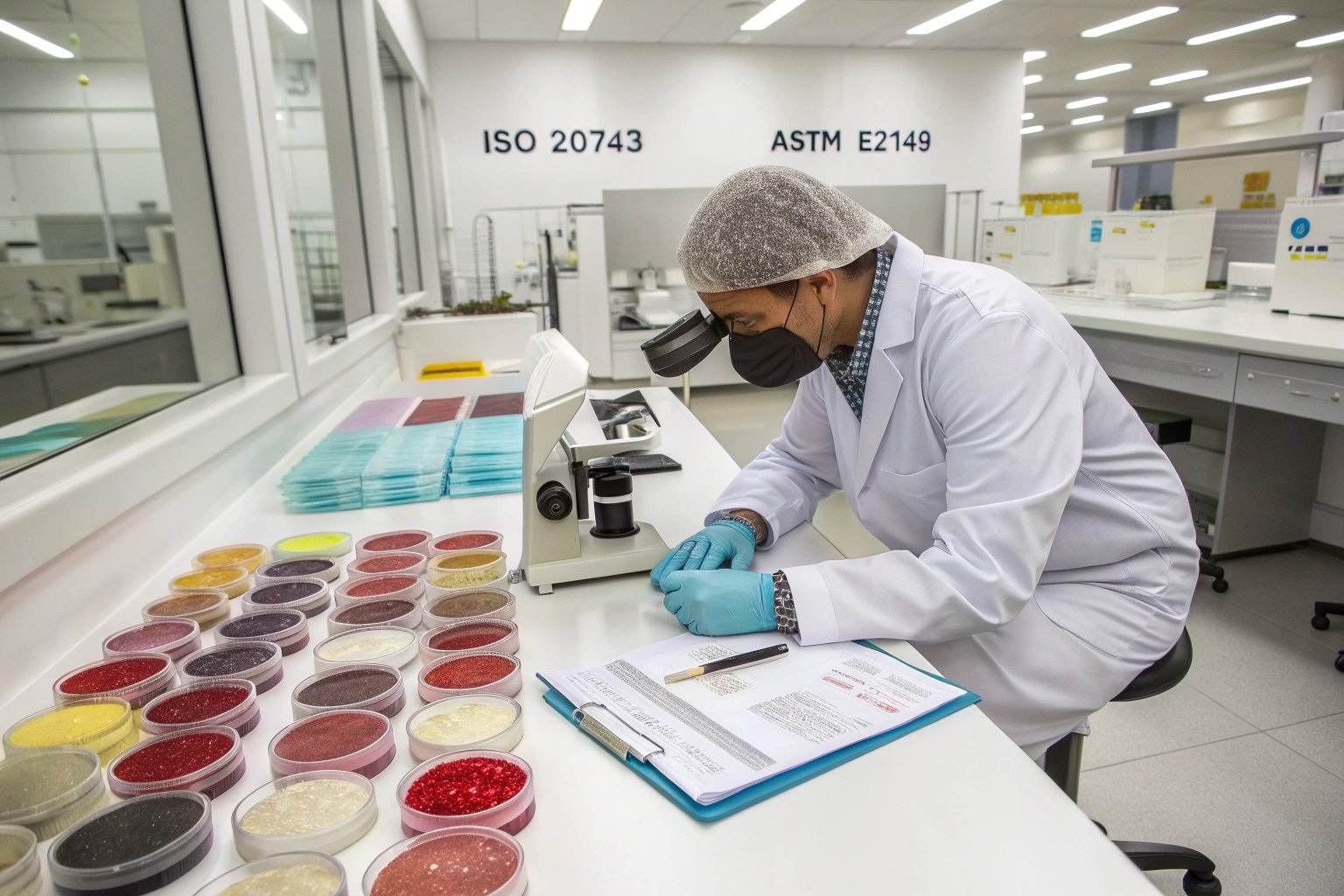
To manufacture hospital-grade uniforms, suppliers must offer more than "antibacterial" labels. Top suppliers develop textiles in certified labs, document performance data like kill-rate percentages, and offer long-term consistency. For example, our in-house CNAS lab allows us to confirm colorfastness, shrinkage, and bacterial resistance using international standards like AATCC 100. Without this, buyers are left guessing.
Here are five factors that define a reliable antibacterial fabric supplier:
| Supplier Feature | Why It Matters |
|---|---|
| Certified Lab Testing | Confirms efficacy against bacteria |
| R&D Specialization | Enables functional fabric development |
| QR Code Traceability | Tracks fabric’s tested performance batch by batch |
| Fast Sample Turnaround | Shortens product development cycle |
| Export-Ready Operations | Eases customs, tariffs, and compliance paperwork |
At Fumao, we work closely with European and American clients who need to meet CE and FDA garment standards. We source fibers with antibacterial additives like silver ions or bamboo charcoal. Whether you’re designing scrubs or surgical smocks, we offer seamless integration from yarn sourcing to moisture-control coating.
Why do healthcare brands prefer sourcing from experienced Chinese factories?
The answer is a mix of scale, expertise, and speed. In Keqiao, our local ecosystem includes over 80 factories, meaning your lab dips, dyeing, embroidery, and even anti-odor finishing can be handled in parallel. We recently helped an American buyer deliver 100,000 meters of poly-cotton antibacterial twill for a national nursing chain in under 22 days—including certification.
How to Verify Antibacterial Fabric Certifications?
Not all “antibacterial” claims hold up under scrutiny.
To verify antibacterial fabric claims, ask for lab reports using recognized standards like AATCC 100 or ISO 20743. Ensure the supplier provides certification from CNAS, SGS, or ITS-accredited facilities.

What documents and test methods confirm true antibacterial properties?
Here’s what buyers should expect from a serious supplier:
- AATCC 100 Report (or ISO 20743): Shows bacteria reduction rate (e.g., 99.9% vs. staph or E. coli).
- CNAS or ISO Accreditation: Confirms the lab’s legitimacy.
- Material Safety Data Sheet (MSDS): Verifies safe treatment chemicals (e.g., zinc oxide or silver nano).
- Shrinkage & Wash Cycle Report: Antibacterial coatings must survive laundering.
- Batch Tracking Codes: Each roll traceable by QR scan.
At Fumao, every antibacterial batch is scanned, tagged, and archived. Clients get a cloud-based portal showing past batch records, shrinkage stats, and bacteria reduction percentages. Our test methods follow both ISO and AATCC frameworks.
What’s the risk if your supplier lacks proper certification?
Hospitals are strict about compliance. If your fabric fails a spot-check, your shipment could be denied, or worse—your brand could lose future contracts. We once had a client whose previous supplier only “sprayed” antibacterial finish. Their uniforms lost function after three washes. We replaced their fabric using an embedded silver-ion polyester blend, with verified 100-cycle durability.
Always demand original lab test results. If you’re unsure, ask to speak directly with the lab staff—or let our team walk you through the process.
Top Antibacterial Fabrics for Healthcare Apparel
Not all fibers fight bacteria the same way.
The top antibacterial fabrics for healthcare uniforms include silver-ion polyester, bamboo viscose blends, and zinc-treated cotton. These materials combine comfort, moisture-wicking, and proven microbe resistance.

Which fibers provide effective antibacterial properties while ensuring comfort?
Let’s break it down:
| Fabric Type | Bacteria Resistance | Comfort Level | Wash Durability | Cost |
|---|---|---|---|---|
| Silver-Ion Polyester | ★★★★★ | ★★★★☆ | ★★★★★ | $$ |
| Bamboo Charcoal Viscose | ★★★★☆ | ★★★★★ | ★★★☆☆ | $ |
| Zinc Oxide Cotton Blend | ★★★★☆ | ★★★★☆ | ★★★★☆ | $$$ |
| Chitosan-Treated Modal | ★★★★☆ | ★★★★★ | ★★★☆☆ | $$ |
| Tencel™ Lyocell (w/ Finish) | ★★★☆☆ | ★★★★★ | ★★★☆☆ | $$$ |
These textiles are used in scrubs, surgical gowns, and lab coats. Silver-ion infused polyester, for instance, offers the best resistance and longest wash life. It’s ideal for high-rotation use in large hospitals.
Why does Fumao prioritize both function and softness in antibacterial fabrics?
Because uniforms aren’t just about performance—they’re also worn for long shifts. That’s why we blend performance fibers with modal or lyocell for extra softness. Our most popular healthcare fabric this year? A silver-ion treated polyester/modal twill, finished with moisture-wicking coating. It meets both FDA and REACH criteria.
When buyers tell me they want “antibacterial but not stiff,” I know what they mean. The real win is when nurses thank you for making a uniform that doesn’t itch after 12 hours on the floor. We build that into the weave.
Are Antibacterial Fabrics Durable for Uniform Use?
Antibacterial effect is useless if it disappears after 10 washes.
The durability of antibacterial fabric depends on how the treatment is applied—embedded fibers last longer than surface coatings. Look for 50+ wash certifications and woven-in agents like silver or zinc.

What makes one antibacterial fabric more durable than another?
Let’s clarify the chemistry. There are two main application methods:
- Surface Finishing: A topical spray or chemical bath is applied after weaving. Cheaper, faster—but wears off quickly (10–30 washes).
- Embedded Fiber Technology: Antibacterial agents (like silver) are blended into the yarn before weaving. This lasts 50–100+ washes.
Here’s a breakdown:
| Method | Avg. Wash Cycles | Performance Decay | Cost | Common In… |
|---|---|---|---|---|
| Surface Coating | 15–30 | High | Low | Low-cost uniform lines |
| Yarn Integration | 50–100+ | Low | Medium | Premium hospitalwear |
| Dual-Tech (Hybrid) | 70–100 | Moderate | High | Specialized applications |
At Fumao, 80% of our antibacterial output uses yarn-level infusion. That includes custom poly/rayon and poly/modal blends that are made-to-order. We test all batches for 50+ industrial wash cycles and provide clients a digital wash durability report.
How does this affect cost and long-term ROI?
Sure, upfront costs may be 10–15% higher. But if your uniforms last twice as long and pass every QA test, your annual budget improves. Plus, reliable performance prevents brand damage. We recently helped a European buyer upgrade from surface-treated fabric to embedded zinc-polyester, reducing replacement costs by 37% across their lab coat range.
Durability isn’t a nice-to-have—it’s your contract protection.
Conclusion
Sourcing antibacterial fabrics for healthcare uniforms demands proof, performance, and a partner who understands the stakes. At Fumao, we combine lab-tested function with soft comfort and fast development, helping brands and medical facilities deliver safety—without delays.