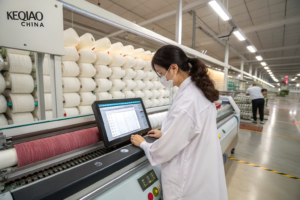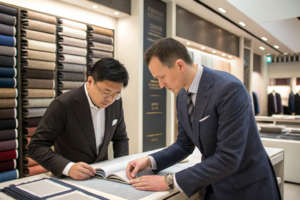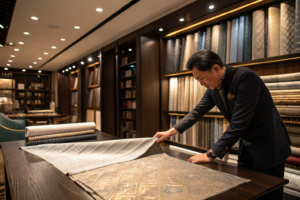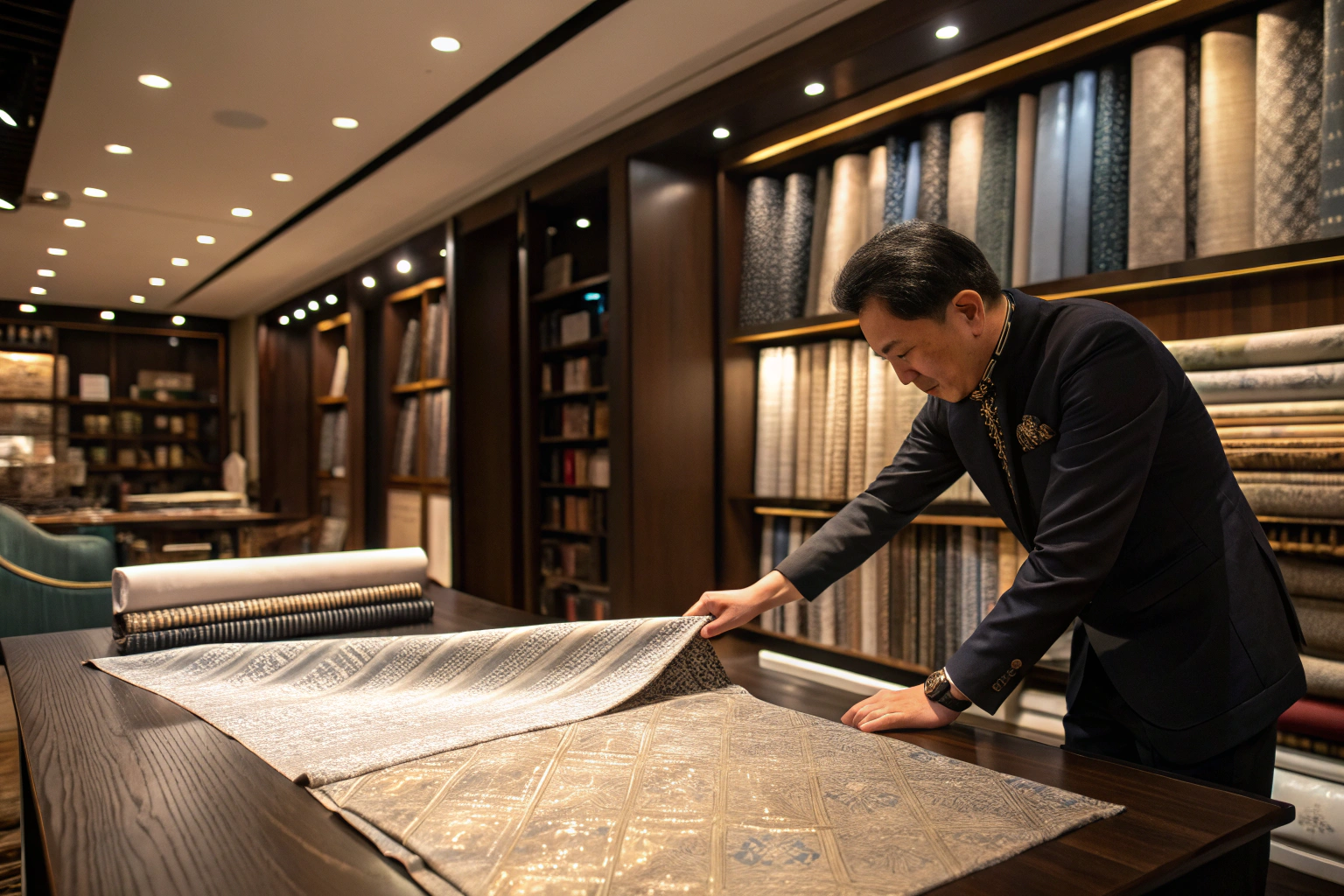
Let me tell you something that surprises most buyers. Everyone knows Keqiao for volume. For the millions of meters of standard poplin, polyester, and jersey that go into the world’s basic clothing. But what they don’t know—what most of them never even think to ask—is that hidden in the heart of this textile cluster are mills that can produce woven fabrics so rare, so complex, that only a handful of factories in the world can make them. I’ve been here for over 20 years. I’ve walked into workshops where they’re weaving silk and metal threads into brocades that look like they belong in a museum. I’ve seen jacquards with patterns so dense they take three days to set up a single loom. These are not the fabrics you find on Alibaba. These are the fabrics that make designers’ eyes go wide when they see them.
At Shanghai Fumao, we specialize in the rare and the complex. We produce woven fabrics that most mills won’t touch because they require specialized looms, unusual yarns, or finishing techniques that demand expertise. We do genuine silk jacquards with 20-plus colors, slub linen blends with a hand-feel that can’t be replicated, iridescent taffetas that shift color in the light, burn-out velvets with intricate patterns, hand-finished embroidered organzas, and coated technical fabrics with finishes that most coating factories can’t achieve. We don’t just weave fabric. We solve problems. And we love the hard stuff.
Now, I know what you’re thinking. “Rare fabrics sound expensive and complicated.” And yes, they require more expertise. But here’s what I’ve learned: the clients who come to us for these fabrics aren’t just buying cloth. They’re buying differentiation. They’re building collections that stand out in a crowded market. Let me show you what we actually make—the styles that other suppliers can’t—and why these rare woven fabrics might be exactly what your next collection needs.
What Luxury Jacquards and Brocades Do You Produce?
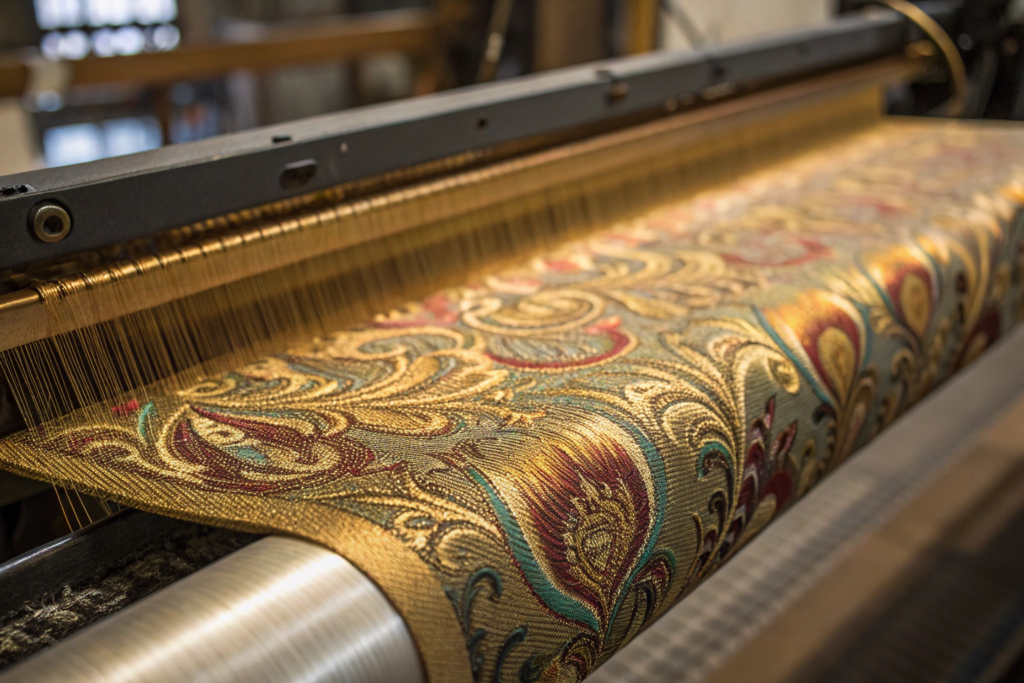
Let’s start with the fabric that started it all for me. When I first walked into a jacquard weaving workshop in Keqiao 20 years ago, I watched a master weaver spend four hours setting up a loom for a single pattern. He was weaving a brocade with 16 different colors of silk and three shades of metallic thread. The pattern was a traditional Chinese floral, but the complexity was astonishing. I asked him how many mills could do this. He looked at me and said, “In this city? Maybe four. In the world? Maybe ten.” That’s when I knew I wanted to specialize in the hard stuff.
We produce multi-color silk jacquards, metallic brocades, cotton-silk blend jacquards, and complex damasks that most mills reject. Our jacquard looms are equipped with electronic jacquard heads that can control up to 12,000 individual warp threads. That means we can weave patterns with incredible detail—think photorealistic florals, geometric designs with subtle shading, and logos woven directly into the fabric with a level of precision that printing can’t match. We work with silk, fine cotton, viscose, linen, and even metallic yarns. For formal wear, evening wear, bridal, and luxury accessories, our jacquards are in a class of their own.
Let me give you a real example from last year. A high-end bridal brand from Italy came to us. They wanted a custom jacquard for their flagship wedding dress collection. The design was a floral pattern with 12 colors, including a silver metallic thread for highlights. They had tried three other mills in Italy and China. One Italian mill quoted them €90 per meter with a 12-month lead time. Another Chinese mill said it was impossible because of the metallic thread. We took it on. Our jacquard team spent a week developing the pattern file. We ran samples, adjusted the tension for the metallic yarn (it’s more brittle than silk, so it requires slower speeds), and delivered a sample that matched their design perfectly. They ordered 8,000 meters. The final fabric? €38 per meter. Six-week lead time. Their designer told me it was the most beautiful fabric they’d ever used.
What Makes a 20-Color Jacquard Different from Standard Jacquard?
This is where the technical divide really shows. A standard jacquard might use 4 to 8 colors. That’s manageable. But when you get to 12, 16, or 20 colors, the complexity multiplies exponentially. Each color represents a different yarn type or dye lot. In a 20-color jacquard, you might have 20 different weft yarns, each with its own tension requirements. The electronic jacquard head has to select the correct yarn for each stitch. If one yarn is silk and another is metallic, the machine has to adjust tension on the fly. The pattern file—the digital instruction set for the loom—can be hundreds of megabytes. In our weaving factory, we have technicians who specialize only in multi-color jacquard setup. In 2023, we produced a 24-color silk jacquard for a Middle Eastern luxury brand. The pattern was a complex geometric Islamic design. The fabric was used for traditional ceremonial robes. The client told us they had searched for two years for a mill that could execute the design at the quality level they required. That’s the kind of work we live for. If you’re curious about how multi-color jacquard weaving differs from standard weaving, the difference is in the level of control and the expertise of the operators.
How Do You Incorporate Metallic Yarns Without Compromising Durability?
Metallic yarns are beautiful but tricky. They’re typically made by laminating a metal foil—often aluminum or copper—onto a polyester or nylon core, then cutting it into thin strips. The problem is that metal is stiff and can break under tension. If the weaving tension is too high, the metallic yarn snaps and you get defects. If it’s too low, the pattern looks loose and the metallic yarn doesn’t lie flat. We’ve developed specific protocols for metallic yarns. We run our jacquard looms at slower speeds—sometimes 30% slower than standard. We use special lubricants on the yarn paths. And we inspect more frequently. In early 2024, we produced a metallic brocade for a US evening wear brand. The fabric had gold metallic accents on a black silk base. We ran 5,000 meters with a defect rate of less than 2%. The client told us their previous supplier had a 15% defect rate with similar fabrics. The difference was our willingness to slow down and do it right. For anyone looking to source metallic jacquard fabrics for high-end apparel, the key is finding a mill that understands the material limitations.
What Specialty Linens and Unique Natural Fiber Blends Do You Offer?
Here’s a secret that most buyers don’t know. Not all linen is created equal. In fact, most “linen” sold today is actually a cotton-linen blend with a low percentage of flax, or it’s been heavily processed to remove the natural slubs that give linen its character. The result is fabric that looks like linen from a distance but feels like paper up close. Real linen—the kind that gets softer with every wash, that has a natural texture you can see and feel, that breathes like nothing else—is getting harder to find. We’ve made it a specialty.
We offer a range of specialty linens and unique natural fiber blends that go far beyond standard offerings. First, pure European flax linen in heavy weights (up to 12oz for jackets) and lightweight (as low as 3.5oz for shirts). Second, slub linen where the natural irregularities in the yarn are emphasized for a raw, textured look. Third, linen-hemp blends that combine the softness of linen with the durability and environmental benefits of hemp. Fourth, ramie fabrics—a lesser-known bast fiber that has a crisp, papery hand and exceptional strength. And fifth, bamboo linen blends that combine the natural texture of linen with the soft, silky feel of bamboo viscose. We source fibers from Europe, China, and beyond, and we weave them in our own factory to ensure consistency.
Let me share a recent story. In Q3 of 2023, a Japanese menswear brand approached us. They wanted a linen fabric for their summer collection, but not the standard washed linen that everyone uses. They wanted something with more texture—almost rustic. They had tried several European mills, but the lead times were too long and the MOQs were too high. We developed a custom slub linen for them using a specific flax fiber from Normandy. We used a coarse yarn count and a loose plain weave that emphasized the natural slubs. The result was a fabric with a dry, textured hand that looked almost handmade. They ordered 15,000 meters. The collection sold out in Japan within weeks. That’s the power of getting the details right.
What Is Slub Linen and Why Is It So Sought After?
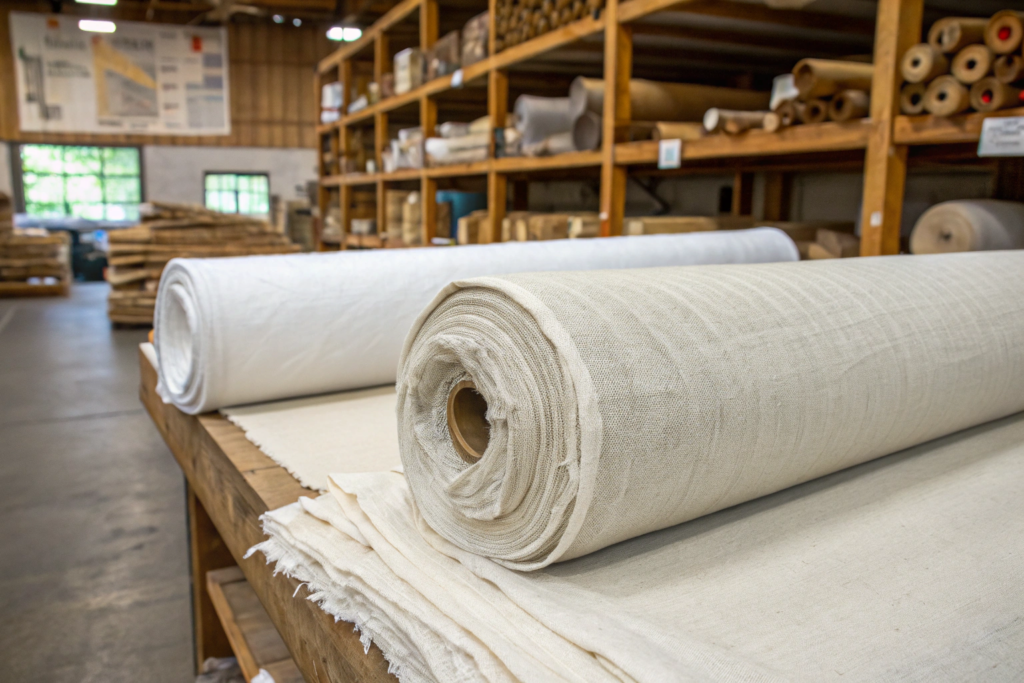
Slub linen is linen where the yarn has intentional thick-and-thin variations. In standard linen production, mills try to minimize slubs—they’re seen as defects. But in slub linen, those irregularities are the feature. They give the fabric a raw, organic, artisanal look that’s very popular in contemporary menswear and womenswear. The slubs come from using shorter flax fibers or from the spinning process itself. We produce slub linen in our weaving factory by selecting specific yarns with high slub content. We then weave them in open structures that let the texture show. In 2024, we developed a slub linen for a European contemporary brand that was so textured you could feel the yarn irregularities with your eyes closed. The client used it for oversized shirts and wide-leg trousers. The feedback was that the fabric felt “alive”—like it had its own character. For designers looking to understand the difference between standard and slub linen, it’s one of the most distinctive fabrics you can use.
How Do You Work with Ramie and Hemp Blends?
Ramie and hemp are both bast fibers—they come from the stem of plants, like linen. But each has unique properties. Ramie is stronger than linen, has a natural luster, and a crisp, almost papery hand that doesn’t wrinkle as easily. Hemp is highly durable, naturally antimicrobial, and has a softer hand than linen when processed well. We work with both. For ramie, we often blend it with cotton or linen to soften the hand while retaining its crispness. For hemp, we blend with organic cotton or Tencel to improve drape. In late 2023, a US-based sustainable brand asked us to develop a hemp-cotton blend for their casual wear collection. We sourced certified organic hemp fiber, blended it with long-staple cotton in a 55/45 ratio, and wove it into a lightweight twill. The fabric had the durability of hemp, the softness of cotton, and a beautiful drape. The client ordered 20,000 meters and has since made it their core fabric. If you’re exploring sustainable bast fiber fabrics for fashion, these blends offer a unique combination of sustainability and performance.
What Iridescent, Textured, and Coated Specialties Can You Create?
Some fabrics are meant to be seen from across a room. They catch the light, they shift color as you move, they have a presence that can’t be ignored. These are the fabrics that make eveningwear, stage costumes, and high-fashion collections unforgettable. But they’re also the hardest to produce. Most mills won’t touch them because the finishing processes are complex, the yields are lower, and the technical knowledge required is rare. We’ve built our reputation on taking on these challenges.
We specialize in three categories of special-effect woven fabrics. First, iridescent and shot effect fabrics. These are woven with different colors in the warp and weft—say, blue warp and purple weft—so the fabric shifts color depending on the angle of light. We produce iridescent taffetas, shot silks, and color-shift blends that are stunning for eveningwear and special occasion. Second, burn-out and devoré fabrics. This is a chemical finishing process where we print a paste that dissolves one fiber (like viscose or cotton) while leaving another (like polyester or silk) intact. The result is a fabric with sheer areas and textured patterns—classic for velvet burnout. Third, coated and laminated specialties. Our coating factory can apply finishes that most coating lines can’t handle, including metallic coatings, pearlescent finishes, high-gloss laminates, and breathable waterproof membranes for technical applications.
Let me give you a specific example from 2024. A luxury costume designer in London needed an iridescent fabric for a theatrical production. They wanted a fabric that shifted from emerald green to deep purple, with a stiff, rustling hand like traditional taffeta. They had tried suppliers in Italy and France, but the lead times were too long for their production schedule. We took their Pantone references and developed a shot taffeta using a green warp and a purple weft, both in high-twist polyester to create the crispness. The color shift was exactly what they wanted. We delivered 2,000 meters in four weeks. The designer told me the fabric was “the star of the show.” That’s what we aim for.
How Do You Create Iridescent and Shot Effect Woven Fabrics?
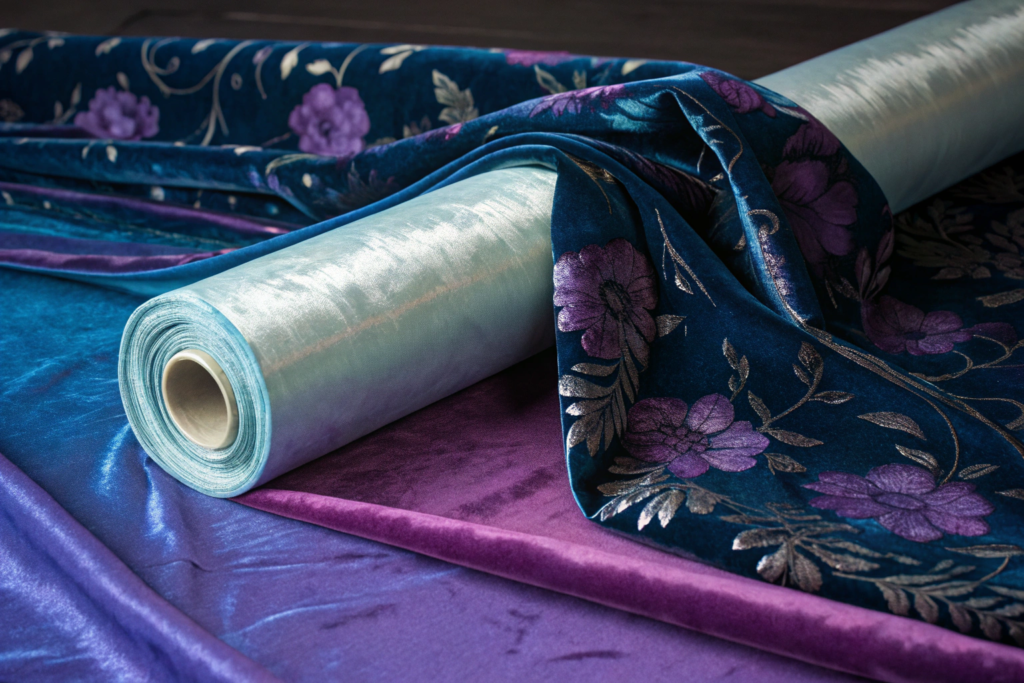
The principle is simple, but execution is everything. In a standard woven fabric, the warp and weft are usually the same color. In a shot effect fabric, they’re different colors. When the light hits the warp yarns, you see one color. When it hits the weft, you see another. As the fabric moves, the color appears to shift. The key is controlling the color intensity and the yarn properties. If the yarns are too bright, the effect can be garish. If they’re too subtle, the shift is barely noticeable. We use spectrophotometer measurements to balance the color values. We also choose yarn types carefully—high-twist yarns create more luster and a crisper hand, which enhances the shot effect. In 2023, we produced a shot silk for a Middle Eastern eveningwear brand that shifted from gold to bronze. The fabric was used in a collection that was featured in a major fashion magazine. The editor described it as “liquid metal.” If you’re curious about how shot silk and iridescent fabrics are woven, it’s one of the oldest and most beautiful techniques in textile history.
What Is Burn-Out Velvet and How Do You Achieve It?
Burn-out velvet—also called devoré—is a fabric where a pattern is “burned out” using a chemical paste. The process starts with a fabric that has two fiber types, usually a cellulose fiber like viscose or cotton for the pile, and a protein or synthetic fiber like silk or polyester for the base. A paste containing sodium bisulfate is printed onto the fabric in a pattern. When the fabric is heated, the chemical dissolves the cellulose fiber in the printed areas, leaving only the base fiber. The result is a pattern of velvet pile against a sheer, translucent background. We produce burn-out velvet in our printing and finishing facilities. The challenge is controlling the chemical concentration, temperature, and timing to get a clean burn without damaging the base fabric. In early 2024, we produced a burn-out velvet for a European lingerie brand. The pattern was a delicate floral. The fabric was used for robes and camisoles and sold out in pre-order. For designers wanting to learn about burn-out velvet production and applications, it’s a fabric that combines luxury with a touch of drama.
What Custom Embroidered and Hand-Finished Woven Fabrics Can You Develop?
Here’s something you won’t find in most fabric catalogues. Fabric that’s been touched by human hands after the machine is done. In an industry that’s increasingly automated, there are still techniques that require skill, judgment, and a willingness to do things the hard way. Embroidery on delicate fabrics. Hand-finishing on organza. Small-batch custom runs where the machine settings are adjusted by people who’ve been doing this for 30 years. We don’t just have the machines. We have the people.
We offer custom embroidery on woven fabrics through our two embroidery factories, which are equipped with multi-head machines that can handle everything from small logo runs to large-scale all-over embroidery. But what sets us apart is our ability to work with delicate and unusual base fabrics. We embroider on sheer organza, on silk charmeuse, on coated technical fabrics, and on heavy canvas. We can do flat embroidery, 3D puff embroidery, chenille embroidery, and sequin embroidery. We also offer hand-finishing for clients who want a truly artisanal product—hand-beading, hand-embroidery, and hand-stitched details that can’t be replicated by machine.
Let me share a recent project that shows what we can do. In late 2023, a bridal designer from New York came to us. She needed a custom embroidered fabric for a couture wedding dress. The base was silk organza—sheer, delicate, and prone to shifting. The embroidery pattern was a cascade of floral motifs from the shoulder to the hem, with 12 thread colors and small glass beads. Most embroidery factories refused because the organza was too unstable. We assigned our most senior embroidery technician to the project. He adjusted the machine tension, used a water-soluble stabilizer to prevent shifting, and ran the embroidery at a slower speed. Then the hand-beading team—six women who’ve been doing this for decades—added the glass beads by hand. The result was a fabric that the designer called “a work of art.” We produced 500 meters. Each meter took three times longer than a standard embroidery order. But for the right client, it’s worth it.
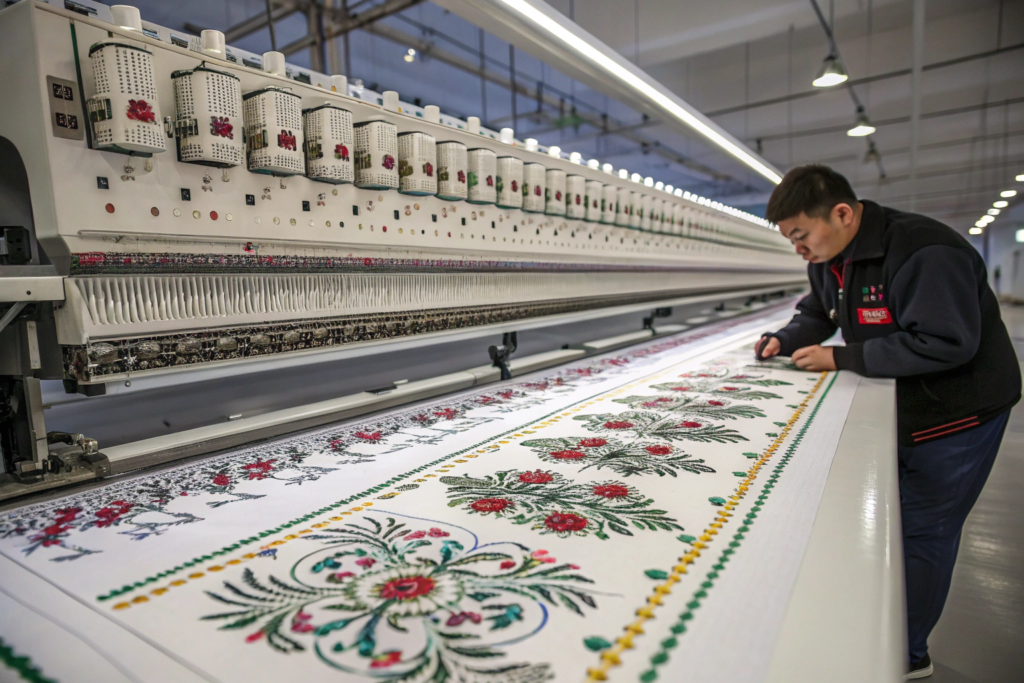
How Do You Embroider on Delicate Fabrics Like Organza and Silk Chiffon?
Delicate fabrics move. They stretch. They pucker. Standard embroidery settings that work on a stable cotton fleece will destroy a silk organza. Our approach is to treat each delicate fabric as a custom project. We use stabilizers—sometimes two or three layers—to support the fabric during stitching. We use sharp needles designed for fine fabrics. We reduce machine speed. We adjust thread tension to prevent the fabric from pulling. And we inspect more frequently—sometimes every 10 meters instead of every 100. In 2024, we embroidered a complex logo on a silk charmeuse for a luxury lingerie brand. The fabric had a 10% stretch, which made it challenging. Our team ran a pre-production sample, adjusted the digitizing file to account for the stretch, and delivered 3,000 meters with a defect rate under 3%. The brand told us they had tried three other factories before us. All had failed. If you’re looking for technical guidance on embroidering delicate fabrics, the key is experience and willingness to test.
What Hand-Finishing Capabilities Do You Offer for Artisanal Collections?
Machine embroidery can do a lot, but it can’t do everything. For true artisanal collections, hand-finishing adds a level of detail and luxury that machines can’t replicate. We have a dedicated hand-finishing team that can add hand-beading, sequin work, hand-stitched appliqués, and hand-embroidered details. We also offer hand-smocking, hand-pleating, and hand-fagoting for clients who want vintage or couture techniques. In early 2024, a Korean designer approached us for a collection inspired by traditional Korean textiles. They wanted a fabric with hand-embroidered floral motifs on a hand-woven-looking linen base. We developed a custom linen slub fabric in our weaving factory, then our hand-embroidery team added the motifs using traditional techniques. The collection was featured in a major Asian fashion week. The designer told me that the hand-finishing made the collection “unmistakably unique.” For designers looking to incorporate artisanal hand-finishing into commercial collections, it’s a way to create true differentiation in a market flooded with mass production.
Conclusion
Let me be honest with you. These rare woven fabrics—the 20-color jacquards, the slub linens, the iridescent taffetas, the burn-out velvets, the hand-finished embroideries—they’re not for everyone. They require more time. They cost more per meter. They demand a supplier who actually understands the complexity and isn’t afraid of it.
But for the right brand? For the designer who wants to create something that no one else has? For the collection that needs to stand out in a crowded market? These fabrics are the difference between “nice” and “unforgettable.”
At Shanghai Fumao, we’ve spent over 20 years building the relationships, the machinery, and the expertise to produce these rare woven fabrics. We own the weaving factory where our technicians have been setting jacquard looms for decades. We have the cooperative relationships with dyeing and finishing facilities that can handle chemical burnout processes. We run two embroidery factories with operators who know exactly how to embroider on delicate organza. And we have a hand-finishing team that adds the artisanal details that machines can’t replicate.
We’re not the biggest mill in Keqiao. But we might be the one that can do what you need when no one else can.
If you’re working on a collection that demands something special—something rare—I’d invite you to reach out to our Business Director, Elaine. She and her team have worked with luxury brands, costume designers, and emerging labels from around the world. They can walk you through our capabilities, share samples, and help you develop the exact fabric you’re imagining.
Let’s make something unforgettable together.
Email Elaine: elaine@fumaoclothing.com
From the heart of Keqiao, China—where the world’s textiles are woven—to your studio, your showroom, your customers. We’re ready for the hard stuff.