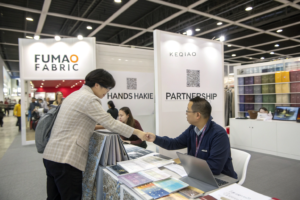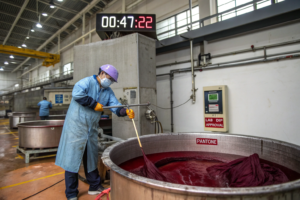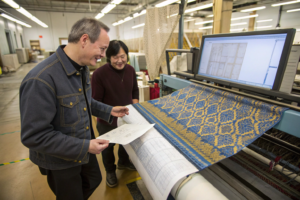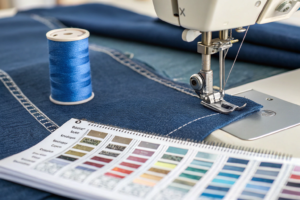
I remember a phone call I got in late 2023 from a first-time buyer in Texas. He was excited. He had found a "great deal" on some printed rayon challis for his new dress line. The supplier asked for 100% payment via Western Union before production. He did it. Three months later? No fabric. No replies. No refund. He came to us to fix the mess. And while I hate that story, it's the reason I'm writing this article. Sourcing fabric abroad—especially from the massive textile hub here in Keqiao—isn't just about finding the right satin or modal blend. It's about making sure your money doesn't vanish into thin air. Your payment method isn't just a transaction; it's your insurance policy, your leverage, and your bull detector all rolled into one.
The right payment method does more than just move cash from your account to ours at Shanghai Fumao. It aligns incentives. It says, "I trust you enough to start work, but we both have skin in the game until those rolls hit the Port of LA." Different methods protect you from different things. Are you worried the factory will disappear before shipping? You need one tool. Are you worried the quality will be off-shade or the yarn count wrong? You need a different tool. Are you just worried about a bad exchange rate eating your margin? That's another tool entirely.
Let me break this down from the perspective of someone sitting on this side of the negotiating table. I want you to feel confident when you wire funds for 20,000 yards of organic cotton or 5,000 meters of PU coated nylon. Because the truth is, a secure payment process makes my life easier too. It means less drama, fewer angry emails, and a partnership that lasts beyond one container load. Let's look at the four pillars of payment security that every US buyer should master before they send a dollar overseas.
What Is the Safest Payment Method for New Suppliers?
When you're dealing with a factory for the first time—even a big one like Shanghai Fumao—you have no history. No trust has been built. You don't know if our definition of "navy blue" matches yours. You don't know if we hit our deadlines. That's normal. That's smart caution. In this phase, you need a method that puts a referee between us. You need a system where the money is held by a neutral third party until the goods are shipped or, better yet, until they arrive and pass a basic inspection.
A lot of guys like Ron, our 44-year-old confident buyer persona, think Letter of Credit is the answer for first orders. It's not. Not anymore. LC requires so much exact paperwork that if I put a period instead of a comma on the Bill of Lading, the bank rejects it. That delays payment and annoys everyone. For new relationships, especially under $20,000, the safest route is almost always a platform-based escrow service or a structured Paypal invoice. Let's dig into why Trade Assurance and specific Paypal practices are your best friends on a first date.
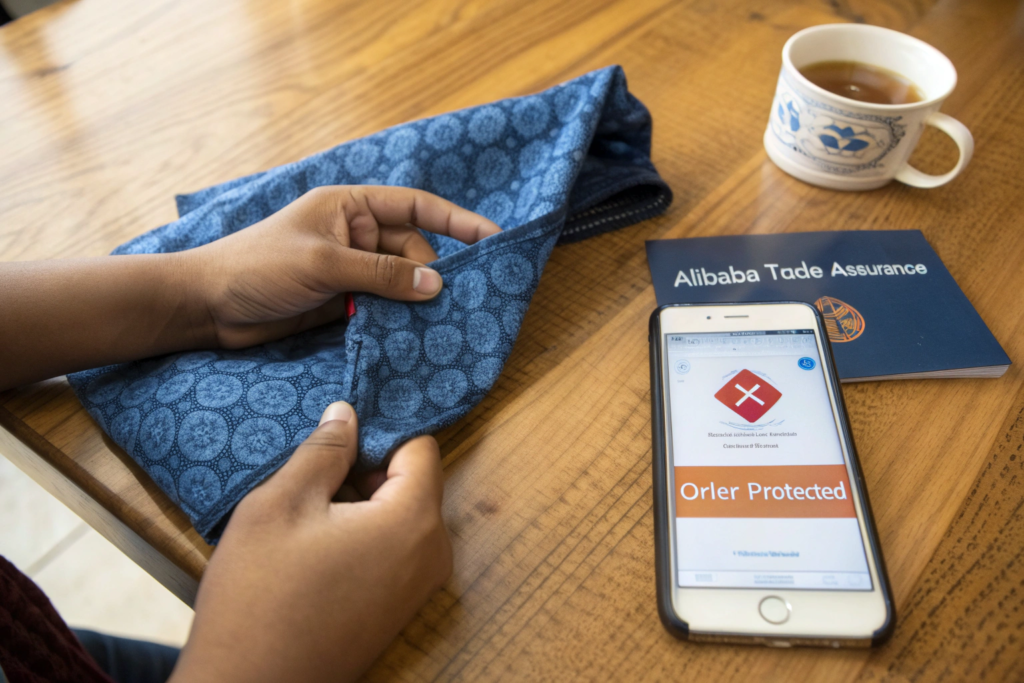
How Does Alibaba Trade Assurance Protect Against Non-Shipment?
Look, I know Alibaba has a reputation that's a bit mixed. But as a supplier on the platform for over a decade, I can tell you this: Trade Assurance is the cheapest insurance policy you can buy for a test order. It doesn't cost you anything as a buyer. The supplier pays a small fee (about 2-3% of the transaction value) to offer it. And what does it do for you? It covers On-Time Shipment and Product Quality as described in the contract.
Here is the exact workflow I walk my new US clients through when we use it:
- Contract Upload: We detail everything. Fiber content: 95% Bamboo Silk / 5% Spandex. Weight: 180 GSM +/- 5%. Color: Pantone 19-4052 Classic Blue. Lead Time: 25 days.
- Milestone Payment: You pay 30% deposit. That money doesn't hit our Shanghai Fumao bank account directly. It sits in an Escrow Account held by Alibaba's financial arm.
- Shipping Verification: We produce the fabric. We upload the Bill of Lading (B/L) to the platform. The system verifies the container number with the shipping line's public data.
- Release of Funds: Only when the system confirms the vessel has actually left Ningbo or Shanghai port do we get access to the balance payment (if you agreed to pay on shipment).
If we miss the ship date by more than a few days, you file a dispute. You get your deposit back. If the fabric arrives and it's 130 GSM instead of 180 GSM, you provide a third-party lab report (from SGS or our own CNAS lab data), and you get a refund of the difference or a full return. I've had to go through this process exactly twice in five years. Once, our coating machine broke down and we delayed a shipment of waterproof nylon by 9 days. The US client filed a claim. Alibaba refunded him $850 of his deposit to cover his lost time. It was fair. It keeps everyone honest. If you want to understand the exact coverage limits and the fine print, you should review this guide on how Alibaba Trade Assurance protects buyers from non-shipment and quality defects. And for a real-world community perspective, there's a decent thread on Reddit discussing first-hand experiences with Alibaba supplier payment disputes.
Should You Ever Pay 100 Percent Upfront with PayPal for Samples?
Short answer: Yes. For samples only. And even then, use a Credit Card through PayPal.
There is a nuance here that most "Sourcing 101" blogs get wrong. They scream, "NEVER PAY 100% UPFRONT!" But if you want 5 meters of custom-printed modal for a strike-off, or you need a specific color lab dip done in 48 hours, I'm not opening a Letter of Credit for a $50 order. The admin cost is more than the sample itself.
Here's the safe way to do it:
- Use PayPal Goods & Services. Never, ever use "Friends & Family" for a business transaction. If you do, you waive all buyer protection. I insist my clients use the business invoice feature.
- Pay with a Credit Card (AMEX or Visa) linked to PayPal. Why? Because this gives you Two Layers of Protection.
- Layer 1: PayPal's Dispute Center (180-day window). If I don't ship the swatch book within 14 days, you open a case.
- Layer 2: Your Credit Card Chargeback. If PayPal denies your claim (rare, but possible), you call Chase or Amex and file a chargeback for "Goods Not Received."
We ship about 200 sample packages a month via DHL. The cost is usually $30 to $80 for a set of swatches. I expect 100% upfront payment for these. It covers the DHL courier fee and the cost of cutting the fabric. But I also provide a tracking number within 2 hours of payment. That's the deal. I've seen too many small designers get burned for $120 on Instagram sample shops. Don't be that person. Use the tools. This article explains the specific timeline and rules for PayPal Purchase Protection for international tangible goods. And for the extra layer of credit card security, this is a solid overview of how to file a chargeback for goods not received on an international purchase.
How Do Letter of Credit Terms Protect Bulk Fabric Orders?
Once you move past the $30,000 mark—say you're ordering 10,000 meters of linen or a full container of Tencel denim—the game changes. You have significant capital at risk. This is where the Letter of Credit (LC) still holds its crown, despite being a paperwork nightmare. An LC isn't just protection against me, the supplier, running away. It's protection against the unknown. What if our factory burns down? (God forbid). What if the port of Ningbo closes due to a typhoon for three weeks?
An LC shifts the risk from Commercial Risk (Will Shanghai Fumao perform?) to Bank Risk (Will the Bank of China and Citibank honor the documents?). Banks have deeper pockets than we do. That's the logic. But here's the catch: Banks only care about Documents, not Quality. They will release funds if the Bill of Lading says "Shipped On Board October 10th" and the Commercial Invoice says "100% Linen." They will not check if the linen is actually 100% or if the color is correct. That's where you need to add a layer of inspection before the documents are presented.
What Is the Difference Between LC at Sight and Usance LC?
Let's translate bank-speak into real cash flow terms. This is critical for your working capital.
- LC at Sight: This means "Pay Now." The moment I (Shanghai Fumao) present the shipping documents to my bank, and my bank sends them to your bank, and your bank verifies there are no discrepancies... they debit your account immediately. Even if the ship is still in the middle of the Pacific Ocean. You're out the cash while the goods are in transit.
- Usance LC (or Deferred Payment LC): This means "Pay Later." The documents are presented. They are clean. The bank "accepts" the draft. But the actual debit from your account doesn't happen for 30, 60, or 90 days after the Bill of Lading date. This is a beautiful thing for a buyer. It allows you to receive the fabric, cut it, sew it, and potentially sell the finished garments before you have to pay me for the raw material.
Here is a comparison table based on a typical $50,000 order of wool blend coating:
| Feature | LC at Sight | Usance LC (60 Days) |
|---|---|---|
| Payment Timing | Within 5 banking days of docs. | 60 days after shipment date. |
| Supplier's Cash Flow | Good. We get paid fast. | Poor. We wait 2+ months. |
| Buyer's Cash Flow | Bad. Capital tied up 30+ days in transit. | Excellent. Use fabric to make revenue before paying. |
| Cost (Interest) | Low opening fee. | Higher fee (Supplier will factor the cost into fabric price usually). |
Most textile suppliers in China prefer LC at Sight because waiting 90 days for $50,000 hurts our ability to buy yarn for the next order. But for a client with strong credit and a long history with Shanghai Fumao, we can discuss Usance terms, usually with a slight price adjustment to cover the bank interest. It's a negotiation. If you want to sound like a pro when talking to your bank, you should review the official definitions of Letter of Credit types from the International Chamber of Commerce. And for a more practical look at how these terms affect Asian suppliers, this article on supply chain finance for textile imports is worth the read.
How to Avoid Discrepancies That Void Letter of Credit Protection?
(Here's a painful story.) Two years ago, a European client issued an LC to us for a large order of fire-resistant aramid fabric. We did everything perfectly. The fabric was flawless. The container left on time. But I made a mistake. The LC required the Bill of Lading to state "Freight Prepaid." Because we were shipping FOB, our forwarder put "Freight Collect." That's a discrepancy. The bank in Germany refused to pay. We had $80,000 in limbo on the water. It took two weeks of emails and an amendment fee of $150 to fix it.
Discrepancies are the enemy of LC security. Here is the checklist I give every buyer before they open an LC with us at Shanghai Fumao:
- Keep It Simple: Do not ask for 15 separate documents. Stick to: Signed Commercial Invoice, Packing List, Clean On Board Bill of Lading, and ONE inspection certificate (like a CNAS report or SGS report). The more documents you demand, the higher the chance one has a typo.
- Spelling Matters: My company name on the LC must match my bank account EXACTLY. "Shanghai Fumao Textiles Co., Ltd." is different from "Shanghai Fumao Textile Co., Ltd." (Missing 's'). That's a discrepancy.
- Description of Goods: Copy and paste the description directly from the Proforma Invoice into the LC application. If the PI says "80% Cotton / 20% Polyester Fleece," do not let the bank clerk change it to "Cotton Polyester Fleece."
- Latest Shipment Date: Give yourself a buffer. If I promise shipment October 20th, set the LC expiry date for November 10th and the latest shipment date for October 30th. Delays happen. A missed LC date is a voided LC.
A clean set of documents means the bank has to pay. They cannot argue about the color of the fleece or the softness of the hand feel. That's why smart buyers pair an LC with a Third-Party Pre-Shipment Inspection (PSI). You instruct the inspector to release the report only if the fabric meets AQL 2.5 standards. That way, you know the quality is there before the documents trigger the payment. It's the belt and suspenders approach. You can learn more about common pitfalls in this detailed guide on how to avoid common letter of credit discrepancies in international trade.
How Can You Use Deposit and Balance Terms to Reduce Risk?
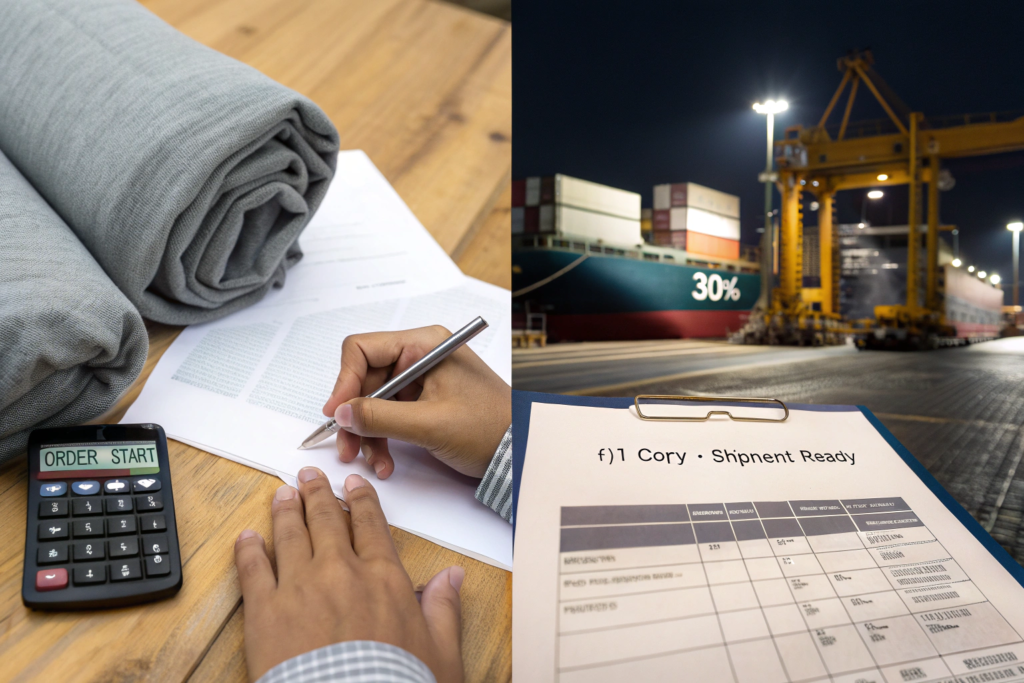
Sometimes, the best protection isn't a complicated bank instrument or a platform algorithm. It's just Leverage. And the most effective leverage in this business is the Final Balance Payment. This is the standard operating procedure for 90% of the transactions I do with US clients. We call it T/T 30/70 or T/T 30/70 against B/L Copy.
Here is the psychology of why this works better than any contract clause. You pay 30% deposit to start the greige weaving and yarn procurement. That covers our raw material cost. We have no incentive to run away—we've used your money to buy specific yarn that's now cut for your order. But the 70% balance is our profit and our labor. You hold that back until we provide proof of shipment. We have a massive incentive to finish on time and ship correctly because we want that 70%. If we don't ship, we don't get paid. If we ship garbage, you might refuse to pay, and we have to pay $4,000 to bring that container back to China. It's a perfect balance of risk.
Is 30 Percent Deposit with 70 Percent Against B/L Copy Safe?
For a buyer, this is the sweet spot. It's what I recommend for Ron—confident, experienced, and value-conscious. But you have to understand what "Against B/L Copy" actually means.
When the container leaves the port of Ningbo, the shipping line issues a Bill of Lading. It's a legal document of title. There are three types:
- Original B/L: A physical piece of paper. We courier it to you. You need it to claim the goods. (Slow).
- Telex Release: Electronic release. Fast. Common now.
- Express B/L: The shipper can't change the consignee easily.
When you agree to pay "70% Against B/L Copy," you are saying: "I will wire the balance when you email me a scanned copy of the B/L showing that the container has been loaded on the vessel for the USA."
The Risk: We could email you a fake B/L. It's rare but happens with scam traders. The Mitigation: You can verify the container number on the shipping line's official website (Maersk, MSC, COSCO) in real-time. If the number doesn't track, don't pay.
I had a new client in Australia who was nervous about this. He paid the 30% deposit to Shanghai Fumao for some custom embroidered linen. When the goods were ready, I sent him the B/L copy and a Container Tracking Screenshot. He was able to log into the MSC website himself and see the container was "Gate In Full" at Ningbo. He sent the balance immediately. By the time the fabric reached Melbourne 18 days later, it was fully paid for and cleared customs without delay. It was smooth. This method works because of transparency. For more details on the legal standing of this document, this is a good reference on what a Bill of Lading is and how it serves as proof of shipment in international trade. And for a practical view of common scams, this industry blog post on how to verify a container number and spot fake shipping documents is a must-read.
When Should You Negotiate a Smaller Deposit for Large Orders?
This is a conversation for the big boys. When you're ordering 50,000 meters of fabric—a few full containers—a 30% deposit could be $40,000 or $50,000. That's a lot of cash to have tied up for 6-8 weeks of production. If you have a strong credit rating, a long history with us, or you're a publicly traded company, we can talk about 10/90 Terms or even Net 30 Open Account.
But let me be brutally honest: As a fabric mill, I'm extending you an unsecured loan if I start production with only 10% down. That 10% doesn't even cover the cost of the yarn for a high-end fiber like Cashmere or Lyocell. So why would I do it?
- Volume Commitment: If you place 12 containers a year with Shanghai Fumao, I'll bend over backward on payment terms for one or two of them.
- Seasonal Slowdown: In June and July (our slower production periods), I'm more flexible on deposit terms because I want to keep the looms running. My knitting machines don't like to sit idle. I'd rather take a 10% deposit on a Tencel jersey order in June than let the machine sit cold.
- You Cover the Hard Costs: Sometimes we negotiate a 20% deposit that specifically covers the cost of the yarn. We show you the yarn invoice from our spinner. You pay that exact amount. Then the balance is due against B/L.
We did this recently with a large US workwear brand. They needed a huge run of modacrylic blend fabric for FR uniforms. The yarn cost was high. We agreed on a deposit structure that matched the cash outlay for the special fiber. It protected our cash flow and reduced their upfront exposure. It's a partnership, not a vendor relationship. This approach to balancing cash flow is discussed well in this resource on how to negotiate better payment terms with Chinese textile suppliers.
What Role Does Inspection Play in Securing Payment Release?
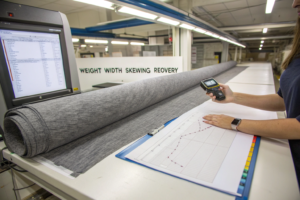
I've said it before and I'll say it again: Banks pay against Paper. You should only pay against Quality. The best way to bridge that gap is to tie the payment release to a Third-Party Inspection Certificate. This is the single best investment you can make after the fabric price itself. It turns a subjective argument ("This blue looks dull") into an objective one ("Delta E is 1.8, outside spec").
At Shanghai Fumao, we have our own CNAS-accredited lab. But I never get offended if a buyer wants to send an external inspector from SGS or Bureau Veritas. Actually, I prefer it. It eliminates disputes later. Here's how you structure the payment to use inspection as a shield.
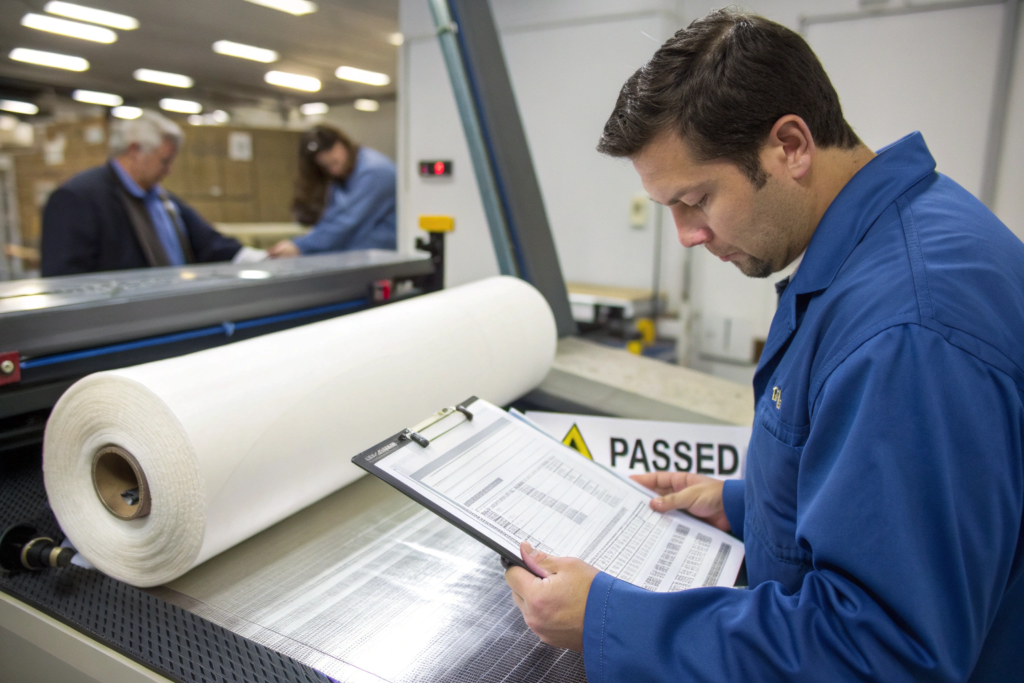
Can Third-Party Inspection Certificates Guarantee Quality Before Payment?
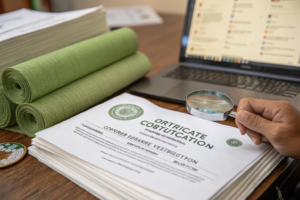
Yes, but only if you structure the contract correctly. Do not just ask for "Inspection Certificate." You need to specify When, What Standard, and The Consequence.
Here is the clause I advise US buyers to put in the Proforma Invoice:
"Final payment of 70% shall be released upon presentation of (1) Copy of Clean On Board Bill of Lading AND (2) Pre-Shipment Inspection Certificate issued by [SGS/BV/Intertek] confirming the fabric meets AQL 2.5 Level II for Major and Minor Defects as per the approved quality sample."
Notice the word AND. Both must be true. This stops me from shipping defective goods just to get a B/L. If the inspector finds that the shrinkage on the viscose linen is 8% (when the spec said 3%), the inspection report will say "FAIL." You are contractually allowed to withhold payment until I fix it or re-negotiate a discount.
Here is a real scenario from last year. A European fashion brand ordered 8,000 meters of a difficult silk/cotton blend voile. It's a tricky fabric. Shading issues are common. They hired SGS to inspect the lot in our Keqiao warehouse before we packed it.
- SGS Finding: 15 rolls out of 200 had a visible crease mark near the core.
- Result: We stopped packing. We cut off the first 5 meters of those 15 rolls (75 meters total). SGS re-inspected. PASS.
- Outcome: The client paid the 70% balance. The fabric arrived perfect. No chargebacks. No air freight of replacements. That inspection cost him $400. It saved him probably $3,000 in waste and lost production time in Portugal.
For a deep dive into how these inspections work logistically in China, check out this guide on how to arrange a pre-shipment inspection for textiles in China before releasing final payment. And if you want to understand the statistical basis for AQL sampling (how many rolls to open), this explanation of AQL tables for fabric inspection by AsiaInspection is very clear.
How Do Chargebacks Work on International Fabric Transactions?
This is the nuclear option. And it mostly applies to Credit Card payments via PayPal or direct card processing. If you paid by T/T wire transfer, you generally cannot "chargeback" unless you can prove criminal fraud (and even then, good luck recovering the wire).
A chargeback is you telling your bank, "I didn't get what I paid for." For fabric, it's usually a "Not as Described" claim.
The Process:
- Contact Supplier: You must try to resolve it with Shanghai Fumao first. Document the issue (e.g., photos of the fabric with a ruler showing the width is 54 inches instead of 60 inches).
- File Dispute with Bank/Issuer: You submit evidence. The key here is Third-Party Documentation. A note from your cutting room saying "Fabric is short" is weak. A Weight/Measure Certificate from a warehouse scale or an independent lab test is strong.
- Bank Decision: The bank arbitrates. They look at the description of goods in the original transaction.
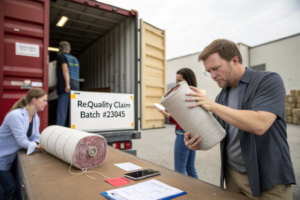
I've been on the receiving end of one chargeback in 15 years. It was a mistake on our end—we shipped 200 GSM jersey instead of 220 GSM. The buyer was a small fitness brand. They showed the bank a weight test from a US lab. The bank reversed the $2,500 charge. We ate the cost of the fabric and the shipping because we messed up. It was fair. But note: The chargeback took 45 days to process. It's slow. It's not a quick fix. And if you abuse chargebacks (e.g., filing one because you changed your mind about a color), suppliers will blacklist you.
This is why I always push for Pre-Shipment Inspection. It avoids the need for the nuclear option. But if you do need to go there, understand the rules of engagement. Here is a thorough guide from a consumer perspective that applies equally to business purchases on how to win a credit card dispute for goods significantly not as described. And for the PayPal-specific nuance, review their official policy on Significantly Not as Described claims for business transactions.
Conclusion
Protecting your cash when sourcing fabric from China isn't about finding one magic bullet. It's about layering defenses. Start with a secure platform like Trade Assurance for the first sample run. Move to a solid 30/70 T/T against B/L Copy structure for your regular bulk orders. When the stakes get high with six-figure container loads, pull out the heavy artillery: a Letter of Credit paired with a strict Third-Party Inspection Certificate. And always, always, keep an eye on the paperwork details—a misspelled name or wrong freight term can undo all that careful planning.
The goal is to create a transaction where both sides win when the fabric ships on time and on spec. We want the balance payment just as much as you want the goods. By understanding the tools available—from escrow to LC to simple leverage—you can negotiate from a position of strength and confidence.
If you're looking for a partner who understands that payment terms are just as important as thread count, reach out to us at Shanghai Fumao. We've navigated these waters with hundreds of US brands, from startups to established labels. We can help you structure a deal that keeps your money safe and your production on track. For a detailed discussion on your next project, whether it's cashmere coating or performance fleece, contact our Business Director, Elaine, directly at elaine@fumaoclothing.com. Let's make sure your next payment is an investment in quality, not a gamble.