I'll never forget the call from a client in Texas who'd just lost $45,000. They'd found what seemed like the perfect knitted fabric supplier—great prices, quick responses, beautiful samples. They wired a 50% deposit, as requested. Then the supplier stopped answering emails. The website disappeared. The factory address didn't exist. Their money was gone, and there was absolutely nothing they could do about it.
That call still makes me angry, not just because a client was hurt, but because it was entirely preventable. There are payment methods designed specifically to protect buyers, and this client hadn't used any of them. They'd trusted a stranger with $45,000 based on samples and nice emails.
Let me walk you through the payment methods that actually protect you when ordering knitted fabric from overseas. I'll explain how each works, the level of protection they provide, and when to use which. This knowledge won't just save you money—it'll save you from the nightmare of being cheated by someone you trusted.
What Are the Most Common Payment Methods in the Textile Industry?
Before we discuss protection, let's understand the landscape. These are the payment methods you'll encounter when sourcing knitted fabric from China.
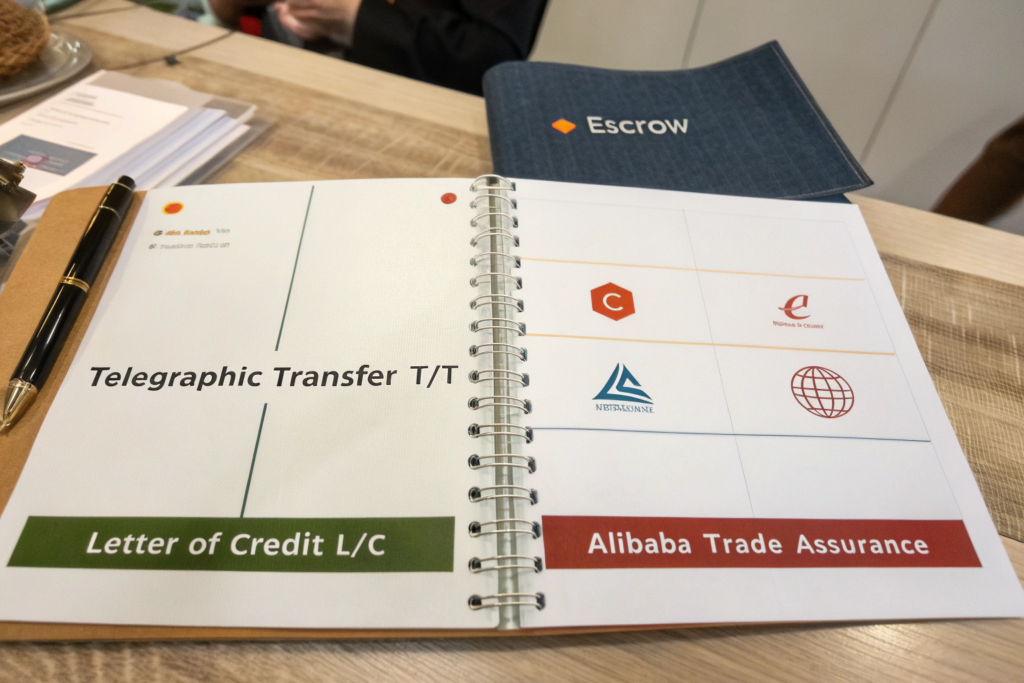
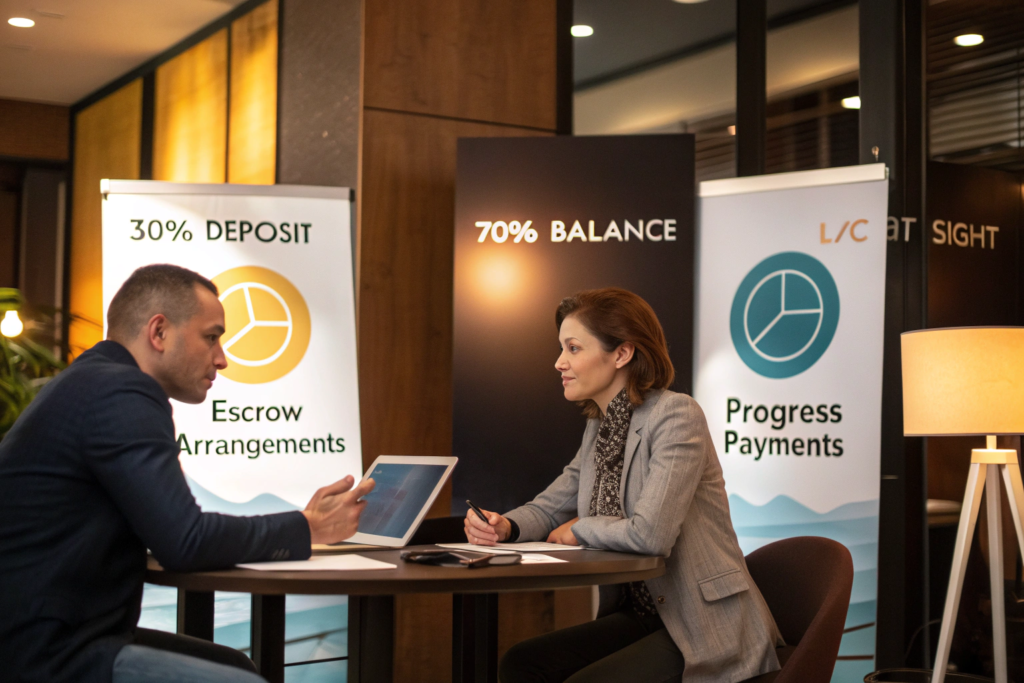
Telegraphic Transfer (T/T) is the most common method. You wire money directly from your bank to the supplier's bank. Typically, suppliers ask for a 30% deposit to start production and 70% balance before shipment. This method offers minimal protection—once the money leaves your account, it's gone. You're trusting the supplier to deliver.
Letter of Credit (L/C) is a bank-mediated method. Your bank guarantees payment to the supplier upon presentation of specified documents (bill of lading, inspection certificate, etc.). The supplier doesn't get paid until they prove they've shipped what you ordered. This offers strong protection but involves more paperwork and bank fees.
Alibaba Trade Assurance is an escrow-like service for orders placed through Alibaba. You pay Alibaba, who holds the funds until you confirm receipt of goods. This offers good protection for orders within the Alibaba ecosystem.
Escrow services are third-party companies that hold funds until both parties fulfill their obligations. They're less common in textile trade but available for large transactions.
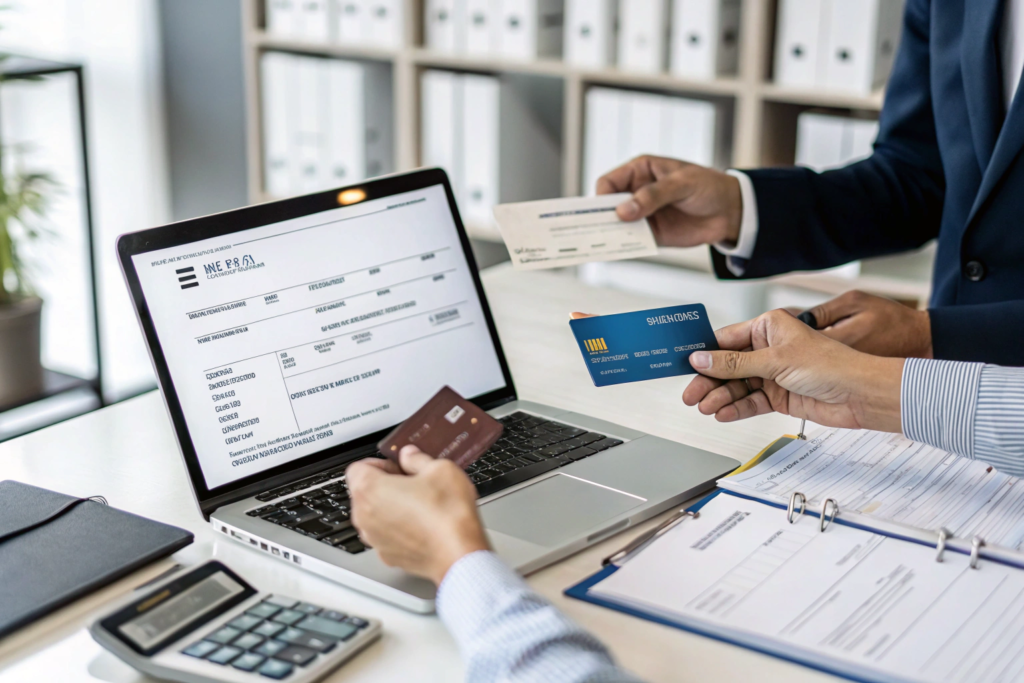
PayPal and credit cards offer strong buyer protection but are rarely accepted for large fabric orders due to high fees and chargeback risks. They're fine for samples, not for production.
A Canadian client uses a mix: PayPal for samples, T/T with trusted long-term suppliers, and L/C for new suppliers or large orders. Each method matches the risk level.
Why Is Telegraphic Transfer So Common Despite Limited Protection?
T/T dominates the industry for practical reasons, despite its risks.
Speed is the main advantage. A wire transfer takes 1-3 days. The supplier gets funds quickly and can start production. L/Cs can take weeks to arrange, delaying orders.
Cost is lower than alternatives. Bank fees for wires are modest. L/C fees can run hundreds of dollars. Trade Assurance adds a percentage. For price-sensitive orders, T/T keeps costs down.
Trust is built over time. Once you've worked with a supplier for years, T/T makes sense. The relationship itself provides protection. The problem is when new buyers use T/T with unknown suppliers.
Simplicity appeals to everyone. No complicated documents, no bank negotiations, no third parties. Just send money, receive goods. When it works, it's elegant. When it fails, it's devastating.
The key insight: T/T protection comes from relationship, not from the payment method itself. Use it only with suppliers you've vetted thoroughly and built trust with over time.
A Swedish brand uses T/T exclusively now—but only after seven years of smaller orders with L/C and Trade Assurance. The relationship earned the trust that makes T/T safe.
How Does Letter of Credit Actually Protect Buyers?
L/C protection comes from the bank's role as intermediary. Here's how it works.
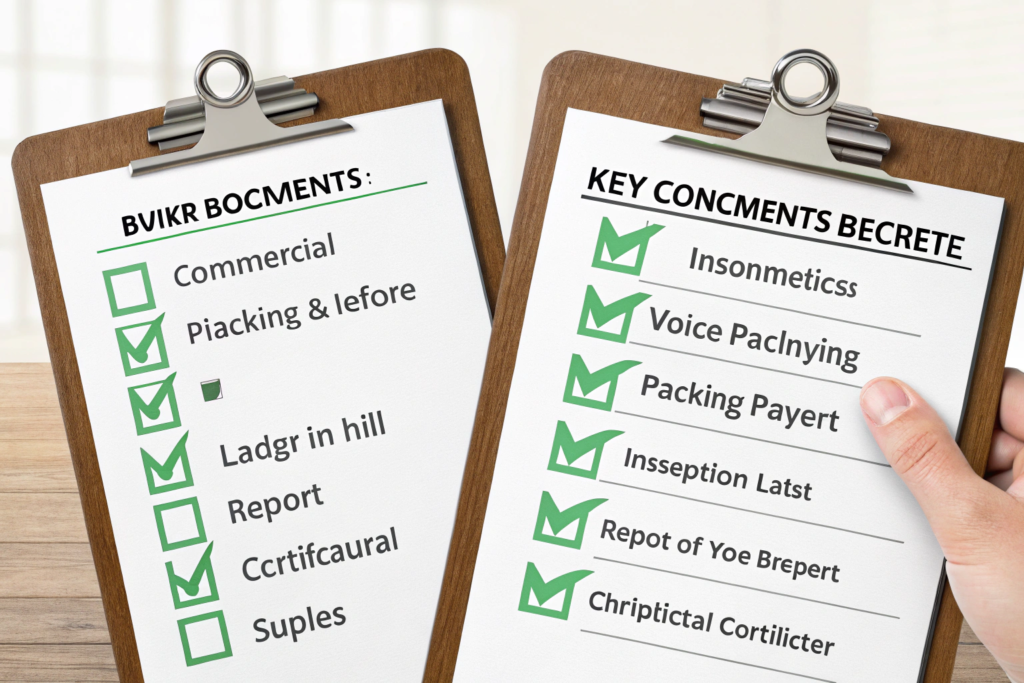
You open an L/C with your bank, specifying exactly what documents the supplier must present to get paid. Typically these include: commercial invoice, packing list, bill of lading, inspection certificate, and any required certificates (GOTS, etc.).
The supplier ships the goods, then presents these documents to their bank. If the documents match your L/C requirements exactly, their bank gets paid, and your bank charges your account.
The protection lies in the document requirements. You don't pay until the supplier proves they've shipped what you ordered. The bill of lading proves goods are on a vessel. The inspection certificate proves quality. The L/C ensures all this documentation is in order before money changes hands.
The limitation is that L/Cs don't protect against quality issues that aren't caught by inspection. If your inspection certificate says "pass" but you later find problems, the L/C has already paid. That's why L/C plus independent inspection is the strongest combination.
The paperwork burden is real. L/Cs require precise documentation—even minor discrepancies can delay payment. But for large orders or new suppliers, the protection outweighs the hassle.
A German client uses L/C for all first orders with new suppliers. The cost and paperwork are worth the peace of mind. After 2-3 successful orders, they might switch to T/T.
What Payment Methods Offer the Strongest Buyer Protection?
If protection is your priority, these methods offer the most security.
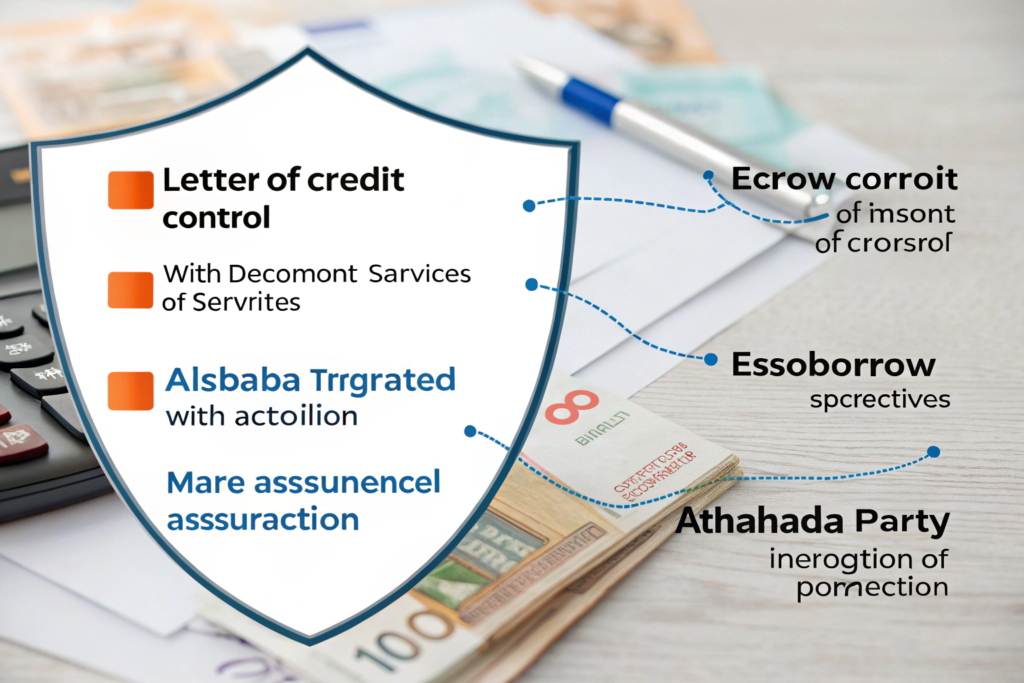
Alibaba Trade Assurance is excellent for orders placed through Alibaba. You pay Alibaba, who holds the funds. The supplier ships. You inspect the goods. Once you confirm everything is correct, Alibaba releases payment. If something goes wrong, Alibaba mediates and can refund your money. The protection is real and has saved many buyers.
The limitation is that it only covers orders initiated through Alibaba. If you find a supplier on Alibaba but then try to do a direct deal, Trade Assurance won't apply. Always keep qualifying orders within the platform to maintain protection.
Escrow services like Escrow.com offer similar protection for off-platform deals. You deposit funds with the escrow service. They notify the supplier to ship. You inspect and approve. Then they release payment. Escrow fees (typically 1-3%) are worth it for large orders with unknown suppliers.
Documentary Collections (D/P) offer moderate protection. Your bank sends documents to the supplier's bank with instructions to release them only upon payment. The supplier can't get the documents (including bill of lading) without paying. This protects against non-delivery but doesn't address quality issues.
The strongest protection combines methods: L/C with independent inspection, or Trade Assurance with careful order management. No single method is perfect, but combinations cover most risks.
A French client uses Trade Assurance for all Alibaba-sourced orders, even after years of working with the same supplier. The small fee is insurance against catastrophic loss. They've never needed to file a claim, but they sleep better knowing they can.
Is Alibaba Trade Assurance Really Reliable for Large Orders?
This question comes up constantly, and the answer depends on understanding what it covers and what it doesn't.
Trade Assurance covers up to the amount shown on the order. If you order $50,000 worth of knitted fabric and something goes wrong, you're covered for $50,000 (minus any partial shipments accepted). The coverage is real and has been tested.
The claims process requires documentation. You need to prove that the supplier failed to deliver, delivered late beyond the protection period, or delivered goods that don't meet specifications. Photos, videos, and third-party inspection reports strengthen your claim.
Timing matters. Trade Assurance has a protection period—typically the promised delivery date plus some buffer. If you don't file a claim within that window, coverage expires. Track your dates carefully.
The platform mediates disputes. They don't automatically side with buyers—they review evidence from both sides. Strong documentation wins cases.
The biggest limitation is that Trade Assurance only covers issues related to the order itself. If the supplier ships something completely different, you're covered. If they ship exactly what you ordered but you don't like it, you're not. Quality disputes require proof that specifications weren't met.
A US client had a $30,000 Trade Assurance claim when their fabric arrived with the wrong weight. They'd specified 200 GSM; the fabric tested at 180 GSM. Their third-party inspection report proved the discrepancy, and Alibaba refunded their payment within weeks. The protection worked exactly as promised.
What About PayPal and Credit Cards for Fabric Orders?
For samples and small orders, these methods offer excellent protection. For production orders, they're rarely accepted.
PayPal's buyer protection is strong. If goods don't arrive or don't match description, you can file a dispute and often get refunded. The problem is that PayPal fees (typically 3-4% plus currency conversion) are prohibitive for large orders. A $50,000 order would cost $2,000 in fees—unsustainable.
Credit cards offer chargeback rights. If goods aren't delivered, you can dispute the charge with your card issuer. The same fee issue applies—merchants pay 2-3% and often pass that cost to buyers or refuse cards entirely.
For samples, these methods are ideal. Sample orders are small enough that fees don't matter, and protection is valuable. We accept PayPal for sample orders precisely because it gives buyers confidence to try us.
For production, the fees make them impractical. A supplier who accepts credit cards for a $50,000 order is either building the fee into their price or operating on margins that should raise questions.
A UK client always pays for samples via PayPal. It's fast, secure, and gives them confidence to order from new suppliers. For production, they use L/C or Trade Assurance.
How Do You Verify a Supplier Before Sending Payment?
Payment method is only part of protection. Verifying your supplier before paying is equally important.
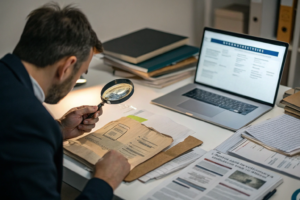
Check business licenses. In China, all registered companies have a business license with a unique registration number. Ask for a copy and verify through government websites or services like Qianzhan. The license should match the company name, address, and scope of business.
Verify physical existence. Ask for a video call showing the factory, the office, the people. Fraudsters often can't produce a convincing real-time video. Google Earth the address—does a factory actually exist there?
Check trade history. On Alibaba, look at years as a Gold Supplier, transaction history, and reviews. Off Alibaba, ask for references from other buyers, preferably in your country. A legitimate supplier can provide these.
Verify certifications. Don't just accept PDFs—check with certifying bodies as discussed in previous articles. GOTS, OEKO-TEX, and other certificates should be verifiable online.
Start small. Before placing a large order, order samples, then a small production run. Test the supplier's reliability with money you can afford to lose. Successful small orders build confidence for larger ones.
A Spanish client always visits new suppliers before placing first orders. For those who can't visit, they hire a third-party inspection company to visit and verify. The cost is minimal compared to the risk.
What Red Flags Should Stop You from Paying?
Experience teaches you to recognize warning signs. Here are red flags that should make you pause.
Pressure to pay quickly with "limited time offers." Legitimate suppliers don't create artificial urgency. Fraudsters do.
Requests to pay a different company than the one you've been dealing with. "Our bank account changed" or "pay our sister company" can be signs of fraud.
Bank accounts in different countries. A Chinese supplier should have a Chinese bank account. Accounts in Hong Kong are common and legitimate; accounts in random other countries are suspicious.
No video call availability. Suppliers who won't do video calls may be hiding something. Modern business includes video communication.
Vague answers about production capabilities. Ask detailed questions about their process. Legitimate suppliers can answer. Fraudsters get vague.
Extremely low prices. If it seems too good to be true, it probably is. Fraudsters lure with prices that can't be sustained.
A Dutch client once had a supplier who insisted on payment to a personal account in Malaysia. The "company" was supposedly in China. That single red flag saved them from a likely scam.
How Do You Verify Bank Account Details?
Even with a legitimate supplier, verifying bank details prevents costly errors.
Confirm the account name matches the company name exactly. If the company is "Shanghai Fumao Textiles Co., Ltd.," the account should be in that name or a very clear parent company. Personal accounts for business payments are suspicious.
Verify the bank is in the supplier's country. A Chinese supplier should have a bank account in China. Hong Kong accounts are common and fine—just understand they're separate.
Use bank account verification services. Some banks offer services to verify account details before sending. Small fee, large protection.
Start with a small test transfer. Send a nominal amount ($10-20) and confirm the supplier receives it before sending the full deposit. This verifies the account is active and correctly spelled.
Get account details in writing on company letterhead. Email with the company domain, not personal email. The formality adds accountability.
A US client once had a supplier's email hacked. The hacker sent new "updated" bank details. A verification call to the supplier's known phone number revealed the truth. The test transfer would have caught it too.
What Payment Terms Should You Negotiate for Knitted Fabric?
The payment terms you agree to affect both your risk and your relationship with the supplier. Here's what's reasonable to negotiate.
For new suppliers, 30% deposit, 70% balance against shipping documents is standard. The deposit covers their material costs; the balance ensures you don't pay in full before seeing proof of shipment. This is fair to both sides.
For trusted long-term suppliers, terms might improve. Some buyers move to 20% deposit, 80% balance, or even net 30 days after shipment for exceptional relationships. These terms reward trust built over time.
For large orders, progress payments can work. 20% with order, 30% when yarn is received, 30% when knitting is complete, 20% against shipping documents. This aligns payment with work completed and reduces both sides' risk.
L/C terms should specify "at sight" rather than deferred payment. You want the supplier paid when documents are presented, not 30-60 days later. "At sight" L/Cs are standard.
Always include inspection as a condition of final payment. Whether through third-party inspection or your own visit, final payment should only occur after quality verification.
A Japanese client negotiates payment terms as part of the relationship discussion. With new suppliers, they start conservatively. As trust builds, terms improve. Both sides know where they stand.
Is 30% Deposit Standard, and Can You Negotiate Lower?
30% deposit is standard in the industry, and for good reason. When we start production on your knitted fabric, we commit to buying yarn, reserving machine time, and dedicating capacity. If you cancel, we're left with materials and lost opportunity. The deposit protects us.
That said, everything is negotiable.
For small orders, deposits might be higher—50% isn't unusual because the fixed costs of production are proportionally larger.
For large orders with trusted suppliers, deposits might be lower—20% or even 10% if you have history.
For orders using standard yarns the supplier stocks regularly, deposits might be lower because your cancellation risk is smaller.
For orders with long lead times, deposits might be structured as progress payments rather than a single upfront amount.
The key is understanding why the deposit exists and negotiating from that understanding. Suppliers need protection too. A fair deposit protects both sides.
A Swedish client negotiated 20% deposit on their second order after flawless performance on the first. By the fifth order, they were at 15%. The relationship earned better terms.
What Happens If You Need to Cancel After Paying a Deposit?
Cancellation happens, though rarely. Understanding what happens to your deposit helps you make decisions.
If you cancel before production starts, the deposit typically covers the supplier's administrative costs and any materials already purchased. You might get some back if no costs were incurred, but don't count on it.
If you cancel after production starts, the deposit covers work completed. You might receive the fabric produced to date, or you might forfeit the deposit entirely if the fabric can't be sold elsewhere.
If you cancel after fabric is completed but before shipment, you typically forfeit the entire deposit and may owe additional if the fabric is custom and can't be sold to others.
The best protection is clear cancellation terms in your contract. Specify what happens to deposits at different stages. Most reputable suppliers will be reasonable, but written terms prevent disputes.
A French client had to cancel an order when their retail partner went bankrupt. They'd paid a 30% deposit, and production hadn't started. The supplier refunded 20% after deducting yarn costs. Fair outcome for both.
What Documentation Should You Receive Before Final Payment?
Before sending final payment, you should receive documentation proving your goods exist, are shipped, and meet quality standards.
Commercial invoice shows what's being shipped, quantities, and values. Verify it matches your order.
Packing list details how the goods are packed—roll numbers, lengths, weights. This helps you receive and verify the shipment.
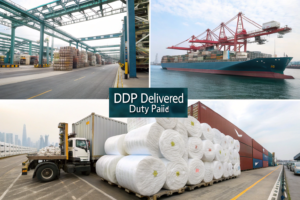
Bill of lading is the single most important document. It proves the goods have been loaded on a vessel and are on their way. The bill of lading should be in your name or "to order," giving you control of the goods.
Inspection report from a third-party inspector (or your own visit) confirms quality. This should include photos, measurements, and test results if applicable.
Certificate copies (GOTS, GRS, OEKO-TEX) if required. These should match your order specifications.
Shipping advice with vessel name, departure date, and estimated arrival.
A German client requires all these documents before releasing any final payment. If anything is missing or incorrect, payment waits until it's resolved. This discipline has prevented multiple problems.
How Do You Verify the Bill of Lading Is Real?
Bill of lading fraud exists. Scammers create fake documents for goods that don't exist. Here's how to verify.
Check the carrier's website. Most major shipping lines allow tracking by bill of lading number. Enter the number and see if the shipment details match what you've been told.
Verify the vessel's position. If the bill says the vessel sailed on a certain date, you should be able to track its current position. A bill for goods supposedly on a vessel that's actually in a different ocean is fake.
Confirm with your freight forwarder. If you're using a forwarder, they can verify the bill of lading through their systems.
Look for consistency. The shipper name, consignee, port of loading, port of discharge—all should match your order details.
Be suspicious of copies rather than originals. For L/C transactions, original bills are required. For T/T, copies are common, but you should still verify.
A UK client once received a bill of lading for goods supposedly on a vessel that had been scrapped two years earlier. A quick check revealed the fraud before payment was sent.
What Role Does Third-Party Inspection Play in Payment Protection?
Third-party inspection is your best protection against quality issues.
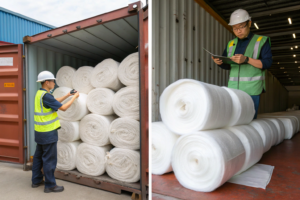
An inspector visits the factory when production is complete, before shipment. They examine the fabric against your specifications, check for defects, measure roll lengths and widths, and document everything with photos and reports.
The inspection report becomes a condition of payment. You can specify that final payment requires a satisfactory inspection report. This ensures you don't pay for fabric that doesn't meet quality standards.
Inspection companies like SGS, Bureau Veritas, and QIMA operate worldwide. They're professional, impartial, and their reports are accepted internationally.
Cost varies by shipment size but is typically a few hundred dollars—cheap insurance against a ruined order.
Timing matters. Schedule inspection when fabric is finished but before packing. Once fabric is packed in containers, inspection is much harder.
A US client had an inspection catch a color variation across rolls—different dye lots mixed together. The inspector flagged it, the supplier sorted and repacked, and the client received uniform fabric. Without inspection, they'd have discovered the problem during cutting, when it was too late.
Conclusion
Payment methods for knitted fabric range from risky (T/T with unknown suppliers) to highly protective (L/C with inspection). The right choice depends on your relationship with the supplier, the order size, and your risk tolerance.
For new suppliers, prioritize protection. Use Alibaba Trade Assurance when possible, or L/C with third-party inspection. The extra cost and paperwork are insurance against catastrophic loss.
For sample orders, use PayPal or credit cards. The fees are worth the protection, and the small amounts make it practical.
For trusted long-term suppliers, T/T with deposit and balance is reasonable—but only after the relationship has earned that trust through multiple successful orders.
Always verify suppliers before paying. Check business licenses, verify physical existence, check trade history, and start with small orders. The time invested in verification pays for itself many times over.
Always demand documentation before final payment. Commercial invoice, packing list, bill of lading, inspection report—these prove your goods exist and meet specifications.
Consider third-party inspection for any significant order. The cost is minimal compared to the risk of receiving non-conforming goods.
At Shanghai Fumao, we understand that payment is about trust. We've built our reputation on reliability over two decades, earning the trust that makes payment simple. For new clients, we recommend protected methods—Trade Assurance, L/C, or escrow—until they're comfortable. For returning clients, we offer flexible terms that reflect our history.
We provide all documentation promptly, welcome third-party inspection, and communicate transparently throughout production. Our goal is to make payment the easiest part of the transaction.
Whether you're placing your first sample order or your hundredth production order, we'll work with you to find payment terms that protect both sides and build a lasting partnership.
Contact our Business Director, Elaine, today to discuss your knitted fabric needs and payment preferences. She and her team will explain our standard terms, discuss alternatives, and help you choose the approach that gives you confidence. Email her directly at: elaine@fumaoclothing.com. Let's build a relationship you can trust.