In my two decades of running fabric mills and dealing with global brands, I've seen safety standards come and go. But when a Zara or an H&M mandates a specific certification across tens of thousands of SKUs, you pay attention. That’s the power of a benchmark—it’s the standard that defines the playing field. For apparel that touches your skin every single day, that benchmark isn’t a government regulation; it’s OEKO-TEX® Product Class II. Why? Because while governments set minimum legal floors, OEKO-TEX® Grade 2 sets a practical, commercially viable ceiling for safety that the entire industry can be measured against. It’s the point where rigorous science meets real-world manufacturing and consumer trust intersects with supply chain reality.
OEKO-TEX® Product Class II (often called “Grade 2”) is the benchmark for safe textile production because it establishes the globally accepted, scientifically defined threshold for “skin-safe” textiles. It goes beyond single-substance bans to implement a holistic, prevention-based system that covers the entire production process. Its authority comes from three pillars: 1) Scientific Rigor – independent, continuously updated research; 2) Practical Enforceability – a clear audit and certification system for factories; and 3) Universal Recognition – trusted by brands, retailers, and consumers worldwide as the definitive mark of safety for everyday wear.
Think of it like a food safety standard (e.g., HACCP) for your clothes. It doesn’t just test the final “meal” for poison; it monitors the entire “kitchen”—the ingredients (chemicals), the chefs’ hygiene (worker safety), and the cleaning process (environmental impact)—to ensure nothing harmful is introduced in the first place. For any brand serious about safety, meeting this benchmark isn’t optional; it’s the cost of entry into the modern marketplace. Let’s break down what, specifically, elevates this particular grade to its iconic status.
What Scientific Principles Underpin Grade 2's Authority?
The benchmark status of Grade 2 isn’t arbitrary; it’s built on a foundation of toxicology and real-use scenarios. The OEKO-TEX® association’s research is conducted by independent institutes like Hohenstein and TESTEX. Their work answers a critical question: “At what concentration does a substance become harmful under conditions of prolonged, direct skin contact?” This is different from asking if a substance is simply “present.”
Grade 2’s limit values are based on:
- Bio-availability: Can the substance be released from the fabric (through sweat, saliva, friction) and be absorbed by the skin?
- Cumulative Exposure: A person wears multiple garments for 16+ hours a day, every day. The standards consider this aggregate exposure, not just a single item in isolation.
- Sensitivity of Adult Skin: While stricter than Class III/IV, it’s calibrated for healthy adult skin, acknowledging different risk levels than for babies (Class I).
- The Precautionary Principle: If there is credible scientific suspicion about a substance’s harm, it can be restricted even before it is globally regulated. This keeps the standard ahead of legislation.
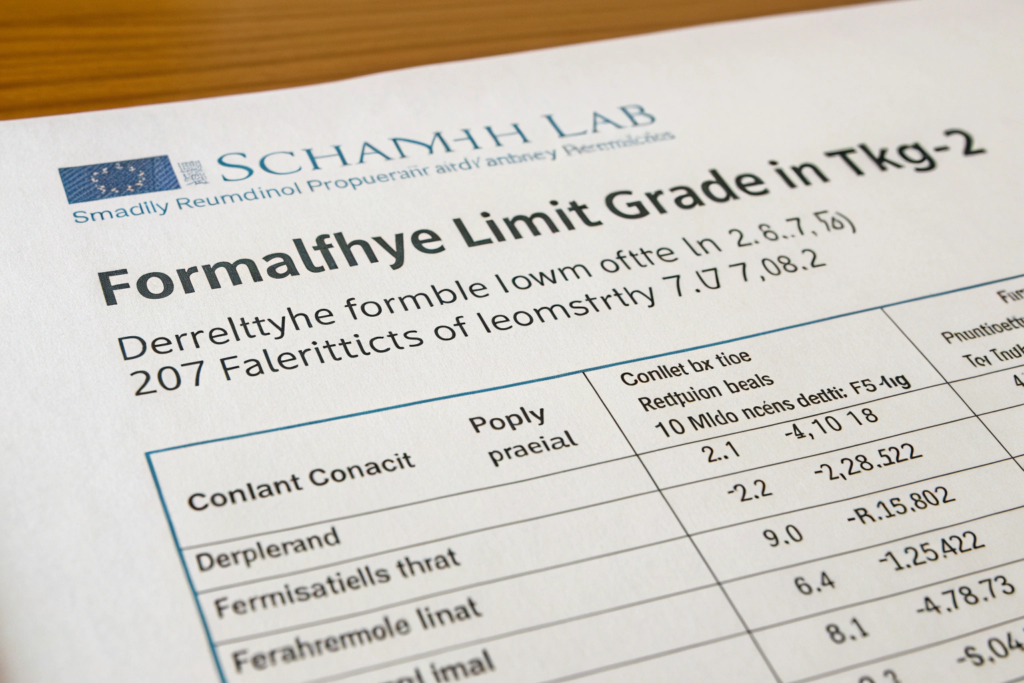
For example, the limit for formaldehyde in Grade 2 is 75 mg/kg. This isn’t a random number. It’s set below the threshold known to cause allergic contact dermatitis in the majority of the population under conditions of textile wear. In our own lab at Shanghai Fumao, when we test a fabric and see a result of 10 mg/kg, we know it’s not just “low,” it’s scientifically insignificant for causing skin reactions. This scientific backing is what allows brands to make the claim “safe for skin” with confidence. For those interested in the toxicology, resources like the Research Journal of Textile and Apparel publish peer-reviewed studies on substance migration.
How are the test methods and limits updated?
This is key to its benchmark status—it’s a living standard. The OEKO-TEX® Standard 100 is updated at least once a year. New scientific findings, changes in global regulations (like EU REACH SVHC updates), and emerging substance groups (like certain PFAS) are incorporated. As a certified manufacturer, we receive these updates and must ensure our processes comply. This means a fabric certified in 2023 meets a different, often stricter, set of criteria than one certified in 2020. It forces continuous improvement. A great public resource to track regulatory changes that influence these updates is Chemical Watch.
Why is the focus on "regulated substances" so powerful?
Grade 2 tests for over 100 individual regulated substances across groups: banned carcinogenic dyes, allergenic disperse dyes, heavy metals, pesticides, chlorinated phenols, and more. This comprehensive panel is what makes it a benchmark. A brand could test for lead and call it “lead-free,” but miss allergenic dyes. OEKO-TEX® Grade 2 provides a one-stop, holistic safety check. It answers the consumer’s unspoken worry: “What bad stuff could be in here?” with a definitive scan.
How Does Its Implementation Create a Tangible "Gold Standard"?
A standard is only as good as its enforcement. Grade 2 becomes a gold standard because of its three-tiered implementation model that turns theory into factory-floor reality.
- Certification of the Product: The final article is tested by an independent institute. This is the proof.
- Certification of the Production Site (de facto requirement): To reliably produce certified goods, mills must implement a Chemical Management System (CMS) and often pursue STeP certification. This ensures the process is safe, not just one lucky batch.
- Ongoing Market Surveillance: OEKO-TEX® conducts random tests on certified products pulled from retail shelves globally. If a product fails, the certificate is revoked. This keeps everyone honest.
In practice, this means when you walk into our partner dyeing factory, you see:
- Color-coded barrels with clear labels (part of the CMS).
- PPE stations for workers handling chemicals.
- Wastewater pH meters with real-time logs.
- A dedicated “OEKO-TEX® only” production line for certified orders, to prevent cross-contamination.
This tangible system is why a buyer from a German brand can visit us and, within an hour, verify that our “benchmark” is operational, not just theoretical. It’s auditable reality. For a deep dive into world-class manufacturing systems, industry reports from McKinsey on operational excellence often highlight such integrated control points.

What is the role of the "Approved Chemical List" in maintaining the benchmark?
This is the single most important control point. We cannot use any chemical that hasn’t been vetted and approved by our certification body for use in OEKO-TEX® production. Our chemical suppliers must provide full disclosure. This shifts responsibility upstream to the chemical industry itself, creating a cleaner supply chain at the source. It eliminates the “mystery additive” that could cause a failure. Maintaining this list is a daily discipline, a core part of what makes Grade 2 a reliable benchmark.
How does this compare to a brand conducting its own lab tests?
Brand testing is reactive and fragmented. You test a sample from a batch. It’s a snapshot. The OEKO-TEX® system is proactive and systemic. It certifies the production capability. It’s the difference between testing a glass of water from a tap versus certifying the entire water treatment plant and distribution pipeline. The latter guarantees the safety of every glass that comes out. That’s benchmark-level assurance.
Why Has Grade 2 Become the Default for Global Brands and Retailers?
Market adoption creates a benchmark. Grade 2 has become the default because it solves a critical business problem for global brands: How to efficiently ensure the safety of millions of garments sourced from hundreds of factories across multiple countries? Developing and enforcing a proprietary standard is prohibitively expensive and complex. OEKO-TEX® provides a trusted, off-the-shelf solution.
- Efficiency in Sourcing: A brand’s sourcing team can simply mandate “OEKO-TEX® ST 100, Class II” in their technical specifications. Every supplier, from Vietnam to Turkey to China, understands exactly what that means and how to achieve it (or knows they can’t). It creates a common language.
- Risk Transfer: By requiring certification, the brand transfers a significant portion of legal liability for product safety to the certified manufacturer and the testing institute. The certificate is a key piece of due diligence.
- Consumer Trust & Labeling: The label is instantly recognizable. It’s a marketing asset that requires no explanation in key markets like Europe and Japan. It shortens the consumer’s decision journey.
A major UK fast-fashion retailer we supply provides a clear example. Around 2018, they shifted their entire basicwear collection (tees, underwear, socks) to a Grade 2 requirement. For us, it meant scaling up our certified cotton jersey production. For them, it meant they could launch a prominent “Trusted & Tested” marketing campaign across all stores and online, with a consistent message backed by a third party. Their customer complaints related to skin irritation on those categories dropped by over 60% within two years. When success stories like this scale, the standard becomes the industry norm. Analysis on retailer private label sourcing strategies often cites OEKO-TEX® as a key compliance pillar.

How does this affect pricing and competitiveness?
It creates a two-tier market. Factories that can efficiently meet the Grade 2 benchmark (like us, through integrated control) gain access to premium, stable orders from top brands. Factories that cannot are relegated to the lower-margin, more volatile commodity market. The benchmark, therefore, drives consolidation towards more professional, better-capitalized manufacturers. For brands, it means paying a slight premium (5-15%) for fabric, but in return receiving de-risked supply and a marketable asset. The cost is an investment in brand integrity.
What is the role of retailers in cementing this benchmark?
Retailers are the ultimate gatekeepers. When Walmart, Target, Decathlon, and Mango all include OEKO-TEX® Grade 2 in their sourcing manuals, it ceases to be an option. Their vast purchasing power forces the standard down through multiple tiers of the supply chain. This commercial pressure is what truly solidifies a benchmark. We see this when a fabric trim supplier we’ve never used before calls us and says, “We need to get certified because our client’s client is a major retailer requiring it.” The ripple effect is enormous.
How Does This Benchmark Drive Continuous Improvement in the Industry?
A static standard becomes obsolete. The true power of Grade 2 as a benchmark is its role as an engine for gradual, systemic improvement across the global textile industry.
- Tightening Limits: As mentioned, annual updates slowly but surely tighten limit values for existing substances. This forces chemical suppliers to innovate cleaner alternatives and manufacturers to refine their processes. It’s a gentle but persistent ratchet moving the entire industry toward cleaner production.
- Raising the Floor: As more factories get certified to service brand demand, the baseline level of chemical safety and environmental awareness across the manufacturing sector rises. Poorly managed, polluting mills find themselves locked out of major business.
- Spillover Effects: The chemical management and wastewater treatment practices required for Grade 2 production have positive effects even for a factory’s non-certified lines. It upgrades their overall operational discipline.
From our vantage point in Keqiao, we see this firsthand. Five years ago, OEKO-TEX® was a niche for export-focused factories. Today, driven by brand demand, it’s becoming commonplace. Our local dyeing chemical suppliers now lead with “OEKO-TEX® approved” versions of their products. The benchmark has pulled the entire local ecosystem upward. This kind of industry-wide transformation is discussed in reports from platforms like The Sustainable Apparel Coalition.

What's next after Grade 2? How does the benchmark evolve?
The benchmark is already evolving beyond safety towards comprehensive responsibility. This is seen in the rise of:
- MADE IN GREEN: Combining safety (ST 100) with responsible production (STeP) and traceability. This is becoming the new benchmark for holistic sustainability.
- ECO PASSPORT: Certifying chemicals themselves as safe and sustainable, further securing the very front of the supply chain.
- DETOX TO ZERO: A tool helping factories measure and achieve the Zero Discharge of Hazardous Chemicals (ZDHC) commitment.
The journey starts with Grade 2 safety, but it doesn’t end there. Grade 2 is the foundational, non-negotiable layer upon which more advanced sustainability claims are built.
Conclusion
OEKO-TEX® Product Class II is the benchmark for safe textile production because it successfully merges uncompromising science with commercial pragmatism. It provides a clear, enforceable, and globally recognized target that aligns the interests of consumers, brands, and responsible manufacturers. It’s more than a test; it’s a system that upgrades supply chains from within, driving continuous improvement and consolidating market share around quality and responsibility. In a world awash with green claims, this benchmark cuts through the noise with authoritative clarity.
For a brand, partnering with a manufacturer who doesn’t just meet this benchmark but is engineered around it—like Shanghai Fumao—is the most decisive step you can take to secure your product integrity and your brand’s future. The benchmark is set. The question is, are you working with a supplier who treats it as the minimum, or as the core of their philosophy? Let’s build to the highest standard, together. Contact our Business Director, Elaine, to begin: elaine@fumaoclothing.com.