I still remember the phone call. It was 2019. A client from Paris, a designer for a high-end fashion house, said to me: “I need a fabric that no one else has. I’ve seen everything in the mills. I need something rare.”
That word—rare—stopped me. In this industry, we deal in volume. We measure in thousands of yards. We optimize for efficiency. Rare is the opposite of everything we usually do.
But I understood what she meant. She wasn’t looking for expensive for the sake of expensive. She was looking for distinctive. She was looking for a fabric with a story, a fabric that would make her collection stand out in a crowded market. She was looking for something that her competitors couldn’t copy.
Over the past 20 years at Shanghai Fumao, I’ve learned that “rare” fabrics fall into several categories. Some are rare because of the fiber—an unusual animal or plant that produces limited quantities. Some are rare because of the production method—a traditional technique that few artisans still practice. Some are rare because of the combination—a blend or structure that no one has thought to try before.
Let me walk you through what makes a fabric truly rare and how you can source it. I’ll share real examples from our own sourcing adventures, the challenges we’ve overcome, and the lessons we’ve learned about finding the extraordinary in an industry built on the ordinary.
What Are the Different Types of Rarity in Fabric?
Rarity is not one thing. It comes in different forms. Understanding these categories helps you know where to look and what to expect.
Fiber Rarity: What Makes a Fiber Rare?
Some fibers are rare because of the animal or plant they come from. Limited supply. Difficult harvesting. Remote geography.
Wild Silk (Eri, Muga, Tussar)
Unlike cultivated mulberry silk, wild silkworms feed on natural vegetation and produce silk in smaller quantities. Muga silk from Assam, for example, has a natural golden color that can’t be bleached or dyed. It’s produced only in one region of India. Annual production is tiny.
In 2021, a client from Japan asked us to source Muga silk for a luxury collection. It took us six months to find a reliable supplier. The fabric cost 10x what normal silk costs. But the client’s collection sold out. The rarity was the story.
Yak Down and Camel Hair
Yak down is softer than cashmere and warmer than wool. It comes from the undercoat of yaks in the Himalayan region. Each yak produces only about 100 grams of usable down per year. Camel hair is similar—only the soft undercoat from Bactrian camels, combed out during molting season.
We worked with a client from Canada in 2022 who wanted a yak down-cashmere blend for a line of luxury scarves. We sourced the yak down from a cooperative in Tibet. The fabric had a handfeel that was unlike anything else in their collection. They charged $450 per scarf and sold every one.
Hemp from Specific Regions
Hemp itself isn’t rare. But hemp from certain regions has unique properties. Romanian hemp has longer fibers and a silvery color. Chinese hemp from the Yellow River region has a particular softness. These regional variations are rare.
A client from Italy in 2023 wanted Romanian hemp for a summer suiting collection. We had to work directly with a small mill in Transylvania. The fabric had a natural luster that Chinese hemp didn’t have. The client paid a premium. Their customers noticed the difference.
Production Rarity: What Makes a Process Rare?
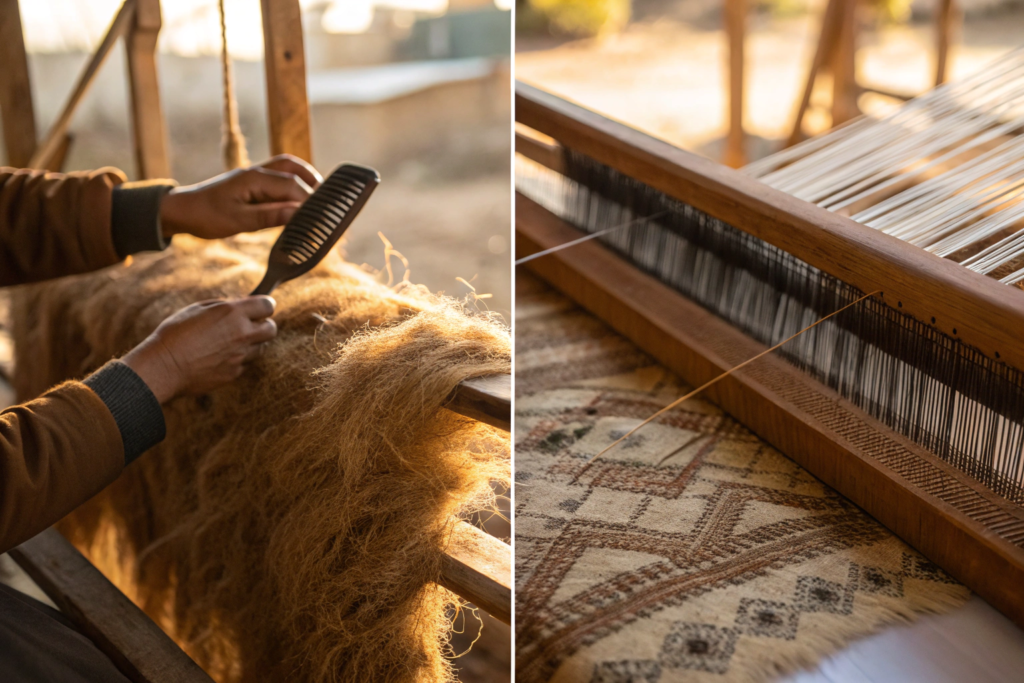
Some fabrics are rare not because of the fiber but because of how they’re made. Traditional techniques that machines can’t replicate. Hand processes that are slow and expensive.
Handloom Weaving
Machine-made fabric is consistent. Handloom fabric has variations—small irregularities in the weave, subtle shifts in color. These imperfections are what make it beautiful. But handloom weaving is slow. A skilled weaver might produce 5-10 meters per day. A machine produces 500.
In 2020, a client from the US asked us for handloom cotton for a line of resort wear. We found a weaving cooperative in West Bengal. The fabric had a texture that no power loom could replicate. The client produced only 200 garments. They sold them for $400 each. The customers knew they were buying something special.
Natural Dyeing
Most fabric today is dyed with synthetic chemicals. Natural dyeing—using indigo, madder root, cochineal, walnut husks—is rare. The colors are softer and less predictable. The process is labor-intensive. But the result has a depth that synthetic dyes can’t match.
We have a client from Sweden who insists on natural indigo for their denim. The color fades differently than synthetic indigo. It develops a patina over time. Each garment becomes unique. The client tells their customers, “Your jeans will age with you.” That’s a powerful story.
Antique Techniques (Shuttle Loom, Hand Embroidery)
Shuttle looms are slower than modern air-jet looms. But they produce a fabric with a different handfeel—slightly softer, with a more rounded yarn. Hand embroidery, whether Chinese silk embroidery or Indian zardozi, is incredibly rare and expensive.
In 2022, we sourced hand-embroidered silk panels from Suzhou for a client in London. Each panel took an artisan two weeks to complete. The client used them for a capsule collection of evening wear. The garments started at $5,000. They sold to collectors, not casual shoppers.
Combination Rarity: What Makes a Blend or Structure Rare?
Sometimes rarity comes from putting things together in a new way. A blend that no one has tried. A weave structure that’s technically difficult.
Unusual Blends
Silk and stainless steel. Cotton and copper. Wool and carbon fiber. These blends are rare because they’re hard to produce. The different fibers have different properties. They want to separate during spinning. They react differently to dyes.
We worked with a client from Germany in 2023 on a copper-blend fabric for anti-static workwear. The development took six months. The yarn broke constantly during spinning. The dyeing was unpredictable. But the final fabric worked. The client has a unique product that no competitor can easily copy.
Complex Weave Structures
Most woven fabrics are plain weave, twill, or satin. Rare fabrics use more complex structures. Three-dimensional weaves. Multi-layer weaves. Weaves that create patterns without printing.
We developed a three-layer jacquard for a client from Japan in 2022. The fabric had different colors on each face and a different pattern in the middle. It took our technicians two months to program the loom. The client used it for a limited edition jacket. They made 50 pieces. Each sold for $2,500.
Where Do You Find Rare Fabrics?
Finding rare fabrics is not like ordering stock jersey. You can’t just send an email and get a quote. You have to search. You have to build relationships. You have to be willing to go where the fabric is.
Why Is Keqiao Still the Best Place to Search?
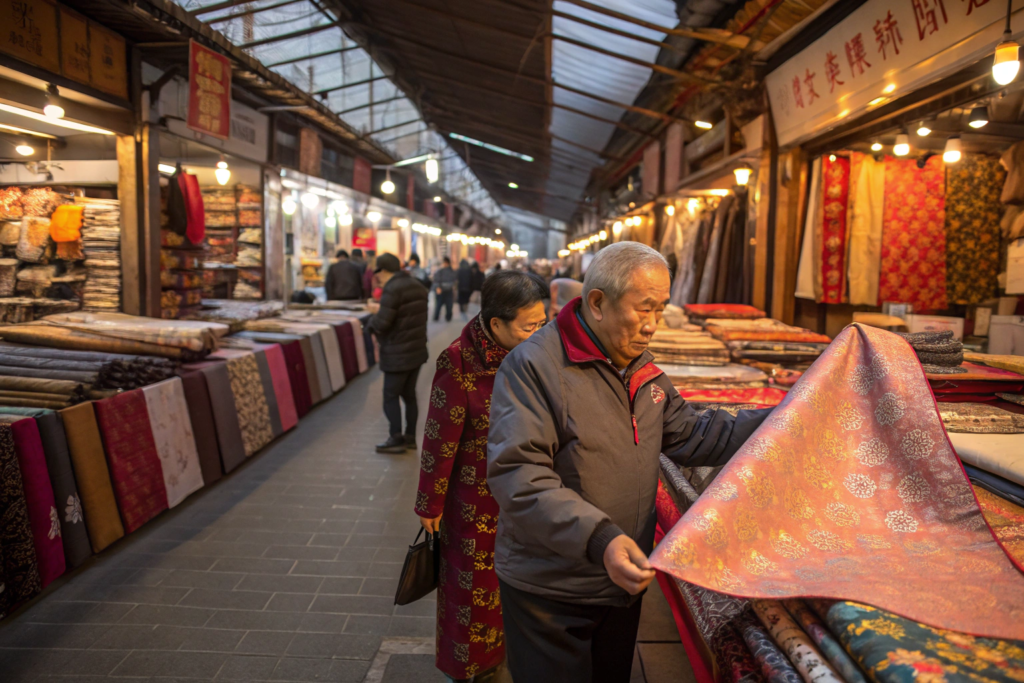
I’m biased, of course. But hear me out. Keqiao is the world’s largest textile cluster. That means more variety. More small mills. More weird experiments. The big mills produce volume. The small mills produce everything else.
In Keqiao, I can walk into a small weaving workshop and find fabric made on looms from the 1980s. I can find a dyehouse that still uses natural indigo. I can find a supplier who imports yak down from Tibet and blends it with silk from Suzhou.
A client from New York visited us in Keqiao in 2023. He wanted to find a rare linen for a collection. We spent two days walking through the smaller markets, not the big showrooms. He found a linen made from flax grown in a specific region of Normandy, woven on antique looms in China. He told me, “I would never have found this on Alibaba. I had to be here.”
That’s the truth about rare fabrics. You can’t source them from a website. You need feet on the ground.
How Do You Build Relationships with Small Mills?
Rare fabrics come from small producers. Small producers don’t have sales teams. They don’t have websites. They have one old guy who knows where everything is. You need to find that guy.
We’ve spent 20 years building relationships with these small mills. We know who weaves the best handloom cotton. We know who still has a working shuttle loom. We know who can source wild silk from Assam.
These relationships are built on trust. You don’t walk in and place an order. You walk in and talk. You show respect for their craft. You pay on time. You come back.
In 2021, we needed a small run of naturally dyed indigo fabric for a client. Our regular dyeing partner couldn’t do it. So we called an old contact who runs a small traditional dyehouse. He agreed to do the run—400 meters—because we had worked with him for years. If we had been a new customer, he would have said no.
What About Trade Shows and Specialized Fairs?
Trade shows are another source. But not the big ones like Magic or Première Vision. Those are for volume. For rare fabrics, you need smaller, specialized fairs.
Première Vision has a “Smart Creation” section for sustainable and innovative fabrics. We’ve found interesting things there. But the real discoveries happen at regional fairs. In India, there’s a fair for handloom textiles. In Japan, there’s a fair for traditional indigo. In Peru, there’s a fair for alpaca.
A client from Australia found a rare alpaca-cotton blend at a fair in Arequipa. He connected with a small mill there. Now he sources directly from them. He told me, “I spent three years looking for that fabric. I found it because I went to the right fair and asked the right questions.”
How Do You Verify That a Fabric Is Truly Rare?
Rarity can be faked. I’ve seen suppliers claim “handloom” when it’s actually machine-made with a distressed finish. I’ve seen “wild silk” that’s just ordinary mulberry silk with a slub yarn. You need to verify.
What Lab Tests Can Confirm Rarity?
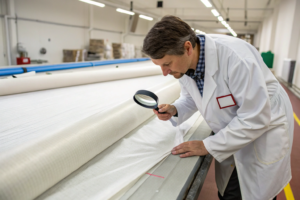
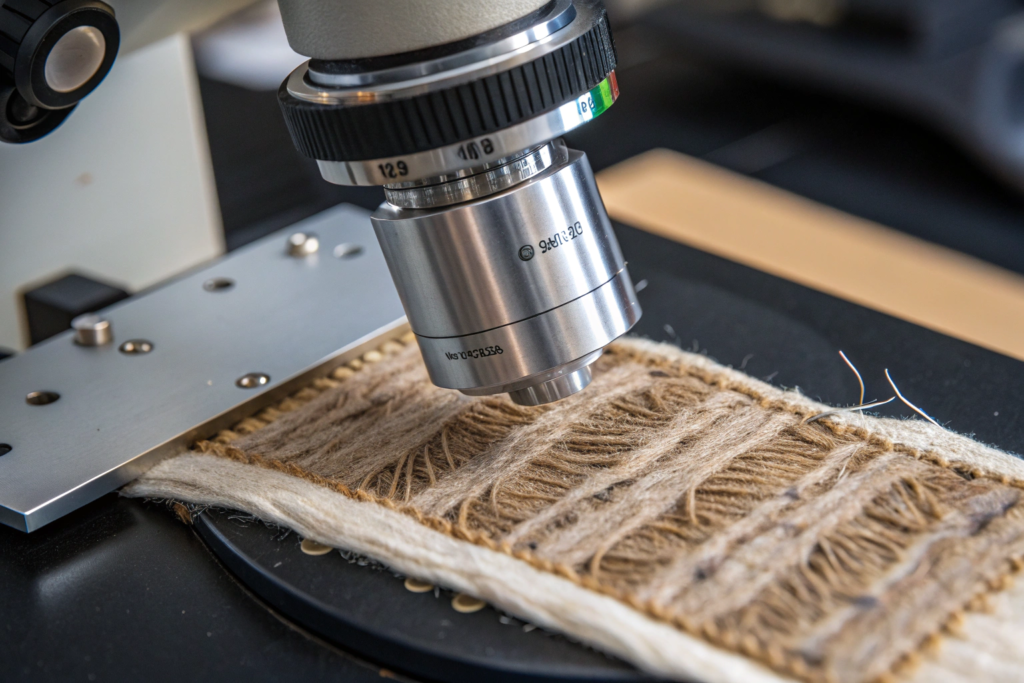
Our CNAS-accredited lab can run tests that help verify rare claims.
Fiber Identification
Microscopy can identify the fiber type. Yak down has a different scale pattern than cashmere. Wild silk has a different cross-section than cultivated silk. These tests can confirm that the fiber is what the supplier claims.
Elemental Analysis
For unusual blends like copper or stainless steel, we can run elemental analysis to confirm the metal content. A client once brought us a fabric claimed to be “silver-infused.” The test showed no silver. The supplier was lying.
Dye Analysis
For natural dyes, we can run chromatography to identify the dye compounds. Indigo from a plant has a different chemical signature than synthetic indigo. Madder root is different from synthetic red.
In 2022, a client from the US asked us to verify a supplier’s claim of “natural indigo.” We ran the test. It was synthetic. The client canceled the order. They told me, “I would have been embarrassed if my customers found out. Your lab saved me.”
What Questions Should You Ask the Supplier?
Beyond lab tests, you need to ask the right questions.
- Where does the fiber come from? A specific region? A specific farm?
- How much is produced annually? Real rarity has small volumes.
- Who does the weaving or dyeing? Can you visit the workshop?
- What’s the lead time? Rare fabrics often require waiting for production cycles.
- Can you provide samples of the raw fiber? Seeing the raw material tells you a lot.
A client from Canada told me, “I ask every supplier for photos of their production process. The ones who send generic photos are hiding something. The ones who send specific photos of their actual workshop are usually telling the truth.”
What’s the Difference Between Rare and Just Expensive?
This is important. Some suppliers will try to sell you ordinary fabric at a high price and call it rare. Don’t fall for it.
A rare fabric has a story. It comes from a specific place or a specific process. The story is verifiable. You can trace it back.
An expensive fabric might just be a standard fabric with a high markup. There’s no story. No traceability. No verification.
A client from London told me about a supplier who claimed to have “rare Mongolian cashmere.” The price was 3x normal. My client asked for the source. The supplier couldn’t provide it. My client walked away. He later found the same cashmere from another supplier at the normal price.
What Are the Challenges of Working with Rare Fabrics?
Rare fabrics come with challenges. If you’re used to ordering standard fabrics with predictable lead times and consistent quality, rare fabrics will test your patience.
How Do You Handle Inconsistent Quality?
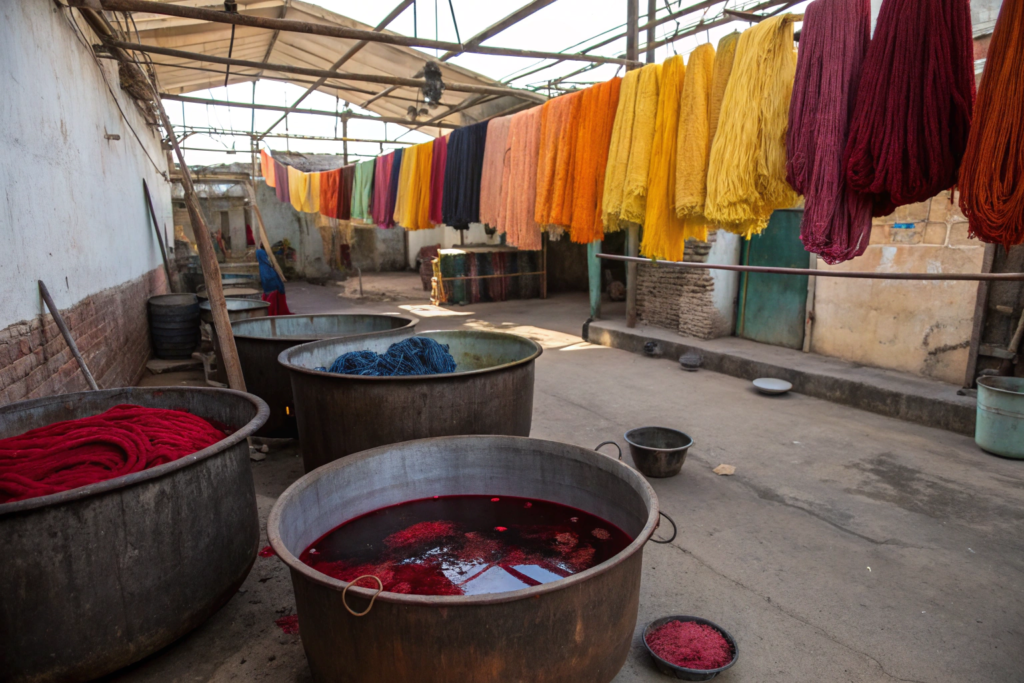
Rare fabrics are often inconsistent. Handloom fabric has variations. Naturally dyed fabric has color differences between batches. That’s part of the appeal. But it’s also a challenge for production.
If you’re making 100 garments, you need the fabric to be consistent enough that the garments look like a collection. Not identical—that’s the point of rare—but not wildly different.
We advise our clients to order extra yardage. For a standard fabric, we recommend 5-10% overage. For a rare fabric, we recommend 15-20%. The extra cost is worth avoiding a shortage.
A client from the US learned this in 2021. They ordered handloom cotton for a 500-piece collection. They ordered exactly 500 pieces worth of fabric. When they started cutting, they found that some panels were slightly different shades. They didn’t have enough fabric to recut. They had to reduce the collection size. Now they always order 20% extra.
How Do You Manage Longer Lead Times?
Rare fabrics take longer to produce. The small mill might only run the loom for one week per month. The natural dyeing process might take weeks instead of days. The artisan might be working on other projects.
You need to plan ahead. For a standard fabric, we quote 4-6 weeks. For a rare fabric, we quote 12-16 weeks as a starting point. Sometimes longer.
A client from Germany wanted a hand-embroidered silk for a gala dress. The embroidery alone took 8 weeks. The total lead time was 20 weeks. She planned her collection 6 months in advance. The dress was the star of her show. The wait was worth it.
What About Minimum Order Quantities?
Small mills have different MOQs than large factories. Some will do 100 meters. Some won’t do less than 500 meters. Some require you to buy the entire batch of whatever they’re producing.
We’ve learned to ask these questions early. “What’s your minimum?” “Can you do a smaller run at a higher price?” “Do you have stock from a previous run?”
In 2023, we found a supplier of wild silk who only produced in 200-meter batches. A client wanted 50 meters for a sample collection. We negotiated. The supplier agreed to sell 50 meters at a 50% premium. The client paid it. They used the sample collection to raise funding. Then they ordered the full 200 meters for production.
Conclusion
A truly rare fabric is more than just expensive. It has a story. It comes from a specific place or a specific process. It can’t be easily copied. And it makes your collection stand out in a world of sameness.
At Shanghai Fumao, we’ve spent 20 years building the relationships and the expertise to source rare fabrics. We know the small mills in Keqiao. We know the weavers in India. We know the dyers in Japan. We know how to verify claims with lab tests. And we know how to manage the challenges of inconsistent quality, long lead times, and unusual minimums.
We don’t source rare fabrics for every client. Most of our clients want reliable, consistent, affordable fabric for their core collections. But for the clients who need something extraordinary—who need a story, who need to stand out, who need a fabric that no one else has—we can deliver.
If you’re looking for a fabric that’s truly rare, I want you to reach out to our Business Director, Elaine, at elaine@fumaoclothing.com. Tell her what you’re imagining. Send her photos, sketches, references. She’ll talk to our network of small mills and artisan workshops. She’ll find you something you won’t find anywhere else.
The ordinary is easy. The rare takes work. But the rare is what people remember. Let us help you create something unforgettable.