You’ve ordered your fabric. Production is complete. The rolls are packed. Now comes the part that makes many buyers nervous: shipping. Especially DDP shipping, where the supplier handles everything including customs and duties. You’re not managing the freight forwarder. You’re not filing customs forms. But you still need to understand the documents.
Why? Because if a document is missing or incorrect, your fabric sits at the port. Days turn into weeks. Your factory is waiting. Your launch date is slipping.
At Shanghai Fumao, we ship fabric DDP to over 100 countries. We’ve learned exactly which documents are needed for each destination. We’ve made our share of mistakes. We’ve had shipments delayed because of a missing commercial invoice copy. We’ve had customs holds because of an incorrect harmonized code.
Let me walk you through exactly what logistics documents you need for DDP fabric shipping. I’ll cover each document, why it matters, what information goes on it, and what can go wrong.
What Is DDP Shipping and How Does It Change Documentation?
Before we dive into the documents, let’s clarify what DDP means for documentation. Under DDP (Delivered Duty Paid), the supplier is responsible for everything. Freight. Insurance. Export clearance. Import clearance. Duties. Taxes. Delivery to your door.
That means we prepare most of the documents. You don’t need to hire a customs broker. You don’t need to pay duties at the port. You don’t need to file any forms.
But you still need to receive and review documents. You still need to provide some information upfront. And you still need to understand what each document does, so you can catch errors before they cause delays.
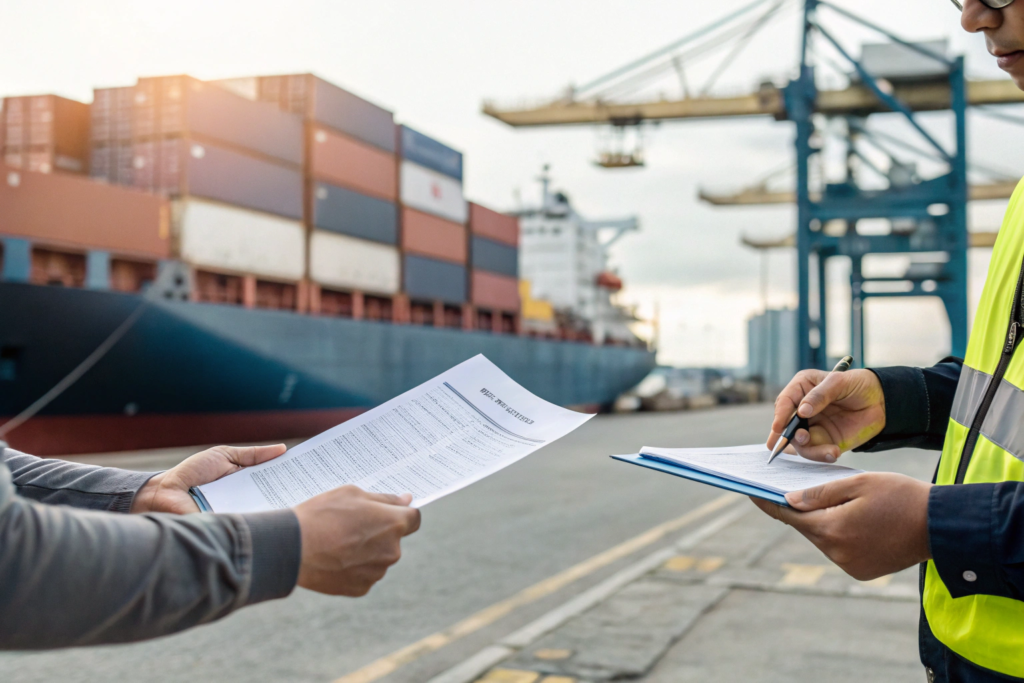
Who Prepares Which Documents?
Here’s a simple breakdown:
| Document | Prepared By | Reviewed By Buyer? | Filed By |
|---|---|---|---|
| Commercial Invoice | Supplier | Yes | Supplier’s customs broker |
| Packing List | Supplier | Yes | Supplier’s customs broker |
| Bill of Lading | Freight forwarder | Yes | Supplier |
| Certificate of Origin | Supplier or chamber of commerce | No | Supplier’s customs broker |
| Fabric Test Reports | Supplier | Yes (if required) | Supplier |
| Import License (if needed) | Buyer | N/A | Buyer |
| Duty Payment Proof | Supplier’s customs broker | No | Broker |
A client from the US once asked us, “Do I need to do anything for customs?” Under DDP, no. We handle everything. But we still send him copies of all documents so he has a record. His accounting department needs the commercial invoice. His legal department needs the bill of lading.
What Information Do You Need to Provide?
Even though we prepare the documents, we need information from you. Provide this information accurately and early, or documents will be delayed.
- Legal company name and address (exactly as it appears on your business license)
- Tax ID or EIN number (for US shipments)
- Contact person and phone number at the destination
- Harmonized code (if you know it; if not, we will determine it)
- Any special import requirements (licenses, permits, certifications)
In 2023, a client from Canada provided an incorrect company name on the commercial invoice. The name on the invoice didn’t match the name on their import bond. Customs held the shipment for 5 days. We had to issue a corrected invoice. The client missed his production window. Now we always double-check the legal name before we issue documents.
What Are the Essential Documents for DDP Fabric Shipping?
Let me walk through each essential document. I’ll tell you what goes on it, why it matters, and what mistakes to avoid.
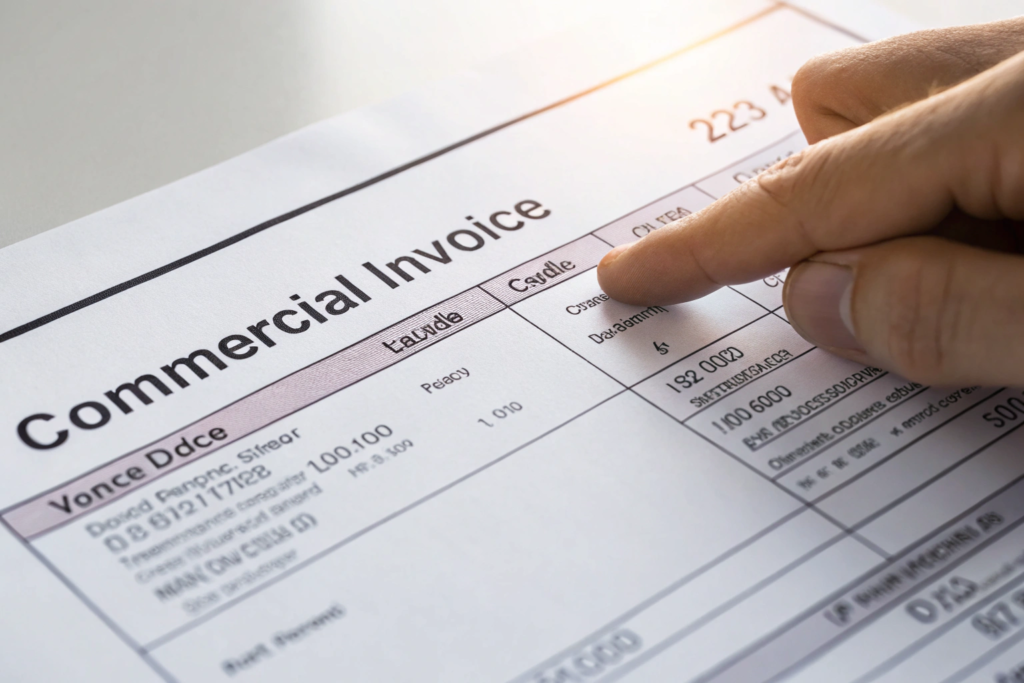
The Commercial Invoice: Why Is It the Most Important Document?
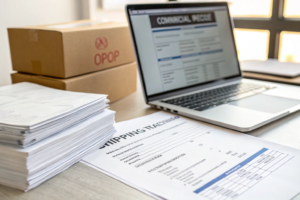
The commercial invoice is the master document. Customs uses it to assess duties. The buyer uses it to pay. The freight forwarder uses it to release the cargo.
For DDP fabric shipping, the commercial invoice must include:
- Seller and buyer information (legal names, addresses, tax IDs)
- Invoice date and number
- Incoterm (DDP, with named place of delivery)
- Description of goods (fabric type, fiber composition, weight, width)
- Harmonized System (HS) code (the tariff classification number)
- Quantity (rolls, yards, meters, kilograms)
- Unit value and total value
- Country of origin (China)
- Currency
- Reason for export (sale, sample, return)
The most common mistakes on commercial invoices:
-
Incorrect HS code. This is the biggest risk. An incorrect code can lead to the wrong duty rate. If the duty rate is too low, customs may assess a penalty. If it’s too high, you pay more than you should.
-
Missing country of origin. Without “China” on the invoice, customs may reject the shipment.
-
Value mismatched with packing list. If the total value on the invoice doesn’t match the total value on the packing list, customs will hold the shipment.
-
Vague description. “Fabric” is not enough. “100% cotton woven twill, 200gsm, 58 inch width” is better.
In 2022, we shipped a container of polyester fabric to the US. Our commercial invoice had the HS code for cotton fabric. The duty rate for cotton was higher than for polyester. We overpaid duties by $2,000. We didn’t catch the mistake until after the shipment cleared. We had to file a post-entry correction. It took 6 months to get the refund. Now we have a dedicated person who checks every HS code before an invoice is issued.
The Packing List: What Details Does Customs Need?
The packing list describes how the goods are packed. It tells customs what’s inside each carton. It tells the freight forwarder how to handle the shipment.
For DDP fabric shipping, the packing list must include:
- Same seller and buyer information as the commercial invoice
- Invoice number (to link the two documents)
- Number of cartons or rolls
- Gross weight and net weight (in kilograms)
- Dimensions of each carton (length x width x height, in centimeters)
- Contents of each carton (fabric type, color, roll numbers)
- Total number of cartons
The most common packing list mistakes:
-
Weight discrepancies. If the packing list says 1,000kg and the actual weight is 1,100kg, customs may suspect something is wrong. They may inspect the shipment. Inspection adds 3-7 days.
-
Missing carton numbers. If there are 20 cartons but only 19 are numbered, the freight forwarder may think a carton is missing. They will search. The shipment is delayed.
-
Inconsistent units. Mixing kilograms and pounds, or meters and yards, causes confusion.
We weigh every carton on a calibrated scale. We record the weight on the packing list. We also take a photo of the scale reading. If customs questions the weight, we have proof.
The Bill of Lading: What Type Do You Need for DDP?
The bill of lading is the contract between the shipper and the carrier. It’s also the document of title. Whoever holds the bill of lading owns the goods.
For DDP shipping, the supplier usually arranges the bill of lading. But you need to understand the different types.
Sea Waybill (Express Bill)
This is the most common for DDP. It’s electronic. No physical document is needed. The cargo is released to the consignee based on identification, not on a paper document. Fast and simple.
Original Bill of Lading
This is a physical document. It must be sent to the buyer (or the buyer’s broker) before the cargo can be released. Slower. Riskier (if the document is lost). Usually not used for DDP.
Telex Release
The carrier agrees to release the cargo without the original bill of lading. The shipper sends a telex (electronic message) authorizing release. Common for DDP shipments.
For DDP, we always use a Sea Waybill or Telex Release. We want the cargo to move smoothly without paper documents getting lost.
The bill of lading must include:
- Shipper (Shanghai Fumao)
- Consignee (your company, or your customs broker for DDP)
- Notify party (usually the same as consignee)
- Vessel name and voyage number
- Port of loading (e.g., Shanghai, Ningbo)
- Port of discharge (e.g., Long Beach, New York)
- Container number and seal number
- Description of goods (summary, not as detailed as the commercial invoice)
- Gross weight and total cartons
A client from the UK once asked for an Original Bill of Lading for a DDP shipment. We explained that it wasn’t necessary. He insisted. We sent the document by courier. It got lost in transit. The cargo sat at the port for 10 days while we arranged a replacement. Now we always explain the options and recommend the fastest method.
What Supporting Documents Might Be Required?
Beyond the three essential documents, some shipments require supporting documents. These depend on the destination country and the type of fabric.
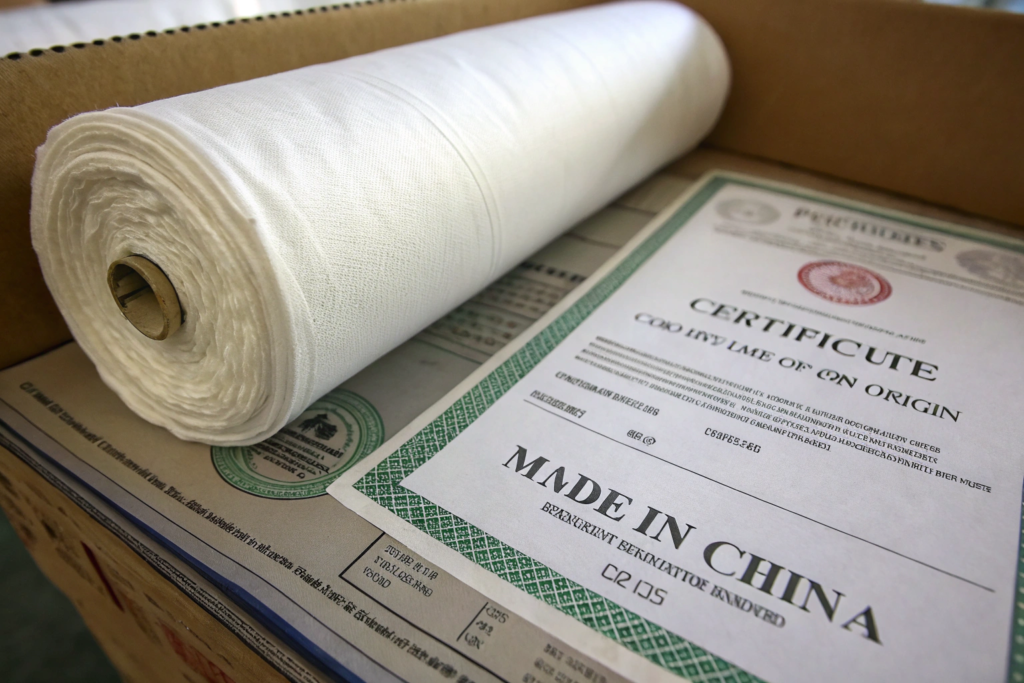
Do You Need a Certificate of Origin?
A Certificate of Origin (CO) proves where the fabric was made. Some countries require it for tariff purposes. Others don’t.
For fabric from China shipped to:
-
United States: Not required for most fabrics, but can be used to claim certain trade program benefits. For DDP, we usually don’t provide one unless the buyer asks.
-
European Union: Required for some fabrics to prove origin for tariff calculations. For DDP to the EU, we provide a CO for most shipments.
-
Canada, Australia, Japan: Sometimes required, depending on the fabric and the trade agreement.
The CO can be issued by the Chamber of Commerce. It takes 1-2 days to get one. If your shipment needs a CO, tell us when you place the order. Don’t wait until the container is at the port.
In 2023, we shipped a container of wool fabric to Italy. The buyer didn’t tell us he needed a Certificate of Origin. We shipped without one. The fabric arrived. Italian customs asked for the CO. We didn’t have it. The container sat for 5 days while we arranged a CO from the Chamber of Commerce and sent it by courier. Now we ask every EU client: “Do you need a Certificate of Origin?”
What About Fabric Test Reports and Certifications?
For some fabrics, customs may ask for test reports or certification documents. This is more common for:
- Children’s wear fabrics: Oeko-Test or other safety certifications
- Organic fabrics: GOTS certificate
- Recycled fabrics: GRS certificate
- Flame-resistant fabrics: Test reports proving the FR properties
These documents don’t go to customs in most cases. But if customs flags your shipment for inspection, they may ask for them.
We include copies of relevant test reports and certificates in the shipping documents packet. We also keep digital copies ready to send by email if needed.
A client from Germany ordered GOTS-certified organic cotton. We shipped with the GOTS certificate in the documents packet. German customs inspected the container. They asked for the certificate. The inspector scanned the QR code on the certificate and verified it online. The container cleared in one day. Without the certificate, it would have been held for weeks.
Do You Need an Import License or Permit?
Some countries require import licenses for certain fabrics. For example:
- Textiles with military applications (some high-performance fabrics)
- Textiles containing certain chemicals (restricted substances)
- Textiles for medical use
These licenses are the buyer’s responsibility, even under DDP. The supplier can’t get them for you.
If your fabric requires an import license, you need to obtain it before the fabric arrives at the port. Otherwise, customs will hold the shipment.
A client from the US ordered a fabric with an anti-microbial finish. The finish contained a chemical that required an EPA import license. He didn’t know. We didn’t know. The fabric arrived. Customs held it. It took 3 weeks to get the license. He missed his launch. Now we ask every client: “Does your fabric require any special import permits in your country?”
How Do You Review Documents to Prevent Customs Holds?
You don’t prepare the documents under DDP. But you should review them. A mistake on a document can delay your shipment. You are the one who will feel the delay.

What Should You Check on Every Document?
Create a review checklist. Before you approve any shipping document, check:
-
Your company name and address – exactly as it appears on your import records. A mismatch causes holds.
-
HS code – confirm it’s correct for your fabric. If you’re not sure, ask a customs broker.
-
Value – is it correct? Too low, and customs may question it. Too high, and you pay more duty (even if the supplier pays, it affects the supplier’s cost).
-
Quantity – does the total yardage match your order?
-
Country of origin – must be China.
-
Incoterm – must say DDP, with the correct place of delivery.
-
Description – specific enough to pass customs. “Fabric” is bad. “100% cotton knitted jersey” is good.
In 2022, a client from Australia reviewed his documents. He noticed that the HS code was for synthetic fabric, but his fabric was cotton. He asked us to correct it. We did. The correct HS code had a higher duty rate. The supplier paid it under DDP. If the client hadn’t caught the error, customs might have rejected the shipment or assessed a penalty.
What Do You Do If You Find an Error?
If you find an error, tell the supplier immediately. Don’t wait. Don’t assume it will be fine.
For errors on the commercial invoice or packing list, the supplier can issue a corrected document. This takes a few hours.
For errors on the bill of lading, corrections are harder. The freight forwarder may charge a fee. If the vessel has already sailed, you may not be able to correct it at all.
That’s why you review documents before they are finalized. We send draft documents to our clients for approval. Once approved, we issue the final versions. No surprises.
How Do You Store Documents for Your Records?
Even though the supplier handles customs, you need to keep copies of all shipping documents for your records.
- Commercial invoice – for your accounting department
- Packing list – for your warehouse when the fabric arrives
- Bill of lading – for your legal department and insurance
- Certificate of origin – for any future tariff claims
- Test reports and certifications – for your marketing and compliance
Store these documents digitally. A shared folder on Google Drive or Dropbox works. Keep them for at least 5 years.
A client from the US was audited by customs 3 years after a shipment. They asked for the commercial invoice and packing list. The client had deleted the emails. He had to ask us to resend the documents. It took a week. Now he keeps a permanent folder for every order.
Conclusion
DDP shipping is supposed to be simple for the buyer. You pay one price. The fabric arrives at your door. No customs. No duties. No freight forwarding.
But simple for the buyer doesn’t mean no documents. The documents still exist. The supplier prepares them. The freight forwarder files them. Customs reviews them.
Your job is to provide accurate information upfront and review the documents before they are finalized. A small error—a wrong HS code, a misspelled company name—can cause a customs hold. A customs hold can delay your fabric by days or weeks.
At Shanghai Fumao, we’ve shipped DDP to over 100 countries. We have the templates. We have the processes. We have the relationships with freight forwarders and customs brokers. We know what documents are needed for the US, for the EU, for Canada, for Australia, for Japan.
But we need your help. Give us your legal company name exactly as it appears on your import records. Give us your tax ID. Tell us if you need a Certificate of Origin. Tell us if your fabric requires any special import permits. Review the draft documents we send you.
Do these things, and your DDP shipment will move smoothly. Miss them, and your fabric sits at the port.
If you’re ready to place a DDP fabric order, or if you have questions about shipping documents, I want you to reach out to our Business Director, Elaine, at elaine@fumaoclothing.com. She’ll walk you through our DDP process. She’ll send you sample documents. She’ll answer your questions.
Shipping doesn’t have to be stressful. Not when you have the right documents and the right partner.