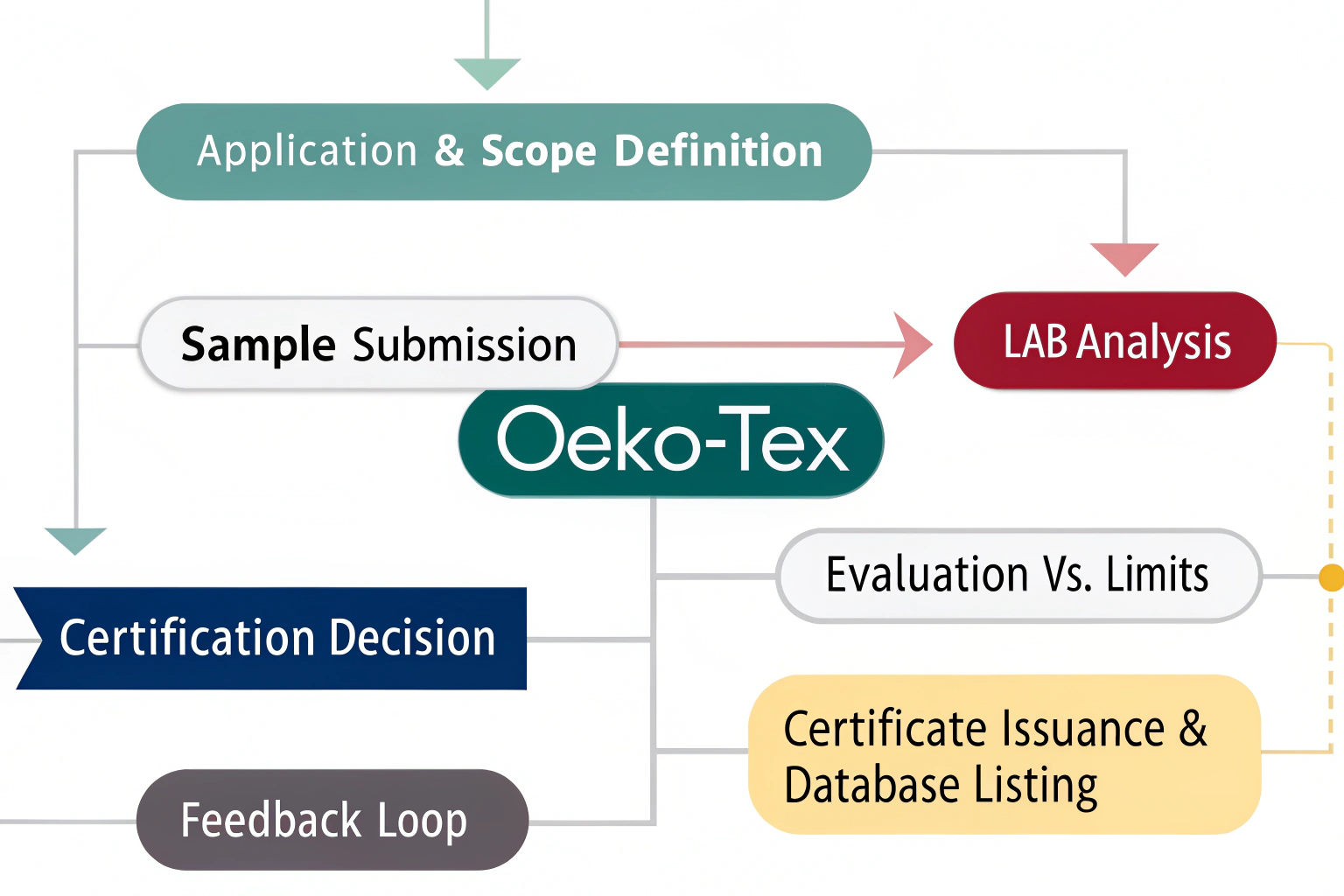
You've decided to certify your apparel to OEKO-TEX® STANDARD 100, Product Class II (for direct skin contact). You know it's the right move for the European market. But what exactly are you paying for? What happens in that lab, and how can you be sure the process is robust enough to protect your brand? Many see certification as a "black box"—send money and samples, get a certificate. This lack of transparency is dangerous. Understanding the testing process is your first line of defense against inadequate certification and your best tool for ensuring a smooth, successful audit.
The testing process for STANDARD 100, Class II (Grade 2) is a rigorous, systematic evaluation designed to simulate real-world use and ensure human-ecological safety. It's not a single test, but a battery of over 100 specific analyses conducted by independent, OEKO-TEX® accredited institutes. The process validates that every component of your textile article—from fabric to thread to button—meets strict limits for regulated and non-regulated harmful substances. This article will demystify the journey, from sample submission to certificate issuance, giving you the knowledge to confidently engage with certifiers and suppliers.
Phase 1: Application & Article Definition – Setting the Correct Scope
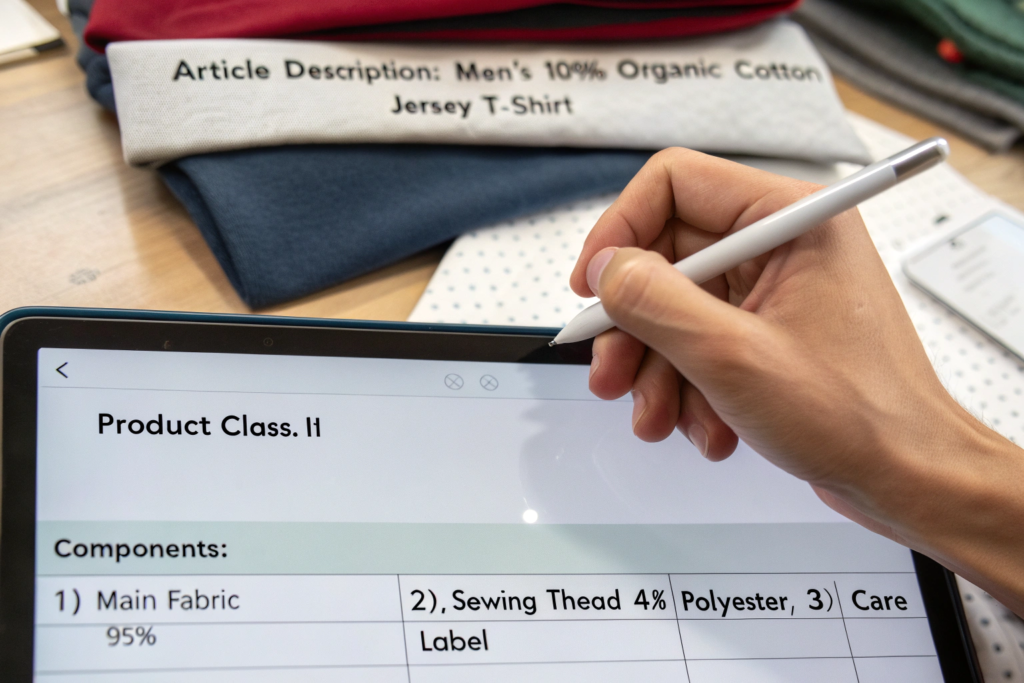
The process doesn't start in the lab; it starts at the desk. A critical and often mismanaged phase, the application sets the legal and technical boundaries of your certificate. You (or your supplier) must complete a detailed application with an OEKO-TEX® member institute, defining the exact article to be certified.
This requires precise technical descriptions for every component that constitutes >1% of the article's weight: fiber composition, construction (woven/knitted), all accessories (thread type, button material, zipper composition), and any applied finishes (water-repellent, anti-microbial). Crucially, you must declare the intended use to determine the correct Product Class. For a t-shirt, this is unambiguously Class II (skin contact). Misdeclaration here—intentional or not—invalidates the entire certification. We once audited a supplier who had certified lounge pants as Class III ("not close to skin"), a clear and risky error for a product clearly worn against the skin.
Why is the "declared formulation" for dyes and chemicals so important?
At this stage, the applicant must also provide information on the chemicals used in production (dyes, auxiliaries, printing pastes). The certifying institute cross-references these against their extensive database of approved substances. If a non-approved or banned substance is declared, the application will be rejected before any physical testing begins. This upfront screening is a powerful risk filter. It forces transparency in the supply chain and ensures that certified production starts with safe inputs. For brands, this means your supplier must have full traceability of their chemical inventory—a sign of a professionally managed factory. Resources like the OEKO-TEX® Chemical Guide explain this input control philosophy.
What are the common pitfalls in the application phase?
- Overly Broad Scope: Trying to certify "all cotton knits" under one certificate is usually rejected. The scope must be specific (e.g., "100% cotton, single jersey, dyed, for T-shirts").
- Incomplete Component List: Forgetting to declare the sewing thread or interlining.
- Incorrect Supplier Declaration: The applicant must be the legal entity responsible for the product. A trading company cannot certify goods made in a factory it doesn't own without a specific licensing agreement.
A correctly defined scope, managed by an experienced partner like Shanghai Fumao, is the foundation for a smooth process. We handle this for our clients, ensuring the application accurately reflects the product and its supply chain.
Phase 2: Sample Submission & Laboratory Analysis
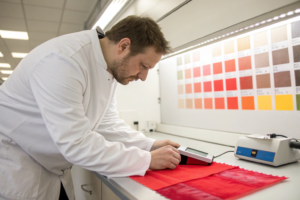
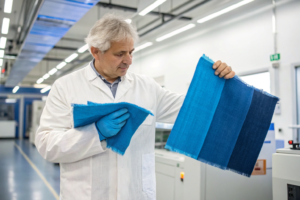
Once the application is accepted, you submit physical samples. These are not just swatches; you must provide representative samples of the finished article in its final, ready-to-sell state. For a garment, this means fully assembled pieces, including all trims. The lab will dissect and test each relevant component.
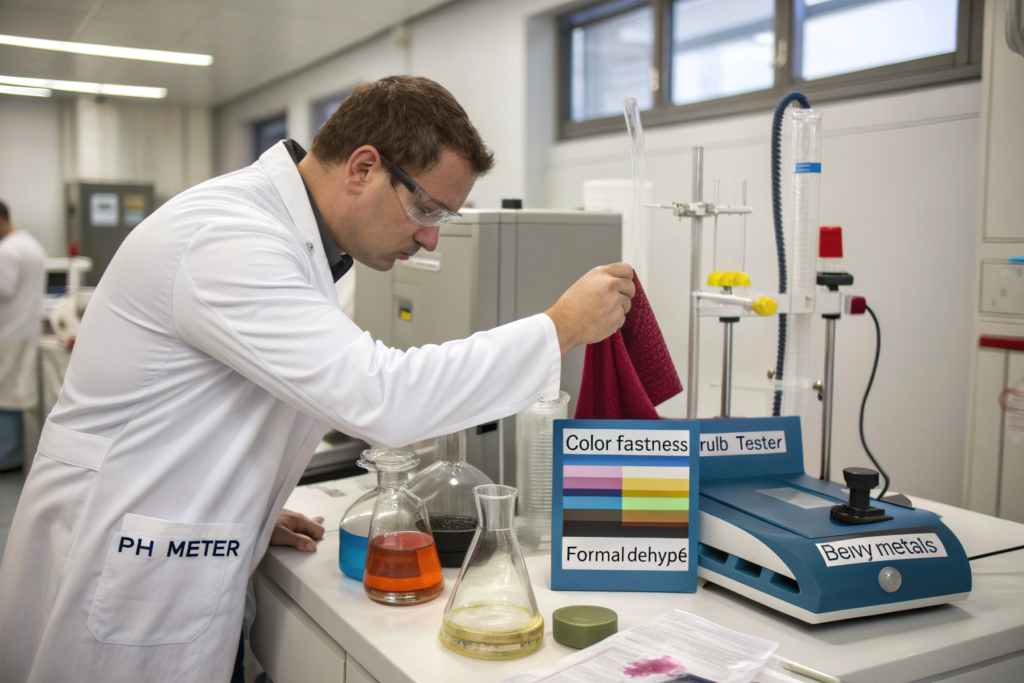
The laboratory analysis is grouped into several test categories, each simulating a different risk pathway. The limits for each parameter are strictly defined for Product Class II.
What are the key test categories and what do they simulate?
Here is a breakdown of core tests for Class II:
| Test Category | Specific Parameters (Examples) | What It Simulates / Why It Matters |
|---|---|---|
| Illegal & Regulated Substances | Azo dyes, Carcinogenic dyes, Pentachlorophenol (PCP) | Legal compliance; bans on known carcinogens. |
| Legally Regulated Chemicals | Formaldehyde, Heavy metals (Pb, Cd, Ni, etc.), Pentachlorobenzene | Skin irritation, allergic reaction, and systemic toxicity. |
| Harmful Chemicals (Non-Regulated) | Allergenic disperse dyes, Chlorinated phenols, Phthalates (in prints/coatings) | Proactive safety beyond law; addresses sensitization and endocrine disruption. |
| Parameters for Health | pH Value, Colorfastness (to saliva, sweat, rub) | Skin's natural acid mantle protection; risk of dye transfer to skin. |
| Other | Extractable heavy metals, Nickel release, Odor | Safety for children (mouthing), contact dermatitis, general product quality. |
The tests use methods like extraction with synthetic perspiration or saliva to see what leaches out, and accelerated abrasion to simulate wear. The famous "mouthing" test for extractable heavy metals is particularly stringent for children's products (Class I) but still relevant for safety in Class II.
How does the lab handle complex articles and blends?
For a garment, the lab creates a homogenized sample from all components for tests like heavy metals. For parameters like pH or formaldehyde, they may test different components separately (e.g., main fabric, printed area, elastic). Blended fabrics (e.g., poly-cotton) are tested for the full spectrum of hazards associated with both fiber types. This comprehensive approach is why certification is not cheap or instant—it's detailed science. Understanding these methods can be deepened by reviewing public test standards from organizations like ISO (International Organization for Standardization).
Phase 3: Evaluation, Certification, & Ongoing Compliance
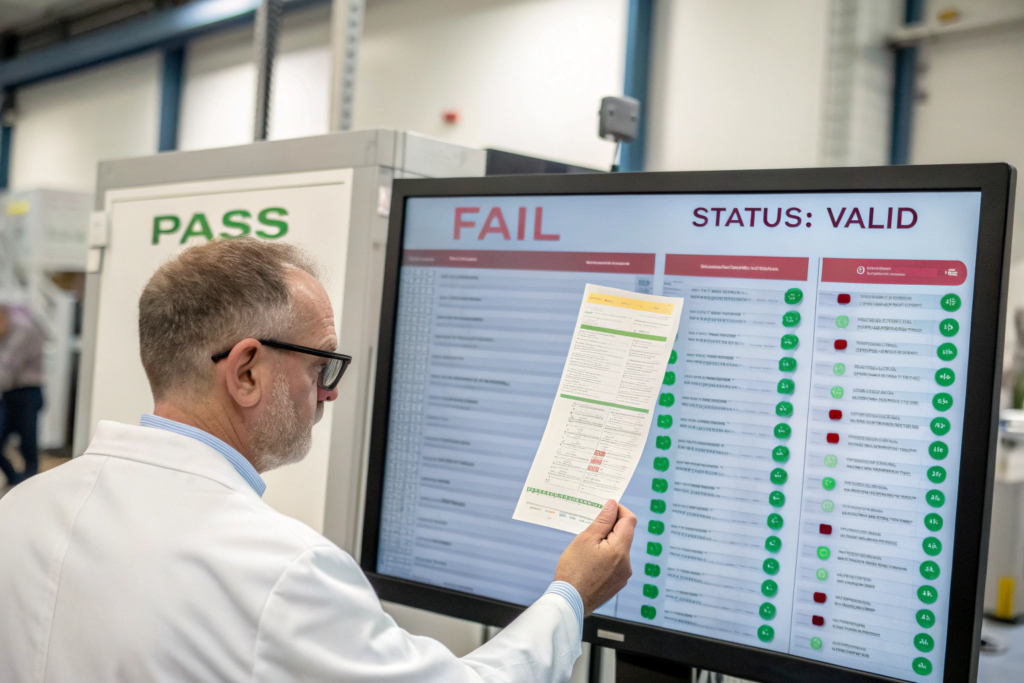
After analysis, the lab compares every result against the strict limit values for Product Class II. This is a pass/fail system for each parameter. If any single parameter exceeds the limit, the entire article fails. There is no averaging or "mostly compliant."
Upon a successful pass, the certifying institute issues the OEKO-TEX® STANDARD 100 certificate. This document includes the unique certificate number, certified company, product scope, and validity period (one year). It is simultaneously uploaded to the public OEKO-TEX® database, where anyone can verify its authenticity.
What happens if the product fails?
The institute provides a detailed failure report. This is invaluable. It doesn't just say "fail"; it states which substance exceeded which limit and by how much. This allows for targeted corrective action. For example, a failure for pH might indicate inadequate rinsing after dyeing. A failure for a specific allergenic dye points to a problem with the dye recipe. The applicant can then work with their supply chain to rectify the issue and submit a new sample for retesting (usually at an additional cost). This diagnostic aspect is a key benefit of the process.
Does the responsibility end with the certificate? No—it's about ongoing conformity.
The certificate is valid for one year under the condition of ongoing production conformity. The certified company must ensure that every batch produced matches the quality of the tested sample. OEKO-TEX® institutes conduct unannounced annual audits (often on-site or via document review) to verify this. They can also conduct random market surveillance, purchasing certified products from stores to retest. If a non-conformity is found, the certificate can be suspended or revoked. This is why working with a supplier like Shanghai Fumao, which has an integrated CNAS-lab and strict internal QC aligned with OEKO-TEX® limits, is critical for long-term, reliable compliance.
The Practical Implications for Your Business
Understanding this process empowers you to be a smarter buyer and brand owner. It shifts your conversation with suppliers from "Do you have a certificate?" to "How do you manage the certification process and ensure ongoing conformity?"
You should ask:
- "Can you walk me through the article definition you used for this certificate?"
- "How do you control chemical inputs to pass the declarative screening?"
- "What is your internal testing protocol to ensure every batch matches the certified sample?"
- "Have you ever had a test failure, and what was the root cause?"
The answers will reveal the depth of their commitment. A partner who understands and respects the rigor of the testing process is a partner who will protect your brand.
Conclusion
The OEKO-TEX® STANDARD 100, Class II testing process is a comprehensive, science-backed system designed to deliver unequivocal proof of product safety. From precise article definition and chemical declaration to exhaustive lab analysis and ongoing surveillance, it is built to ensure integrity. For brands, this transparency is an asset. It means the label on your garment represents a verifiable journey of scrutiny, not just a fee paid.
By understanding this process, you transform certification from a cost center into a strategic quality assurance program. You gain the confidence that your products are not only market-ready but are also backed by one of the most respected safety protocols in the world. In an era of scrutiny, this knowledge isn't just power—it's protection.
Looking for a partner who masters this process from start to finish? At Shanghai Fumao, our fabrics are certified through this rigorous system, and our internal controls are designed to meet its ongoing demands. We can guide you through certifying your finished garments or provide you with the certified materials and transparency you need. Contact our Business Director, Elaine, at elaine@fumaoclothing.com to ensure your next collection is built on a foundation of proven safety.