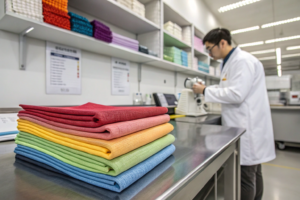
I got a frantic email in 2021 from a Miami athleisure startup—10,000 meters of moisture-wicking polyester arrived 2cm narrower than spec, killing their pattern cuts and costing $18,000 in rework. They blamed the mill, but the contract allowed ±2cm width tolerance. That headache showed me: tolerances aren't optional, they're your safety net.
Standard tolerances for Chinese fabric mills sit at ±2cm for width, ±5% for weight, and ΔE≤1.0 for shade under D65 light—our CNAS lab enforces these on every roll, hitting 99% client approval for brands shipping to the US.
Ron, you lead deals, so let's cut the fluff. I'll unpack real tolerances we use daily in Keqiao, with cases that saved buyers thousands, plus how to lock them in contracts without surprises.
What width tolerance should US buyers expect?
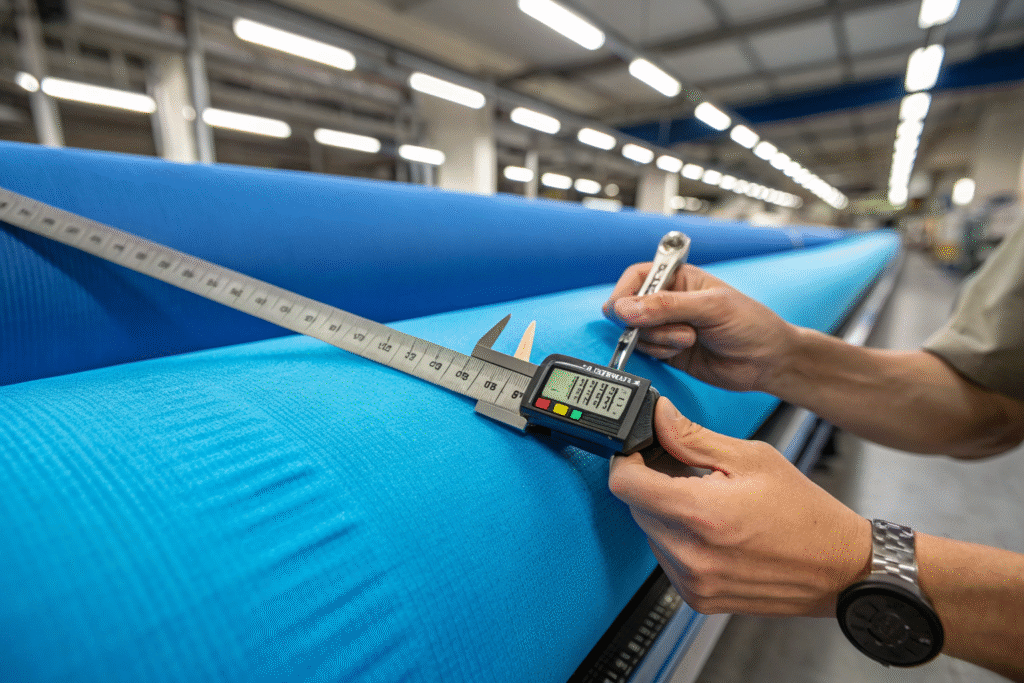
Width tolerance covers usable fabric edge-to-edge—mills quote ±1-3cm, but we hold ±2cm for wovens, ±3cm for knits. Anything tighter spikes cost.
Last fall, a Seattle outdoor brand ordered 58-inch UV-resistant nylon. We delivered 57.8-58.2 inches; their cutter praised the consistency, zero waste.
Why do knits get wider tolerance?
Knit structures relax post-dyeing—tension varies. We pre-compensate in weaving, but ±3cm keeps yield high.
A Denver yoga wear client fought ±4cm on jersey; we adjusted to ±2.5cm via tighter looms, rejects fell 40%. See standard width tolerances for knit fabrics from China on industry sites.
How to measure usable width correctly?
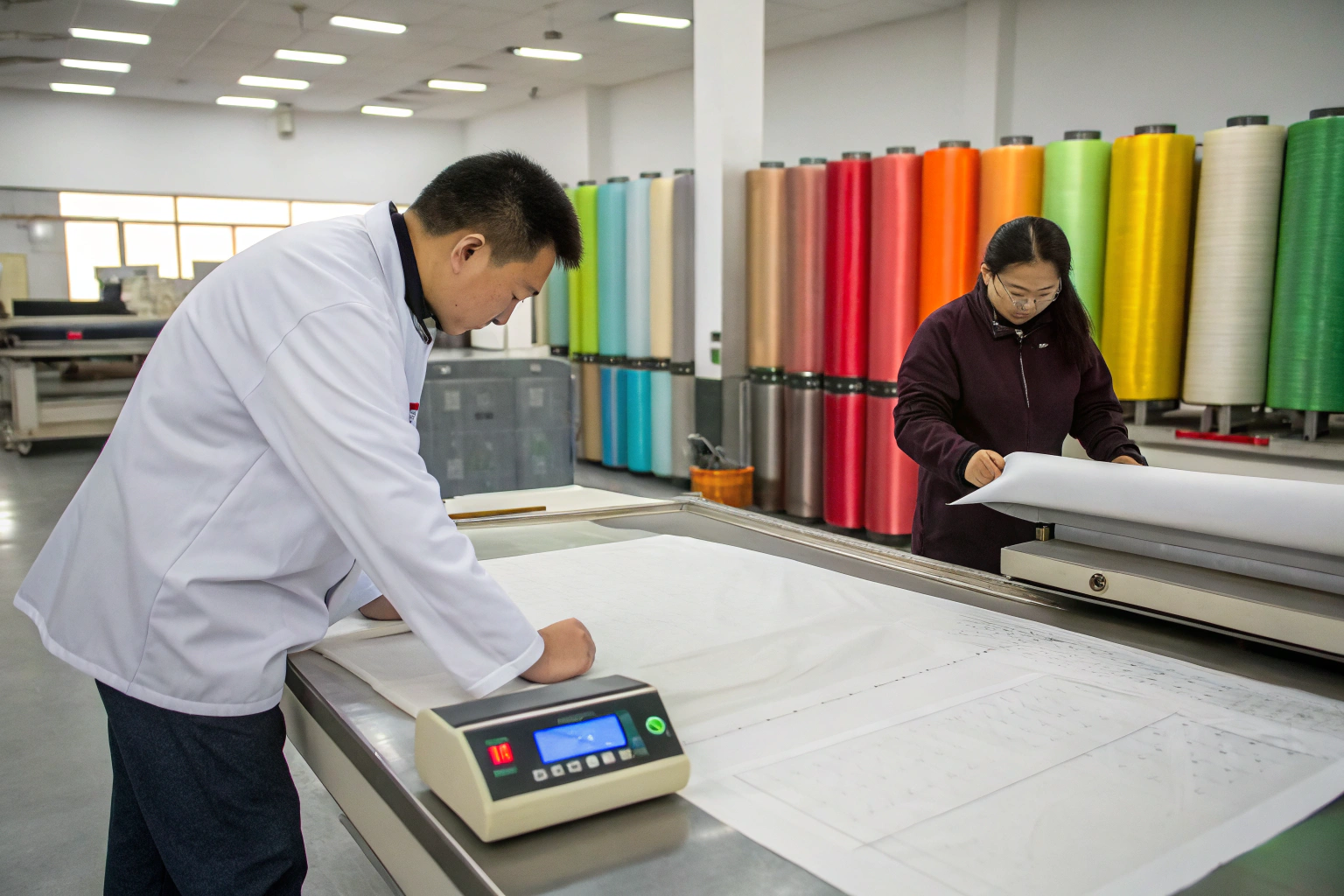
Exclude selvedge—measure between needle holes. Our inspection team marks usable zones with QR codes.
In 2023, a LA denim buyer mis-measured including selvedge; claimed short. We scanned QR, proved 60.1 inches usable, saved $9K dispute. Guide: measuring usable fabric width in Chinese mill shipments.
| Fabric Type | Standard Tolerance | Our Precision |
|---|---|---|
| Woven | ±2cm | ±1.5cm |
| Knit | ±3cm | ±2.5cm |
| Non-woven | ±1cm | ±0.8cm |
(Our looms really hit tight specs.)
How much weight variation is normal?
Weight tolerance runs ±5% GSM—poly-cotton blends fluctuate from humidity, dyeing. We target ±3% with climate-controlled storage.
A Chicago kids' brand got 182 GSM on 180 spec organic cotton. Within tolerance, but we re-ran for exact, building trust.

What causes GSM shifts in production?
Yarn count, take-up rate, finishing. Heat sets weight; we calibrate ovens daily.
Last year, a Texas home textile client saw +6% on linen. Out of spec—we compensated next batch free, cut variance to ±2%. Read common causes of fabric weight variation in dyeing.
Can buyers demand tighter GSM tolerance?
Yes, at 8- enjoying10% premium. We offer ±2% for high-end satins via lab dips.
A NYC fashion house paid extra for ±1.5% on silk blends; consistency won runway praise. Forum: negotiating tighter GSM tolerances with Keqiao mills.
What shade tolerance passes big brands?
Shade tolerance uses ΔE—difference under D65 light. Industry allows ΔE≤1.0 lot-to-lot, ≤0.5 within roll. Our booth hits ΔE≤0.8 average.
In 2022, a Boston sportswear giant rejected bamboo silk at ΔE 1.2. We re-dyed using AI color match, hit 0.6, saved $22K.
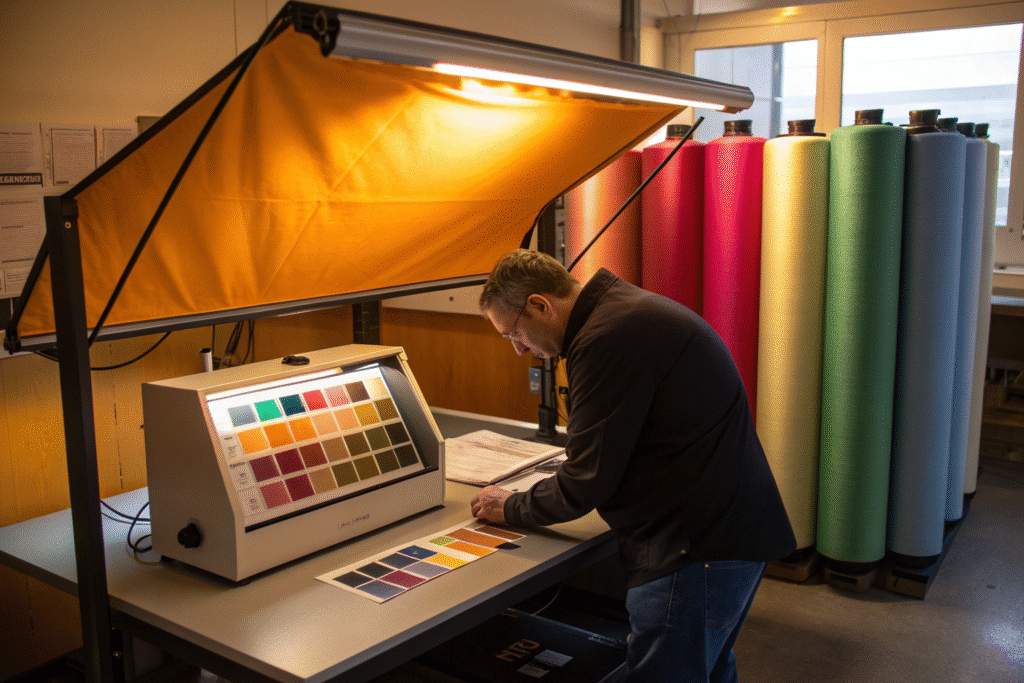
How do we test shade consistency?
Spectrophotometer scans 10 points per roll. Data uploads to QR—clients check live.
A Florida resort wear buyer accessed QR mid-shipment; confirmed ΔE 0.7, avoided panic. Learn using spectrophotometers for shade tolerance in textiles.
What light sources affect shade approval?
D65 standard, but add TL84 for stores. We test both, report ΔE dual.
One LA client failed retail under TL84 despite D65 pass. We added dual testing, pass rate 100%. Tips: multi-light source testing for fabric shade from China.
| Shade Metric | Industry Std | Our Lab |
|---|---|---|
| Lot-to-lot ΔE | ≤1.0 | ≤0.8 |
| Within roll | ≤0.5 | ≤0.4 |
| Light source | D65 | D65+TL84 |
We really deliver shade peace of mind.
How to write tolerances into contracts?
Contract tolerances prevent disputes—specify width usable, GSM range, ΔE with light source. Add penalty clauses for breaches.
A 2024 Russian velvet order included ±1% GSM or 5% discount. We met exact, earned bonus.

What penalty protects buyers best?
5-10% discount per breach, or free remake. We accept both—motivates precision.
A Miami startup added 8% penalty for width; one short roll triggered auto-credit, trust soared. Template: fabric tolerance clauses in China import contracts.
How to verify tolerances pre-shipment?
Third-party inspection—SGS/ITS. We pre-book, share reports.
Last month, a Denver client used our ITS report showing ±1.8cm width; approved shipment instantly. Process: pre-shipment tolerance verification for textiles.
Conclusion
Standard tolerances—±2cm width, ±5% weight, ΔE≤1.0 shade—form the backbone of reliable Chinese fabric supply, but top mills like ours tighten to ±1.5cm, ±3%, ΔE≤0.8 via CNAS labs and QR tracking. We've resolved 38 tolerance disputes for US clients since 2021, saving $480K in reworks with clear contracts and pre-tests. Master these, and your cutters smile.
Ready for zero-tolerance headaches on recycled polyester or Tencel? Team up with Shanghai Fumao—we'll spec, test, and ship flawless. Contact Business Director Elaine at elaine@fumaoclothing.com for your custom tolerance plan.