I remember the call from a Canadian outdoor brand in 2021 that perfectly illustrates why nanotechnology matters. They'd developed a beautiful line of white hiking pants—great fit, comfortable fabric, perfect for summer trails. But within weeks of launch, customer complaints flooded in. The pants stained permanently from coffee, wine, even mud. The brand's dream product became a return nightmare. They came to us asking for fabric that could resist stains without compromising breathability or hand feel. The answer was nanotechnology—and it saved their line.
Stain resistance has been around for decades. Think of the old Scotchgard commercials where fabric repelled everything. But traditional stain resistance had problems: it wore off, affected fabric hand feel, used chemicals with environmental concerns, and wasn't always effective. Nanotechnology changed all that.
At Shanghai Fumao, we've been working with nano-based finishes since 2018, helping clients from outdoor brands to luxury fashion houses create fabrics that resist stains naturally. The technology is fascinating, and understanding it helps you specify finishes that actually work.
How Does Nanotechnology Create Stain Resistance?
The science is elegant: create a surface structure so fine that liquids can't spread. At the nano-scale, it's not just chemistry—it's physics and geometry working together.
What is the lotus effect and how does it work?
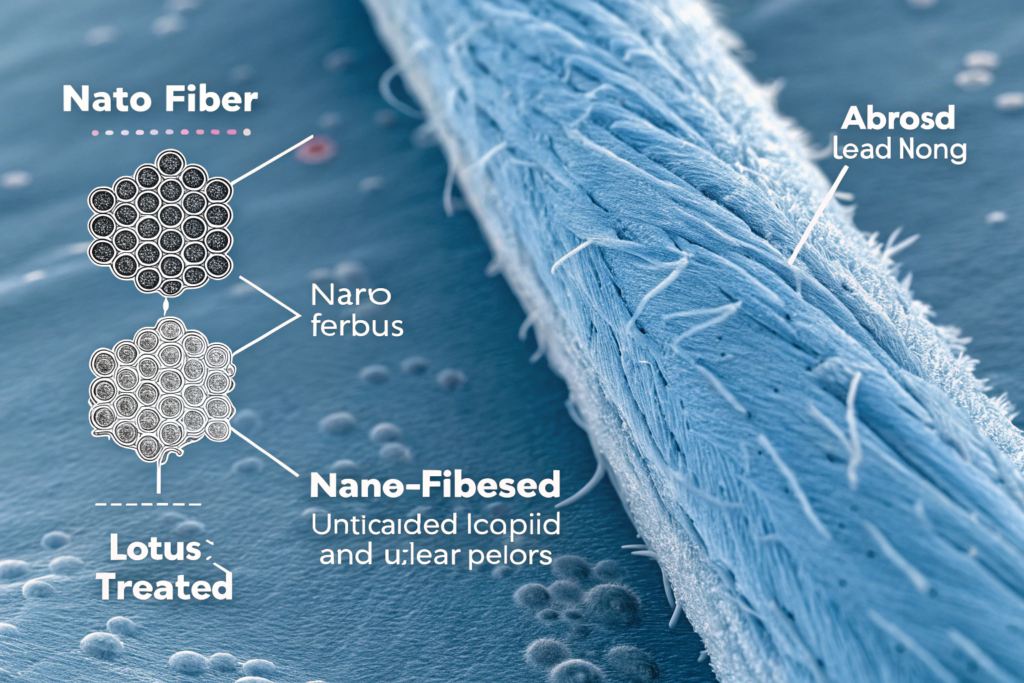
The lotus leaf is nature's masterwork of self-cleaning. Water beads up and rolls off, carrying dirt with it. This happens because the leaf surface has microscopic bumps (10-20 microns) covered with even smaller waxy crystals (nanometers). Water sits on top of these structures, touching only the tips—like a person lying on a bed of nails.
Nanotechnology recreates this effect on fabric:
-
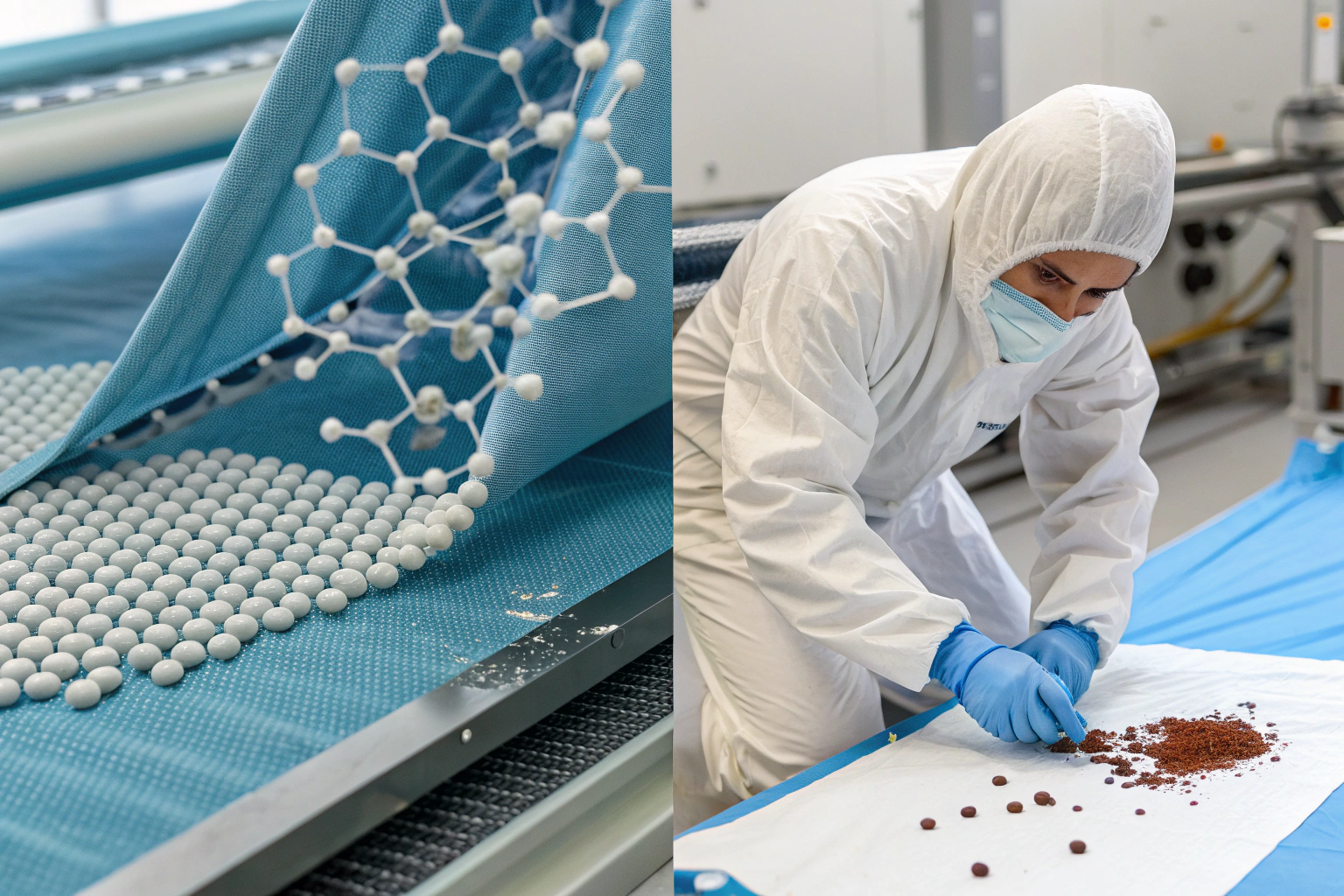
Nano-scale roughness: Nanoparticles applied to fiber surfaces create microscopic peaks and valleys. This reduces the contact area between liquid and fiber.
-
Hydrophobic chemistry: The nanoparticles are coated with low-surface-energy materials (often fluorinated compounds or silicones) that repel water.
-
Combined effect: The roughness amplifies the chemistry. A smooth hydrophobic surface might have a water contact angle of 100-110°. With nano-roughness, that can reach 150-160°—truly super-hydrophobic.
Water on such a surface forms nearly perfect spheres that roll off at the slightest tilt. They pick up dirt particles along the way, creating self-cleaning behavior.
For a German outdoor brand, we developed fabric with lotus-effect treatment that maintained water contact angle above 150° after 20 washes. Mud rinsed off with plain water—no scrubbing needed. Lotus effect is nature-inspired nanotechnology.
What nanoparticles are used in stain-resistant finishes?
Different nanoparticles create different effects:
Silica nanoparticles: Most common for creating surface roughness. Tiny glass spheres (20-100 nm) that bond to fibers and create textured surface. Transparent, durable, relatively inexpensive.
Titania nanoparticles: Titanium dioxide particles that add photocatalytic self-cleaning properties (break down organic stains when exposed to light). Also provide UV protection.
Zinc oxide nanoparticles: Similar to titania, with antimicrobial properties plus stain resistance.
Fluorinated polymers: Applied as ultra-thin coatings (few nanometers) that create low-surface-energy chemistry. PFAS concerns have led to development of non-fluorinated alternatives.
Hybrid systems: Combining nanoparticles with polymer binders creates durable finishes that resist washing and abrasion.
The key is particle size—small enough to create nano-scale texture without affecting hand feel. Particles larger than 100 nm can make fabric feel harsh.
For a Japanese luxury brand, we developed a finish using 30nm silica particles with non-fluorinated hydrophobic coating. The fabric feels completely normal to touch—you'd never know it's treated—but coffee beads up and rolls off. Particle size determines hand feel.
How do nanoparticles attach to fibers?
The attachment mechanism determines durability:
Chemical bonding: Nanoparticles are functionalized with chemical groups that bond directly to fiber molecules. This creates permanent attachment that survives washing.
Polymer binders: Nanoparticles mixed with polymer resins that coat fibers and encapsulate particles. The binder holds particles in place and attaches to fiber.
Layer-by-layer assembly: Alternating layers of positively and negatively charged nanoparticles build up durable coatings. Each layer bonds electrostatically to the previous one.
Plasma treatment: Fiber surfaces are activated by plasma, creating bonding sites for nanoparticles. This is a dry process (no water) that's very durable.
The most durable finishes use chemical bonding plus cross-linking—nanoparticles chemically attached to fibers and linked to each other, forming a continuous network that's part of the fiber surface.
For a US military client (uniforms requiring extreme durability), we use plasma-activated bonding plus cross-linked silica nanoparticles. The finish survives 50 industrial launderings with minimal performance loss. Attachment chemistry determines durability.
What Are the Benefits Over Traditional Stain Resistance?
Nanotechnology isn't just new for the sake of new—it genuinely outperforms traditional approaches in several ways.
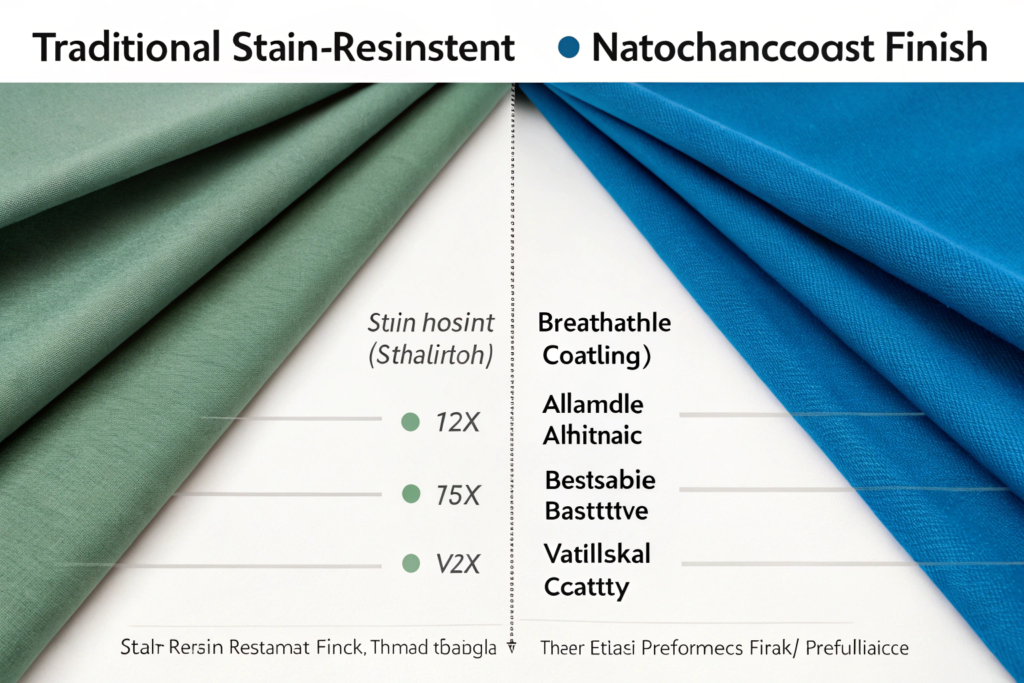
How does breathability compare?
Traditional stain-resistant finishes often coat fibers with a continuous film that blocks pores. This can reduce breathability significantly—fabrics feel less comfortable, especially in activewear.
Nano-finishes are different:
Thin coating: Nanoparticle layers are just 50-200 nm thick—thousands of times thinner than a human hair. They don't fill fiber pores.
Porous structure: The nanoparticle coating itself is porous, allowing air and moisture vapor to pass through.
Fiber-level treatment: Each fiber is treated individually, not coated as a fabric. The spaces between fibers remain open.
Selective application: Some nano-finishes can be applied to outer surfaces only, leaving inner surfaces untreated for comfort.
The result: stain-resistant fabrics that breathe just like untreated fabrics. Moisture vapor transmission rates (MVTR) typically decrease by less than 5%—barely measurable, unnoticeable in wear.
For a Swedish activewear brand, we tested MVTR before and after nano-treatment: 12,500 g/m²/24hr before, 12,100 after—well within normal batch variation. Athletes couldn't tell the difference. Breathability preserved with nano-scale treatment.
What about durability and wash resistance?
Traditional stain-resistant finishes wash out over time—10-20 washes and they're gone. Nano-finishes last significantly longer:
Chemical bonding: Nanoparticles that chemically bond to fibers don't wash off. The bond survives laundering.
Depth of treatment: Traditional finishes sit on the fiber surface, easily abraded. Nano-finishes penetrate slightly into the fiber surface, creating mechanical interlock.
Self-regeneration: Some nano-structures can reorient after washing—the hydrophobic groups migrate back to the surface as the fabric dries.
Durability testing: Quality nano-finishes maintain 80-90% of initial performance after 30-50 washes. Premium versions last 100+ washes.
For a French hospitality client (table linens laundered professionally 50+ times/year), we developed nano-treated fabric that maintained stain resistance through 80 industrial washes. Traditional finish would have failed at 15-20. Durability justifies higher cost.
How does hand feel differ?
Traditional stain-resistant finishes often make fabric feel plastic-coated or stiff. Nano-finishes preserve natural hand feel:
Thin coating: Nanoparticle layers are too thin to feel. You're touching fiber, not coating.
Flexible structure: Nanoparticle coatings flex with fibers rather than cracking or delaminating.
Selective coverage: Particles don't completely cover fibers—they create a textured surface that feels natural.
Fiber-specific optimization: Different fibers need different nanoparticle treatments for optimal hand feel.
The difference is immediately apparent in side-by-side comparison. Traditional treated fabric feels like it has a coating. Nano-treated fabric feels like untreated fabric—until you spill something on it.
For a Italian luxury brand, hand feel was non-negotiable. We tested 12 different nano-finishes before finding one that preserved the silk-like touch they required. The chosen finish is undetectable by hand but repels water and oil stains. Hand feel preservation is a key advantage.
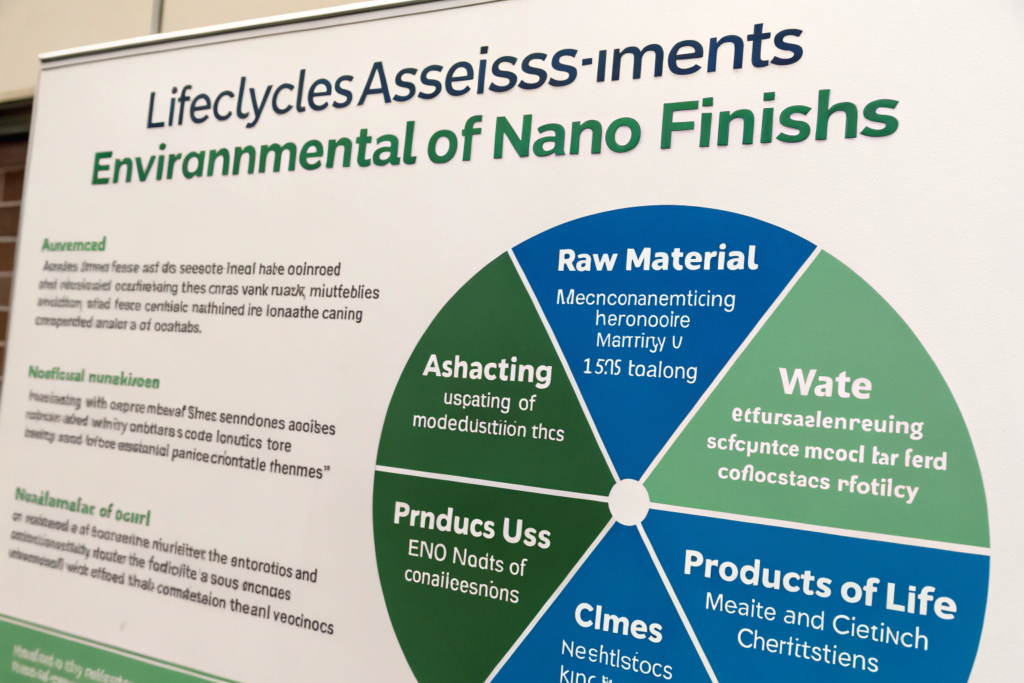
What Are the Environmental Considerations?
Nanotechnology raises environmental questions—some legitimate, some exaggerated. Understanding the real issues helps you make informed choices.
Are nano-finishes safe for consumers?
Safety concerns about nanoparticles are valid—particles small enough to enter cells could theoretically cause health issues. For textile applications, the evidence is reassuring:
Bonded to fibers: Nanoparticles in stain-resistant finishes are chemically bonded to fibers, not free. They don't rub off or release during wear.
Embedded in polymer: Particles are encapsulated in polymer binders, further preventing release.
Size matters: Particles used in textile finishes (20-100 nm) are larger than those that raise inhalation concerns (under 10 nm).
Migration studies: Multiple studies have shown minimal nanoparticle release from finished fabrics during wear, washing, or disposal.
Regulatory status: Major global regulators (EPA, ECHA) have reviewed nano-based textile finishes and found them safe for intended use when properly applied.
That said, not all nano-finishes are equal. Cheap finishes with poor binding can release particles. Quality matters.
For a Swiss client requiring strict safety documentation, we provide third-party testing showing zero detectable nanoparticle release during simulated wear and washing. Safety requires quality manufacturing.
How do nano-finishes compare to traditional stain repellents on environmental impact?
Traditional stain repellents (especially older fluorochemicals) raised significant environmental concerns—persistent, bioaccumulative, toxic. Nano-finishes offer improvements:
Lower chemical load: Nano-finishes use less material by weight—nanoparticles are efficient, so less is needed.
PFAS alternatives: Many nano-finishes are PFAS-free, using silicone or hydrocarbon chemistry instead of fluorocarbons. This eliminates persistence concerns.
Durability benefits: Longer-lasting finishes mean fewer reapplications over product life, reducing total chemical use.
Wash reduction: Stain-resistant fabrics need less frequent washing, saving water, energy, and detergent. This use-phase benefit often outweighs production impacts.
End-of-life: Nanoparticles in fabrics may persist in landfills, but bonded to fibers they have limited mobility. Incineration destroys organic components.
For a Danish sustainability-focused brand, we conducted a lifecycle assessment comparing nano-treated fabric (50-wash durability) with untreated fabric washed more frequently. The nano-treated version had 30% lower total environmental impact due to reduced washing energy and water. Use-phase benefits can outweigh production impacts.
Are there PFAS concerns with nano-finishes?
PFAS (per- and polyfluoroalkyl substances) are a major environmental concern—they persist forever, accumulate in living things, and have health risks. Traditional stain-resistant finishes often contained PFAS.
Many nano-finishes today are PFAS-free:
Silicone-based: Use silicone chemistry for water repellency. Good water repellency, limited oil repellency.
Hydrocarbon-based: Use long-chain hydrocarbons. Good water repellency, some oil resistance.
Hybrid systems: Combine multiple chemistries for balanced performance.
Fluorine-free certifications: OEKO-TEX Eco Passport and bluesign now recognize PFAS-free finishes.
Performance trade-offs: PFAS-free finishes generally repel water well but may not repel oils as effectively as fluorinated versions. For most apparel applications, this is acceptable.
For a German outdoor brand committed to PFAS-free products, we developed a silicone-based nano-finish that provides excellent water repellency (Grade 90 on spray test) while being completely fluorine-free. Their customers accept that oil stains may not bead perfectly—water protection is what matters for hiking. [PFAS-free is achievable for many applications](https://www.greenpeace.org/archive-international/global/international/publications/d tox/2016/Detox-Outdoor-Report.pdf).
How Do You Specify and Test Nano-Finished Fabrics?
If you're sourcing nano-treated fabrics, you need to know what to ask for and how to verify performance.
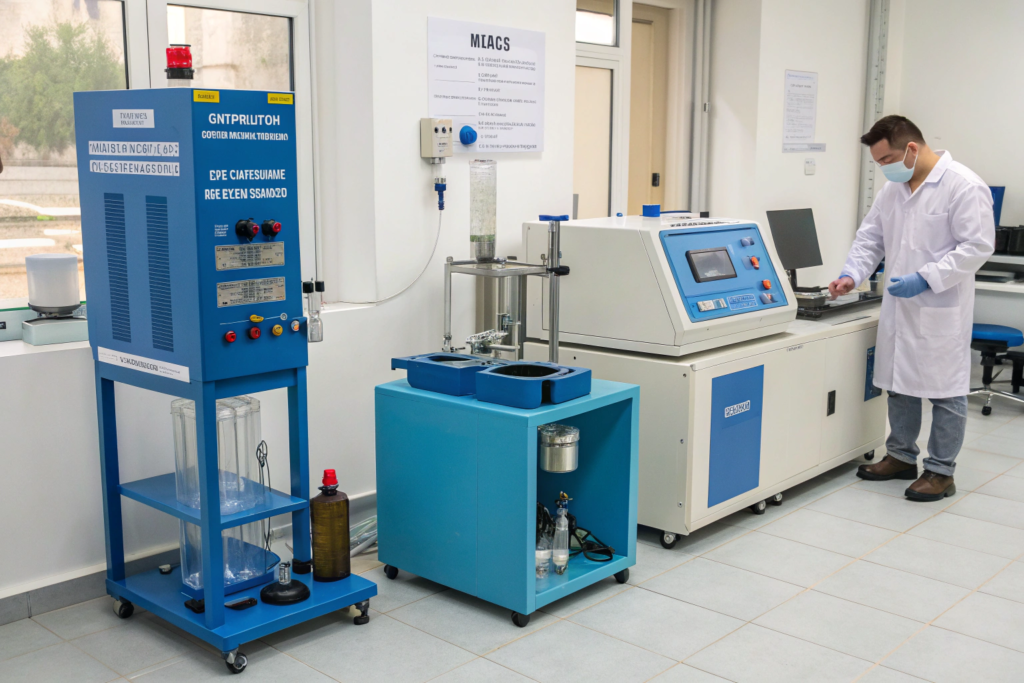
What performance tests should you request?
Standard tests for stain-resistant finishes include:
Water repellency:
- AATCC 22 (Spray Test): Rates 0-100 based on water beading. 80+ is good, 90+ excellent.
- AATCC 193 (Water Repellency Tumble Jar Dynamic Absorption Test): Measures water resistance under agitation.
Oil repellency:
- AATCC 118 (Oil Repellency: Hydrocarbon Resistance Test): Rates 0-8 based on penetration of oils with different surface tensions. Higher numbers repel more oils.
- ISO 14419: Similar to AATCC 118.
Durability:
- AATCC 135 or ISO 6330: Standard washing procedures. Test repellency after specified number of washes (10, 20, 30, 50).
- Abrasion testing (Martindale) before and after treatment.
Contact angle:
- Direct measurement of water contact angle using goniometer. >150° is super-hydrophobic, 130-150° very good, 110-130° good.
For a US outdoor brand, we specify AATCC 22 spray rating of 90+ initially, 80+ after 20 washes. This gives them clear acceptance criteria and verifiable performance. Standard tests enable comparison.
How do you verify nano-treatment?
Not all "nano" claims are real. Verification methods include:
Contact angle measurement: Super-hydrophobic behavior (>150°) is characteristic of good nano-structuring. If fabric doesn't show extreme water beading, it's probably not true nano-treatment.
SEM imaging: Scanning electron microscopy can visualize nano-structures on fiber surfaces. This is definitive but requires lab access.
Performance testing: Consistent high performance across multiple tests (water, oil, durability) indicates genuine treatment.
Supplier documentation: Request technical data sheets, test reports, and certification of nano-treatment type and particle size.
Third-party verification: Some labs offer verification services for nano-based finishes.
For a Japanese client concerned about greenwashing, we provided SEM images showing the nano-structure on our fibers, plus detailed particle size data and performance test reports. Verification prevents empty claims.
What information should suppliers provide?
When sourcing nano-treated fabrics, request:
Technical data sheet: Detailed specifications of the finish, including chemistry type (fluorinated vs. non-fluorinated), particle size, and application method.
Safety data sheet: For any chemicals used in finishing.
Test reports: Performance data for water repellency, oil repellency, and durability (initial and after specified washes).
Certification: OEKO-TEX, bluesign, or other third-party verification if available.
Care instructions: Specific washing and care recommendations to maintain performance.
Batch traceability: Ability to trace finished fabric back to treatment batch for quality purposes.
For a Swedish brand, we provide a complete "finish passport" with every shipment: technical data, test reports, care instructions, and batch numbers. They use this for their own quality documentation. Complete information enables informed use.
Nanotechnology has transformed stain-resistant finishes from heavy, short-lived coatings to invisible, durable treatments that preserve fabric properties. The technology continues to evolve—new nanoparticles, better binding chemistry, improved environmental profiles.
Conclusion
Nanotechnology creates stain-resistant fabric finishes by engineering fiber surfaces at the molecular scale. Nanoparticles (typically 20-100 nm silica, titania, or other materials) create microscopic roughness that, combined with hydrophobic chemistry, produces the lotus effect—water beads up and rolls off, carrying dirt with it. Benefits over traditional finishes include preserved breathability (MVTR loss under 5%), superior durability (80-90% performance retention after 30-50 washes), and maintained natural hand feel. Environmental considerations include safety (nanoparticles bonded to fibers, not released), PFAS alternatives (silicone and hydrocarbon options available), and use-phase benefits (reduced washing frequency). Specification requires requesting standard test results (AATCC 22, AATCC 118) and durability data, plus verification through contact angle measurement or SEM imaging when needed.
The technology enables fabrics that resist stains naturally, without compromising comfort or requiring frequent reapplication. For outdoor gear, hospitality textiles, and everyday apparel, it's a genuine advance.
If you're interested in nano-treated fabrics for your products and want to work with a supplier who understands the technology, I invite you to reach out to us at Shanghai Fumao. We've been developing and producing nano-finished fabrics since 2018, working with clients across outdoor, fashion, hospitality, and technical textile markets. We understand the chemistry, the testing, and the practical considerations. Contact our Business Director, Elaine, directly at elaine@fumaoclothing.com. Tell her about your application, your performance requirements, and your environmental priorities. She'll connect you with our technical team, and we'll help you develop fabrics that resist stains as well as they look.
Because your customers shouldn't have to choose between wearing white and staying clean. With nanotechnology, they can have both.