Let's cut to the chase. If you're still thinking of digital printing as just a "sampling tool" and rotary as the "bulk workhorse," you're planning for 2020, not 2025. The landscape has shifted under our feet. The real question isn't which one is better, but how their roles are being redefined by speed, sustainability, and the demand for hyper-personalization. I've seen brands stuck in the old mindset lose months on lead times and waste thousands on unsold inventory because they used the wrong tool for the job. In 2025, the most successful brands won't choose one—they'll orchestrate both in a seamless production flow.
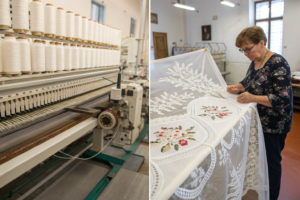
So, what is the role of each? Think of it as a strategy of complementary strengths. Rotary printing remains the undisputed champion for ultra-long runs of simple, repeating patterns—think classic floral bed sheets or uniform shirting stripes—where its staggering speed and low per-meter cost are unbeatable. But digital printing in 2025 is no longer the slow, expensive cousin. Its role is exploding as the primary driver for agile, on-demand production, limitless design complexity, and radical sustainability through reduced waste. It’s becoming the default for short to medium runs, rapid response collections, and any design with photorealistic detail, color gradients, or no repeat.
The shift is being turbocharged by three forces: consumer demand for uniqueness (fueling micro-segments), retail’s move to test-and-react models (like Shein’s ultra-fast fashion), and brutal environmental regulations targeting textile wastewater and chemical use. In this new world, understanding the nuanced, evolving role of each technology is your key to unlocking speed, profit, and compliance. Let’s dive into the specifics.
How Has Digital Printing Closed the Cost and Speed Gap?
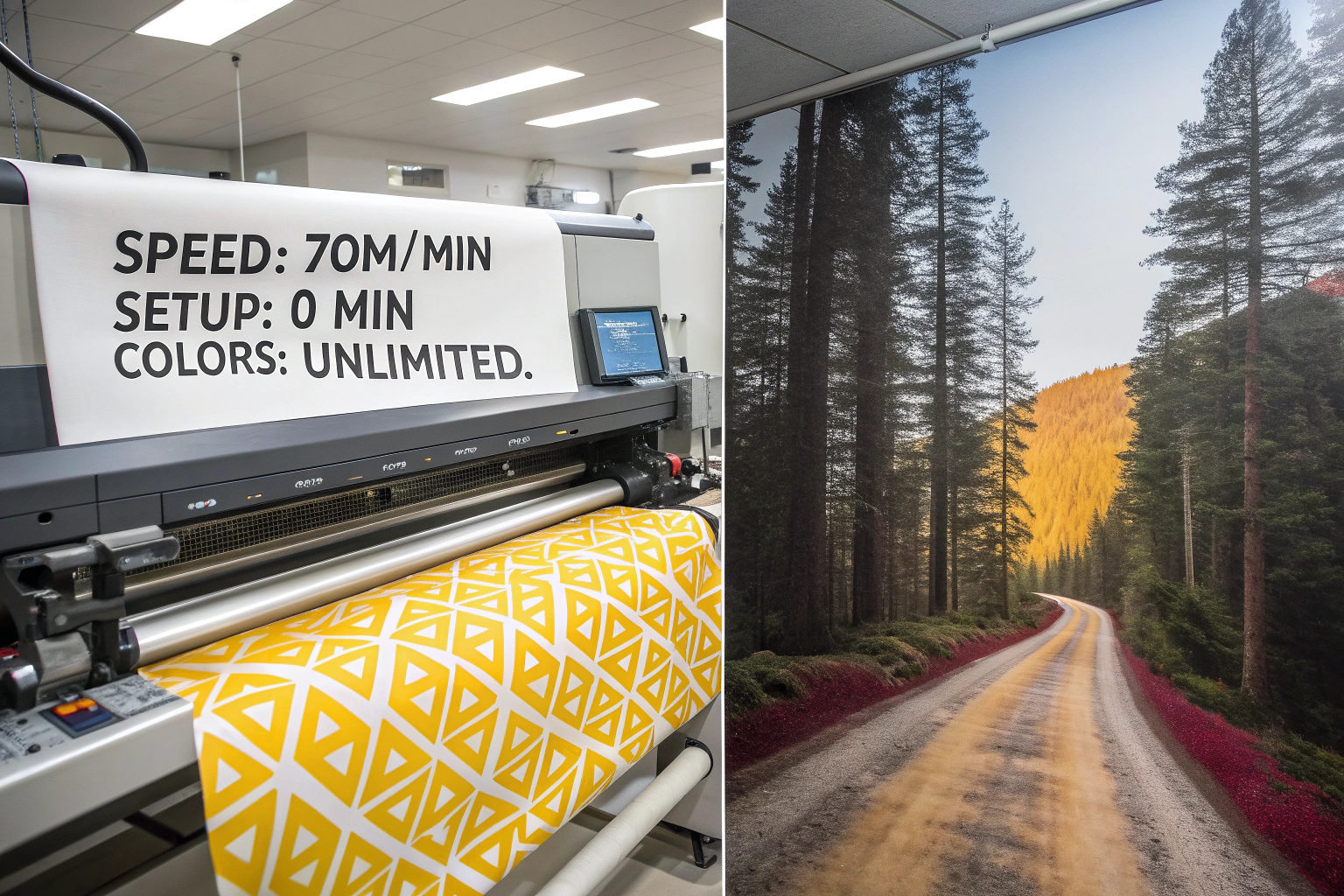
The old narrative was simple: digital is expensive and slow for bulk. That narrative is dead. The cost-per-meter for digital printing has plummeted by over 50% in the last five years, thanks to faster print heads (think Epson’s PrecisionCore, Kyocera’s KJ4B), more efficient ink chemistries, and smarter RIP (Raster Image Processing) software that optimizes ink usage. Speed? Modern single-pass digital printers can now run at speeds exceeding 100 meters per minute. That’s not “sampling” speed; that’s viable production speed.
But the real cost story isn't just the meter rate—it's the total cost of ownership and operation (TCOO). Digital eliminates the colossal upfront costs and time of rotary: no engraved copper rollers (costing $500-$1500 each, taking 2-3 weeks to produce), no screen setup, no color kitchen matching, and zero fabric wasted during setup (“strike-off” and “running-in” waste). For an order of 5,000 meters with a 6-color design, the setup waste for rotary can be 500-800 meters. With digital, it’s less than 5 meters. In an era of tight margins and material costs, that waste is pure profit left on the cutting room floor.

What Are the Real Minimum Order Quantities (MOQs) in 2025?
This is where digital reshapes the business model. Rotary printing, due to its setup cost, has a high economic MOQ—typically 5,000 to 10,000 meters per design/colorway to amortize the roller cost. In 2025, digital’s effective MOQ is 1 meter. Practically, for commercial production, we see brands comfortably running batches of 300 to 3,000 meters digitally.
This collapse in MOQ enables two revolutionary strategies:
- Micro-Collections & Test Marketing: Launch 10 design variants in 500-meter runs each, see what sells in 2 weeks, and then re-order only the winners. This slashes inventory risk.
- Mass Customization: It’s finally economically viable. A sportswear brand we work with now offers customized team jerseys with unique names and numbers, printed on-demand in batches as small as 50 pieces, all with zero inventory.
The role of rotary becomes focused on servicing the proven winners from these digital tests, when orders scale beyond 8,000-10,000 meters. The supply chain becomes a responsive loop: Digital for launch and testing -> Rotary for replenishment of mega-hits.
How Do Ink Innovations Drive Down Cost and Up Performance?
The ink is the lifeblood, and here the innovation is fierce. The dominant inks are now:
- Reactive Dye Inks (for cellulose: cotton, linen, viscose): These have achieved incredible color vibrancy and wash fastness, nearly matching rotary.
- Acid Dye Inks (for silk, wool, nylon): Essential for luxury and performance wear.
- Disperse Dye Inks (for polyester): Both for direct printing and the hugely popular DTG (Direct-to-Garment) and DTF (Direct-to-Film) markets.
The cost-saving innovations are in ink yield and fixation. New high-concentration inks require less volume to achieve deep shades. Low-energy curing processes (like steaming instead of high-pressure steam) reduce water and energy use by up to 60%. At Shanghai Fumao, our investment in Kornit and MS digital systems allows us to use OEKO-TEX certified NeoPigment inks that fix at lower temperatures, cutting our energy bill and giving clients a strong sustainability story. For anyone exploring the latest in digital ink chemistry and sustainability, industry conferences are the frontline.
Why Is Sustainability the Defining Battlefield for Printing?
The textile industry is under a microscope for water pollution and chemical use. Traditional rotary printing is a heavy hitter here: it requires washing off massive amounts of thickener and unfixed dye, producing highly concentrated chemical wastewater. The water footprint can be 50-100 liters per kilogram of fabric.
Digital printing, in its ideal form (pigment or optimized reactive), is a game-changer for clean production. It uses an “inkjet” approach, placing tiny, precise droplets of ink only where needed. There’s no excess thickener to wash off. The most advanced systems are moving towards waterless pigment digital printing, where pigment inks are cured with heat, requiring zero wash-off. This reduces water consumption by over 90% and slashes wastewater treatment costs. In 2025, this isn't a niche benefit—it’s a core compliance and marketing driver, especially for brands selling into the EU.

How Do Wastewater Regulations (Like in Zhejiang) Force Technology Adoption?
Local regulations are becoming the strongest enforcement mechanism. In Zhejiang province, home to China’s textile heartland, the government has implemented strict quotas on wastewater discharge and real-time monitoring of COD (Chemical Oxygen Demand) levels. Factories exceeding limits face severe fines or shutdowns.
This has directly accelerated the adoption of digital printing in our cluster. For a rotary dyeing and printing mill, meeting these new limits requires multi-million-dollar investments in advanced wastewater treatment plants. For a digital printing setup, especially using pigment inks, the compliance burden and cost are a fraction of that. In 2024, we helped a large home textiles supplier transition 30% of their mid-run production from rotary to digital specifically to stay within their wastewater quota. Their regulatory risk plummeted, and they gained the ability to offer quicker turns on new designs—a double win.
Can Digital Printing Truly Match the Color Fastness of Rotary?
This was the classic weakness. Early digital prints could fade or crock (rub off). Today, the gap is virtually closed for most applications. The secret is in pre-treatment, ink formulation, and precise fixation.
For reactive digital printing, the fabric is first padded with a precise amount of alkali and thickener. The printer then applies the dye ink, which reacts with the fiber in situ. Subsequent steaming fixes the dye molecules into the fiber core. When done correctly with modern inks and calibrated equipment, the results achieve AATCC 61 (wash fastness) Grade 4-5 and AATCC 8 (crocking) Grade 4, matching rotary standards.
A tangible case: In March 2024, a high-end bedding brand from Italy required a linen-cotton blend with a complex, watercolor-style design. They were skeptical about digital’ durability for repeated home laundering. We produced digital samples and subjected them to 30 industrial wash cycles. The color loss was less than 0.5 CIELAB units, well within their strict tolerances. They approved the bulk digital run, saving 8 weeks compared to rotary roller engraving. The key was our lab’s precise control over the pre-treatment chemistry. For technical details, forums like Digital Textile Forum offer deep dives.
How is AI and Workflow Integration Changing the Game?
The hardware is only half the story. The true 2025 advantage comes from AI-powered software integration. This is where digital pulls irreversibly ahead. AI tools are now used for:
- Automated Color Matching: AI can predict the ink formula for a given Pantone or lab dip on a specific fabric, reducing manual correction from days to hours.
- Nesting and Print Path Optimization: Software automatically arranges design patterns on the fabric width to minimize waste (marker efficiency), a process notoriously manual for rotary.
- Predictive Maintenance: Sensors on digital printers predict printhead failures before they happen, minimizing costly downtime.
The ultimate role of digital is becoming the central node in a smart, responsive textile ecosystem. A design is finalized in the EU, the AI-optimized file is sent to a cloud platform, and a production order is automatically released to the nearest compliant digital print facility (maybe in Turkey for the EU, or in Mexico for the US) based on capacity and logistics. This is the "distributed manufacturing" model that slashes shipping times and carbon footprint.

What is the Role of On-Demand and Nearshoring Models?
Digital printing is the essential enabler of micro-factories and nearshoring. Because it’s clean, compact, and requires no lengthy setup, it can be deployed in smaller facilities closer to the end consumer. A brand can place a digital printing unit in a distribution center in Ohio to print and fulfill e-commerce orders within 24 hours.
This radically reduces the need for long, risky supply chains from Asia for fast-fashion items. The role of large-scale rotary printing in Asia then evolves: it focuses on producing the base greige fabrics (which are efficiently shipped in bulk) and the proven, staple patterns for seasonal basics. The final, fashion-driven customization and rapid-response printing happen locally. This hybrid model is the future of resilient sourcing.
How Are Brands Using Data from Digital Printing for Design?
This is an untapped superpower. Every digital print order generates data: which designs sell, in which colorways, in which regions, at what time. Smart brands are feeding this data back into their design algorithms. They can identify that "floral patterns with blue backgrounds sell 40% better in Scandinavia in Q3," or that "geometric designs under 5 colors have a faster turnover."
This turns design from a gut-feeling art into a data-informed science. Rotary printing, with its long lead times and high MOQs, could never provide this kind of real-time feedback loop. In 2025, digital printing’s role is as much about market intelligence as it is about production.
What Are the Unbeatable Strengths of Rotary Printing in 2025?
Let's not write off rotary. Its role remains vital, but it's more specialized. Its unbeatable strengths are:
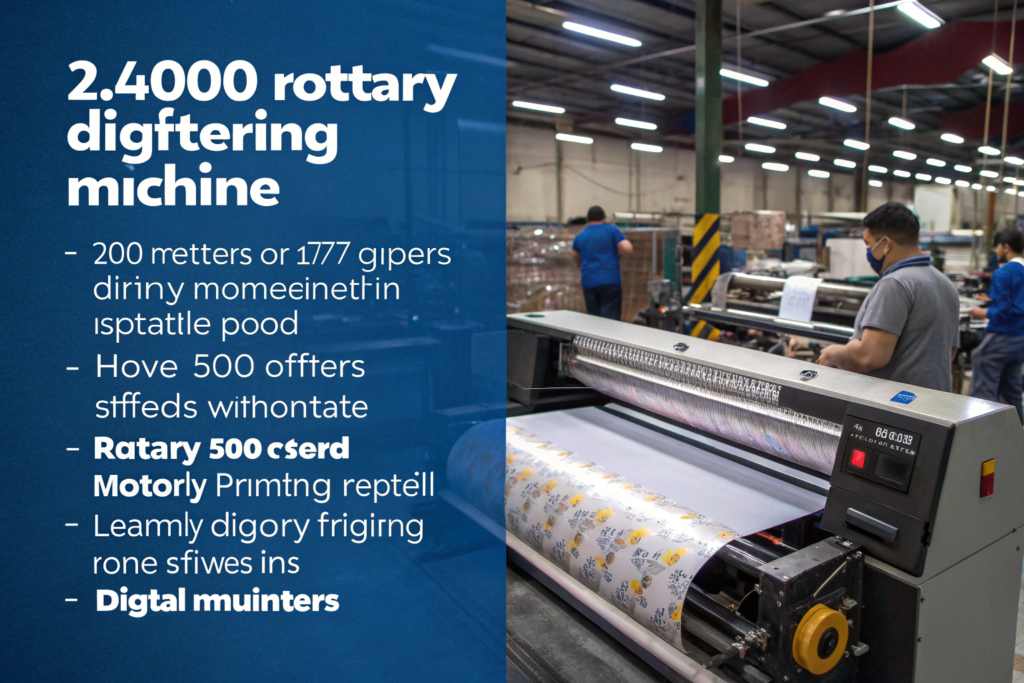
- Raw Speed on Long Runs: On a simple, repeating pattern, a 12-color rotary machine can print at 70-100 meters per minute, 24/7. No digital printer can match this throughput for a 50,000-meter single-design order.
- Unmatched Hand-Feel for Certain Inks: For deep, penetrating prints on heavy fabrics like upholstery or for special effects like "flocking" or "glitter," rotary application of thicker paste can achieve a tactile effect digital still struggles with.
- Cost at Scale: When the design is fixed and the run is long enough (typically >10,000m), the per-meter cost of rotary is still 20-40% lower than digital. For commodity textiles, this margin is everything.
The future of rotary is in high-efficiency, smarter operations. Think automated paste kitchens, AI-driven defect detection on the run, and the use of laser-engraved ceramic rollers which are more durable and finer than traditional copper rollers, allowing for more detailed designs than old-school rotary.
When Does It Make Financial Sense to Choose Rotary in 2025?
The decision matrix has become clearer. Choose Rotary when:
- Design is simple and repetitive (stripes, dots, basic florals).
- Order quantity is very high and guaranteed (>8,000-10,000 meters per colorway).
- Lead time is flexible (allow 6-8 weeks for roller production and setup).
- Design is finalized and will not change for the entire production run.
- Specific hand-feel or heavy ink application is a critical requirement.
It remains the backbone for fast-fashion basics, uniform fabrics, and home textiles where design turnover is slower but volume is king.
How Are Hybrid “Rotary-Digital” Systems Emerging?
This is the most exciting development. Machine makers like Reggiani are developing hybrid printers that combine rotary screens for base colors or ground coverage with digital print heads for detailed, variable design elements. Imagine printing a denim look with a rotary screen for the perfect, even indigo base, then using digital heads to spray on unique whisker and wear patterns for a customized, vintage finish on every meter. This merges the cost-effectiveness of rotary for large areas with the flexibility of digital for customization. In 2025, we’ll see these systems move from concept to limited commercial application, further blurring the lines.
Conclusion
In 2025, the roles of digital and rotary printing are not in conflict; they are in concert. Digital printing has matured into the agile, sustainable, and intelligent core for design validation, short-run production, and mass customization. It is the engine of responsiveness and innovation. Rotary printing has evolved into a highly optimized, cost-effective solution for proven, high-volume commodity patterns. The smartest brands and suppliers are building fluid sourcing strategies that leverage digital’s speed-to-market for testing and launching, and rotary’s economies of scale for replenishing blockbuster successes.
The key to winning is to abandon the either/or mindset. Map your product portfolio: which items are fashion-forward, risky, and need fast turns? Go digital. Which are your evergreen, high-volume cash cows? Go rotary. By strategically deploying both, you minimize risk, maximize efficiency, and build a supply chain that is both creative and commercially ruthless.
If you’re looking to navigate this new printing landscape and build a production strategy that leverages the best of both worlds for 2025 and beyond, let’s talk. At Shanghai Fumao, we operate both state-of-the-art digital printing hubs for rapid prototyping and short runs, and have deep partnerships with rotary mills for volume production. We can help you design for each technology and build a seamless pipeline. To optimize your fabric printing strategy, contact our Business Director, Elaine. Let’s print the future, intelligently. Reach her at: elaine@fumaoclothing.com.