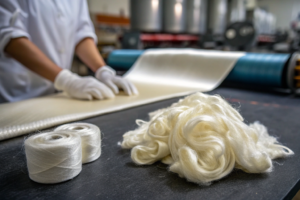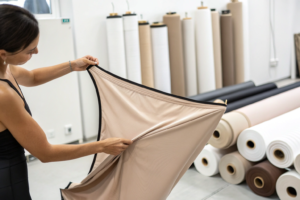
You're a fabric buyer in Europe, and you've just had a conversation with your R&D team. They told you that by 2030, over 30% of your product line must be made from biodegradable or bio-based materials. But here's the problem: you've tried recycled polyester, and while it solves the plastic waste issue, it still sheds microplastics in the wash. You've looked at organic cotton, but the water and land use are still a concern for your sustainability auditors. You're stuck. What do you actually specify for your Fall 2026 collection?
The answer is starting to show up in our lab samples and in the technical data sheets we send to clients like you. Biopolymers are stepping in to fill this gap. In simple terms, these are polymers (long chains of molecules) that are produced by living organisms. Think of it as nature's version of plastic. For fabrics, this means we can create fibers that aren't just derived from nature (like viscose), but that also biodegrade back into nature without leaving toxic residue or microplastic pollution.
Here at Shanghai Fumao, we've been testing these materials for the last three years. We've run trials with PLA (Polylactic Acid) made from fermented corn starch, and we've blended Chitosan (derived from shrimp shells) with our cotton to create naturally antimicrobial fabrics. This isn't science fiction anymore. It's a real shift in how we think about the end-of-life of a garment. Instead of designing clothes that will sit in a landfill for 200 years, we are now engineering them to return to the earth in a matter of months—under the right conditions, of course.
But let's be real: the transition isn't as simple as swapping polyester for PLA on the loom. We've had to deal with lower melting points, dye affinity issues, and higher raw material costs. However, for our clients—especially the high-end denim brands and activewear lines in the EU—the marketing value and the regulatory compliance make the effort worth it. In this post, I'm going to walk you through the actual role these biopolymers play, the headaches we've solved in production, and whether or not they can actually survive a wash cycle.
How Do Biopolymers Actually Reduce Microplastic Pollution in Activewear?
We all know the stat: around 500,000 tons of microplastics from textiles end up in the ocean every year. That's the equivalent of 50 billion plastic bottles. When a customer washes a pair of yoga pants made from standard polyester, they're literally flushing tiny plastic particles down the drain. This is where biopolymers offer a radically different end-of-life scenario.
When we talk about biopolymers like PLA (Polylactic Acid) or PHA (Polyhydroxyalkanoates), we are talking about materials that are designed to be digested by microbes. Here's the critical distinction: a standard synthetic fiber is a long chain of molecules that nature hasn't evolved to break down easily. A biopolymer fiber, however, contains ester bonds that hydrolyze (break down with water) under specific conditions—like in an industrial compost facility or a marine environment.
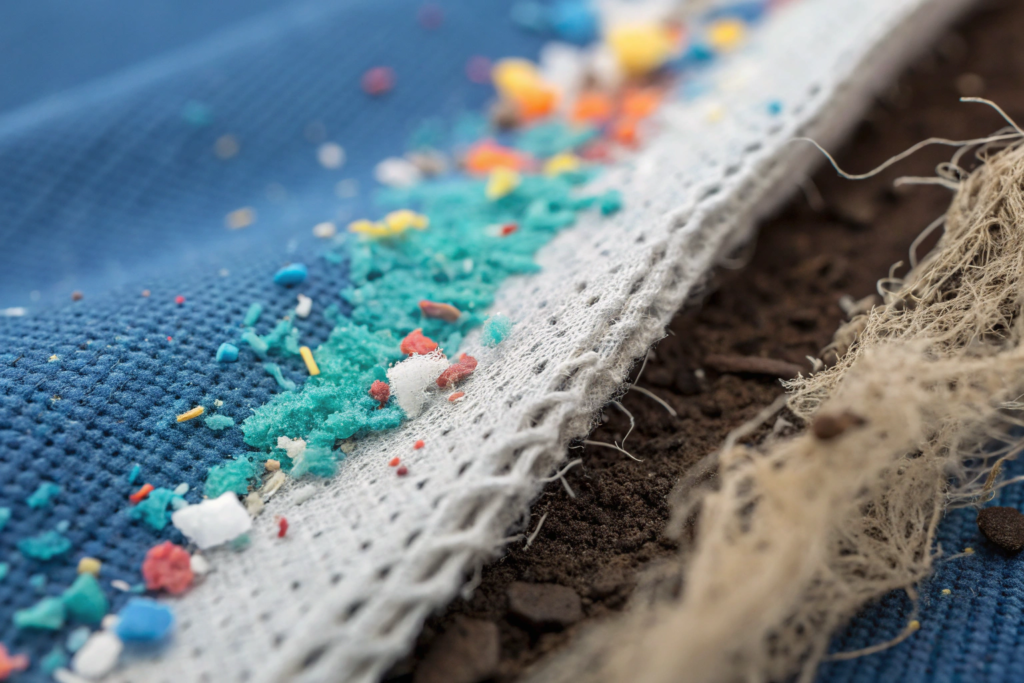
Why does PLA break down in the ocean but polyester doesn't?
To understand why PLA doesn't create persistent microplastics, we have to look at the lab results. In 2023, we collaborated with a European activewear startup to test a PLA blend against our standard recycled polyester. We put both samples through a controlled composting simulation (ISO 14855). The recycled polyester? After 90 days, it was physically intact, just broken into smaller pieces—microplastics. The PLA sample? It degraded by over 60%. The microbes actually ate it. The reason is the chemical backbone. PET (polyester) has an aromatic ring that is very stable. PLA has an aliphatic structure that microbes recognize as food. For our clients worried about California's pending microplastics legislation, switching to a PLA-based lining for hoodies isn't just a marketing gimmick; it's a compliance strategy. We've also found that blending PLA with our Tencel for moisture management creates a fabric that performs well in the gym but breaks down in the landfill.
Can biopolymer fabrics survive a real workout without melting?
This was our biggest headache three years ago. PLA has a melting point around 160-170°C, whereas polyester is around 250°C. That's a huge difference. One of our major US clients (a big box of athletic wear) sent back an entire sample run of PLA-based leggings because the heat from the laser cutting machine literally fused the edges together. It was a disaster. We had to go back to the drawing board. We solved it by moving to a PLA/PHA blend. PHA has a slightly higher thermal stability. We also changed our finishing processes. Instead of using high-heat calendaring to get that shiny finish, we switched to a mechanical pressing method. So, yes, they survive. But you have to adjust your factory settings. We learned that the hard way. Now, we run all our biopolymer tests at 20% lower heat on our stenter frames to avoid shrinkage or melting. It slows down the line by about 15%, but the trade-off for a plastic-free supply chain is worth it for brands like Stella McCartney who are pushing this boundary.
Why Aren't Biopolymers Replacing Polyester in Every T-Shirt Right Now?
If biopolymers are so great, why isn't every shirt in Zara made from them? The honest answer is cost and scale. Polyester costs around $0.80 - $1.20 per kilogram as a raw chip. PLA? It's currently hovering around $2.20 - $2.80 per kg. That price difference adds up fast when you are ordering 50,000 yards of fabric. Plus, the supply chain just isn't there yet.
The infrastructure for biopolymers is immature. We have massive, established supply chains for oil-based synthetics. For biopolymers, we are relying on agricultural products—corn, sugar beets, or bacteria fermentation tanks. This creates a "food vs. fiber" debate and also leads to supply volatility. I remember in 2022, a drought in the US Midwest spiked corn prices, which immediately made our PLA suppliers raise their rates by 18%. We had to eat that cost to keep our promise to a Canadian outerwear brand.
What are the real dyeing problems with Polylactic Acid (PLA)?
Here's a technical detail our dyers hate about PLA: it has no reactive dye sites. Polyester is dyed with disperse dyes that literally physically "sublimate" into the fiber. PLA can also use disperse dyes, but the color yield is much lower. The dye uptake is about 30-40% less efficient than on PET. This means we use more dye, more water, and more time to get the same shade of deep black or royal blue. For our Italian client who wanted a deep crimson PLA velvet for upholstery, we had to run the dye cycle three times. Three times! That's expensive. We've since developed a pre-treatment using a plasma process (a dry finishing technique) to etch the surface of the PLA fiber and improve dye acceptance. It's a slow process, but it shows that technical innovation in textile dyeing can solve these problems. Until then, we advise most of our startup clients to stick to natural, undyed shades like ecru or oatmeal when working with PLA to avoid the headache and the cost.
Is the composting infrastructure ready for biodegradable clothes?
We sell a lot of fabric to a Dutch designer who makes "biodegradable burial wear." It's a niche but telling market. She came to us because she was tired of complaints that her "compostable" dresses weren't breaking down in her customers' home compost bins. And she was right—they weren't. The problem is that most biopolymers, especially PLA, require industrial composting conditions: sustained temperatures above 55°C and specific humidity levels. A backyard bin rarely hits those temps. So, if a consumer throws a PLA/cotton blend t-shirt into their garden compost, it might sit there for years. This creates a "greenwashing" risk. At Shanghai Fumao, we are brutally honest about this. We label our biopolymer fabrics clearly: "Industrial Compostable Only." We work with our clients to create take-back programs where they can collect used garments and send them to specialized facilities. Without this honesty, the entire movement loses credibility.
How Do Biopolymer Blends Improve the Performance of Natural Fibers?
Sometimes, the best use of a biopolymer isn't to replace the whole fabric, but to enhance what we already have. Cotton is great, but it wrinkles. Hemp is durable, but it's stiff. Silk is luxurious, but it's delicate. Biopolymers can act as a performance-enhancing coating or a blend component that fixes these flaws while still maintaining the overall biodegradable profile of the garment.
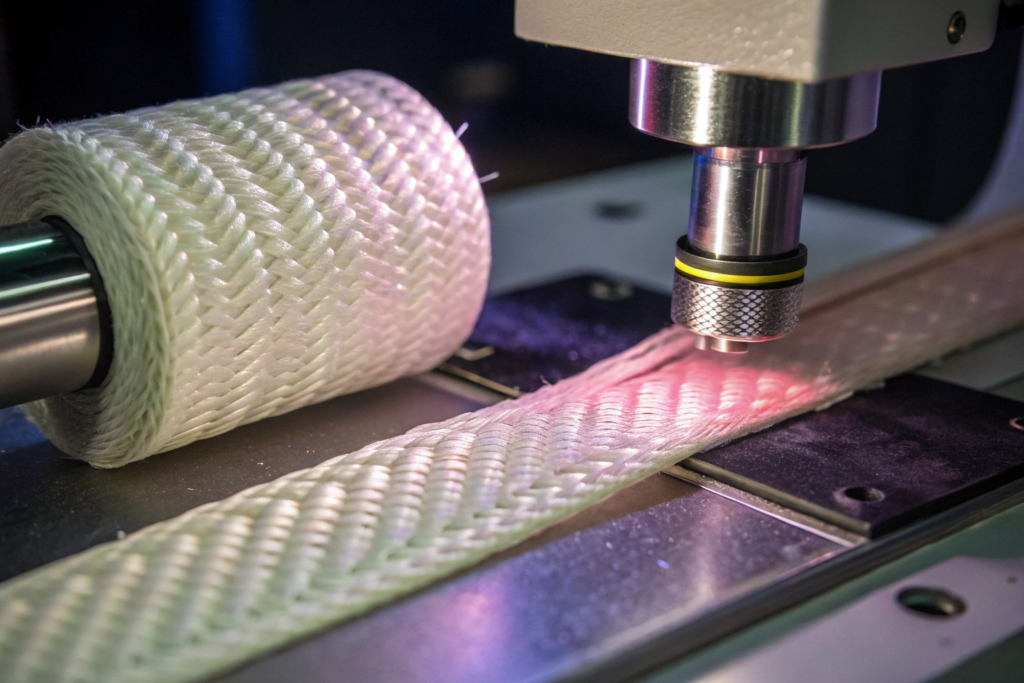
Think of it like concrete and rebar. The natural fiber gives the structure, and the biopolymer gives the tensile strength or the flexibility. For instance, Chitosan, which we extract from crustacean shells (a waste product from the seafood industry), is a powerful biopolymer. When we apply it as a finish to cotton, it bonds at a molecular level, creating a fabric that is naturally antibacterial and antifungal without using harsh chemical finishes like silver nanoparticles.
Can we use Chitosan from shrimp shells to make odor-resistant cotton?
Absolutely, and it's one of the coolest things we do. In 2024, we ran a trial for a Korean sportswear brand. They wanted a "natural" base layer that didn't stink after a marathon. We took our standard 180g organic cotton jersey and ran it through a finishing bath with a 2% Chitosan solution. The result? It passed the JIS L 1902 antibacterial test with a reduction of Staphylococcus aureus of over 99%. The Chitosan, which carries a positive charge, binds to the negative cell walls of bacteria and disrupts them. It's a mechanical kill, not a chemical poison, so the bacteria don't develop resistance. The downside we saw? It reduces the fabric's absorbency slightly, and it can yellow over time if exposed to too much chlorine. But for a niche product like eco-friendly activewear for sensitive skin, it was a home run. We are now scaling this up for a Japanese client who wants "marine-friendly" swimwear lining.
What happens when you blend bamboo with PHA for denim?
We call this the "bio-stretch" project. Denim buyers always want stretch. Usually, we use Spandex (Elastane). But Spandex is the enemy of recycling—it ruins the pulp if you try to make recycled cotton. So, a Dutch denim brand challenged us: "Give us stretch, but no elastane." We experimented with weaving PHA (Polyhydroxyalkanoate) filaments into the weft direction of a bamboo/cotton warp. PHA is stiff, but it has "shape memory." When we washed the denim, the PHA filaments relaxed, but they didn't stay stretched out like cotton would. They pulled back. This created a "mechanical stretch" that felt different than spandex—it was more of a "recovery" than a stretch. The fabric held its shape better through the day. The first batch had a 15% variance in the stretch rate, which was unacceptable. We had to work with our supplier in Thailand to standardize the PHA filament thickness. Now, we can offer a compostable denim with 20% stretch that feels rigid but moves with the body. It's a premium product, but it sells.
Where Are Biopolymers Hiding in Fast Fashion Supply Chains Right Now?
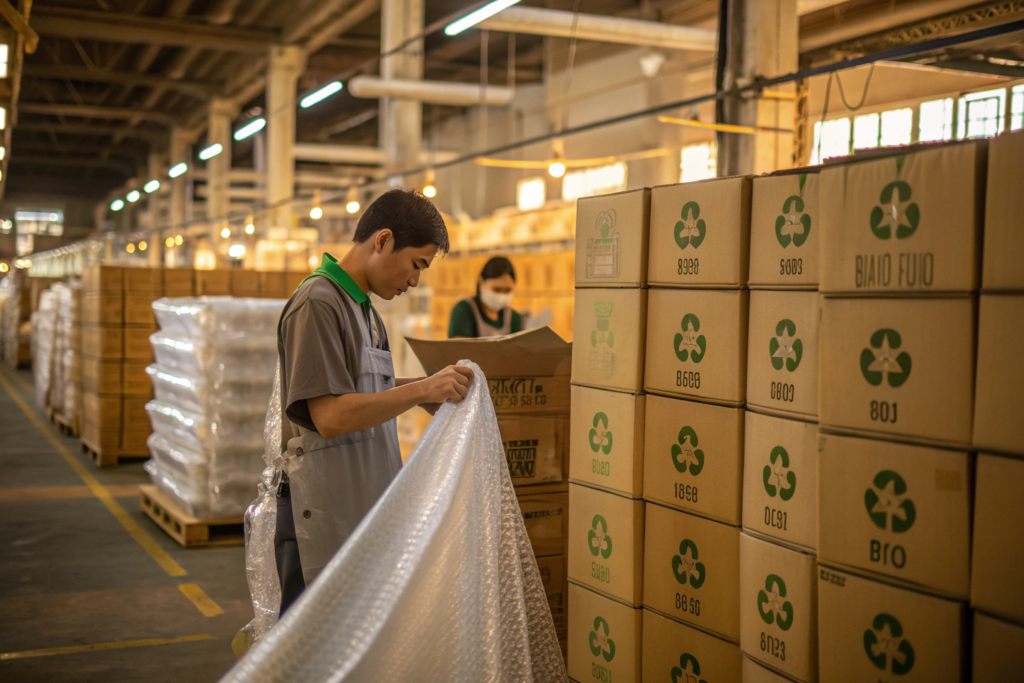
You might not see "100% PLA" on a H&M tag yet, but biopolymers are already in your wardrobe. They are hiding in plain sight, usually in the parts of the garment that are invisible—the interlinings, the sewing thread, the labels. This is where the risk of failure is lowest, and the sustainability win is easiest to claim.
Fast fashion brands are terrified of performance failure. If a zipper breaks, the customer returns the jeans. So, they test new materials in low-stakes areas first. The fusible interlining in your jacket collar? That could be a non-woven made from PLA. The care label that tells you how to wash it? Often made from a biopolymer film now. It's a safe way to reduce the overall plastic load of the garment without risking the fit or durability of the main fabric.
Why are sewing threads and care labels the first movers?
Because the standards are different. For a care label, it just has to survive one wash cycle to be read. It doesn't need the tensile strength of a seam thread. In 2021, we started supplying a huge Portuguese fashion group with PLA-based threads for attaching their leather patches to denim. The catch? The thread had to withstand the stone-washing process. Stone washing involves pumice stones and sometimes enzymes banging against the fabric for hours. Standard PLA thread snapped. We had to go to a high-tenacity PLA variant and actually increase the thread thickness by 10% to stop the breakages. We also had to lubricate the thread differently to handle the friction of the industrial sewing machine needles. It took six months to perfect. Now, it's a standard option we offer. For sustainable packaging and trim suppliers, this is a growing niche. We even have a client who uses our PLA thread for "dissolvable" embroidery on hospital scrubs—once you wash them, the embroidery disappears, repurposing the garment.
Are biopolymer coatings replacing plastic laminates for waterproofing?
Yes, and this is moving faster than I expected. Traditional waterproofing means PVC or Polyurethane laminates. Neither is biodegradable. But new bio-based PU alternatives are hitting the market. These aren't entirely made from plants—usually about 30-50%—but it's a start. We recently worked with a German luggage brand to coat a heavy cotton canvas with a bio-PU derived from castor oil. The coating didn't yellow as fast as standard PU, which was a bonus. The challenge was the adhesion. The bio-PU had a different surface tension, so it kept peeling off the cotton in our initial trials. We solved it by adding a primer layer made from the same bio-PU, thinned out with water. It added a step to our coating factory processes, but the result is a fabric that is 100% recyclable (no mixed materials) and water-resistant. For our US customers worried about tariffs on Chinese synthetics, this natural-heavy composition often qualifies for different, lower tariff codes. It's a small hack, but it saves them thousands of dollars per container.
Conclusion
So, what is the role of biopolymers in future sustainable fabrics? From where I sit, running the looms and the dye vats here in Keqiao, the role is not to replace everything overnight. That's impossible. The role is to replace the parts that matter most. We use them to solve microplastic pollution in activewear, to add performance (like natural odor resistance) to cotton without chemicals, and to hide in the seams and labels of fast fashion to quietly reduce its environmental load.
The truth is, working with these materials is harder. It requires lower heat, gentler dyes, and more expensive raw materials. It forces us to be honest with you about composting infrastructure that doesn't fully exist yet. But we are doing it. We've burnt the samples, we've ripped the seams, and we've redyed the batches until they worked. We are ready to scale this with you.
If you are a brand owner, a buyer, or a designer looking to navigate this shift—whether you need a fully compostable denim, a Chitosan-treated cotton, or just a reliable source for PLA linings—let's talk. We handle everything from yarn sourcing to shipping, and we know how to clear customs without getting hit by US tariffs.
Reach out to our Business Director, Elaine, directly to start your next project. She'll walk you through our lab reports and help you choose the right biopolymer for your specific needs. Her email is elaine@fumaoclothing.com. Let's build something that doesn't last forever—in the best possible way.