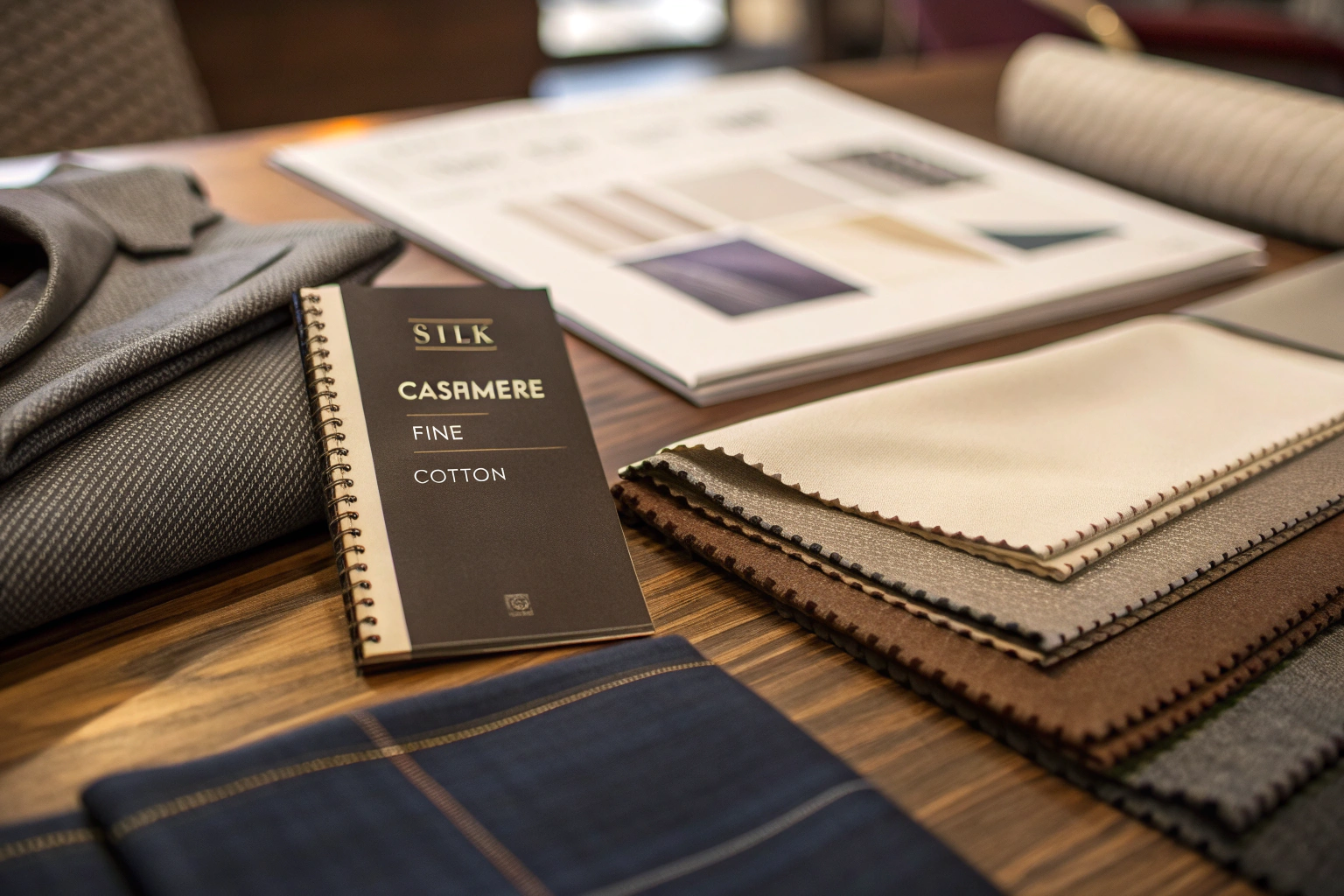
I've been in the textile industry for over 20 years, and I've watched hundreds of brands come and go.
Some succeed. Some fail. And I've spent a lot of time thinking about why.
Here's what I've noticed.
The brands that succeed—the ones that build real loyalty, that command premium prices, that survive market downturns—they all have one thing in common.
They care about fabric.
Not just as a material to make clothes. But as a fundamental part of their brand identity.
I've seen a Scandinavian minimalist brand build a cult following around their signature organic cotton jersey. I've watched a Japanese denim brand command $400 for a pair of jeans because customers trust their fabric. I've worked with a French luxury house that rejects more fabric than they accept because their quality standards are non-negotiable.
These brands understand something that a lot of newcomers miss.
Your fabric is not just a cost line on your P&L. It is the physical embodiment of your brand promise.
Today, I want to walk you through what I've learned about the relationship between fabric quality and brand positioning. I'll share stories from clients I've worked with, mistakes I've seen, and how you can use fabric to build a stronger brand.
How Does Fabric Quality Translate Into Brand Perception?
Let me start with a simple truth.
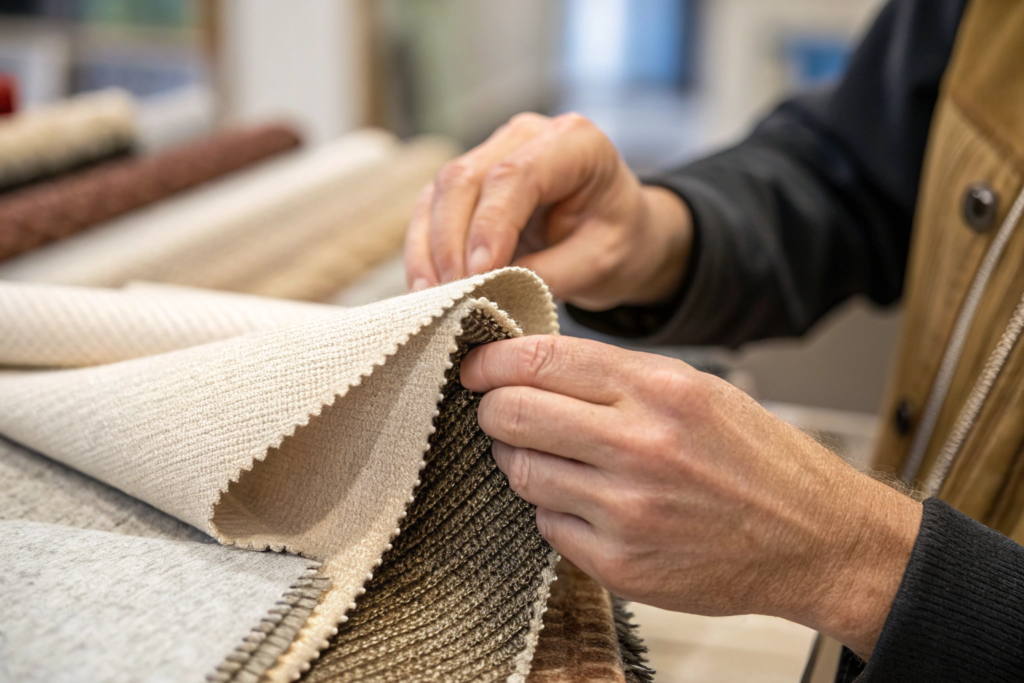
Your customer touches your product before they buy it. Even online, they touch it when it arrives.
And that first touch creates a judgment that no amount of marketing can override.
What Happens When a Customer Touches Your Fabric?
I'm going to tell you about two clients.
Client A came to us in 2022. They were launching a mid-priced women's wear collection. They wanted the cheapest fabric that would look decent in photos.
We sourced a standard cotton-poplin for their shirts. It was fine. It passed basic tests. It looked acceptable on a hanger.
Client B came to us the same year. They were launching a premium line. They wanted a 100% Egyptian cotton poplin with a specific thread count, a specific finish, and a specific handfeel. They paid 40% more per meter.
Both collections launched. Both looked good on Instagram.
But six months later, I heard from both clients.
Client A was struggling. Their return rate was 12%. Customer reviews mentioned "feels cheap" and "not as nice as I expected." They were discounting heavily to move inventory.
Client B was thriving. Their return rate was 3%. Customer reviews mentioned "beautiful fabric" and "feels luxurious." They were selling at full price and reordering.
Same category. Same basic garment. Different fabric. Different outcome.
When a customer puts on a garment, they feel the fabric against their skin. They feel the weight, the texture, the drape. If it feels good, they associate that feeling with your brand. If it feels cheap, they associate that too.
I've seen this play out over and over.
In 2023, a US-based denim brand switched from a standard cotton denim to a premium Japanese selvedge for their core collection. The fabric cost increased by 35%. Their retail price increased by 25%. Their sales increased by 40%.
Why? Because their customers could feel the difference. The selvedge denim felt substantial, had a deeper indigo color, and developed better fading over time. The brand built a reputation for quality that attracted new customers.
How Does Fabric Quality Affect Customer Loyalty?
This is where the real value lies.
Acquiring a new customer is expensive. Retaining an existing customer is cheap. And fabric quality is one of the biggest drivers of retention.
Think about your own experience.
You buy a t-shirt. You wash it five times. It still feels soft. It hasn't lost its shape. The color hasn't faded. What do you do? You buy more from that brand.
You buy a different t-shirt. You wash it twice. It shrinks. The fabric feels rough. The color looks dull. What do you do? You never buy from that brand again.
In 2024, we conducted a small survey with five of our retail clients. They sell in the US and Europe. We asked them about their return reasons.
The top reason for returns? Fit issues related to shrinkage.
The second reason? Fabric that didn't meet expectations—too thin, too rough, didn't drape as expected.
Both of these are fabric quality issues. Both lead to returns, which cost money. Both lead to lost customers, which cost even more.
A UK-based client told me their customer lifetime value increased by 35% after they upgraded their fabric quality. Customers who bought their premium collection were three times more likely to purchase again within six months.
The math is simple. Better fabric = happier customers = more repeat purchases = stronger brand.
What Are the Different Ways Brands Use Fabric for Positioning?
Not all brands use fabric the same way.
The way you position your brand determines what kind of fabric you need. And the fabric you choose reinforces that positioning.
How Do Luxury Brands Use Fabric to Justify Premium Prices?
Luxury is about exclusivity, craftsmanship, and sensory experience.
For a luxury brand, fabric is not just a material. It is a statement.
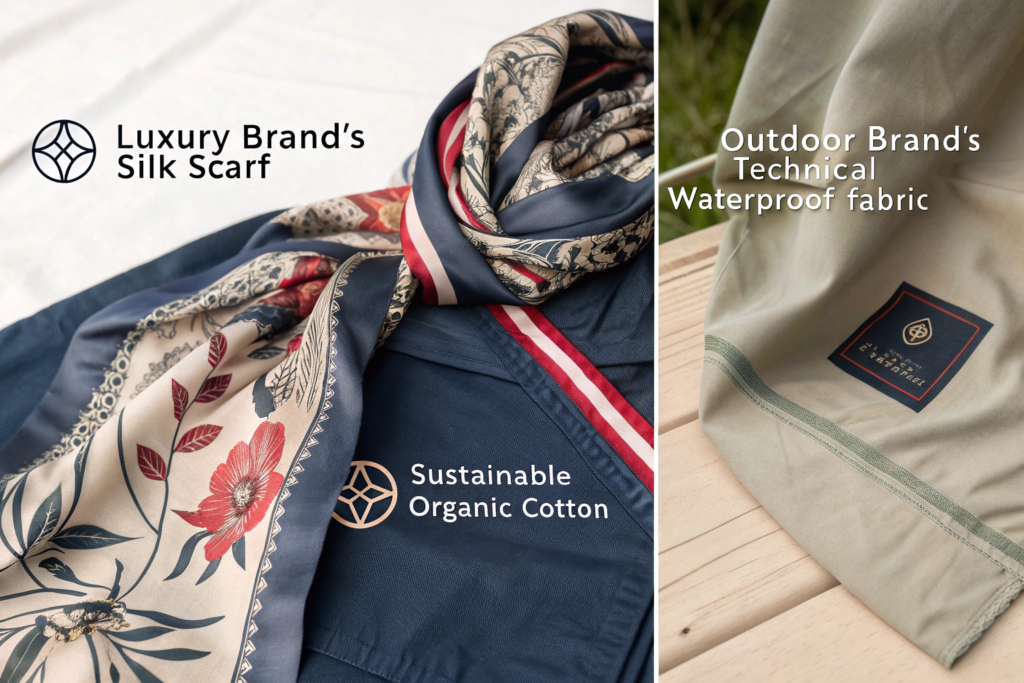
I worked with a French luxury brand in 2023. They were developing a collection of silk blouses. They didn't want standard silk. They wanted a specific type of silk from a specific region in China, woven on specific looms, with a specific weight and luster.
The silk cost three times what standard silk costs. The production volume was small. The entire project was complex.
But the blouses retailed for over $1,000 each. And they sold out.
Why? Because the brand could tell a story about the fabric. The customer wasn't buying a blouse. They were buying a piece of craftsmanship with a story.
Luxury brands also use fabric to control supply.
A Swiss luxury brand we work with buys the entire production of a specific cotton farm in Egypt. No other brand can get that cotton. That exclusivity becomes part of their brand story.
When a customer buys their shirt, they're buying fabric that literally no one else can offer.
How Do Performance Brands Use Fabric to Build Credibility?
Performance brands—outdoor gear, sportswear, athleisure—use fabric differently.
For these brands, fabric is about function. It needs to deliver measurable results.
I've worked with a Scandinavian outdoor brand for over a decade. They don't care about how fabric looks in a showroom. They care about how it performs in the field.
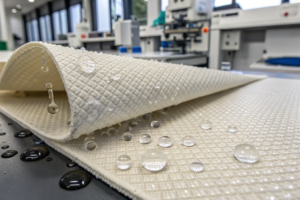
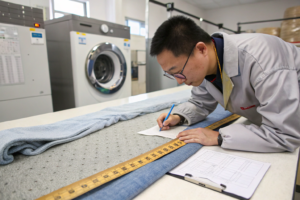
Every fabric we develop for them goes through rigorous testing. Hydrostatic head. Breathability. Tear strength. Abrasion resistance. UV protection. They want numbers.
When they launch a jacket, they don't just say it's waterproof. They say it has a 20,000mm hydrostatic head. They say it's tested to withstand 50,000 rubs on the Martindale test.
Their customers trust these claims because the brand has built credibility through consistent performance. And that credibility starts with fabric that delivers the promised specifications.
In 2024, we developed a new fabric for this brand—a recycled nylon with a PFAS-free waterproof membrane. The fabric exceeded all their performance targets. They launched a jacket using this fabric with a retail price of $450. It sold out in three weeks.
Their customers weren't just buying a jacket. They were buying the guarantee that the fabric would keep them dry in a storm.
How Do Sustainable Brands Use Fabric to Attract Conscious Consumers?
This is the fastest-growing segment I'm seeing.
Sustainable brands use fabric to communicate their values.
I have a client from Germany who built their entire brand around GOTS-certified organic cotton. Every fabric they use is certified. Every supplier is audited. Every transaction certificate is tracked.
Their customers pay a premium because they trust the certification. They know the fabric was grown without pesticides. They know the workers were treated fairly. They know the dyeing process didn't pollute local water.
In 2023, we helped a US-based sustainable brand develop a fabric made from recycled ocean plastic. The plastic was collected from coastal communities in Southeast Asia, processed into pellets, extruded into yarn, and woven into fabric.
The fabric cost more than virgin polyester. But the brand was able to tell a powerful story. Every jacket they sold removed plastic from the ocean. Their customers loved it. The collection sold out in pre-order.
The fabric wasn't just a material. It was proof of the brand's mission.
How Can Smaller Brands Compete on Fabric Quality?
I hear this question all the time.
"David, we're a small brand. We don't have the budget for premium fabrics. How can we compete?"
Here's what I tell them.
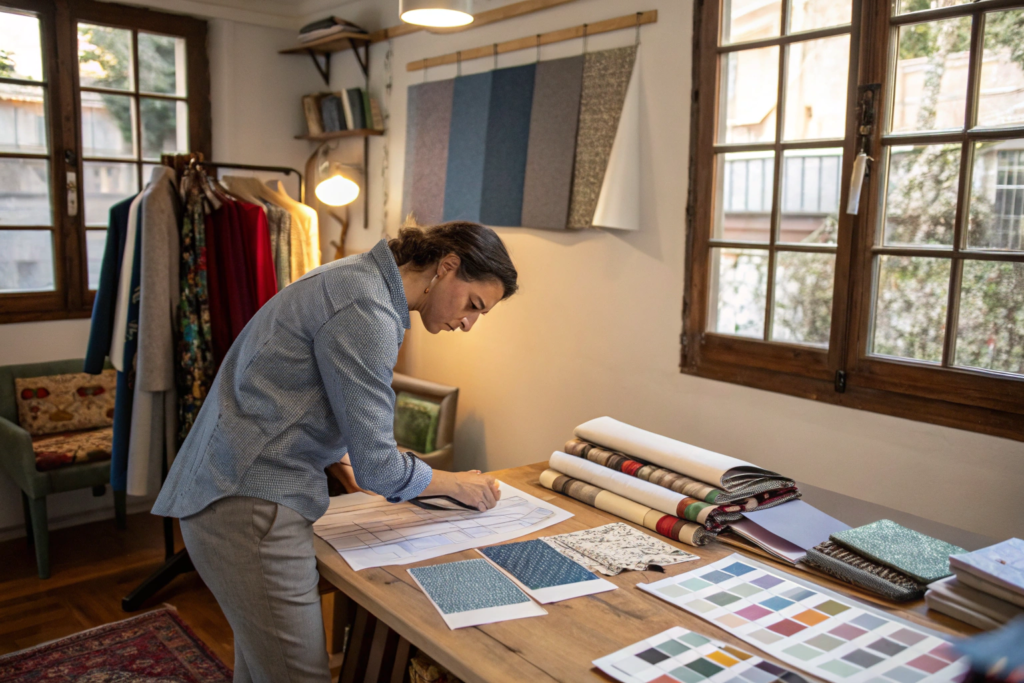
You don't need to use the most expensive fabric. You need to use the right fabric for your positioning. And you need to be smart about how you source it.
What's the Smart Way for Small Brands to Source Quality Fabric?
Let me give you a strategy that works.
Strategy 1: Start with one signature fabric.
Instead of trying to source ten different fabrics for ten different styles, focus on one fabric that defines your brand.
A US-based t-shirt brand did this brilliantly. They started with one fabric—a custom-developed 100% combed cotton jersey. They obsessed over the weight, the handfeel, the shrinkage, the color. They built their entire brand around that fabric.
Today, they sell over 100,000 t-shirts a year. They still use the same fabric. Their customers know exactly what to expect when they order.
Strategy 2: Work with suppliers who offer small minimums.
This is a big change from when I started in this industry.
When I started, mills wouldn't talk to you unless you ordered 10,000 meters. Today, many mills—including ours—work with smaller brands.
At Shanghai Fumao, we offer small-batch customization. You can order 500 meters of a custom-developed fabric. We'll help you develop the fabric, test it, and produce it.
In 2024, we worked with a Canadian swimwear startup. They ordered 800 meters of a custom recycled nylon-spandex in their signature print. The fabric was high-quality. The minimum was manageable for their budget. They launched their collection and sold out in two months.
Strategy 3: Use fabric to tell your story.
You don't need to be a luxury brand to have a fabric story.
I worked with a UK-based brand that uses fabric made from nettles grown in the UK. The fabric is not the softest. It's not the cheapest. But it has a story. The brand is built around local materials and traditional techniques.
Their customers love the story. They pay a premium for it.
Another client uses deadstock fabric—fabric that was leftover from larger brands' production runs. They source small quantities of high-quality fabric that would otherwise go to waste. Their brand story is about sustainability and uniqueness. And because deadstock fabric is often discounted, they get premium quality at lower prices.
How Do I Balance Fabric Quality with Production Costs?
This is the real challenge.
You can't use the best fabric for everything. Your cost structure won't allow it.
Here's how we help our clients prioritize.
High-touch areas get the best fabric. The parts of the garment that touch the customer's skin—the collar, the cuffs, the lining—these areas need the best quality. You can save money on areas that aren't as noticeable.
Color consistency matters more than you think. Cheap fabric often has color variations between rolls. That variation makes your product look inconsistent. Investing in better dyeing and quality control pays off.
Shrinkage control is non-negotiable. I've said it before and I'll say it again. A garment that doesn't fit after washing is a garment that gets returned. Pre-shrinking adds cost, but it's cheaper than handling returns.
A New York-based womenswear brand learned this in 2023. They were using a lower-cost fabric to hit their price point. The fabric had inconsistent shrinkage. Some pieces fit. Some didn't. Their return rate hit 15%. They were losing money on every order.
They switched to our pre-shrunk fabric. The material cost increased by 10%. Their return rate dropped to 4%. Their net profit increased by 8% because they stopped losing money on returns and chargebacks.
What's the ROI of Investing in Better Fabric?
Let me put this in numbers.
Because at the end of the day, you need to make business decisions based on what delivers results.
What Metrics Should I Track to Measure Fabric's Impact?
Here are the metrics I track with my clients.
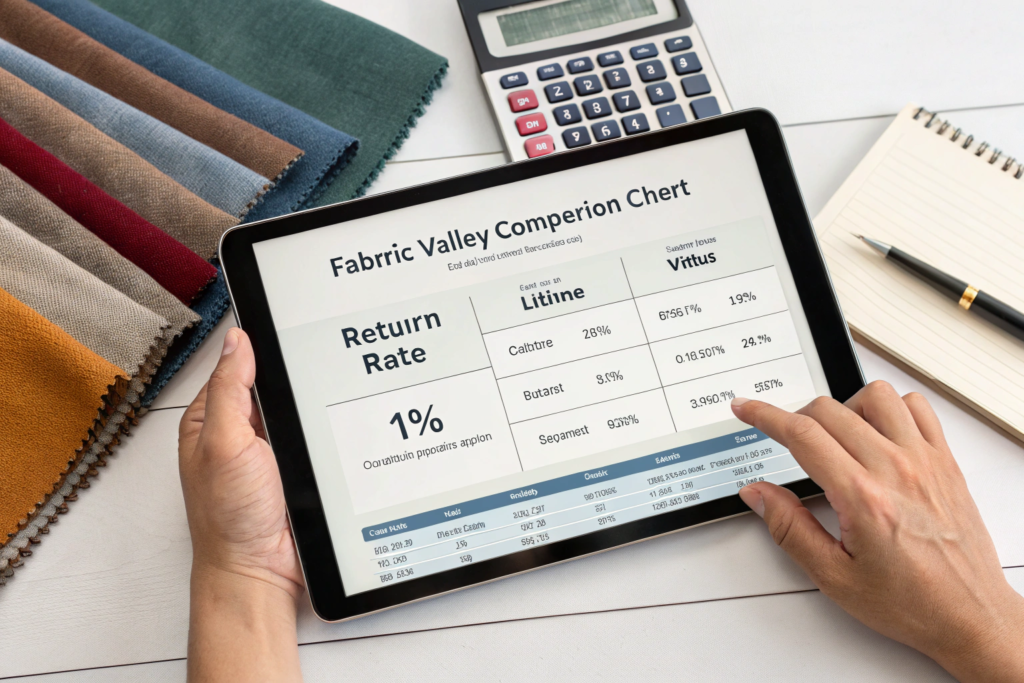
Return rate. This is the most direct measure. If your fabric causes fit issues, fading, or pilling, your return rate will be higher. A 5% improvement in return rate can save thousands of dollars.
Customer lifetime value. Customers who love your product buy again. If your fabric quality creates loyal customers, your CLV increases.
Average order value. Customers who trust your quality are more likely to buy multiple items or upgrade to higher-priced items.
Gross margin. Better fabric costs more. But if it reduces returns and increases repeat purchases, your net margin can actually improve.
Let me give you a real example.
A UK-based menswear brand we work with did an analysis in 2024. They compared their premium line—which uses our high-quality fabric—to their entry-level line—which uses standard fabric.
| Metric | Entry-Level Line | Premium Line |
|---|---|---|
| Fabric cost per garment | $4.50 | $7.20 |
| Retail price | $49 | $79 |
| Return rate | 8% | 3% |
| Repeat purchase rate (6 months) | 18% | 32% |
| Gross margin per garment | $44.50 | $71.80 |
The premium line has a higher fabric cost. But the higher retail price, lower return rate, and higher repeat purchase rate make it significantly more profitable.
How Do I Justify Better Fabric to My Team or Investors?
If you're a designer or product developer, you've probably had this conversation.
You want to use better fabric. Your finance person wants to save money.
Here's what I tell my clients to do.
Show the total cost, not just the material cost.
A cheaper fabric might save you $1 per meter. But if it increases your return rate by 5%, you're losing money on returns, shipping, and lost customer trust.
Show the competitive advantage.
If your competitors are using standard fabric, better fabric sets you apart. It gives you a reason to charge more. It gives your customers a reason to choose you.
Show the brand alignment.
If your brand is positioned as premium, sustainable, or performance-driven, your fabric needs to match that positioning. Using fabric that doesn't match your brand promise creates a disconnect that customers will notice.
A Swedish outdoor brand told me they frame it this way internally: "Fabric is the product. Everything else is packaging." I like that. Because it's true.
Conclusion
I've been in this industry for over 20 years. I've seen trends come and go. I've seen brands rise and fall.
The ones that last—the ones that build something real—they understand that fabric is not a commodity. It is the foundation of their brand.
Your fabric is the first thing your customer touches. It's what they feel against their skin. It's what determines how long their garment lasts. It's what they remember when they think about your brand.
When you invest in better fabric, you're not just spending money. You're investing in customer satisfaction. You're reducing returns. You're building loyalty. You're creating a brand that people trust.
At Shanghai Fumao, we've built our business around this understanding. We don't just sell fabric. We help brands build their identity through fabric.
We work with you to develop the right fabric for your positioning. We test it. We certify it. We produce it with consistency. We pre-shrink it so your garments fit. We provide the documentation you need to tell your story.
Because your brand deserves fabric that lives up to your promise.
If you're building a brand—whether you're just starting or you're ready to level up—I invite you to reach out.
Let's talk about your vision. Let's talk about your customers. Let's find the fabric that tells your story.
Ready to build your brand with the right fabric? Contact our Business Director, Elaine, directly at elaine@fumaoclothing.com. She'll help you develop a fabric strategy that aligns with your brand positioning and delivers real business results.