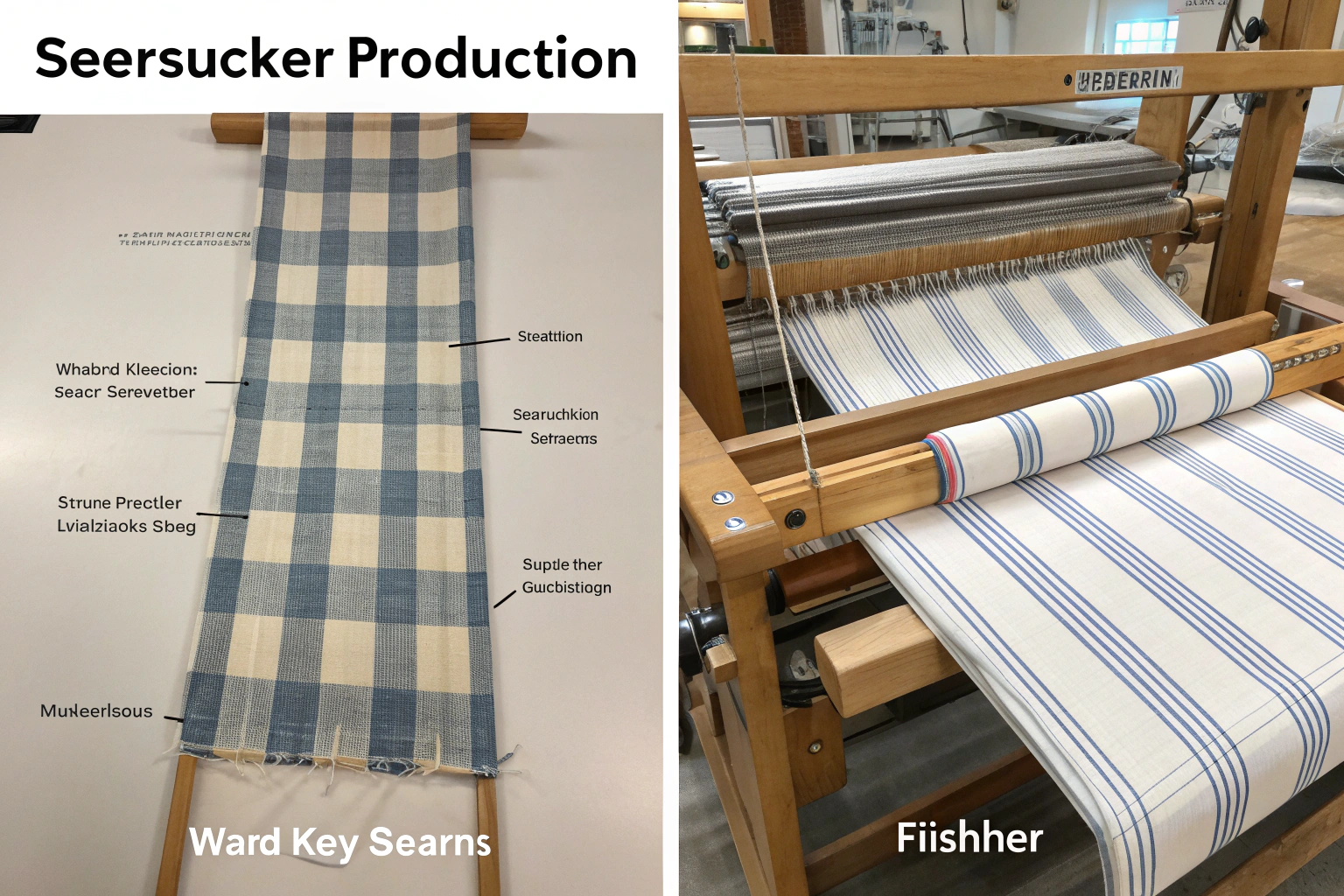
I'll never forget the first time a young designer asked me, "Can you make seersucker, but in a stretch jersey?" She thought seersucker was just a pattern—like stripes or polka dots. She didn't realize it's a construction. You can't print puckers onto fabric. You have to weave them in. I had to explain that seersucker is born on the loom, not in the dye house.
Seersucker is one of those fabrics that looks complicated but is actually based on a simple, clever idea: tension. By feeding some yarns tighter and some yarns looser, we create those signature puckers and stripes. It's been around for over a hundred years, and it's still one of the best fabrics for hot weather because the puckers keep the fabric off your skin, allowing air to circulate.
At Shanghai Fumao, we've been weaving seersucker for decades. We make it for shirting, for summer suiting, for dresses, and even for home textiles. The process hasn't changed much since it was invented, but we've gotten faster and more precise. In this post, I'm going to walk you through exactly how we do it—from the yarn on the beam to the finished roll ready for cutting.
How Does the Loom Create Those Signature Puckers?
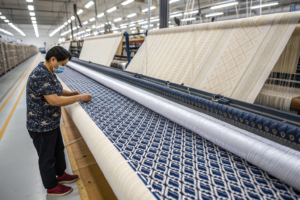
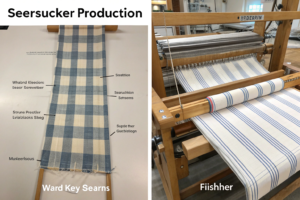
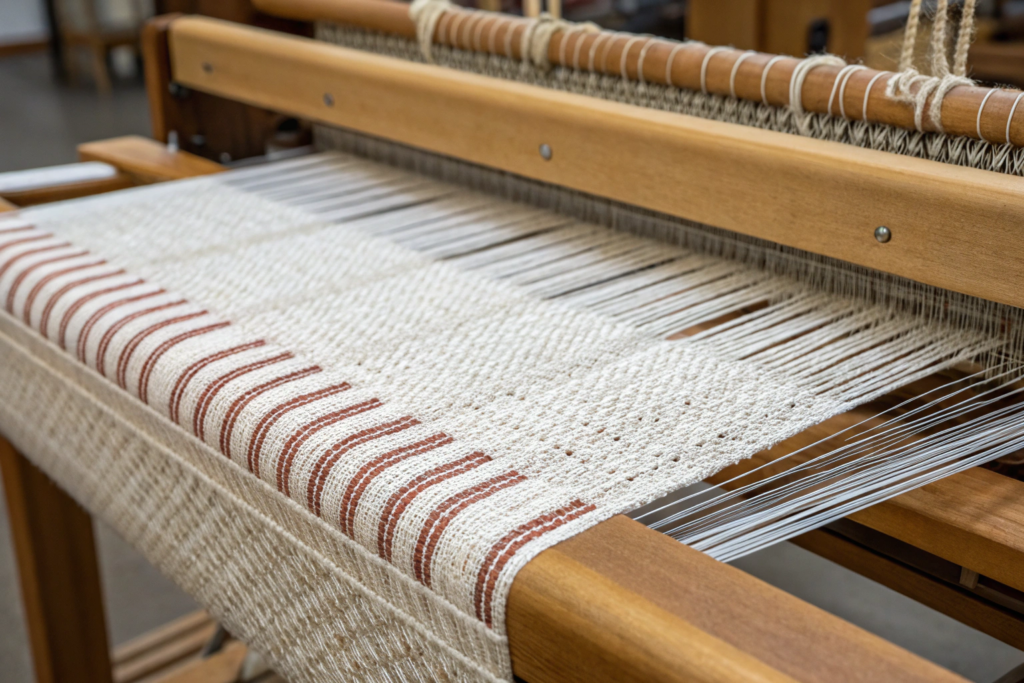
The magic happens in the warping. For a standard woven fabric, all the warp yarns are under the same tension. For seersucker, we use two beams. One beam holds the "ground" warp—these are under normal tension. The other beam holds the "effect" warp—these are fed in with much less tension, so they're slack.
When we insert the weft yarn (the one that goes side to side), it pulls on both sets of warps. The tight warps stay straight. The slack warps get gathered up, forming the puckers. The weft yarn acts like a drawstring, pulling the loose yarns together.
Why do we need two separate warp beams?
You can't just put some warp yarns under less tension on the same beam. They would all even out. The tension would equalize. So you need physically separate beams, each with its own tension control. The ground beam is braked harder. The effect beam is allowed to feed more freely. It's a delicate dance. If the tension difference is too small, you get no pucker. If it's too big, the slack yarns can break or get caught.
We had a client from India in 2022 who wanted a very dramatic, deep pucker for a resort wear collection. We increased the tension differential by 30%. The first trial was a mess—the slack ends kept snapping. We had to reduce the speed of the loom by 40% to keep the fabric running. It took us a week to dial in the settings. The final fabric was beautiful, but it taught us that extreme puckers come at a cost: slower production. For more on seersucker weaving mechanics, Textile School has a good technical overview.
What happens if the tension isn't perfectly balanced?
You get a defect called "ladders" or "smiles." The puckers should form in straight lines along the length of the fabric. If the tension is uneven across the width, some puckers will be deeper than others, or they'll wander. It looks messy. We check this constantly during production. Our weavers walk the looms and feel the fabric. If a pucker feels weak in one spot, they adjust the tension on that section of the beam. It's part art, part science.
I remember a batch we made for a US brand in 2021. The first 500 meters looked perfect. Then a tension spring broke on one side of the loom. For the next 200 meters, the puckers on the left edge were weak. We caught it during inspection, cut out the defective section, and re-spliced. The client never knew, but it cost us time and fabric. That's why constant monitoring is key.
What Yarns Work Best for Seersucker?
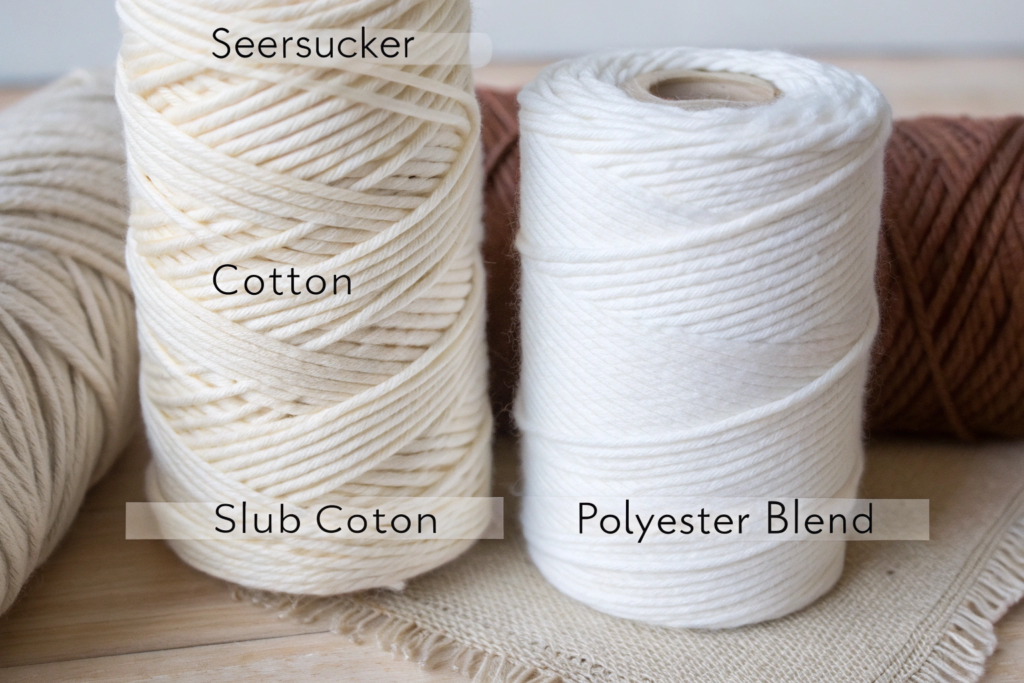
The yarn choice is critical. The ground warp (the tight one) needs to be strong and stable. It's under constant tension. The effect warp (the slack one) can be softer, and often we use a different yarn entirely to enhance the texture.
Traditionally, seersucker is 100% cotton. But we've done it in linen, in polyester blends, and even in silk for luxury markets.
Why is cotton the traditional choice?
Cotton has the perfect balance of strength and flexibility. It can withstand the tension of the ground warp, but it also has enough "give" to form the puckers without breaking. Plus, cotton breathes. Seersucker is a summer fabric, so breathability is key. We use long-staple cotton for the best seersucker—Egyptian or Supima. The longer fibers mean fewer breaks and a smoother surface on the flat stripes.
For a Japanese client making high-end men's shirts, we used a 100s two-ply cotton for the ground and a single 80s cotton for the effect. The ground was super fine and strong; the effect was slightly thicker and softer, which made the puckers more pronounced. The combination was expensive—over $8 per yard—but the shirts retailed for $400. The Cotton Incorporated site has great resources on yarn quality for different fabric constructions.
Can you use polyester or blends for easier care?
Yes, and we do it a lot for the uniform market. Polyester/cotton blends (like 65/35) hold the pucker well and are much easier to care for. They don't wrinkle as much, and they dry faster. But they don't breathe as well as 100% cotton. For a police uniform contract in a hot climate, we made a seersucker blend. The puckers kept the fabric off the skin, and the polyester added durability. The officers loved them because they didn't need ironing. The downside? The luster is different. Polyester has a slight shine that purists don't like. For more on polyester/cotton blend properties, FabricLink has good comparisons.
How Is Seersucker Different from Plissé?
This is a common point of confusion. There's real seersucker, which is woven, and there's a fake version called plissé, which is made with chemicals. The difference matters for durability and quality.
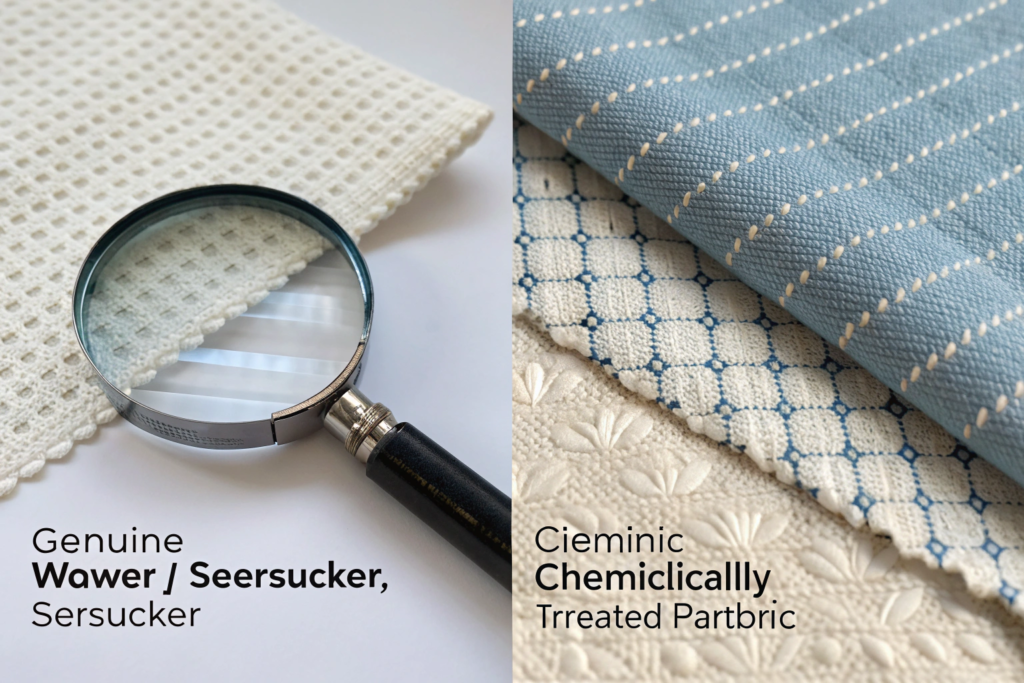
Plissé is made by printing a caustic chemical onto a regular fabric, usually cotton. The chemical shrinks the fibers where it's applied, creating a puckered effect. It's cheaper and faster than weaving seersucker. But the puckers wash out over time.
How can you tell real seersucker from plissé?
Look at the back of the fabric. Real seersucker has the same puckered pattern on both sides. It's woven that way. Plissé is usually flat on the back—only the front has been treated. Also, real seersucker's puckers run in straight lines along the length of the fabric. Plissé can have patterns—flowers, geometric shapes—because the chemical is printed on. But those patterns fade.
A client from Brazil once ordered "seersucker" from a cheaper supplier. They got plissé. After five washes, the puckers were almost gone. Their garment looked like a wrinkled mess. They came to us for the real thing. We explained the difference, and they've been buying woven seersucker ever since. For a detailed explanation, Threads Magazine had a good article on distinguishing the two.
Is plissé ever a good choice?
For cheap, disposable fashion, sure. If you only need the garment to last one season, plissé is fine. It's much cheaper—maybe 30-40% less than woven seersucker. For children's wear that gets outgrown quickly, it can work. But for anything that will be washed repeatedly, like a summer shirt or a uniform, you need the real thing. The woven puckers are permanent. They're part of the structure. They won't wash out, ever.
What Are the Finishing Steps for Seersucker?
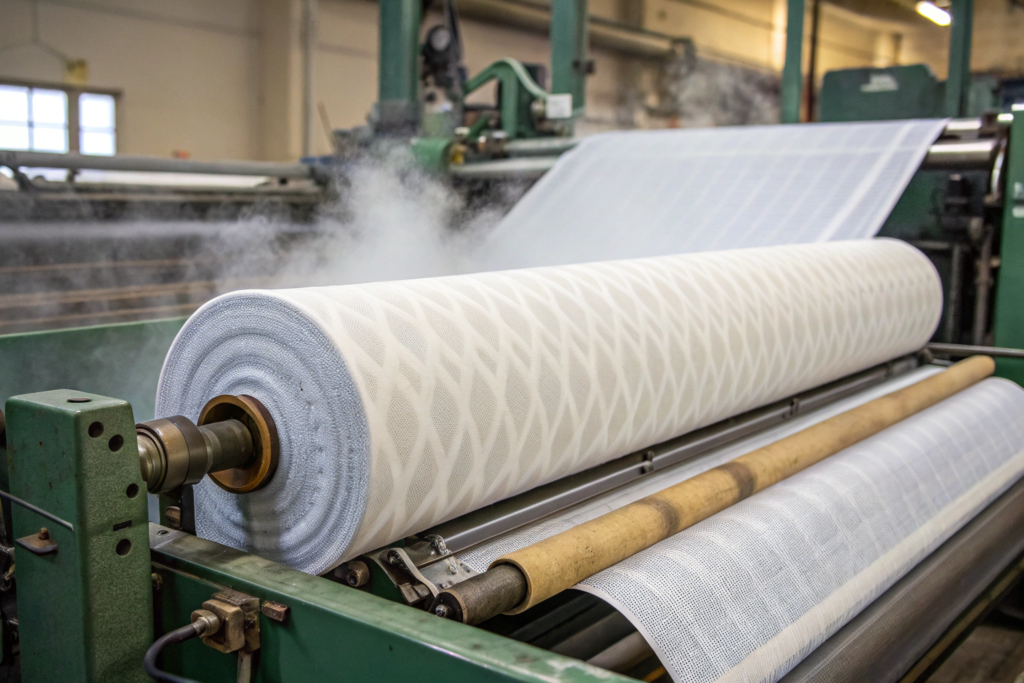
Once the fabric comes off the loom, it's called "greige." It's stiff, beige, and full of natural impurities. The finishing process brings it to life—cleaning it, setting the puckers, and adding color.
The key is to not flatten the puckers. We have to be gentle in the finishing range. Too much tension, and the puckers pull out.
How do you dye seersucker without flattening the texture?
Carefully. We use jet dyeing machines for piece-dyed seersucker. The fabric moves through the dye bath in a rope form, not open width. This keeps the tension low and allows the fabric to move freely. The puckers stay intact. For yarn-dyed seersucker (where the stripes are colored), we dye the yarns before weaving. That's even better for preserving the texture because the fabric never goes through a high-tension dye bath.
For a French client making nautical-themed shirting, we did yarn-dyed seersucker with navy and white stripes. The colors were deep, and the puckers were crisp. The finishing was just a light wash and a gentle dry. No calendering, no heavy pressing. The AATCC test methods for dimensional stability are important here—we have to ensure the puckers don't relax out during the customer's first wash.
Do you need special care instructions for seersucker garments?
Yes, and we put them on every hang tag. The biggest mistake people make is ironing seersucker. You don't iron seersucker. The puckers are the point. If you iron it flat, you ruin it. We tell consumers to wash in cold water, tumble dry low, and remove promptly. If they must remove wrinkles, use a steamer, not an iron. And never, ever dry clean with pressing. The dry cleaner will press it flat.
We had a client in Australia who ignored this. They sent their seersucker summer suits to a regular dry cleaner. The cleaner pressed them. The suits came back flat and sad. The client had to explain to 50 customers that the suits weren't defective—they'd just been ironed. Now they include a "do not iron" tag prominently.
Conclusion
Seersucker is a testament to clever engineering. By simply varying the tension of yarns on the loom, we create a fabric that is cooler, more comfortable, and more interesting than flat cloth. It's not a print. It's not a chemical trick. It's pure textile mechanics.
At Shanghai Fumao, we love weaving seersucker. It challenges our weavers and delights our clients. We've made it in cotton, in blends, in stripes, and in solids. We've made it for shirts, for dresses, for uniforms, and for curtains. Every time, the process is the same: two beams, careful tension, and a gentle finish.
If you're thinking about using seersucker for your next collection—whether it's classic cotton shirting or a modern blend—let's talk. We can help you choose the right yarns, dial in the pucker depth, and ensure the finishing preserves the texture.
Contact our Business Director, Elaine. She's overseen hundreds of seersucker runs and can guide you through the process. Her email is elaine@fumaoclothing.com. Let's weave something with texture.