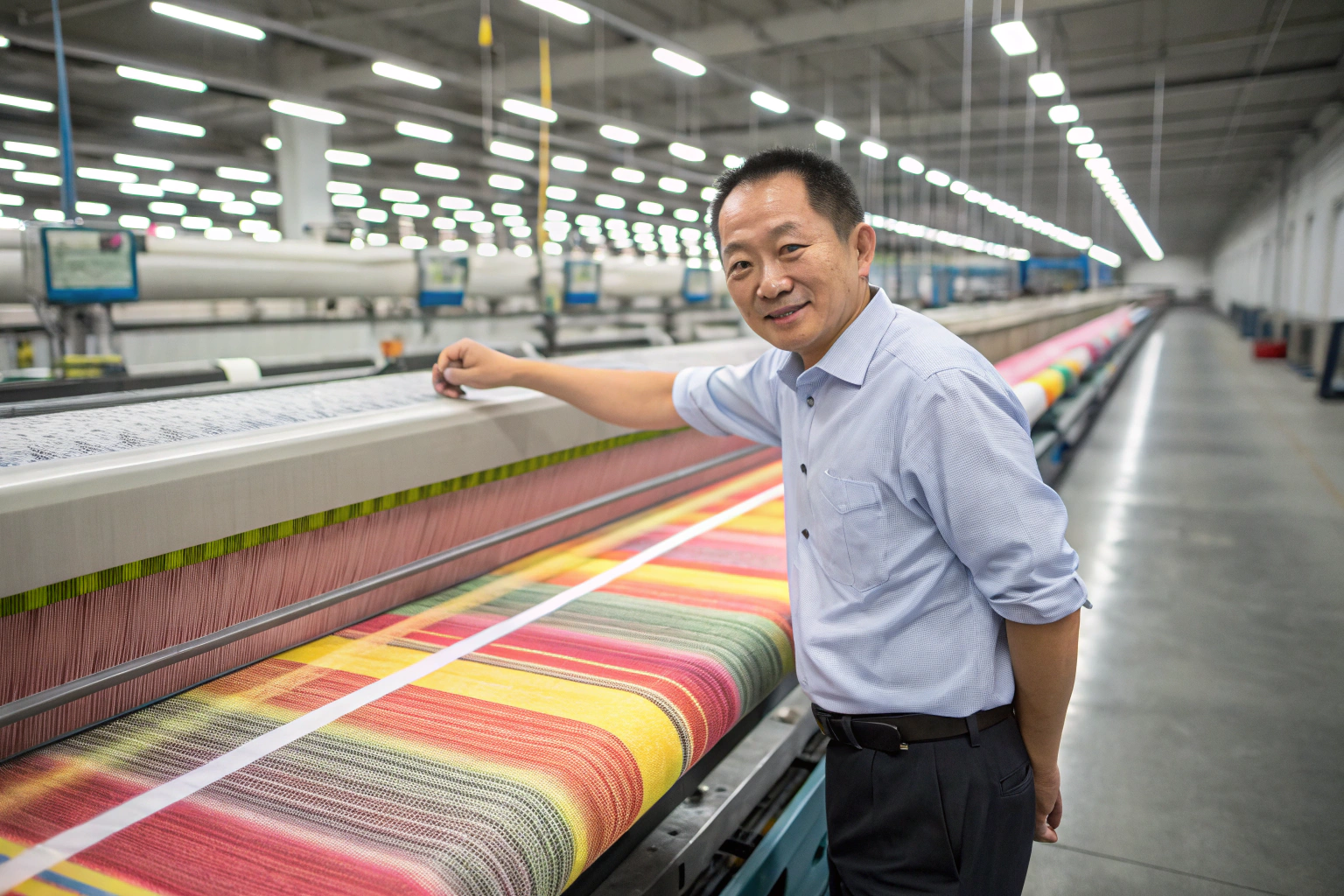
You’ve got a design in your head. Maybe it’s a bespoke jacquard for a new blazer collection. Maybe it’s a custom stripe for your menswear line. You know exactly what you want. But then comes the question that stops so many brands in their tracks: what’s the minimum order quantity? And if you’re like most of our clients, you’re thinking, “I don’t want to order 10,000 yards for a test. But I also don’t want to pay a fortune per yard for a tiny run.”
I get it. I’ve been on both sides of this conversation for over two decades. When I started in this industry, the MOQ for custom woven fabric was a brick wall. You either ordered a full container or you didn’t get to play. But things have changed. The market has changed. And at Shanghai Fumao, we’ve changed with it. We’ve built our entire custom production model around flexibility without sacrificing quality.
Let me break down exactly how our MOQs work, why they’re set the way they are, and how we can help you get the custom woven fabric you need—whether you’re a small designer or a global brand.
What Factors Actually Determine the MOQ for Custom Woven Fabric?
When a new client asks me for our MOQ, I never give them a single number. Because the truth is, it depends. A lot of suppliers will just say “1,000 yards” and leave it at that. But that answer doesn’t help you. It doesn’t explain why. And it definitely doesn’t help you plan your collection.
Let me walk you through what actually goes into setting an MOQ. This comes from real production runs we’ve done, real yarn we’ve sourced, and real machines we’ve programmed.
Why Does Yarn Type Change the MOQ?
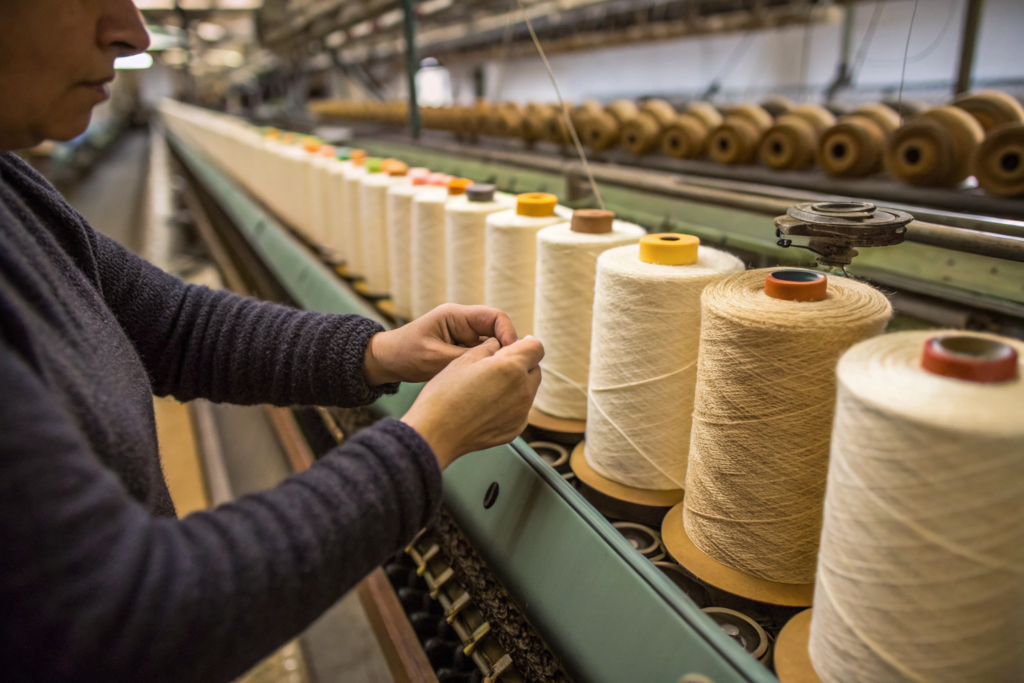
This is the biggest factor. If you want a custom woven fabric, we have to source the yarn. And different yarns have different minimums from the mills.
For standard yarns like cotton counts (say 40s or 60s) or regular polyester, we can usually buy small quantities. The yarn mills in Keqiao keep huge inventories. We can get 100kg of a standard cotton yarn without a problem. But for specialty yarns? That’s different.
I remember a client from Italy in 2023. They wanted a custom blend of cashmere and silk for a luxury shirting collection. The blend was 70% cashmere, 30% silk. Beautiful fabric. But the yarn mill required a minimum order of 200kg for that blend. That worked out to about 800 meters of finished fabric, depending on the weight. We told them upfront. They understood. They placed the order for 1,000 meters to be safe.
On the flip side, we have clients who want recycled polyester or organic cotton. These yarns are more available now. For GOTS-certified organic cotton yarn, we can often source in smaller quantities because more mills are stocking them. We’ve done custom runs with as little as 300kg of organic cotton yarn.
Here’s a simple breakdown:
| Yarn Type | Typical Yarn MOQ | Resulting Fabric Yardage (approx) |
|---|---|---|
| Standard cotton/polyester | 100-200 kg | 800-1,500 yards |
| Specialty blends (silk, cashmere) | 200-300 kg | 1,500-2,500 yards |
| Recycled or certified organic | 150-250 kg | 1,200-2,000 yards |
| In-stock yarn (our inventory) | 0 kg | As low as 500 yards |
How Does the Weave Structure Affect the MOQ?
This is something a lot of buyers don’t consider. A simple plain weave or twill is easy to set up. The loom can be programmed quickly. But a complex jacquard? That’s a different story.
Jacquard weaving requires a special loom with hundreds or thousands of individually controlled warp threads. The setup time is longer. The programming is more complex. We have to create a digital file that tells each needle when to lift. That’s a significant upfront cost in time and labor.
We did a jacquard project for a client in New York last year. They wanted a custom floral pattern for a women’s dress collection. The design was intricate—lots of small details, multiple colors in the weft. Our jacquard specialists spent three days just programming the loom and running test samples. Once we had the pattern locked in, we could run production. But because of that setup cost, we asked for a minimum of 1,200 yards. They understood. They ended up ordering 2,500 yards and used the fabric across three seasons.
For simpler weaves like poplin or twill, we can go lower. We’ve done 500-yard runs of custom-dyed cotton twill for smaller brands. The weaving setup is faster, so the cost per yard is lower even at smaller quantities.
What About Colors and Finishing?
This is where our dyeing and finishing partners come in. And this is actually where we have a lot of flexibility.
We work with two dyeing factories that are set up for small batches. They have what’s called “sample dyeing” machines that can handle 50kg to 200kg of fabric. That’s about 150 to 600 yards, depending on the weight.
For finishing, we can also do smaller batches. Anti-pilling, softeners, water-repellent coatings—all of these can be applied in smaller quantities. But there is a catch. Some finishes require a minimum to make the chemical bath effective. For example, a durable water-repellent finish usually needs at least 300 yards to be cost-effective. If you run less, the cost per yard goes up because we’re still using the same amount of chemicals.
I’ll give you a real example from early 2024. A client in Vancouver wanted a water-resistant cotton twill for outdoor jackets. They only needed 400 yards for a test run. We could do the weaving at that quantity because it was a standard 2x1 twill. But the water-repellent finish? We had to run it on a smaller machine. The cost per yard for finishing was about 15% higher than if they had ordered 1,000 yards. They were okay with that because it was a test. They placed a 3,000-yard order three months later.
Can You Really Order Less Than 1,000 Yards for Custom Woven Fabric?
The short answer is yes. The longer answer is “it depends on what you’re willing to trade off.” We’ve done custom runs as small as 300 yards. We’ve even done 100-yard runs for very specific projects. But when you go that low, something has to give. Usually, it’s either the price per yard or the complexity of the fabric.
What’s the Smallest Custom Run We’ve Actually Done?
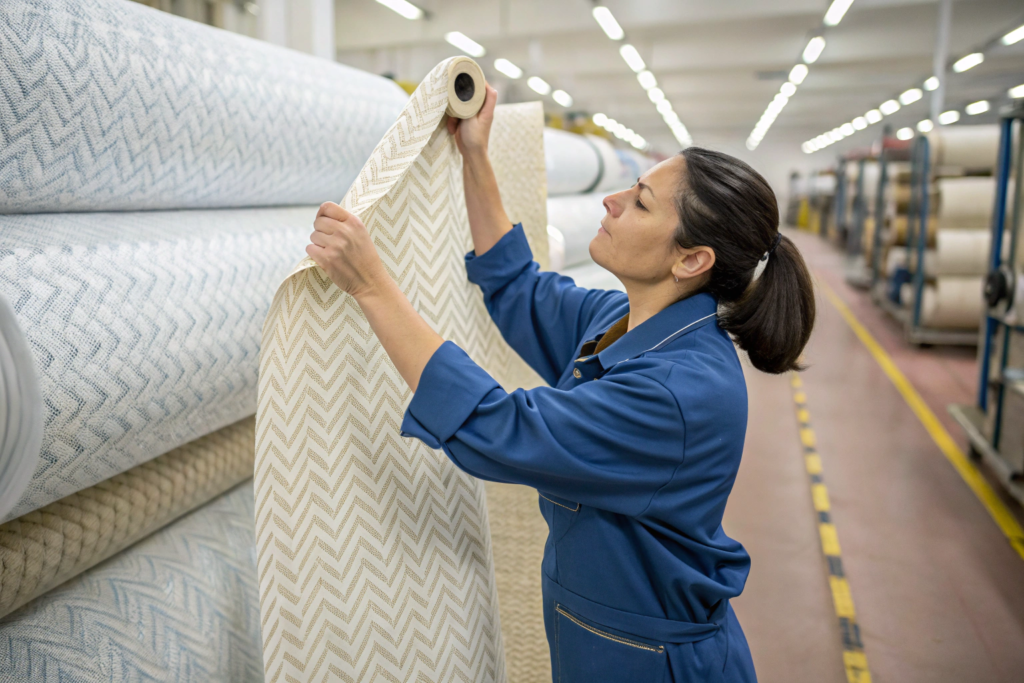
Let me tell you about a client from Australia. They were a small sustainable brand making men’s shirts. They had a signature fabric—a custom striped dobby in organic cotton. But they were just starting out. They couldn’t commit to 1,000 yards. They asked if we could do 300 yards.
We looked at the project. The yarn was standard organic cotton, which we could buy in small quantities. The weave was a simple dobby, not too complex. The colors were two—just a natural and a navy stripe. We said yes.
We ran the fabric on one of our smaller looms. The weaving took two days. Dyeing was straightforward. The finishing was standard softener. The total cost per yard was about 25% higher than if they had ordered 1,000 yards. But they were okay with that because they were testing the market. They sold out of their first collection in three weeks. The next season, they ordered 1,500 yards. They’re now one of our regular clients.
That’s the model we try to support. We’re not just selling fabric. We’re investing in your growth. If you have a good idea and a realistic plan, we’ll work with you to find a quantity that makes sense for both of us.
What Are the Trade-Offs for Small Custom Orders?
If you want to go below our standard MOQ, here’s what you need to know. I’m going to be completely transparent about this because I’d rather you understand the costs upfront than be surprised later.
Higher Price Per Yard. This is the most obvious trade-off. The setup costs—yarn sourcing, loom programming, dyeing preparation—are fixed. When you spread those costs over 500 yards instead of 2,000 yards, the cost per yard goes up. We usually see a 15-30% increase for small runs.
Longer Lead Time. This might seem counterintuitive. You’d think a small order would be faster. But small orders often get scheduled around our larger production runs. We’re not going to stop a 10,000-yard order for a big client to run your 300-yard batch. So we’ll fit you in when there’s capacity. That might mean a 6-8 week lead time instead of 4 weeks.
Limited Finishing Options. Some finishes just don’t work well in small batches. We mentioned water-repellent coatings earlier. The same applies to things like anti-microbial finishes or specialized laminations. For small runs, we might suggest a simpler finish that we can apply more easily.
Yarn Availability. If the yarn you want is not in stock, we might have to buy a larger quantity than you need. This happened with a client from Germany last year. They wanted a specific wool-nylon blend. The yarn mill required a 300kg minimum. That would produce about 2,500 yards. The client only needed 800 yards. So we had to explain that they would either need to take the full yarn quantity or we could help them find a different blend that was available in smaller quantities. They chose the latter.
Here’s a quick comparison table to help you decide:
| Order Size | Price Premium | Lead Time | Best For |
|---|---|---|---|
| 500-1,000 yards | 10-20% higher | 6-8 weeks | Test runs, small collections, local production |
| 1,000-3,000 yards | Standard pricing | 4-6 weeks | Full collections, seasonal launches |
| 3,000+ yards | Volume discounts | 4-5 weeks | Large-scale production, repeat orders |
What About Stock Fabrics That Look Custom?
Here’s a secret that a lot of suppliers don’t tell you. We have over 30,000 stock designs in our inventory. Some of these are produced in small batches specifically for designers who need variety without huge minimums.
If you come to us and say, “I need a custom jacquard but I only have 500 yards to start,” we’ll first ask you what you’re trying to achieve. Sometimes we can show you a stock jacquard that’s 90% of what you wanted. The difference is that you can order 500 yards of that stock fabric today, at standard pricing, and have it in 2-3 weeks.
We did this for a client in Texas last year. They wanted a custom floral jacquard for a holiday dress collection. The timeline was tight. They only had budget for 600 yards. We showed them three stock jacquards in similar colorways. They picked one, ordered 600 yards, and had their dresses in stores for the holiday season. The next year, they came back and did the custom development with a larger order. They used the stock fabric to test the market, then invested in the custom when they knew it would sell.
How Does the Production Process Work from Sample to Bulk?
Once we’ve agreed on the MOQ, the real work begins. I want you to understand exactly what happens at each stage so you can plan your production timeline and budget accordingly. We’ve refined this process over 20 years, and it’s designed to eliminate surprises.
What’s the Difference Between a Sample and a Bulk Order?
The sample is your proof of concept. The bulk order is where we prove we can deliver consistently at scale. And the gap between them is where a lot of things can go wrong if you’re not working with an experienced supplier.
When we develop a custom woven fabric for you, we follow a structured process. I’ll walk you through it using a real project from 2023.
A client in Los Angeles came to us with a design for a custom herringbone tweed. They wanted a wool-polyester blend, 380gsm, for a line of blazers. Here’s how it went:
Step 1: Yarn Sourcing (1-2 weeks)
We sourced the yarn based on the blend ratio. For this project, it was 70% wool, 30% recycled polyester. The wool came from a supplier in Australia. The recycled polyester was from a certified source in Taiwan. We ordered enough yarn for the initial sample plus a buffer for bulk.
Step 2: Sample Development (1-2 weeks)
Our weaving technicians set up a small sample loom. We ran a 10-meter sample. We also ran lab dips for the two colors—a charcoal and a heather grey. The client approved the sample after one revision. The first sample was too heavy at 410gsm. We adjusted the weave density and hit 380gsm on the second try.
Step 3: Pre-Production (1 week)
Once the sample was approved, we moved to pre-production. This is where we set up the actual production loom, program the pattern, and run a small batch to verify everything. We ran 100 yards of pre-production fabric. The client approved it. This step is critical. It confirms that the production loom is producing exactly what the sample loom produced.
Step 4: Bulk Production (3-4 weeks)
We ran the full bulk order. The client had committed to 2,500 yards total across two colors. We wove the fabric, then moved it to our dyeing partners for finishing. We applied a softener and a light anti-pilling treatment.
Step 5: Quality Control (1 week)
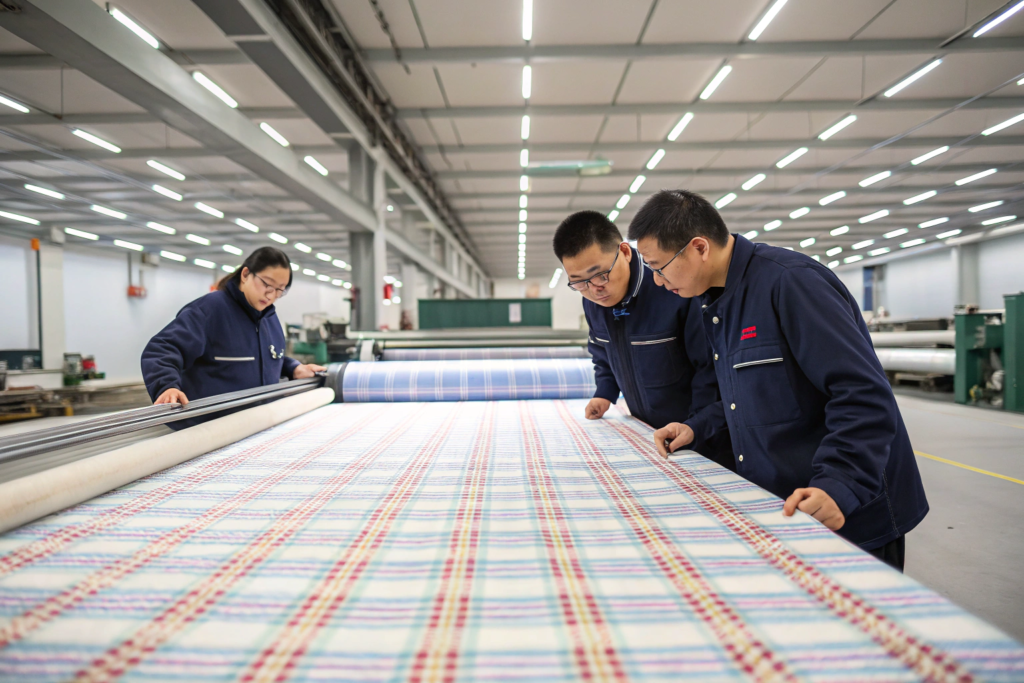
Every roll went through our inspection line. Our QC team checked for weaving defects, color consistency, and width variation. We also pulled samples for lab testing. We tested shrinkage (passed at 2.5%), colorfastness (Grade 4), and pilling (Grade 4 after 2,000 rubs).
Step 6: Packaging and Shipping (1 week)
The fabric was rolled on tubes, wrapped in poly bags, and packed into cartons. We loaded a 40-foot container and shipped it to the client’s factory in Mexico.
The whole process from yarn sourcing to shipping took 10 weeks. The client had their fabric in time for their Fall production run.
How Do You Handle Color Consistency Across Bulk Orders?
This is one of the hardest things in custom woven fabric production. If you’re ordering a single color across multiple batches, or if you reorder the same fabric months later, color matching is a challenge.
We solve this in two ways. First, we keep what we call a “golden sample” of every custom fabric we produce. It’s a physical piece of fabric with the exact color and finish that was approved. When we run a new batch, we match against this golden sample, not against a digital file or a memory.
Second, we use spectrophotometers in our lab. These machines measure color numerically. Instead of saying “this looks close,” we can say “the delta E is less than 1.0,” which is the industry standard for a good match.
A client from Japan learned to appreciate this in 2023. They ordered a custom cotton-linen blend in a specific olive green. They needed 5,000 yards for a uniform collection. We produced it in three batches over two months. The first batch was right on target. The second batch came out slightly warmer—the delta E was 1.2. Our lab caught it before it shipped. We held the batch and re-dyed it. The third batch matched perfectly. The client never even knew there was an issue. That’s the value of in-house testing.
What About Lead Times for Reorders?
If you’ve ordered a custom fabric from us before, reorders are faster. Why? Because we already have the yarn program. We already have the loom setup. We already have the dyeing formula.
For a reorder of a standard custom fabric, we can usually deliver in 4-5 weeks. That’s about half the time of the initial order. We had a client in the UK who orders the same custom twill for their workwear line every three months. They’ve been doing it for two years. The first order took 8 weeks. The reorders now take 4 weeks consistently.
What Are the Payment Terms for Custom Woven Fabric Orders?
Let’s talk about money. Because at the end of the day, MOQ isn’t just about yardage. It’s about cash flow. And as a brand, you need to know how much you’re committing and when.

What’s Our Standard Payment Structure?
For custom woven fabric orders, we use a standard two-part payment structure. This is common in the industry, but I want to explain why we do it and what it means for you.
50% Deposit to Start Production. We need this to buy the yarn. Custom yarn is not returnable. If we order 300kg of cashmere blend yarn for your order, we can’t use it for someone else. The deposit covers that risk for us.
50% Balance Before Shipping. Once the fabric is produced, inspected, and packed, we send you the final invoice. You pay the balance, and we ship. We also send you photos of the packed rolls, the inspection report, and the test results before you pay.
We’ve used this structure for years. It’s fair to both sides. You don’t pay the full amount until you see that the fabric is ready. We don’t ship until we have the balance.
Do We Offer Any Flexibility on Payment?
Yes, for established clients or larger orders, we can be flexible. If you’ve worked with us before and have a good payment history, we might offer:
- 30% deposit, 70% before shipping for repeat orders
- Letter of Credit (L/C) for larger clients who prefer bank-backed terms
- Net 30 terms for very large, long-term clients with strong credit
We also work with clients who use third-party financing. If you’re using a platform like Alibaba Trade Assurance, we can structure the payments to fit their requirements.
I’ll give you an example. A client in Canada has been ordering from us for five years. They’re a mid-sized brand with consistent volume. We moved them to a 30% deposit, 70% before shipping structure two years ago. They appreciate the lower upfront cash requirement. We appreciate their loyalty and on-time payments. It’s a partnership.
What About Tariffs and Duties?
Since we’re talking about payments, I need to mention this. For our US clients, tariffs on Chinese fabrics can be significant. We addressed this in our previous article about DDP shipping, but it applies to custom orders too.
When we quote you a price for custom woven fabric, we quote it as EXW (Ex Works) or FOB (Free On Board) unless you specifically ask for DDP. Most of our clients prefer to handle shipping and duties themselves because they have existing relationships with freight forwarders.
But if you want a door-to-door price with all duties included, we can do that. We’ve done DDP for custom orders as small as 500 yards. The key is that we need to know your final destination so we can calculate the landed cost accurately.
Conclusion
I started this article by saying that MOQ is one of the most common questions we get. And I hope by now you understand why the answer is never just a single number. At Shanghai Fumao, we’ve built our custom woven fabric production to be as flexible as possible while maintaining the quality and consistency that our clients expect.
The reality is that every custom project is different. The yarn you choose, the weave structure, the finishing, the colors—all of these factors come together to determine what’s possible and what it will cost. Our job is to guide you through those decisions and help you find the path that works for your collection and your budget.
We’ve done custom runs for brands at every stage. For the startup in Australia who needed 300 yards of organic dobby to test their first collection. For the established Italian brand who needed 10,000 yards of cashmere-silk blend for their luxury line. For the workwear company in the UK who reorders the same custom twill every quarter. Each of these clients came to us with different needs, different budgets, and different timelines. And we found a way to say yes to all of them.
If you’re ready to start your custom woven fabric project, I want you to reach out to our Business Director, Elaine, at elaine@fumaoclothing.com. Tell her what you’re designing. Send her your sketches, your tech packs, or even just a photo of a fabric you love. She’ll work with our R&D team to figure out what’s possible, what the MOQ will be, and what the timeline looks like.
We’re not just here to sell you fabric. We’re here to help you build your collection. And that starts with a conversation about what you actually need, not just a number on a price list. Let’s talk.