You have a brilliant fabric idea - maybe it's a unique blend of recycled cashmere and Tencel, or a performance textile with a proprietary coating. But when you ask about custom development, you're hit with that dreaded question: "What's your order quantity?" The fear sets in. Will the MOQ be 10,000 meters, pricing your innovative startup out before you even begin? Let's cut through the uncertainty. In today's market, the answer is more flexible than you think, but understanding what drives MOQ is the key to unlocking it.
The Minimum Order Quantity (MOQ) for custom fabric development isn't a fixed number; it's a flexible equation balancing yarn sourcing, production process complexity, and supply chain partnership. While traditional bulk orders may start at 3,000-5,000 meters per color/design, innovative suppliers in clusters like Keqiao now offer strategic low-MOQ programs starting from 500-1,000 meters for validated projects, especially for eco-friendly or high-value functional fabrics. The real cost isn't just in the meters produced, but in the R&D effort and production line setup.
Chasing the lowest possible MOQ can be a trap if it sacrifices quality or supply chain ethics. As a supplier who's navigated thousands of custom projects from global brands and indie designers alike, I've seen the full spectrum. The brands that succeed are those that approach MOQ not as a barrier, but as a collaborative variable to be optimized through smart fabric design, phased ordering, and transparent partnership. Let's break down exactly how MOQ is determined and how you can strategically negotiate yours.
What Factors Actually Determine Custom Fabric MOQ?
Many buyers think MOQ is just about how much fabric the factory wants to sell. In reality, it's a financial and operational calculation to make production viable. The factory needs to cover fixed costs that don't change much whether you order 100 or 10,000 meters. Pushing below a certain threshold means they lose money on your order. The major cost drivers are Yarn Sourcing Minimums, Machine Setup and Downtime, and Laboratory & Sampling Costs.
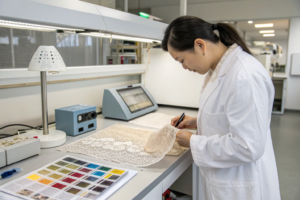
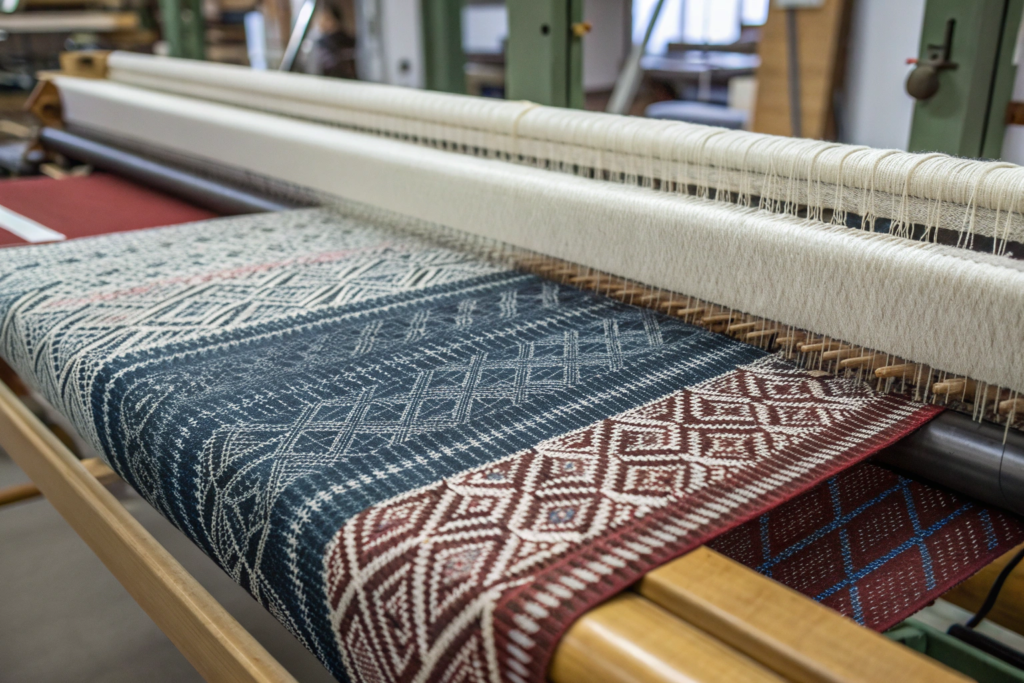
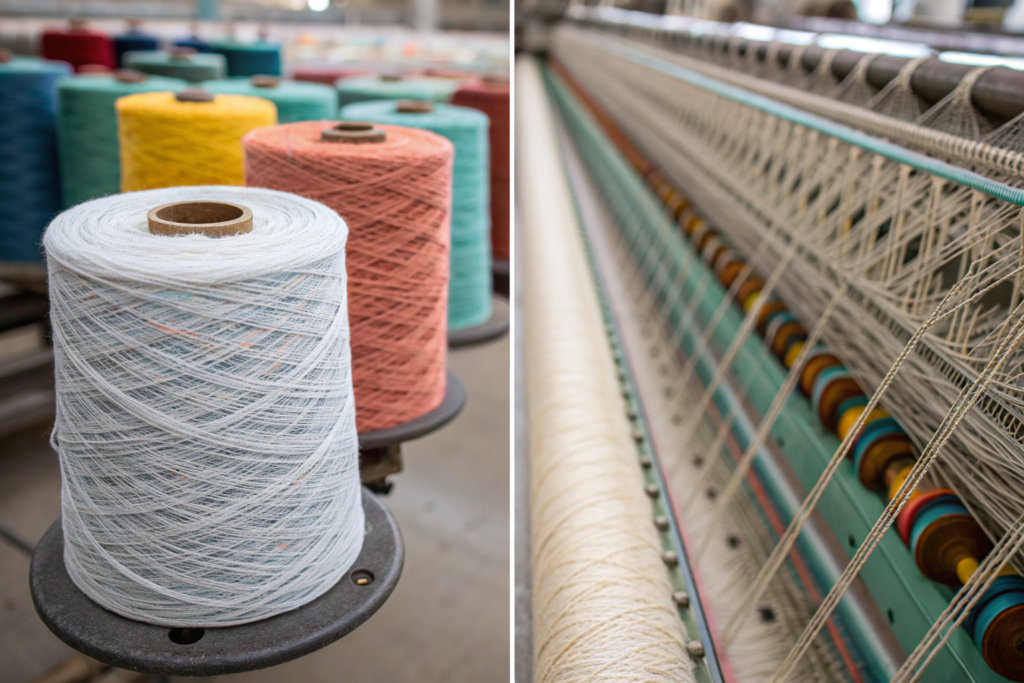
First, yarn suppliers have their own MOQs. If you want a special organic cotton yarn or a patented antibacterial polyester, we might need to purchase a 500kg minimum spool from the fiber producer. That single spool alone can yield around 2,000-3,000 meters of fabric. If your design uses multiple yarns in a jacquard, the math compounds quickly. Second, setting up the looms or knitting machines is labor-intensive. Technicians need to thread thousands of yarns through specific harnesses according to your design—this can take 1-3 days for a complex weave. That's lost production time. Finally, the hidden hero (or cost sink) is the lab. Developing the perfect shade via lab dips, testing physical properties, and creating approval samples consumes expert hours and materials. A recent project for a Californian activewear brand wanting a chlorine-resistant elastic fabric required 12 lab-dip iterations and 3 bulk trial runs before approval—that R&D cost needed to be amortized across the order.
How Does Fabric Complexity Directly Increase MOQ?
Complexity is the MOQ multiplier. Think of it in layers:
- Fiber & Yarn: A standard single-yarn fabric (100% cotton poplin) has low complexity. A blend (e.g., 50% organic cotton, 30% recycled polyester, 20% spandex) immediately increases MOQ due to multiple yarn sourcing and blending setup. A fancy yarn, like a slub or tape yarn, adds more.
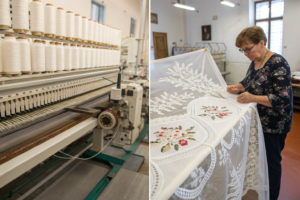
- Construction: A basic plain weave is simple. A complex jacquard with a detailed floral motif requires a special loom setup and possibly new digital files for the electronic jacquard machine. Each new color in the pattern acts like an additional yarn color in the MOQ calculation.
- Finishing: A standard softener application is routine. But a specialized finish like PFC-free water repellency, phase-change temperature regulation, or an enzyme stone wash requires separate, calibrated machinery and chemical batches with their own minimums.
For example, in Q4 2023, we developed a fabric for a Norwegian outdoor brand: a recycled nylon base with a custom jacquard logo weave and a biomimetic shark-skin finish for drag reduction. The fabric itself was stunning, but the MOQ was 4,000 meters—not because we wanted it high, but because the jacquard loom setup took 4 days and the finishing chemistry batch minimum covered exactly that yardage. Understanding this breakdown allowed the brand to decide the premium was worth it for their flagship line. Forums like The Fashion Brain Academy's discussions on production costing often dive deep into these technical multipliers.
Can Yarn Sourcing Alone Dictate Your MOQ?
Absolutely, and it's often the most inflexible part of the equation. When you request a custom fiber—say, GOTS-certified organic cotton from a specific region, or Seawool® made from recycled oyster shells—you are tapping into a specialized supply chain with its own economics. The spinner producing that unique yarn may have a minimum order of several hundred kilograms. For a lightweight fabric, that kilogram-to-meter conversion can set a floor for your entire project.
Let's say you want a fabric made from 100% Lenzing™ Ecovero viscose, a sustainable fiber with a low environmental impact. The agent for this branded fiber might have a minimum purchase quantity. If that minimum spins into 2,500 meters of your desired fabric weight, then your fabric MOQ cannot logically be below 2,500 meters, regardless of how simple the weave is. This is where a supplier with strong fiber partnerships can help. At Shanghai Fumao, because of our volume across many projects, we sometimes have "spot" inventory of premium yarns or standing relationships that allow us to aggregate demand from multiple clients to meet a spinner's minimum, thereby lowering the effective MOQ for an individual designer. It's one of the key advantages of working within a major textile cluster.
What are Realistic MOQ Ranges for Different Fabric Types?
While every project is unique, there are industry benchmarks that set expectations. These ranges are heavily influenced by whether you're working with a trading company, a small specialty mill, or a large integrated factory like ours. Here's a pragmatic breakdown based on our 2024 order book:
| Fabric Category | Typical Custom MOQ Range (Meters) | Key MOQ Drivers & Notes |
|---|---|---|
| Basic Wovens (e.g., Poplin, Twill) | 3,000 - 5,000 | Standard yarns, simple finishes. Most competitive; MOQ is about machine efficiency. |
| Basic Knits (e.g., Jersey, Rib) | 2,000 - 4,000 | Lower setup time than wovens, but yarn dyed stripes or complex structures increase it. |
| Natural/Specialty Fibers (e.g., Organic Cotton, Linen, Wool) | 1,500 - 3,000 | Higher yarn cost and sourcing mins push per-meter price up, but can allow lower meter MOQ. |
| Performance Fabrics (e.g., Moisture-Wicking, UV) | 2,000 - 5,000 | Special yarn coatings and functional finishes have batch minimums. R&D cost is significant. |
| Complex Designs (Jacquard, Dobby) | 3,000 - 8,000+ | Loom setup time is the dominant cost. Digital file creation may also be required. |
| Eco-Innovative Fabrics (rPET, BAMsilK) | 1,000 - 3,000 | Growing demand and supplier competition is making low-MOQ more accessible here. |
Important Caveat: "Per color/design" is the critical phrase. If you want the same fabric in 5 colors, the MOQ is often multiplied, especially for dyed fabrics where each dye bath has a minimum capacity (e.g., 500kg). A smart strategy is to use a yarn-dyed or greige (undyed) fabric and then garment-dye later, though this has other trade-offs.
Is Low MOQ (Under 1000m) Possible for True Custom Work?
Yes, but with clear conditions. It's not for every fabric type, and it requires the right supplier model. We've developed a "Pioneer Development Program" specifically for designers and brands looking to produce groundbreaking fabrics in quantities from 500-1000 meters. This works when:
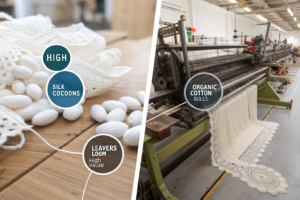
- The Fabric Has High Per-Meter Value: Think luxury silks, intricate embroideries over lace, or fabrics with patented nanotechnology finishes. The margin supports the fixed costs.
- You Use Existing Base Fabrics: Instead of spinning a brand-new yarn, we can apply custom prints, embroideries, or coatings to our in-stock greige fabrics. This bypasses the yarn and weaving MOQ entirely.
- You Commit to a Development Fee: Being transparent, producing 800 meters of a fully custom woven fabric often isn't profitable on the meterage alone. A separate, agreed-upon development fee that covers lab and setup costs makes the project viable and aligns our interests in your success.
A success story: In early 2024, a London-based avant-garde designer approached us with a concept for a lightweight wool felt bonded to a technical mesh. The MOQ for developing the bonding technique was prohibitive. Instead, we sourced our stock wool felt and mesh, and our R&D team perfected the bonding process on small panels. The designer paid a development fee and ordered 750 meters for their debut collection. The fabric was a hit, and they've since re-ordered. Resources like Maker's Row often discuss this fee-based model for small-run production.
How Do MOQs Compare: Woven vs. Knitted vs. Non-Woven?
The production mechanics create different MOQ profiles.
- Woven Fabrics generally have the highest MOQs for custom work. The loom setup is lengthy, and changing designs frequently is inefficient. A dobby or jacquard weave is more MOQ-heavy than a simple plain weave.
- Knitted Fabrics can be more flexible. Circular knitting machines can be set up relatively quickly, especially for simpler constructions like single jersey. However, intricate knit patterns (like intarsia) or using expensive yarns will raise the MOQ. Knits also benefit from the ability to create fabric directly from yarn, which can streamline the process.
- Non-Woven Fabrics (like felts or technical substrates) are a different beast. They are often made by the ton, and custom development usually involves creating an entire production run with specific fiber blends and bonding parameters, leading to very high MOQs. Small batches are rarely feasible unless using a stock felt and applying secondary processes like laser-cutting or laminating.
For a recent client from Australia needing a custom thermal knit for performance base layers, the knitted structure allowed us to propose an MOQ of 1,800 meters, whereas a similar concept in a woven structure would have started at 3,500 meters due to loom constraints.
What Strategies Can Effectively Lower Your Perceived MOQ?
You can't always change the factory's minimum, but you can change how you meet it. Smart planning and strategic design can make a higher MOQ manageable or reduce the effective minimum you need to commit to. The goal is to increase the value and versatility of every meter you order.
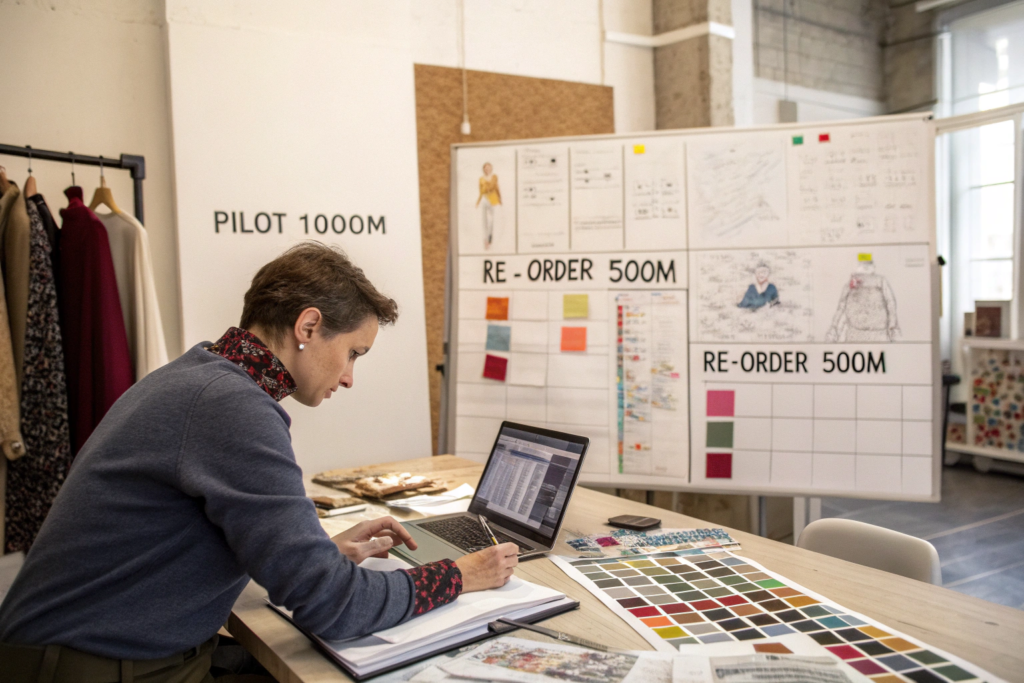
The most effective strategies involve Phased Ordering, Strategic Design Standardization, and Fabric Pooling. Instead of viewing your MOQ as a one-time, monolithic hurdle, break it into a phased production plan. Order a first article or pilot run to test the market, with a commitment to larger follow-on orders if successful. This de-risks the project for both you and the supplier. Secondly, design your custom fabric to serve multiple purposes within your collection—perhaps the same custom jacquard is used in a dress, a blouse, and as a trim. This increases the consumption rate per order. Finally, for truly small brands, explore if your supplier has a fabric pooling program where several brands with similar values (e.g., all sustainable womenswear) share an order of a premium eco-fabric.
Can Phased Production and Roll-Over Programs Help?
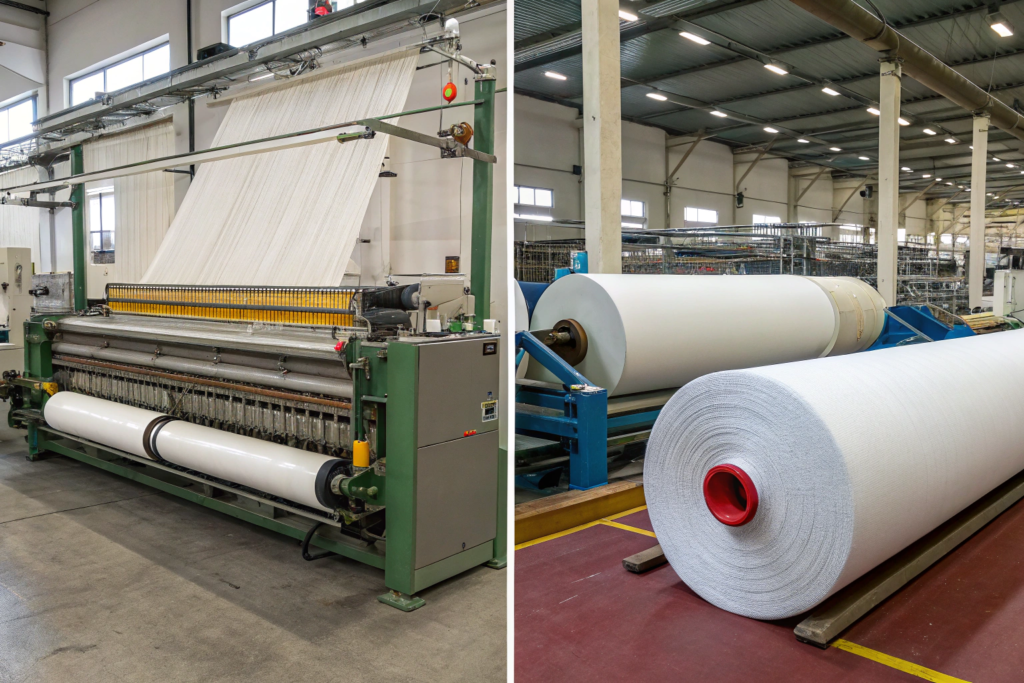
This is the #1 strategy for growing brands. You negotiate an MOQ of, say, 3,000 meters, but you only commit to producing and paying for 1,000 meters now. The remaining 2,000 meters' worth of yarn is "banked" with the supplier, and you have 12-18 months to trigger production of the remaining fabric in smaller lots (e.g., 500 meters at a time). This locks in your yarn cost and quality while dramatically improving your cash flow. It turns a capital-intensive bulk order into an operational expense.
We call this our "Fabric Reserve" service. A Berlin-based minimalist fashion label used this for their signature organic linen-cotton blend. They produced an initial 1,200 meters for their core collection. Over the next 14 months, they triggered four more batches of 400-600 meters each for seasonal colors and capsule collections, all from the original yarn lot, ensuring perfect consistency. The effective "per-release" MOQ was 500 meters, while the supplier's economic order was secured. This model is frequently recommended in entrepreneurial guides to fashion manufacturing.
How Does Smart Design Reduce Effective MOQ?
Design with production in mind. If you know MOQ is a constraint, make your custom element something that can be applied to a stock fabric. For instance:
- Custom Print on Stock Fabric: Instead of developing a custom woven jacquard with a floral motif (high MOQ), use a digital print on our stock silk twill (lower MOQ).
- Custom Embroidery/Appliqué on Standard Base: Create a stunning effect with embroidery on a plain wool crepe from inventory.
- Develop a "Hero" Trim: If a full garment in your custom fabric is too much, use it as a striking collar, cuff, or pocket accent on garments made from a commercial fabric.
This approach was a game-changer for a New York-based eveningwear designer. They dreamed of a fabric woven with real gold-metallic yarn. The yarn MOQ was astronomical. Instead, we developed an exquisite gold-thread embroidery appliqué net. They ordered 300 meters of the custom net (low weight, high value) and applied it over dresses made from a stock satin. The impact was identical, the cost was controlled, and the MOQ was manageable.
How Should You Approach MOQ Negotiation with a Supplier?
Walking into an MOQ negotiation asking "What's your minimum?" puts you in a weak position. The right approach is collaborative and informed. Frame the conversation around partnership, long-term potential, and shared risk. Demonstrate that you understand the cost drivers and are willing to work on solutions. The supplier's goal is profit and a reliable client; your goal is a feasible minimum. Find the overlap.
Start by sharing your vision and business plan—are you a startup with high growth potential? An established brand launching a new line? Then, ask insightful questions: "What component of this MOQ is most driven by yarn? If we used your stock yarn X, how would that change the minimum?" or "Is there a development fee model that would allow a smaller initial meterage?" Be prepared to offer something in return: a slightly higher per-meter price, a commitment to a multi-season relationship, or prompt payment terms. Transparency about your constraints builds trust.
What Should Be in Your MOQ Negotiation Checklist?
Don't wing it. Go in prepared with this list:
- Have a Complete Tech Pack: This shows you're serious and reduces the supplier's risk of costly misunderstandings.
- Know Your Numbers: What is your absolute maximum budget for fabric development and first order? What is your ideal and fallback quantity?
- Ask for a Cost Breakdown: Request a rough breakdown of costs (yarn, weaving, dyeing, finishing). This identifies the biggest leverage points for negotiation (e.g., switching to a more accessible yarn).
- Inquire About Alternatives: "If we can't meet the 5,000m MOQ for this dobby weave, what similar-weave base fabric do you have in stock that we could customize with a print or dye?"
- Discuss Payment Terms: Sometimes, offering a 50% deposit instead of 30% can ease a supplier's cash flow concern and make them more flexible on quantity.
- Mention Long-Term Vision: "We plan to launch this as our signature fabric. If this first run goes well, we foresee annual re-orders of X meters."
When a Canadian sustainable outerwear brand negotiated with us last fall, they came with exactly this checklist. They couldn't meet the 4,000m MOQ for their ideal fabric. By reviewing the breakdown, we jointly decided to switch from a custom recycled nylon yarn to one we had in our annual contract, lowering the MOQ to 2,200 meters. They accepted a 5% price increase for the smaller quantity—a fair trade-off that made the project viable.
When is a Higher MOQ Actually a Better Deal?
Chasing the lowest MOQ can sometimes cost you more in the long run. Consider a higher MOQ if:
- It Unlocks a Much Lower Per-Meter Price: The savings on a 5,000m order vs. a 2,000m order might fund the extra inventory.
- You are Creating a Core, Signature Fabric: For a fabric you'll use for years across multiple styles and seasons, buying more upfront ensures color and quality consistency that is impossible to match across separate, smaller batches.
- You Have Reliable Demand: For basic staple items (like a branded organic cotton jersey for t-shirts), a larger order secures production slots and protects against future price hikes.
At Shanghai Fumao, we're transparent about these trade-offs. We once advised an e-commerce client against pushing for a 1,000m MOQ on their core chino fabric. The per-meter cost was 40% higher than the 3,500m price point. We showed them the math: the 3,500m order, even with slightly higher storage costs, gave them a better margin and guaranteed supply for their best-selling product for 18 months. They went with the larger quantity and thanked us later when a supply chain crunch hit and their competitors were struggling.
Conclusion
The Minimum Order Quantity for custom fabric development is not a monolithic wall, but a flexible gate. The key to passing through is understanding the complex mechanics behind it—yarn sourcing, machine setup, and the economics of specialization. By approaching your supplier as a strategic partner, employing smart design and phasing strategies, and negotiating with prepared insight, you can find an MOQ that supports both your creative vision and your business reality.
Remember, the most successful fabric developments are built on transparency and shared goals. Your supplier wants your project to succeed as much as you do, because your growth fuels theirs.
If you have a fabric concept that feels limited by MOQ constraints, let's have a different kind of conversation. At Shanghai Fumao, we specialize in making innovative fabric development accessible. Through our Pioneer Development Program, Fabric Reserve service, and deep expertise in the Keqiao supply chain, we can help you navigate the MOQ equation to find a practical, high-quality path forward. To explore your specific project and discuss a tailored strategy, contact our Business Director, Elaine. She'll connect you with our development team to turn your concept into a tangible swatch and a feasible plan.
You can contact Elaine at: elaine@fumaoclothing.com.