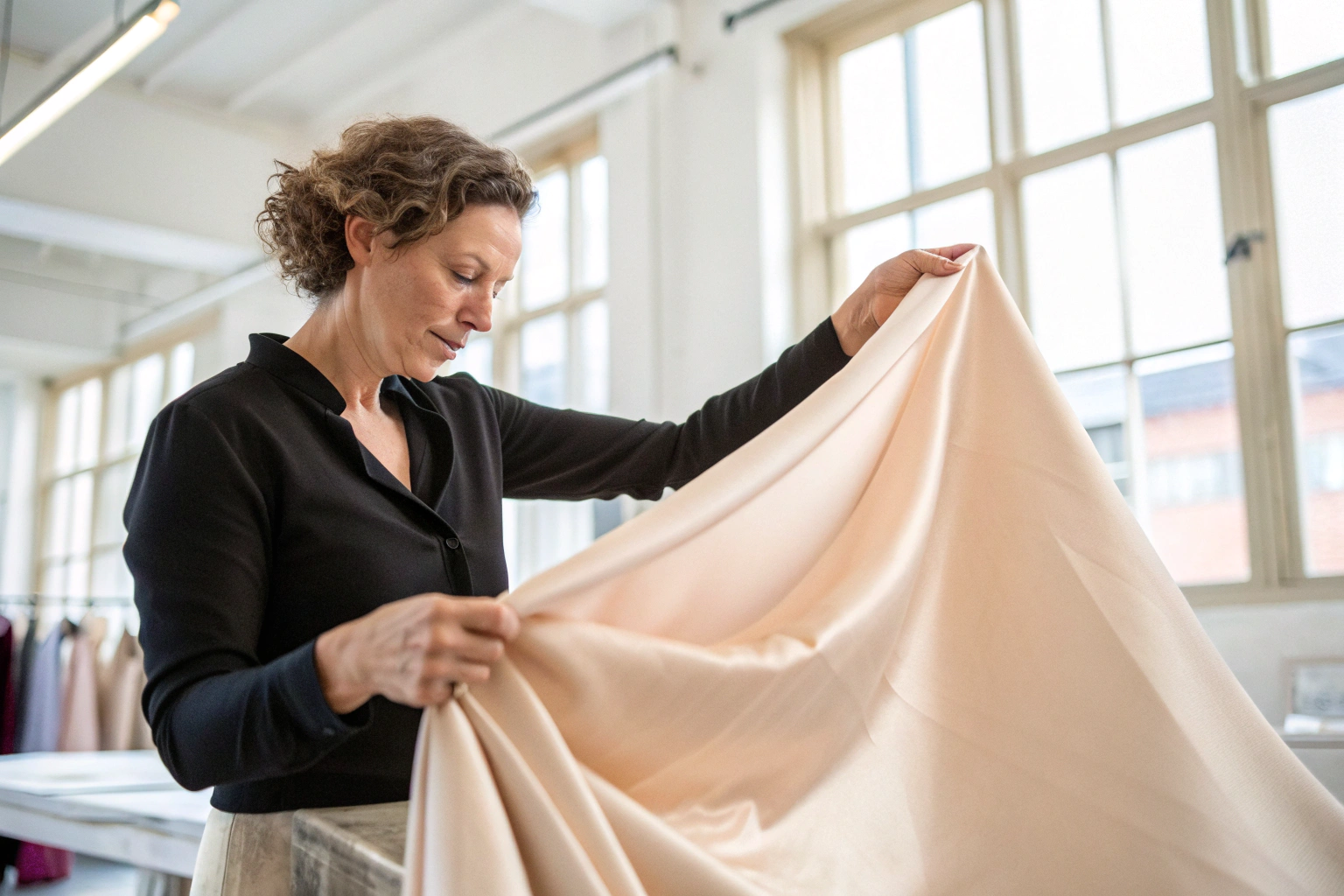
I was in a design meeting last year with a client named Sarah. She was showing me sketches for a beautiful new line of silk scarves and bias-cut dresses. Her designs were flowing and elegant. But she was worried. She said, "I know I want to use the bias for this collection, but I am not 100% sure why it works or how to explain it to my production team. I just know it looks better." Sarah is a talented designer, but like many, she had learned the "what" without fully understanding the "why." And in manufacturing, understanding the "why" is what prevents costly mistakes.
The importance of fabric bias lies in the unique properties it gives to a garment: increased stretch, fluid drape, and a soft, body-hugging fit. The bias is the 45-degree angle between the straight grain and the cross grain of a woven fabric. When a garment is cut on the bias, the threads are oriented diagonally, allowing the fabric to twist and conform to curves in a way that straight-grain cutting cannot achieve. This creates the legendary, flattering drape seen in iconic garments like the bias-cut slip dress. At Shanghai Fumao Clothing, we work with designers to harness this power, but we also guide them on its challenges.
You might think cutting on the bias is just a fancy technique for high-end fashion. But understanding it can improve even simple accessories like scarves and headbands. It affects how they hang, how they feel, and how they move. Let me break down the science and the art of the fabric bias.
What Exactly Is Fabric Bias?
Before we talk about why it matters, we need to be clear on what it is. Fabric is not a random mess of threads. It is an engineered grid. Understanding that grid is the first step to understanding bias. It is simple geometry, but it changes everything.
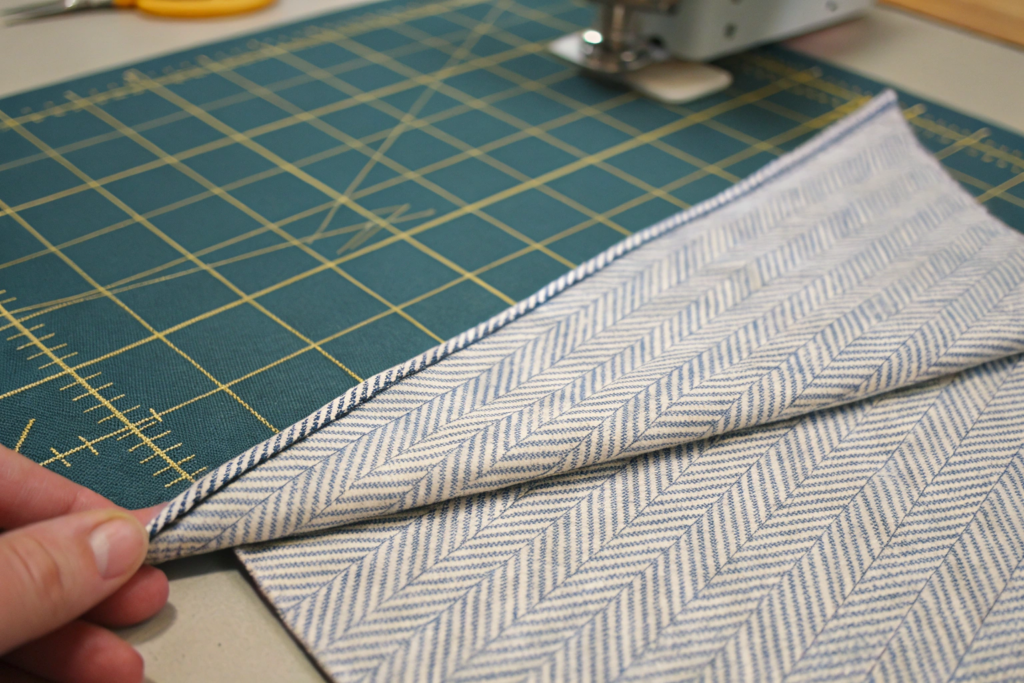
Fabric bias is the diagonal line cut across a woven fabric at a 45-degree angle to the selvage (the finished edge). Woven fabric has two main grain lines: the lengthwise grain (warp threads), which runs parallel to the selvage and has little to no stretch, and the crosswise grain (weft threads), which runs perpendicular and has a slight amount of "give." The bias is the diagonal between them. On this angle, the fabric gains its maximum stretch and flexibility because the tension is distributed across the intersections of the warp and weft threads, allowing them to shift and move.
Think of a square window screen. If you push on a thread from the side (straight grain), it resists. But if you push on the corner (the bias), the whole screen distorts and stretches. Fabric works the same way. The "true bias" is exactly 45 degrees. Even a few degrees off can change the behavior of the fabric. This is why precision in pattern cutting is so critical for bias-cut garments. A pattern that is not perfectly aligned to the true bias will not drape correctly. It might twist or hang unevenly. This is a key reason why bias-cut clothing is more expensive to produce. It requires more skill and more fabric.
Why Does the Bias Have More Stretch Than the Straight Grain?
The stretch comes from the geometry of the weave. On the straight grain, you are pulling directly against the threads themselves. They are taut and have very little give. On the bias, you are pulling at an angle. This force is applied to the intersections, the points where the warp and weft threads cross. These intersections act like tiny hinges. When you pull on the bias, these hinges open slightly, allowing the diamond-shaped spaces between the threads to elongate. This creates the characteristic "give" of the bias. This property is what allows a bias-cut silk camisole to skim over the body's curves without needing darts or seams.
Is the Bias the Same for All Woven Fabrics?
The concept is the same, but the amount of stretch and drape varies dramatically depending on the fabric. A loose, open weave like a gauze will have a lot of bias stretch. A tight, crisp weave like a taffeta will have very little. The fiber content also matters. Silk, with its smooth, long fibers, moves beautifully on the bias. A stiff cotton canvas will barely move at all. This is why fabric selection is so critical for bias-cut designs. You cannot just take any fabric and expect it to drape like silk charmeuse. You have to choose a fabric with the right weight, weave, and fiber to respond to the bias. This is a key discussion we have with clients at Shanghai Fumao Clothing when they are developing new luxury accessory lines.
How Does Cutting on the Bias Affect Garment Drape?
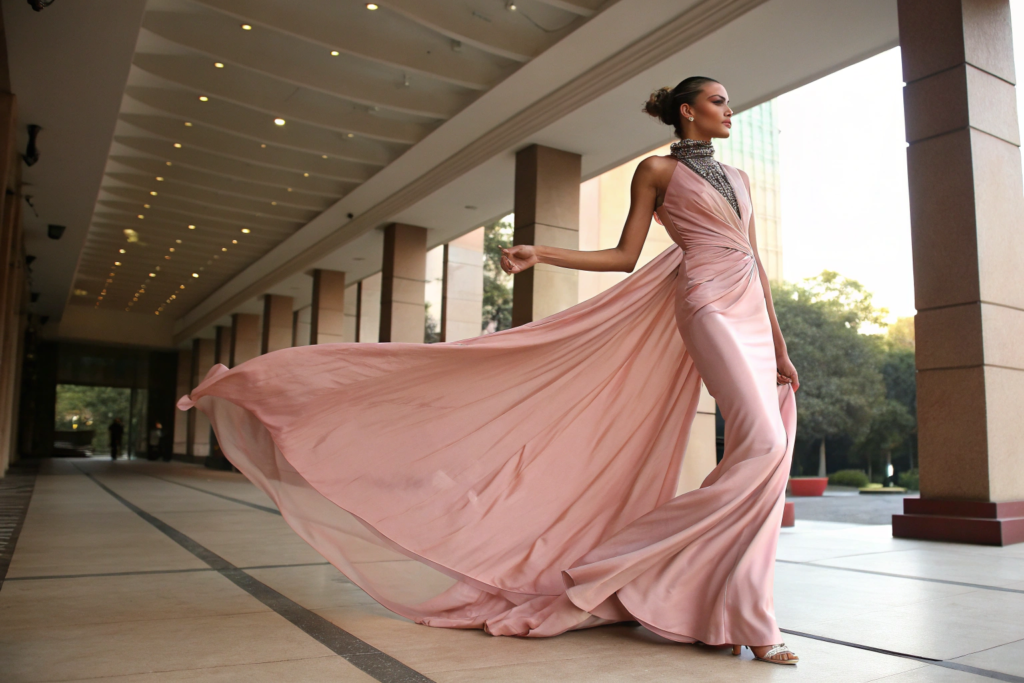
Drape is the word we use to describe how fabric hangs and falls. It is the difference between a stiff, cardboard-like skirt and a soft, flowing one. Bias cutting is the secret weapon for achieving the most beautiful, liquid-like drape possible. It transforms a flat, two-dimensional fabric into a three-dimensional form that moves with the body.
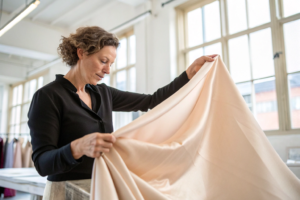
Cutting on the bias transforms a fabric's drape from stiff and structured to soft and fluid. Because the threads are on an angle, they are not fighting to stay flat. They can twist and curve. This allows the fabric to follow the body's natural lines. It creates soft, rounded folds (or "foulards") instead of sharp, angular ones. This is why bias-cut evening gowns and luxury scarves have such a flattering, almost magical, way of skimming the figure. They do not cling, but they do not stand away. They move with the wearer.
The bias also affects how light plays on the fabric. Because the threads are angled, they catch the light differently than straight-grain fabric. This can create a subtle, beautiful shimmer, especially on lustrous fabrics like satin. It adds depth and dimension to the garment. This is why a simple bias-cut slip dress can look so much more elegant and expensive than a similar dress cut on the straight grain. The fabric itself becomes a more active participant in the design. It is not just a covering; it is a key element of the aesthetic.
What Is the "Bias Stretch" and How Is It Used?
Bias stretch is the flexibility the fabric gains when cut on the diagonal. This is used intentionally in design. In a bias-cut skirt, this stretch allows the skirt to fit snugly over the hips and then flare out smoothly. It provides ease of movement without needing pleats or slits. In a cowl neck top, the bias stretch allows the deep, soft fold of the cowl to fall gracefully. The weight of the fabric, combined with the stretch, creates that characteristic draped look. Without the bias, a cowl neck would be stiff and would not drape properly. The stretch is what makes the design possible.
How Does Bias Affect the Fit of a Garment?
Bias-cut garments fit differently. They are not "constructed" to fit with darts and seams. They are "molded" to fit by the fabric itself. The garment will gently stretch and conform to the wearer's unique shape. This means a bias-cut dress can fit a range of body sizes more forgivingly than a structured garment. However, it also means it can stretch out over time with wear. The weight of the fabric constantly pulls on the bias, causing a gradual, permanent stretch. This is something designers need to account for. They often let bias-cut garments "hang" for 24 hours before hemming to allow for this initial stretch. It is a detail that separates amateur work from professional garment construction.
What Are the Challenges of Working with Fabric on the Bias?
For all its beauty, working with the bias is not easy. If it were, every garment would be cut this way. The truth is, it presents significant challenges in cutting, sewing, and finishing. Sarah, my client, needed to understand these challenges before she committed to her collection. The beauty comes at a cost.
The main challenges of working with fabric on the bias are fabric waste, handling difficulty, and the risk of distortion. Bias cutting requires significantly more fabric than straight-grain cutting because patterns must be placed at a 45-degree angle, leaving large, unusable triangular spaces on the fabric. The fabric also handles differently. It stretches and moves under the sewing machine foot, making it easy for seams to pucker or for the garment to become distorted. Finally, bias-cut garments can sag or twist over time if not properly constructed and finished.
Another challenge is pattern making itself. Patterns for bias-cut garments cannot simply be turned 45 degrees. They often need to be redesigned. Darts are usually eliminated, and the shaping comes from the bias stretch and the cut of the seams. The patterns must also be "blocked" or "stabilized" differently. Sewing bias-cut seams requires special techniques, like using a narrower seam allowance and stabilizing the seam with a line of stay stitching immediately after sewing to prevent it from stretching out. It is a slower, more skill-intensive process, which is why bias-cut garments are typically found at higher price points.
Why Does Bias Cutting Create More Fabric Waste?
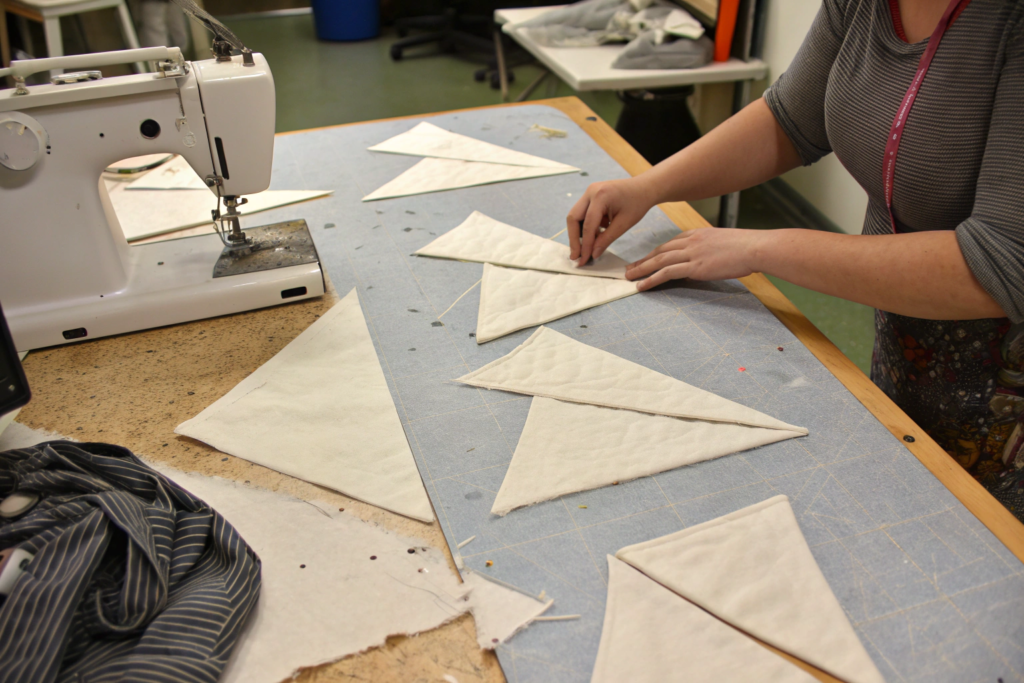
This is a simple matter of geometry. When you place a pattern piece on fabric, you usually align it with the straight grain to fit pieces together like a puzzle, minimizing waste. When you cut on the bias, the pattern piece must be placed at a 45-degree angle. This creates large, odd-shaped gaps between the pattern pieces that are simply too small to use for anything else. You cannot rotate the other pieces to fill these gaps because they would no longer be on the true bias. For a typical garment, this can increase fabric consumption by 20% to 30% or even more. For expensive fabrics like silk charmeuse, this is a significant cost increase that must be factored into the pricing.
How Do You Prevent a Bias-Cut Garment from Stretching Out?
Prevention starts before the garment is even sewn. The first step is to let the cut fabric pieces "rest" or "hang" for 24 hours before sewing. This allows the initial, gravity-induced stretch to occur. Then, you can trim the pieces back to the correct size. During sewing, stay stitching is essential. This is a line of regular-length stitches sewn just inside the seam line on single layers of fabric. It stabilizes the bias edge and prevents it from stretching as you handle it. Finally, the choice of seam finish matters. A simple serged edge can add weight and pull, while a delicate French seam is lighter and more appropriate. The goal is to support the fabric without weighing it down or restricting its natural movement.
How Does Bias Apply to Fashion Accessories?
You might think bias is only for dresses and gowns. But it is just as important in the world of accessories. Understanding bias can elevate a simple scarf or hat from ordinary to exceptional. It is a tool that every accessory designer should have in their kit.
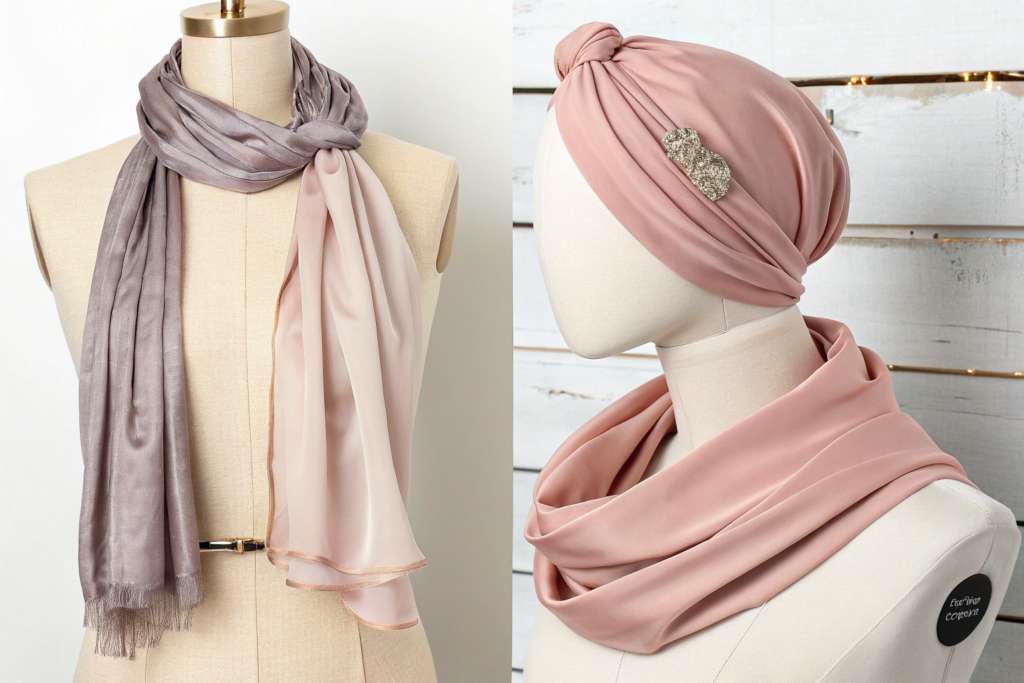
In accessories, the bias is crucial for items that need to tie, wrap, or conform to the body. Scarves cut on the bias, for example, have a beautiful, fluid drape and wrap more gracefully around the neck without bulk. They also have a soft, rolled edge that is more elegant than a straight-cut hem. For items like headbands or hair wraps, cutting on the bias allows them to conform comfortably to the curve of the head without puckering. Belts made on the bias have a subtle, soft give that makes them more comfortable to wear.
Even in structured accessories, bias can play a role. A hat with a brim cut on the bias might have a different, more fluid shape than one cut on the straight grain. The bias can be used intentionally in the crown of a baseball cap to create a better fit. The key is understanding that the bias is not just a construction detail. It is a design element. It changes the behavior of the material. By choosing to use it, you are making a conscious decision about how the final product will look, feel, and perform.
Why Are Bias-Cut Scarves More Desirable?
A bias-cut scarf is a mark of quality. When a square or rectangular scarf is cut on the bias, the edges are on the straight grain, which is more stable and easier to hem neatly. But the body of the scarf, where it falls and drapes, is on the bias. This gives it a soft, fluid movement that a straight-grain scarf simply cannot match. It wraps around the neck more softly. It drapes over the shoulders more elegantly. It does not look stiff or "flat." For a luxury silk scarf, cutting on the bias is a sign that the maker cared about the final effect, not just about minimizing fabric costs. It is a detail that customers who appreciate quality will notice and value.
How Does Bias Affect the Fit of a Knit Beanie?
While knit fabrics are not "woven," and therefore do not have a grain in the same way, the principle of orientation still applies. Knit fabrics have a direction of greatest stretch. For a beanie to fit well, the direction of greatest stretch should go around the head (the circumference), not from crown to brim. If you cut a beanie pattern with the stretch going the wrong way, it will be tight on the forehead and loose on top. This is a common mistake. Understanding how to orient a pattern to use the fabric's natural "bias" of stretch is essential for creating a comfortable, well-fitting knitted hat. It is a small detail that makes a huge difference in customer satisfaction.
Conclusion
The fabric bias is one of the most powerful tools in a designer's vocabulary. It is the key to unlocking a fabric's full potential for fluid drape, elegant movement, and a flattering, body-conscious fit. From the iconic bias-cut gown to a simple, beautifully draped scarf, understanding and using the bias elevates a product from functional to extraordinary. But it also demands respect. It requires more fabric, more skill, and more care in cutting and sewing. It is a choice that must be made deliberately, with a full understanding of both its benefits and its challenges.
If you are designing a collection that demands the beauty of bias-cut construction, you need a partner who understands the intricacies. At Shanghai Fumao Clothing, we have the experience to guide you through fabric selection, pattern making, and production to ensure your vision is realized perfectly. Please contact our Business Director, Elaine, at elaine@fumaoclothing.com. Let's create something that moves beautifully.