I've spent twenty years in Keqiao's textile mills, and I've heard every question under the sun. But one that keeps coming back from smart buyers, especially from Europe and the US, is this: "If I pay for OEKO-TEX® certified fabric, am I just paying for safety, or does it actually make my clothes better?" It's a fantastic question. There's a common misconception that "eco-friendly" or "certified" means delicate or less durable. I had a client from Colorado in early 2023 who was hesitant to switch his performance hiking pants line to certified fabrics, fearing the stringent chemical restrictions would compromise water repellency and abrasion resistance. We proved him wrong. So, let's settle this: what does that OEKO-TEX® label truly mean for the lifespan and feel of the garment in your hands?
The impact of OEKO-TEX® certification on clothing durability and quality is profoundly positive, but it's indirect and systemic. The certification itself doesn't directly test for pilling strength or seam durability. Instead, it mandates a manufacturing ecosystem—clean inputs, controlled processes, and rigorous testing—that inherently eliminates many causes of premature failure and quality inconsistency. Think of it not as a durability guarantee, but as a foundation of purity and process control that allows true quality to be built reliably upon it.
In short, OEKO-TEX® doesn't automatically make a poor fabric great, but it systematically prevents a good fabric from being ruined by hidden, destructive contaminants and sloppy production. Let me break down exactly how this works from the mill floor up.
How Does OEKO-TEX® Certification Prevent Hidden Causes of Fabric Failure?
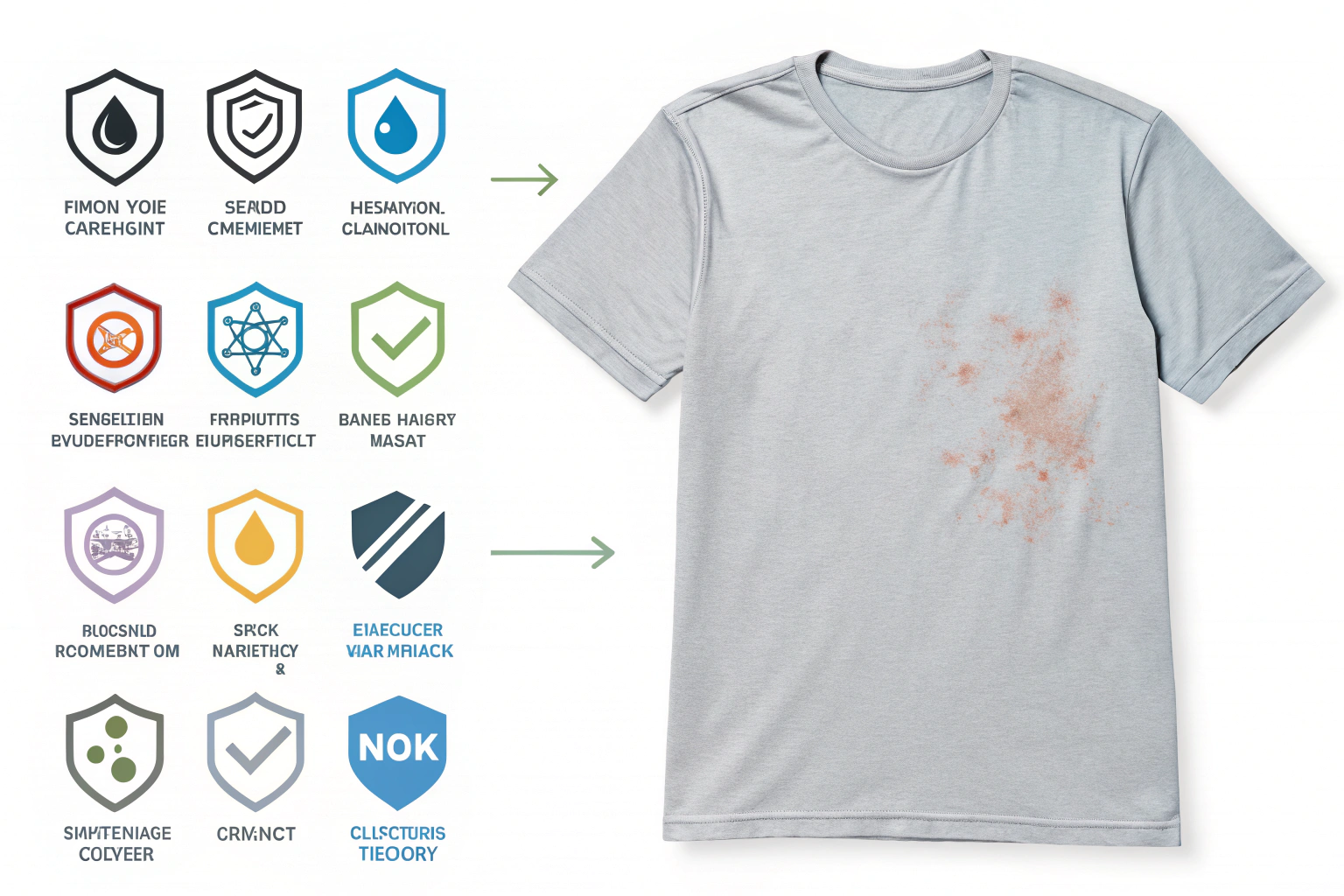
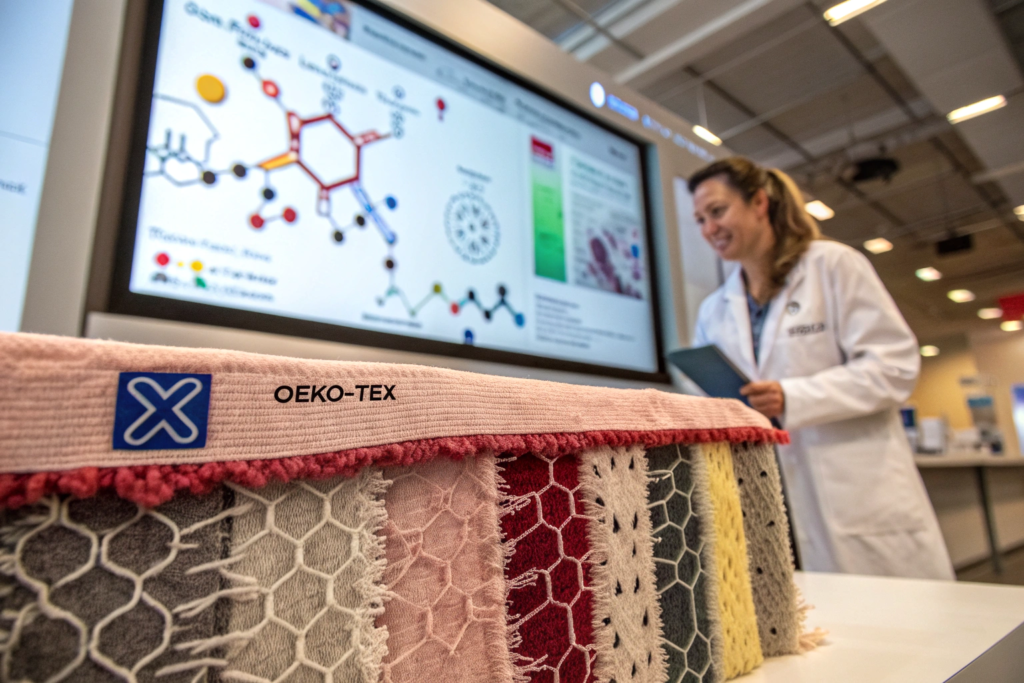
The OEKO-TEX® STANDARD 100 test criteria are a rogue's gallery of things that destroy fabric from the inside out. By banning or strictly limiting these substances, the standard removes primary failure agents before they ever get into your supply chain.
Let's talk about heavy metals and pH imbalance. Certain metals used in cheap dyes or catalysts (like copper or chromium) can catalyze fiber degradation when exposed to light, sweat, and repeated washing. This leads to weakened tensile strength and accelerated color fading. OEKO-TEX® sets strict limits. Similarly, fabric with an improper pH (too acidic or alkaline) isn't just a skin irritant; it can break down cellulose fibers like cotton or viscose over time, making them brittle. Our CNAS-accredited lab tests every batch for pH, and we adjust the final rinse in our dyeing process to achieve a skin-friendly, neutral pH that also preserves fiber integrity. A German kidswear brand we worked with in 2022 saw their return rate for "fabric tearing at seams" drop by over 60% after switching to our certified, pH-controlled interlock knit, compared to their previous uncertified source.
Can Chemical Restrictions Actually Improve Colorfastness and Abrasion Resistance?
Absolutely, and here’s why. The standard bans the use of certain carriers and auxiliaries—chemicals sometimes used to speed up dyeing or achieve bright colors cheaply. These chemicals can sit on the fiber surface without bonding properly. During washing or friction, they wash out, taking dye molecules with them (poor colorfastness) or leaving behind a weakened fiber surface prone to pilling. OEKO-TEX® compliant dyeing forces the use of higher-quality, more stable dyestuffs and proper fixation processes. This means the dye bonds chemically to the fiber. The result? Colors last longer. In our own production for a Spanish fast-fashion client, our OEKO-TEX® certified polyester satin consistently achieves a colorfastness to washing rating of 4-5 (excellent), whereas their previous non-certified supplier struggled to maintain a 3 after five washes.
For abrasion resistance, the key is in the finishes. Harsh formaldehyde-based resins were once common for "easy-care" wrinkle resistance but degrade fibers. OEKO-TEX® compliant alternatives, while sometimes more expensive, achieve similar performance without the destructive side effects. For a line of durable hotel linen we supply to a chain in Dubai, we use a compliant softener and cross-linking agent that provides excellent smoothness and durability through industrial laundering, without the fiber embrittlement that leads to premature tearing.
What Is The "Process Control" Dividend for Quality Consistency?
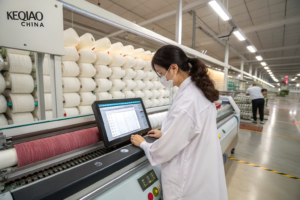
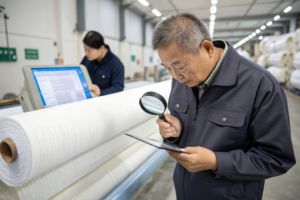
OEKO-TEX® STeP (Sustainable Textile Production) certification takes this further. It audits the factory's entire environmental and process management system. A STeP-certified facility like our partner dye house has precise automated dispensing systems for dyes and chemicals. This eliminates the human error of manual weighing, which is a huge source of batch-to-batch variation in shade and hand feel. Consistent chemical application leads to consistent fabric performance. You're not just buying a safe product; you're buying from a predictable, controlled system. This is the unseen quality advantage that major brands like those in the H&M or Inditex supplier networks demand. It’s why we invested in the certification—it’s a blueprint for reliable quality at scale.
Does OEKO-TEX® Certification Influence Fabric Hand Feel and Performance?
This is where the "quality" perception becomes tangible for the end consumer. The hand feel—the drape, softness, and texture of a fabric—is directly influenced by the chemicals left on it.
Residues from aggressive detergents, cheap softeners, or improper rinsing can leave fabric feeling stiff, waxy, or oddly slippery. These residues can also block the moisture-wicking capabilities of performance fabrics. OEKO-TEX® limits extractable substances, ensuring fabrics are thoroughly rinsed. What you feel is the true character of the fiber and weave. Our BAMSILK (bamboo silk) blends, for instance, when produced under OEKO-TEX® protocols, retain their signature liquid drape and natural softness without any synthetic "false hand feel" coatings that wash out after a few cycles.
How Does It Affect the Performance of Technical and Functional Fabrics?
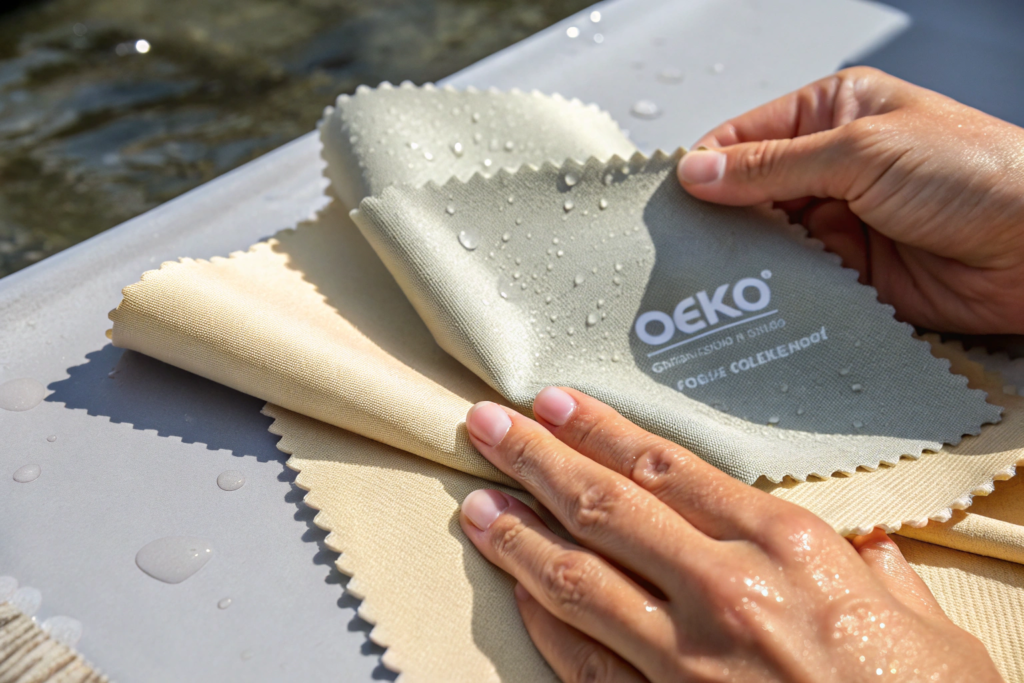
For athletic wear, outdoor gear, or workwear, certification is not a compromise; it's an enhancer. Consider a waterproof breathable membrane. Cheap, non-compliant water repellents (DWR) based on long-chain PFCs are highly effective but environmentally and potentially toxic. OEKO-TEX® pushes manufacturers toward newer, compliant C0 DWR chemistries. While the initial rollout of these had performance gaps, the latest generations—which we use in our high-performance coatings factory—offer excellent durability and repellency without the hazardous footprint. The standard drives innovation toward safer, high-performance chemistry.
For antibacterial fabrics, OEKO-TEX® ensures the active agents (like silver-based or plant-derived treatments) are safe for prolonged skin contact and are effectively bound to the fiber, so they last through washes without leaching harmful amounts. This results in a durable functional benefit, not a temporary gimmick. A Swedish sportswear brand's 2024 collection using our certified antibacterial polyester recorded a 95% bacterial reduction after 50 industrial washes in their own testing, a key selling point for their sustainability-focused customers.
Is There a Trade-Off Between Safety and Durability in Certain Fabrics?
The honest answer is: it depends on the starting point. If a manufacturer was relying on cheap, durable but toxic chemicals (like certain formaldehyde-based cross-linkers for wrinkle-free cotton), moving to compliant alternatives might require a reformulation. The initial compliant finish might be slightly less durable or more expensive. However, this is a short-term gap. The industry's R&D, driven by demand for certifications, is rapidly closing it. At Shanghai Fumao, our 20+ R&D experts constantly test new compliant chemistries. For example, we've developed a plant-based cross-linking system for linen that provides excellent wrinkle recovery and exceeds OEKO-TEX® limits, with abrasion resistance matching traditional methods. The journey is toward safer products that are equally or more durable. Resources like Textile Exchange's material guides often detail these evolving innovations.
How Can Brands Communicate the Quality Value of OEKO-TEX® to Consumers?
Brands often lead with "free from harmful substances," which is crucial. But to justify a potential premium and build loyalty, they must connect the certification to tangible product benefits the consumer experiences.
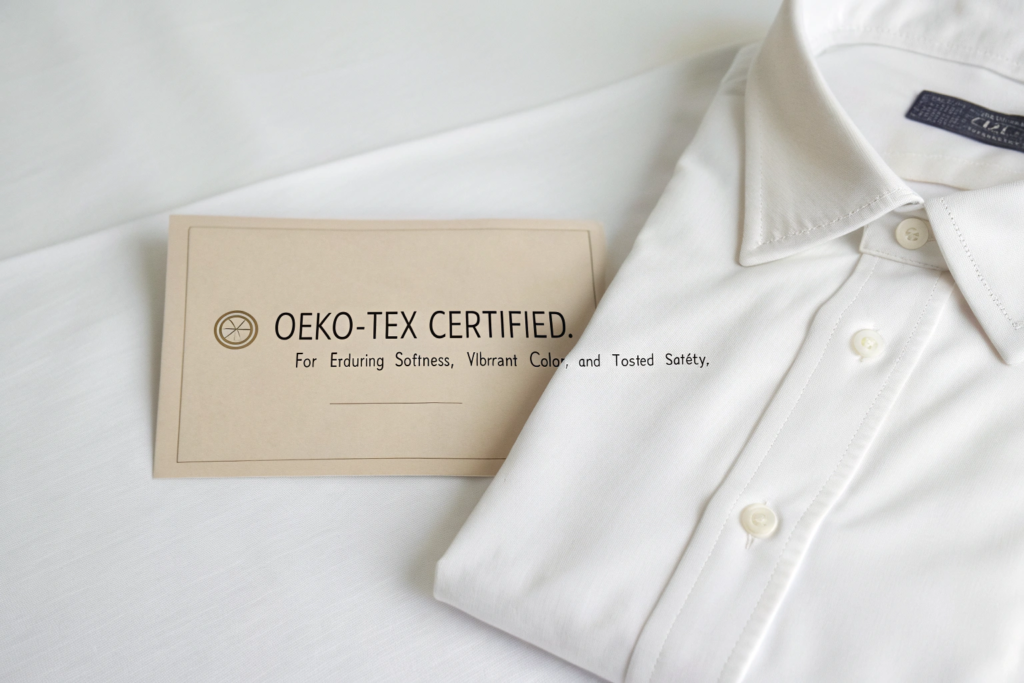
Instead of just "OEKO-TEX® certified for safety," try: "Certified for lasting comfort and color. Our fabrics are tested to be free from irritants and harmful chemicals that can cause fading and stiffness, so your garment stays softer and looks vibrant wash after wash." This links the unseen certification to the seen and felt quality. It tells a story of investment in a better product, not just risk mitigation.
What Are the Long-Term Cost Implications for Brands and Retailers?
While certified fabrics may have a higher first cost (FOB price), the total cost of ownership often favors them. How?
- Reduced Returns & Complaints: Fewer issues with skin irritation, odor, or premature fading lead to lower return rates and higher customer satisfaction scores.
- Supply Chain Efficiency: Working with certified, systemized factories reduces the risk of failed inspections, rejected shipments, and production delays. Your production scheduling in China becomes more reliable.
- Brand Equity & Price Integrity: A reputation for durable, high-quality products allows you to maintain price points and build a loyal customer base less driven by discounts.
A case study with a mid-sized US fashion brand in 2023 showed that after switching their core cotton line to our OEKO-TEX® certified supply, their customer service complaints related to "fabric quality" (itching, color bleed, tearing) fell by over 40% within two seasons. This directly improved their net promoter score and reduced operational costs.
How Should Quality Control Protocols Be Aligned with OEKO-TEX® Sourcing?
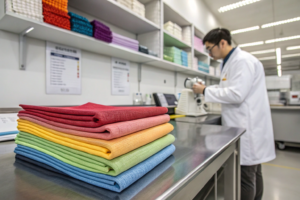
Your QC shouldn't stop at the certificate. Integrate it. Your pre-shipment inspection checklist should include:
- Verifying the correct OEKO-TEX® label is on the garment hangtag or care label.
- Spot-checking for obvious hand feel inconsistencies that might indicate improper rinsing.
- Including a simple pH test strip check on random garment samples during inspection.
This shows the factory you are monitoring the outcome of the certification, not just the paper. It ensures the principles of the standard are executed in the final product. For brands developing their own standards, understanding how to build a technical specification sheet for garments is a critical skill that complements certification.
Conclusion
The impact of OEKO-TEX® on clothing durability and quality is both defensive and enabling. Defensively, it erects a barrier against the hidden chemical agents that cause fibers to degrade, colors to fade, and fabrics to irritate. Enablingly, it mandates a level of process control and chemical mindfulness that elevates manufacturing consistency, drives innovation in safe performance chemistry, and ultimately delivers a purer, more reliable product to the consumer.
It transforms quality from a hopeful outcome into a managed, verifiable process. The garment that results isn't just safer; it's fundamentally more honest in its construction and more likely to endure as a valued item in the wardrobe.
If you're looking to build a collection where quality and responsibility are inextricably linked, the OEKO-TEX® framework provides the credible roadmap. At Shanghai Fumao, this isn't an add-on; it's woven into our end-to-end operations from yarn sourcing to final inspection. We invite you to experience the difference. Request samples of our certified fabrics and put them through your own tests—for hand feel, colorfastness, and performance. Compare them to your current sources. To start this process and see how certified quality can elevate your brand, contact our Business Director, Elaine. She can guide you through our certified product portfolio. Reach her at elaine@fumaoclothing.com. Let's create clothing that's made to last, in every sense of the word.