Last month, a sportswear brand came to us confused about certification standards. They'd been using "recycled" materials from a supplier with questionable documentation, and their marketing team was nervous about making specific recycled content claims. When we explained that their current supplier lacked GRS certification, the brand realized they'd been risking greenwashing accusations—and potentially violating FTC guidelines for environmental marketing claims. This scenario is becoming increasingly common as recycled materials gain popularity without proper verification.
The Global Recycled Standard (GRS) is an international, voluntary certification that verifies recycled content in products and tracks them through the supply chain while addressing social and environmental requirements. For clothing manufacturers, GRS certification provides third-party verification of recycled material content, ensures responsible social practices, regulates chemical usage, and creates transparent documentation from source to final product. The standard applies to any product containing at least 20% recycled material and has become particularly crucial for brands using recycled polyester, nylon, and cotton in their collections.
I've watched the recycled textile market explode in recent years, and with that growth comes confusion, greenwashing, and certification misunderstandings. Where GOTS focuses on organic materials, GRS provides the verification framework for the circular economy—and understanding this distinction is becoming essential for manufacturers navigating today's sustainability landscape. Let me break down exactly what GRS means for clothing manufacturers and why it matters.
How Does GRS Certification Differ From Other Sustainability Standards?
Many manufacturers confuse GRS with other certifications, but each standard serves distinct purposes. I've seen factories invest in the wrong certification for their products, wasting time and resources while missing market opportunities.
GRS focuses specifically on recycled content verification and traceability, while GOTS certifies organic materials, Oeko-Tex addresses chemical safety, and B Corp covers overall business practices. The key differentiator for GRS is its specific focus on creating transparency in the recycled materials supply chain—something particularly important as fast fashion brands face increasing scrutiny about their circularity claims. A European outdoor brand we work with maintains both GOTS and GRS certifications because they use both organic cotton and recycled polyester in their collections, requiring different verification systems for different materials.

What makes GRS unique in recycled content verification?
GRS provides specific percentage verification of recycled content—whether it's 50%, 75%, or 100% recycled—and tracks this through the entire supply chain with transaction certificates. This specificity allows for precise marketing claims that less rigorous systems cannot support.
We helped a activewear brand reformulate their recycled content claims after discovering their previous supplier's documentation couldn't verify specific percentages. The GRS certification now allows them to confidently market "85% Recycled Polyester" on hangtags, knowing they have the transaction certificates to prove it. This level of specific recycled content verification transforms vague sustainability claims into precise, verifiable statements.
How does GRS address social responsibility?
Unlike many recycling certifications that focus solely on environmental aspects, GRS includes social criteria based on International Labour Organization standards, ensuring that recycled products aren't created using exploitative labor practices.
Our GRS certification requires the same social compliance standards as our GOTS certification—fair wages, safe working conditions, and no forced or child labor. This comprehensive approach recently helped a US brand qualify for a ethical sourcing program that required both environmental and social verification. The social responsibility components of GRS provide assurance beyond material composition alone.
What Are the Key Requirements for GRS Certification?
Achieving and maintaining GRS certification requires meeting specific criteria across multiple areas. I've guided numerous manufacturers through the certification process, and the requirements often surprise those accustomed to less rigorous standards.
The key GRS requirements include minimum 20% recycled content for certification, complete supply chain traceability through transaction certificates, compliance with chemical environmental criteria, adherence to social responsibility standards, and proper labeling and branding guidelines. Each requirement has specific documentation and verification protocols that must be maintained continuously, not just during audits. A Turkish manufacturer we assisted learned this the hard way when they lost their certification for failing to maintain proper transaction certificates between audits, despite having adequate recycled content in their products.

How does recycled content verification work?
GRS uses a mass balance system to track recycled materials through the production process, requiring documentation that accounts for inputs and outputs with minimal variance. This prevents the material substitution that plagues unverified recycled content claims.
Our mass balance tracking recently identified a 7% discrepancy in recycled polyester content that manual calculations had missed. The investigation revealed that a new supplier was providing conventional polyester labeled as recycled—a issue that could have led to serious compliance violations. The mass balance verification in recycled content provides mathematical assurance that many manufacturers lack without certification.
What chemical requirements does GRS impose?
GRS prohibits specific hazardous chemicals and requires manufacturers to implement environmental management systems for chemical usage, wastewater treatment, and energy consumption—going beyond simple recycled content verification.
We had to reformulate several dyeing processes to meet GRS chemical requirements, particularly around heavy metals and certain solvents. While this required initial investment, it ultimately improved our environmental performance and reduced our wastewater treatment costs by 25%. The chemical management aspects of GRS create environmental benefits beyond recycled material usage alone.
How Does GRS Certification Benefit Clothing Manufacturers?
Beyond compliance, GRS certification delivers tangible business benefits that justify the investment. I've watched manufacturers transform their market position and profitability through strategic GRS implementation.
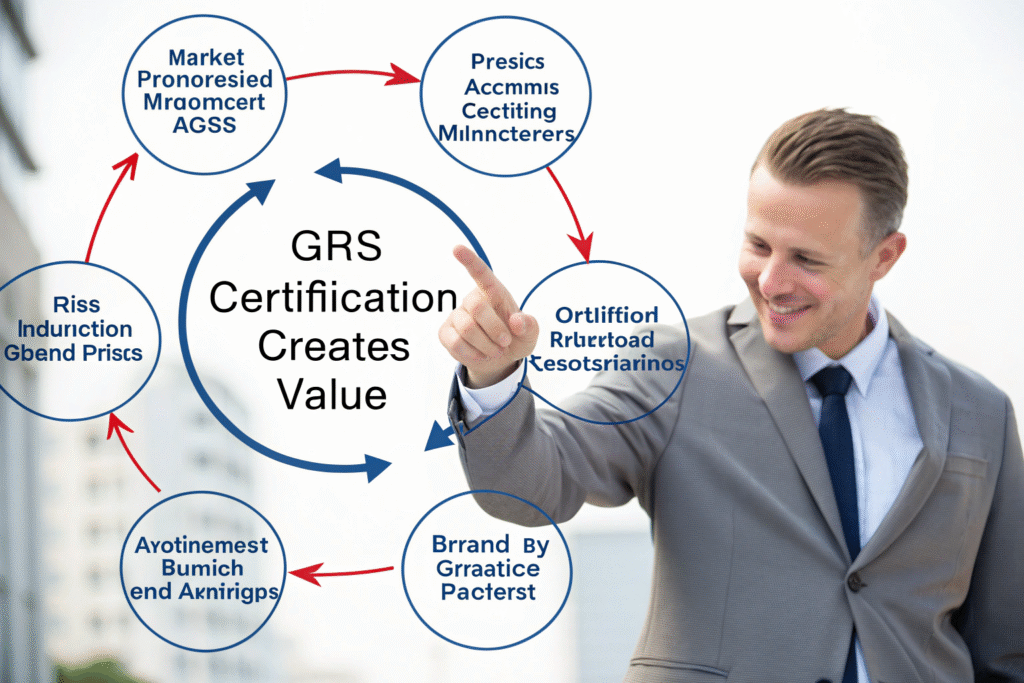
GRS certification benefits include access to new markets and clients, premium pricing for verified recycled products, reduced risk of greenwashing accusations, streamlined compliance with retailer requirements, and improved operational efficiency through better tracking systems. Our data shows that GRS-certified manufacturers achieve 15-30% price premiums for recycled products and experience 40% faster qualification with major retailers compared to non-certified competitors. A Portuguese knitwear manufacturer doubled their business with Scandinavian brands after achieving GRS certification, as these retailers required verified recycled content for their sustainability programs.

How does GRS create market access opportunities?
Major retailers and brands are increasingly requiring GRS or equivalent certification for recycled product lines, making certification essential for accessing these growing market segments.
We've helped multiple manufacturers qualify for fast-fashion recycling programs that were previously inaccessible without GRS certification. These programs typically involve larger volumes and longer-term contracts than conventional sourcing relationships. The certification serves as a market access requirement for recycled products in increasingly regulated markets.
What risk reduction does certification provide?
GRS certification reduces regulatory risks by ensuring compliance with green marketing guidelines and supply chain due diligence requirements that are becoming more stringent globally.
When the UK updated its green claims guidance last year, our GRS-certified clients had already documentation systems to support their recycled content claims. Non-certified competitors faced costly reviews and potential marketing changes. This demonstrates how certification manages regulatory risk in evolving legal landscapes.
What Are the Implementation Challenges for GRS Certification?
While beneficial, GRS implementation presents specific challenges that manufacturers should anticipate. I've helped numerous factories navigate these hurdles successfully, and preparation is key to efficient certification.
Common GRS implementation challenges include establishing complete supply chain traceability, managing transaction certificate systems, meeting chemical compliance requirements, training staff on new procedures, and maintaining consistent documentation between audits. A Bangladeshi manufacturer we assisted struggled initially because their recycled polyester supplier couldn't provide proper transaction certificates—they had to change suppliers mid-certification, delaying the process by three months and costing approximately $15,000 in lost efficiency.
How can manufacturers establish reliable traceability?
Building a traceable supply chain for recycled materials requires vetting suppliers for their documentation capabilities and sometimes helping them improve their systems—not just checking for recycled content.
We developed a supplier pre-qualification process that assesses documentation capabilities before ordering materials. This approach prevented a potential certification failure when we discovered that a recycled cotton supplier maintained inadequate transaction records. The system ensures reliable supply chain traceability from the beginning rather than discovering gaps during audits.
What training requirements does GRS impose?
GRS certification requires training staff on new procedures for material handling, documentation, chemical management, and social compliance—often requiring significant cultural and operational changes.
We implemented a "GRS ambassador" program where key staff from each department received intensive training and then trained their colleagues. This approach reduced implementation time by 40% and improved compliance consistency across operations. The training requirements for certification implementation are often underestimated but crucial for success.
Conclusion
GRS certification has evolved from a niche verification to an essential standard for clothing manufacturers working with recycled materials. The certification provides the verified traceability that brands and consumers demand in an era of increasing skepticism about sustainability claims. While implementation requires significant investment in systems, training, and documentation, the benefits—market access, premium pricing, risk reduction, and operational improvements—typically justify the costs for manufacturers committed to the recycled materials market.
The most successful manufacturers approach GRS not as a compliance burden but as a strategic investment in their future positioning within the circular economy. As regulations tighten and consumer awareness grows, GRS certification provides the verification framework that enables confident participation in the expanding market for recycled textiles. Manufacturers who embrace this standard early are positioning themselves as leaders in the industry's transition toward greater circularity and transparency.
If you're considering GRS certification or need assistance implementing recycled content verification systems, contact our Business Director Elaine to discuss our certification experience: elaine@fumaoclothing.com. We'll help you navigate the certification process and maximize the business benefits of verified recycled content.