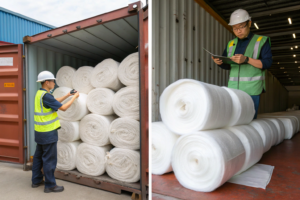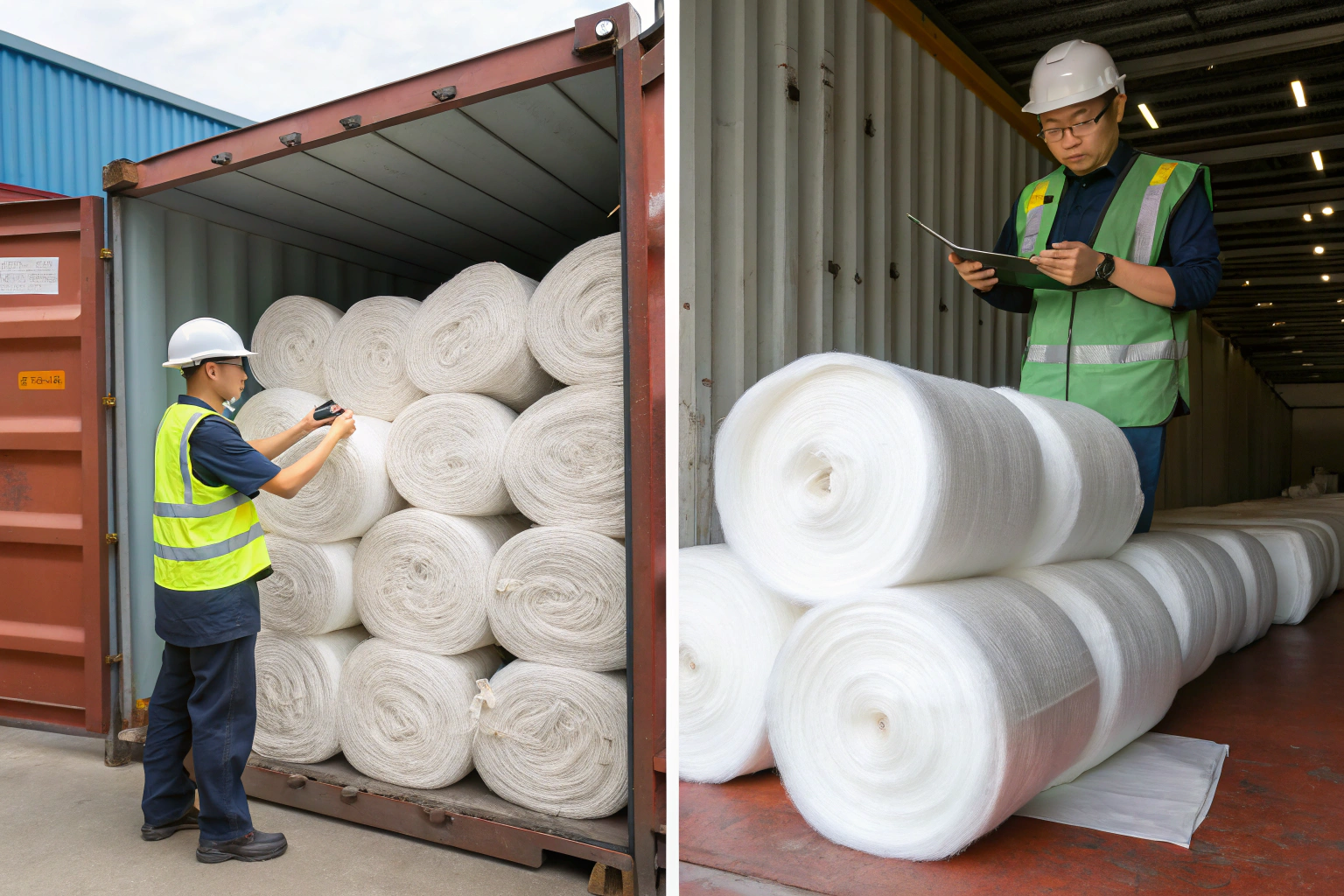
I've lost count of how many clients have called me shocked by their final shipping costs. They calculated based on weight, assuming their fabric would ship like every other fabric they'd bought. Then the invoice arrived, and the freight charge was 30% higher than expected. The culprit? They'd ordered knitted fabric but budgeted like it was woven. The difference in logistics costs between knits and wovens isn't trivial—it can determine whether your landed cost supports your retail price.
Here's the straightforward reality: knitted fabrics almost always cost more to ship than woven fabrics of the same weight and quantity. The reason is simple physics—knits are bulkier. Their looped structure creates air gaps that woven fabrics don't have. A roll of knitted jersey takes up 20-40% more volume than a roll of woven poplin of the same length and weight. And since ocean freight is charged by volume, not weight, for lightweight fabrics, that bulk translates directly to higher costs.
Let me walk you through exactly how logistics costs differ, why the gap exists, and most importantly, how to minimize it. I'll share real data from thousands of shipments, practical strategies for reducing costs, and the questions you need to ask before your fabric ships.
How Are Ocean Freight Costs Calculated for Fabric Rolls?
Before comparing knits and wovens, you need to understand how shipping lines charge for fabric. It's not as simple as "per kilogram" or "per roll."
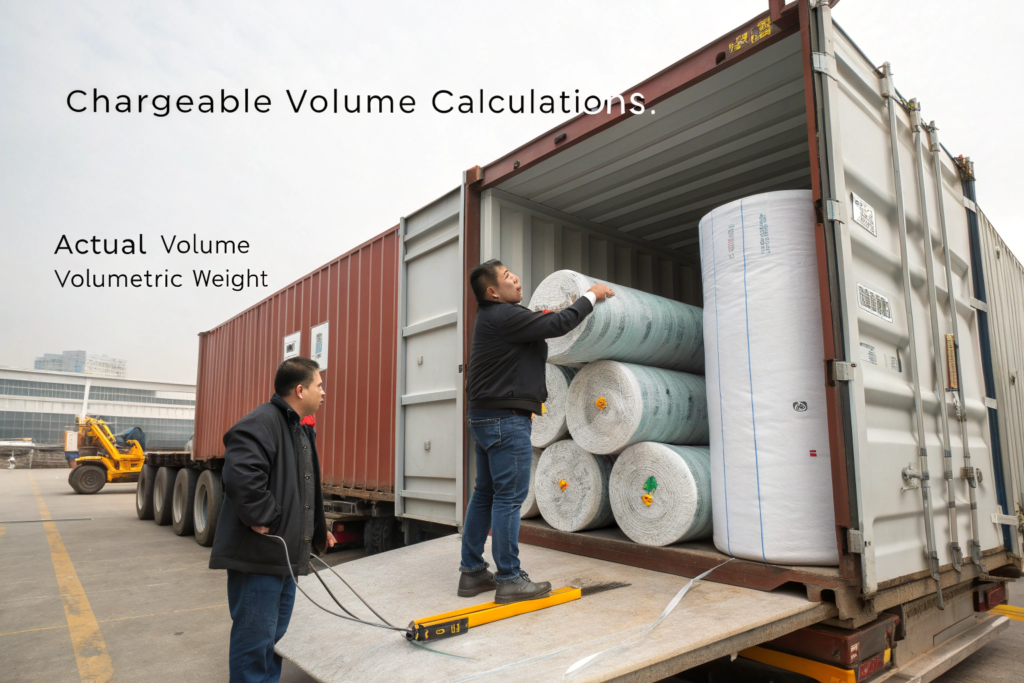
Ocean freight is calculated based on the greater of actual weight and volumetric weight. For dense, heavy fabrics (like heavy denim or canvas), actual weight usually determines the cost. For lightweight fabrics (like most summer knits and wovens), volumetric weight is the limiting factor.
Volumetric weight is calculated as: Length × Width × Height (in cubic meters) ÷ 0.006 (or 1 cubic meter = 167 kilograms). This conversion factor comes from shipping industry standards—it represents the point at which a shipment is considered "light but bulky."
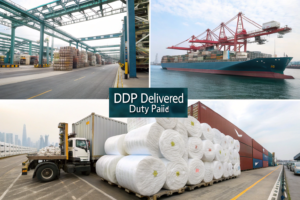
Here's a real example from our shipments: A 40-foot container can hold about 25-30 metric tons of fabric by weight. But for lightweight knitted jersey (say, 150 GSM), you'll hit the volume limit long before you hit the weight limit. You might only get 8-10 tons in that same container because the rolls are too bulky to stack more.
The result is that shipping cost per kilogram is much higher for lightweight, bulky fabrics than for dense, heavy fabrics. And knits are almost always bulkier than wovens of the same weight.
A US client once compared our quote for knitted jersey against a competitor's quote for woven poplin. The competitor's fabric cost was higher, but their shipping cost was lower because wovens pack more efficiently. Our client calculated landed cost and found the overall difference was minimal—the higher fabric cost was offset by lower shipping.
What's the Difference Between FCL and LCL Shipping for Fabrics?
Full Container Load (FCL) and Less than Container Load (LCL) have different cost structures that affect the knit-woven comparison.
FCL (Full Container Load) means you rent an entire container—20ft or 40ft standard. You pay a flat rate regardless of how much you pack (up to the container's limits). This favors shippers who can maximize container utilization. With wovens, you can often pack 30,000-40,000 yards in a 40ft container. With knits, you might only get 20,000-25,000 yards in the same space. Your cost per yard is higher because you're spreading the flat container rate over fewer yards.
LCL (Less than Container Load) means you share container space with other shippers. You pay based on the actual volume your cargo occupies (in cubic meters). This can be economical for smaller orders, but the per-cubic-meter rate is higher than FCL rates. For knits, the higher volume per yard means higher LCL costs.
The breakeven point where FCL becomes cheaper than LCL is typically around 15-18 cubic meters. For wovens, that might be 15,000-20,000 yards. For knits, it might be only 10,000-12,000 yards because of the bulk.
A Canadian brand learned to calculate FCL vs LCL for each order. For their woven shirting, FCL made sense at 15,000 yards. For their knit jersey, they needed 20,000 yards to justify FCL because the bulk reduced per-container yardage.
Why Does Volumetric Weight Often Exceed Actual Weight for Knits?
The math explains everything. A typical lightweight knitted jersey might weigh 150 grams per square meter (GSM). A roll of 1000 meters, 60 inches wide (1.5 meters), weighs about 225 kilograms (1000m × 1.5m × 0.15kg = 225kg).
Now calculate the volume of that roll. A tightly wound knit roll might be 40cm in diameter and 1.6 meters long. Volume = π × (0.2m)² × 1.6m = approximately 0.2 cubic meters.
Volumetric weight = 0.2m³ × 167 = 33.4 kilograms.
Wait—that's less than the actual weight? In this example, actual weight (225kg) exceeds volumetric weight (33kg), so you'd be charged by actual weight. This happens for dense, heavy fabrics.
But here's where knits differ. Knitted fabrics are often lighter (lower GSM) AND bulkier (larger roll diameter for the same length). A lightweight knit might have the same weight calculation, but the roll diameter could be 50cm instead of 40cm because the fabric is loftier. Volume becomes π × (0.25m)² × 1.6m = 0.31 cubic meters. Volumetric weight = 0.31 × 167 = 52 kilograms.
Now actual weight (still 225kg) far exceeds volumetric weight, so you're still charged by weight. So why do knits cost more?
The real issue is container utilization. Even though each roll is charged by weight, you can only fit so many rolls in a container. The lightweight knit's bulk means fewer rolls per container, so the fixed container cost spreads over fewer yards. Your cost per yard increases even though the per-kilo rate is the same.
A Japanese brand compared identical weights of knit and woven in the same container type. The woven filled the container with 35,000 yards; the knit only managed 22,000 yards. The shipping cost per yard was 37% higher for the knit.
How Much Bulkier Are Knitted Fabrics Compared to Wovens?
The bulk difference isn't theoretical—it's measurable and significant. Based on thousands of shipments from our facility, here's what you can expect.
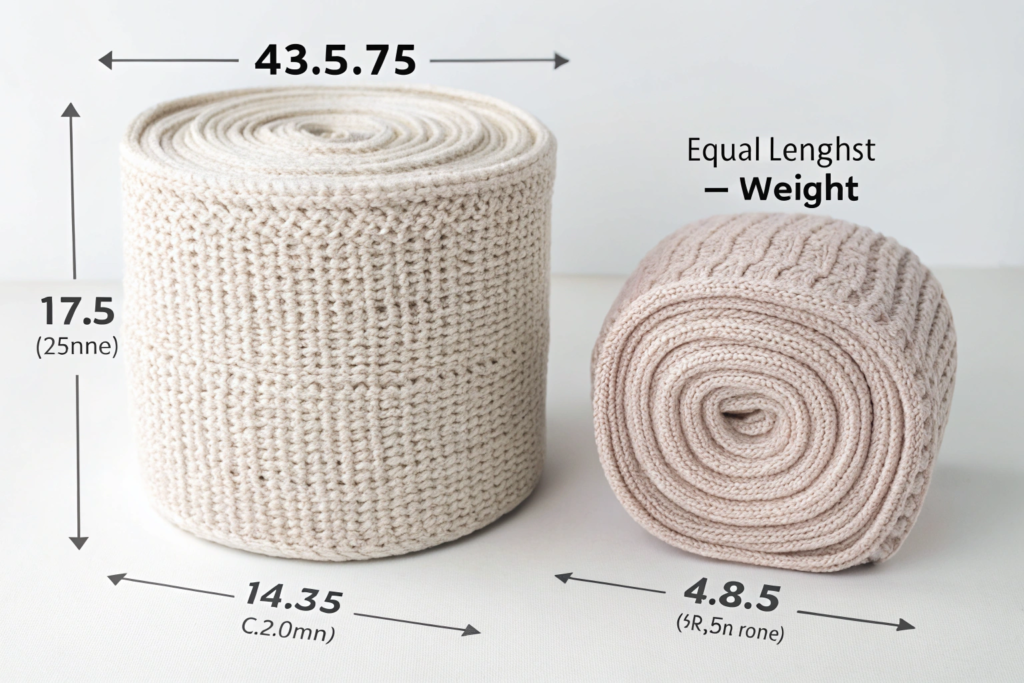
For lightweight fabrics (100-150 GSM), knitted jersey typically requires 30-40% more volume per yard than woven poplin of the same weight. A 1000-meter roll of knit might be 45-50cm in diameter, while the same length of woven might be 35-40cm. That extra 10cm per roll means fewer rolls per container.
For mid-weight fabrics (150-200 GSM), the difference narrows slightly but remains significant. Knits might be 20-30% bulkier. Fleece and terry knits are the worst—their looped surfaces create maximum loft, often requiring 50% more volume than equivalent-weight wovens.
For heavy fabrics (200+ GSM), the gap narrows further. Heavy knits are compressed by their own weight, and heavy wovens are often quite dense. The difference might be only 10-15%. Some heavy fleeces still defy compression and remain bulky.
The construction matters enormously. A tightly knit interlock is less bulky than a loose single jersey. A compact double knit approaches woven-like density. Always ask your supplier about expected roll diameters—don't assume based on weight alone.
A Swedish client once ordered what they thought was compact double knit for a uniform program. The fabric was lovely, but the rolls were huge—40% bulkier than they'd budgeted. Their container held 18,000 yards instead of the expected 25,000. The shipping cost overage ate their margin for the entire order.
Why Do Knitted Fabrics Have Larger Roll Diameters?
The answer lies in the fabric structure itself. Knitted fabrics are made of interlocking loops that create natural loft and air gaps. Even under tension during winding, those loops resist complete compression. The fabric wants to maintain some thickness.
Woven fabrics, with their tight, flat construction, have minimal loft. Under tension, they compress to near-minimum thickness. The yarns themselves compress, and the structure flattens.
The winding process also differs. Knits require careful tension control to avoid stretching or distorting the loops. Too much tension and you'll permanently stretch the fabric, affecting garment fit. So knits are wound at lower tension, leaving more air between layers.
Some knits—particularly fleece and terry—have surface loops that create additional bulk. Those loops stand up from the fabric surface, creating thickness that can't be compressed without damaging the texture.
A German brand discovered that their brushed fleece rolls were nearly twice the diameter of their woven canvas rolls of the same length. The fleece's cozy texture came with a logistics penalty they hadn't anticipated.
What's the Impact on Container Capacity?
Let me give you real numbers from our shipping records.
For lightweight woven poplin (120 GSM, 60" width), we typically pack 35,000-40,000 yards in a 40-foot high-cube container. That's about 22-25 pallets, each with 8-10 rolls, depending on roll lengths.
For lightweight knitted jersey (150 GSM, same width), the same container holds 22,000-26,000 yards—about 35-40% less. The rolls are simply too big to fit more.
For mid-weight woven twill (200 GSM), we pack 28,000-32,000 yards. For mid-weight knit fleece (220 GSM), we're down to 18,000-22,000 yards—another 30% reduction.
For heavy woven canvas (300+ GSM), we pack 22,000-26,000 yards. For heavy knit sweatshirting (280 GSM), we're at 16,000-18,000 yards.
These aren't theoretical—they're actual numbers from shipped containers. A buyer planning a 30,000-yard order needs to know: if it's woven, one container might suffice. If it's knit, you're looking at two containers or significant consolidation challenges.
A French brand learned this when their 25,000-yard knit order arrived and they discovered it required two containers, doubling their freight budget. The fabric cost was within forecast, but the landed cost blew their margin.
What Packing Strategies Reduce Logistics Costs for Knits?
The good news is that you can reduce knit bulk through smart packing strategies. These techniques add some cost but often pay for themselves in freight savings.
Vacuum compression is the most dramatic solution. Specialized equipment compresses fabric rolls, removes air, and seals them in plastic. This can reduce volume by 30-50% for bulky knits. The fabric relaxes to normal thickness once the plastic is removed. The cost is significant—maybe $200-300 per container—but when freight savings are thousands of dollars, it's worth it.
High-tension winding (within safe limits) reduces roll diameter. We can increase winding tension for knits that can tolerate it without distortion. This might reduce diameter by 10-15%, adding 10-15% more yards per container. The key is knowing which knits can handle higher tension—some will stretch permanently.
Optimized roll lengths matter. Standard rolls of 50-60 meters create many small rolls with cumulative wasted space between them. Longer rolls (100-120 meters) reduce the number of rolls and the space between them. If your cutting room can handle longer rolls, this saves container space.
Pallet configuration affects how many rolls fit. Alternating roll directions, using custom pallet sizes, and stacking to maximum height all improve utilization. We work with logistics partners who specialize in fabric container loading—they can often fit 10-15% more than standard loading.
A UK brand now specifies vacuum compression for all their bulky knit orders. The added cost is €300 per container, but they save €1,200 in freight. Their logistics manager told me it's the easiest cost-saving decision they make.
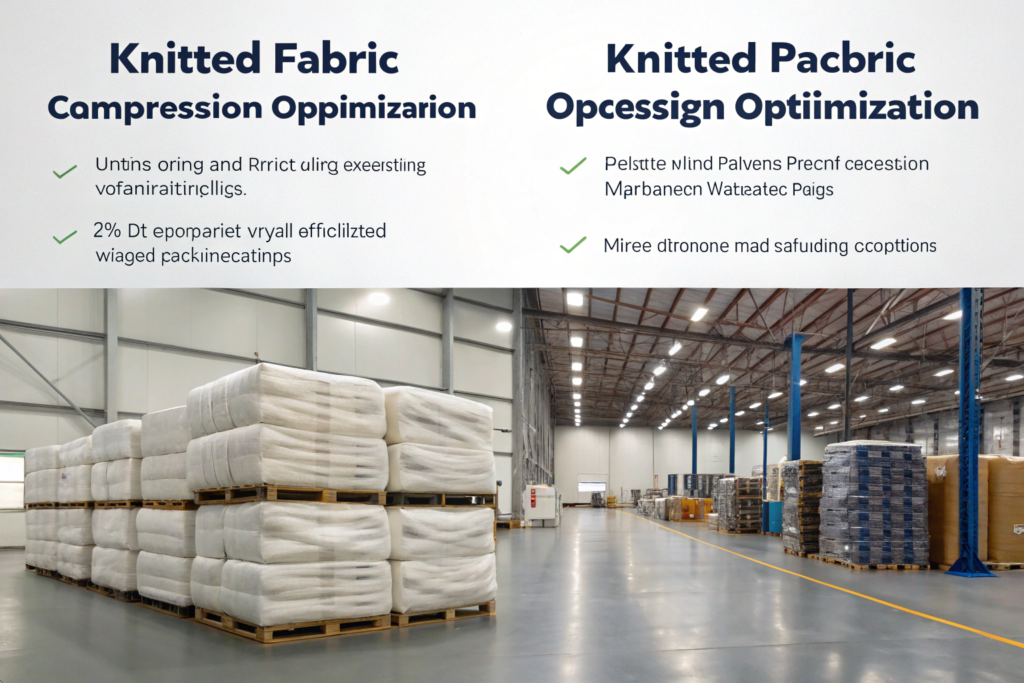
Does Vacuum Compression Damage Knitted Fabrics?
This is the first question everyone asks, and it's valid. Vacuum compression applies significant pressure to fabric. For some delicate knits, this can cause permanent creasing or distortion.
The answer depends on fiber content and construction. Synthetic knits (polyester, nylon, blends) handle compression beautifully—they spring back to original thickness. Natural fiber knits (cotton, wool) may show temporary compression marks that relax with steaming or light ironing.
Delicate structures (fine gauge, open knits) are riskier. The pressure can distort the loop structure permanently. We test compression on every knit type before recommending it to clients.
The key is proper technique. Compression should be gradual, with controlled pressure release. The plastic wrapping should support the fabric evenly. And the fabric should be allowed to rest after unpacking before cutting—24-48 hours usually suffices.
We've vacuum-compressed millions of yards of recycled polyester fleece for a Swedish outdoor brand. They've never had a quality complaint. The fabric arrives compressed, expands within hours, and cuts perfectly.
How Do Roll Lengths Affect Container Utilization?
This is a math problem that rewards attention to detail.
Standard rolls of 50-60 meters create a certain number of rolls per container. Each roll has a diameter, and the container has fixed dimensions. The number of rolls that fit is determined by how they stack and pack.
Longer rolls—100-120 meters—reduce the number of rolls by half for the same total yardage. Fewer rolls mean less wasted space between rolls, more efficient stacking, and often better container utilization.
The trade-off is handling. Longer rolls are heavier and may require equipment to move. Your cutting room needs capacity to handle them. Some cutting tables are designed for standard roll lengths and can't accommodate longer ones.
For many knit applications, 100-meter rolls are the sweet spot. They improve container utilization by 10-15% without creating handling problems. We offer this as standard for many clients.
A Danish brand switched from 50-meter to 100-meter rolls for their knit basics. Their container utilization improved from 22,000 to 26,000 yards—an 18% increase. The freight savings paid for the slight handling adjustments they needed to make.
What Hidden Logistics Costs Differ Between Knits and Wovens?
Beyond basic freight, several other logistics costs differ between knits and wovens. Understanding them prevents budget surprises.
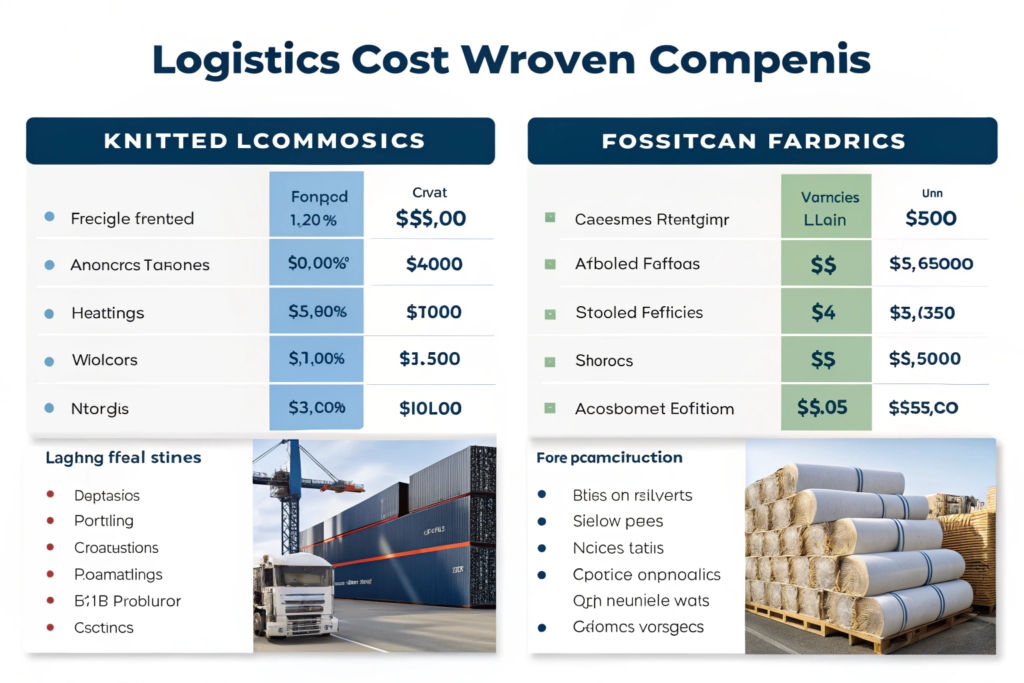
Warehousing and storage costs more for knits because they occupy more space. If your fabric sits in a warehouse before cutting, you're paying for cubic meters, not kilograms. A pallet of knit might hold 30% less yardage than a pallet of woven, so your storage cost per yard is higher.
Handling costs can be higher for knits because rolls are often larger and heavier. Equipment requirements differ—a forklift can handle both, but manual handling becomes harder with large knit rolls. Some warehouses charge more for "oversized" handling.
Insurance calculations sometimes consider bulk. While not common, some insurers adjust rates based on shipment characteristics. Knits' bulk might trigger higher rates in niche cases.
Port congestion surcharges apply equally to both, but the per-yard impact is higher for knits because you're spreading the surcharge over fewer yards. A $500 congestion surcharge adds $0.02 per yard to a 25,000-yard woven shipment, but $0.03 per yard to a 16,000-yard knit shipment.
A Spanish brand calculated that their total landed cost for knits was 15% higher than for wovens of the same fabric cost, purely due to logistics factors. They adjusted their pricing accordingly and stopped wondering why knit product margins were tighter.
How Does Fabric Weight Affect Per-Yard Shipping Costs?
Weight and volume interact in ways that matter for your cost calculations.
For heavy fabrics (250+ GSM), actual weight usually determines freight cost. The fabric is dense enough that you hit weight limits before volume limits. In this range, knits and wovens of the same weight might have similar shipping costs per yard because both are weight-limited.
For medium fabrics (150-250 GSM), you're in a transition zone. Some constructions hit volume limits, some hit weight limits. This is where knit bulk starts to matter.
For lightweight fabrics (under 150 GSM), volume almost always determines cost. And this is where the knit-woven gap is largest. A lightweight knit might have 30-40% higher shipping cost per yard than a lightweight woven.
The threshold varies by fabric, but as a rule of thumb: below 180 GSM for knits, you're almost certainly volume-limited. For wovens, the threshold might be 120 GSM.
A US brand learned to calculate shipping costs based on volume, not weight, for their lightweight knit line. When they switched to volume-based budgeting, their margin forecasts became accurate for the first time.
What Documentation Errors Cause Costly Logistics Delays?
Documentation errors cost money regardless of fabric type, but the impact can be larger for knits because any delay adds to costs that are already higher.
Common errors include:
- Incorrect harmonized codes (leading to customs holds)
- Wrong weights or dimensions (causing re-invoicing and delays)
- Missing certificates (especially for sustainable fabrics)
- Incorrect shipping marks (causing warehouse confusion)
For knits, a week's delay in customs can mean missed seasonal windows, storage fees, and frustrated customers. The higher base cost of knit logistics makes these penalties more painful.
We've seen shipments held because the declared weight didn't match the actual weight—a simple error that cost a client $2,000 in storage and demurrage fees. For a woven shipment, that might have been manageable. For their knit order with tighter margins, it wiped out profit.
A Canadian brand now requires a third-party documentation review for all knit shipments over $50,000. The $200 review fee has saved them multiple times the cost in prevented errors.
How Do Air Freight Costs Compare for Knits vs Wovens?
When you need fabric fast, air freight becomes necessary. And the knit-woven gap widens dramatically in air freight.
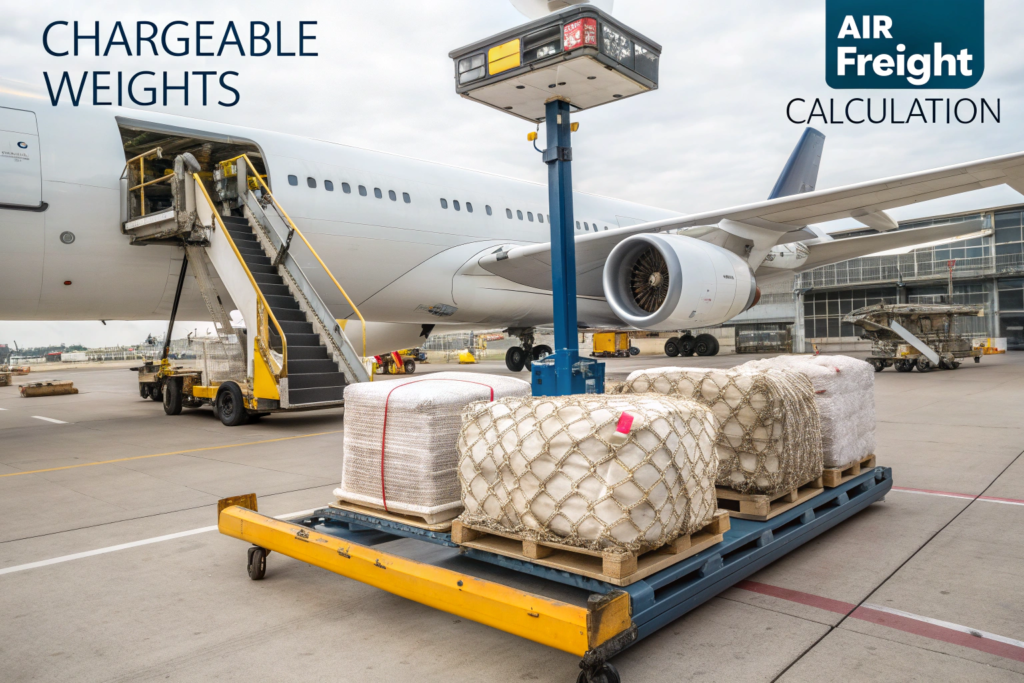
Air freight is charged almost entirely by volumetric weight for lightweight fabrics. The airline industry uses a divisor of 6000 (cubic centimeters per kilogram) or 166.67 (cubic inches per pound). For lightweight fabrics, volumetric weight almost always exceeds actual weight.
For a lightweight knit with high bulk, the volumetric weight can be 2-3 times the actual weight. That means you're paying for air freight on a chargeable weight that's double or triple what you'd expect from the scale.
A real example: A 500kg shipment of knitted jersey might have a volume of 5 cubic meters. Volumetric weight = 5m³ × 167 = 835 kg. You pay for 835 kg, not 500 kg. The same weight in woven poplin might be 3 cubic meters (volumetric weight 500 kg), so you pay actual weight.
The cost difference is enormous. Air freight for knits can be 50-100% higher than for wovens of the same actual weight.
A German brand once air-freighted 2 tons of knit fabric to meet a launch deadline. The freight cost was €12,000—more than the fabric itself. They calculated that if they'd chosen woven instead of knit, the same air freight would have been €7,000. The knit's bulk cost them €5,000 in extra freight.
When Does Air Freight Make Sense for Knitted Fabrics?
Despite the cost, air freight is sometimes the right choice for knits.
Seasonal deadlines are the most common reason. If missing a launch window costs more than the air freight premium, you fly it. A missed summer season can mean writing off the entire collection.
Sample and development orders often fly because speed matters more than cost. Getting samples a week faster can accelerate the entire production cycle.
Emergency replenishment for bestsellers justifies air freight. If a style is selling out and reorders are pouring in, air freight keeps the momentum going.
The key is calculating the breakeven. Compare the air freight premium against the cost of stockouts, lost sales, and missed seasons. Sometimes flying is the cheaper option in the long run.
A UK brand has a rule: if the order value exceeds 3x the air freight cost, they fly. For their knit line, that threshold is higher because air freight costs more. They've learned to build air freight contingencies into their pricing for critical styles.
What's the Minimum Order Quantity for Economical Air Freight?
Air freight has minimum charges regardless of shipment size. Understanding these helps you consolidate shipments effectively.
Most air freight carriers have a minimum charge equivalent to 45-100 kg, even for smaller shipments. For very small sample orders, this minimum can make per-unit costs astronomical.
The sweet spot for air freight efficiency is typically 300-500 kg chargeable weight. Below this, the per-kg rate is higher. Above this, you may need palletized shipping with different rate structures.
For knits, remember that chargeable weight exceeds actual weight. A 300 kg actual shipment might be 500 kg chargeable, pushing you into higher rate brackets. Factor this into your calculations.
A French brand consolidates all their knit sample orders into monthly air shipments. Instead of flying each sample separately (with high minimum charges), they batch everything and fly once. The savings pay for additional samples each month.
What Questions Should You Ask Your Supplier About Logistics?
Getting logistics right starts with asking the right questions before you order. Here's what you need to know.
"What is the expected roll diameter for this fabric?" Don't accept vague answers. Ask for specific measurements based on your order quantity and roll length. A good supplier can calculate this precisely.
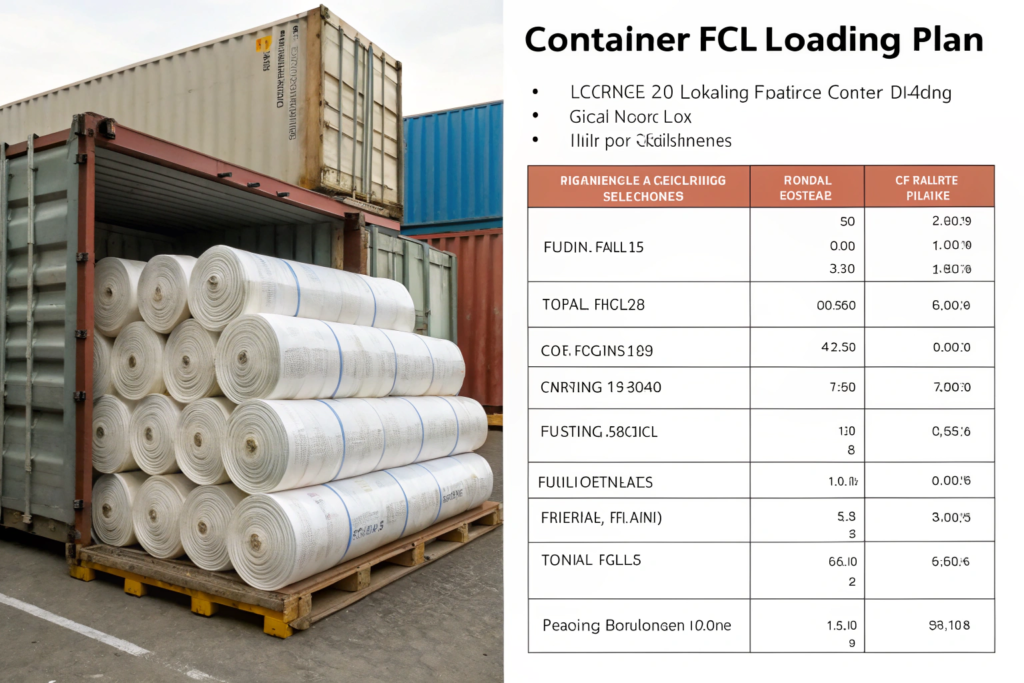
"Can you provide a container loading plan?" For FCL shipments, request a plan showing how many rolls per pallet, pallets per container, and total yardage. This confirms your utilization expectations.
"What packing options do you offer?" Ask about tension levels, roll lengths, and compression options. A supplier who understands logistics will have multiple options to optimize your shipment.
"What's the chargeable volume for my order?" Before shipping, request the calculated volume based on actual packed rolls. This lets you verify freight quotes and avoid surprises.
A Dutch brand now requires a pre-shipping logistics summary for every order: expected roll count, total volume, container utilization, and chargeable weight. This single document has eliminated their freight budget surprises.
How Do You Calculate Expected Freight Costs Before Ordering?
With the right information, you can estimate freight costs before placing your order.
Step 1: Get the fabric's GSM and width. Calculate weight per yard: GSM × width (meters) × 0.000001 = kg per yard. For 150 GSM, 1.5m width = 150 × 1.5 × 0.000001 = 0.000225 kg per square meter? Wait—that's wrong. Let me correct:
Weight per square meter = GSM/1000 = kg/m². So 150 GSM = 0.15 kg/m².
For 1.5m width, weight per linear meter = 0.15 kg/m² × 1.5m = 0.225 kg/m.
For 1000 meters, weight = 225 kg.
Step 2: Estimate roll diameter based on similar fabrics. Ask your supplier for typical diameters, or use industry averages: lightweight knit: 45-50cm per 1000m; lightweight woven: 35-40cm.
Step 3: Calculate volume per roll: π × (radius)² × roll length (in meters). For 0.25m radius (50cm diameter) and 1.6m roll length: 3.14 × 0.0625 × 1.6 = 0.314 m³ per roll.
Step 4: Calculate total volume for your order. For 20,000 yards (18,288 meters) in 1000m rolls: 18.3 rolls, say 19 rolls. Total volume = 19 × 0.314 = 5.97 m³.
Step 5: Get freight rates per cubic meter from your forwarder. For LCL, multiply volume × rate. For FCL, compare volume to container capacity—if under 22 m³, you might use 20ft; if under 28 m³, 40ft standard; over that, 40ft high-cube.
Step 6: Add buffer for packing inefficiency (5-10%) and any surcharges.
A US brand built this calculation into a spreadsheet. Now they can compare landed costs for knit vs woven options before making fabric decisions, not after.
What Information Should Your Supplier Provide Pre-Shipment?
Before your fabric ships, you should receive:
Packing list showing roll numbers, lengths, weights, and dimensions. This lets you verify the shipment matches your order.
Container loading plan showing how rolls are arranged. This helps your receiving warehouse prepare.
Photographs of packed containers (optional but helpful). Some clients request photos of the loaded container before sealing.
Final volume calculation based on actual packed dimensions. Compare this to your estimate—significant discrepancies indicate packing problems.
Estimated time of departure and arrival, with vessel name and voyage number.
A Swedish brand requires all this information 48 hours before sailing. They've caught issues—wrong roll counts, dimensional errors—that would have caused major problems at arrival. The 48-hour window gives them time to correct before the ship sails.
Conclusion
The logistics cost difference between knitted and woven fabrics is real and significant. Knits typically cost 20-40% more to ship than wovens of the same weight and quantity, purely due to their bulkier nature. This difference affects container utilization, warehousing costs, and especially air freight rates.
Understanding these costs lets you make informed decisions. When comparing fabric options, don't just compare material costs—compare landed costs including freight. A slightly more expensive woven might actually be cheaper overall than a cheaper knit when logistics are factored in.
Strategies to reduce knit logistics costs exist and work. Vacuum compression, optimized roll lengths, careful tension control, and smart container loading can reduce the gap by 10-20%. These techniques add some cost but often pay for themselves in freight savings.
Ask the right questions early. Request roll diameter estimates before ordering. Get container loading plans. Calculate expected volumes. A supplier who can't provide this information probably doesn't understand logistics well enough to optimize your shipments.
At Shanghai Fumao, we've shipped millions of yards of both knits and wovens to over 100 countries. We know exactly how much space each fabric type occupies, what packing methods work best, and how to minimize your logistics costs. Our logistics team provides detailed pre-shipment information, container loading plans, and accurate volume calculations so you know your costs before the ship sails.
We offer multiple packing options—different roll lengths, tension levels, and vacuum compression—to match your logistics needs. And we work with your forwarder to ensure smooth coordination from our dock to yours.
Whether you're ordering lightweight jersey for summer dresses or heavy twill for uniforms, we'll help you understand and minimize the logistics costs. The goal is landed cost that supports your business, not surprises that eat your margin.
Contact our Business Director, Elaine, today to discuss your fabric logistics needs. She and her team will provide detailed shipping calculations, packing options, and cost-saving strategies for your specific order. Email her directly at: elaine@fumaoclothing.com. Let's get your fabric where it needs to be, cost-effectively and on time.