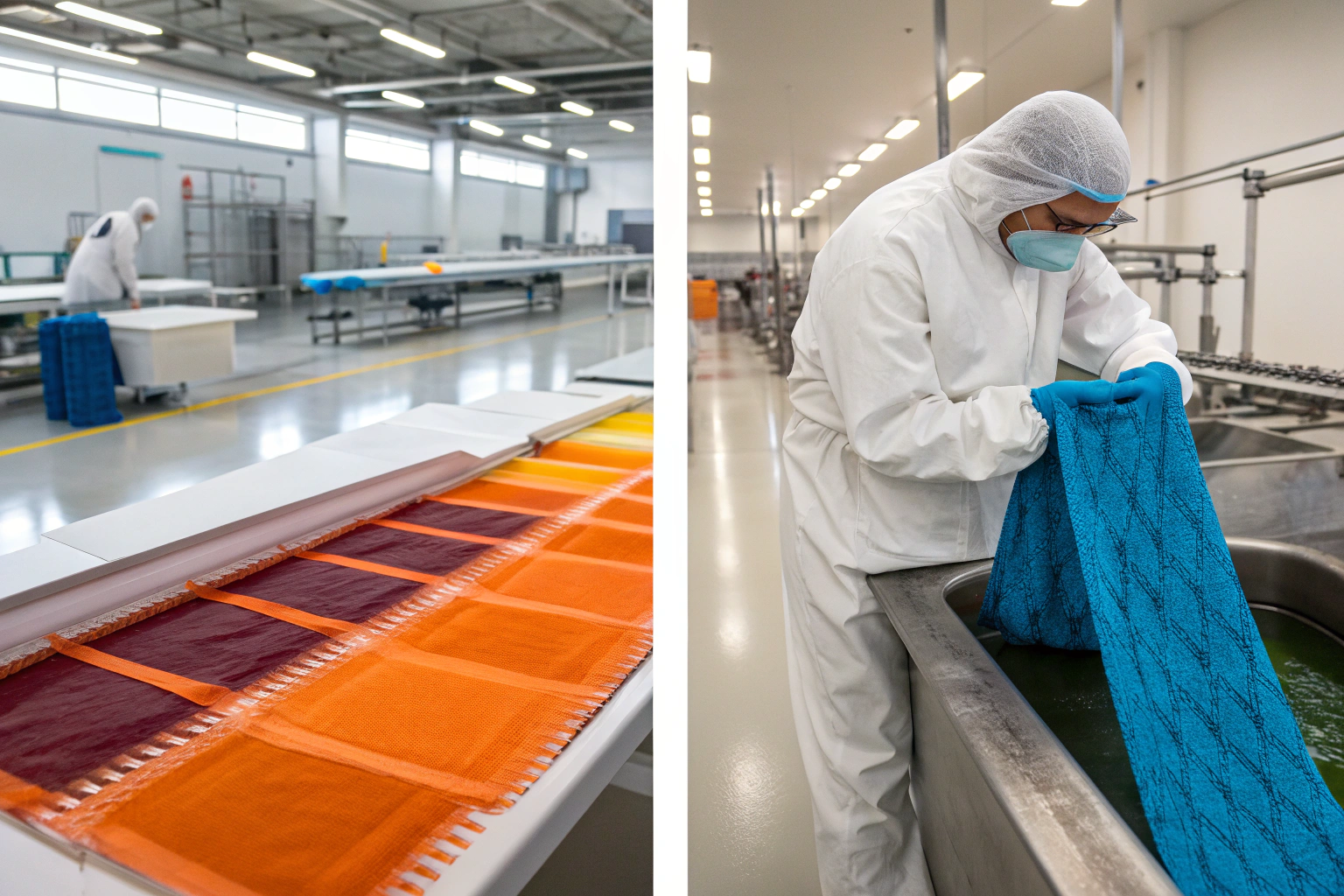
I remember the call from a Florida-based outdoor furniture manufacturer in 2021 that perfectly illustrates why this distinction matters. They'd been sourcing acrylic fabric for their high-end patio furniture line for years—beautiful colors, good durability, reasonable cost. Then a competitor started offering a "10-year color guarantee" that was eating their lunch. Customers wanted that guarantee, and my client couldn't match it with their current fabric. They came to us asking: "What's the secret?" The secret was solution-dyed acrylic, and understanding the difference saved their business.
Acrylic fabric is everywhere—in awnings, outdoor furniture, boat covers, automotive interiors, and increasingly in apparel and accessories. It's valued for its softness, wool-like hand, vibrant colors, and durability. But not all acrylic is created equal. The difference between solution-dyed acrylic and traditional (piece-dyed) acrylic is fundamental to how the fabric performs, how long colors last, and what it costs.
At Shanghai Fumao, we produce both types of acrylic fabrics for clients ranging from outdoor furniture manufacturers to automotive suppliers to fashion brands. The choice between them affects everything from colorfastness to UV resistance to production lead times. Let me walk you through what you actually need to know.
How Are Solution-Dyed and Traditional Acrylic Made Differently?
The difference starts at the molecular level—literally. Understanding the manufacturing process explains why these fabrics behave so differently.
What happens during solution dyeing?
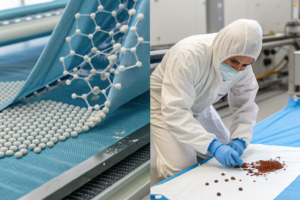
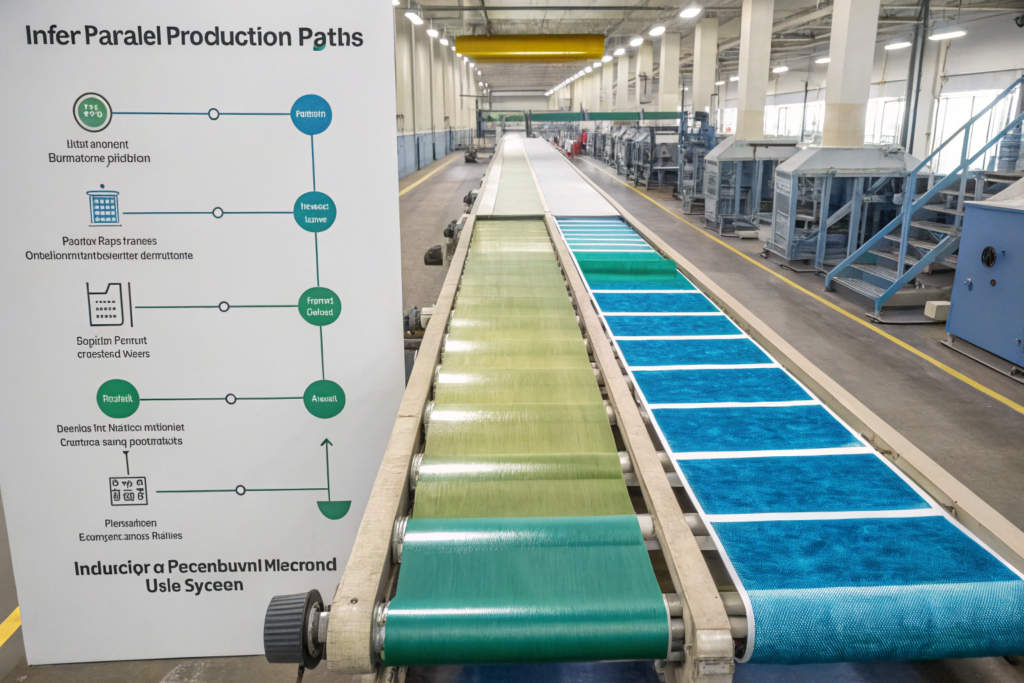
Solution dyeing (also called dope dyeing or spun dyeing) adds color at the earliest possible stage—before the fiber even exists:
-
Polymer preparation: Acrylic polymer (polyacrylonitrile) is dissolved in a solvent to create a spinning solution called "dope."
-
Pigment addition: Color pigments (not dyes) are added directly to this liquid dope. The pigments are insoluble particles that become suspended in the polymer solution.
-
Extrusion: The pigmented dope is forced through spinnerets (like shower heads with tiny holes) to form continuous filaments.
-
Coagulation: Filaments pass through a bath that solidifies the polymer, trapping pigment particles inside the fiber structure.
-
Drawing and finishing: Fibers are stretched, heat-set, and finished—but the color is already locked inside every fiber.
The key: color is throughout the fiber, not just on the surface. If you cut a solution-dyed fiber in half, the color is the same all the way through.
For a German automotive client requiring 10-year colorfastness in intense sunlight, solution-dyed acrylic was the only choice. The color is literally part of the fiber's structure, not something that can fade or wash out. Solution dyeing integrates color at molecular level.
How does traditional acrylic dyeing work?
Traditional acrylic dyeing adds color after the fiber is already made:
-
Fiber production: Unpigmented acrylic polymer is extruded, coagulated, and drawn to create white or natural fiber.
-
Yarn or fabric formation: Fiber is spun into yarn, then knitted or woven into fabric.
-
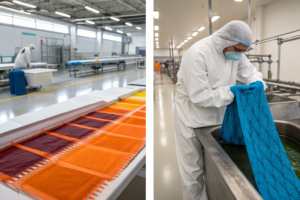
Dyeing: The finished fabric (or sometimes yarn) is immersed in dye baths. Acrylic requires specific dye classes—typically cationic (basic) dyes that are attracted to the fiber's negative ionic sites.
-
Dye fixation: Heat and chemicals drive dye molecules into the fiber surface, where they bond with available sites.
-
Rinsing and finishing: Excess dye is washed away; finishes applied.
The key: color is only on the fiber surface and in amorphous regions where dye molecules can penetrate. The fiber core remains undyed. If you cut a traditional dyed fiber in half, you'd see a colored shell and a lighter or white core.
For a fast-fashion brand needing quick color changes and small quantities, traditional dyeing offers flexibility—they can dye the same base fabric in different colors as trends shift. Traditional dyeing enables quick color response.
What does this mean at the fiber level?
The structural difference has profound implications:
Solution-dyed acrylic:
- Color throughout the fiber (through-dyed)
- Pigment particles physically trapped in polymer matrix
- No dye sites required—pigments don't "bond" chemically
- Consistent color regardless of fiber variations
- No dye-related chemical processing after fiber formation
Traditional acrylic:
- Color only in dye-accessible regions (surface and amorphous areas)
- Dye molecules chemically bonded to specific sites
- Color depth depends on dye site availability and dye penetration
- Color can vary with fiber crystallinity and processing
- Requires significant water, energy, and chemicals for dyeing
Under a microscope, solution-dyed fibers show uniform color distribution. Traditional dyed fibers show a "ring dyeing" effect—darker edges, lighter centers. This isn't just academic; it directly affects real-world performance. Fiber-level differences drive performance differences.
How Does Performance Differ Between the Two?
The manufacturing difference translates directly into performance differences that matter for real-world applications. Understanding these helps you choose the right fabric for your specific use.
Which has better UV resistance?
Solution-dyed acrylic dramatically outperforms traditional acrylic in UV resistance:
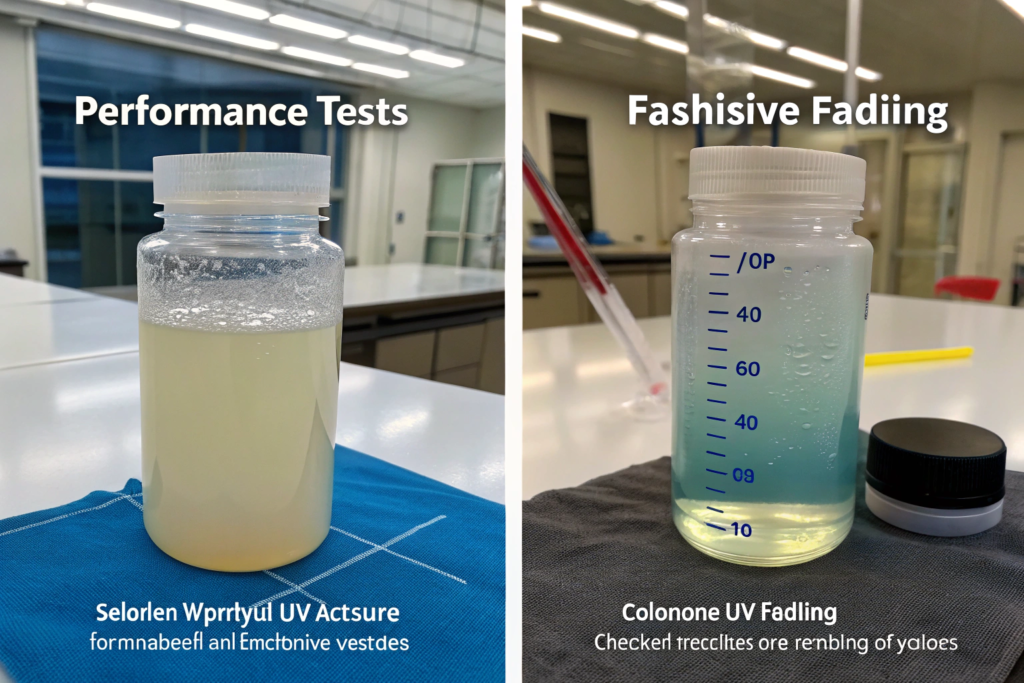
Solution-dyed: UV radiation degrades the fiber surface over time, but because color is throughout the fiber, the fabric maintains its appearance even as the surface slowly erodes. Typical colorfastness to light: Grade 5-6 (excellent) after 500+ hours accelerated testing. Real-world: 5-10 years outdoor exposure with minimal fading.
Traditional: UV radiation breaks down dye molecules at the fiber surface. Once surface dye fades, there's no color underneath to replace it. Typical colorfastness: Grade 3-4 (fair to good) after 500 hours. Real-world: 1-3 years outdoor exposure before noticeable fading.
The difference is so significant that many outdoor furniture manufacturers specify solution-dyed acrylic exclusively for products with multi-year warranties. For a Florida outdoor furniture client, we guarantee solution-dyed acrylic fabric for 5 years against fading—we couldn't offer that with traditional. UV resistance is the #1 differentiator.
How does washfastness compare?
Washfastness (color retention through laundering) also favors solution-dyed:
Solution-dyed: Pigments are physically trapped in the fiber matrix. Washing removes surface dirt but can't remove color because color isn't on the surface. Even after 100+ washes, color remains virtually unchanged.
Traditional: Dye molecules can be gradually extracted by water, detergents, and mechanical agitation. After many washes, dye loss causes fading. Some colors (especially brights) are more susceptible than others.
For a hospitality client (drapes and upholstery that need periodic professional cleaning), solution-dyed acrylic maintains appearance through decades of cleaning cycles. Traditional acrylic would show noticeable fading after 5-10 cleanings. Washfastness affects maintenance costs.
What about chemical resistance?
Chemical resistance follows the same pattern:
Solution-dyed: Pigments protected inside fiber. Most chemicals that don't dissolve the fiber itself won't affect color. Chlorine bleach, pool chemicals, cleaning agents—minimal color impact.
Traditional: Dye molecules on fiber surface are exposed to chemical attack. Chlorine can destroy dyes quickly. Acidic or alkaline cleaners can alter dye chemistry, causing color change.
For a poolside furniture application (constant chlorine exposure), solution-dyed acrylic is essential. Traditional acrylic would fade or discolor within months. Chemical exposure demands through-dyed color.
What About Cost and Production Considerations?
The performance advantages of solution-dyed acrylic come with trade-offs in cost, flexibility, and production. Understanding these helps you make economically sound decisions.
Is solution-dyed acrylic more expensive?
Yes—but the comparison isn't simple:
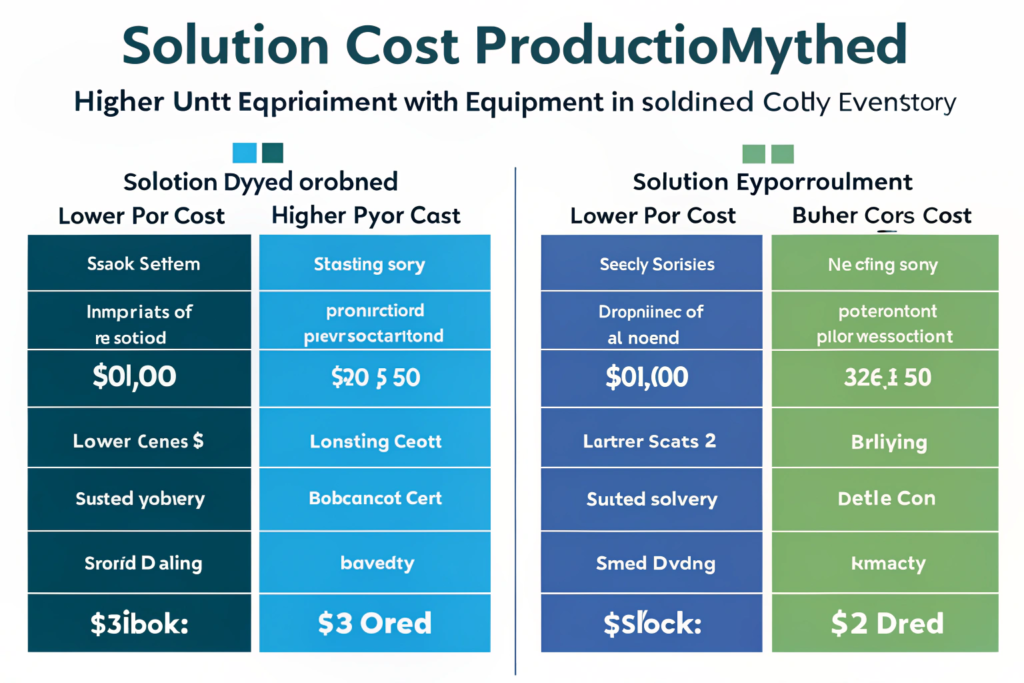
Higher base cost: Solution-dyed acrylic typically costs 20-40% more than comparable traditional acrylic. The specialized equipment, color changeover costs, and minimum runs drive this premium.
Lower lifetime cost: For applications where color matters, the longer life of solution-dyed fabric often makes it cheaper over time. A sofa that needs reupholstering after 3 years with traditional fabric vs. 10 years with solution-dyed—the solution-dyed option wins economically.
Hidden costs of traditional: Dyeing requires water, energy, chemicals, and wastewater treatment. These costs are real but often not fully reflected in fabric price. As environmental regulations tighten, traditional dyeing costs are rising.
Scale economies: Solution-dyed becomes more cost-effective at larger volumes. Small runs (under 1,000 meters per color) are expensive; large runs (10,000+ meters) approach traditional costs.
For a Swedish furniture brand with high-volume, long-lifecycle products, solution-dyed acrylic's higher upfront cost is easily justified by extended product life and reduced warranty claims. Total cost of ownership matters more than purchase price.
What about color availability and lead times?
Color considerations differ significantly:
Solution-dyed:
- Colors must be chosen before fiber production
- Each color requires dedicated production run
- Minimum order quantities per color: typically 1,000-3,000 meters
- Color changes require cleaning equipment (downtime, cost)
- Lead time: 8-12 weeks for custom colors
- Color consistency across production runs: excellent (same pigment formula)
Traditional:
- Colors chosen after fabric production
- Same greige fabric can be dyed many colors
- Minimum order quantities: 500-1,000 meters per color (lower)
- Quick response to color trends
- Lead time: 4-6 weeks for custom colors
- Color consistency: good but dye lot variation possible
For a US fashion brand needing quick color changes each season, traditional acrylic offers flexibility they need. For their core colors that run year after year, they use solution-dyed for consistency. Match sourcing strategy to color program.
How do minimum order quantities compare?
MOQ differences affect sourcing decisions:
Solution-dyed:
- Custom colors: 2,000-5,000 meters typical minimum
- Standard colors (held in inventory): 500-1,000 meters possible
- Sample quantities: 10-50 meters for development
Traditional:
- Greige fabric: 3,000-5,000 meters (shared across colors)
- Dyeing per color: 500-1,000 meters minimum
- Sample dyeing: 10-30 meters possible
The key insight: solution-dyed MOQs are per color; traditional MOQs are per greige fabric run, with dyeing MOQs per color. For programs with many colors, traditional may offer lower total commitment.
For a Canadian outdoor brand with 6 core colors and 4 seasonal colors, we produce solution-dyed for cores (high volume, consistent) and traditional for seasonals (lower volume, flexible). Hybrid approach optimizes both.
What Applications Suit Each Type?
Different applications have different requirements. Choosing the right type for your use case prevents both over-engineering and under-performing.
When is solution-dyed acrylic essential?
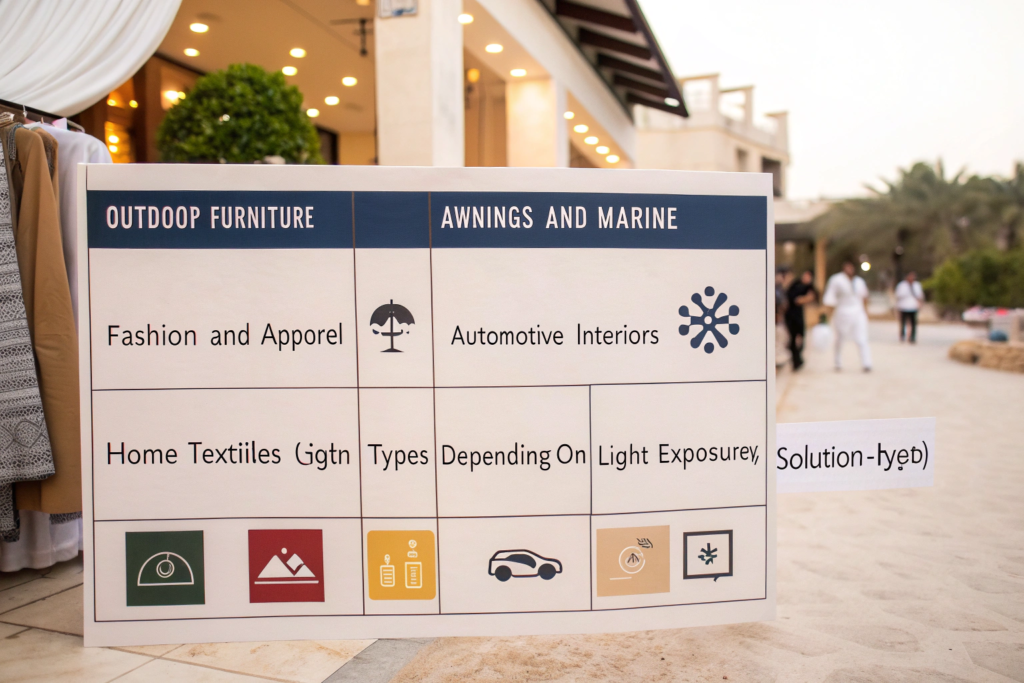
Solution-dyed acrylic is the clear choice for:
Outdoor furniture: UV exposure, weather, cleaning—requires maximum durability. Most premium outdoor furniture brands specify solution-dyed exclusively.
Awnings and canopies: Constant sun exposure, large surface areas where fading would be obvious. Solution-dyed maintains appearance for years.
Marine applications: Boats, docks—UV plus salt water, chemicals. Traditional acrylic would fail quickly.
Automotive interiors: Through-windshield UV exposure, high heat, long life requirements. Solution-dyed meets OEM specifications.
Contract upholstery: Public spaces, hotels, restaurants—high use, frequent cleaning, need for long life. Solution-dyed justifies higher cost through reduced replacement.
For a Saudi Arabian hospitality client (extreme sun, high-end properties), solution-dyed acrylic is the only fabric that meets their 10-year warranty requirement. Critical applications demand critical materials.
When is traditional acrylic sufficient?
Traditional acrylic works well for:
Indoor upholstery: Minimal UV exposure, lower performance requirements. Traditional offers cost savings without compromising appearance.
Fashion and apparel: Seasonal colors, trend-driven, limited life expected. Traditional provides color flexibility at lower cost.
Home textiles: Curtains (if lined), decorative pillows, throws—applications with limited light exposure.
Short-lifecycle products: Promotional items, seasonal goods, products not expected to last years.
Sample and development work: Small quantities where solution-dyed MOQs are prohibitive.
For a UK fast-fashion retailer, traditional acrylic allows them to respond to color trends within weeks, not months. The shorter product life makes the lower durability acceptable. Match material to expected product life.
Can you tell the difference by looking?
Sometimes, but not reliably:
Visual inspection: Both can look identical. Color depth and vibrancy can be excellent in both.
Burn test: Acrylic burns similarly regardless of dye method. Not a reliable differentiator.
Solvent test: Acetone or similar solvent may extract dye from traditional acrylic (color on rag) but not from solution-dyed (pigment trapped). This is a rough field test but not definitive.
Cross-section microscopy: Definitive—cut fiber cross-sections show color distribution. Solution-dyed shows color throughout; traditional shows ring dyeing.
Certification: Supplier documentation is the only reliable way to know. Request certification of solution-dyed vs. traditional.
For a US government contract requiring solution-dyed acrylic, we provide both material certifications and independent lab test reports confirming through-dyed fiber structure. Verification prevents substitution.
The choice between solution-dyed and traditional acrylic isn't about which is "better"—it's about which is better for your specific application. Solution-dyed offers superior UV resistance, washfastness, and chemical resistance at higher cost with longer lead times and higher minimums. Traditional offers lower cost, greater color flexibility, and faster response at the expense of long-term durability.
Conclusion
The fundamental difference between solution-dyed and traditional acrylic fabric lies in when and how color is applied. Solution-dyed acrylic has color pigments added to the liquid polymer before fiber extrusion, locking color throughout the fiber structure. Traditional acrylic is dyed after fiber or fabric production, with color only on the fiber surface and in accessible regions.
This structural difference drives performance differences: solution-dyed acrylic offers dramatically better UV resistance (5-10 years outdoor life vs. 1-3 years), superior washfastness (color unchanged through 100+ washes), and excellent chemical resistance. Traditional acrylic offers lower cost, greater color flexibility, faster lead times, and lower minimum order quantities.
Application determines choice: outdoor furniture, awnings, marine, automotive, and contract upholstery demand solution-dyed for long-term performance. Indoor applications, fashion, short-lifecycle products, and sample work can use traditional effectively.
The cost difference (20-40% higher for solution-dyed) must be evaluated against total cost of ownership—longer life, reduced warranty claims, lower replacement frequency often justify the premium.
If you're sourcing acrylic fabric and need to decide which type fits your application, I invite you to reach out to us at Shanghai Fumao. We produce both solution-dyed and traditional acrylic fabrics for clients across every market. We understand the performance requirements, the cost implications, and the sourcing strategies that work. Contact our Business Director, Elaine, directly at elaine@fumaoclothing.com. Tell her about your application, your performance requirements, your color program, and your volume needs. She'll connect you with our acrylic specialists, and we'll help you choose the right fabric for your specific use.
Because the right acrylic isn't about which is better—it's about which is better for you. And we can help you figure that out.