I still remember the phone call from a New York-based sweater designer in 2019. She was furious—and confused. Her "cashmere" sweaters were pilling after two wears, and her customers were demanding refunds. She'd paid premium prices, sourced from what she thought was a reputable Chinese supplier, and received fabric that looked beautiful in the roll but failed completely in real life. When we tested the fabric in our lab, the answer was immediate: the supplier had substituted filament fibers for staple fibers. Instead of 100% cashmere staple, the fabric contained extruded filament fibers designed to mimic cashmere's softness but lacking its structure. That one substitution destroyed her season and taught her a lesson I want you to learn before it costs you money: the difference between filament and staple fibers isn't academic—it's the difference between a garment that performs and one that disappoints.
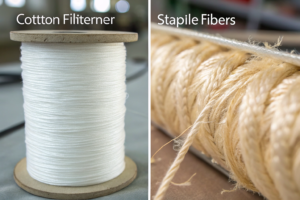
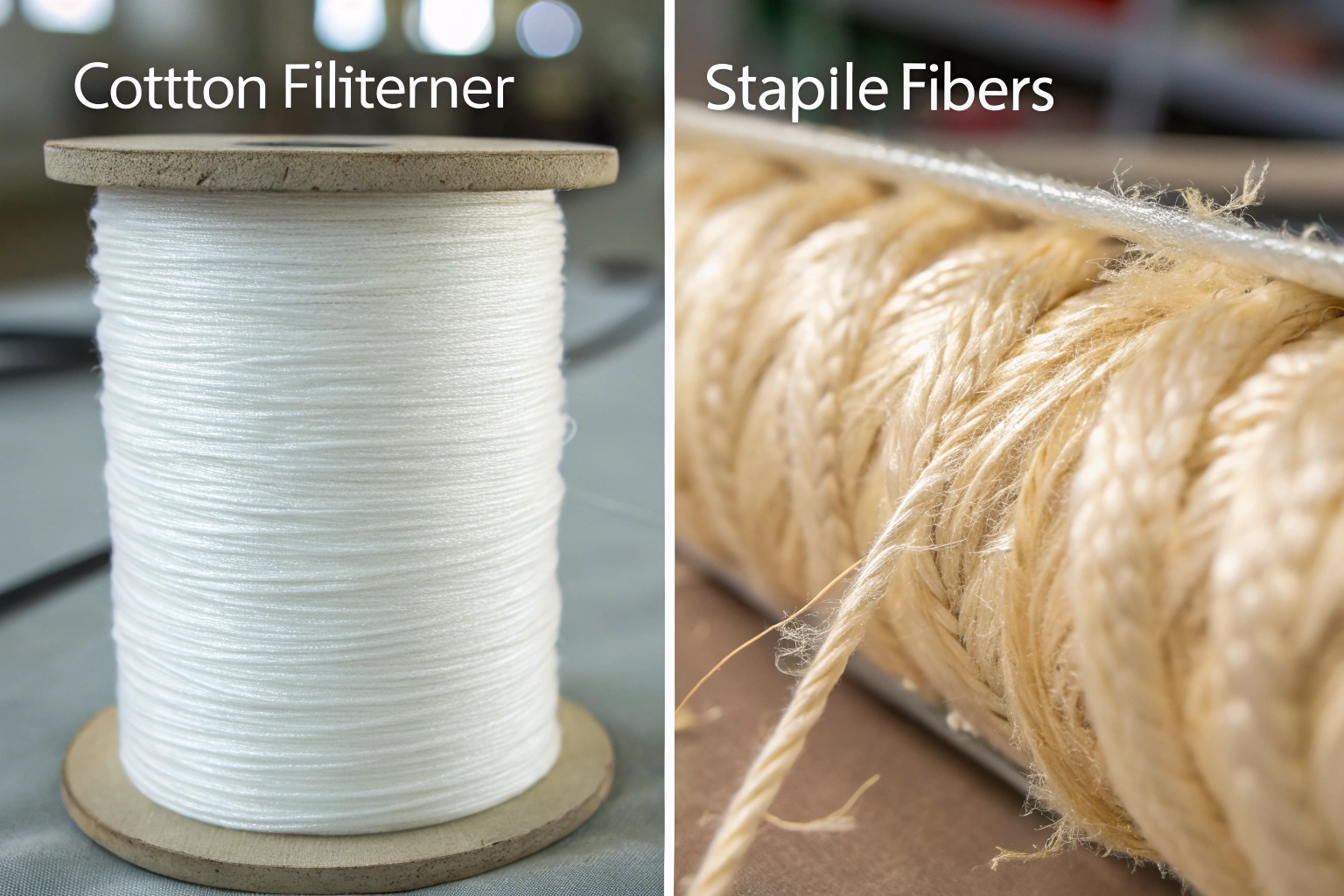
Here's the simple version: filament fibers are long, continuous strands. Think of a single endless thread of silk or a manufactured polyester filament extruded from a chemical bath. Staple fibers are short, discrete lengths—typically 1 to 6 inches long. Think of cotton fibers picked from the plant or wool sheared from a sheep. Filaments can be kilometers long; staples are measured in centimeters.
But the real story is in what happens when these fibers become fabric. Filament fibers create smooth, lustrous, strong fabrics that resist pilling but can be slippery and less insulating. Staple fibers create textured, soft, warm fabrics with excellent breathability but higher tendency to pill and shed. Each has its place, each has its ideal applications, and understanding the difference helps you specify exactly what you need and recognize when a supplier is trying to cut corners.
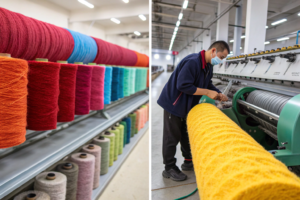
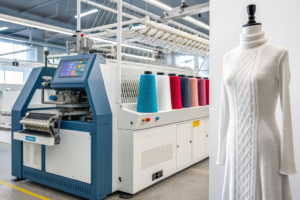
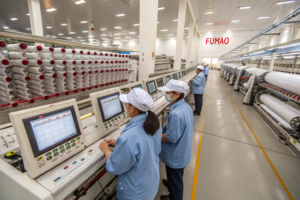
At Shanghai Fumao, we work with both fiber types daily. Our weaving factory runs filament warps for satins and taffetas. Our knitting machines handle staple yarns for cozy sweaters and soft jersey. And increasingly, we're developing blends that combine the best of both worlds. Let me walk you through what you actually need to know.
How Do Filament and Staple Fibers Behave Differently in Finished Fabric?
The behavior difference starts with fiber length and continues through every aspect of fabric performance. When you hold a fabric, you're feeling the collective result of millions of individual fibers—and whether those fibers are continuous or short changes everything about how they interact.
Why do filament fabrics feel smoother and more lustrous?
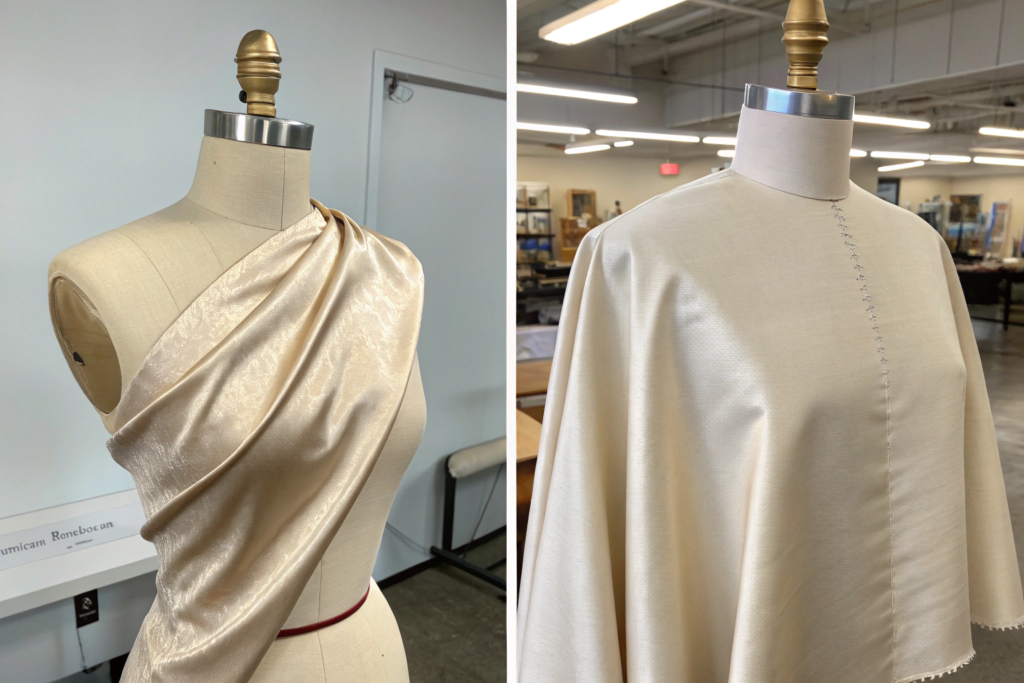
Filament fabrics feel smooth because there are no fiber ends. In a staple yarn, thousands of short fiber ends stick out from the yarn surface, creating tiny protrusions that scatter light and create texture. In a filament yarn, the surface is continuous—like a single piece of spaghetti rather than a bundle of short noodles.
This continuity creates two effects: smoothness and luster. Smoothness because there's nothing to catch on your skin or create friction. Luster because continuous surfaces reflect light evenly rather than scattering it in multiple directions.
Take silk charmeuse as the ultimate example. Silk filaments can be hundreds of meters long, reeled from a single cocoon. When woven into charmeuse, the continuous filaments create that iconic liquid drape and mirror-like sheen. There's simply no way to achieve that same effect with staple fibers—even the finest cotton or wool will always have a slightly matte, textured surface.
But smoothness isn't always better. For applications where you want grip—like a scarf that stays on your shoulders or a blanket that feels cozy—the texture of staple fibers actually performs better. Filament scarves slip; staple scarves stay put.
A Swedish client learned this in 2022 when they developed a collection of "luxury" polyester filament scarves. The fabric was beautiful—high-luster, excellent drape, perfect color. But customers complained the scarves wouldn't stay tied and slid off shoulders constantly. We reformulated using a staple-spun polyester yarn for their next season. Same fiber, different construction. The matte texture created enough friction to keep scarves in place, and returns dropped by 80%. The difference was purely about fiber format, not fiber type.
Which fiber type pills more—filament or staple?
Staple fibers pill more. This isn't debatable—it's physics. Pilling happens when fiber ends work loose from the yarn surface, tangle together, and form little balls. Staple yarns have millions of fiber ends, each a potential pill starter. Filament yarns have almost no ends, so they simply don't pill the same way.
But here's where it gets complicated: filament fabrics can "fuzz" through a different mechanism. Continuous filaments can break under stress, creating new ends that then behave like staple fibers. Poor quality filament yarns—especially low-twist or poorly extruded synthetics—can break down over time, creating fuzz and eventually pills.
We test pilling resistance constantly in our CNAS lab. A good quality filament polyester typically scores 4-5 on the pilling scale (1=severe pilling, 5=no pilling). A good quality staple cotton might score 3-4. A poor quality staple acrylic might score 2-3. But a poor quality filament nylon with broken filaments can score as low as 2.
The key is understanding what causes pilling in each case. For staple fabrics, pilling is almost inevitable—the question is how quickly and severely. Tight twisting, longer staple lengths, and compact yarn structures all reduce pilling. For filament fabrics, pilling indicates quality failure—broken filaments that shouldn't exist in properly manufactured yarn.
A Canadian outdoor brand came to us in 2023 with pilling complaints on their "premium" filament nylon base layers. Testing revealed the yarn had been over-stretched during extrusion, creating weakened spots that broke under normal wear stress. We switched to a higher-grade filament nylon with better extrusion control, and pilling complaints disappeared. The problem wasn't filament vs staple—it was filament quality.
How does insulation differ between filament and staple fabrics?
Staple fabrics insulate better. Those millions of fiber ends and the irregular surfaces they create trap air—and trapped air is what keeps you warm. Staple fibers create a fuzzy, three-dimensional structure full of tiny air pockets. Filament fibers, being smooth and continuous, lay flatter and trap less air.
Think of a wool sweater versus a silk blouse. The wool sweater—made from staple fibers—feels warm even when thin because the fuzzy surface creates an insulating layer against your skin. The silk blouse—made from filament fibers—feels cool and slick, conducting heat away rather than trapping it.
This doesn't mean filament fabrics can't be warm. Filament polyester fleece exists and performs well because the fabric construction—not the fiber format—creates insulation. But for a given fabric weight and construction, staple versions will almost always feel warmer against the skin.
For a Danish winterwear brand in 2022, we developed a base layer fabric using a blend of staple merino wool and filament polyester. The wool provided warmth and next-to-skin comfort through its staple structure. The polyester filament provided durability and moisture wicking through its continuous structure. The blend outperformed both pure versions in thermal regulation tests—warmer than pure polyester, more durable than pure wool. Understanding both fiber types let us combine their strengths.
What Manufacturing Considerations Matter for Each Fiber Type?
The differences don't stop at fabric performance. Manufacturing with filament versus staple fibers requires completely different equipment, expertise, and quality control. If you specify the wrong fiber type for your intended production method, you'll create problems that no amount of supplier skill can fix.
Can the same machines weave both filament and staple yarns?
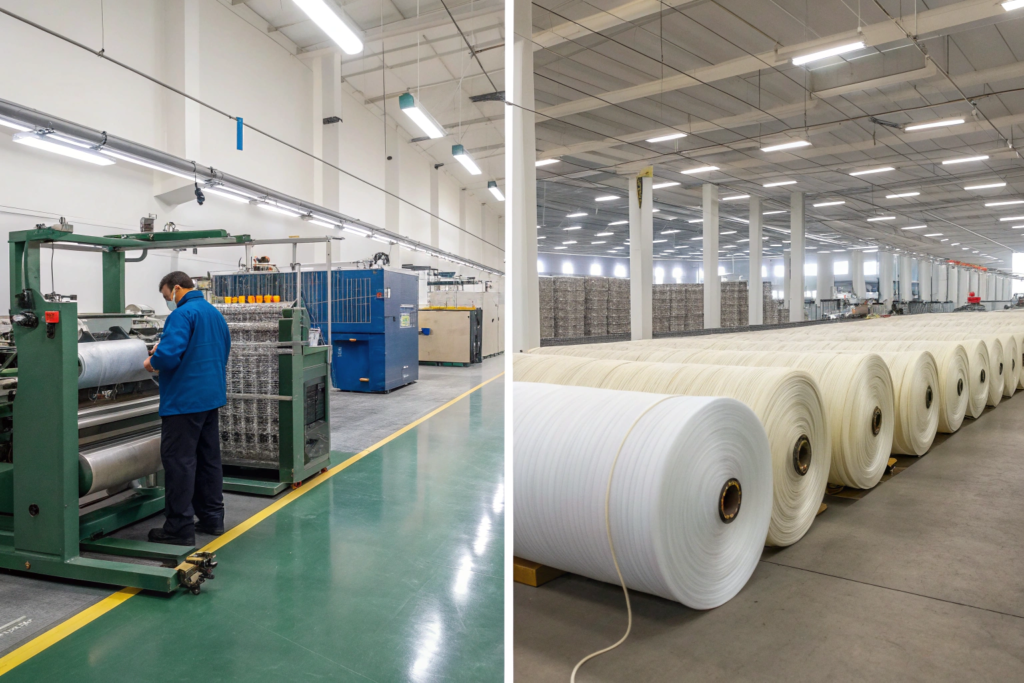
Sometimes yes, but usually with limitations. A loom doesn't care whether the yarn feeding into it is filament or staple—it cares about yarn strength, elasticity, and surface friction. Filament yarns are typically stronger and smoother, which means they run faster and with fewer breaks. Staple yarns are weaker and fuzzier, requiring slower speeds and more tension control.
The real limitation is in preparation. Filament yarns come on beams ready to weave—they're already wound, sized, and prepared. Staple yarns require additional steps: winding, warping, and often sizing to add temporary strength for weaving. These steps add time and cost.
For knitting, the differences are even more pronounced. Filament yarns knit easily on high-speed circular machines, producing smooth jersey with excellent uniformity. Staple yarns require more careful tension control and run slower, but produce the soft, natural hand that consumers associate with quality knitwear.
A Turkish home textile client learned this in 2021 when they ordered staple cotton yarn for a project that normally used filament polyester. Their knitting machines, optimized for filament, couldn't handle the staple yarn's friction and irregularity. Production speeds dropped 40% and defect rates tripled. We helped them adjust machine settings—different tension, different needle lubrication, different take-up speed—but the fundamental mismatch cost them three weeks and significant money. Matching fiber type to manufacturing capability matters.
How do dyeing and finishing requirements differ?
This is where many sourcing problems hide. Filament and staple fibers absorb dye differently, require different dye classes, and behave differently during finishing.
Filament fibers—especially synthetics—are hydrophobic. They resist water and require disperse dyes that actually dissolve into the fiber structure. The dyeing process for filament polyester happens at high temperature and pressure, forcing dye molecules into the fiber. Color can be incredibly consistent because the fiber is uniform throughout.
Staple fibers—especially naturals—are hydrophilic. They absorb water readily and accept a wide range of dye classes. Cotton uses reactive or direct dyes. Wool uses acid dyes. The dyeing process is gentler but less predictable because natural fibers vary in their absorption.
When you blend filament and staple fibers in the same fabric, dyeing becomes complex. A polyester-cotton blend requires two different dye classes and a two-step process—disperse dye for the polyester at high temperature, then reactive dye for the cotton at lower temperature. Getting the color to match across both fiber types requires precise control.
We had a French client in 2023 who wanted a specific olive green in a 50-50 polyester-cotton blend. Simple enough—except the polyester was filament and the cotton was staple. The filament polyester took the disperse dye perfectly, producing a clear, consistent color. The staple cotton, however, absorbed the reactive dye differently depending on slight variations in fiber maturity. We ended up adjusting the cotton dye formula three times to match the polyester's color. Cross-fiber color matching requires expertise and patience.
What quality issues are specific to each fiber type?
Filament fabrics hide defects differently than staple fabrics. A broken filament can create a "needle line" that runs the entire length of the fabric—a single missing thread visible as a thin stripe. Because the filament is continuous, a break anywhere in the beam affects every meter woven afterward.
Staple fabrics hide broken threads better because the yarn itself has internal redundancy. But staple fabrics suffer from "slubs"—thick spots where too many fibers accumulated during spinning—and "neps"—tiny tangled fiber knots that create specks in the finished fabric.
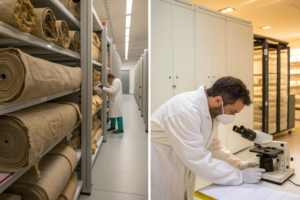
Inspection requires different training for each. Our QC team in Keqiao knows exactly what to look for on filament satins versus staple oxfords. Filament inspection focuses on yarn breaks, tension variations, and moire patterns. Staple inspection focuses on neps, slubs, and hairiness.
For a high-end Italian shirting client, we developed a 100% cotton staple fabric that looked beautiful but showed occasional white specks—neps—in dark colors. Under normal inspection, the fabric passed. But the client's customers were complaining. We traced the neps to a specific cotton growth region and adjusted our cotton sourcing to exclude that variety. The problem disappeared, but only because we understood the specific quality challenges of staple fibers.
When Should I Choose Filament vs Staple for My Product?
The choice isn't about which is "better"—it's about which is better for your specific application. I've seen brands fail by choosing filament for a product that needed staple's warmth, and fail by choosing staple for a product that needed filament's durability. Matching fiber type to end use separates successful products from returns.
Which fiber type works best for activewear and performance wear?
Filament fibers dominate activewear for good reason. They're stronger, lighter, and wick moisture better than staple equivalents. A filament polyester or nylon yarn can be engineered with specific cross-sections—four-channel, six-channel—that actively pull moisture away from skin. The continuous surface also resists abrasion better than staple, which matters for garments that rub against equipment or other clothing.
But there's a catch: filament next to skin can feel clammy or slippery. Many athletes prefer the slight texture of staple fibers for comfort, even if performance measurements favor filament. This is why premium activewear increasingly uses filament fibers for the outer surface (durability, wicking) and staple fibers for the inner surface (comfort).
For a German cycling brand in 2023, we developed a two-face fabric using filament polyester on the outside for wind resistance and moisture transport, and staple merino on the inside for comfort and odor control. The fabric performed better in lab tests than either single-fiber version, and riders reported significantly higher comfort scores. Hybrid constructions are the future of performance textiles.
When does staple fiber make more sense for luxury products?
Luxury isn't one thing. Filament silk screams luxury in evening wear. Staple cashmere screams luxury in sweaters. The fiber type must match the product's role in the wearer's life.
Staple fibers dominate in products where softness and warmth matter most. Cashmere, merino, fine cotton—these fibers achieve their luxurious reputation through staple construction. The fuzzy surface, the gentle halo, the ability to trap warm air while feeling soft against skin—all require staple fibers.
But staple luxury requires quality. Short, coarse staples create rough, itchy fabric. Long, fine staples create the buttery softness that commands premium prices. When you specify "cashmere," you're not just specifying fiber type—you're specifying staple length. Top-grade cashmere uses staples 36mm and longer. Inferior cashmere uses shorter staples that shed and pill.
A Japanese client learned this in 2022 when they sourced "premium cashmere" that turned out to be made from recycled cashmere staples—shorter fibers that had already been through one manufacturing cycle. The fabric felt acceptable initially but pilled within weeks. We helped them specify virgin cashmere with minimum staple length requirements, and their quality complaints dropped to zero. Staple length specifications protect your brand reputation.
Can blends combine the best of both worlds?
Absolutely—and this is where smart product development happens. Blending filament and staple fibers lets you engineer properties that neither fiber type achieves alone.
The classic example is poly-cotton blends for shirting. Filament polyester adds durability and wrinkle resistance. Staple cotton adds comfort and breathability. The blend outperforms either pure version for its intended use.
More sophisticated blends use filament cores with staple wraps. The core provides strength and stability. The wrap provides surface properties—softness, moisture absorption, aesthetic. These "core-spun" yarns are common in denim (cotton-wrapped polyester for durability with denim look) and performance wear (cotton-wrapped spandex for stretch with comfort).
For a British workwear brand in 2023, we developed a fabric using core-spun yarns with filament polyester cores for strength and staple cotton wraps for comfort and appearance. The fabric passed abrasion tests at 50,000 cycles—double the requirement—while feeling like comfortable cotton against skin. The client replaced their previous 100% cotton fabric (failed abrasion) and 100% polyester fabric (worker complaints about comfort) with a single blend that satisfied everyone. Core-spinning technology solves previously irreconcilable conflicts.
The filament vs staple decision isn't a one-time choice you make and forget. It's a design variable you should revisit for every product, every season. Fiber technology evolves. New filament variants offer properties that didn't exist five years ago. New spinning techniques create staple yarns that behave almost like filaments. The best product developers stay curious and keep testing.
At Shanghai Fumao, we maintain separate libraries for filament and staple developments. We test both options whenever a client comes with a new product concept. Sometimes the obvious choice—filament for performance, staple for comfort—proves right. Sometimes we surprise ourselves and each other by finding a filament solution for a traditionally staple application, or vice versa.
Conclusion
The difference between filament and staple fibers shapes everything about your fabric: how it feels, how it performs, how it's made, and how it ages. Filament fibers—long, continuous, smooth—create lustrous, strong, pill-resistant fabrics ideal for dresses, activewear, and applications requiring durability and sheen. Staple fibers—short, discrete, textured—create warm, soft, breathable fabrics perfect for sweaters, basics, and products where comfort matters most.
Understanding this difference helps you specify fabrics correctly, recognize when suppliers are substituting inferior materials, and combine fiber types strategically to achieve properties neither offers alone. It's foundational knowledge that separates professional buyers from amateurs.
If you're developing a new product and wondering whether filament or staple makes more sense for your application, I invite you to reach out to us at Shanghai Fumao. Our team works with both fiber types daily and can help you make the right choice for your specific market, price point, and performance requirements. Contact our Business Director, Elaine, directly at elaine@fumaoclothing.com. Tell her about your product vision, and she'll connect you with our technical team for an honest, practical conversation about fiber selection.
Because the best fabric isn't filament or staple—it's the right fiber for your product, made by people who understand the difference.