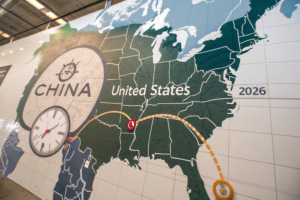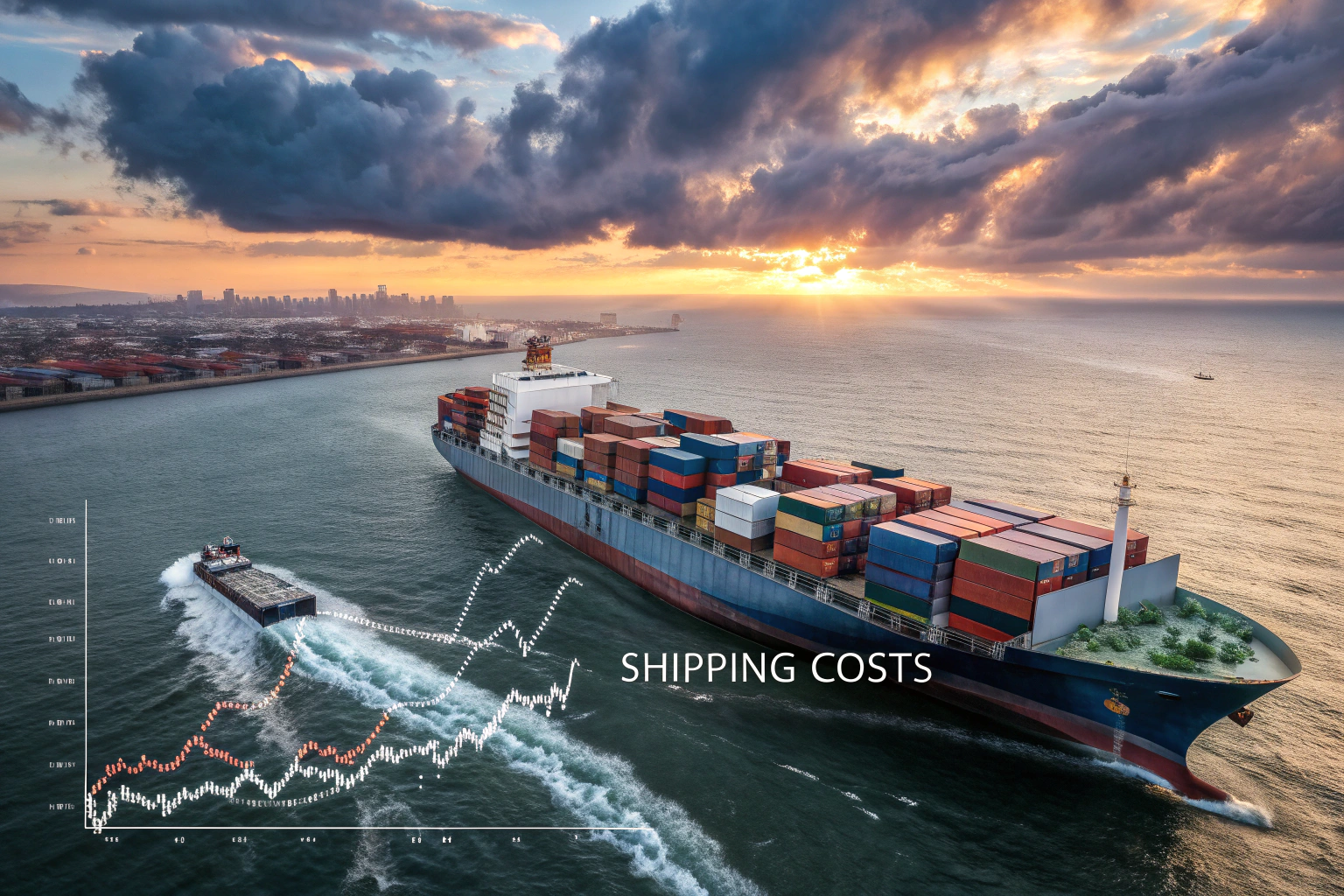
You're sitting at your desk in Chicago, staring at a container quote that's 40% higher than last year, and you're wondering if someone's trying to cheat you. I get these calls every week. A client from Toronto will forward me a freight quote that makes their eyes water, asking "is this real?" The short answer is yes, it's probably real, but the long answer is much more complicated. Shipping costs right now are bouncing around like a hyperactive kid, and if you don't understand what's actually driving those numbers, you'll either overpay or get burned by hidden fees.
Let me be straight with you: there's no single "current cost" for a container. In January 2024, we saw rates from Shanghai to Los Angeles ranging from $2,800 to $5,200 for a 40-foot container, depending on the carrier, the timing, and the fine print. By March, some spots hit $6,500. By June, they pulled back to $4,200. This volatility isn't going away. But after moving thousands of containers through our Shanghai Fumao logistics network, I can tell you exactly what makes those numbers move and how to lock in rates that won't destroy your margins.
Why do container prices change so dramatically month to month?
You booked a container in September for $3,800. By November, the same route costs $5,200. You're furious at your freight forwarder, assuming they're padding their margins. But the reality is that ocean freight pricing operates more like an airline ticket than a utility bill—demand surges, capacity shrinks, and prices explode overnight.
The market in 2023 and 2024 has been uniquely chaotic. Red Sea disruptions forced ships to reroute around Africa, adding 10-14 days to Europe-bound voyages and pulling capacity from Pacific routes. Drought in the Panama Canal limited crossings, creating bottlenecks. Carriers responded by blanking sailings—canceling scheduled departures—to prop up rates. If you're not watching these global events, you're blindsided by their impact on your container cost. A Danish furniture brand we supply learned this in December 2023 when their usual $4,200 rate hit $7,800 because two carriers canceled December sailings entirely.
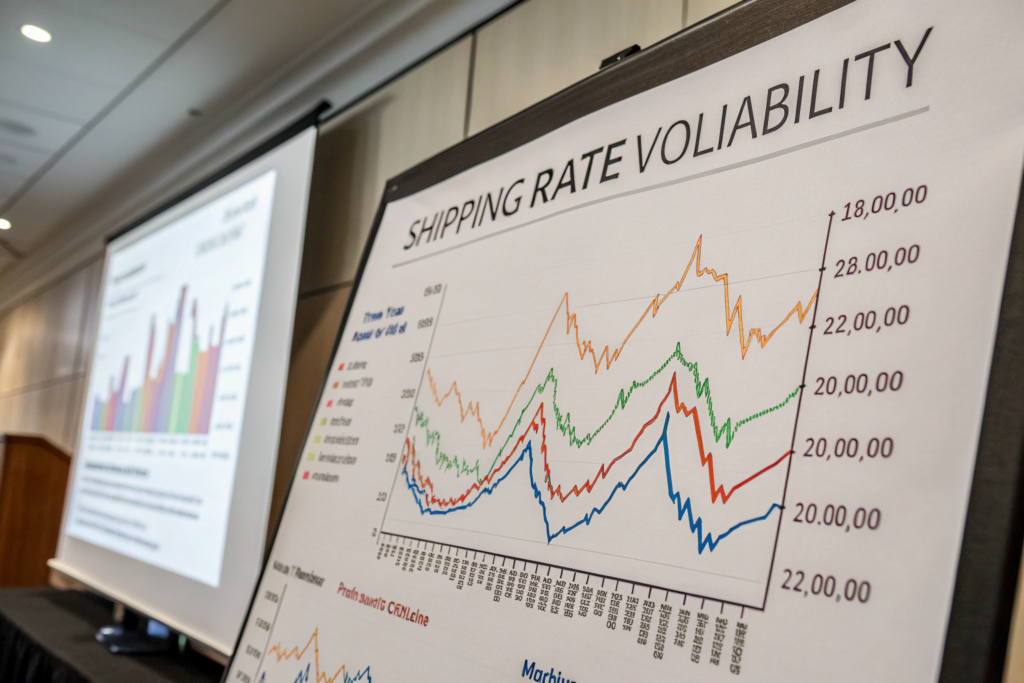
What causes sudden rate spikes that aren't related to fuel costs?
Fuel is actually a small piece of the puzzle—maybe 15-20% of your total freight cost. The big spikes come from capacity manipulation and equipment shortages. When carriers see demand softening, they cancel sailings to keep rates high. When demand surges—like during peak season August-October—they run out of space and auction slots to the highest bidders.
The real killer is equipment shortages. In early 2024, we saw a massive imbalance: containers piled up in North America and Europe but were scarce in Asia. Factories in China had goods ready but no boxes to load them in. A 40-foot container that cost $200 to lease suddenly cost $600—if you could find one. That cost passes directly to you. A New York handbag brand we work with lost three weeks waiting for containers in March 2024, then paid a $1,200 premium just to secure boxes. A detailed analysis of container availability cycles on the Journal of Commerce site explains why these shortages keep happening.
How do blank sailings affect my shipping cost and schedule?
Blank sailings are when carriers cancel scheduled voyages. They do this to manage capacity and keep rates profitable. For you, it means your cargo gets rolled to the next available ship—maybe next week, maybe in two weeks. That delay costs you in storage fees, late penalties, and missed selling windows.
In September 2023, THE Alliance blanked 25% of their Asia-North America sailings. Rates jumped 30% in two weeks. A Toronto-based activewear client had 12 containers stuck at our warehouse waiting for space. We ended up splitting the shipment across three different carriers at higher rates just to move the goods before their holiday selling window closed. The extra cost was $4,800—money they hadn't budgeted. A schedule of blank sailing announcements on the Sea-Intelligence website helps forward-thinking buyers anticipate disruptions.
What's the real impact of port congestion on my bottom line?
Port congestion is a hidden cost multiplier. Your freight quote assumes your container arrives, gets unloaded, and moves to your truck within 48-72 hours. When ships wait outside LA/Long Beach for 10 days before docking, carriers charge detention on the vessel time. When your container sits at the terminal for 8 days waiting for a chassis, you pay demurrage.
A Chicago-based furniture client learned this painfully in late 2023. Their fabric shipment from us arrived at the port on time, but rail congestion moving containers from LA to Chicago added 18 days to transit. The freight forwarder's quote hadn't included the $2,300 in rail storage and chassis fees that accumulated. We now advise clients to budget an extra $800-1,200 per container for "congestion contingency" during peak periods. A real-time port congestion dashboard from the Marine Exchange of Southern California shows exactly what's happening at the busiest US gateway.
What are the hidden fees that triple my quoted shipping cost?
Your freight forwarder quotes you $3,800 for a 40-foot container. You celebrate, ship your goods, and then the invoice arrives for $5,400. What happened? You just met the hidden fees of ocean freight—charges that exist in the fine print but rarely appear in initial quotes. After 20 years of shipping, I can tell you exactly where these landmines hide.
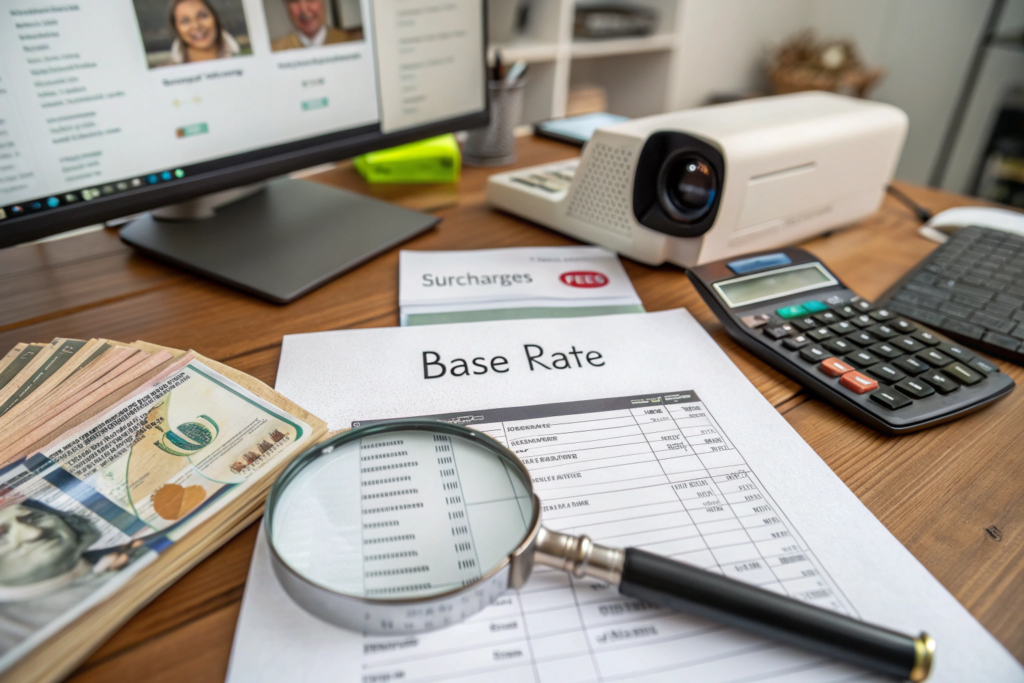
The base rate is just the starting point. Carriers and forwarders add surcharges for everything imaginable: peak season surcharges (PSS), general rate increases (GRI), bunker adjustment factors (BAF), currency adjustment factors (CAF), congestion surcharges, port security fees, documentation fees, and chassis fees. A 40-foot container from Shanghai to Los Angeles in May 2024 might quote at $4,200 but end up at $5,800 after all additives. A Seattle-based outdoor gear brand we work with now asks every forwarder for an "all-in" quote with every possible fee itemized before they book.

What is the Bunker Adjustment Factor and why does it keep changing?
BAF is the carrier's way of protecting themselves from fuel price volatility. When oil prices spike, they pass the cost to you. But here's the dirty secret: BAF rarely drops as fast as fuel prices. Carriers treat it as a profit center. In 2023, fuel prices dropped 25% in the second half, but BAF surcharges only decreased 8-10%.
The calculation methods vary wildly between carriers. Some use formulas based on published fuel indices. Others just set a number and call it "market adjustment." A Los Angeles-based children's wear client compared quotes from three forwarders for the same shipment in February 2024. The BAF charges ranged from $380 to $720—same route, same carrier group, completely different numbers. A breakdown of how BAF is calculated on the Freightos knowledge base helps you understand whether you're being fairly charged.
How do demurrage and detention charges actually accumulate?
Demurrage is for the time your container sits in the terminal beyond the free period. Detention is for the time the container is off-terminal with you or your trucker. Free time is typically 3-5 days at the port and 3-5 days for return. Sounds generous until you realize that congestion means your trucker can't pick up until day 4, and then you need 3 days to unload, and suddenly you're at day 7 with $150/day penalties.
A Vancouver-based家居品牌 had this exact problem in March 2024. Their fabric arrived, their trucker picked up on day 4, they unloaded on day 7, and returned the container on day 9. Detention charges: $450 per container across 6 containers = $2,700. Their freight forwarder's quote hadn't mentioned the possibility. Now we remind every client to check free time allowances and book truckers BEFORE the ship arrives. A demurrage and detention calculator on the Container xChange site helps estimate these costs before they surprise you.
What are chassis fees and why do I pay them twice sometimes?
Chassis are the wheeled frames that containers sit on for truck transport. In the US, chassis are often owned by separate companies from the carriers. When your container arrives, you need a chassis to move it. That chassis rental costs $30-60 per day. But here's where it gets ugly: if the chassis provider and the terminal have different systems, you might pay chassis rental while the container sits at the terminal waiting for pickup—even though you're not using the chassis yet.
A New York fashion brand had this exact issue in late 2023. Their container sat at the terminal for 5 days waiting for customs clearance. The chassis provider charged $275 for those 5 days even though the chassis wasn't even hooked up. The terminal required chassis reservation before pickup, so they had to reserve early. They paid for 5 days of unused chassis time. A guide to chassis management and fees on the Intermodal Association of North America site explains why this system creates double charges.
How can I reduce my shipping costs without delaying my cargo?
Everyone wants cheaper shipping, but the obvious moves—waiting for rates to drop, shopping for the lowest quote—often backfire. The brands who consistently pay less for shipping don't find cheaper carriers. They build smarter logistics strategies. After helping hundreds of clients optimize their shipping, I've seen what actually works.
The biggest myth is that spot rates are always cheaper than contracts. In volatile markets, the opposite is often true. In early 2024, spot rates from Shanghai to New York hit $6,200 while contract rates for large shippers stayed around $4,800. The brands with annual contracts paid 23% less than those shopping spot. A Denver-based outdoor brand locked in a 12-month contract in January 2024 and saved an estimated $38,000 on their first half shipments compared to spot market pricing.
Should I use a freight forwarder or book directly with carriers?
This question comes up constantly. Direct booking sounds cheaper—cut out the middleman, right? Wrong, for most mid-sized importers. Carriers prioritize their largest customers. If you're shipping 50 containers a year, you're small potatoes to Maersk or MSC. When capacity tightens, your containers get rolled while the forwarder's clients (with 5,000 containers annually) get space.
A good forwarder aggregates volume from many clients, giving them negotiating power you can't match alone. In September 2023, when blank sailings crushed capacity, our forwarder partners still secured space for our clients because they had relationships and volume commitments. A Portland-based apparel brand that tried booking directly got rolled three times and missed their October delivery window. They now use our recommended forwarders exclusively. A comparison of direct vs forwarder booking on the Shipping and Freight Resource blog explains the tradeoffs clearly.
What's the optimal shipping window to avoid peak surcharges?
Peak season surcharges typically hit from August through October, as factories rush to ship holiday goods. But the exact timing varies yearly based on capacity and demand. In 2023, surcharges started in July and continued through November. In early 2024, some carriers introduced "peak season" surcharges in February due to Red Sea disruptions.
The winning strategy is to ship in the shoulder months—April-May and November-December—when demand softens and carriers compete for volume. A Swedish home textile client shifted their order timing specifically to ship in late November 2023. Their rate was $3,900 compared to $5,600 for October shipments. They saved $1,700 per container and still hit their spring delivery window. A historical peak season pricing analysis on the Xeneta platform shows the best and worst months for pricing.
How do container consolidation and LCL shipping affect my per-unit cost?
Everyone assumes full containers are cheaper per unit than LCL (less than container load). That's usually true, but not always. When container rates spike to $6,000, a 40-footer holding 800 cartons costs $7.50 per carton in freight. LCL might cost $12-15 per carton, plus extra handling fees. But if you only need 300 cartons, paying for a full container wastes space and money.
The smarter approach for growing brands is to use consolidation services. Multiple clients share a container, splitting the cost. We do this regularly for smaller US brands—combining their fabric orders with other clients heading to the same region. A Boston-based startup saved 40% on their first three shipments this way. The tradeoff is timing: you wait until the container fills. But for non-urgent orders, the savings justify the delay. A guide to LCL vs FCL shipping decisions on the International Trade Centre site helps calculate the break-even point for your specific order size.
What contract terms protect me from unexpected rate increases?
You sign a contract for $4,200 per container. Two months later, the carrier announces a GRI (general rate increase) and your next shipment quotes at $5,100. You wave the contract, and the forwarder says "sorry, that was just an estimate." This happens constantly because most "contracts" in shipping aren't actually binding on rates.
The reality is that carrier contracts protect the carrier, not you. They include clauses allowing rate adjustments for "market conditions" and "fuel fluctuations." But some contracts are better than others. The brands who sleep well at night have contracts that cap increases or lock rates for specific periods. A Montreal-based outerwear brand learned this after getting hit with three GRIs in four months on their 2023 shipments. For 2024, they renegotiated with a rate cap of 8% above base, saving them an estimated $22,000 so far.

What is a GRI and how can I protect against it?
General Rate Increases are exactly what they sound like—carriers announcing that rates are going up, effective immediately or within 30 days. In 2023, we saw 14 GRIs announced on the Asia-US routes, with an average increase of $800-1,200 each time. Some stuck, some didn't, depending on market acceptance.
Protection comes from contract language that either locks rates for a specific period (60-90 days) or caps increases at a percentage. We advise clients to push for "rate validity" clauses guaranteeing the quoted rate for at least 30 days from booking confirmation. A Texas-based client now gets 45-day rate locks from their forwarder, giving them time to ship without mid-process price shocks. A sample GRI protection clause and negotiation guide on the Logistics Bureau website shows what language to ask for.
How do Minimum Quantity Commitments affect my pricing leverage?
This is the tradeoff: lower rates require volume commitments. Carriers and forwarders will give you their best pricing if you guarantee 100, 200, or 500 containers annually. But if you miss your target, you pay penalties or lose the rate for future shipments.
A Chicago-based apparel brand committed to 50 containers annually with a major forwarder in 2023. They shipped 42 due to softer sales, and their 2024 rate quote was 15% higher than competitors. The forwarder applied their "failure to meet MQC" penalty. Now they're more conservative, committing to 30 containers and paying slightly higher rates but avoiding penalty risk. A guide to calculating optimal volume commitments on the Supply Chain Digest helps find the sweet spot for your business.
What cancellation and rollover terms should I watch for?
When you book a container and then cancel, or need to roll to a later sailing, fees apply. But how much? Standard terms might charge 50% of freight if you cancel within 7 days of sailing. Some contracts have no-cancellation clauses during peak season. A UK brand learned this in October 2023 when they tried to cancel a $5,800 booking and got billed $2,900 anyway.
Better contracts allow cancellations up to 14 days before sailing with minimal penalty, and rollovers to the next available sailing without extra charge. A Melbourne-based swimwear client negotiated "free rollover once per booking" into their 2024 contract. When their production delayed two weeks in March, they shifted the booking without paying the $500 change fee others faced. A checklist of critical contract terms on the FreightWaves site helps ensure you're not signing a one-sided deal.
Conclusion
Shipping costs from China to North America will never be simple or stable again. The era of predictable $2,000 containers is gone, probably forever. But that doesn't mean you're helpless against volatility. Understanding what actually drives those costs—capacity manipulation, equipment shortages, hidden surcharges, contract traps—puts you in control. The brands winning today aren't the ones who find the cheapest quote. They're the ones who build logistics systems that protect margins even when rates spike.
At Shanghai Fumao, we've made logistics a core part of our service because we know that great fabric means nothing if it arrives late or costs twice what you budgeted. We maintain relationships with multiple forwarders, track equipment availability daily, and advise clients on timing strategies that save real money. When a New York brand asks us "when should I ship this?" we don't just look at production—we look at the entire logistics picture and recommend windows that balance speed and cost.
If you're tired of shipping surprises eating your profits, let's talk. Elaine, our Business Director, works closely with our logistics team to help clients build shipping strategies that work. She can review your recent shipments, identify where hidden costs are hiding, and connect you with forwarders who actually protect your interests. Contact Elaine at elaine@fumaoclothing.com to start a conversation about making your shipping costs predictable again. Let's get your products where they need to go, at prices that make sense.