Tencel™ Lyocell is on every sustainable fashion buyer’s list right now. As a fabric supplier based in the heart of Keqiao, I see the demand skyrocketing—especially from our European and American clients. But with all the buzzwords in the textile world, it’s easy to get confused. What exactly sets this fiber apart? And more importantly, as a sourcing professional, what do you need to know to choose the right supplier and integrate it into your production timelines effectively? Let’s cut through the noise.
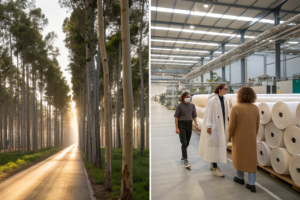
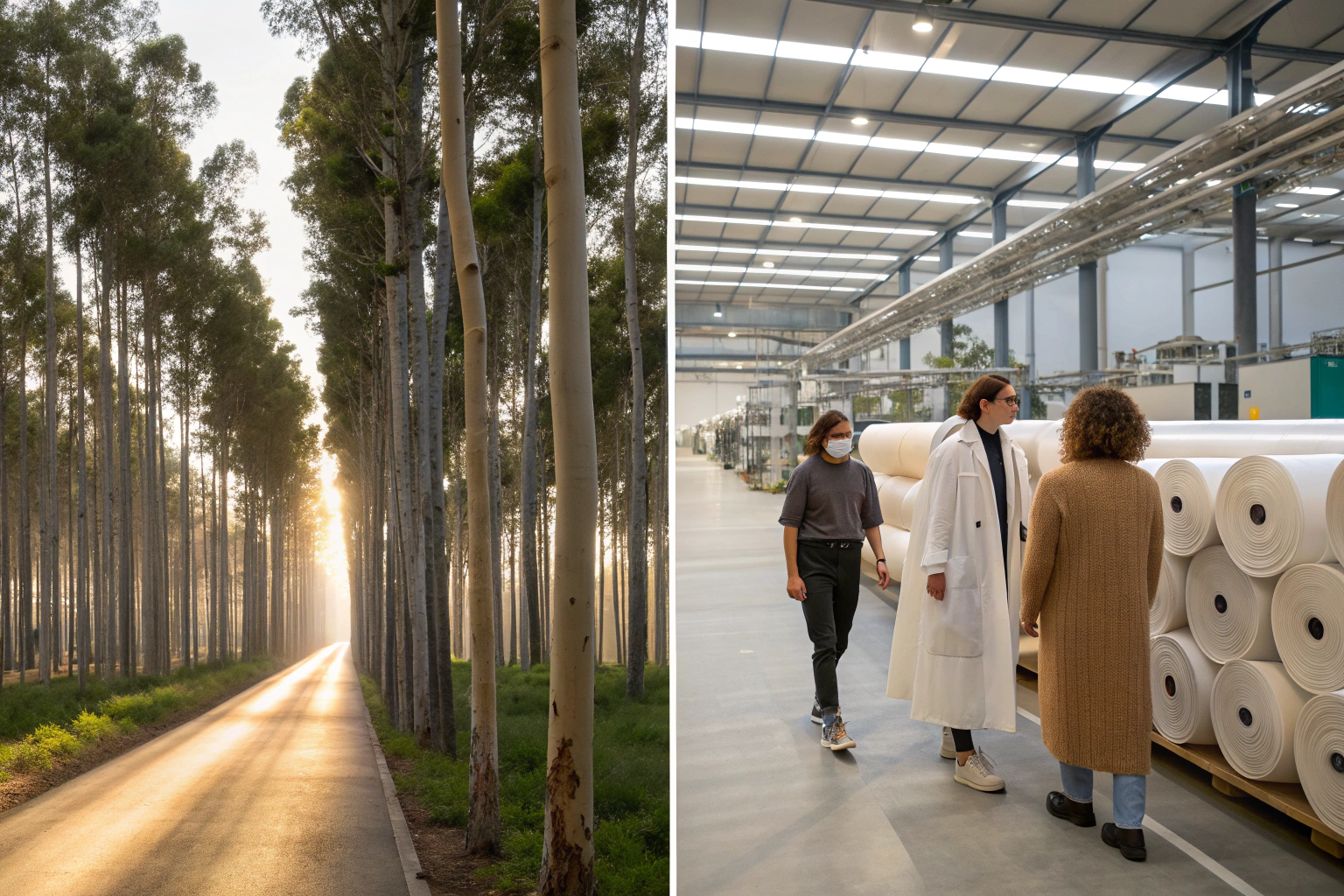
Tencel™ Lyocell is a branded form of lyocell, a regenerated cellulose fiber made from wood pulp (usually from sustainably managed eucalyptus forests). It’s celebrated in sustainable fashion for its closed-loop production process, where over 99% of the water and solvents are recycled, its biodegradability, and its resulting fabric qualities: exceptional softness, breathable moisture-wicking, and a smooth, luxurious drape. Its popularity stems from offering an eco-conscious alternative to conventional viscose and synthetic blends without compromising on performance or aesthetics.
Understanding the ‘why’ behind its popularity is crucial. But to truly leverage it for your brand, you need to grasp the practicalities—from the production nuances with Chinese manufacturers to aligning its sourcing with the unique rhythms of the Asian supply chain. I’ll share insights from our own factory floor and client experiences to give you a clear, actionable roadmap.
What are the key benefits of Tencel™ fabric for clothing?
Let's talk real benefits. When buyers ask me about Tencel™, they often start with sustainability. That's important, but the magic for your collection happens when eco-credentials meet tangible performance. The benefits that make it popular are the same ones that solve real problems for brands and end-consumers.
The key benefits are a powerful trifecta: environmental responsibility, superior comfort, and versatile performance. Its closed-loop production minimizes chemical waste and water use, appealing to the eco-conscious consumer. The fiber's structure creates a fabric that is incredibly soft, breathable, and regulates temperature better than cotton. Furthermore, it dyes brilliantly, resists wrinkles, and has a natural sheen that screams luxury, making it a designer's dream across categories from dresses to activewear.
How does Tencel™ production impact the environment compared to cotton?
This is the most frequent comparison we get. A client from Los Angeles once asked me point-blank: "Is switching from organic cotton to Tencel™ actually better, or is it just marketing?" The data from our sourcing and certification processes is revealing.
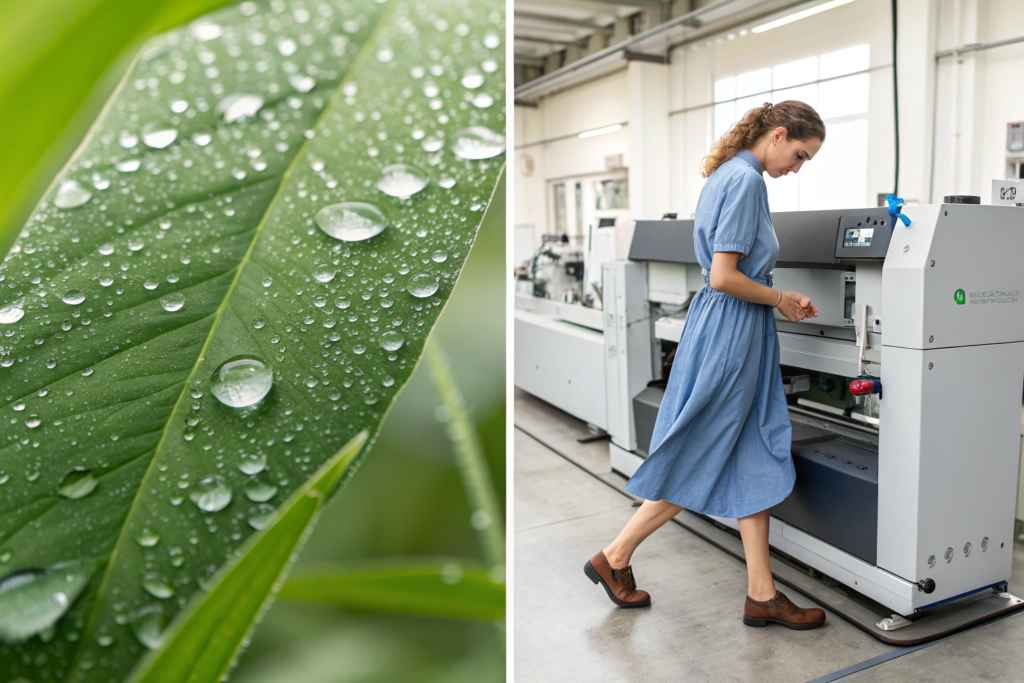
The environmental impact of Tencel™ production is significantly lower than even conventional cotton in terms of water and land use. While organic cotton eliminates pesticides, it remains a water and land-intensive crop. Producing 1 kg of cotton can use over 10,000 liters of water. Tencel™, sourced from fast-growing eucalyptus on marginal land, uses far less water overall, and its closed-loop Lenzing™ process recycles over 99% of the solvent. For brands looking at a comprehensive water footprint analysis for textile sourcing, this is a game-changer. However, it's not without energy input for processing wood pulp. The trade-off is clear: Tencel™ offers a more efficient route to a soft, cellulosic fabric with a lower agro-chemical and water footprint. We guide our clients through this choice based on their specific sustainability benchmarking goals for fashion brands.
Why is Tencel™ so breathable and moisture-wicking?
The performance isn't magic; it's microbiology and fiber engineering. I remember a 2023 project with a German sportswear startup. They needed a fabric for yoga wear that felt like cotton but performed like a synthetic. We recommended a Tencel™/organic cotton blend. After testing, they were stunned by the breathability scores.
Tencel™ fibers have a uniquely smooth surface and a circular cross-section. This structure allows the fiber to absorb moisture (like sweat) rapidly into its core and then release it into the air. Think of it like a super-efficient moisture highway, whereas cotton absorbs and holds moisture, feeling wet. This makes garments feel drier and more comfortable. For a deep dive into the science, resources like Textile Exchange's fiber guides explain these mechanisms well. In our CNAS lab, we test for moisture management (AATCC 195), and Tencel™ consistently outperforms standard viscose. This intrinsic property is why it’s a star in performance blends for activewear and loungewear, offering comfort without the plastic feel of pure polyester.
How to source high-quality Tencel™ fabric from China?
Sourcing Tencel™ in China is a different ball game than sourcing basic polyester. The "Tencel™" brand is owned by Lenzing, and not all lyocell is Tencel™. Your first decision is between branded Tencel™ and generic lyocell. Many buyers come to us after a bad experience with a supplier who promised "Tencel-like" fabric that pilled or shrank excessively.
To source high-quality Tencel™ fabric from China, you must verify the supply chain: insist on official Lenzing Tencel™ fiber certificates from your supplier's spinners, partner with factories that have expertise in weaving and dyeing this specific fiber (it behaves differently than cotton), and conduct rigorous pre-production testing. The factory's skill in handling the fiber directly impacts the final fabric's hand feel, shrinkage, and durability.
What certifications should I demand from my Tencel™ supplier?
Certificates are your first line of defense. Never skip this. I had a client from the UK in late 2022 who sourced a "lyocell" fabric elsewhere that caused skin irritation. The root cause? Uncertified pulp and residual chemicals. We helped them re-source with proper documentation.
| Demand, at minimum, the Lenzing Tencel™ license certificate from the yarn spinner or the fabric mill. This proves they use genuine Tencel™ fibers. For full sustainability claims, look for chain-of-custody certificates. Other critical certifications include: | Certification | Purpose | Why It Matters |
|---|---|---|---|
| OEKO-TEX® Standard 100 | Tests for harmful substances. | Ensures fabric safety for direct skin contact. | |
| FSC® (Forest Stewardship Council) | Traces wood pulp to sustainable forests. | Validates the responsible forestry claim. | |
| EU Ecolabel | Assesses environmental impact across lifecycle. | A robust standard for the EU market. |
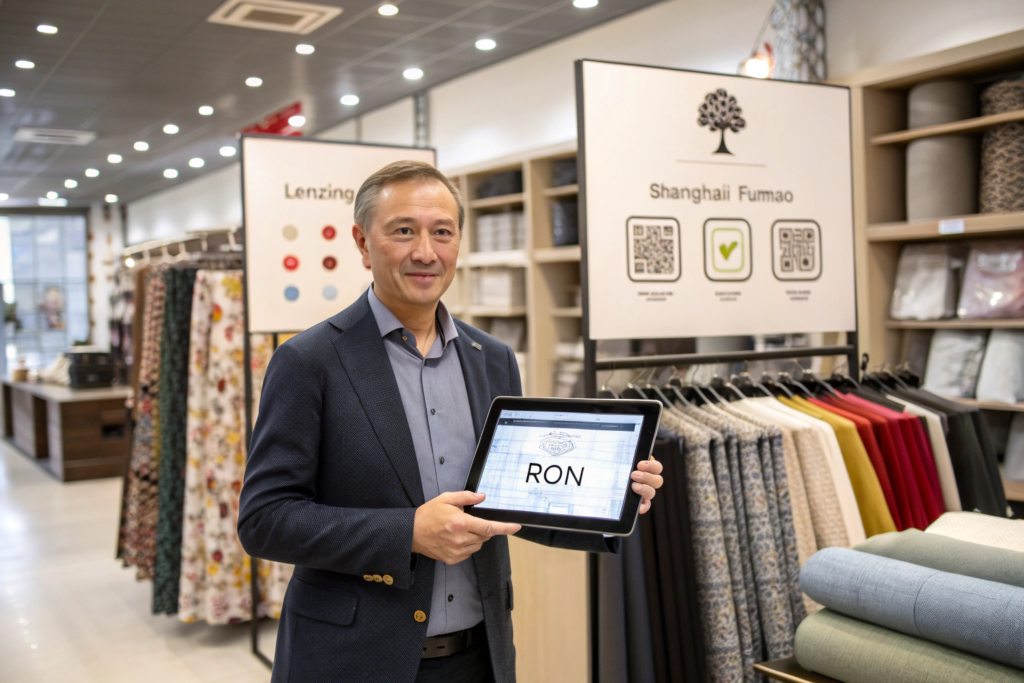
Additionally, ask for the mill's test reports on pilling, shrinkage, and colorfastness. A reliable supplier, like us at Shanghai Fumao, will have these documents ready and traceable via our QR system. Forums like Sustainability in Fashion: A Practical Sourcing Guide often discuss the real-world importance of these certs beyond just having the paper.
How do production timelines for Tencel™ differ in China?
This is where the background you provided about China's production cycles becomes critical. Tencel™ isn't a stock fabric you pull from a shelf (well, we keep some common greige goods, but dyed or printed versions are often made-to-order). Its timeline has two layers: the general China cycle and the specific Tencel™ process.
Firstly, align with the seasonal rhythms. If you need Tencel™ fabric for an August launch, don't start production in June. The peak period (Mar-May) will add 1-2 weeks. Plan to have your development done and orders placed before Chinese New Year for a post-holiday start. (Here’s a pro tip from our planning desk: we really push clients to finalize Tencel™ developments 6 weeks before CNY).
Secondly, Tencel™ requires careful wet-processing. Dyeing must be controlled to maintain its soft hand. A rushed dyeing job can make it feel harsh. This means allocating sufficient time for fabric development and sampling in China, which can take 3-4 weeks for lab dips and strike-offs. A European contemporary brand we work with now builds in an 8-week buffer for their Tencel™ orders, which lets us navigate peak periods without compromising quality. This planning is part of what we call strategic inventory planning for seasonal fashion lines at our group.
What are the best fabric blends with Tencel™ Lyocell?
Pure Tencel™ fabrics are beautiful but have limitations, like a tendency to wrinkle or drape too fluidly for some structures. Blending is where innovation happens. Our R&D team spends half its time developing new blends to unlock specific properties. A blend balances cost, performance, and aesthetics.
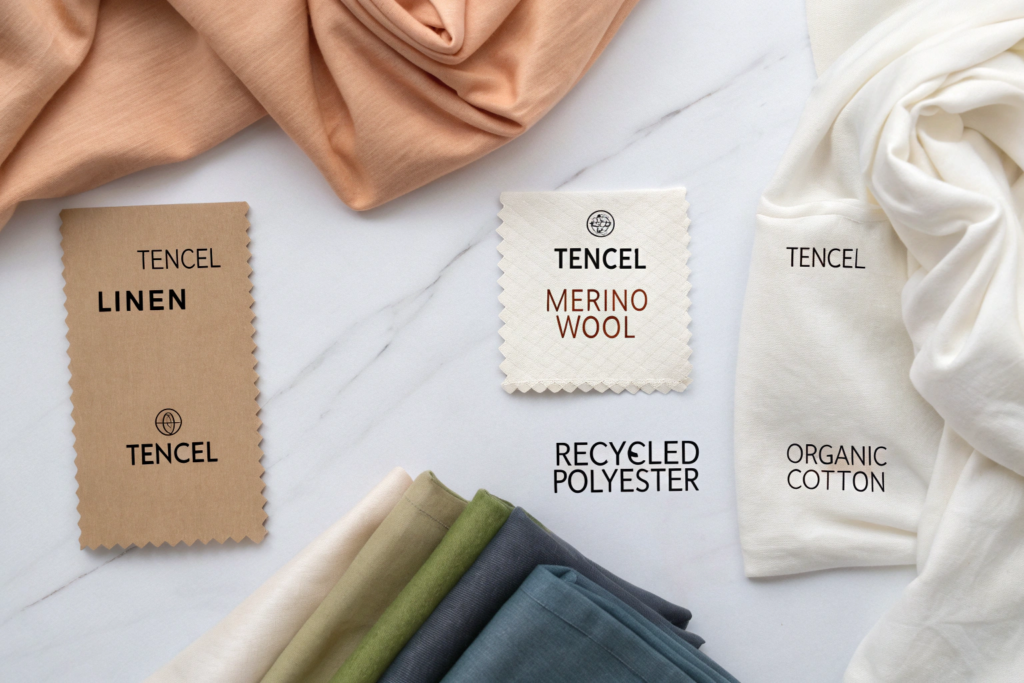
The best blends enhance Tencel™'s natural advantages or mitigate its minor weaknesses. For instance, Tencel™/Linen offers a textured, breathable luxury ideal for summer shirts; Tencel™/Wool creates a lighter, softer suiting with improved drape; and Tencel™/Recycled Polyester adds durability and recovery for activewear. The choice depends entirely on your end-use.
Tencel™ and Linen: A perfect match for summer collections?
Absolutely. This is one of our top-selling blends for European brands targeting the SS season. In April 2023, we developed a 70% Tencel™/30% Linen blend for a French brand that wanted a fabric that was cool but had more structure and a "lived-in" aesthetic than pure linen.
Tencel™ softens linen's sometimes coarse hand and reduces its severe wrinkling, while linen adds body, texture, and that coveted rustic elegance. The blend drapes beautifully and breathes exceptionally well. The key is in the yarn spinning—ensuring an even blend before weaving. We often recommend a yarn-dyed stripe or check for this blend, as it takes color beautifully. For brands exploring this, it's wise to understand the finishing techniques for luxury cellulose blends, as a good enzyme wash can elevate the hand feel significantly. Production tip: Linen can have natural slubs, so work with your supplier (like Shanghai Fumao) to agree on an acceptable evenness standard upfront to avoid disputes.
How does Tencel™ enhance performance in activewear blends?
This is the growth segment. Tencel™ isn't just for flowing dresses. When blended with synthetics, it brings natural comfort to high-performance zones. We worked with a Canadian athleisure label in Q3 2023 on a 50% Tencel™ / 50% rPET (recycled polyester) fabric. The goal was moisture-wicking + odor resistance + a natural next-to-skin feel.
Tencel™'s moisture management pulls sweat away quickly, while the polyester provides stretch, durability, and quick-drying properties. The result is a fabric that feels less "plastic-y" against the skin, reducing the clammy feeling of 100% synthetic activewear. Furthermore, Tencel™'s smooth surface inhibits bacterial growth better than cotton, aiding in odor control. For technical development, look into advanced fiber blending technologies for functional apparel. The challenge is ensuring the blend performs consistently through washes, which requires precise knitting and finishing. Our lab tests for pilling (Martindale) and wicking (vertical wicking test) on every performance blend batch.
What are the common challenges when working with Tencel™?
No fabric is perfect, and going in blind leads to production headaches. Being forewarned is forearmed. The challenges aren't deal-breakers, but they require knowledge and a competent factory partner. I’ve seen too many brands get a beautiful Tencel™ sample, then face issues in bulk production because these factors weren't considered.
The main challenges revolve around its specific behavior during manufacturing: it has a higher wet shrinkage rate than cotton, requires controlled dyeing and finishing processes to maintain its signature softness, and pure Tencel™ knits can be susceptible to fibrillation (micro-pilling) if not treated correctly. Understanding these allows you to plan and spec accordingly.
How to prevent shrinkage and fibrillation in Tencel™ fabrics?
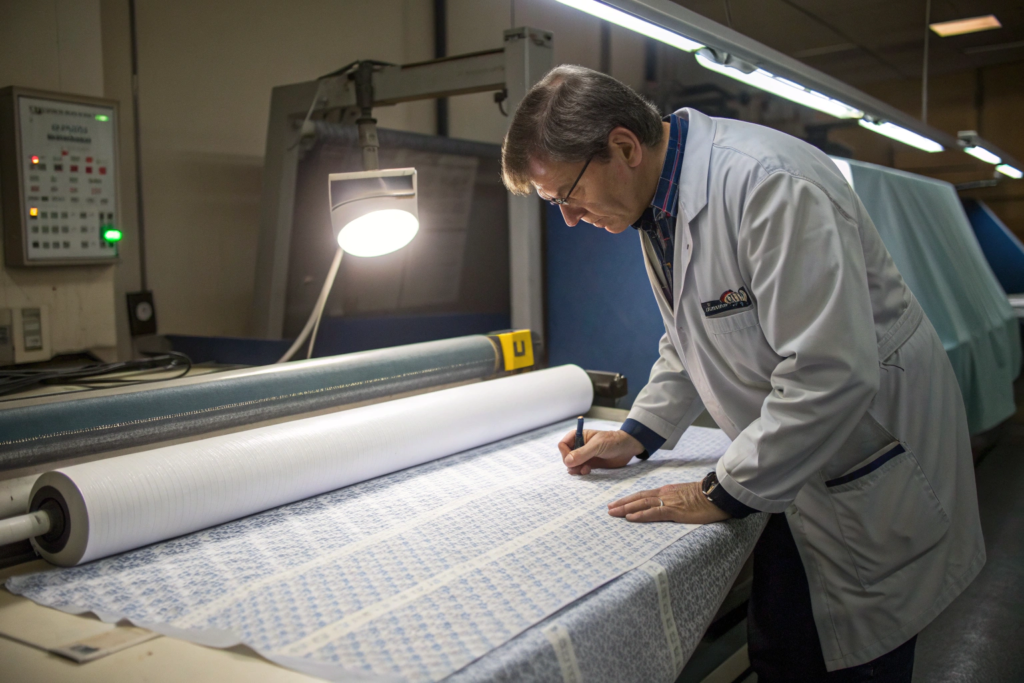
Shrinkage and fibrillation are the twin technical challenges. Let's tackle shrinkage first. Tencel™ fibers swell significantly when wet. If the fabric isn't pre-shrunk (sanforized or relaxed) properly during finishing, your garment will shrink after the first home wash. The fix is mechanical and chemical finishing. We always recommend and perform pre-shrinking processes on our Tencel™ woven fabrics, and we provide the residual shrinkage data to our clients—it's a non-negotiable test report.
Fibrillation is when fine fibers break and migrate to the surface, creating a fuzzy, sometimes two-tone appearance. It can be a desired effect for a "peach skin" finish, but uncontrolled, it looks like pilling. Prevention happens in dyeing and through enzyme finishing. Using specific dyes and a controlled "primary fibrillation" step under agitation, followed by an enzyme wash to remove the loose fibrils, creates a stable, smooth surface. This process requires expertise. A great resource to understand the underlying mechanics is The Science of Cellulosic Fiber Care and Maintenance. Partnering with a factory that has a dedicated dyeing line for cellulosics is crucial.
Why is dye selection and process critical for Tencel™?
This is the secret to that incredible, deep color and soft hand feel. Tencel™ is more amorphous than cotton, meaning it absorbs dye more readily and evenly. This is good—it allows for vibrant colors with less dye. But it's also sensitive. Using the wrong dye class or harsh process can damage the fiber, making it lose its softness and become harsh or weak.
Reactive dyes are the standard for Tencel™, as they form a strong bond with the fiber. The critical control points are salt usage, alkali addition, and temperature. Our dyeing partners use low-salt or salt-free reactive dyeing processes specifically for Tencel™ to minimize environmental impact and fiber stress. (I have to add, our partnered dye house really gets this right, which is why our hand feel consistently earns praise). After dyeing, thorough washing removes unfixed dye, which is essential for colorfastness. For brands pushing the envelope on color, exploring low-impact dyeing innovations for sustainable textiles is a worthwhile journey. Always, always request and review the AATCC colorfastness to washing and crocking test reports before bulk production. This level of detail is what separates a good partner like Shanghai Fumao from the rest.
Conclusion
Navigating the world of Tencel™ Lyocell is more than just choosing a sustainable fabric; it's about understanding a complete ecosystem—from the forestry origins and closed-loop production to the precise manufacturing needs and strategic sourcing aligned with Asia's production calendar. Its popularity is well-earned, marrying environmental responsibility with performance that delights designers and consumers alike. However, its true potential is unlocked only when you partner with a supplier that possesses the technical expertise, rigorous quality controls, and proactive planning capabilities to handle its unique characteristics.
The journey from a sustainable idea to a successful garment on the rack requires a guide who knows the terrain. At Shanghai Fumao, we've built our expertise over two decades in Keqiao, not just by selling fabric, but by co-creating value with our clients. We manage the complexities of Tencel™ and other innovative fibers daily, ensuring that your commitment to sustainability is matched by flawless execution in quality, consistency, and timeliness.
If you're ready to explore how Tencel™ can elevate your next collection while navigating production cycles smartly, let's start a conversation. Share your designs and challenges with us. For a dedicated discussion on your specific needs, please reach out to our Business Director, Elaine. She and her team are experts in turning fabric aspirations into delivered reality. You can contact Elaine directly at: elaine@fumaoclothing.com.